Ha Jin is the pen name of Jin Xuefei, a novelist, poet, short story writer, and Professor of English at Boston University.Ha Jin writes in English about China, a political decision post-Tiananmen Square.
Ha Jin grew up in mainland China and served in the People’s Liberation Army in his teens for five years. After leaving the army, he worked for three years at a railroad company in a remote northeastern city, Jiamusi, and then went to college in Harbin, majoring in English. He has published in English ten novels, four story collections, four volumes of poetry, a book of essays, and a biography of Li Bai. His novel Waiting won the National Book Award for Fiction, the PEN/Faulkner Award, and was a finalist for the Pulitzer Prize. Ha Jin is William Fairfield Warren Distinguished Professor in English and Creative Writing at Boston University, and he has been elected a fellow of the American Academy of Arts and Letters and the American Academy of Arts and Sciences. His writing has been translated into more than thirty languages. Ha Jin’s novel The Woman Back from Moscow was published by Other Press in 2023.
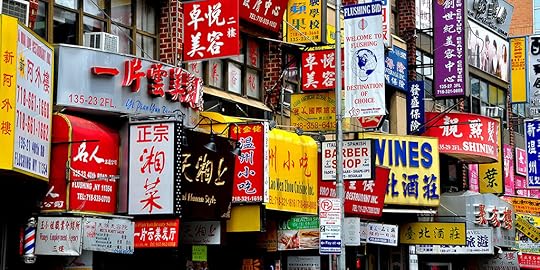
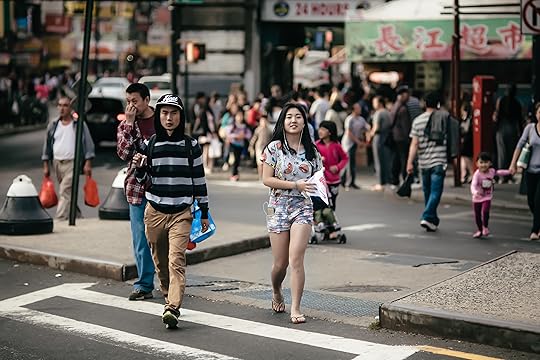
These stories of Chinese Americans and Chinese immigrants in America are mostly set in the ‘new Chinatown’ in Flushing in New York City.
Unlike the collection of stories of Bengali immigrants in Unaccustomed Earth by Jhumpa Lahiri, who were mostly all upper-class and westernized even before they came to the United States, the folks in this collection represent a range of classes and circumstances from waitress to college professor. Some are Christian, some are Buddhist.
In many of the stories we see a true clash between Chinese holding on to traditional values and their Americanized or American-born kin. In one story a woman in China cons her American waitress sister into sending her money for a car. In another story a man gets more than he bargained for when he hires a detective to spy on his wife. An American Chinese man gets a visit from a vicious traditional Chinese mother-in-law.
Other stories feature a male student who pursues a widow whose teenage American daughter controls her life. A Buddhist monk fails at suicide and becomes a celebrity. (The title of the collection.)
Chinese grandparents move to America and find that their relationship with their American-born grandchildren is one of mutual disgust. An immigrant professor in the US is on the run from mainland Chinese 'thought police.'
These are great stories that show the common humanity, good and bad, of all people, Chinese and American.
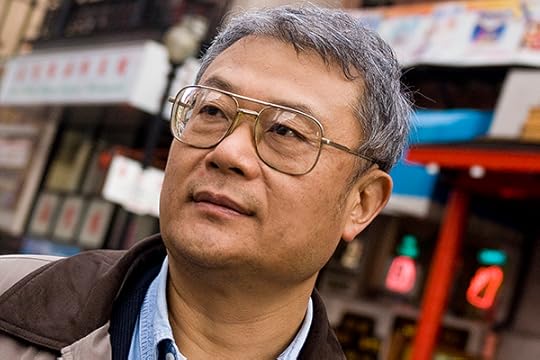
The author, whose real name is Xuefei Jin, was born in China in 1956. He was in the Chinese army during the cultural revolution but fled the country after Tiananmen Square. He teaches at Boston University. He has written several novels and many collections of poetry and short stories. I also enjoyed his novel, Waiting.
About New York’s Chinatowns: The are more than half a million Chinese Americans in New York City and there are five areas called ‘Chinatowns.’ The largest is in Queens; the second largest is in Brooklyn, and the traditional one in Manhattan is now third largest.
Top photo of Chinatown in Flushing from newyorklatinculture.com Chinatown in Queens from wiki The author from udel.edu
OK - I just cannot get along too well with Ha Jin. I heard so many great things about his award winning novel, the Waiting, that I thought I should give him a try... This was the second book by him I finished this month (the previous one was "The Boat Rocker"), and... no and no again. A Good Fall is a short story collection. The stories themselves (all about Chinese immigrants in Flushing, NYC) are not bad, some of them are even very intriguing but the endings... I know Ha Jin writes them in this way on purpose but it really, really annoyed and frustrated me in spite of the fact that after the second one I knew they would end similarly. So here it is: he is writing a complete story, with good characters, finds an adequate ending to them, and then... he adds another sentence that carries on the events/story, except... it does not. Because that is where he really ends them. As if the film broke in the middle of a scene and there is just the dark room afterwards, the audience looking at each other, "...so now what?" This technique seemed simply pretentious and completely forced, as if he wanted to find something that made the stories more appealing or interesting or memorable...? God knows.
Anyhow, I don't think I will read any more Ha Jin soon if ever.
Gave it 3 stars as again, the stories would be excellent without those stupid endings.
Several years ago, I read an intriguing novel, Waiting, by a young Chinese author, known as Ha Jin, born Jin Xuefei. This book so impressed me that, contrary to my usual state, I recall it rather well. I followed this with another of his efforts A Free Life . Ha Jin, who is by now a well noted poet and writer, arrived in the US in 1985 to attend Brandeis University. He has been a professor of English at Boston University and has been the recipient of many awards for his writing. The main reason that I have stated his mini biographical facts is that I have long held him in great esteem. His writing in English, not his native language, has impressed me with his elegance and facile style. This book did not disappoint me, despite the fact that I do not usually tend to read short stories.
The stories in this collection are varied, from the simple, to the complex, from the humorous to the sublime. They all involve Chinese immigrants of Flushing, New York. Many are needy, some are successful. There are brilliant scientists and professors and there are uneducated, inexperienced people. He has delved into the full spectrum of the immigrant experience. It would be pointless for me to describe each story, except to state that each had details which provided rewards for the reader.
The Beauty is about a man's marriage to an exquisitely beautiful woman who is admired by men of all ethnicities. The man doubts her love, especially when she bears a very homely baby. He is sure that she is having an affair, so he goes to the "Sherlock Holmes Detective Agency" and hires an investigator with very interesting results!
Temporary Love concerns a man and woman who immigrate from China, leaving their spouses behind. They agree to cohabit in order to reduce living expenses. The results of this arrangement become very complex.
My favorite story is A Composer and His Parakeets . This sweet, poignant tale is humorous and provides interesting psychological twists.
There are many more delightful and thought provoking stories penned by this talented author to enjoy.
It must be a good omen if the first book I read in 2010 has a five star merit! Actually, I was somewhere between four and five stars, but the simplicity, honesty, attention to detail and beauty of this collection of short stories was a fantastic way to begin the new year. Primarily these stories focus on Flushing, one of New York City's largest Chinese immigrant communities. With startling clarity, Jin explores the challenges, loneliness and uplift associated with discovering one's place in America. Many different generational perspectives are laid out, from the young male sweatshop-worker narrator of The House Behind a Weeping Cherry, who lives in the same rooming-house as three prostitutes, to the grandfather of Children as Enemies, who disapproves of his grandchildren's desires to Americanize their names.and revolve around the Chinese-American reality for new immigrants. Some sentences taken from Reed Business Review.
I'm an unabashed Ha Jin lover, so of course I enjoyed this book. His books appeal to me because they give me a peek into the mindset of a culture that seems utterly alien in some respects, but no different in others. Ha Jin's characters have the same insecurities, desires and fears as anyone else, but they are expressed and dealt with differently because of the Chinese culture.
This collection was a hybrid of Jin's tales set in China and his latest novel, A Free Life, set in the American south. Here, the characters are in America and are weighted down with the expectations of success that come with that fact, but they are also in a sort of limbo because they are surrounded by their countrymen in Flushing, NY. The situations this leads to are fascinating and make for a great, and quick, read.
A writer friend once told me he was easily bored by literary realism because the real world is so absurd that it takes surrealism to accurately describe it. Salman Rushdie expresses a similar notion in an interview I often show my ENG 102 classes when he says (I'm paraphrasing) in defense of magic realism that stories don't have to be true in order to get at the truth. Perhaps that's why I had such a muted reaction to this collection, which peddles in impeccably written realism to portray the experiences of Chinese immigrants in America.
Ha Jin is, in many ways, a writer's writer, an editor's dream. He writes sentences so crystalline and flawless that reading him is like letting a gentle current wash you downstream. That effect made me read this book in just a few sittings, but there's something about the degree of polish that renders the effect more intellectual than emotional. I did learn a lot about the Chinese immigrant experience, and some of the stories here (most notably "The Beauty" and "A Composer and His Parakeet") are memorable. It's easy to see why Ha Jin is so rightfully celebrated as a writer, but I hope the next thing I read by him packs a little more visceral wallop.
This is a collection of short stories focusing on the plight of Chinese immigrants in the United States. Clear, interesting writing leaves me eager to read one of his novels.
Not my favorite Ha Jin book, or even my favorite book of Ha Jin short stories. These stories approach emigration from many different angles but felt uneven and hardly compare to the poignant ones in Under the Red Flag, which seem restrained but also uniformly powerful and connected to one another on some visceral level. The stories in Under the Red Flag also seem magical insofar as they incorporate perhaps hundreds of Chinese proverbs, insults, and proletarian or worker turns of phrase.
This is my first time reading Ha Jin's work. As I started to work my way through the book, one short story at a time, I felt something was missing somehow, although of course I could not say what nor how. As I progressed through the collection of short stories, I realized that what made Jin's writing so fascinating was precisely this very undefinable ingredient that was missing still, story after story. The stories all deal with the life of Chinese immigrants in New York, more specifically Flushing. They are all very intimate, but at the same time, there is an inescapable sense of reserve emanating from each narrator, each protagonist. Where the naked eye would see a community, there are in fact strangers upon strangers adrift in an unfamiliar world, where there appears to be solidarity, there is exploitation, and where the American Dream hovers, there is in fact the materialistic enslavement of visas and sweatshops. However, hope is still there, so delicate yet impossible to kill off entirely... and the very same American Dream makes us root for those who deny fate its prize and escape to run, however hesitantly, towards the future.
Ha Jin writes stories of interesting people navigating mundane situations that nevertheless have profound, or meaningful, consequences.
His stories are good at examining small corners of everyday lives and exposing their larger significance (in often wryly funny details). He writes insightfully and poignantly about the struggles of Chinese immigrants adjusting to life in America and attempting to reconcile the differences between Old World and New.
Most of Ha Jin's work is from the perspective or viewpoint of a Chinese immigrant. In the future, would the author consider exploring the narrative voice of a second or third-generation Chinese American, or even a non-Chinese character altogether?
In addition, a minority of the stories lack sufficient exposition (notably, A Good Fall) and have narrative actions that are just a little too neat and cliched.
Overall, though, I really enjoyed the stories and their humor.
The author has written several tales detailing the experiences of Chinese immigrants in America. Some of the immigrants have been in the US for years whereas others are newly arrived. "The Beauty" is a story about a couple who has a homely baby. Fearing that the child is not his, the husband questions his wife only to discover that she, too, was once homely but had had plastic surgery to improve her appearance. "Children as Enemies" focuses on grandparents who cherish their heritage and find it difficult to accept that their grandchildren want American names because their friends have trouble pronouncing their Chinese names. "An English Professor" is the tale of a man who is seeking tenure and carefully prepares his papers for that decision. After submitting them he discovers that he has used an incorrect word that he believes will disqualify him. Other interesting tales are "The House Behind a Weeping Cherry," "Temporary Love." and "A Composer and His Parakeets."
I love when a collection of short stories is centered around one place or idea. It really allows the author to explore a lot of different characters while keeping the whole book cohesive, and that technique was used to great effect here. I was a little frustrated with how gender roles were so strong here, but I also understand that that's a reflection of a cultural perspective that I don't share. Ha Jin did a great job showing the constant tension between places, people, and cultures/histories. His characters feel like real people, and their struggles are real struggles. I also really enjoyed how a lot of the stories didn't come to a clean resolution of the conflict or problem - it made each story feel like there was more to know without feeling incomplete.
All these stories, with many different voices, revolve around the struggles of Asian immigrants. Many are set in Flatbush--just a stop on a subway to me, hopefully a stop to financial independence for them. Their families, without exception, struggle in China, and demand financial help to maintain "face". As parents, our goal is to give our children love, independence, and skills/education. The Asian families in this book of short stories are sending out explorers to prosperous America so that their family can either follow or survive in China, a society without a safety net. Told with humor.
I keep coming back to books of short stories but I'm really not a fan of the genre. I prefer depth when reading and in stories you just become committed to the characters or the plot and then it is done. Ha Jin writes very well - very realistic - and these vignettes of a life for a Chinese immigrant in New York City ring true and I learned a bit of the experience, but none of the stories really "stuck" with me. It is sort of like watching people on the street or hearing about someone at a cocktail party - a moment in the life type of thing. There were stories I liked while reading but nothing I would want to really revisit.
I've never read anything by Ha Jin before, but I will certainly read more. This is a collection of short stories that examines the lives of various members of the Chinese Immigrant community. Almost all are set in Flushing (NYC) and the characters range from a Buddhist monk to a prostitute to a composer. Beautifully wrought, though I found some of the endings rather abrupt.
Ha Jin has quickly become one of my favourite contemporary writers. I love his style, his subject matter and his delicate, poetic way of writing. This was a collection of short stories, and I've got more of his stories and novels in my reading queue.
I'm basically studying his style and trying to learn as much from him as possible.
3.5 stars…the stories are uneven, but the best of them provide an interesting and mostly melancholic view of the ambivalences of the immigrant experience.
"Even at night he avoided the perch, sleeping with his claws clutching the side of the cage, his body suspended in the air. Isn't it tiring to sleep like that?" (14). "...at this time it's hard to adjust to life here. In America it feels as if the older you are, the more inferior you grow" (80). “Five weeks ago, Matt declared at dinner that he must change his last name because a substitute teacher that morning had mispronounced ‘Xi’ as ‘Eleven’” (83). “The other day, exasperated, my wife wanted to go to Mandi’s fortune cookie factory and raise a placard to announce: ‘My Daughter-in-Law Mandi Cheng Is the Most Unfilial Person on Earth!’” (86). “He sat down and tapped the spacebar on the keyboard to bring the monitor back to life” (96). "A good class was gratifying to Rushen, but this didn't happen very often. Most times he felt as frustrated as if he were singing to the deaf" (138). "He understood that a professor was like an entertainer, obliged to make his students feel good, but he had yet to learn how to please them without revealing his effort" (139).
The talented Jin resumes his poignant examination of the conflicts inherent in the immigrant experience in these twelve stories, only two of which were previously unpublished. In simple, unadorned prose, often wryly humorous in its matter-of-fact observations, Jin crafts unique and believable characters, subtly molding them through the quiet details of their everyday lives. Jin's minimalism belies the dexterity with which he constructs each story and interweaves universal themes of hope, love, independence, and death against the backdrop of a single expatriate community. The Washington Post found fault with some of Jin's phrasing, and most critics predictably deemed the stories uneven (but could not agree on the best.) According to the Dallas Morning News, however, all of these clever, moving stories are well worth reading. This is an excerpt from a review published in Bookmarks magazine.
I've lived in a New York City Chinatown for nine years, so this collection of short stories about Chinese immigrants in NYC hits close to home. I found most of the stories, although fictional, realistic and even familiar. Reading them consecutively deepened my understanding of Chinese culture and the immigrant experience in the US. Several of the stories make absolute statements about what America is or isn't like, or what one person can or can't achieve here. Occasionally the statements contradict each other, which is especially fascinating. I'm not sure that this collection stands out to me, or that I'd be interested in reading it again, but I appreciate the glimpse into fictionalized versions of my neighbors' lives, and hope that it makes me a better neighbor to them in return.
Really interesting set of stories. Ha Jin's previous novels set in China always had a trapped feeling - the protags. had limited options and they circled around them unsure of what to do, disinclined to do anything. In these stories the characters have more choices, but are limited more by self-imposed problems than by external controls, so there is the same feeling of limitation and being trapped. This was less obvious in his first U.S. novel, A Free Life, but the feeling was there as well. Ha Jin always deserves at least 4 stars for his subtle and perfect descriptions of nature.
Consists of many short stories about Chinese Americans. Most of the stories are interesting but they are short and when some stories really have drawn my interest, it just ended and left me wonder what would have happened afterwards. I feel like some of the stories should have developed a little longer; like I had finished the appetizers, and starting the main course, then the plate was taking away from me, which still left me hungry.
Gorgeous. I'm not usually a fan of short stories, but I'm trying to read more of them this year. This is a wonderful collection about the Chinese immigrant experience in America, highlighting cultural and generational differences. Every word is perfectly placed and Ha Jin is a master storyteller. I'll definitely pick up another volume.
I kept having deja vu, like I was pretty sure I'd read this book before, but it was really enjoyable, so I kept going. Ha Jin is one of those authors whose books I'll see at a library book sale or some random place and just buy them without really knowing what they're about, because his writing is so good I'm pretty sure I'm going to like the book.
Chinese immigrant stories set in Flushing Queens with happy, sad and complicated endings. Missing some of the black humor from his older stuff. Ha Jin is a great writer in general but short stories are still his strongest work.
Nice set of short stories. Puts you into the lives of Chinese immigrants to the US and tells how their culture holds and changes once here. My favorite, the parakeet story, because it stars a parakeet.
I liked some of the stories a lot better than others -- "Shame" and "The House Behind a Weeping Cherry" are standouts -- but overall this is a nice collection of stories. Looking forward to exploring some more of his work in the future.
2.5/5.0 There are two stories worth reading in this collection: "A Composer and His Parakeets" and "A Good Fall."
As a short story lover, my heart sank when I found myself disappointed by this collection. I have been looking forward to reading Ha Jin for quite some time because of the good reviews. But I am disappointed by most of the stories except the two mentioned above, especially considering this is not his first book and was not published in the last century. To me, most stories are just a little more finished than a third draft in a creative writing seminar. Many of them have good promise to become interesting stories but are still too rough as they are now. Here are the major problems I have: 1. I would agree with other readers that Ha Jin has some good plotting and he is quick at building up conflict, but he did not make the most out of his characters. In these stories, most narrators don't have much character development, they are mostly narrative carriers. True, some may found their lives altered (like the narrator in "Children As Enemies"), but they remained their old selves and we don't see much of character development or discovery. In some cases, I almost got a feeling that he despised them, to a point that he did not bother to understand their feelings. Take the woman in "A Pension Plan" for example. Ha Jin puts her in such an interesting situation where she had so much room to explore herself: her sexuality (when she was facing the old man's harassment), her feeling/experience/longing about romance (when the man's daughter proposed a fake marriage), her complicated feelings about learning English (which was mentioned but portrayed rather abruptly with inconsistency), her vision for her future (which was again touched upon by the old lady scene but not developed enough)... Ha Jin could have made her a complicated character with a unique voice, but instead, she came out as simple-minded woman asking for nothing but a pension. Such indifference towards his characters is what makes his stories end weak. We are always left with some expected solutions of the tension yet not knowing what will happen to those characters afterward -- sometimes I feel the stories end too late to worth contemplating and too early to be complete.
2. The interpretation of China and Chineseness in the characters has the potential to bear more nuance, but those opportunities are missed. Similar to his treatment to his characters, Ha Jin treats China more as an equipment to move the plot forward rather than a locus of conflict and nuance. He uses Chinese food, Chinese medicine, kung fu, and many other cultural symbols to make sure we know they are Chinese, but they did nothing more than just cultural markers. The characters either speak of China as a poor country with no financial or academic prospect, or an underdeveloped society where traditional values are held so tightly that there was no room for negotiation. I am not a China expert but I do hope, from a reader's point of view, when I'm reading about diasporic characters, I can see more complicated feelings about the old country and its culture. Take the professor in "An English Professor" for example, it is all very fine if a character's motivation to live in the US is money, but I would like to see how this motivation is challenged, reshaped, or twisted when real America becomes present. Instead of working on that, Ha Jin made the character a single-minded man wanting to stay in the US because he could make more money. We don't understand why he was so committed to staying in the US, nor are we given a clear explanation on how the "professor" identity matters to him, and eventually we are not told what becomes of him after his plan was fulfilled.
3. The writing craft. The major problem I have with his writing style is his physical description. This might not be accurate (I have returned my library copy and am writing from my memory) but the impression I got is that every time he tries to describe a woman his gaze always moves from an oval face to almond eyes and then thin middle. And for male characters, he had hardly anything more than their body shape and facial expressions. Short stories are supposed to be compact, which means it relies more on unique characters. Another thing is his usage of dialogue. There are many occasions I don't think a dialogue conveys anything more than factual information and does very little to character construction or plot development. He could have made the stories much more concise by replacing those informative dialogues with a narrative. Lastly, as a reader, I feel I am "told" too much but "showed" too little. In "An English Professor," the narrator's criticism on the Professor's collection which was handed to him towards the end of the story was an example of "tell not show." It is quite boring when it comes from the narrator as it wouldn't do much to change the relationship. If he wanted it to be purely informative, then he could probably make it come from a publisher. If he wants this detail to have an impact on revealing the narrator's feeling towards his professor, he could do so by showing it earlier in the story and give the narrator more room to work on his relationship with the professor.
Finally, a few reactions I jotted down as I moved through the book: [The Beauty] I don't know why but the third story just annoyed me to a point that at times I had to put it down and roll my eyes... The background information of each character took more room for explanation than necessary. The story could have been more concise and exciting had it been cut to, say the least, its 2/3 length. The main character seems plain and stereotypical. His relationship with the mother was anticipated and almost a cliche because Ha Jin did not give the two enough personality to reverse the cliche. The physical description of the two female characters made me feel uncomfortable: they are, again, cliche and sexist. Nor did I see the relationship ever made an impact on the narrator's character. Sammy, the teenage girl, is the only one that I find interesting -- she could have so much potential to be developed into a complicated character with twisted feelings and moral struggles in her but Ha Jin did not give her enough room to grow further than half a line in the ending.
[The House Behind a Weeping Cherry] This is one of the stories that I slightly take a liking. A young man living in a brothel. This is a classic plot that has all kinds of potential to be a great place to explore the tension of gender, poverty, trauma, and humanity. Still, instead of getting into the feelings of the characters, Ha Jin stayed at the surface, having them experiencing sensuality and financial difficulty, rather than pushing for moral tension and dilemma. Ha Jin again shows his ignorance of women and the underclass when he makes those women address themselves as prostitutes or whores -- if he ever talked with more than three people working in that field he would have a much larger vocabulary to express their self-interpretation. The male narrator also sounds too bookish to be a part of the house, how would a manual worker talk to the girls? I think it would make more sense if Ha Jin paints him as a working student than just a factory worker.
This entire review has been hidden because of spoilers.
Instagram.com/marco_ketab #ادبیات_چین 🇨🇳 سقوط شادی بخش نویسنده: ها جین مترجم: علی هداوند نشر: نیکو برشی از کتاب میگفت: تو رشته تاریخ تنها چیزی که لازم داری وقت و یک کتابخونه درست و حسابیه. هر کس به اندازهٔ کافی کتاب بخونه میتونه تاریخ دان بشه. میخوای چه کاره بشی؟ استاد؟ هر کسی میتونه بیشتر از استاد پول دربیاره.وقتی پدرم حرف میزد من ساکت میشدم ... گفت: شما چی تدریس میکنین؟ ادبیات آمریکا. اشتاین بک رو هم تدریس میکنید؟ گاهی؛ موشها و آدمهای اونو تدریس کردم. من آثار اونو دوست دارم؛ مخصوصاً شرق بهشت را. اشتیاق الکس راشینگ را آشفته کرد؛ او میدانست که بیشتر مدرنیستها از اشتاین بک خوششان نمی آید. و اما قصه از چه قراره اول بگم از اون دست کتاباس که به همه پیشنهاد میدم. خوندن ادبیات شرق آسیا حس میکنم برای همه جذابه، یه سری داستان کوتاه دوست دارن، یه سری خوندن زندگی مهاجرا براشون جذابه. این کتاب گمنام همه اینارو باهم داره. حتمن که ارزش خوندن داره. کتابی که هیچ دیالوگ یا برشی رو نمیشد خاص تر از بقیه کرد چون اتفاقاتی که میوفتاد و تجربه هاشون برای من همه قشنگ بود. کتاب شامل ده داستان کوتاهه که همگی از زندگی مهاجران چینی به آمریکاس. هر داستان روایت مشکلات مختلفی از جمله کار، پول، اقامت، زبان، تفاوت فرهنگ و دغدغه های از این دست. گرفتاری های که همه مهاجرهای دنیا درگیرشن رو به قشنگی به تصویر کشیده. تصویرسازی و پایان بندی های خوبی داشت. یه چیز جالب برای من تو داستان ها ارتباط مستقیم و غیرمستقیمشون با اسم کتاب بود، داستان آخر که حجت رو تموم کرد. سه داستان که من اصلن شبیه بهش رو اصلن نخونده بودم جایی و اینکه من خیلی با داستان های کتاب همزاد پنداری کردم و شدیدن خوشم آمد از خوندنش حداقل خیلی بهتر از یه سری از کتابای بود که کلی هم اسم در کردن اما روایت تکراری و بدون هیچ کششی. telegram.me/marco_ketab