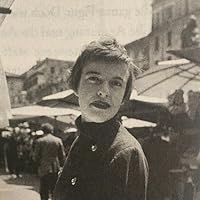
Parages brings together four essays by Derrida on the fictions of Maurice Blanchot. Three of the essays―"Living On," "Title To Be Specified," and "The Law of Genre," are by now canonical. The fourth, " Pa ce Not( s )" as well as Derrida's 1986 introduction to the French edition of the book, appear here in English for the first time. This was a breakthrough publication in the analysis of Blanchot, a notoriously difficult writer. It is safe to say Derrida contributed much to that writer's reputation in both French and English, always insisting on the philosophical pertinence of Blanchot's work to any discussion of the relationship between literature and critical thought. Through patient citation, and an ample collocation and readings of Blanchot's various motifs, Derrida explores a variety of questions, including the limits of genre, the procedure of crossing out, and the evocation of a non-dialectical and non-privative negativity. The book marks a crucial stage in Derrida's itinerary and provides a context for his later writings on apophatics in such works as On the Name (SUP, 1995) and his response to Heidegger on death in Aporias (SUP, 1993).
Jacques Derrida was a French philosopher best known for developing deconstruction, a method of critical analysis that questioned the stability of meaning in language, texts, and Western metaphysical thought. Born in Algeria, he studied at the École Normale Supérieure in Paris, where he was influenced by philosophers such as Heidegger, Husserl, and Levinas. His groundbreaking works, including Of Grammatology (1967), Writing and Difference (1967), and Speech and Phenomena (1967), positioned him at the center of intellectual debates on language, meaning, and interpretation. Derrida argued that Western philosophy was structured around binary oppositions—such as speech over writing, presence over absence, or reason over emotion—that falsely privileged one term over the other. He introduced the concept of différance, which suggests that meaning is constantly deferred and never fully present, destabilizing the idea of fixed truth. His work engaged with a wide range of disciplines, including literature, psychoanalysis, political theory, and law, challenging conventional ways of thinking and interpretation. Throughout his career, Derrida continued to explore ethical and political questions, particularly in works such as Specters of Marx (1993) and The Politics of Friendship (1994), which addressed democracy, justice, and responsibility. He held academic positions at institutions such as the École des Hautes Études en Sciences Sociales and the University of California, Irvine, and remained an influential figure in both European and American intellectual circles. Despite criticism for his complex writing style and abstract concepts, Derrida’s ideas have left a lasting impact on contemporary philosophy, literary theory, and cultural criticism, reshaping the way meaning and language are understood in the modern world.
Derrida's analyses of Blanchot and the undecidable through pas, borders and borderlines, as well as the madness of the récit that recites "A récit? No. No récit, never again." Derrida is in high form here, especially in the first two essays of this collection. And if you haven't read Blanchot then do so. His work is a step beyond...what? Is it also not no step at all, no beyond? Alas, le pas au-delà.