As seen on the Khloé in Wonder Land podcast Uncover the secrets of the next life...
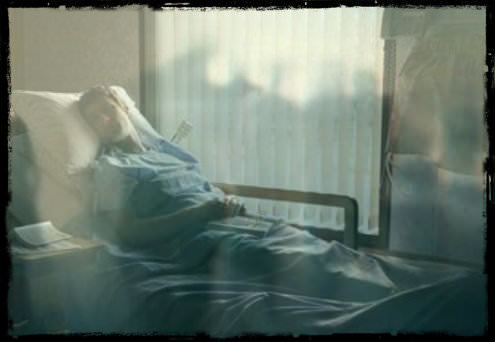
David Kessler, one of the most renowned experts on death and grief, takes on three uniquely shared experiences that challenge our ability to explain and fully understand the mystery of our final days. The first is "visions." As the dying lose sight of this world, some people appear to be looking into the world to come. The second shared experience is getting ready for a "trip." These trips may seem to us to be all about leaving, but for the dying, they may be about arriving. Finally, the third phenomenon is "crowded rooms." The dying often talk about seeing a room full of people, as they constantly repeat the word crowded.
In truth, we never die alone. Just as loving hands greeted us when we were born, so will loving arms embrace us when we die. In the tapestry of life and death, we may begin to see connections to the past that we missed in life. While death may look like a loss to the living, the last hours of a dying person may be filled not with emptiness, but rather with fullness.
In this fascinating book, David brings us stunning stories from the bedsides of the dying that will educate, enlighten, and comfort us all.
David Kessler David Kessler is the world’s foremost expert on grief. His experience with thousands of people on the edge of life and death has taught him the secrets to living a fulfilled life, even after life’s tragedies. His new book is Finding Meaning: The Sixth Stage of Grief. He coauthored On Grief and Grieving and Life Lessons with Elisabeth Kübler-Ross and You Can Heal Your Heart: Finding Peace After a Breakup, Divorce or Death with Louise Hay. He is the author of Visions, Trips, and Crowded Rooms, and The Needs of the Dying, praised by Mother Teresa.
David’s work has been featured in the New York Times, Los Angeles Times, Business Week, and Life Magazine, and on CNN, Fox, NBC, PBS, and CBS. David has served on the Red Cross Aviation Disaster Team and has volunteed for decades as a Los Angeles Police Department Specialist Reserve Officer. He lectures for physicians, nurses, counselors, police, and first responders and leads talks and retreats for those dealing with grief.
This book should come with an accompanying box of tissues!
I spent two months by my grandmother’s bedside as she slowly passed away. It was the most involved I’ve ever been in the dying process. As a result, it left me with many questions about what I had experienced. My grandmother would wave at people we couldn’t see, smile and talk to them, and appear to see profound things. It made us feel like we were catching a glimpse into another world.
I’d never read a book about death before, but was excited to come across this, as it seemed to potentially hold answers to what I was looking for. I was correct!
David Kessler writes about death in a beautiful way – a style I didn’t think possible with death and dying. He completely lifts the taboo surrounding death, and seems like the caring, compassionate friend we all need when experiencing grief.
It wasn’t long before I was relating to experiences in the book. The first which explained how many people report seeing a “mother figure” - just like my grandmother did, who regularly 'confused' my mum for her own. I also found it fascinating how the legal world views deathbed confessions as legally binding - while others don’t take them seriously.
“Perhaps if they knew that in the legal world a person’s final words are more highly valued and examined, they might view these visions differently.”
It was also interesting to hear testimony from doctors on deathbed visions, with one describing them as nothing short of miraculous, acknowledging the peace and reconciliation they give the dying.
How do you even rate such profound and emotional stories? Each one of them is unique and moving. While a short book, it’s heavy and emotionally draining. It’s not something suited to power-reading and I often noticed myself lost in reflection.
Many of these stories will blow your mind. It really began to seem as the dying saw less of this world, some appeared to be looking into the world to come! Memorable stories involved "Jessica", who in a near death experience, saw her deceased mother, who refused to face her, before walking away - she survived. A person whose step-father was greeted by her biological father, who wanted to thank him for raising her and her siblings. And the patient who requested the nurse to move because she was "blocking the beautiful, blinding light".
Social worker, Nora, best described most events: “Not a ghostly experience, but a feeling of holiness.. As if someone or something is guiding my patients home.”
The “Crowded Rooms” section was also fascinating. After all, a crowd of well-wishers welcome us into the world, so it’s “not so much of a stretch to imagine the same in death”. Patients reporting “people at the door” directly related to my grandmother's experience too.
Many of these stories were life-affirming and reminded me of how privileged I felt to have been part of my grandmother’s dying process. Had I read this book prior to her death, it would've no doubt prepared me for the visions and experiences she had during her final weeks.
I'm now left curious about others’ experiences with deathbed visions and the dying process. It has also helped me feel more comfortable talking about death. Perhaps most importantly, Visions, Trips and Crowded Rooms has helped me in my own grieving process and for that, I’m incredibly grateful.
Before reading this I had very limited knowledge of David Kessler. Since then I have learned that he is a big deal in the area of grief. He co wrote two books with Elisabeth Kübler-Ross, and was with her when she herself was dying. He has spent decades studying death, dying, and the process of grief in many different circumstances from mass deaths, hospice settings, hospital settings, as well as academic study. I stumbled across this book while listening to the 10% Happier podcast with Dan Harris. My weird interest in the subject of death and dying, and the process of grief started while my mom was sick with heart failure, as well as the almost 7 years that she lived after a heart transplant. I was 26 when she died and completely heartbroken by her passing. I did like this book. It is a book explaining three things that the dying often experience at some point in their journey: telling people present that they are preparing to go on a journey, or that the room is suddenly crowded with lots of people, or that already deceased loved ones are there in the room with them. The book does do a good job explaining why many professionals do not believe that these experiences are not from an oxygen deprived brain or hallucinations. It just felt that the stories were not in depth enough. I wanted more. More stories and somehow for the author to explain things even more. Perhaps I was looking for too much?
***TEN STARS*** I have read a lot of these deathbed vision books in the past year since losing both of my parents, but this is my favorite one. I have re-read it about 4 times now. This book gives so much comfort to the reader, especially when a person is supporting a loved one very one close to passing away. The stories in this book are from the hospice perspective, all true accounts of people who see departed loved ones and other comforting figures, who come to visit them right before their passing. These patients are totally lucid during these experiences. The stories give the reader goosebumps (the good kind), as well as truly offering hope and comfort during the devastating time of losing a loved one. Not only did this book help me, but I have also bought copies for several of my friends who were losing their loved ones too. I cannot recommend this book highly enough.
I had purchased this book after the death of my own mother. As I began reading this book it made quite alot of things clear in which I thought my mother was just muttering, or she was saying incoherent things that didn't quite make sense. She was actually leaving me clues as to her last final days here on earth. After I had read this book I told my sister of my experiences I've had with our mother. I let her borrow this book so she too could read and have an open mind and share the experiences that she had.
"Visions, Trips, and Crowded Rooms by David Kessler is an explanation of what the dying sees and who they speak to in their last final days. Their Visions are those people from their past who are coming to visit to let them know that they aren't too far away, Trips - The dying are told they are going on a Trip. I remember my mom telling me she was going to take a trip. I said I will pack our bags and she told me no that SHE was the only one making this trip. I was confused at that statement she had made. Now reflecting back I understand what she was telling me. Crowded Rooms is when the dying sees their rooms filled with many spirits.
This book had helped me heal in the grieving process in which it brought back the memories that I had shared with my mother. I now have the understanding of what takes place when the dying are ready to leave the physical for the spiritual plane.
If I could give this book a 10 star rating out of 5, I would. My father just recently passed away in the ICU ward, where he was not conscious at the time of death. When all the breathing tubes were removed, there was this huge smile on his face (a smile I only ever saw when he was truly and utterly happy). The one question I kept asking myself was: what made him smile? Was this a genuine smile, or some kind of a biological phenomenon? Also, a little over 10 years ago, my mom passed away in surgery for a liver transplant. I remember as they were reeling her into the OR room, she was waving goodbye to all these imaginary people. This moment always haunted me as I always wondered if mom suddenly started facing delusional episodes due to toxins from the liver, or was there something more to this that I didn’t understand or see. The former made no sense to me as moments before she left her ICU room, she was lucid and engaged with us all as we wished her good luck on her surgery. Yet, how do I explain her waving goodbye to ghosts along a dark and narrow ICU corridor from her gurney at 3am (not a person in sight other than us and her surgeon). This book provided me with much needed answers, and opened my eyes to what it means to be a human. Thank you David Kessler!!! I recommend this book to EVERYONE, regardless of your religion or beliefs. JUST WOW!
I had high expectations for this book and found myself sorely disappointed. Kessler's first chapter was interesting enough, however it was followed by a series of vignettes that felt entirely contrived. These stories are ostensibly about various folks' experiences with bearing witness to a deathbed vision. However, the tone of each of these "contributed" stories is exactly the same as every other story contained here and each of these stories happens to conveniently reinforce points that Kessler makes in that first chapter. It reads like Chicken Soup for the Death Witness-er's Soul.
I really liked the part about the visions. It gave me comfort and made death seem much more eternal with our loved ones that have passed on. The idea of our loved ones being there is so comforting. Enjoyed the book and would recommend.
so interesting stories by the bed side, keeps one wondering how nature has planned for us. there is so much peace to see someone dying without fear, coming to an acceptance that their time is come. It is all unexplainable yet beautiful.
This is a gem of a book. The author is an expert on death and caring for the dying, but his voice is secondary to all the healthcare workers and family members sharing stories about how their patients or loved ones died.
These personal stories about deathbed visions of loved ones returning, of angels, journeys, or crowded rooms of welcoming faces is comforting, bittersweet, and inspiring. It is a short and quick read, but helped me wrestle out of an existential crisis about my own death. I'm a hospital chaplain, so I often help people and their families cope with death, but I was finding my own mortality a scary thing to contemplate and, hell, I'm healthy! This book helped me personally and professionally; I'm grateful for all who told their stories.
This author is a renowned expert on death and grief. In this book he shares stories from the bedsides of the dying, as told by those who were present. Countless numbers of people near death have said that they see their loved ones coming to meet them, and they are very excited to see their friends and family. Often they refer to their room being crowded by so many spirits, who have come to see them at the end of their lives. The book is based on personal experiences of health care professionals, clergy members, and family members. I enjoyed reading it, especially since I have had similar experiences in my own family. I found the accounts somewhat repetitious, however, I think the book would be very comforting for someone who knows they are dying and also for their families.
I facilitate grief groups and am always looking for books to recommend to people in my sessions. I would certainly recommend this because we have discussed this topic in some sessions over the years. This book is timeless.
"While death may look like a loss to the living, the last hours of a dying person may very well be filled with fullness rather than emptiness. No matter how death unfolds for us--whether we're planning for a 'trip,' or gazing upon our loved ones or a crowded bedroom in awe--lour transition ultimately is a mystery. Sometimes all we can do is embrace the unknown and unexplainable."
I came across this book right after I started working at Hospice; and man am I forever grateful it came into my life at that time. It helped me to understand a lot of what the dying are experiencing right before it’s their time to cross over. What they might see, hear, feel etc. This book is a fascinating read and may even have you shed a few tears.
Beautiful stories. My Dad saw his mom (I think I told her to leave because I wasn’t ready) about a week or so before he died. Then the night before he died, one of his best friends (who had passed years earlier) was there with him and they were having a great time together. I’m not religious and I don’t know what happens when we die but I was definitely comforted to know that his family and friends were there with him in his final transition.
"We've been brought up to believe that dying is a lonely, solitary event. But what if everything we know isn't true? What if the long road that you thought you'll eventually have to walk alone has unseen companions? What if who and what you see before you die changes everything?"
This is a short, but very heavy book. If you've ever lost a loved one you can appreciate the comfort that David Kessler has supplied in these pages. Kessler has combined various accounts of death bed visions by those who were present during the last moments of a loved one's or patient's life. Broken down in to three different types of experiences that are described as a "vision," "going on a trip," or being in a "crowded room," we learn what may be waiting for us in our last moments, as well as the surprising fact that these experiences are as common to those in the medical/hospice/social work fields as dying itself, but are never talked about due to the fear of being labeled "crazy." David Kessler also points out the various places in art, literature, and film in which the death bed phenomena is present, presenting it as an experience that can't be completely made up due to the similarities throughout human history, but the varying nature depending on personality.
It's a hard book to describe and I suggest it to anyone who needs some sort of comfort from the death of a loved one or any fears he or she might have in regards to their own mortality. The stories are sweet, and sad, and you won't come away without having dropped a few tears, but it is comforting. Do not read it in one sitting. If you do, steel yourself. Like I said, it's heavy.
I found the topic really interesting and a lot of the stories heartwarming, but overall I found this book lacking. It was mostly just a lot of stories with a brief description of a person's life and death and a quick summary of a vision they had. I missed some more scientific data and facts and research information and even more of the author's analysis and own theories etc. It seemed quite superficial and I could google end of life stories and find stories like this in two minutes, without having to pay for this book. I thought it would be a lot more in-dept than that I guess. The stories WERE lovely but also extremely repetitive which I understand was in a way the author's point, but if they were all so similar did we really need a whole book of them? I would have rather had half the book dedicated to experts in the field giving their theories and explanations and information about research done into this etc. It was still a nice book but only if you like the same heartwarming story over and over without a whole lot of thoughts and theories and science connecting them. This was not for me I'm afraid.
I've been aware of Elizabeth Kubler Ross's work since college, but I hadn't known about Mr. Kessler, who worked closely with her on the subjects of death and grief.
Having not been around many people in the process of dying, I was unaware of this phenomena outside of fiction. He does not mention how often it occurs--and facts and figures are not his point--but it seems to be something common enough that people working in the hospice area encounter it regularly, at least from the number of accounts included.
Whether it is a true visitation or the delusion of a dying mind doesn't matter to me. It's a nice thought that in a frightening time, ourselves and our loved ones might have some comfort.
I had the privilege of hearing Kessler speak and he's so knowledgeable about the subject of dying and he delivers the information in such a caring way. It's obvious to anyone how much cares about the subject of his life's work. His book, Visions, Trips, and Crowded Rooms is no different - it was informative, interesting, and the information was delivered in a caring manner. It doesn't matter what a person's belief system is, this book has such great and uplifting accounts of end of life. A must read for those in the hospice field, or those interested in what a loved one may go through at the end of life.
This is an amazing book! Everything is clearly explained and I would highly, highly recommend that anyone and everyone read this book. We need to re-evaluate what we have been told and learn that the future is more promising than we have ever imagined. As Kessler says, we are loved when we come into this life and we are also loved when we leave it. This book is incredibly uplifting and presented in a straightforward, interesting fashion. Though losing a loved one is always incredibly hard, this book gives you the peace of knowing that they are cared for into their next journey. Read it, and you won't regret it.
Excellent book. I just heard David speak and found him fascinating. This book didn't disappoint. I believe the veil between Heaven and earth is much thinner than we imagine.
What happens in the final moments, hours, even days in a life approaching death? Kessler has worked with hospice and the dying and crime scenes. In this book he shares his experiences with the dying, as well as testimonies from the medical professionals and loved ones who’ve witnessed the phenomenon of the dying, sharing their first-hand accounts about death-bed visions.
As one who has experienced these visions myself, I was compelled to read this book. Kessler says that enough people would rather not talk about the things they’ve witnessed, but he’s gathered a few who were willing to share.
Kessler begins with his own telling of his childhood, losing his mother at a young age and then witnessing the dying of his father sharing that his mother came to visit him the night before he died. He continues by sharing that his father was in a depressed state and hadn’t spoken for days until he had ‘the visit’, and then he died.
Kessler says this book is about hope because ‘the end’ isn’t just about meds and machines keeping one alive, but the beautiful parts about dying. The visits, the transition, and the crowded rooms that many in their last hours see are the experiences we will learn about in this book. Kessler encourages the grievers to speak openly about what they’ve witnessed without fear because it adds to the perspective of death.
“Life ends, but love is eternal.” Truest words.
This book will bring up many commonalities witnessed of the dying. All of which I have personally witnessed more than once myself. From conversations between the dying and the dead, to out of the blue, hands reaching up high as though opening arms to someone and calling their names, there is scientifically no proof, yet there are an awful lot of people, just as myself who’ve witnessed these happenings.
The veil is thin for those soon to be on their next journey from this life, and perhaps that’s why only the dying can hear and see the dead, while loved ones sit with them in awe of what they are witnessing, yet unable to see into the next world as the dying can. We don’t see what they see, merely just their responses and words.
Death-bed visions are often witnessed by remaining loved ones. While some choose not to admit what they saw and others are in awe at some of what they’ve witnessed, the fact is it is part of the transition. Of course there is no scientific proof, just spiritual proof, and for the many who’ve witnessed these happenings.
This is an easy-to-read book. It helped that the subject matter is one that interests me greatly. I particularly enjoyed the personal stories.
Here are some of my favorite quotes:
Believe “I firmly believe that just as loving hands greet us when we’re born, loving arms will embrace us when we die.”
Deathbed Visions “’With a living person actually seeing someone from the other side?’ ‘Yes—in fact, deathbed visions are quite common.’”
“Deathbed visions occur in the presence of nurses, priests, doctors—and, yes, even attorneys. That knowledge could be comforting to people.”
Working in Hospice “People often ask me why doctors don’t talk more about visions, and I explain that there are many reasons. First of all, they aren’t really there with the patient much at the end of his or her life. They come in for a quick assessment and see how to manage nausea, fatigue, fever, or pain. They’re trained to heal and fix, so deathbed visions are considered hallucinations. For more enlightened physicians, however, they might perceive these visions as a sign of impending death. Many of my colleagues would never admit or even discuss such a thing, though, and pass it off as a side effect of medication or lack of oxygen. When I worked in hospice, I realized that doctors have more time to sit with their patients and get to know them. While there, I was able to witness so many of my patients experiencing visions before dying, and they always seemed to bring peace and reconciliation. I consider these visions to be nothing short of miraculous.”
Having worked in a nursing home for fifteen years and after losing a husband, parents, and grandparents, I’m interested in what it’s like to die. After reading a review of this book on one of the blogs I follow, I snatched it up, and I’m glad I did.
The author doesn’t just tell us what happens to people when they’re dying. He provides true stories from social workers and other health care professionals having come in contact with the dying, along with a few of his own experiences. I was especially fascinated to read about dying people’s visions of relatives who passed before them. But I also found interesting the accounts of dying patients’ impressions of traveling and being in crowded rooms.
This book left me with one question. The stories here are about people in end-of-life care. What about those who pass unexpectedly? When my father died over ten years ago, those who found him told me they thought he went quickly as a result of a heart attack. Did he see his mother or some other relative who went before him when this happened? I’ll never know.
However, after reading this book, I was comforted to realize that my late husband didn’t die alone. As he hovered between life and death during his last few days on Earth, I couldn’t bear to be with him for long due to his unresponsiveness. After I finally gave him permission to go, he passed peacefully one night when I wasn’t with him. I used to feel guilty about not being with him when he died, but now, I don’t. This book offers an interesting look at what happens to dying people when they’re “goin’ home.”
I recently read something about this book, I can't recall where, that led me to request it from the library. I thought that it was a recent book, but it was published in 2010. Somewhat coincidentally, I read it around the anniversary of my mother's passing, recalling things about her passing and the years of her illness leading up to it.
As the title indicates, when people are near death they often experience visions of those who have gone before, often parents, spouses or children, feel like they are preparing to go on a trip and/or see many people from their past. The book is made vignettes from mostly health care professionals, though often about their personal experiences, who have watched people die. Each story is only a page or two, making the book easy to pick up and put down in short intervals. At various points, the author, who is evidently a noted expert on death and grief, inserts comments or stories of his own. It is comforting to think that those we love in life, go onto another realm, where they are welcomed by people they know. It also gives us hope that we will see them again.
"In the tapestry of life and death, we just know where we as individuals are positioned in the family tree, in dying, however, perhaps we're able to make the connections to the past that we'd missed earlier in life." (133)
Whether these visions are real or not, I find comfort in how beautifully peaceful the experience can make one's end of life. This book is full of stories from those who have witnessed either patients or loved ones living through visions before passing. This is much different than near death experiences as those are first-hand accounts.
I couldn't help but think of my own grandfather and his surprise at seeing his old school friend and his dog while in the hospital bed. And how we sometimes treat dying as a very clinical experience rather than a transition we can support people through.
I particularly liked the idea of parents being their for their children,"You protect your children from household dangers. You hold their hands when they cross the street on their first day of school. You take care of them when they have the flu, and you seem them through as many milestones as you can. Now fast forward 70 years or after you yourself have passed away. What if there really is an afterlife and you receive a message that your son or daughter will be dying soon? If you were allowed to go to your child, wouldn't you?" For me the answer is absolutely yes, if I can be there, I will and it was not something I considered until reading this book.
Do you believe in angels? How about spirits? Would you believe that someone from "the other side" could come to visit you as you are approaching death? These are questions presented in this book in a manner that certainly makes all seem possible. To me as one looks at the vastness and complexity of the universe, or the "simple" matter of creation of a human baby it is hard to deny the possibility that angels and spirits exist. In fact, the author makes it comforting to think that God might send such to you to ease you into death. The real life examples he uses seem believable as he includes those who have been there to witness the passing of someone. He makes it exciting to think that someone from our past may visit us in spirit form as we approach death. There are those who will refute that such things happen, but to those he has included in his book the experience was real. Who's to say such visitations cannot take place. Isn't it more comforting to believe that they might. Read the book with an open mind and ask yourself, with all that we see around us that was created by a supreme being, isn't it just possible that what the author presents is possible?
I found this book deeply unconvincing. Rather than offering thoughtful analysis or evidence-based insights, it relies heavily on anecdotal stories designed to evoke an emotional response, particularly from those grieving or dealing with loss. I had hoped for a serious discussion on end-of-life choices, including the complex debate around assisted dying versus extending life through medical intervention. Instead, the book presents subjective experiences framed as universal truths, without offering substantial argumentation or evidence to support broader conclusions. While personal narratives can be powerful, I believe this book falls short in providing the critical depth or balanced perspective the topic deserves.