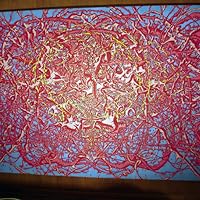
In this collection, first published in 1987, John Ashbery--"one of his generation's most gifted and eloquent poets" (Michuko Kakutani, The New York Times)--offers some of his most intimate and direct poems. With breathtaking freshness, he writes of mutability, of the passage of time, and of growth, decay, and death as they are reflected in both ourselves and the changing of the seasons. By turns playful, melancholy, and mysterious, the poems in April Galleons reaffirm the extraordinary powers that have made Ashbery such a significant figure in the American literary landscape.
Formal experimentation and connection to visual art of noted American poet John Ashbery of the original writers of New York School won a Pulitzer Prize for Self-portrait in a Convex Mirror (1975).
From Harvard and Columbia, John Ashbery earned degrees, and he traveled of James William Fulbright to France in 1955. He published more than twenty best known collections, most recently A Worldly Country (2007). Wystan Hugh Auden selected early Some Trees for the younger series of Elihu Yale, and he later obtained the major national book award and the critics circle. He served as executive editor of Art News and as the critic for magazine and Newsweek. A member of the academies of letters and sciences, he served as chancellor from 1988 to 1999. He received many awards internationally and fellowships of John Simon Guggenheim and John Donald MacArthur from 1985 to 1990. People translated his work into more than twenty languages. He lived and from 1990 served as the Charles P. Stevenson Jr. professor of languages and literature at Bard college.
Dude, Ashbery could drink you under the table. And then write a fucked up persona poem about it. And it would be from the point of view of PORKY PIG. Man, wouldn't you feel stupid then? DO NOT TRY TO DRINK ASHBERY UNDER THE TABLE!
Took my time for the last half of the book. Didn’t find it as interesting as some of his other pieces. But Ashbery is Ashbery. It’s like bad Shakespeare. It does exist, but is really a bad thing?
THis is the last collection in the First collected! Not that I've finished it. 1987 & it's reading like later Ashbery this is more the Wakefulness vibe I really liked it again not necessarily his Strongest piece but the sketching of scenes here is really indicative of his development & he's still bashing down the walls of the box
If I come to you empty-handed, thaumaturge-like, It is so you can see my arms are wide open, Bereft of you, that in the sunshine we can play And return to separate dreams later, in the night Of the car. And all that we do within and to
Each other be kept distinct from evening's dazzle, From the colorful drowned insects in the grass, And my name be invisibly scratched on everything.
O to toodle off from April Galleons. First some ginger tea, and then a reflection, back about 24 hours. You know, when I really finished. But then I don't remember, something about slippage. Ways of seeing the new ways of seeing. A voice distantly called, but then it was almost Thanksgiving and even a few days off I was mildly hungry. To associate is to amplify, is what my third grade teacher said, or perhaps it was a VP of marketing. I don't really care, do you?
There’s a wisdom to knowing how much of the world around you might be available to you, and how much more of it will merely exist. Trees in blossom. Your uncertainty which of the days it will be when the tree fully blossoms. And then just living with the knowledge that time need not make any knowledge available to you. Or I would ask you to think of the you, the one you’re using when you read Ashbery’s book. You are merely existing. Which is definitely something he is aware of, because he’s aware of it in himself. And he’s aware that most of the world exists on contingency. A there-ness. And then a there-ness that is thoroughly available and present to the poet. Like I would declare this book Ashbery’s poetics of there-ness.
I mean, let’s face it, he is the most there poet there is. The poetics of suddenly realizing, but burying all that sudden realization in rhetoric so that it’s not all the time clear there was a there there. Maybe there had drifted away. Maybe there lost the context for it to be a real there. And now it’s just there in nature, or there in the city, or there outside your window, blooming with spring flowers, or changing like how the tree changes so drastically over the course of a year. Whenever I read Ashbery, I just want to be there with him. Is that too demanding? I think he would say, “Come on over.” And then I’m like, “But you’re all the way over there.”
Seriously, I’m realizing if I filled this review with sentences that all used there in some capacity, this would likely be the best analogy for reading the poems in this book. If you’re willing to go there. Because that’s really how a poetics of the there would work. The ways there is buried among many there’s, by its nature. And Ashbrery has attuned himself to sensing what’s there, how there might thread itself through the landscape, or surface like a whale in the Atlantic. Sometimes it’s that dramatic. And sometimes it’s there in the lake. And it’s just the perch that’s come close enough to the surface that when it suddenly turns to go deeper, there’s a pull on the lake’s surface.
And, significantly, he’s wishing you could have been there with him. But reading the poem, he knows you’re too late. And that mild sentimental nod saturates Ashbery’s tone. It’s the tone of “there could have been something.” Because while he’s writing this poem, he’s observing himself, and who he might be, who he fears others see him being, and what that must necessarily mean.
If you were to tell me that the sentences in this book were a random collection of sentences from a random collection of literary fiction novels, I would believe you. Which is to say that a lot of lines in these poems scan as random (to me, at least). That being said, many of these poems still manage to be emotionally affecting. And, I think, some of them are post modern masterpieces, while others are just pretty good. Overall I enjoyed taking my time with this collection. I found myself enjoying it more and more the deeper I got into it. Ashberry isn’t for everyone and I can’t say I understand a lot of what’s contained in this book, but the poems still manage to be evocative and provocative.
I found there was not much to hold onto with these poems. About the middle, with Someone you have seen before there were a few good poems. These I could grasp firmly and enjoyed them more. Overall though, I oddly did like this collection better than Ashbery's previous book I read last month, A Wave. Attempting one more and if it doesn't grip me I'll stop there.
Ashbery exudes "goodness" and skill, but I couldn't slow myself down enough to really enjoy or absorb him. He's probably worth purchasing and musing through more slowly when I'm not as goal-oriented and ravenous.
Reading these poems is like making bedside conversation with an Alzheimer's patient. There are words, and they are arranged in the right order, but there is nothing there...no sense, no intent, no engagement, no illumination. Ashbery is the worst kind of literary hoaxster.