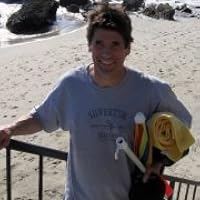
Poetry. LGBT Studies. Like Tennyson's In Memoriam, Teare's book sees within a personal loss evidence of an epochal shift at work, a shift at once historical, political, and cosmological. Asserting the lover's body as a lost Eden, revisiting again and again the narrative of "the fall"--its iconic imagery as well as Gnostic reinterpretations--the book also records the eventual end of mourning and a return to the ecology not of myth but of the literal weather and landscape of California. The book is haunted throughout by the task of "writing the disaster" of AIDS; its lyrics link emergency to inquiry in an attempt to make a memorial "in language sufficient/to pain: not in itself the world: the thought of it."
A former National Endowment for the Arts fellow, Brian Teare is the recipient of poetry fellowships from the Pew Foundation, the MacDowell Colony, the American Antiquarian Society, the Fund for Poetry, and the Headlands Center for the Arts. He is the author of The Room Where I Was Born, Sight Map, the Lambda-award winning Pleasure, the Kingsley Tufts finalist Companion Grasses, The Empty Form Goes All the Way to Heaven, and National Book Award longlisted Doomstead Days. After over a decade of teaching and writing in the San Francisco Bay area, and eight years in Philadelphia, he is an Associate Professor at University of Virginia, and lives in Charlottesville, where he makes books by hand for his micropress, Albion Books.
A powerful elegy of loss and how it defines or creates the world. I’m not a poet and don’t know how to review poetry per se, but I know lines like “in the deep meanwhile / of your life, what was wordless, what passed as fact:” and “no grimace without God in it” and “August : awful / powdery texture drought lends everything. / Heat’s immense lens : to suffer summer / like that. To pretend to find it meaningful.” ... I know those are some brutal and beautiful lines.
If I didn’t, or you don’t, get every single reference or allusion (there are a lot of ‘em), the work doesn’t suffer any. Nature as death as Gnosticism as...I’m not sure yet. Have to go back in for another read or sixteen. But although not “easy” reads, there’s very little pretension in these poems, or vagueness for the sake of vagueness. Rather, this is someone taking the details of their mourning and throwing them out on a slab. Must have been very hard to write, I think.
in the deep meanwhile of your life! Man, I wish I was a poet.
More cerebral (seemingly by design) than what I prefer, but fuck my preference because this is outstanding. What an energizing voice. Teare captures grief in its metastasized forms — mourning that doesn't burn to the touch (anymore), but one that lingers and fills the "the deep meanwhile / of your life". The poems seem to serve as sites of reconciliation, despite (and because of) loss that eludes closure. The poems are often thorned and wide open; the image of a slit throat from the collection suddenly comes to mind.
"... Wilt, wither, and burn, June, and none of it metaphor. Fourth month without rain, August : awful powdery texture drought lends everything. Heat's immense lens : to suffer summer like that. To pretend to find it meaningful.
Teare has written something rare: an elegy that refuses easy consolation while still achieving genuine beauty. Like Tennyson before him, he transforms personal loss into epochal witness, linking the lover's body as lost Eden to the broader disaster of AIDS with unflinching precision. His lyrics move between emergency and inquiry, Gnostic myth and California's literal weather, never settling into the expected gesture. The formal control is remarkable; these poems hold their grief in language that knows exactly how much pressure it can bear. "Not in itself the world: the thought of it." That line encapsulates what Teare accomplishes: a memorial that understands representation's limits while insisting on its necessity. A devastating, essential collection for anyone who believes poetry must confront history's wounds without exploiting them.
Pleasure, by Brian Teare (69 pps/Ahsahta Press, 2010) ISBN: 9781934103166
In Pleasure, poet Brian Teare repossesses one of our oldest stories of identity: the fall from innocence. Pleasure contains an intertwined narrative: in one, a man recounts the experience of watching his loved one sicken and die at the beginning of the AIDS epidemic. He is blindsided, as stigma and fear replace what he comes to recognize as a former state of grace.
In this fall, he comes to understand that Eden is the idea of a closed garden, a mythic place that is an ideal no one can ever return to. It is a memory one creates, perhaps helplessly, in defiance of loss:
… dead says Let there be a record, dead says Let memory live a little longer, dead says Do not forsake me, dead says and says and this is our common immunology... Advertisement
The memory, the story, replaces what was once real:
…I author this Eden to keep you near. Understand? Outside, the real garden withers, too; the door warps and on the hottest days
won’t let me out of the lyric, which can’t keep anything alive. I’ll tell you how I feel: fuck the real.
From this impossible place, a cold, flawless plot, Teare’s second narrative springs: it is the story of storytelling itself-- how the mythic reality we create, our individual and collective Edens, become inextricable from the actual. The act of creating these stories, or Language, Teare asserts, could be seen as the snake in the garden, both the way we acknowledge our mortality, and the way we try to outwit it:
And the snake, lumen skin of alphabets, rubbing his stomach in the dust… flickered and split and new black sinew out of the slough dead lettered vellum legless crept and let fall wept whisper, hiss, paperhush: with the skin language left behind I bind time to memorial…
Teare’s choice to reclaim the Eden story is particularly powerful, as it is a protected narrative, one so carefully guarded in some interpretations that to re-write it could be considered an act of blasphemy, a spiritual crime. This is illustrative of one of the many points Teare makes about nature of language, and of storytelling, and its intrinsic connection to our mortality: we are caught between the reality of experience, and the alternate, fleshless body we weave in story:
O Deus, I remember: Self and Other, and between us every elegy, all the fallen Language that couldn’t hold it’s own and wouldn’t give it back, had no flesh except how long dust keeps our alphabets…
Pleasure isn’t an intellectual exercise. Though its concepts are heady, the poetry isn’t sacrificed for the ideas: it is wrested from them. Pleasure is filled with music. It is powered by grief, but the kind that rises on a spiral of emotional force that makes the hair on the back of your neck stand up.
The reward of Pleasure is Teare’s honesty, skill, and soft, insistent ferocity, acknowledging to the reader that we are living a shared, evolving manuscript:
…what was wordless, what passed as fact : late summer outside the windows : dim doors struggling shut; wind an umbrella open against dull sun; to keep them clean, all the small dogs in sweaters; all theories of the real : a ruin somehow intact… Meanwhile: the spectacular disaster of the actual.
Read in the back garden after coming home from the thrift-store with ok Terry Eagleton ideology anthology and old-ish 'Dykes to Watch Out For' book. Wondered about the supposed Robin Blaser genealogy although at that point I hadn't read much Blaser at all. Come to think of it, not sure how Blaser even came up.
Pleasure is a fantastic book of poetry. By leveraging formal experimentation, biblical allegory, and personal loss, Brian Teare created an immense, organic palace through which to wander. I've read Pleasure roughly four times, and continue to learn more from and about these poems and the way they work.
What this book does so profoundly is bring us to consider how the loss of Eden is a loss of pleasure; how our personal loss of the loved one becomes the original loss; how grief becomes contained in lyric, in a garden, in a structure where we would hold some bloom or its relic, yet grief remains “ the white voice trolling its borders…”