The Brazilian theologians noted work on the phenomenon of small communities of the faithful who study, theologize, and work together for the kingdom of God. Boff explains how the Brazilian base communities are a ""New Way of Being Church"", a dynamic model for church structures today. This book offers background and various useful insights for small Christian communities in North America.
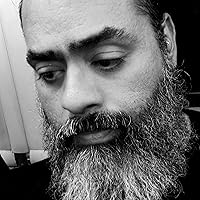
Leonardo Boff, born as Genézio Darci Boff, in Concórdia, Santa Catarina, Brazil, on the December 14, 1938. He is the grandson of Italian immigrants from the region of Veneto who came to Rio Grande do Sul, Brazil, in the final part of the nineteenth century. He received his primary and secondary education in Concórdia - Santa Catarina, Rio Negro - Paraná, and Agudos - São Paulo. He studied Philosophy in Curitiba - Paraná and Theology in Petrópolis - Rio de Janeiro. He joined the Order of the Franciscan Friars Minor in 1959 and received his doctorate in Philosophy and Theology from the University of Munich - Germany, in 1970. For 22 years he was the professor of Systematic and Ecumenical Theology at the Franciscan Theological Institute in Petrópolis. He has served as a professor of Theology and Spirituality in various centers of higher learning and universities in Brazil and the rest of the world, in addition to being a visiting professor at the universities of Lisbon (Portugal), Salamanca (Spain), Harvard (United States), Basel (Switzerland), and Heidelberg (Germany). He was present in the first reflections that sought to articulate indignance toward misery and marginalization with discourse, which later generated the Christian faith known as Liberation Theology. He has always been an ardent of the Human Rights cause, helping to formulate a new, Latin American perspective on Human Rights with, “Rights to Life and the ways to maintain them with dignity.” He has received honorary doctorates, in Politics from the University of Turin (Italy) and in Theology for the University of Lund (Sweden). He has also been honored with various awards, within Brazil and the rest of the world, for his struggles on behalf of the weak, the oppressed and marginalized, and Human Rights. From 1970 until 1985 he participated in the editorial council of Editora Vozes. During this time he participated in the coordination and publication of the collection, “Theology and Liberation” and the entire edition of the works of C. G. Jung. He was Editor-in-chief of “Revista Eclesiástica Brasileira” from 1970 to 1984, of “Revista de Cultura Vozes” from 1984 to 1992, and of “Revista Internacional Concilium” from 1970 to 1995. In 1984, he was submitted to a process by the Sacred Congregation for the Doctrine of the Faith, former Holy Office, in the Vatican. This was due to his theses linked to liberation theology exposed in his book "Church: Charism and Power. In 1985 he was condemned to “obsequious silence” and was removed from his editorial functions and suspended from religious duties. Due to international pressure on the Vatican, the decision was repealed in 1986, allowing him to return to some of his previous activities. In 1992, under renewed threats of a second punitive action by authorities in Rome, he renounced his activities as a priest and ‘promoted himself the state of laity.’ “I changed trenches to continue the same fight.” He continues as a liberation theologian, writer, professor, widely hear conference speaker in Brazil among other countries, also as an adviser of social movements of liberating popular matrix, as the Landless Movement and the Base Ecclesial Communities (CEBs), between others. In 1993 he was selected as professor of Ethics, Philosophy of Religion and Ecology at the State University of Rio de Janeiro (UERJ). On December 8, 2001 he was honored with the alternative Nobel prize, “Right Livelihood Award” in Stockholm, Sweden. He presently lives in Jardim Araras, an ecological wilderness area on the municipality of Petrópolis, Rio de Janeiro. He shares his life and dreams with the defender/educator of Human Rights from a new ecological paradigm, Marcia Maria Monteiro de Miranda. He has also become the “father by affinity” of a daughter and five sons, sharing the joys and sorrows of responsible parenthood. He lives, accompanies and recreates the unfolding of life in the “grandkids” Marina, Eduardo and Maira.
Read for school. Surprisingly really liked it. It finds such a balance between traditional and progressive that is honoring to the way the catholic & adaptive church is intended to be. Only thing I really push back on is the idea that the church as we know it today is a result of Christ’s “failure” to convert the Jews. I definitely believe the church is God’s intention but do appreciate the challenge against the circumstances under which it was established.
In a nutshell, Leonardo Boff dares to envision a church reinvented by basic communities composed of the margins of society. He sees these base communities (as he calls them) as communities liberated and quickened by the Resurrected Christ.
Instead of merely dwelling on Liberation Theology, Boff in Ecclesiogenesis shares not only what a liberated base community is, but also how such communities could revitalize the church.
Leonardo Boff was among the first wave of theologians who challenged the Roman Catholic Church by bringing to the forefront the misery of the marginalized through discourse, what we know today as Liberation Theology. Ecclesiogenesis is the outworking of Liberation Theology.
Ecclesiogenesis explores the “new” church structures arising among the marginalized in Brazil and elsewhere in Latin America. Thes new, or basic (base) communities provide us with a different perspective with which to critically examine existing church structures, be they Roman Catholic or Protestant.
According to Boff, base communities allow marginalized people to spiritually, emotionally and physically relate to each other as human—as the Church. It is through the spirit of the Resurrected Christ, not the ecclesiastical structure of the church, that they are enabled to do so. We Western Christians are apt to think of our cell groups, bible studies, home churches and the like as being the same as base communities. They are not! These church communities are directed by the church, or at the very least a pastor.
Base communities are structured by the people themselves. “Liberation” implies “to empower.” Base communities are empowered by the people themselves, not the structural church. Base communities are cohesive communities organically drawn together by their specific spiritual, emotional and physical needs. The difference is rather than the church seeing and addressing a perceived need, the church allows freedom for the people to come together on their own accord, as needed. And become the Church.
A close approximation to a base community might be an Alcoholic Anonymous meeting. Where people come together of their own accord, yet out of need.
The Western Church with her structure has marginalized thousands of people, sometime inadvertently, and sometimes purposely. Within the West we are seeing a growing number “Nones” and “deconstructing Christians.” A common strain is that with being pushed to the margins comes a feeling of being controlled, perhaps even oppressed. “Deconstructing” is liberation. It is often liberation sans community.
The question is could base communities be the answer to revitalizing – reinventing – the Western Church? The term “Church” usually limits us to thinking ecclesiastically. Could base communities be the wave of the future that re-imagines Christianity?
Ecclesiogenesis offers some insight on how base communities could very well do this for Western Christianity, just as it is doing for the Latin Christianity.
The works of Leonardo Boff, and especially Ecclesiogenesis, need to be rediscovered by the Western Church. His thinking could very well be the “salvation” of the church. ____
The book is comprised of two sections. The first four chapters provide us with an in-depth look at base communities. The last three chapters are Questio Disputata (“Questions of Dispute) within the Roman Church and look at how base communities might shed light on the dispute (Is the Roman Church the only church institutionalized by Jesus? Lay involvement with the administration of the Eucharist. And Women Priests). These I am sure will be of interest to Roman Catholics reading Boff. I do have one wish; I wish that when Orbis published the English translation they would not have used bold type for the entire text. On the plus side, the book is well-annotated and contains a useful index. ____
Leonardo Boff is among the first of the Latin American Roman Catholic theologians to theologically address the plight of the marginalized folk in Latin America. Today we know this theology as Liberation Theology.
Liberation Theology challenged the organized structure of the Roman Church. Boff was accused of doing so with his book 1983 work, Church: Charism and Power. He was ordered to appear before the Sacred Congregation for the Doctrine of Faith and was condemned to “obsequious silence” and suspended from all religious duties (1985). Due to pressure the Vatican reversed it decision in 1986, allowing Boff to resume some of his work.
Ecclesiogenesis was first published before his condemnation in 1977. The English translation was published in 1986, the year the condemnation was removed. In 2001, Boff received the prestigious Right Livelihood Award, an international prize that recognizes and supports individuals and organizations offering practical and exemplary answers to the most urgent challenges facing today’s world.
Boff's book describes the phenomenon of the base communities (or basic ecclesial communities) that formed among Roman Catholics in Central and South America in the wake of Vatican II. After placing them historically, he reflects on what their reality has to contribute to a new understanding of the Church. What results is a thoughtful Catholic reflection on ecclesiology that places a high priority on many of the things that non-Catholics (perhaps especially baptistic communities) value: the active role of the Bible to lead and speak to Christians, the ability of all Christians to hear from God through Scripture, not only the priests or leadership, the being of the church as the people of God gathered into unity through fidelity to the apostolic message rather than placed into a hierarchy of sacred power. The last three chapters reflect on some disputed questions: whether the historical Jesus intended only one form for the church; whether lay people might be able to celebrate the Lord's supper; and whether the priesthood might be opened up to include women. These final chapters are very particular in their focus but bring to light some of Boff's deepest convictions about the nature of the church.
I will have to revisit the book to get a better understanding of all that Boff is saying. I'm relatively new to Latin American liberation theology, and expect there are things whose significance I will better grasp in the future.
Although this book was written from a Catholic ethos, the author provides many beneficial insights that are generally applicable to any church "system," such as how "base communities" can bring new vitality to a larger church organization--a process which he calls "ecclesiogenesis." His chapter on women's ordination was excellent, and although I thought I had probably heard everything there was to hear on the matter, Boff's explanation on key points filled some important "gaps." Good book.
Boff's critical analysis of the catholic church allows him to provide space an interstitial space for base communities and the ministry fo the church. Boff does a wonderful job in his analysis. I found his first four chapters very important, foundational for a liberation perspective of base communities as it reinvents what it means to be the church.