

What do you think?

Driving on the Rim: A novel
The unforgettable story of a housepainter turned doctor in Big Sky country who finds himself on a darkly funny journey to salvation in this “irrepressibly comic and optimistic” novel (The New York Times Book Review) from the acclaimed author of Ninety-two in the Shade and Cloudbursts Berl Pickett is living in the small town of Livingston, Montana. The son of Pentecostal rug-shampooers, Pickett has never been the social toast of the town, but when he is accused of negligent homicide in the death of his former lover, he finds himself ostracized by his colleagues and realizes just how small his little village truly is. But fortunately for Berl, the very thing that sets him apart—his inability to follow the pack—proves to be his saving grace. With this inglorious hero, McGuane has created an unforgettable voyager.
322 pages, Kindle Edition
First published January 1, 2010
About the author
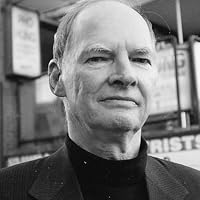
Thomas McGuane
64 books513 followersThomas Francis McGuane III is an American writer. His work includes ten novels, short fiction and screenplays, as well as three collections of essays devoted to his life in the outdoors. He is a member of the American Academy of Arts and Letters, National Cutting Horse Association Members Hall of Fame and the Fly-Fishing Hall of Fame.
McGuane's early novels were noted for a comic appreciation for the irrational core of many human endeavors, multiple takes on the counterculture of the 1960s and 1970s. His later writing reflected an increasing devotion to family relationships and relationships with the natural world in the changing American West, primarily Montana, where he has made his home since 1968, and where his last five novels and many of his essays are set. He has three children, Annie, Maggie and Thomas.
McGuane's early novels were noted for a comic appreciation for the irrational core of many human endeavors, multiple takes on the counterculture of the 1960s and 1970s. His later writing reflected an increasing devotion to family relationships and relationships with the natural world in the changing American West, primarily Montana, where he has made his home since 1968, and where his last five novels and many of his essays are set. He has three children, Annie, Maggie and Thomas.
Ratings & Reviews
Friends & Following
Create a free account to discover what your friends think of this book!
Community Reviews
Displaying 1 - 30 of 149 reviews

March 23, 2013
There's so much more going on with this novel than at first appears. The story arc is skeletal, even anecdotal, at first, but each subsequent vignette reveals a deeper understanding of the complexity of the protagonist -- a small-town Montana doctor who would be reluctant to allow such personal revelation. The reader almost has to wrestle the undercurrents from the first-person narrator. His neglectful parenting by a mother obsessed with fundamentalist Christianity and a father obsessed with his war experiences exposes Berl to a series of challenges and opportunities, especially as he is raised by alternate parents. The mistakes he makes in the current story could easily -- too easily -- be pinned on his parents and flaws of his upbringing, but Berl all too willingly shoulders the burden of blame for every mis-step, including certain events the reader quickly absolves him for. (This reader, anyway). The bonus for me in this novel was the frequent and lovely description of Montana. For the short visit to a bar in Checkerboard alone, it was well worth reading. I'm definitely now a McGuane fan. His fly fishing book, The Longest Silence is magical, and now I can't wait to discover more of his fiction.

September 5, 2013
Self-reflective novels tend to make me, well, self-reflective. I'm prone to see myself in the first-person narratives. Well-turned thoughts become Ah-Ha moments of clarity. Such as:
The story was always the same: someone would find a reason to be interested in me; then they would hit that little wall which consisted in their detecting my scrutiny of them.
And here I thought I was just socially awkward.
But, no, I was not, I decided after all, like Dr. Irving Berlin Pickett. There were similarities which I will not confess here except for the painfully obvious ones, such as:
For several days, the nicest thing I heard about myself was that I was not a flight risk.
True, Berl and I are both screw-ups. But we handle remorse in different ways. I toss and turn; Berl goes out of his way to confess. This may be why Berl gets stabbed and I do not.
Which is my way of saying this book got a little cinematic. And much of the story was implausible. Yet, I was fairly riveted.
This had notes of Jim Harrison (McGuane's (late) buddy) and Richard Russo, which when they're good, they're very enjoyable.
So I liked reading:
As insincere as my occasional episodes of falling out and jerking on the floor may have been, the approval I got as a child who had been touched by the Holy Ghost was transforming, even if my father, learning of it, called me a bullshit artist.
No, I was not 'Berl'. I dodged that character. I ultimately didn't like him, and find myself a bit of an improvement. I'm not quite Dr. Olsson, though, a truly admirable character, and maybe good enough to make this a worthwhile read. You have to like an old man, lying in bed with his bird dog, reading Montaigne.
The story was always the same: someone would find a reason to be interested in me; then they would hit that little wall which consisted in their detecting my scrutiny of them.
And here I thought I was just socially awkward.
But, no, I was not, I decided after all, like Dr. Irving Berlin Pickett. There were similarities which I will not confess here except for the painfully obvious ones, such as:
For several days, the nicest thing I heard about myself was that I was not a flight risk.
True, Berl and I are both screw-ups. But we handle remorse in different ways. I toss and turn; Berl goes out of his way to confess. This may be why Berl gets stabbed and I do not.
Which is my way of saying this book got a little cinematic. And much of the story was implausible. Yet, I was fairly riveted.
This had notes of Jim Harrison (McGuane's (late) buddy) and Richard Russo, which when they're good, they're very enjoyable.
So I liked reading:
As insincere as my occasional episodes of falling out and jerking on the floor may have been, the approval I got as a child who had been touched by the Holy Ghost was transforming, even if my father, learning of it, called me a bullshit artist.
No, I was not 'Berl'. I dodged that character. I ultimately didn't like him, and find myself a bit of an improvement. I'm not quite Dr. Olsson, though, a truly admirable character, and maybe good enough to make this a worthwhile read. You have to like an old man, lying in bed with his bird dog, reading Montaigne.

October 21, 2010
Dark, funny but also very true to life. An intimate view into the life of a man who crosses the class barrier in a small town in Montana. Dr Berl Pickett is a quirky character who despite his indiscretions and lapses of judgment is quite engaging. The reader can relate to what he says about his life and the paths taken or not taken. We see a man taken to introspection as he walks through the West of his past and the present. He succumbs to his urges and is unrepentant. He can not see the love of his life right in front of him. The irony of being accused of manslaughter for a case in which he feels no responsibilty while he harbors guilt over another incident that is completely hidden leads to another epiphany. This book reminded me of John Updike's character Rabbit and also those by Annie Proulx on small towns in the American West- but it was much better.

October 22, 2022
A meandering plot with sentence-level brilliance. McGuane overplays the quirkiness, and new characters are introduced every two or so pages. You wonder, do I need to pay attention to this character, or are they going to soon disappear forever?
The book is only 306 pages, but took me three weeks to get through. I attribute this to the deckle edges (which I hate).

November 2, 2010
Thomas McGuane's novel will make you laugh, tear-up, and nod with the, "Oh, I know someone like that character" feeling. Driving on the Rim is the story of Irving Berlin Pickett, M.D. who has his practice in a small town in Montana. He grew up with colorful characters surrounding him including his rug cleaning parents, with his holly roller, patriotic mother, to his over-sexed aunt, to women along the way that seduce him...until....something happens in his practice. The event forces Berl to review his life - take stock in the land around him and take responsibility. McGuane's use of language and description draws readers into the book before page one! After reading his short note to readers before the first chapter began, I knew I wouldn't be able to put the book down. I was lucky enough to introduce him for his book signing at the Tattered Cover and he is wonderful, funny, just like his books.

December 1, 2010
The novel takes place in thinly disguised Livingston Montana and features a doctor who was born in the town to poor parents who lived on the edges of society and came back to the town after finishing medical school. The novel includes flashbacks to his childhood with his current life which appears to revolve around alcohol, womanizing, fishing and attempts at old fashioned country doctoring that conflicts with the other doctors and owners of the medical clinic that employs him. The flashbacks to his college and childhood experiences explain his current sometimes self destructive behavior
A strength of the story is the diverse characters in the book; my favorites were the doctor who left the east and moved to Montana to become young Pickett's mentor and inspiration for Pickett to go to medical school, a woman ob doctor who appears to be Pickett's one true friend, and a sexy but manipulative bush pilot that Pickett pulls from a plane crash.
A great book that has perhaps the best last paragraph of any book I have read for a long, long time
A strength of the story is the diverse characters in the book; my favorites were the doctor who left the east and moved to Montana to become young Pickett's mentor and inspiration for Pickett to go to medical school, a woman ob doctor who appears to be Pickett's one true friend, and a sexy but manipulative bush pilot that Pickett pulls from a plane crash.
A great book that has perhaps the best last paragraph of any book I have read for a long, long time
May 24, 2011
Not my kind of book. Here we have a flawed character, a doctor who is sidelined by a malpractice sort of thing, This gives him much time on his hands to think about his multitude of problems. As a doctor he is very compassionate, professional, and caring. As a human he doesn't know how to deal with people. I found his stupid behavior exasperating and this definitely colored my thoughts about the book. I finished it, but it was a struggle.
High points? I enjoyed the lovingly composed descriptions of the Montana plains and mountains. I enjoyed the characters that make up the town. McGuane is an observer of people.
High points? I enjoyed the lovingly composed descriptions of the Montana plains and mountains. I enjoyed the characters that make up the town. McGuane is an observer of people.

November 26, 2011
I debated between a 3 star and a 4 star rating on this one, but ultimately decided to be generous. The tipping point is probably this quip near the middle of the book: "Nowadays, experiences came at me like bugs hitting the windshield. I wasn't sure I could keep up. Of all the mysteries of life, nothing was more mysterious than the return of happiness. I was willing to wait."
As we follow Pickett in this not always chronological episodic novel that holds together only a bit tighter than a series of short stories, the question of happiness and guilt and the meaning of life are always bubbling just below the surface. I found Pickett to be reminiscent of a John Irving character (if just a touch too over the top..Irving would have been more subtle about the character's obtuseness, rather than emphasizing at each opportune moment). He was funny, loveable, and quirky, if slightly autistic in his inability to gauge other's potential reactions.
There weren't any surprises here; Jinx's affection for him and Jocelyn's betrayal were understood by the reader early in the book, but it amazed me that I was not annoyed by Pickett's inability to grasp this situation in much the same way that he was unable to disentangle his guilt (potentially deserved) over Cody's suicide with his innocence in Tessa's death. Overall there were a lot of very well paired contradictions that Pickett works to cohere in his own life.
I was not pleased with his ultimate turn toward religion about 2/3rds of the way through the book. Understandably, the death of his parents (mother especially) and the subsequent accusation of negligent homicide cause Pickett to re-examine his beliefs, BUT I did not expect him to convert. Dr. Olsson as a surrogate father and atheist would ultimately (in my opinion) carry more weight than the guilt over having committed his mother to a few stints in the mental hospital. I was displeased that he was arguing for religion in the last chapter; Jinx should not be calling him a momma's boy as this does not cohere with the rest of the novel.
Overall it was a good read; at times a bit stark with short sentences and harsh language, but I thought that was in keeping with Pickett's character.
As we follow Pickett in this not always chronological episodic novel that holds together only a bit tighter than a series of short stories, the question of happiness and guilt and the meaning of life are always bubbling just below the surface. I found Pickett to be reminiscent of a John Irving character (if just a touch too over the top..Irving would have been more subtle about the character's obtuseness, rather than emphasizing at each opportune moment). He was funny, loveable, and quirky, if slightly autistic in his inability to gauge other's potential reactions.
There weren't any surprises here; Jinx's affection for him and Jocelyn's betrayal were understood by the reader early in the book, but it amazed me that I was not annoyed by Pickett's inability to grasp this situation in much the same way that he was unable to disentangle his guilt (potentially deserved) over Cody's suicide with his innocence in Tessa's death. Overall there were a lot of very well paired contradictions that Pickett works to cohere in his own life.
I was not pleased with his ultimate turn toward religion about 2/3rds of the way through the book. Understandably, the death of his parents (mother especially) and the subsequent accusation of negligent homicide cause Pickett to re-examine his beliefs, BUT I did not expect him to convert. Dr. Olsson as a surrogate father and atheist would ultimately (in my opinion) carry more weight than the guilt over having committed his mother to a few stints in the mental hospital. I was displeased that he was arguing for religion in the last chapter; Jinx should not be calling him a momma's boy as this does not cohere with the rest of the novel.
Overall it was a good read; at times a bit stark with short sentences and harsh language, but I thought that was in keeping with Pickett's character.

November 15, 2011
I'd read a couple of Mcguane short stories and absolutely loved them before deciding to try one of his novels. I was pretty disappointed. Driving on the Rim takes place in a small Montana town. Like Richard Russo's Empire Falls, the town is full of a cast of intriguing small town characters: simple folk, lawyers, cowboys, doctors. And like Russo, I found that Mcguane was just a little too impressed all the details of the world he created. Sure he is a phenomenal writer, but I don't need full paragraphs of quirky and ironic background information on characters that will never show up again. The book is full of such characters. I'm sure there is a larger, deeper point to their inclusion, and to the myriad details the reader is subjected to, but I personally missed it. In designing such a large quilt Mcguane seems to have spread it too thin, so that the point of it all is kind of lost. The main character, a doctor, is a kind of anti-hero, a bumbling, awkward, space cadet who seems to have made it in spite of himself. But because of his distant nature, the impact of the events that befall him lack dramatic thrust. He has a hard time making sense of them, but then so did I. I'll definitely give Mcguane another shot, but maybe with one of his older works.

June 11, 2011
I heard that in years past, pigs were drawn into the slaughterhouses of the Chicago stockyards by hooks attached to their noses. A pig is a smart animal, but this placed the decision elsewhere. It was in this spirit I headed once more to White Sulfur Springs to pay a call on Jocelyn Boyce. (Ch. 14)
also
Napoleon said that if it weren't for religion the poor would kill the rich. (Ch. 15)
The library's Overdrive system up and deleted Driving on the Rim right out from under me upon the due date, or rather, made me delete it, as if it was teaching me a lesson. I had 4 more chapters to go but I'm OK with letting go at this late point. I felt the protagonist, approaching a trial for an event I kinda don't remember from the beginning of the book, should have likewise let it go and just enjoyed the sweet funny moments as they happened until they didn't happen anymore. Similarly, I loved almost every sentence of the book while feeling ambivalent about the coalescence. I'm thinking that's the theme.
also
Napoleon said that if it weren't for religion the poor would kill the rich. (Ch. 15)
The library's Overdrive system up and deleted Driving on the Rim right out from under me upon the due date, or rather, made me delete it, as if it was teaching me a lesson. I had 4 more chapters to go but I'm OK with letting go at this late point. I felt the protagonist, approaching a trial for an event I kinda don't remember from the beginning of the book, should have likewise let it go and just enjoyed the sweet funny moments as they happened until they didn't happen anymore. Similarly, I loved almost every sentence of the book while feeling ambivalent about the coalescence. I'm thinking that's the theme.

January 21, 2011
I think that Thomas McGuane is an indisputably talented writer. He has a unique authorial voice and can write crisp sentences that seem to possess fundamental truths. Having said that, I simply didn’t enjoy “Driving on the Rim.” The Dickensian catalogue of characters and narrative wordplay were fun to juggle for a while; however, the novel felt heavy and overstuffed. Now, let me say, I don’t mind working through a novel; however, I don’t want a novel to feel like work.
“Driving” will definitely appeal to a great many people. Perhaps if I’d read it at another time, I would’ve found joy and fulfillment within its pages. Unfortunately, for me, it was an uneven tapestry of wonderful moments bogged down by dramatis personae and purplish prose.
“Driving” will definitely appeal to a great many people. Perhaps if I’d read it at another time, I would’ve found joy and fulfillment within its pages. Unfortunately, for me, it was an uneven tapestry of wonderful moments bogged down by dramatis personae and purplish prose.
October 31, 2011
McGuane is such an awesome writer! I love how his randomness just pulls things together: it is, after all, the way we interact with the world, and the culmination of detail makes up a more robust reality than the usual contrived literary strings of articulation. I was saving this for a trip we are starting tomorrow, but couldn't resist starting it, and now am already sucked into the character and craft. Hope I can put it down long enough to day to pack.
...Later: finished it, reluctantly. Such a great author, and a good example of his craft. I cannot recommend McGuane enough. I gave this book to our hosts (in Chile, the trip we took) as a parting gift, and I wish I hadn't as I would like to read it again right now.
...Later: finished it, reluctantly. Such a great author, and a good example of his craft. I cannot recommend McGuane enough. I gave this book to our hosts (in Chile, the trip we took) as a parting gift, and I wish I hadn't as I would like to read it again right now.

June 27, 2024
I really wanted to like this book. McGuane is a talented writer and has many interesting observations about people, religion, relationships, but the story was goofy and strangely structured. The plot, such as it is, centers on a single, middle aged doctor who is the narrator. While the plot meanders along it is constantly interrupted by the character reminiscing about different aspects of his life. But these are not in chronological order and often occur right in the middle of a plot line. So I found it difficult to keep track of the various characters.
My other gripe is how the main character describes himself as a socially awkward, goofy looking guy but somehow is able to bed almost every woman he comes into contact with. He also somehow gloms on to valuable adult mentors who provide much needed guidance and counsel. If only life was like that. Lastly, what a predictable ending. The reader can see it coming from miles away.
My other gripe is how the main character describes himself as a socially awkward, goofy looking guy but somehow is able to bed almost every woman he comes into contact with. He also somehow gloms on to valuable adult mentors who provide much needed guidance and counsel. If only life was like that. Lastly, what a predictable ending. The reader can see it coming from miles away.

Read
June 30, 2019I read this book.

November 20, 2024
I liked the writer better than the story. Considered a 4 rating, because I truly enjoyed McGuane’s turn of phrase. I didn’t entirely connect with the main character and struggled a bit to stay interested, but the writing pulled me through. Looking forward to reading another McGuane!
May 14, 2026
Socially stunted Montana doctor falls for all the wrong women - we often fail to see what's right in front of us

January 6, 2011
I loooved this book. It was thoroughly entertaining. It was in turns darkly hilarious, insightful, cringe-inducing, profound and utterly real. I say the last especially as McGuane makes a note in his foreword of saying that this is a work of fiction and as such it should be taken with a grain of salt. Truth, it has been said, is stranger than fiction and McGuane comes so very close to the truth that it is a little unnerving. He has drawn a character in Berl Pickett that is full of people I know. He is immature, surprisingly self referential, often obtuse, just plain dumb, and more than a little "off." He is so flawed that he is real. But he is also honest and caring in his own way and that is endearing.
McGuane writes beautifully too. I loved the backdrop of Big Sky country and was a little surprised at how much I enjoyed the testosterone laden subjects of hunting and camping. The prose has a lyrical quality that carries you along even though it jumps around with Berl's stream of consciousness as he wades through the mess that is his life. I felt like I was highlighting quotes every other page, but here were some of the pithy lines that stood out for me:
"It is a truth universally acknowledged that a single woman in possession of a trailer has a gun"
"Prolonged bad weather aroused distaste for one's fellows, but life had taught me that the quality of light could enlarge the heart."
"...you hold a square foot of air between your hands, and in that piece of air are radio waves, GPS and television signals, microwaves, light waves, soundwaves. And the human spirit can't exist because you can't see it?"
"you go around like a cat ruining a blanket trying to find a place to lie down."
"...being an imbecile is a tremendously effective way of getting along in America; if it had been satisfying I would have stuck to it."
"They both beamed at me with the intense curiosity which we save for people we suspect might not be stable."
I know these are all over the place and I am not doing this book justice with this random smattering, but this book was great. I do believe it has something for everyone.
McGuane writes beautifully too. I loved the backdrop of Big Sky country and was a little surprised at how much I enjoyed the testosterone laden subjects of hunting and camping. The prose has a lyrical quality that carries you along even though it jumps around with Berl's stream of consciousness as he wades through the mess that is his life. I felt like I was highlighting quotes every other page, but here were some of the pithy lines that stood out for me:
"It is a truth universally acknowledged that a single woman in possession of a trailer has a gun"
"Prolonged bad weather aroused distaste for one's fellows, but life had taught me that the quality of light could enlarge the heart."
"...you hold a square foot of air between your hands, and in that piece of air are radio waves, GPS and television signals, microwaves, light waves, soundwaves. And the human spirit can't exist because you can't see it?"
"you go around like a cat ruining a blanket trying to find a place to lie down."
"...being an imbecile is a tremendously effective way of getting along in America; if it had been satisfying I would have stuck to it."
"They both beamed at me with the intense curiosity which we save for people we suspect might not be stable."
I know these are all over the place and I am not doing this book justice with this random smattering, but this book was great. I do believe it has something for everyone.
September 4, 2024
Wild characters in a western (Montana) setting! An unlikely protagonist takes you for a strange ride of turbulence and triumph, like drunk driving an 88 Oldsmobile. McGuane is an all-time great and few authors are better at assigning First Names for their characters.

March 26, 2022
This being only my eighth of a string of books by Thomas McGuane, am prone to snapping them up without hesitation; like Russo, Franzen, Updike, Ford, Proulx, and others, embracing their narratives for styles that are rewardingly immersive and reassuringly familiar. In a previous review of some length for "Gallatin Canyon," his mien employs, as it does here, indigenous off-beat types (misfits) who lend some color to his monochromatic free-range stomping grounds. He knows the dried-up, used-up, territorial expanses of Montana and his characters are veritable extensions of its wind-swept, wheel-rutted, weed-entangled topography. His prose, at times, reads like an Audubonesque field guide; native grasses, wildflowers, trees, cover for game birds and lessor, assorted sparrows, all kinds of birds and his favorite; the raptors. Similar to others in his stories, the protagonist is well-versed in a loner's pursuit of nature: fly fishing for cutthroat trout; wing-shooting partridge with a much-loved shotgun; the choreographed beauty of a gun dog in the field; ranching and horsemanship. And, being a doctor, an appreciation for French cooking and fine wine; fashion (or its opposite) in manner and appearance, both being worthy of note--the guy sees everything! he pays close attention; the esoterica of ER medicine and the practice of country doctoring. Yet for all his acquired knowledge and observational skill Pickitt is hard-pressed to relate with people, or to seek out their social circles; particularly where the nuances of female companionship are concerned. Relationships are of a fleeting, intangible nature--for whatever self-deprecating reason, and there is no shortage of them--usually ending messily if not prematurely; succumbing easily to temptation and manipulation by partners, none the wiser for his being used. One theme that resonates is McGuane's fear of loneliness. Not so much mortality. Or even death. The protagonist, Berl Pickett, M.D. is a small-town GP who keeps to himself mostly except for a fellow female practitioner and colleague at the clinic, Jinx Mayhall, who being like-minded as an avid hiker and birder, and single, is his most-intimate friend. He cherishes their platonic relationship enough to not muck it up with the momentary promise of sex. The only other thing in his life--a love-object, actually--is a money-pit of a car; a ruby red Oldsmobile 88, well on, if not past, its serviceable lifespan. And which he curiously suspects has a sudden spait of mechanical problems once his long overdue sex life is revived with a female crop-spraying pilot named Jocelyn. Her plane crashes (which is how they meet, he drags her free from the wreckage before it burns, saving her life) so she's attended to for the duration in a hospital some 30 miles away, until her release, becoming then a mysterious, exploitive, outlawish love-interest. Despite his infatuation, the impressionable doctor has doubts. He has issues. Lots of them. Unresolved issues about his roots in faith and spirituality that harken back to his mother who is institutionalized for her unstable manic behavior; a religilous manifestation of her all-consuming Pentecostal zealotry. Growing up, his father dwells obsessively in reliving the Battle of the Bulge, endlessly recounting war stories about fearsome German tanks with his buddies, seeing them restored in military museums, until the young Berl is taken aside and informed that his father went AWOL. A deserter. Fleeing from that pivotal battle. Moreover, in conflict with the past, he treats, Tessa, the previous love of his younger life who, since having squandered her good looks away and morphed to desperate ends, has stuck a serrated bread knife into her abdomen. She is "coincidentally" admitted during his ER shift on his 40th birthday, only to die from complications of a rampant antibiotic-resistant infection four days later. Pickett is subsequently threatened with charges of malpractice and negligent, if not intentional, homicide by an alpha male on the Board of Directors at the clinic who has connections with the Prosecuting Attorney's office and Judge, and a personal axe to grind (read that: marital issues stemming from flirtations and possibly worse between the doctor and his wife). Pickitt's conscience is most haunted, however, by the long-term physical abuse (in which he is powerless to interfere) that leads to murder of a young, needful girl who is his patient where upon arriving at the scene he convinces her malevolent, boyish husband to shoot himself. Even going so far as giving him professional guidance; precisely the most lethal trajectory for the bullet's path (putting the revolver in his mouth and pointing straight up). Having such a hand in a murder/suicide goes somewhat against the hippocratic oath of "doing no harm," and it's his secret and unbearable burden of guilt until he finally confesses all to the young perpetrator's mother; the very woman who, unknown to him, was also a close confidant of Tessa before stabbing herself then fearing she was done away with on his operating table. Not to divulge a spoiler, suffice to say Hell hath no fury like what she has in store for him. So the doctor would outwardly (an inwardly to himself) seem to fit the prescription for an anti-hero. A pariah in his own town, Pickett is presumed to be summarily guilty, or suspected at least of being culpable. Via the all-too familiar defamatory cancel culture--before they called it that--he is declared persona non grata. By those he grew up with, his neighbors, patients and colleagues. And damn few friends to side with him when he needs them most. Fewer still when the lawyer defending him dies just before filing legal motions from a heart attack. In short, this is everything that readers of McGuane have come to expect: a good person who we can identify with, at the center of a tragically-tinged story that is at times darkly humorous, who doesn't take himself or the world seriously and makes bad decisions. Then marshalling what ever measure of character is held in reserve--and any other credit still left in good standing--to settle his fate. Despite the drama and seemingly complicated plot-line, the narrative is tightly focused and paces itself well-enough holding out enough mystery to the last for an ending that doesn't feel rushed or forced. Or having to necessarily tie everything up so neatly (falsely) by redemptive contrivances. Hate that when that happens. Frankly, am surprised this gifted author for his prolific outpouring of novels has not won more awards. He never fails to connect in ways that are timeless, articulate, and meaningful. And, most of all, entertaining--especially his use of dialogue (the essence of a screenplay writer)--which is McGuane's stated goal above all else. So, true to form, the next one of his books I find on the store shelf--new, used, abused, full-price, half-price, whatever--I swear, it's mine. I've got dibs.

December 6, 2010
Just read this latest by a guy who was one of my favorite authors when he was young and crazed. I think he's been more hit and miss for the last twenty years or so, now that he's settled and sober. It's kind of a rock and roll career arc more than a novelist's.
Driving on the Rim is my favorite since Nothing But Blue Skies. Another Montanan lead character who's having a hard time keeping it together, this time a doctor whose nutso family - Christian itinerant carpet shampooers - and hardscrabble youth have planted a seed of nonconformism in him that makes it hard to play ball with society just when he needs to most. Plus he's your basic doomed romantic. In other words a typical McGuane anti-hero.
I did feel like the story wandered more than it needed to, as if he didn't quite know how to get where he was going. I think he writes longer as he gets older, but not necessarily better. 92 in the Shade was just about perfect. He still writes gorgeously about the natural world, and appealingly about human foible.
If you like McGuane, check out Jamie Harrison's Blue Deer mysteries, set in pretty much the same idiosyncratic Montana he writes about.
Driving on the Rim is my favorite since Nothing But Blue Skies. Another Montanan lead character who's having a hard time keeping it together, this time a doctor whose nutso family - Christian itinerant carpet shampooers - and hardscrabble youth have planted a seed of nonconformism in him that makes it hard to play ball with society just when he needs to most. Plus he's your basic doomed romantic. In other words a typical McGuane anti-hero.
I did feel like the story wandered more than it needed to, as if he didn't quite know how to get where he was going. I think he writes longer as he gets older, but not necessarily better. 92 in the Shade was just about perfect. He still writes gorgeously about the natural world, and appealingly about human foible.
If you like McGuane, check out Jamie Harrison's Blue Deer mysteries, set in pretty much the same idiosyncratic Montana he writes about.

October 23, 2010
Driving on the Rim is a character-driven novel that encompasses a full life: the life of Montana doctor, Irving Berlin Pickett. McGuane has artfully crafted a collage of a plot, rendered along an unpaved road, complete with a set of unique characters who are viewed through the eyes and mind of a narrator as he matures, albeit very, very slowly. We are introduced to him as the son of Christian fundamentalist traveling salespeople; he meets a doctor who teaches him how to fish, track, and hunt and in the process inspires him to follow in the vocation of medicine. Returned from medical school to his home state, Pickett finds himself a general practitioner and an impulsive nitwit who judges character a bit weakly. He survives his professional and personal trials, however, and we leave him on the cusp of retirement, knowing a great deal more about himself and the human condition; an actualized life set like a jewel within the beautiful and eternal landscape of the American west.

December 9, 2010
Incisive and droll, this picaresque comedy delighted the critics with its exceptional prose, quirky, well-developed characters, and sharp insights into modern-day life. McGuane may infuse this serious exploration of contemporary moral questions with witty observations and deadpan one-liners, but as a mature and confident novelist, he is careful not to dull the edges of his inquiries. A few critics had reservations, including a meandering plot and some discontinuities in characters and timelines. However, all agreed that these minor complaints paled in comparison to McGuane's many gifts. Powerful and entertaining, Driving on the Rim is, according to most critics, "McGuane at his best" (Boston Globe). This is an excerpt from a review published in Bookmarks magazine.
May 23, 2021
I am a 60-year subscriber to the New Yorker, with an ongoing focus on its fiction, for which the magazine is the #1 prestigious (and remunerated) fiction showcase. Where a short story attracts me, I turn to the author’s fiction, an oblique, backwards route to important fiction. From an author’s perspective, as long as I read the novel, I suppose it doesn’t matter how I got there. Instead, it can be regarded as a compliment that the story propelled me to the book.
My enthusiasm for Thomas McGuane’s May 2021 New Yorker short story titled “Balloons” led me to decide to read a novel. I found McGuane had written ten novels. Selecting which one to read was simplified in that on the Overdrive library website, there are just two McGuane books in my preferred ebook format available. So it was a matter of choosing A or B. Driving on the Rim won the flip of the coin.
I found that elements of Ballons overlapped Driving and the reverse. Some metaphors appeared in both cases--apt ones and a quality point of view worth repeating. “Sea of Excrement”, for example. Duplicates in works separated by more than ten years are surprising. It makes me wonder to what extent repeated bon mots are peppered through his ten books.
Irony is a dominant element in both short story and novel. That is not a negative. I love irony. Unfortunately, in the current era of direct blunt say it as it is writing, the kind of subtle indirection that irony consists of is not in style—the days of the great ironists have passed. I think of Graham Greene, Evelyn Waugh and especially Somerset Maughan, in my view, the greatest ironist of all. However, McGuane is no slouch. The final sentence of Balloons delivers an ironic event that Maughan would have admired. For that matter, Driving also provides an end-of-book deft ironic touch of the “I never saw that coming” character.
I have yet to show my hand in terms of what I thought of Driving. I suppose my four stars give away my assessment. Yes, I liked it; I liked it a lot. However, there are generation and generational factors at play. I am a senior male who matured (the word flatters me) in Marilyn Monroe’s breast fixation of the 1950 and 1960s. Most of the ethos is now suppressed, but residues remain uneradicated. That is the time frame in which McGuane and I were incubated, the period of the “male gaze” writ large, in which females were an unknowable species, ranked in relation to physical appearance.
Driving is an autobiographical account of the protagonist L.B Picket’s relationship with a series of women. The trope of the naive, sexually inexperienced male introduced to its delights by ravishing sexually aggressive women. is repeated about a series of women throughout the book. It projects a male sexual fantasy. No doubt Freud had a term for the phenomenon. The theme permeates both Ballon and Driving. As the years went by, one anticipated the author would have left behind the 1950s trope, but there we are.
What I did like about Driving was the writing. The pages live. There are engaging terms of phrase, insights, illuminating descriptions of characters, landscape, and relationships. McGuane kept me entertained.
A problem flows from the author’s propensity to entertain. We are presented with episodes associated with one woman, then another and another, each of them intriguing in their way. However, I became confused, attempting to recall which one was and what happened concerning her. The connector to the individual episodes was the doctor protagonist. However, it became difficult to relate his personality to the individual female episodes.
We prefer books that are the sum of their parts. In Driving, the parts struggled to thicken to a whole.
I reference above my propensity to migrate from New Yorker short story to the author’s novels, a process that led me to read Drive. In this instance -- for the first time -- my positive experience with the book has led me back to the author’s short stories. I find that McGuane is a New Yorker staple, having published his stores over decades. I read two of them: Wide Spot, published in 2019 and Papaya, in 2016. Each is fabulous. It is not surprising that the New Yorker has printed so many of them over an extended time frame.
Not that I have three of them under my belt, I have a sense of pattern. The stories begin slowly at a leisurely pace, sketching in character and place ambience. The reader has no intention of where the story is going. “Short,” as in a short story, is a misnomer. Instead, there is an unhurried openness in the narrative. There are fewer pages than in a novel but no sense of incompleteness.
McGuane is over 80. His writing is hopelessly out of style. The protagonist in Driving is a kind of Marlboro Man in disguise as a doctor. To the current generation, the tone of Driving would be scathingly regarded as a misogynist. In terms of women as objects, McGuane’s peers are Saul Bellows and Phillip Roth. The focus on irony, as mentioned above, is rooted in an earlier Sommerset Maughan generation.
It seems that McGuane’s time has come and gone. Yet, the New Yorker published an excellent short story this month. In addition, an anthology of short stories will be published this fall. Commenting on McGuane’s work in this review is presumptions in the extreme. The man has written ten novels, countless short stories, film scores and documentaries, and I see fit to comment based on one book and a handful of short stories — mea culpa. However, the reality is that I liked what I read, and I intend to read another novel and look forward to the next short story. Will McGuan’s work be read ten and fifty years from now. Of course, I don’t know, but I would not rule it out.
My enthusiasm for Thomas McGuane’s May 2021 New Yorker short story titled “Balloons” led me to decide to read a novel. I found McGuane had written ten novels. Selecting which one to read was simplified in that on the Overdrive library website, there are just two McGuane books in my preferred ebook format available. So it was a matter of choosing A or B. Driving on the Rim won the flip of the coin.
I found that elements of Ballons overlapped Driving and the reverse. Some metaphors appeared in both cases--apt ones and a quality point of view worth repeating. “Sea of Excrement”, for example. Duplicates in works separated by more than ten years are surprising. It makes me wonder to what extent repeated bon mots are peppered through his ten books.
Irony is a dominant element in both short story and novel. That is not a negative. I love irony. Unfortunately, in the current era of direct blunt say it as it is writing, the kind of subtle indirection that irony consists of is not in style—the days of the great ironists have passed. I think of Graham Greene, Evelyn Waugh and especially Somerset Maughan, in my view, the greatest ironist of all. However, McGuane is no slouch. The final sentence of Balloons delivers an ironic event that Maughan would have admired. For that matter, Driving also provides an end-of-book deft ironic touch of the “I never saw that coming” character.
I have yet to show my hand in terms of what I thought of Driving. I suppose my four stars give away my assessment. Yes, I liked it; I liked it a lot. However, there are generation and generational factors at play. I am a senior male who matured (the word flatters me) in Marilyn Monroe’s breast fixation of the 1950 and 1960s. Most of the ethos is now suppressed, but residues remain uneradicated. That is the time frame in which McGuane and I were incubated, the period of the “male gaze” writ large, in which females were an unknowable species, ranked in relation to physical appearance.
Driving is an autobiographical account of the protagonist L.B Picket’s relationship with a series of women. The trope of the naive, sexually inexperienced male introduced to its delights by ravishing sexually aggressive women. is repeated about a series of women throughout the book. It projects a male sexual fantasy. No doubt Freud had a term for the phenomenon. The theme permeates both Ballon and Driving. As the years went by, one anticipated the author would have left behind the 1950s trope, but there we are.
What I did like about Driving was the writing. The pages live. There are engaging terms of phrase, insights, illuminating descriptions of characters, landscape, and relationships. McGuane kept me entertained.
A problem flows from the author’s propensity to entertain. We are presented with episodes associated with one woman, then another and another, each of them intriguing in their way. However, I became confused, attempting to recall which one was and what happened concerning her. The connector to the individual episodes was the doctor protagonist. However, it became difficult to relate his personality to the individual female episodes.
We prefer books that are the sum of their parts. In Driving, the parts struggled to thicken to a whole.
I reference above my propensity to migrate from New Yorker short story to the author’s novels, a process that led me to read Drive. In this instance -- for the first time -- my positive experience with the book has led me back to the author’s short stories. I find that McGuane is a New Yorker staple, having published his stores over decades. I read two of them: Wide Spot, published in 2019 and Papaya, in 2016. Each is fabulous. It is not surprising that the New Yorker has printed so many of them over an extended time frame.
Not that I have three of them under my belt, I have a sense of pattern. The stories begin slowly at a leisurely pace, sketching in character and place ambience. The reader has no intention of where the story is going. “Short,” as in a short story, is a misnomer. Instead, there is an unhurried openness in the narrative. There are fewer pages than in a novel but no sense of incompleteness.
McGuane is over 80. His writing is hopelessly out of style. The protagonist in Driving is a kind of Marlboro Man in disguise as a doctor. To the current generation, the tone of Driving would be scathingly regarded as a misogynist. In terms of women as objects, McGuane’s peers are Saul Bellows and Phillip Roth. The focus on irony, as mentioned above, is rooted in an earlier Sommerset Maughan generation.
It seems that McGuane’s time has come and gone. Yet, the New Yorker published an excellent short story this month. In addition, an anthology of short stories will be published this fall. Commenting on McGuane’s work in this review is presumptions in the extreme. The man has written ten novels, countless short stories, film scores and documentaries, and I see fit to comment based on one book and a handful of short stories — mea culpa. However, the reality is that I liked what I read, and I intend to read another novel and look forward to the next short story. Will McGuan’s work be read ten and fifty years from now. Of course, I don’t know, but I would not rule it out.

January 18, 2014
After 9 chapters of this book , I have given up on it. This story is about Irvin Berlin Pickett, who is a physician in a small community in Wyoming. He is emotionally immature , has no morals, and makes poor choices. He goes from one chosen misfortune to another. Occasionally the author writes a line or two that give pause and says to me...this author can write. But for me, this story needs to be more interesting and better organized. This author introduces too many characters and their story goes no where. To me it seems a rambling mess !
March 26, 2021
Thomas McGuane has been on my radar for at least 40 years, and yet Driving on the Rim (his 10th and currently last novel) has been my first foray into his oeuvre. I find it troubling that my experience in reading this very good novel is that I’m aware of the author outside the novel. My various impressions of McGuane over the years have largely been negative, and while I “know” he’s a writer’s writer, I also have “impressions” he is or has been a hard party-er, a faux backwoods-man, a prankster, and a scenarist of casual and sardonic violence.
So, how do I give this novel a fair shake, counter a lifetime’s impressions, many probably unfounded, that have somehow formed in me an abiding sense that there was/is something unsavory about McGuane? There were some mental adjustments: I saw something providential in picking up this book out-of-the-blue from a neighbor’s front yard library box, and I gave special significance to this novel being his last (2010), thus making it possible to see it as a consolatory summing up, as with the common perception of Shakespeare’s Tempest. I’m probably alone in erecting this extra mental scaffolding, conceiving the novel as an apologia. …But the good news is—and this will come as a great relief to Mr. McGuane—that Driving to the Rim is a satisfying novel from first to last, and the author’s sins are shriven.
Driving on the Rim belongs to that great tradition of the feckless, errant white baby-boomer male, which in my reading experience began with Walker Percy’s The Movie Goer. But while Percy’s Binx is born into a settled and comfortable life, McGuane’s protagonist, Irving Berlin (Berl) Pickett, is more in the Wallace Stegner mold, a character rising out of a chaotic childhood of barely-making-it parents, each with their own particular debilities. From the first, Berl is telling the reader what a goober he is, and it’s a disarming gambit, because as a feckless, errant white baby-boomer male, I can identify with a man who’s naïve and socially maladroit, either too earnest or too careless.
McGuane creates a largely attractive character in Berl Pickett, a man who in 2001 or 2002 is looking back on 50-plus years of life and summing up (and then five or six years later providing an epilogue that elides the inevitable resolution of the trajectory of his life). Berl Pickett is a general MD at a medical clinic in a small Montana town, a career that he likes best because he has reason to be with people and can do them good. In his early years, he was content to be a house painter, and later, when he’s sidelined from working as a doctor, he attempts, with miserable and comic results, to attain that simplicity again.
Berl Pickett’s relations with six women (seven, if you count his God-mad mother) define his life. There’s his aunt, who when he’s a young teen introduces him to some satisfying sex; his Native-American high school sweetheart; Tessa, a slightly older woman who carries a torch for Berl long after they’ve parted ways; Clarice, a young battered wife, whose husband Cody he urges to suicide; Jocelyn, the hotshot pilot unable to speak the truth; and Jinx, a fellow doctor at the clinic, one of only two doctors who stand beside him when he’s charged with negligent treatment in Tessa’s stabbing death.
Berl’s life is a mix of reveries and regrets, of careless choices driven by positive impulses. What anchors Berl is his practice, being with people, caring for them, and this entrée into humanity makes him compassionate and sometimes stupid, though his good nature is inclined that way from the first. When Tessa and Clarice’s mother-in-law do wrong to Berl, he has no hesitation in dismissing anger and recrimination. The earnest side of Berl’s nature makes him take on more guilt than is his share, and this self-flagellation, however lowkey, makes him doubt his worth.
McGuane has Berl narrate this story in a winning fashion, and there are many, many vignettes of his family life, always alternating with moments in the present, when these too are interrupted by vignettes about the various “characters” in town with whom Berl is familiar, and which lend to the novel a particularizing charm and Chekhovian humanity. The brevity of these scenes allows McGuane to shine at the sentence level, creating striking images with well-turned, often droll phrases. While the novel is full of divagations, it ultimately achieves its climax when intersecting lines about Berl’s “malpractice” and his relations with the manipulative Jocelyn appear to overwhelm him. Even as these crises peter out anticlimactically, Berl becomes aware of the real crisis that he’s denied for too long: Jinx is about to leave town because he’s too much the goober to recognize her charms.
Summing up, I find McGuane has presented a good case for the existence of well-meaning, easily distracted/confused goobers like Berl Pickett, who is also in my imagination not unlike the way McGuane would like us to perceive him.
So, how do I give this novel a fair shake, counter a lifetime’s impressions, many probably unfounded, that have somehow formed in me an abiding sense that there was/is something unsavory about McGuane? There were some mental adjustments: I saw something providential in picking up this book out-of-the-blue from a neighbor’s front yard library box, and I gave special significance to this novel being his last (2010), thus making it possible to see it as a consolatory summing up, as with the common perception of Shakespeare’s Tempest. I’m probably alone in erecting this extra mental scaffolding, conceiving the novel as an apologia. …But the good news is—and this will come as a great relief to Mr. McGuane—that Driving to the Rim is a satisfying novel from first to last, and the author’s sins are shriven.
Driving on the Rim belongs to that great tradition of the feckless, errant white baby-boomer male, which in my reading experience began with Walker Percy’s The Movie Goer. But while Percy’s Binx is born into a settled and comfortable life, McGuane’s protagonist, Irving Berlin (Berl) Pickett, is more in the Wallace Stegner mold, a character rising out of a chaotic childhood of barely-making-it parents, each with their own particular debilities. From the first, Berl is telling the reader what a goober he is, and it’s a disarming gambit, because as a feckless, errant white baby-boomer male, I can identify with a man who’s naïve and socially maladroit, either too earnest or too careless.
McGuane creates a largely attractive character in Berl Pickett, a man who in 2001 or 2002 is looking back on 50-plus years of life and summing up (and then five or six years later providing an epilogue that elides the inevitable resolution of the trajectory of his life). Berl Pickett is a general MD at a medical clinic in a small Montana town, a career that he likes best because he has reason to be with people and can do them good. In his early years, he was content to be a house painter, and later, when he’s sidelined from working as a doctor, he attempts, with miserable and comic results, to attain that simplicity again.
Berl Pickett’s relations with six women (seven, if you count his God-mad mother) define his life. There’s his aunt, who when he’s a young teen introduces him to some satisfying sex; his Native-American high school sweetheart; Tessa, a slightly older woman who carries a torch for Berl long after they’ve parted ways; Clarice, a young battered wife, whose husband Cody he urges to suicide; Jocelyn, the hotshot pilot unable to speak the truth; and Jinx, a fellow doctor at the clinic, one of only two doctors who stand beside him when he’s charged with negligent treatment in Tessa’s stabbing death.
Berl’s life is a mix of reveries and regrets, of careless choices driven by positive impulses. What anchors Berl is his practice, being with people, caring for them, and this entrée into humanity makes him compassionate and sometimes stupid, though his good nature is inclined that way from the first. When Tessa and Clarice’s mother-in-law do wrong to Berl, he has no hesitation in dismissing anger and recrimination. The earnest side of Berl’s nature makes him take on more guilt than is his share, and this self-flagellation, however lowkey, makes him doubt his worth.
McGuane has Berl narrate this story in a winning fashion, and there are many, many vignettes of his family life, always alternating with moments in the present, when these too are interrupted by vignettes about the various “characters” in town with whom Berl is familiar, and which lend to the novel a particularizing charm and Chekhovian humanity. The brevity of these scenes allows McGuane to shine at the sentence level, creating striking images with well-turned, often droll phrases. While the novel is full of divagations, it ultimately achieves its climax when intersecting lines about Berl’s “malpractice” and his relations with the manipulative Jocelyn appear to overwhelm him. Even as these crises peter out anticlimactically, Berl becomes aware of the real crisis that he’s denied for too long: Jinx is about to leave town because he’s too much the goober to recognize her charms.
Summing up, I find McGuane has presented a good case for the existence of well-meaning, easily distracted/confused goobers like Berl Pickett, who is also in my imagination not unlike the way McGuane would like us to perceive him.

April 26, 2025
Ambrose Bierce famously said of one of his novels, if he'd had more time, he would have turned it into a short story. While listening to the audiobook version of this book, that quote came to mind many times. I really like McGuane's short stories and essays, and if you want to see his talent fully on display, go there. This book is a baggy, interminable mess that shows signs of sloppy editing--to give a non-spoiler example, we follow the protagonist's life closely, year by year, from adolescence through medical school to middle age, and halfway through the book he starts talking about his years after med school as a reservation doctor, which was never mentioned before. Those years are never mentioned again. I can only assume they refer to an earlier, even longer, version of the book. As far as the ending, I will say nothing except that if you don't find it anticlimactic and disappointing, I will be surprised.
All that being said, his prose is still interesting, especially his descriptions of Western landscapes and for that reason it gets three stars rather than two.
At the end of the day, I wish I had that nine hours back.
All that being said, his prose is still interesting, especially his descriptions of Western landscapes and for that reason it gets three stars rather than two.
At the end of the day, I wish I had that nine hours back.

January 16, 2021
While I feel McGuane is a very talented writer, I couldn't bring myself to give this book 5 stars primarily because of the endless influx of new characters. Each of these personages was described with a rambling, seemingly unrelated discourse before getting back to the story. At times, it felt like the story was being "padded" but by the end of the book, I came to realize it was McGuane's way of feeding the reader's sense of being there, in a small Montana town, amongst its people. And too, the author's extensive use of a Thesaurus to insert obscure words in his narration did not help these tedious sections. Although the actions of Berl Pickett, the story's main protagonist, were sometimes unbelievable and exasperating, I still wanted to see how his life turned out. I found myself looking forward to going back to the book after each time that I had taken a break. I would recommend it.

August 29, 2017
I loved some of McGuane's earlier novels set in Florida, especially "92 in the Shade" and "Panama," but his Montana novels--which he's been writing since he moved there 40 years ago--haven't grabbed me in the same way. But then I was in Bozeman a couple of weeks ago and picked up this one in the airport, and slowly but surely found myself getting into it. He still has that same off-beat sensibility, with the same kinds of off-kilter villains and heroines, that he had back in his Key West books, and while it doesn't work quite as well for me in Montana as it did in Florida (maybe because Florida itself is more off-kilter than Montana), it's kind of fun for a change of pace. Maybe I'll read another one the next time I'm in Montana.

February 20, 2022
I listened to this one on Audible but couldn't find it on goodreads. It was a freebie for subscribers, and I enjoyed it a lot. I haven't read McGuane in a long while. His style got old quickly. This one was more toned down than his previous writings. You read McGuane for his way with words and descriptions. Plots are there but secondary. You don't want to read too much into this plot, although it was fun for sure. And in places, it was deep and meaningful. But, as is often true of McGuane, it was a device to hang some character sketches on. I'm not complaining, because they were entertaining. I did have a hard time believing the number of female characters the protagonist slept with, including his own (spoiler).

January 2, 2018
Pretty good for the first 200 pages but then loses focus.
Originally there's a lot to like here-- but unfortunately the flow of the story becomes rather turgid, nearly absurdly so as the protagonist's frequent digressions go from being charming to becoming irksome. The "drama" of the main plot development is obvious to anyone who's read any Victorian novels or watched any Hollywood movie, yet McGuane, in some coy nod to postmodernism, keeps the plot on minimal life support while treating readers to increasingly irrelevant and repetitive asides. This book, which began so promisingly, ends as a long, bleating whimper. Bleah.
Originally there's a lot to like here-- but unfortunately the flow of the story becomes rather turgid, nearly absurdly so as the protagonist's frequent digressions go from being charming to becoming irksome. The "drama" of the main plot development is obvious to anyone who's read any Victorian novels or watched any Hollywood movie, yet McGuane, in some coy nod to postmodernism, keeps the plot on minimal life support while treating readers to increasingly irrelevant and repetitive asides. This book, which began so promisingly, ends as a long, bleating whimper. Bleah.
Displaying 1 - 30 of 149 reviews