

What do you think?
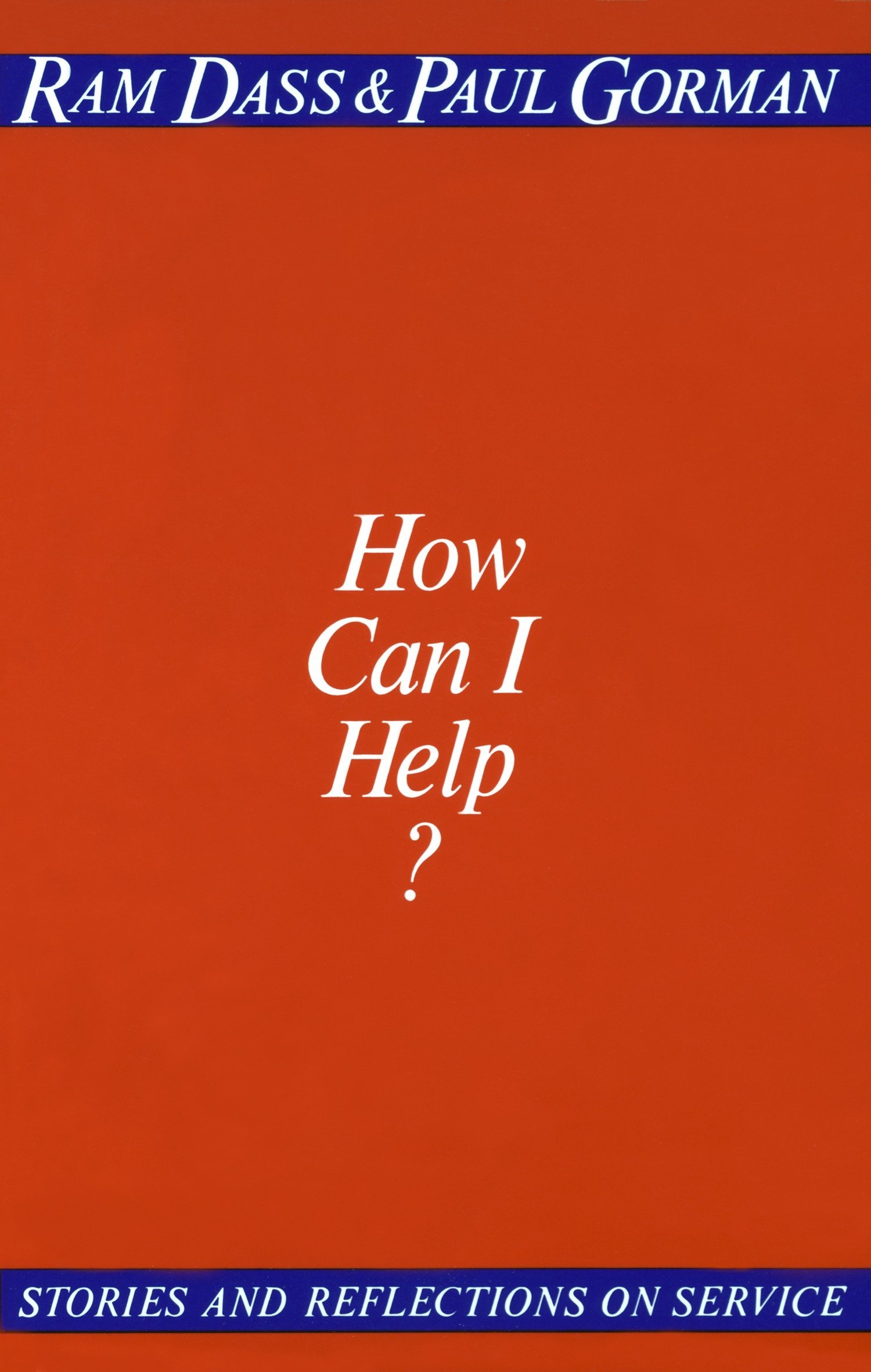
How Can I Help?: Stories and Reflections on Service
Discover how giving of yourself can lead to some of the most joyous moments in your life—in a book that “deserves a special place on that shelf reserved for truly practical wisdom" (Harold Kushner, author of When Bad Things Happen to Good People ).
Not a day goes by without our being called upon to help one another--at home, at work, on the street, on the phone…. We do what we can. Yet so much comes up to complicate this natural response: "Will I have what it takes?" "How much is enough?" "How can I deal with suffering?" "And what really helps, anyway?"
In this practical helper's companion, the authors explore a path through these confusions, and provide support and inspiration for us in our efforts as members of the helping professions, as volunteers, as community activists, or simply as friends and family trying to meet each other's needs. Here too are deeply moving personal accounts: A housewife brings zoo animals to lift the spirits of nursing home residents; a nun tends the wounded on the first night of the Nicaraguan revolution; a police officer talks a desperate father out of leaping from a roof with his child; a nurse allows an infant to spend its last moments of life in her arms rather than on a hospital machine. From many such stories and the authors' reflections, we can find strength, clarity, and wisdom for those times when we are called on to care for one another.
Not a day goes by without our being called upon to help one another--at home, at work, on the street, on the phone…. We do what we can. Yet so much comes up to complicate this natural response: "Will I have what it takes?" "How much is enough?" "How can I deal with suffering?" "And what really helps, anyway?"
In this practical helper's companion, the authors explore a path through these confusions, and provide support and inspiration for us in our efforts as members of the helping professions, as volunteers, as community activists, or simply as friends and family trying to meet each other's needs. Here too are deeply moving personal accounts: A housewife brings zoo animals to lift the spirits of nursing home residents; a nun tends the wounded on the first night of the Nicaraguan revolution; a police officer talks a desperate father out of leaping from a roof with his child; a nurse allows an infant to spend its last moments of life in her arms rather than on a hospital machine. From many such stories and the authors' reflections, we can find strength, clarity, and wisdom for those times when we are called on to care for one another.
272 pages, Paperback
First published March 12, 1985
About the author
Ram Dass
226 books2,363 followersRam Dass (Richard Alpert), was one of America's most beloved spiritual figures, making his mark on the world giving teachings and promoting loving service, harmonious business practices, and conscious care for the dying. His spirit has been a guiding light for four generations, carrying millions along on the journey, helping free them from their bonds as he has worked his way through his own.
Ratings & Reviews
Friends & Following
Create a free account to discover what your friends think of this book!
Community Reviews
Displaying 1 - 30 of 102 reviews

July 27, 2011
As a student in the field of therapy and counseling, the requirement to read this book was one of the most enjoyable that I have been asked to meet in the last 12 months. This book, written in several long chapters, but broken up into short testimonies from professionals was an easy, enjoyable, and intellectual read.
I found myself frequently book marking phrases and passages because of how closely they resembled my own thoughts, fears, reservations, and passions in regards to mental health services. Many of the passages are encouraging, some empowering, and others heart-breaking in their ability to pin point the thoughts that I held in my own mind and opinion that I would have never believed another professional was thinking or feeling.
This book is a comfort to those who are struggling with the profession because of burnout or confusion.
This book is a testament to the complexities that professional counselors have to face in the field of public service.
This book is a valuable resource and a reminder of personal strength that professional mental health providers must have in order to face the struggling and suffering of their clients.
It is a must have book that should adorn the shelves of every practitioner.
I found myself frequently book marking phrases and passages because of how closely they resembled my own thoughts, fears, reservations, and passions in regards to mental health services. Many of the passages are encouraging, some empowering, and others heart-breaking in their ability to pin point the thoughts that I held in my own mind and opinion that I would have never believed another professional was thinking or feeling.
This book is a comfort to those who are struggling with the profession because of burnout or confusion.
This book is a testament to the complexities that professional counselors have to face in the field of public service.
This book is a valuable resource and a reminder of personal strength that professional mental health providers must have in order to face the struggling and suffering of their clients.
It is a must have book that should adorn the shelves of every practitioner.

May 18, 2020
I chose to read this book in search of understanding my role as a nurse and how to deal with the burnout I’m feeling only 6 years into my profession. Almost every shift for the past 1.5 years I wish I wasn’t at work and find myself sick of “helping” people who won’t get better and planning a way out of nursing that won’t leave me in debt.
This book spoke directly to me the entire time. My identification with the role of helper and viewing patients as those who need help is the problem- it is so toxic the way I view myself as separate that I am now just doing a job that HAS to be done so I can get paid. There is an entire chapter called Burnout. I highlighted the crap out of this book and I meditated every day (I dragged this book out for a month so as to make sure I reeeeeally absorbed ram dass’s teachings) and I am so inspired to continue this path and WAKE UP.
What really hit me was a story in the book that describes a woman being caretaker for her mother. The woman puts so much energy into the care yet found herself fighting and bickering with her mother more than ever. During one fight, her mom asked, “why are you doing all this?” And that’s when it hit me- I asked myself the same question and realized that my answers have changed since I started nursing. In the beginning, I’d always wanted to help others genuinely. Now after being burned out and so caught up in my ego- my “why” is so selfish and arrogant!
Thank you Ram Dass for helping me awaken and begin to work out of this burnout which I didn’t think was possible.
This book spoke directly to me the entire time. My identification with the role of helper and viewing patients as those who need help is the problem- it is so toxic the way I view myself as separate that I am now just doing a job that HAS to be done so I can get paid. There is an entire chapter called Burnout. I highlighted the crap out of this book and I meditated every day (I dragged this book out for a month so as to make sure I reeeeeally absorbed ram dass’s teachings) and I am so inspired to continue this path and WAKE UP.
What really hit me was a story in the book that describes a woman being caretaker for her mother. The woman puts so much energy into the care yet found herself fighting and bickering with her mother more than ever. During one fight, her mom asked, “why are you doing all this?” And that’s when it hit me- I asked myself the same question and realized that my answers have changed since I started nursing. In the beginning, I’d always wanted to help others genuinely. Now after being burned out and so caught up in my ego- my “why” is so selfish and arrogant!
Thank you Ram Dass for helping me awaken and begin to work out of this burnout which I didn’t think was possible.

October 4, 2020
This was exactly what I needed this year, and this month. I'm drawn to service (equally?) by guilt and compassion, and it can be an overwhelming combination, and the former often gets in the way of the latter, but in a way I find hard to articulate. This book gets it. I'm a huge fan of Ram Dass, though I wasn't a huge fan of Be Here Now, particularly the format, which was too weird and hard to read and reminded me some of the bullshit hippy-dippy stuff I grew up around, although the narrative and message were aligned with what I believe to be true and important.
This book is far more accessible to, and clearly crafted for, the general public. The influence of Eastern religion is easy to find, but you don't have to buy into any of it to benefit from the stories and ideas here. And it's chock full of stories - heartbreaking and heartwarming and sad and funny and enlightening stories gathered from people of many different faiths and non-faiths, performing all kinds of service. I think it pretty clearly demonstrates how your own insecurities, agenda, ego, ambitions, and fears can get in the way of helping others, even to the point that if you're not open to change, you might be better off not helping at all.
A lot of folks take issue with, even mock, the idea that you can best serve the world by working on yourself. I understand the disdain, and I think some spiritual seekers get so lost in or attached to (ahem) the soul searching that they never get beyond it and have very little positive impact in the world. But I think How Can I Help does show the harm that can be done if you approach service as a duty or an endowment rather than a shared experience among different manifestations of the same complex life form, the same consciousness. If we are all actually one, then there's no such thing as helping someone else, someone Other. We're always caring for ourselves. It's difficult to fully get to that point, but it seems wise, if we are going out in the world, to carry that awareness of our interconnectedness, and a boatload of humility and respect for the integrity of the people we reach out to.
As I said, I am feeling a lot of confusion and fatigue in my own desire to help these days, and this allowed me some breathing room and perspective that has helped.
This book is far more accessible to, and clearly crafted for, the general public. The influence of Eastern religion is easy to find, but you don't have to buy into any of it to benefit from the stories and ideas here. And it's chock full of stories - heartbreaking and heartwarming and sad and funny and enlightening stories gathered from people of many different faiths and non-faiths, performing all kinds of service. I think it pretty clearly demonstrates how your own insecurities, agenda, ego, ambitions, and fears can get in the way of helping others, even to the point that if you're not open to change, you might be better off not helping at all.
A lot of folks take issue with, even mock, the idea that you can best serve the world by working on yourself. I understand the disdain, and I think some spiritual seekers get so lost in or attached to (ahem) the soul searching that they never get beyond it and have very little positive impact in the world. But I think How Can I Help does show the harm that can be done if you approach service as a duty or an endowment rather than a shared experience among different manifestations of the same complex life form, the same consciousness. If we are all actually one, then there's no such thing as helping someone else, someone Other. We're always caring for ourselves. It's difficult to fully get to that point, but it seems wise, if we are going out in the world, to carry that awareness of our interconnectedness, and a boatload of humility and respect for the integrity of the people we reach out to.
As I said, I am feeling a lot of confusion and fatigue in my own desire to help these days, and this allowed me some breathing room and perspective that has helped.

April 13, 2026
An incredible piece of work. valuable, uplifting and honest. I’d recommend this to everyone and anyone.

March 20, 2022
the most accessible Ram Dass I've read so far. Timing is everything and this book came across my reading at just the right time. We get reminded that being human is a messy, confusing and paradoxical state - when we think of ourselves as "separate" we are doomed to loneliness and suffering. When we see ourselves in others and become "we" suffering automatically lessens and we are reminded that this is true help. The book challenges you to question how and why you feel compelled to help - the answer might be a lot more selfish than you think - and instead think about connecting to the one suffering so that help is not exhausting or de-humanizing to the other. The parables and stories that pepper the narrative further illustrate how compassion and pity are not the same thing and that the line between helper and helped is fuzzy at best.

Read
July 21, 2020Simply one of the most important messages to human beings ever penned. The title says it all. Service. Helping others. Selflessness. What else needs to be said?

April 5, 2026
This is a book that sat on my shelf staring at me until I was finally ready for it. Outstanding and exactly what I needed, at exactly the right time.
—
Caveat - Kinda nuts how prison guards and missionaries and soldiers were framed to me, but this is maybe a generational difference
—
Caveat - Kinda nuts how prison guards and missionaries and soldiers were framed to me, but this is maybe a generational difference

March 2, 2024
Would give this book 10 stars if I could!
August 10, 2019
I found this book to be very wise and helpful for anyone. It starts by focusing on how to understand and find yourself. If you are helping to feel better about yourself you aren't really helping. Throughout the novel, there are inspirational stories which create a balance of discussion and insight with stories about service. The authors perspective of burn-out was super interesting and was my favorite part of the book. would give it 4/5 stars and would recommend it for people that want to help others which should be everyone.
This entire review has been hidden because of spoilers.

November 25, 2017
This book is useful for those whose rearing imbued them with the middle class concept of the charity hierarchy: to help "others," we first engage in othering. Ram Dass, like Alan Watts or Pema Chodron, can help us see things in a new perspective. My favorite vignette was the one from the soldier with the gun that the flower child put the daisy in: he said the daisy girl turned him off because she was self-righteous and not actually trying to connect; but he joined Veterans for Peace when he started visiting an activity center they provided for US soldiers in Vietnam. He said he and many other soldiers chose not to shoot when forced to march against the inhabitants because of the relationships he built there. A vital parable for our angry times.

June 2, 2008
This book made a huge difference in my life - very profound. Some quotes: "I have never, ever, met someone who sees me as whole." "Compassion is the spontaneous response of love; pity, the involuntary reflex of fear." "When we're free of self-righteousness, grounded in a kind of inner clarity and quiet self-assurance, we're less likely to rush in simply to prove our point." "We're here to awaken from the illusion of separateness."

August 17, 2013
I've never read such an honest reflection on helping and being helped. This book is made up of short accounts of experiences by people in a variety of roles, connected by a philosophical narrative on helping and life.
Ultimately the book explores how difficult it is to be with people in the way we would like, and how crucial it is that we know ourselves and our motivations for helping. It also shows how helping can emerge spontaneously and unexpectedly from the most difficult situations.
Ultimately the book explores how difficult it is to be with people in the way we would like, and how crucial it is that we know ourselves and our motivations for helping. It also shows how helping can emerge spontaneously and unexpectedly from the most difficult situations.

March 17, 2008
This is a sweet, simple book that was fodder for more than a few sermons in my preaching days. Ram is the real deal. A wonderful book to turn to if you've had a bad day. Like an eastern version of Henri Nouwen.

Read
March 12, 2011Wonderfully helpful to anyone in any field of service or anyone that just wants to re-kindle the love they have for the world that is so smothered by our preconceptions: How much can I help? Am I strong enough? I couldn't do much, etc.

April 10, 2020
A really lovely look into helping, both ourselves and others, and the deeper meaning and resonances of the soul this leads to. I am inspired to act in service with a refreshing new lens and to view that journey as a more sustainable lifelong effort.
August 23, 2021
Ram Dass’ brilliance as an orator and philosopher is without question. And I have heard him tell many of the stories in this book. And I just have to say, they were better through that medium. Still, though, a highly useful book for anyone trying to be of service to other humans.
July 6, 2009
Puts you in touch with what trust and unconditional love is all about. A must read for all those in the helping professions. A gentile, tender, and spirtual book, that will touch your heart.
January 29, 2020
This was the continuation I was looking for after be here now.

February 3, 2019
i noticed the bold orange spine and the name Ram Dass on one of the bookshelves at our counseling clinic, and as the weight of compassion fatigue and confusion/helplessness fatigue has been bearing down on me in my role as a school therapist, i decided to take it and read it mostly that night. it was a comfort and reassurance to read that there is no comfort or reassurance in this work of "helping," and to just have that clarity of transmission through the writing...of what is real and what is conditioned. a nice reminder. the book wants to challenge as much as possible any role we might settle into as the "helper" helping the "other" when the roles fall away there is just "helping" an energy that is there and moving back and forth dynamically. i have caught myself becoming over-involved and over-identified as the helper, whose job it is to help, rather than just being with someone, however they are showing up, without my own agenda without needing to know i've done a "good" job as if that is a thing. I have caught myself obsessing and worrying about clients and trying to "solve" them like a problem. i have caught myself feeling burnout and exhaustion, so this book was a small help. the critique is mainly of the chapter on social action, which preaches that people not be so offended and see from the other perspective to work towards mutual understanding. in theory, yes, tho, too often that places the burden on the most victimized and marginalized and attacked in our culture to set aside real fears and threats in order to help the privileged among us to feel good and get along.
"When suffering is at stake and we've offered ourselves to its relief, we naturally have an interest in how situations evolve. But sometimes this compulsive need to know leads us to doubt because we have a hard time coming to terms with the essential ambiguity of helping.
Paradoxical and elusive, service is ultimately a journey into the unknown. Did we really help? Help at what level? We often can't find the answers. And we don't know what to do with that. So we wonder, worry, turn off, give up....or just struggle bravely on, puzzled and burdened, wearing down. See the helper? . . . He's the hard-working one over there . . . the one with the constant frown.
At some level this challenge is very plain. We can either be frustrated and worn out by uncertainty and doubt or try to find a way to open to the ambiguity, embrace it, work with it, be moved and inspired by it. . .and thereby come closer to the very heart of service where true freedom is found." (202)
Institutions are formalized mind-sets. These too can be witnessed. To become aware of those sets but see right through them from outside is the most reliable way not to get stuck or burned out by them. We master the rules, but we don't let them ultimately define us or narrow our field of perception. We encompass the craziness of the situation, so we can be skillful within it or playful when there's nothing to do but ride through the contradictions. Then we share a sense of the absurd with whoever else is inclined to see it that way...If we are serious in our criticism of the practices and habits of helping organizations, however, we've got to be light and free, and sufficiently above it all to see where we can untangle the knots and bring about change.
As frustrating and wearing as these situations can be, part of our service may entail taking some responsibility for them. The institutions we work in are going to reflect the sum total of consciousness investing in them at every moment. So it's "Our" problem. If it's "Us" who created it, it's probably going to have to be "Us" who'll shake it free.
Or maybe not. We can never be sure. We'll watch. Maybe it's not the right place to be putting our energies now. Maybe the inertia of the system is too great, its effect too strangling. Maybe we just need a break, some breathing space, a walk in the woods for some renewed inspiration. Maybe we're just tired. It's always right to be watching for that, always right to care for ourselves when we're seeking to care for others.
So perhaps quit, not knowing where to go next, but trusting that the right vehicle to express our desire to serve will appear elsewhere, later." (198)
"When suffering is at stake and we've offered ourselves to its relief, we naturally have an interest in how situations evolve. But sometimes this compulsive need to know leads us to doubt because we have a hard time coming to terms with the essential ambiguity of helping.
Paradoxical and elusive, service is ultimately a journey into the unknown. Did we really help? Help at what level? We often can't find the answers. And we don't know what to do with that. So we wonder, worry, turn off, give up....or just struggle bravely on, puzzled and burdened, wearing down. See the helper? . . . He's the hard-working one over there . . . the one with the constant frown.
At some level this challenge is very plain. We can either be frustrated and worn out by uncertainty and doubt or try to find a way to open to the ambiguity, embrace it, work with it, be moved and inspired by it. . .and thereby come closer to the very heart of service where true freedom is found." (202)
Institutions are formalized mind-sets. These too can be witnessed. To become aware of those sets but see right through them from outside is the most reliable way not to get stuck or burned out by them. We master the rules, but we don't let them ultimately define us or narrow our field of perception. We encompass the craziness of the situation, so we can be skillful within it or playful when there's nothing to do but ride through the contradictions. Then we share a sense of the absurd with whoever else is inclined to see it that way...If we are serious in our criticism of the practices and habits of helping organizations, however, we've got to be light and free, and sufficiently above it all to see where we can untangle the knots and bring about change.
As frustrating and wearing as these situations can be, part of our service may entail taking some responsibility for them. The institutions we work in are going to reflect the sum total of consciousness investing in them at every moment. So it's "Our" problem. If it's "Us" who created it, it's probably going to have to be "Us" who'll shake it free.
Or maybe not. We can never be sure. We'll watch. Maybe it's not the right place to be putting our energies now. Maybe the inertia of the system is too great, its effect too strangling. Maybe we just need a break, some breathing space, a walk in the woods for some renewed inspiration. Maybe we're just tired. It's always right to be watching for that, always right to care for ourselves when we're seeking to care for others.
So perhaps quit, not knowing where to go next, but trusting that the right vehicle to express our desire to serve will appear elsewhere, later." (198)

January 27, 2024
The world can feel so lonely, as we drive to and from work or school, feeling completely separated from everyone else.
When someone you love is dying from cancer, how do you move past your fear, frustration, impending loss, in order to simply be there for them? How beautiful that helping others, really does help heal ourselves.
“As we acquire a certain degree of equanimity in self-image, we are that much more likely to feel empathy for those around us. We know what it’s like to be a “self” moving through the world of “others.” When someone feels particularly isolated or in pain, we don’t need a great deal of information in order to come to his or her aid.”
Burn out and fatigue seems to be affecting everyone these days. Whether it’s the social media bombardment of negativity, or the fear that our world is getting worse every day, everyone has a tendency to close themselves up because of fear.
I think this book would be the most helpful to people who are in positions like, nurses, therapist, caregivers, police, and firefighters. These are the people that tend to get burned out very quickly in dealing with emotionally heavy situations.
It’s like Mr. Rogers always said, “Look for the helpers.”
When someone you love is dying from cancer, how do you move past your fear, frustration, impending loss, in order to simply be there for them? How beautiful that helping others, really does help heal ourselves.
“As we acquire a certain degree of equanimity in self-image, we are that much more likely to feel empathy for those around us. We know what it’s like to be a “self” moving through the world of “others.” When someone feels particularly isolated or in pain, we don’t need a great deal of information in order to come to his or her aid.”
Burn out and fatigue seems to be affecting everyone these days. Whether it’s the social media bombardment of negativity, or the fear that our world is getting worse every day, everyone has a tendency to close themselves up because of fear.
I think this book would be the most helpful to people who are in positions like, nurses, therapist, caregivers, police, and firefighters. These are the people that tend to get burned out very quickly in dealing with emotionally heavy situations.
It’s like Mr. Rogers always said, “Look for the helpers.”

May 16, 2023
Wonderful. Should be required reading for everyone (at least those aspiring to be open and compassionate human beings). Written in 1985 but hasn't aged a bit.
----
"Although at times helping may happen simply in the way of things, all too often helping isn’t happening at all. Even if it is, it can be anything but natural: self- conscious, half- hearted, begrudging. How much are we willing to give, and what are we holding on to? How do we really feel about the place of helping in our lives? We needn’t go deep beneath the surface before we encounter our ambivalence. We note the interplay of generosity and resistance, self- sacrifice and self- protectiveness."
"We find ourselves yearning for a future society where the care of others wouldn’t have to be mandated. Service wouldn’t be a duty, it would be a habit— the way of natural compassion."
----
"Although at times helping may happen simply in the way of things, all too often helping isn’t happening at all. Even if it is, it can be anything but natural: self- conscious, half- hearted, begrudging. How much are we willing to give, and what are we holding on to? How do we really feel about the place of helping in our lives? We needn’t go deep beneath the surface before we encounter our ambivalence. We note the interplay of generosity and resistance, self- sacrifice and self- protectiveness."
"We find ourselves yearning for a future society where the care of others wouldn’t have to be mandated. Service wouldn’t be a duty, it would be a habit— the way of natural compassion."

December 27, 2024
A nice peak into the hearts of people who are helping suffering people in this world. For me I always wanted to "teach a man to fish", not to GIVE the man a fish - meaning to solve the underlying problem and not just help someone for a day. But this is what the book is about - giving a man a fish, not what You think he should get. Being humble enough to understand that we can not fix the world, that we can not fix other people. But still helping them, out of compassion and empathy. And not "ACTING" with empathy, since You can not fake empathy. You either have it or You don't. Me, I must admit, have few of it. But this is a great book for people like me to help understand empathy. An easy read.

February 26, 2021
Not what I expected but I’m not disappointed. I honestly read this to get ideas on great things to do with my life with which I could help other people. But instead, I learned important lessons on listening and being present to be able to really help. And this applies mostly to daily stuff.
So it’s one of those books that I’m sure will change my life. However, I did felt that something is missing, probably my first expectation. And I think it got repetitive at some points. So I would give it 4 starts but I think the book suggest ideas that could really change our society for the better if everyone had access to them. Plus, it’s already making an impact in my relationships. So 5 stars.
So it’s one of those books that I’m sure will change my life. However, I did felt that something is missing, probably my first expectation. And I think it got repetitive at some points. So I would give it 4 starts but I think the book suggest ideas that could really change our society for the better if everyone had access to them. Plus, it’s already making an impact in my relationships. So 5 stars.

May 15, 2020
I'm a sucker for this type of read so my 5 stars say more about me than about the book.
Anyway the book goes like this: testimonies from people who lived remarkable experiences in the act of helping followed by the authors' reflection on the subject. I got the audio version and boy talk about an appropriate man for the job! It was as if a deity was reading his inspired words of wisdom to me.
Bottom line: helping is beautiful, but it ain't easy. This is a point worth repeating: helping ain't easy.
But then, it's worth it.
Anyway the book goes like this: testimonies from people who lived remarkable experiences in the act of helping followed by the authors' reflection on the subject. I got the audio version and boy talk about an appropriate man for the job! It was as if a deity was reading his inspired words of wisdom to me.
Bottom line: helping is beautiful, but it ain't easy. This is a point worth repeating: helping ain't easy.
But then, it's worth it.

February 7, 2024
A tender, heartfelt journey exploring the nature of service. What it means to help, to be helped, and to identify as a helper are just a few of the topics covered, as well as a useful section on dealing with burnout. Personal anecdotes are interwoven with musings and instruction, and the reading process is smooth and Enlightening. There's much inspiration and nourishment to be found here. A valuable read for those engaging with service on any level, or even those wanting to be of service but not knowing where to begin.

January 12, 2025
This book delves into the profound complexities of human suffering and the different ways we can support each other through our darkest moments. While the intention behind their messages is undoubtedly noble, I found the book to be an emotionally heavy experience that often felt overwhelmingly dark and grim. There are moments when the authors do provide insightful reflections on compassion and the importance of being present for others, but these are often overshadowed by the intensity of the themes explored.

August 11, 2019
I found this book to be very interesting and helpful for anyone over the age of 14 because it is a little boring. The first couple of chapters focus on how to better understand yourself. Throughout the novel, some stories inspire me. The authors perspective was super interesting and made it somewhat interesting to read. Personally, I would give it 3/5 stars and would recommend it for people that want to help others and help better your personality.

Read
January 5, 2020This was a must read for my life journey.
This book taught me that if you feel like giving, give. Don't overthink it. Don't question it. Don't over judge who/what you're giving to and what they might do with your gift. *Giving is not about controlling how your gift is utilized.*
And yes, others will always judge you on how much you give/don't give (along with everything else), but... We're all students in this game of life. And this book is a great teacher.
This book taught me that if you feel like giving, give. Don't overthink it. Don't question it. Don't over judge who/what you're giving to and what they might do with your gift. *Giving is not about controlling how your gift is utilized.*
And yes, others will always judge you on how much you give/don't give (along with everything else), but... We're all students in this game of life. And this book is a great teacher.

Read
January 10, 2026If you've ever heard Joseph Goldstein talk about how inspiring he's found the title of this book or if you've ever heard Ram Dass read the story from it about a drunk man on a Tokyo subway train, you'll find yourself needing to track down a copy — and fast. But it's just not constructed well and is not interesting to slog through. I gave up.

May 26, 2017
I enjoyed this book. Was it a favorite? No. Was it useful? Yes. It's a simple book that address some complex issues within the helping realm.
There are a handful of topics addressed in the book that do make you think deeply, evaluate your own motives and unconscious habit reactions. I found that valuable.
There are a handful of topics addressed in the book that do make you think deeply, evaluate your own motives and unconscious habit reactions. I found that valuable.
Displaying 1 - 30 of 102 reviews