"Uno se enamora de Roma, lentamente y para siempre". Nikolai Gogol
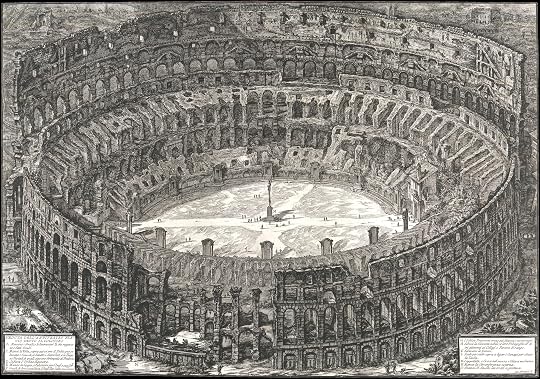
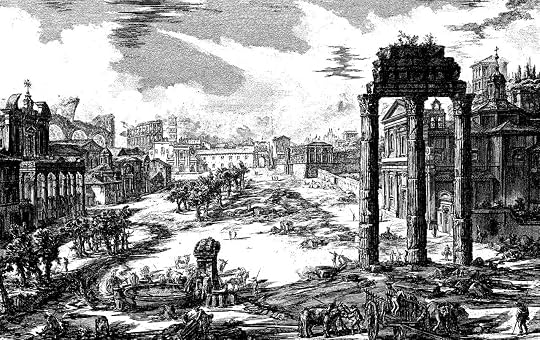
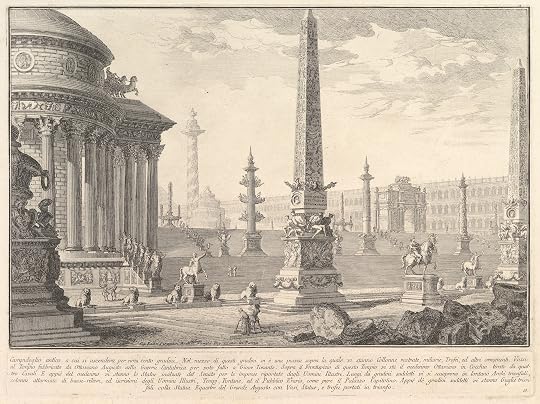
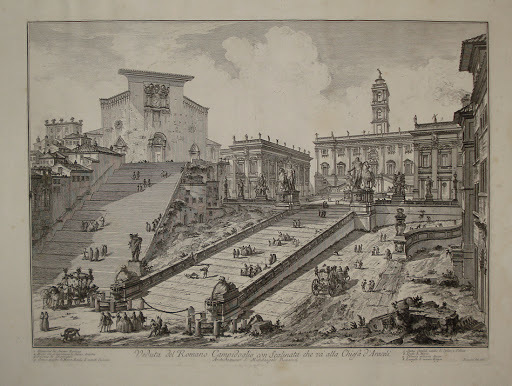
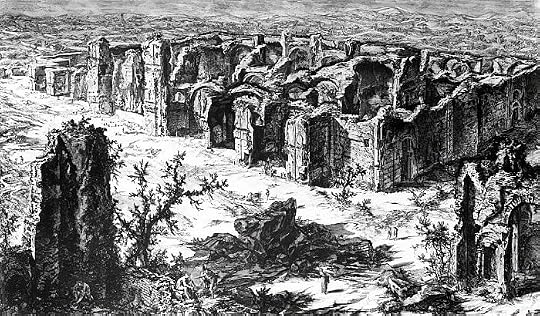
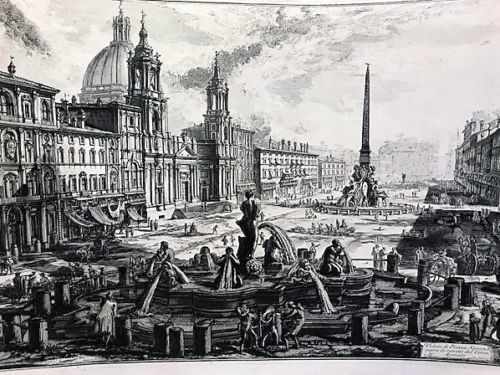
Ninguna otra ciudad ha capturado la imaginación de los artistas de todas las épocas como Roma. La Ciudad Eterna ha sido tradicionalmente destino de escritores deseosos de contemplar ruinas de glorias pasadas y de asombrarse ante las maravillas del arte que guardan sus iglesias, palacios y museos. Esta Guía literaria de Roma ofrece al lector los pensamientos y sensaciones que Roma despertó en los escritores más célebres que la visitaron. Es una visión distinta y literaria de la más artística de las ciudades, ilustrada con deliciosos grabados de Giovanni Battista Piranesi, Giuseppe Vasi y Rossini.
Imprescindible como complemento a una guía tradicional, Guía literaria de Roma nos permite disfrutar de un triple viaje: en el espacio, hacia los monumentos y maravillas romanas; en el tiempo, hacia otras épocas y sensibilidades; y en el espíritu, hacia algunas de las mentes más creativas, divertidas y magníficas que ha dado la cultura de Occidente.
Various is the correct author for any book with multiple unknown authors, and is acceptable for books with multiple known authors, especially if not all are known or the list is very long (over 50).
If an editor is known, however, Various is not necessary. List the name of the editor as the primary author (with role "editor"). Contributing authors' names follow it.
Note: WorldCat is an excellent resource for finding author information and contents of anthologies.
I am afraid I am not very original in deciding that I would like to get to know Rome reasonably well. This volume of extracts of various writers who have had a similar idea is just one of the others that have been published. I have on my pile also this The Smiles of Rome: A Literary Companion for Readers and Travelers
This one I have read twice. The first was a fast read prior to visiting friends who had rented a large apartment in Rome and who had invited me. And the second, and more careful read, was upon my recent return after a trip to visit the Raphael exhibition at the Quirinale. The second read has captivated me a lot more.
Generally, I am not a friend of books made out of extracts, and the fact that I had to read it twice may indicate that such patchworks just don’t have the same impact than a full account. May be these collections are similar to going on a cruise in which the brief stops in striking locations serve to think either: “I have been there, no need to return” (an example is Monaco) or “This is a lovely place, I would like to come back” (La Valletta). And so it was with this book.
In total there are fourteen extracts. Only one is from classical times (Strabo, first Century AD) and only one from the sixteenth century (Montaigne – French). Three are from the eighteenth century (one German –guess who; and a British –guess also who; and one Scott). The rest, that is, nine, are taken from the nineteenth century. In those we have two French, three Brits, three American and only one Spaniard.
They all loved, or at least, liked to talk about the Colosseum. This makes me think that I would love to live in a place with an address something like: Via del Colosseo (one would not need to state in which city, and it would be a convenient insurance against a taxi driver taking you for too long a ride).
There are many little jewels that I would like to mention:
Montaigne, in his visit to the Vatican Library (aren’t we jealous that he could just go in and ask to have a look at several of their books?) was delighted to have in his hands the book that Henry VIII wrote against Luther. I also raised my brows when reading that he thought ‘that we have lost the usage of writing’. What would he say if he visited the 21st century? Montaigne, as a couple others, showed some chauvinism when stating that the most beautiful churches where in France.
I was tickled with the idea that it was, while sitting in the Campidoglio, that Gibbon thought of writing about the way the Roman Empire had fallen. Having noticed how the Coliseum had decayed, not so much due to the Barbarians but to its having become the quarry for the Popes who had built the Baroque Palazzi, Gibbon informs us that the ancient amphitheatre had finally come under the protection of Pope Benedict IV – that was about a decade prior to his own visit.
I was unaware of Tobias Smollett, the Scott who translated Don Quijote, and it seems that his very sarcastic tone was later parodied by Sterne in his A Sentimental Journey Through France and Italy, Vol. 2. Smollett provides interesting snippets about the various buildings, such as when and how was the Pantheon converted into a church, and whether the Diocletian were better than the Caracalla Baths.
Goehe is like Malta. I have to visit him properly. So, I will comment on him when I read his Italian Journey. But both he and Chateaubriand recommend walking in Rome under the moon; I wonder whether this still has much interest with all the electric lights; may be the effect does not make it worse, just incomparably different. Most of these visitors entered the city through the Porta del Popolo, the one that leads onto the road to France, but Chateaubriand entered from the opposite end since he was arriving from Naples, a city that he found more spectacular.
Stendhal gratified me with his recommendations in his Journal to immerse oneself in the reading of books related to the places one is visiting. That is exactly what I love to do more and more. Reading and Traveling have so much in common. One advances through new paths, new thoughts, new worlds.
In the Palazzo Barberini is the lovely portrait of Beatrice Cenci (attributed to Guido Reni), the young woman who was beheaded by Pope Clement VII in 1599 because she had killed her father – he had been abusing her. This book offers an extract from Shelley’s play The Cenci from 1818. This play was so successful that it has been rendered into an opera several times.
The fascination of all these writers for the Eternal City could cause them either trouble, as it happened to James Fennimore Cooper, or provide them with means to earn a living, as was the case of Herman Melville. When Cooper got back to his country, his book Excursions in Italy, published in 1838 brought about criticism from The American Monthly because he was accused of preferring Rome to his own country. As for Melville, who had come to visit Hawthorne in Rome (and alas no extract is included in this book although I already have his The Marble Faun), when he was back home and his novels, in particular Moby-Dick or, the Whale, were not selling, he managed to obtain some income giving lectures while touring the US. The extract is from one of these and in which he concentrated on Italian sculpture. He had a good eye – not just for Nature.
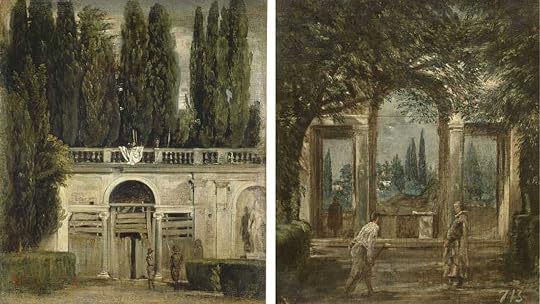
The only Spaniard included I did not know. It turns out that Pedro Antonio de Alarcon was the author of the libretto El sombrero de tres picos which served as basis for Manuel de Falla’s Ballet from 1919. The extract comes from his De Madrid a Nápoles, which he wrote in 1861, that is, during the process of independence and formation of the new Italian state. I wish more writings by Spaniards had been included, for after all, many travelled greatly to Italy when several parts of the country were under the Spanish king. Let’s remember Velázquez and Cervantes. For the latter we could have extracts from his Novelas Ejemplares and from the former, the pictorial testimony of his only two landscapes that have survived. They were views of the Medici Gardens near the Piazza del Popolo.
One ought not to be surprised that Dickens centred his attention not on the monuments and places, but on the people and their habits and ceremonies. His extract from Pictures from Italy however, did not capture much my attention. I found him somewhat Anglocentric. London is insistently his point of comparison.
The price for the best humour will undoubtedly have to be awarded to Mark Twain for his The Innocents Abroad – from 1867 but published two years later. It is important to remember that although the new Italy had already been formed, Rome was still under the Papacy. Twain’s section on the impossibility of seeing anything in Rome that no one has seen before is something that we, with greater regret, can also feel. Hilarious was also how he complains of the futility of not hearing Michelangelo’s name all the time; this reminds me when I visited Weimar with some friends, and we forbade ourselves to pronounce the name Goethe.
Henry James, and no other could do this, provides the closing seal. He knew Italy well, having visited it countless times and stayed for long periods. Several of his novels are the best testimonies to his interest in Rome and Italy. His comments in Italian Hours are certainly the most insightful and nuanced.
The read of these travel fragments helped me to deal with the disaffection that traveling nowadays offers. These texts helped restore the feeling that Rome, indeed, is eternal.
"Un bellísimo cuaderno de viajes escrito por unos guías irrepetibles". Una guía de Roma de la mano de dieciséis escritores de todas las épocas que viajaron a la ciudad para fundir en sus textos la vida, el arte y la literatura. Desde la descripción que hace Estrabón de la grandeza de Roma en la época de Augusto hasta las impresiones de Rilke en 1903. En medio, las reflexiones de Montaigne ante las ruinas de la ciudad abierta, Goethe y la espectacularidad de lo grandioso, un paseo de Chateaubriand bajo la luna, el síndrome de Stendhal, un Shelley conmovido por la belleza y el misterio, el desierto desolado de la decadencia que ve Dickens o la admiración de Henry James en sus horas italianas. La edición de Iria Rebolo se enriquece con los excelentes grabados de tres artistas italianos del XVIII (Vasi, Piranesi y Rossini) que entre la melancolía y el claroscuro ofrecen una visión complementaria de la que transmiten con sus palabras aquellos escritores viajeros. Un bellísimo cuaderno de viajes escrito por unos guías irrepetibles.
Siempre es lindo leer sobre Roma. Le doy dos estrellas porque, si bien el estilo es muy aburrido - odio leer textos antiguos originales - tiene pasajes que sorprenden, que muestran cómo la ciudad mantiene su misma esencia, incluso cientos (o miles) de años después. La grandeza de Roma nunca disminuye, y su belleza siempre fue tal, lo cual no deja de maravillarme. Y también me invitó a la reflexión de pensar cómo se escribía antes, y qué difícil va a ser en el futuro aislar las voces importantes de todo el ruido digital que hay hoy. ¿Cómo se hará, en el futuro, una crónica de este tipo, con testimonios destacados, con todo el ruido de reseñas y opiniones que hay hoy en internet?