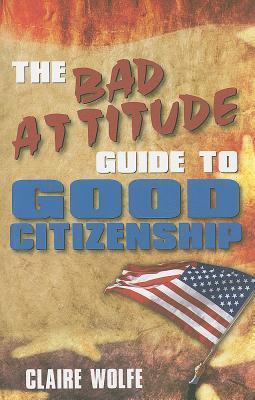
Every few years, American voters get fed up and "throw the bums out." One party sweeps to victory on promises of "change" or "getting government off our backs." Such monumental electoral changes swept the country in 2008. And 1994. And 1980. And 1968. But amid all this change, the one thing that never actually does change is the one thing we imagine we're changing-government. We throw the bums out-and throw another bunch of bums in. We vote for smaller government-and government gets even bigger. We vote for less spending, and spending soars. In other no matter who we vote for, the government gets elected. "It's hopeless," we tell ourselves. "There's not a damn thing we can do to change anything." But that sort of cynicism simply just plays into the system. There are alternatives to the failed methods of good citizenship, and that's what this book is about. Let freedom activist Claire Wolfe show you how to use a bad attitude to effect real Bypassing politics entirely to get things done and preserve your freedoms Keeping politicians and bureaucrats in their place-and out of yours Halting the increased militarization of police Choosing between creative disregard and civil disobedience Assessing the necessity of elections in society The goal of Claire's unconventional brand of political action is to generate a momentum of individual independence around the country, at the same time as government-as-usual engineers its own doom by being oppressive and unresponsive. There may not be a sea change at first, but as more and more citizens become fed up with the status quo and find cause within the freedom movement, change could come bullet-train fast.
It's a fast read, but not too much real info. It is mostly a collection of the author's already-published articles with a few added chapters. If you want to read something that will make you angrier about our current governmental system, this one is good. Otherwise, I'd probably skip it.
If you would like a a signed copy of this book, snail-mail me at: Claire Wolfe c/o Stephen Fairfax (aka Silver) 532 Ranch Road 3232 Johnson City, TX 78636
It was an interesting book. Many of the ideas resonated with me - governments only tend to become bigger and our rights only tend to shrunk further. There are laws against whom one party can make noises but they will never repeal them or improve them. One cannot get more freedom by simply asking for it. Voting, as many of us suspect, is not the "Be All, End All" of being a good citizen.
But, the book has been written is a US specific context. While the basic principles hold, many of the lessons don't apply right now and the situations discussed may feel align. So while it is true that in general governments tend to acquire more power over time and reduce citizen's freedom, in India, we have significant movement in other direction as well. We recently got the Right to Information which is immensely powerful and if someone would have ask me, I would have never believed that Indian politicians will actually pass something like that. Although since then, there has been constant tussle at limiting it's scope and putting things outside it's purview. So we are back in Claire's territory. Similarly, we are expanding women's rights. We are expanding tribal rights. So we may be on a slightly different trajectory. But we do need to be constantly vigilant.
Also, while I admire her passion about gun rights, I find myself on the other side. My position is not a well considered one and might be more of a psychological thing, plus the different environment I grew up in, but I am sticking with it for now. But I do agree that it makes sense to legalize things like prostitution and drugs. And if I understand correctly, the arguments in these cases is that once legalized, they can be better managed - not really an argument for less government intervention. But I wouldn't trust "free market" with these things either.
So while it is an interesting read, if you are not from US, there may be better books to get introduced to these ideas.