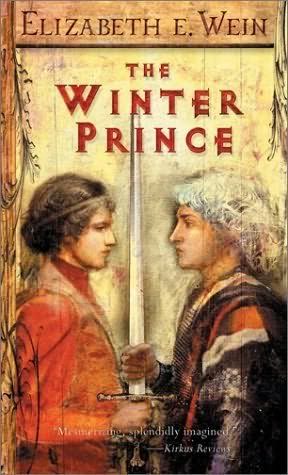
The story of Medraut - strong, skilled, daring, and never to be king...
Medraut is the eldest son of Artos, high king of Britain; and, but for an accident of birth, would-be heir to the throne. Instead, his younger half-brother, Lleu, is chosen to be prince of Britain. Lleu is fragile, often ill, unskilled in weaponry and statesmanship, and childishly afraid of the dark. Even Lleu's twin sister, Goewin, seems more suited to rule the kingdom.
Medraut cannot bear to be commanded and contradicted by this weakling brother who he feels has usurped his birthright and his father's favor. Torn and bitter, haunted by jealousy, self-doubt, and thwarted ambition, he joins Morgause, the high king's treacherous sister, in a plot to force Artos to forfeit his power and kingdom in exchange for Lleu's life. But this plot soon proves to be much more - a battlefield on which Medraut is forced to decide, for good or evil, where his own allegiance truly lies...
It is probably for the best that I didn't realise this book was written by the same author as a book that recently disappointed me - Code Name Verity - because, although everyong else seemed to enjoy this WW2 story of friendship, I found myself bored. The Winter Prince, on the other hand, never lost my attention for a second. This is exactly the kind of fantasy I love and, though I know this is a very bold statement to make, I'd almost go so far as to favourably compare this book to such as The Thief and Finnikin of the Rock. Perhaps not quite as flawless, but very good.
Do you like historical fantasies based around ancient legends with kings, queens, jealousies, backstabbing and scandals all perfectly executed with a cast of colourful and exciting characters? Yeah, me too. This is that kind of book, a wonderful mix of action and multi-layered characters. But be warned, there are not so many likeable characters, they are complex individuals. The protagonist and narrator directs the story at the mother who abused him - a woman who is truly one of the most despicable characters I've ever come across - he is a confused man, torn between the possibilities of vengeance and of love and acceptance.
If you can't stand the kind of book where there are no heroes or heroines, then this isn't the right choice for you. It's an interesting story that makes you think, that makes it impossible to choose sides, you will probably find yourself despising every character at some point or other. But it's also very powerful and it's about the choices people make and whether it's more important to be someone or to be loved by someone. Most of all, I see this as a novel about looking for the wrong things in the wrong places, when what you needed all along was right there with you. And no, this is not a romance.
I think this is a great book. But I can tell you now what a lot of people won't like and I admit I thought it was too much - the copious amount of incest. It is not romanticised, it is not seen as okay, but it happens an awful lot. Nearly every character in this book has either been raped by a relative or had an attempted rape by a relative. Some of the abuse was an important part of the plot and a way of understanding the characters, but a lot felt unnecessary. I really, really don't want to turn anyone off this book, but I see no point in not being honest. I hope readers can overlook it and enjoy this wonderful, well-written fantasy.
[edit] I just upgraded this from four stars to five. Two reasons - one I could not forget the characters of Medraut and Lleu and thought about their beautifully written love/hate relationship for months. It led me to picking up the next book in the series and ultimately to listing the five books as a favorite series]
I listed this as historical because it is a very unique and unusual version of the King Arthur legend. Just very difficult to explain how this is done. The names are different and characters and portions of the story are left out. Perhaps I would not have recognized the connection to the legend had I not known before I read it. It is a play on Mordred, in this book named Medraut. It is the first time I have read a book that is told in the first person as if he were telling or writing it to a specific person, in this case Morgause. Although he calls her grandmother, she is his mother, sister to the King (Arto who represents Arthur in this story. Medraut of course is the bastard son born of incest. Lleu is King Artos' legitimate son and Lleu's twin sister is Goewin (another new character).
This is really the story of Medraut and Lleu and a very intriguing story of Medraut's deepest feelings as he is tortured by Morgause and yet loves her and cannot get away from her evil influence, resents and yet is devoted to his younger brother Lleu who will some day be king. Medraut and his father Aros both know that Medraut is better suited for the role but it can never be. The development of the relationship between these two half brothers with Lleu starting off as a sickly child unlikely to survive, the incredible sacrifices that Medraut takes to save and cure him, Lleu's sometimes rudeness toward his half brother - well it is brilliantly done. I had a little trouble getting into the story at first, perhaps because I had a little trouble getting into Medraut telling the story to Morgause, but once into it I could not put it down. My copy is a small size paperback of 202 pages and a quick read. The last fifty pages or so had me so drawn in to the story I read into the early morning hours. Betrayal, cruelty, hatred, love - all wrapped up together between these two brothers. Great but very intense reading. I had no idea how it was going to play out.
Goewin - "If you don't bring Lleu back alive and unharmed I'll kill you, I swear it, surely, I will find a way to kill you."
Medraut - "I fear you as little as you fear me, I whispered."
After finishing The Winter Prince, I had to stop for a minute to think about it -- do I like it? How much did I enjoy it? The style is very interesting: it seems to be straight first person narration at times, but when Medraut's mother appears, it becomes apparent that he's addressing the story to her. It deals with one of the issues that lie at the heart of the Arthurian mythos, often blamed for the fall of Camelot: the incest between Arthur and his sister. It works out the issues, in a way, binding Medraut to his brother, Lleu, and neutralising him, though it's not an easy road for either of them to walk.
It also deals with the issues of abuse, a horribly powerful link between Medraut and his mother, and even between his mother and his brothers. He has to deal with the tangled feelings that come when at one moment someone will hurt you horrifically and the next comfort you, when they'll say it's for your own good or that you did wrong, to excuse them torturing you. Medraut's confusion is well done: I couldn't predict what he would do and how, I couldn't predict whether he would go free of her at the end or not.
With the point of view it took, I suppose it'd be hard to show more of Medraut's mother and her motivations, but I found that somewhat difficult to swallow, of everything in the book. So casually evil, toying with other people as though they're not real... Goewin and Ginevra are positive female characters, to an extent, though the latter does very little after the opening of the novel. Goewin hints at a way she could become like Medraut's mother, so there is a bit of a sense of circumstances making her the way she is, but still... I did want more, I wanted less senseless evil and more a sense of someone made the way she is by being wronged and so on. Turning Morgause and Morgan Le Fay and their like into evil witches is one of those ways of pathologising female power that people don't seem to guard against.
The Winter Prince can be a quick, easy read, but there's darkness at the heart of it -- which is, I suppose, countered by the end.
This was an INTENSE psychological/domestic thriller with a realistic Arthurian historical fiction setting and it absolutely leans into the darkest corner of Arthuriana and paints it black.
Extraordinary suspense and writing but please note this is NOT YA-appropriate.
Anyone who is sensitive to anything to do with dysfunctional families, maternal abuse, and/or sexual abuse and unhealthy sibling relationships/trauma—please stay clear of this book. To be clear, there are no sex scenes in this book (thank the Lord) but the impact of an abusive sexual relationships is felt throughout the book by the main character, who needs serious therapy or maybe even just a strong enough blow to the head to remove most if not all of his memories.
I don’t want to spoil the ending, but I will say that the author did something fairly splendid with foreshadowing so that despite the fact that things go hideously, hideously wrong and you read most of the book in a fever of absolute dread, the midwinter festival that occurs just before the third act of the novel sets up the hopeful turn that the novel takes. It’s a masterclass in hiding in plain sight.
I can’t speak to the way the family relationships are handled ultimately—there is not enough time in this story devoted to healing and consequences. I’m curious to investigate where Wein goes in the second book. Apparently it follows my favorite character (the only one who is functional), so I will seek it out.
This is a little bit of a Retro Review for me, although not entirely. I just about burst with glee when I saw that THE WINTER PRINCE and A COALITION OF LIONS were back in print. Two reasons for this: 1) I needed a copy of THE WINTER PRINCE for my own and 2) Now I can spread the love more easily! If the last three books come back into print that will just be the icing on the cake. (Warning: do not read the fourth book until you have the fifth book handy.)
Nowadays Elizabeth Wein is well known as the author of smash hit CODE NAME VERITY. But once upon a time she was Elizabeth E. Wein, debut author of an Arthurian retelling called THE WINTER PRINCE. Artos has three children. Medraut, the oldest, is a illegitimate and cannot inherit. Lleu, the prince, is beautiful and fragile and talented and spoiled. Goewin, his twin, will not inherit either since she is a woman. The children love each other, but there's also a great deal of resentment and hurt feelings between them.
THE WINTER PRINCE is written like a letter from Medraut to his aunt and mother, Morgause. She's a cruel woman with a terrible hold on her sons, but at the same time almost understandable as a woman trying to grasp all the power a woman can have. Medraut perhaps loves and hates her even more than her loves and hates Lleu.
There isn't much of a plot to THE WINTER PRINCE. It's a book about a relationship, and two people coming to terms with who they are. It's wonderfully written, Wein's prose lending the book a fittingly seductive and sharp beauty. It's a little messy, just like it's protagonist, and swiftly covers a great deal of time. It's one of those books that sticks in your mind long after you read it, and comes back to you immediately once you read the first sentence again.
It's just everything I want out of a book on the Matter of Britain. And believe me, I'm an Arthurian geek and I want a lot. It has questions of honor and what makes a good ruler, family and romance, and it's all bound up in insane episodes of cruelty, incest, and violence. It holds its own with some of the greats of Arthurian legend, like Malory and Marie de France and Rosemary Sutcliff.
Let's all give a big hand to Open Road for reprinting this under appreciated classic. They've done it quite nicely, with a biography of Wein in the back and illustrations prefacing each chapter. The illustrations have a nicely simple, old-fashioned look to them. Sadly, I couldn't find the credit for the illustrator.
This is a companion novel to “A Coalition of Lions". Sequentially, it comes before ‘Coalition,’ but both are fully stand-alone novels – where ‘Coalition’ tells a story from the perspective of the princess Goewin, ‘Winter Prince’ is her brother Medraut’s story. But more than his story, it is an exploration of love and jealousy. The milieu and characters of the book (very) roughly correspond to the classic Arthurian tales – Medraut is Mordred, bastard child of incest between Artos and his sister Morgause, and for that shame, denied the princehood that he sees as his right. His younger half-sibling, Lleu, is the heir – which not only causes emotional conflicts with his brother, but with Lleu’s twin sister, Goewin, who is, ironically, the one probably most suited to rule. Not only is Medraut resentful toward his brother, but he is caught is a welter of difficult emotions concerning his cruel, politically conniving and perverse mother, Morgause, who has more of a hold over him than anyone may realize…
I said it about ‘Coalition,’ and I have to say it even more strongly about this book – I really don’t understand why someone made the decision to market this as a YA book. The theme of incest and its emotional consequences in this book is rather ‘mature,’ and the language, while evocative and beautiful, is not juvenile.
From reading these two books, I have to say that Wein is, (at least so far in her career), an extremely underrated writer – I hadn’t heard of her before I picked up one of these, admittedly only because I liked the cover! But her writing has impressed me quite a lot… I’m not surprised to discover on the web, she has her PhD in folklore… (a particular interest of mine). I expect good things from this author in the future!
Medraut: I am the emo bastard son of you'll-never-guess-who...
Lleu: I'm the crown prince, and I'm beeuutifyl and smart and talented and the best at everything! I just can't wait to be king!
Geowin: Psh, I'd make a way better ruler. Not only am I your older sister, I also have a backbone.
Medraut: And I have woe. No one understands my troubles, to ba bastard born of incest raised in the lap of luxury. Woe is me.
Lleu: Don't have woe! Be cheered up by how perfect and wonderful and lovable I am! My people love me!
Medraut: *sad incest noises while shooting meaningful looks in Geowin's direction*
Geowin: *has no bearing on the plot and does nothing*
(repeat the above for about the first half of the book)
Morgana: Surprise, motherfucker. I'm coming to stay with you.
Medraut: Omigod, Mom. Stop embarrassing me. I told you I'm not going to incest with you anymore.
Lleu: Incest! You motherfucker! Filth! Shame! Shame! SHAME!
Medraut: *mopes dismally*
(Medraut kidnaps Lleu and Geowin out of the blue because plot)
Medraut: Imma kill you and take your throne, Lleu. Marry me, Geowin.
Geowin: Never! *inexplicably leaves her brother in captivity and rides away*
Lleu: Traitor! How you you betray me when I'm so perfect! Everyone loves me! And in spite of your worthlessness and the fact that I'm tied up and bleeding right now...I think still love you!
Medraut: I love you too, bro.
Lleu: Bro.
Medraut and Lleu: *kissy kissy yum yum*
Medraut: So...let's head back to Camlann, 'kay? Sorry about the whole kidnapping and assassination thing.
Goewin: I see you're back. Where have you been? We've done absolutely nothing in your absence.
Lleu: We're not going to talk about it.
Goewin: But...
Lleu: Ever.
Goewin: But...
Lleu:Medraut's cool now.
Goewin: But he wanted to kill us...
Medraut: I DON'T OWE YOU AN EXPLANATION
King Arthur: I accept these shady circumstances as legit. All my children are home! Yay!
Will return to this and write more, but this just wasn't my kind of book, though it was recommended by people whose taste I trust completely. I just found it very, very stressful reading along, not liking either Lleu or Medraut much but dreading the betrayal that's to come anyway. It was well-written, but if you don't like the characters AND have a lot of resistance to the whole 'rightful heir is naturally going to be the shining one' view of monarchy, this hasn't much for you in it. (Yes, I do make a total exception for Aragorn, as he earns every bit of his shining rightness, the hard and not-glorious way.)
elizabeth wein always writes about love. this book is about tortured love, hurt love, torn love, and ultimately, gloriously, healed love. it's very beautiful, written with gold ink. it's stunning passage after stunning passage. and it gets down to the depths of the human heart, where goodness and terrible rage live side by side, always, always. (it's also a brilliant depiction of a sado-masochistic mother-son relationship, and of the hurt and torture such a relationship brings to the heart).
An extraordinary book, focussing on the relationship between Arthur's two sons, Medraut (Mordred) and his half-brother Lleu. The book succeeds in creating a very distinctive atmosphere, combining an intense psychological realism with a sense of myth and archetype. In this respect, it reminded me a little of Clemence Housman's Life of Aglovale de Galis (a book which I loved, though found myself unable to finish because it was too slow).
Holy shit. I mean literally. A leavening of earth and fire. And brothers. My heart was in my throat, I wanted to weep and be sick. A beautiful, horrible book.
Non ricordo neanche quanto tempo è passato da quando ho letto per la prima volta questo libro: è stato uno dei primi che ho recuperato, quando ho deciso che il ciclo arturiano mi piaceva abbastanza da voler cercare i retelling anche in inglese, ed era uno di quelli consigliati - soprattutto se si apprezza Mordred come personaggio. Lo trovai pure abbastanza facilmente, mi pare su e-bay, e rimasi sorpresa da due cose in particolare: la prima è che si tratta di un libro molto corto, la seconda è che si tratta del primo di una serie composta da cinque volumi eppure è perfettamente autoconclusivo.
The Winter Prince è un libro molto intimo, per certi versi, che ci racconta la psiche e le relazioni tra i suoi personaggi piuttosto che mirabolanti ed adrenaliniche avventure. È scritto anche in modo piuttosto particolare: è una prima persona singolare, ma come se si trattasse di un dialogo - o un racconto - che Medraut fa a qualcuno (il lettore? un altro personaggio? non ve lo dico così che possiate scoprirlo da soli se decidete di recuperarlo). Medraut è il figlio illegittimo di Arthur, il grande re della Britannia, e della di lui sorella Morgause, e in quanto tale vive il suo ruolo con molte, tante incertezze dovute alla sua condizione di bastardo nonché frutto di incesto, che vengono acuite al momento della nascita - del tutto inaspettata - degli eredi legittimi di Artù: due gemelli, femmina e soprattutto maschio. Il libro ci mostra quindi un Medraut in conflitto con sé stesso e con chi lo circonda: un padre che gli vuole bene ma che in lui vede sempre l'incarnazione della propria vergogna più grande, dei fratelli che ama ma allo stesso tempo odia ed invidia, e soprattutto una madre che ha volontariamente creato un rapporto malato e distruttivo col figlio.
Sarò sincera: ho adorato l'ambiguità e la complessità dei sentimenti che questo testo ci mostra, quanto Medraut sia profondamente spezzato dal braccio di ferro che i suoi genitori hanno messo in campo, come si trovi diviso tra un padre che lo apprezza ma non ammette mai la sua parte di responsabilità nell'incesto, e una madre che l'ha usato ed abusato nei peggiori dei modi ma che allo stesso tempo pare riconoscerne i sentimenti e le ambizioni.
In questo libro vediamo le colpe dei genitori che ricadono sui figli, perché Medraut per i gemelli è l'idolatrato fratello maggiore, quello più grande di una decina che ha viaggiato per il mondo e conosce le cose, ma se Gowein cerca principalmente una complicità che lui vive con panico totale perchè non è che nella famiglia i rapporti stretti tra fratello e sorella siano andati poi così bene, ciò che si viene a creare tra lui e Lleu è ben più complesso: se Medraut vede il fratellino come colui che avrà tutto ciò che lui desidera semplicemente per nascita ma senza abilità, Lleu chiaramente vede Medraut come una potenziale minaccia: ammirato fratello maggiore, sì, ma anche più grande, più esperto, con conoscenze maggiori. Non solo una dinamica tra fratelli estremamente complicata, quindi, ma anche la dinamica tra due potenziali eredi di un regno e la necessità di uno dimostrare la superiorità sull'altro. Che ovviamente porterà a conseguenze tanto ovvie quanto dolorosissime, perché spezzare il ciclo di abusi, di sfiducia reciproca, di sogni infranti e in generale di un contesto familiare malato, è difficile pure con la psicoanalisi, figuriamoci in un'ambientazione medioevale. Ma il finale è molto meno scontato di quanto possa sembrare all'inizio.
Un retelling libero, quindi, con un'ambientazione ristretta e un cast di personaggi ancora più ristretto, che tuttavia permette all'autrice di focalizzarsi sulla narrazione senza "lasciare indietro nessuno", tranne forse Ginevra che in effetti ha poco spazio. Ma sappiate che io lo amo, e lo consiglio.
I am like a ruined piece of parchment scrawled over and over again with your name, so many times it has become illegible.
this book fucking killed me. i really wish i could articulate how i feel about it but the relationship of merdraut and lleu made me feel insane. however the description of this book spoils around 80 percent of the plot which was very annoying but didn’t ruin my experience. this is the exact kind of fantasy i love, which kind of died out in the 2000s and 2010s - shamelessly melodramatic with flowery prose and tortured characters. it confronts a lot of darker themes that most YA books would shy away from, even in the 90s - namely incest and sexual/physical/emotional abuse. merdraut is a terribly flawed and cruel character at times,but by the last page it’s clear he’s chosen love for lleu over hatred for his mother, and maybe that’s enough!
there is also a short story called “no human hands to touch” by wein which goes into detail about morgause’s grooming + abuse of merdraut and their relationship. cannot emphasize enough that it is not YA and it’s extremely explicit. but it’s written from her POV which gives a lot of insight into how she thinks and operates, and it was interesting but fucking heartbreaking to read.
This entire review has been hidden because of spoilers.
This whole book is like a case study on the fallout from two terrible parenting styles. One child beaten, sexually abused, and informed that no matter what good and loyal things he does, he will never be allowed to earn any mark of true approbation, even from the "good" parent. The other child spoiled, encouraged in his dictatorial arrogance, but restricted from exploring the world or his interests in any way that might shape him into a mature and compassionate man. The end result of which is a mélange of envy, carelessness, and schadenfreude worthy of the most aggravating Greek (or Shakespearean) tragedy. But! I did learn lots about how not to raise children...and discovered a retelling of Arthurian folklore that I don't want to toss on a roaring fire. Surprising, that. Considering.
I bought it on a whim from a secondhand bookshop, and it's been one of my best whimsical buys. The story seems slow, but even though it may seem as not much is happening, the tension between characters is irresistible. And when in the end all pieces of the puzzle come together - when you already know what happened, and why, and who was in conflict with whom - it's so, so satisfying. I'm still amazed how much there is in this tiny book.
I do not know what to think of this book except that the writing is brilliant. The plot and characters are compelling but odd. None of the characters are particularly admiral, and I like being able to admire fictional characters. Even so, I can't wait to continue the series!
I kept hearing this title and author in the book recommendation threads on Sounis and then several other people mentioned it. So I finally checked it out. And, man, were they ever right!
Except for the prologue, the book is told in first person, from the point of view of Medraut, the illegitimate son of Artos, high king of Britain. Medraut is a complicated character. He both loves and hates his mother, Morgause, and while he loves his father, he also craves the power he knows he can never have. Perhaps his most complex relationship is with his younger brother, Artos's legitimate son and heir, Lleu the Prince of Britain.
I'm not usually one for re-tellings of stories where the villain of the original gets off. I think the reason I liked this one so much is that Medraut is so manifestly not a victim. He is, of course, the victim of the circumstances of his birth, and a lot of his journey has to do with whether he can come to grips with those circumstances. He is bound to Morgause in ways that make him less culpable than he would otherwise be. But in the end, he chooses certain roads and actions.
I gobbled this one down between last night and this morning, but I'm hoping to go back and re-read it more carefully. I'm pretty sure there was some great writing that I accidentally skipped over because I wanted to see how the story would end.
I was reminded of several other books while reading this. The Attolia books are rather obvious, if you've read both them and The Winter Prince. There's also Rosemary Sutcliff, who has the same sense of the Romano-British culture in the last days before it was engulfed by the Saxons, as well as the same lovely and loving descriptions of the British countryside. And then there's Gerald Morris, whose Arthurian retellings are utterly different than Wein's, but who I thought of nonetheless. I think it's because Wein's Gwalchmei and Morris's Gawain seemed somehow similar, although Gwalchmei barely makes an appearance.
I will very definitely be looking for the rest of the books in this series.
Book source: Washington State
***
Several people mentioned this book, particularly for fans of the Queen’s Thief series, so I eventually picked it up. It blew me away. The amazing characterization, especially of Medraut, Artos, and Lleu, the tangled and twisted plot, and the themes of the story would have hooked me anyway, but Wein’s prose is gorgeous. I’m going back and reading it again right now, just to catch the writing that I skipped over in my hurry to know the end. (Jan 2010)
----
I'd been wanting to re-read this one and putting it off because of the state of my TBR stacks. (I have three. They don't quite reach the top of my bed, but it's a near thing.) In the end, I just needed to read it, so I set everything else aside and engrossed myself in Medraut's story. You guys, I can't tell you how much I love this book, and how much I wish it and its sequels were better known. It's like a piece of dark chocolate: intense and bitter and sweet and perfect. I love it, and I love Medraut, and I love Goewin, and Artos, and Ginevra. In general, I don't do retellings that exonerate the traditional villain, but in this case, it works. ALSO! If you're an Elizabeth Wein fan (or even if you're not...yet) did you know that she has a book about WWII and women fliers out early next year? It's called Code Name Verity and I'm so excited, I can't even tell you! (Dec 2011)
When I first read this book ten years ago, I said it was my favorite interpretation of Arthurian legend; I've read and loved more versions since then, but still rate this one highly. There's a hopefulness to it that isn't often present in King Arthur stories, although it's still a dark and thoughtful read, expertly showing the effects abuse and emotional manipulation can have on long-term sufferers and the ways in which pride and shame are closely linked and equally dangerous. In terms of writing and character sketching, this is Wein at her very best.
I'm not going to reread the rest of the series right now. I just wanted to revisit this first one (which is probably my favorite of the series anyway) as a seasonal winter/New Year's book. It's fitting that it turned out to be my first book completed for the year.
Wavering between four and five stars on this one, but giving it five because of the excellence of the writing and the depth of the characterizations (with one possible exception, which I'll get to).
This is a very dark book, about the bonds of love and jealousy within a family. That family, of course, is Arthur's. The main character and narrator is a young man called Medraut. The illegitimate eldest son of the high king, Medraut is bitterly jealous of his younger siblings, especially his younger brother, Lleu. Medraut's name means marksman, which is appropriate because he is a skilled archer who loves the hunt. Frail, timorous Lleu is named for a mythical figure, the bright one.
Medraut loves and is loyal to his father, but his loyalty is tested when the woman he calls godmother visits the court. Morguase is strong-willed, selfish, and highly skilled with poisons. She begins poisoning the young prince of Britain, to the horror of his twin sister and older brother. They attempt to save Lleu on their own, but things soon spiral out of Medraut's control. Even when Morguase has left Camlan, her baneful influence remains.
Which, btw, brings me to the only weak point of this book. Morguase. In a book that is so psychologically astute, how can readers accept a character so purely villainous? We understand Medraut's actions, Artos's, the acts of the young twins Goewin and Lleu, and even those of their cousins, Morguase's sons. While I was reading, I had no trouble believing in Morguase's villainy, too. It was only after I finished (a reread for me) that I began to ask myself why, in this court of flawed, talented, passionate human beings, one character should be purely villainous.
But I never asked myself that while I was reading. As an adult reader, I may want to know what drives Morguase and what twisted her into the monster she seems to be. But I can accept that monsters exist. Among other things, this is an examination of one young man's struggle to transcend the abuse he's been subjected too, rather than passing it on. We can surmise that Morguase, who abuses all her sons psychologically and who torments Medraut physically as well, must herself have been an abuse survivor.
Medraut certainly is, and so, by the end of the tale, is Lleu. Their final confrontation takes place in the dark of the year, between Christmas and New Year's. And it is riveting. This isn't a book I would care to reread too often; it is too dark and disturbing. But it is well worth reading and rereading. A really unique book by a fine writer.
(BTW, for fans of historical fiction, post-Roman Britain is very well evoked. "The Winter Prince" reminds me, in this regard of Sutcliff's "The Lantern Bearers".)
Wow! Let me just say that the writing in that book is fantastic! But it got quite weird on more than a few occasions. I suggest this book for ages 16+. I personally almost didn't finish it because it soooo weird! But I needed to see goodness prevail, which it did. With this said I probably won't be reading the next one... The last line of the prologue just gives you this excited knowledge that that is key in this book! And I was right it came up later. If this book had not been well written I would have stopped reading way back. The story line was a little slow, very gradual through out most of the book then BOOM! it heats up. Medraut, hmmm, really conflicted. I knew that he was going to turn bad at some point but I had to keep reading until he turned good again and did the right thing. I also found the resemblance between this and BBC's Merlin and this. But Merlin was much better. I do not like how many people keep comparing this to Megan Whalen Turner's The Queen's Thief series. Like I see some similarities between Eugenides and Medraut, but Gen is by far the more entertaining. Many people suggest this for fan's of Megan Whalen Turner but this book is much darker, not light hearted, and has no humor pretty much. I Please STOP comparing them. Because just because you like doesn't mean you'll like the other they are very different. All in all I will not be reading this again and I can't give it a rating because I loved parts and absolutely despised parts....
Wein writes these amazing adversarial relationships between strong characters who each have morality on their side, and who relate to each other with genuine affection, but are doomed to conflict anyway. That's an oversimplification, but the best way to describe the emotions that power this novel, which is a fascinating character study of Medraut (more commonly known as Mordred, King Arthur's illegitimate and incestuously conceived son). It leads to two more novels in this trilogy which have not yet read (but assuredly will soon!), then the Mark of Solomon books, about Medraut's son, which I also recommend highly. (The post-Arthurian Ethiopian setting of those is fascinating in its own right.) The Winter Prince is the book that started it all, and it's worth reading first.
"Did you love her? Have you ever loved anything?” Yes. Yes. All the wrong things.
this goes so hard omg i LOVED it. it has twisted familial relationships, betrayal, jealousy, good writing, mommy issues, and mordred. need i say more????
The writing was spectacular. That said, I was not as attached to the characters as I would like to be. The main character is brilliantly written and true to character, but I could not like him or any of the characters to be honest. The story got very weird in places, I would not recommend it for younger kids as some of the content is mature. But it all comes together to a somewhat satisfying ending. I appreciate the quality of writing but the story simply wasn't my favorite.
Edited to add tags because I've finally bought it - it's going for cheap on amazon (kindle edition) for now (12/2016), not sure if that's the regular price or a temporary discount. Either way: this book comes highly recommended, whether you loved Code Name Verity from this author, like Arthurian legends, or neither. As long as you enjoy well-written, emotionally wrenching angst, this is for you. It's beautifully written, gutting and gripping. I think about it in winter every year and I might well re-read it now that I finally own it.
I actually read this after the next one had come out. I was already invested in the story. This one is not as skillfully written as the later ones, but it introduces one to the storyline, and this mixture of Africa and the matter of Britain is so unusual, so well drawn, there is nothing else like it.
This was so intense and atmospheric, I really enjoyed it. There was this air of mystery over everything and I was never entirely sure where I stood, but in a good way. I liked how Meudreut was so unpredictable to the reader, but as the same time you get this sense that no matter how unexpected his actions, it all makes complete sense to him. I would have liked it to have been a little longer; to have allowed more space to see how things would go between Meudret and his little prince. Knowing this was a series I thought the second book would go there, but after reading the first few pages I see this literally could not be further from the case and I plan to consider this a lovely little standalone novel.
Medraut, bastard and prodigal son, returns to Artos's court to care for his younger siblings in this historical retelling of Arthurian legend. It's a fascinating little book, brief, with a deceptively sparse and precise style that reminds me of Wein's inked illustrations and of Elizabeth A. Lynn's novels, which share a focus on place and daily life as they underpin complex interpersonal arcs. There's no magic, but the imagery and winter setting create a quiet mythic tone. The emotional register is more repressed than quiet: angsty but nuanced, ambiguous and troubled; the ending is too neat in view of this, but I appreciate the overall effect.