Its Doctrines & Its Alexandra Its Doctrines & Its Avon FIRST First Edition Thus, First Printing. Not price-clipped. Published by Avon Books, 1979. Octavo. Paperback. Book is very good with toning on pages. Seller 324660 Philosophy & Psychology
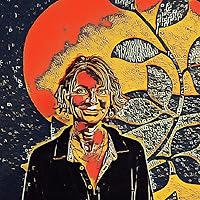
Alexandra David-Néel was an explorer, anarchist, spiritualist, Buddhist and writer. She is most known for her visit to the forbidden (to foreigners) city of Lhasa, capital of Tibet (1924). She was born in Paris, France and died in Digne, Alpes-de-Haute-Provence. She wrote more than 30 books, about Eastern religion, philosophy, and her travels. Her well-documented teachings influenced the beat writers Jack Kerouac and Allen Ginsberg, and philosopher Alan Watts.
Her real name was Louise Eugenie Alexandrine Marie David. During her childhood she had a strong desire for freedom and spirituality. At the age of 18, she had already visited England, Switzerland and Spain on her own, and she was studying in Madame Blavatsky's Theosophical Society.
In 1890 and 1891, she traveled through India, returning only when running out of money. In Tunis she met the railroad engineer Philippe Néel, whom she married in 1904.
In 1911 Alexandra traveled for the second time to India, to further her study of Buddhism. She was invited to the royal monastery of Sikkim, where she met Maharaj Kumar (crown prince) Sidkeon Tulku. She became Sidkeong's "confidante and spiritual sister" (according to Ruth Middleton), perhaps his lover (Foster & Foster). She also met the thirteenth Dalai Lama twice in 1912, and had the opportunity to ask him many questions about Buddhism—a feat unprecedented for a European woman at that time.
In the period 1914-1916 she lived in a cave in Sikkim, near the Tibetan border, learning spirituality, together with the Tibetan monk Aphur Yongden, who became her lifelong traveling companion, and whom she would adopt later. From there they trespassed into Tibetan territory, meeting the Panchen Lama in Shigatse (August 1916). When the British authorities learned about this—Sikkim was then a British protectorate—Alexandra and Yongden had to leave the country, and, unable to return to Europe in the middle of World War I, they traveled to Japan.
There Alexandra met Ekai Kawaguchi, who had visited Lhasa in 1901 disguised as a Chinese doctor, and this inspired her to visit Lhasa disguised as pilgrims. After traversing China from east to west, they reached Lhasa in 1924, and spent 2 months there.
In 1928 Alexandra separated from Philippe. Later they would reconcile, and Philippe kept supporting her till his death in 1941. Alexandra settled in Digne, and during the next 10 years she wrote books.
In 1937, Yongden and Alexandra went to China, traveling there during the second World War, returning to France only in 1946. She was then 78 years old.
In 1955 Yongden died. Alexandra continued to study and write till her death at age 100.
Alexandra David-Neel was born in Paris in 1868, the only child of Louis Pierre David, who fled to exile with his friend Victor Hugo after Louis Napoleon's rightist coup in 1851. At 18, Alexandra walked across the Alps to Italy. In the 1880s she rode a bicycle from Brussels to Spain. In her early twenties, she made her first journey East, through Ceylon and India, until her money ran out and she was forced to return to France and support herself as an opera singer. At the age of 35 she was married. Five days after the wedding, the marriage dissolved. In 1912, the Dalai Lama granted David-Neel the first private interview ever given to a Western woman. From then on she plunged deeper into Tibetan mysticism, trekking across snow-covered mountains for weeks at a time to reach isolated temples and teacher. Finally, in 1924, she penetrated Lhasa, the Forbidden City of Tibet, and witnessed the strange rituals of Lamaism. Her more than 20 books provide one of the best records of a culture now threatened by extinction. She ended her days in a Tibetan-style house she built in the Basses-Alps. She died in 1969, at the age of 100."
...how can you not want to read what she has to say?
Selon moi un classique sur le sujet qu'il faut absolument lire, car Alexandre Davi Neel nous mets en comparaison l'enseignement du Buddha avec son époque c'est qui est très intéressant pour nous aujourd'hui
3 1/2 stars The author clearly has deep knowledge of Buddhism and provides plenty of information about its origins, philosophy and more. Unfortunately I found the language dated and overly academic (I read the French version). I also felt the book lacked structure, more chapters dedicated to specific topics would have made it easier to follow. This might be one of the least approachable books about Buddhism I've read, and it's a shame.
The content is very scholarly but the language is not reader friendly. It is written like an academic paper, not like a book for everyone. In the modern age, this style of writing isn't appealing to the masses. But maybe it wasn't supposed to be for everyone?