Jump to ratings and reviews
Rate this book

Un año

Rate this book
Jugando con el concepto de escribir en un diario, el protagonista de esta antinovela apunta todo lo que le sucede el primer día de cada mes de un año. Un ejemplo de la literatura vanguardista Latinoamericana, este libro explora los principios de la realidad e identidad.

120 pages, Mass Market Paperback

First published January 1, 1935

6 people are currently reading
118 people want to read

About the author

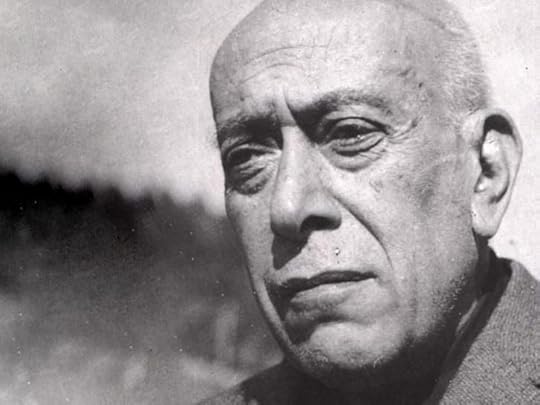
Juan Emar

29 books42 followers
Escritor, crítico de arte y pintor chileno, máximo exponente local de la vanguardia literaria de las décadas de 1920 y 1930 en el género narrativo, e integrante del colectivo de artistas plásticos Grupo Montparnasse

Ratings & Reviews

What do you think?
Rate this book

Friends & Following

Create a free account to discover what your friends think of this book!

Community Reviews

5 stars
35 (23%)
4 stars
57 (39%)
3 stars
39 (26%)
2 stars
11 (7%)
1 star
4 (2%)
Displaying 1 - 19 of 19 reviews
Profile Image for Glenn Russell.
1,511 reviews13.3k followers
Read
March 8, 2022


Juan Emar (1893-1964) from Chile is one of the leading untranslated (until now) Latin American authors of the 20th century.

Juan Emar wrote a novel entitled Yesterday (Ayer) that is available in English translation for the first time April 5 from New Directions. You can pre-order on Amazon and other online sellers. I certainly did and I'm so much looking forward to reading and posting a review.

Juan Emar also wrote a novel entitled One Year (Una año). My translation of the publisher's blurb reads as follows:

"Playing with the concept of writing in a diary, the protagonist of this anti-novel writes down everything that happens to him on the first day of each month of a year. An example of avant-garde Latin American literature, this book explores the principles of reality and identity."

I've written this brief review in the spirit of bringing Juan Emar to the attention of as many English speaking readers as possible. If you are a lover of outstanding Latin American literature, or World Literature, for that matter, please order his novel Yesterday.

And below is an excerpt from One Year translated from the Spanish by Daniel Borzutzky.

----------------------------------------

Today I had surgery on my ear and telephone. Doctor Hualañé, in person, administered the chloroform and scalpel.

This is how the events took place:

For quite some time I have loved Camila, wildly. She loves me one day out of every eight, and during the remaining days she laughs at me, wildly, and there is as much wildness in her laughter as there is in my love.

For the past seventeen days, however, Camila's laughter has gone beyond all previous wildness to the point where today I returned to my house with a greater desire to die than to live. But before putting an end to my existence, I dialed her telephone number,2 and listened.

A few seconds later, Camila spoke. By the tone of her voice, I thought that this perhaps was the one day out of every eight. But then I experienced a cruel deception. I said:

-I love you, Camila! Camila, I love you! She responded with a quick little laugh, a sharp laugh, which jabbed into me like the sting of a rattlesnake.

-My Camila, have mercy, I shouted three times.

And her laughter only grew louder. Overcome with anger, I tried with an abrupt and decisive gesture to yank the receiver from my ear, and to cut off all communication between us. But just as I began this gesture, I felt a strong pain throughout my ear, as though it were being pulled by thousands of demons. At the same time, her laughter continued to pierce me with a sharpness that bristled my nerves.

-Camila, I beg you, stop laughing.

In vain. Her laughter now echoed interminably.

-Camila, it would be better if you told me you hated me.

Nothing. I tried once more to remove the receiver from my ear. It resisted in such a way that I understood that if I kept trying I would knock over the base to which it was mounted. I tried to pull it away with a gentle touch. Useless. I tried to unscrew it like a bolt. Also useless. And her inexhaustible laughter kept pouring out through the phone, and spreading across my head. What could I do?

There was only one thing to do: reach for the scissors to cut the cord. I didn't care if the phone was stuck to my ear as long as I didn't have to hear her cold and scornful laughter.

I gave the cord a snip and split it in two. Salvation!

But no! Her loud and copious laughter kept coming.

I ran through the house. Sweet remedy!

Silence. As soon as I was a few meters from the phone, silence.

What a relief! I would no longer be tortured by that diabolical laughter which evokes all the unhappiness Camila sees in me. No longer would that symbol of my unfortunate love continue to enter in through my auditory nerve. Silence, silence. But soon I began to notice that, in truth, there was too much silence.

Not even a whisper, or a murmur, or a muffled echo, nothing. My feet on the floor board stepped on cotton; when I clapped my hands, not even one wave of sound was released into the air; when I screamed at the top of my lungs, my voice was an underground vault. Complete silence.

Terrified, I picked up a bottle of wine from the Rhine Valley and threw it against my bathroom mirror: the bottle shattered, the wine flew through the air, and the mirror was pulverized. All of this in the silence of a cloudless night over a snowy and deserted mountaintop. The peace of a tomb, an absolute peace. A perfect suppression of any manifestation of all auricular life.

I won't deny it: I turned pale as this black cloak fell over me, isolating me from the side of existence on which all other human beings live.

Nevertheless, a hope. With cautious steps, I walked toward the room with the telephone. Silence, an ever-present silence.

I arrived. I stopped three meters from the phone, and leaned against the wall. Each minute a drop of blood dripped from the severed phone cord. But not a sound nor a whisper, nothing.

I walked no faster than the minute hand on the clock. Silence.

Silence, yes, throughout the entire interminable first meter.

Until I arrived at the very beginning of the second meter.

Then, from far away, at an extraordinary distance, I heard, faintly but, at the same time, with clarity, a jingling, which, because of its distance, made me think of antipodes; it sounded like crystal shards on ice.

I kept walking. The jingling grew louder. Now it sounded like a voice draining the house, soaking it. One more step: the jingle changes, takes shape, vibrates, bounces off the walls. My destiny is marked: defenseless, subdued, I take the last step. And I am nearly deafened by the wounding sound of Camila's sarcastic laughter.

No more precaution, no more deliberation. I jump from one side to the other: toward the telephone, away from it; toward the piercing laughter, then toward the absolute silence . . . O the incessant scorn from my one and only love, o the silent abyss between myself and the world.

And the days begin to pass, outside my eardrums.

Monotonous days, exactly the same.

I sleep well, and I wake up at the same time as always, but I feel three times more tired than before, now that one of the three ways of sleeping is no longer available to me: I can sleep on my back, and on one side, but the telephone receiver stuck to my ear prevents me from sleeping on the other.

I get dressed and look at myself for several minutes in front of the remaining pieces of my broken mirror. I test out all the possible methods of taking the phone off my ear: force, subtlety, a knife, a lubricant. No success.

I walk with soft steps through each room of the house and, from time to time, I entertain myself-the only entertainment possible-by verifying and re-verifying-until I am properly sated-that everything becomes silent in my presence.

I then walk to the telephone, always with the naïve and distant hope that silence will have penetrated its domain. No! Camila's laughter is always there, entrenched in the machine, and suspended several meters in the surrounding air.

I return to my study. I put a record on the phonograph and, as always, I comfortably settle into my armchair. I want, each day, to experiment with the great pleasure-unavailable to others-of knowing that in the entire room there is sound, but that I don't hear a thing.

I stretch out on my bed. I close my eyes, and meditate, and on each occasion-like clouds of smoke taking shape, or like small shapes swimming in the clouds-I sense that another interpretation of the silent world is beginning to form, an interpretation useless to anyone who can hear. Another face, another meaning, another reason, which only begins to form when the silence is definitive unto eternity.

But then I remember that for me this isn't the case. For if on one side I do not hear, I hear-and do I hear!-the moment my receiver enters the zone occupied by Camila's laughter.

Maybe this time there will be silence.

My hope is revived, a double hope: to no longer hear her wretched laughter; and to walk unblemished through my new perceptions of this insinuated world.

I run to the telephone. I extend my neck. And tilt the receiver.

Camila laughs, Camila laughs, jingles and drives ice and nails into my lacerated heart.

And the entire scene repeats itself. The phonograph spins another record.

It's like this every day, every hour. Either the tomb, or the scorn of Camila.

Slowly the habit possessed me. My entire organism adapted to this new mode of existence. The tomb filled with silent meanings; the laughter infiltrated me with the pleasure of suffering. A sweet and sorrowful happiness came more and more to take the place of my previous activities. Thousands of objects, which hid from my intimate life beneath the ever-echoing sounds of existence, now obediently presented themselves to me like delicate gifts. All the empty space that surrounded me became populated with unsuspected existences. And over this new world, the suffocating pleasure of torment that Camilla inflicted upon me absorbed like pepper in my flesh.

It's been three days since I told myself that, from this point on, I will be happy until the end of my life. But yesterday, doctor Hualañé appeared at my door.

The good man had been informed-I will not discuss how-of what he-and up until recently, I-considered as my disgrace. I told him there was no disgrace. But he wouldn't listen to me. He went to the window and opened it wide. With thousands of faces and gestures, he led me to understand that the entire outside world, all that could be seen of the city, the distant mountains, and the sky, was infinitely flowing with living sounds.

The good man tempted me. He has tempted me. I tilt my head to listen.

Today he has come; he has operated on me, and chloroformed me. Afterwards, he reconnected the receiver to the bloody, hanging cord. And today I have reconnected to the sounds of life.

And all of the unsuspected existences, and all of my peaceful meditations have vanished. And all of the pleasure in my pain has disappeared. Now everything echoes frantically. And so to know what to expect in this world, which provokes in me an infernal chaos, I have no choice but to pick up the phone and dial 52061, and wait.
Profile Image for Guillermo Jiménez.
486 reviews361 followers
April 4, 2017
Hoy yo no he sido operado ni de la oreja ni del teléfono. Tampoco he visto el mar por horas ni he logrado penetrar en la naturaleza de una ola infinita, que es la misma, pero es otra; una ola que es en realidad un ente que sufre y que se duele y que Emar desgarradoramente logra captar en toda su profundidad en apenas unas líneas.

Un año es un diario por meses, un recuento magnífico de los días de un flâneur, de un observador meticuloso de los otros, de lo otro; Emar comprime el tiempo narrativo y lo desarticula al máximo.

Habla de la labor del autor como hombre que ve desde afuera, “'Cause I'm the man on the outside looking in”, y consigue fabricar líneas ocultas que unen los puntos de historias que jamás serán contadas o escritas o descubiertas, como si la forma embrionaria fuera aquella en la que se siente más a gusto.

Hay una preocupación por captar el instante, el flujo de ideas y pensamientos, por hacer un entramado invisible del azar, incluso, esta brevísima obra prefigura de alguna maner algo como el Bosón de Higgs, es decir, hace hincapié en el espacio vacío que queda donde pudo ser una historia, sabemos que hay la ausencia de algo que es, pero solo porque no queda nada, o no llegó a suceder, salvo para el narrador; para el escritor.

Mis meses favoritos son junio y julio, y noviembre es sumamente triste porque habla de un amor no correspondido, sin tragedia ni drama, lo que acentúa su tristeza de mes.

Leyendo este librito me sucede lo que con pocos: quiero correr a las librerías para hacerme de todo lo de este autor. Ya quiero que Jorge se vaya a su intercambio de estudios a Buenos Aires donde abrigo esperanzas de que será más fácil localizar Umbral, el novelón de casi o más de cinco mil páginas de este raro, como los llamara Gimferrer, de este iconoclasta, a lo Wilcock; de este ninguneado autor que si no es por Vila-Matas, quizá me hubiera tardado más en descubrir.

No mencionaré que lo emparentan literariamente con Kafka, porque creo que no viene a cuento y podría desviar la atención del precioso objeto de precisión literaria, como si la maquinaria de un reloj se tratara, que es Un año.
Profile Image for Leopoldo.
Author 12 books114 followers
January 24, 2025
¿Qué es un diario? ¿Qué es una novela? ¿Y el realismo, y el calendario, y los días, y la poesía y la cronología y la amistad y las convenciones narrativas y el amor y la enfermedad del amor (que sólo se puede tratar, por supuesto, con una operación de la oreja y del teléfono)? Una única respuesta: todo es lo que a Juan Emar se le da la Reverenda Gana.
Profile Image for Carlos Puig.
656 reviews53 followers
November 4, 2021
Texto vanguardista que presenta un diario de vida con doce entradas, correspondientes al día primero de cada mes. El narrador presenta experiencias irreales, ilógicas, absurdas. Describe en forma precisa, objetiva y reflexiva diversas situaciones donde lo imaginario y especulativo van de la mano. Hay un cierto estilo hermético, metafísico o esotético en buena parte de los relatos. Se proyecta una retórica visionaria, delirante y existencial, con ciertos referentes realistas o cotidianos que se quedan en referentes. Juan Emar, único narrador chileno que experimentó en las primeras décadas del siglo XX con esta estética, mientras los demás insistían en el criollismo, naturalismo y realismo social. Incomprendido, aislado, se dedicó a crear en la literatura su propio lugar en el mundo. Umbral, obra narativa de cinco mil páginas es su obra más relevante. Neruda lo catalogó como "el Kafka chileno".
Profile Image for Jesús.
Author 6 books25 followers
January 4, 2020
Gratuitamente raro a veces, deliciosamente excéntrico otras. Mientras lo leía pensé en Mario Levrero y en Felisberto Hernández. Mereció la pena. Interesante autor.
Profile Image for tH..
93 reviews2 followers
January 9, 2023
"[...] se estaban nutriendo con todas las palabras que mil autores habían enmudecido y plasmado en mi estantería para que yo, cada vez que el Demonio me lo insitara, las sacara de su mutismo y las hiciera rehablar a mis oídos."

esses diários de experiências insólitas delimitam o mundo material através do surreal, de modo que todo vislumbre, uma vez destrinchado como relacionado ao primeiro dia de um mês, torna-se inquestionavelmente parte da realidade. luto, negação, dúvida, palavras que descolam do papel como se fugissem, desintegrando os enunciados, da fixidez dos relatos jornalísticos, em busca da liberdade que traz o absurdo. perspicaz, interessantíssimo, singular. uma ótima leitura em uma ótima edição.
Profile Image for Camilo González.
87 reviews10 followers
December 17, 2023
Cómico, audaz, valiente, estrambótico, imaginativo: así es este diario de Juan Emar durante un año (?). Todo parece raro hasta que recordamos que nuestra vida en la gran ciudad, en una ciudad moderna, es absurda, azarosa y de libre asociación. Cada mes es un nuevo engaño escrito desde el desahogo: retórica, ficción y creatividad.
Profile Image for Juan Fuentes.
Author 7 books76 followers
August 1, 2017
Delirios paranoicos en un lenguaje poético, lleno de imágenes poderosas.

Publicado según parece en 1935 tiene juegos estructurales mejores que el 90% de los libros que en el siglo XXI ocupan las vitrinas de nuestras librerías.
16 reviews
July 18, 2021
Una novela escrita a forma de diario en la que solos los primeros días de cada mes merecen un reporte. Extraña a ratos, inconexa y poco cohesiva de vez en cuando también. Para ser mi primer acercamiento a Emar debo decir que me quedo con gusto a poco por lo breve de la obra, pero sin duda merece la pena. Tiene un par de capítulos con reflexiones muy interesantes.
Profile Image for Sebastián.
33 reviews
November 21, 2023
An atypical book by an anachronous writer, one of latin america's earliest modernist authors, it follows the character during the first day of each months for several months, sleuthing away the colonial and godless modernity he witnesses
Profile Image for Gabriel Cepeda.
11 reviews
August 14, 2025
Entretenido y genuino. Los recursos literarios que utiliza aportan a que sea una lectura cómoda y entretenida.

“Y rápidamente también terminé la lectura de Don Quijote y empecé la de La Divina Comedia.”
Profile Image for Jora.
26 reviews1 follower
May 6, 2023
La entrada en septiembre es como el mejor poema que Pessoa nunca escribió, de hecho el libro en general se siente como un híbrido entre él y Huidobro
Profile Image for Gabriella.
6 reviews
July 18, 2024
Salta de lo monótono y realista a lo romantic, ameno y profundo. No es de mi agrado, pero puedo entender que hay quienes lo encontrarían interesante.
Displaying 1 - 19 of 19 reviews

Can't find what you're looking for?

Get help and learn more about the design.