

What do you think?
Holiday Series
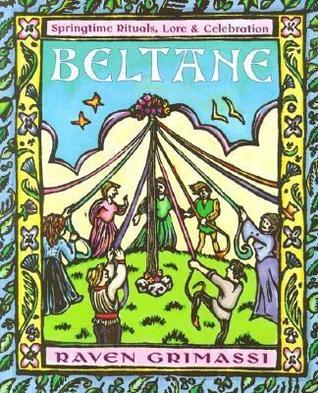
Beltane: Springtime Rituals, Lore, & Celebration
Hail Spring with a "Bright Fire" Celebration!
Discover the roots of Beltane or "bright fire," the ancient Pagan festival that celebrates spring, and the return of nature's season of growth and renewal. In the only book written solely on this ancient Pagan festival, you'll explore the evolution of the May Pole and various folklore characters connected to May Day celebrations. Raven Grimassi reveals the history behind the revelry, and shows you how to welcome this sacred season of fertility, growth, and gain
·May Day magick and Beltane spells to attract money, success, love, and serenity; scrying with a bowl or glass
·Beltane Quick May Wine, Bacchus Pudding, May Serpent Cake, May Wreath Cake
·Seasonal Maypole centerpiece, May wreath and garland, pentacle hair braids, May Day basket
·Springtime rituals and the Maypole dance, May doll, the Mummer's Play, Beltane fires, May King and Queen
·Myths, fairy and flower Green Man, Jack-in-the-Green, Dusio, Hobby Horse; elves, trolls and fairies; spring flowers and their correspondences
This well-researched book corrects many of the common misconceptions associated with May Day, and will help you appreciate the spirituality and connection to Nature that are intimate elements of May Day Celebrations. Welcome the season of fertility, flowers, and fairies with Springtime Rituals, Lore & Celebration.
Discover the roots of Beltane or "bright fire," the ancient Pagan festival that celebrates spring, and the return of nature's season of growth and renewal. In the only book written solely on this ancient Pagan festival, you'll explore the evolution of the May Pole and various folklore characters connected to May Day celebrations. Raven Grimassi reveals the history behind the revelry, and shows you how to welcome this sacred season of fertility, growth, and gain
·May Day magick and Beltane spells to attract money, success, love, and serenity; scrying with a bowl or glass
·Beltane Quick May Wine, Bacchus Pudding, May Serpent Cake, May Wreath Cake
·Seasonal Maypole centerpiece, May wreath and garland, pentacle hair braids, May Day basket
·Springtime rituals and the Maypole dance, May doll, the Mummer's Play, Beltane fires, May King and Queen
·Myths, fairy and flower Green Man, Jack-in-the-Green, Dusio, Hobby Horse; elves, trolls and fairies; spring flowers and their correspondences
This well-researched book corrects many of the common misconceptions associated with May Day, and will help you appreciate the spirituality and connection to Nature that are intimate elements of May Day Celebrations. Welcome the season of fertility, flowers, and fairies with Springtime Rituals, Lore & Celebration.
192 pages, Paperback
First published March 1, 2001
About the author
Raven Grimassi
47 books111 followersRaven Grimassi was an American author of over 20 books, and a scholar of paganism with over 40 years of research and study in the genre of Wicca, Stregheria, witchcraft and neo-paganism.
Ratings & Reviews
Friends & Following
Create a free account to discover what your friends think of this book!
Community Reviews
Displaying 1 - 21 of 21 reviews

May 2, 2019
Difficulty Level: Beginner
No magickal background necessary.
Pros:
- It's a Wiccan classic. It's *the* book on Beltane.
- Correctly credits the Etruscans, Romans, and Greeks for Wiccan customs and for the concept of fairies.
For more on this, see one of Raven Grimassi's other books - The Wiccan Mysteries.
- In-text citations! (I'd prefer more, but I'll take it!)
There's also a bibliography.
- Written for practitioners at any level.
The book discusses the symbolism and folk magick of plants traditionally associated with May or with fairies, Greco-Roman-Etruscan gods associated with May and with Beltane-related rites, and fairy and Green Man lore. There is a section devoted to fairy myths that can be read during rituals.
Cons:
- There are two things that Grimassi forgot to mention.
1. Terra Mater is a Roman epithet for the goddess Cybele. (See pgs. 9 & 124.)
2. The folkloric character La Befana is based on the Roman goddess Strenua. (See pgs. 21 & 42-44.)
No magickal background necessary.
Pros:
- It's a Wiccan classic. It's *the* book on Beltane.
- Correctly credits the Etruscans, Romans, and Greeks for Wiccan customs and for the concept of fairies.
For more on this, see one of Raven Grimassi's other books - The Wiccan Mysteries.
- In-text citations! (I'd prefer more, but I'll take it!)
There's also a bibliography.
- Written for practitioners at any level.
The book discusses the symbolism and folk magick of plants traditionally associated with May or with fairies, Greco-Roman-Etruscan gods associated with May and with Beltane-related rites, and fairy and Green Man lore. There is a section devoted to fairy myths that can be read during rituals.
Cons:
- There are two things that Grimassi forgot to mention.
1. Terra Mater is a Roman epithet for the goddess Cybele. (See pgs. 9 & 124.)
2. The folkloric character La Befana is based on the Roman goddess Strenua. (See pgs. 21 & 42-44.)

April 25, 2017
This was okay. It had good history on where Beltane came from but it was limited in it's ideas for celebrating now. I probably will not touch it again for years.

May 1, 2024
A great book for celebrating Beltane, full of crafts and recipes as well.

February 15, 2012
This book had some history, some folklore, and the meanings of flowers and trees, some recipes and some spells. I thought it was really informative and wouldn't mind reading her other books.
September 6, 2026
I have a soft spot for books like this because they remind me of a period when the sabbats still felt like enormous territories waiting to be explored. Grimassi gives Beltane that kind of attention here, lingering over May Day customs, the Maypole, Beltane fires, the May King and Queen, mummery, fairy lore, flowers, seasonal foods, divination, and the various spirits and folk figures that accumulated around the beginning of May. It is a pleasantly old-fashioned Pagan book in that respect. You can almost feel the ribbons, hawthorn, cakes, bonfires, and questionable homemade wine collecting around you as you read.
What I enjoyed most was the folklore. Grimassi's interest in figures such as Jack-in-the-Green, the Green Man, the Hobby Horse, and the wider company of May spirits gives the festival more personality than the familiar shorthand of “Beltane equals fertility.” Fertility is certainly present, and sometimes with all the subtlety of a Maypole planted firmly in the middle of the village, but the season is also about vegetation returning, boundaries becoming porous, communal festivity, courtship, luck, protection, and the slightly unruly quality that accompanies spring finally winning. The recipes and crafts can feel very Llewellyn-circa-2001, but I mean that with considerable affection. Not every magical book needs to be an ontological crisis.
I would approach some of the historical material more cautiously now than I did when books like this first appeared. Grimassi was writing during a period when Pagan authors could be rather confident about connecting scattered folk customs into coherent ancient religious survivals, and I think contemporary readers are right to ask harder questions. Still, I would hate to see that correction flatten Beltane into a sterile list of things historians can prove beyond argument. Festivals survive partly because people keep adding themselves to them. Grimassi understood the pleasure of that process, and this remains a very enjoyable book for anyone who wants Beltane to feel less like a date on the Wheel of the Year and more like an actual season you can step into.
What I enjoyed most was the folklore. Grimassi's interest in figures such as Jack-in-the-Green, the Green Man, the Hobby Horse, and the wider company of May spirits gives the festival more personality than the familiar shorthand of “Beltane equals fertility.” Fertility is certainly present, and sometimes with all the subtlety of a Maypole planted firmly in the middle of the village, but the season is also about vegetation returning, boundaries becoming porous, communal festivity, courtship, luck, protection, and the slightly unruly quality that accompanies spring finally winning. The recipes and crafts can feel very Llewellyn-circa-2001, but I mean that with considerable affection. Not every magical book needs to be an ontological crisis.
I would approach some of the historical material more cautiously now than I did when books like this first appeared. Grimassi was writing during a period when Pagan authors could be rather confident about connecting scattered folk customs into coherent ancient religious survivals, and I think contemporary readers are right to ask harder questions. Still, I would hate to see that correction flatten Beltane into a sterile list of things historians can prove beyond argument. Festivals survive partly because people keep adding themselves to them. Grimassi understood the pleasure of that process, and this remains a very enjoyable book for anyone who wants Beltane to feel less like a date on the Wheel of the Year and more like an actual season you can step into.

December 20, 2020
Raven Grimassi does an excellent job of telling the story of the Spring ritual of Beltane. The rituals he shares and the celebrations from around the world help to explain just where and what this Sabbat is all about.

Read
April 21, 2022When you're born on a Pagan holiday that is also one hell of a sultry celebration, why not brush up on the midnight rituals. I mean more than midnight margaritas.
My birthday falls on a Sunday this year (2022) and come midnight on 4/30 some fun will be had.
My birthday falls on a Sunday this year (2022) and come midnight on 4/30 some fun will be had.
March 15, 2017
I thought that a few chapters were valuable, but for the most part, I didn't love this book.

August 5, 2014
Beltane is the early summer holiday that is usually celebrated on May 1--May Day. This book delves into various traditions and some interpretations of their roots, with suggestions for modern-day Pagans and Craft practitioners. There are also some attempts to correct misinformation. The book had far more lore and history than I really wanted in a book of this nature--I like to understand the roots, but I also want suggestions on how to bring it into my everyday life--but it was still a really nice resource.

May 3, 2012
I have always thought May was a special month, and May Day is beautiful. There are things to celebrate that I have not done yet, and some that I have. Special are flowers and bonfires. Also Maypoles. I didn't know about May Dolls before. So something new to plan for next year. It rained here May eve and May Day, so no bonfire. Maybe next year for that as well.

April 20, 2015
Not what I was expecting but still pleasantly surprised. Had lots of information on the history of the sabbat how it's celebrated around the world and a large section of May season lore. Also very interesting if you are into fairy lore. Definitely worth a pickup.

August 19, 2008
Awesome book about this summertime holiday from a Pagan standpoint.

May 3, 2009
All about the major rite of Beltane - one of the eight holidays of the Pagan calendar year.

August 2, 2011
As a Priestess I have the entire set, they're full of wonderful ideas for the various Sabbats.
Read
August 20, 2012new

October 1, 2012
Very good one here. Worth looking at, for sure!

April 8, 2013
Good book, but a huge chunk of it was just about fairies and totally lost my interest.

April 24, 2013
I really enjoyed reading about the different fairy tales and the meaning behind flowers.

August 16, 2013
Fantastic read, with beautiful explanations of traditions old and new!

April 19, 2017
I skimmed this one, to be honest. I was hoping for a slightly more interactive book, like Edain McCoy's Ostara: Customs, Spells & Rituals for the Rites of Spring, but this one was mostly pseudo-historical and folkloric information. I'm sure that plenty want that, but I was mostly interested in the recipes and crafts and such. Also, as with many Llewellyn books, this one really could have used another bout of editing; lots of typos, and even some factual errors in this one.
Displaying 1 - 21 of 21 reviews