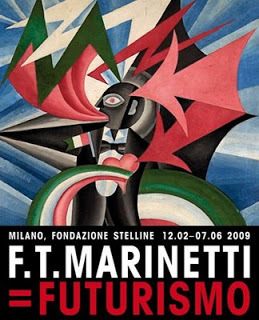
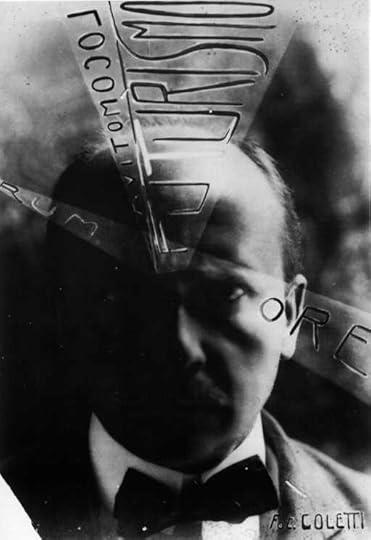
Futurism, invented in 1909 by the Italian writer and cultural impresario, F.T. Marinetti, was the defining avant-garde movement of the early twentieth century. Inspired by the cities, technology, speed, and latent violence of the world around them, the Futurists created an art and ideology for their heroic and highly politicized version of modernity. This book examines the impact of Futurism in Italy, England, Russia, and elsewhere, as well as its significance for twentieth-century art as a whole.
Richard Stephen Humphreys was the Curator of Programme Research at Tate Britain and Deputy Chairman of the London Consortium, of which he was a founding member.
The art movement known as Futurism was born in Italy in 1909 with the publication of F. T. Marinetti’s The Founding and Manifesto of Futurism, outlining the philosophy of this revolutionary movement comprising an international band of artists, sculptors and poets - Umberto Boccioni, Carlo Carrà, Luigi Russolo, Giacomo Balla, Gino Severini, among others. These Futurists loved speed, noise, machines and danger and also proclaimed a muscular political agenda linked to Fascism.
Richard Humphrey’s lively, richly illustrated book covers the origins, development and pervasive influence of this group that thrived on boldly setting down their Manifestos on such topics as art, sculpture, architecture, poetry, music, lust and war. Perhaps an effective way for me to provide a glimpse into what readers will encounter with this spirited band of visionaries is to share the eleven concise statements of their staunch political/cultural/artistic position at the heart of F. T. Marinetti’s Manifesto along with my comments. Here they are:
1. We intend to sing the love of danger, the habit of energy and fearlessness.
Hardly the words of a group of sensitive, refined Romantic or Decadent aesthetes who make a hasty retreat from the world in order to live and create in the rarefied atmosphere and safety of isolation. No, no, no – right out on the city street, in your face, creating works of art that kick ass.
2. Courage, audacity, and revolt will be essential elements of our poetry.
These Futurists wanted to insert themselves into history rather than simply art history and that’s history as in the real flow of monumental events with a stomp of the jackboot – none of those reasoned, mild-mannered discussions or incremental changes so as not to upset the status quo. Just the opposite: think of black uniformed soldiers racing around in fast, sleek cars; think of a Mussolini rally with a crowd of thousands cheering in response to impassioned rhetoric, words of fire and action ; think of the Italian dictator shooting off air raid sirens just to keep the population on their toes.
3. Up to now literature has exalted a pensive immobility, ecstasy, and sleep. We intend to exalt aggressive action, a feverish insomnia, the racer’s stride, the mortal leap, the punch and the slap.
The now famous myth of the writer as tough guy. Years after Marinetti’s Manifesto, the tradition has been carried forward by writers like Ernest Hemingway, Henry Miller and Charles Bukowski, tough guys who take time out from daring adventures and barroom brawls to punch and slap the keys of their typewriter.
4. We affirm that the world’s magnificence has been enriched by a new beauty: the beauty of speed. A racing car whose hood is adorned with great pipes, like serpents of explosive breath—a roaring car that seems to ride on grapeshot is more beautiful than the Victory of Samothrace.
Ah, those noising, revving autos speeding along the highway. Actually, to my mind, there is an even more powerful display of gleaming silver pipes and symbol of roaring danger and speed: the modern motorcycle. With so many revving, gleaming motorcycles and lists of driver deaths, the vision of the Futurists is still very much with us.
5. We want to hymn the man at the wheel, who hurls the lance of his spirit across the Earth, along the circle of its orbit.
This statement of constantly driving a high speeds, defying death at every turn, shooting left and right, watching explosions all around you anticipates our culture of high speed ultra-violent video and computer games and, of course, ultra-violent movies and films. Again, the spirit of Marinetti and the Futurists are with us still.
6. The poet must spend himself with ardor, splendor, and generosity, to swell the enthusiastic fervor of the primordial elements.
We all have seen and heard our modern day poets of enthusiasm, fervor and primal energy: rock stars.
7. Except in struggle, there is no more beauty. No work without an aggressive character can be a masterpiece. Poetry must be conceived as a violent attack on unknown forces, to reduce and prostrate them before man.
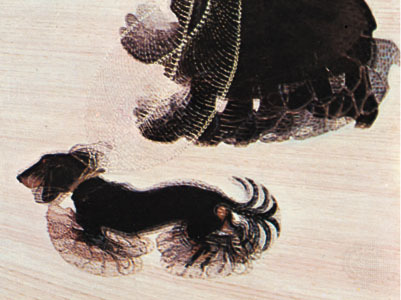
Those Futurists proclaimed spiritual vitality by living in the present and through the aesthetics of action. Movement is everything. Even a little doggie can get in on the action. And what would the Futurists say if you asked them about art that should be created to endure over time? Answer: Vai all'inferno!
8. We stand on the last promontory of the centuries! Why should we look back, when what we want is to break down the mysterious doors of the Impossible? Time and Space died yesterday. We already live in the absolute, because we have created eternal, omnipresent speed.
Go, Futurists, go! Viva la speed!
9. We will glorify war—the world’s only hygiene—militarism, patriotism, the destructive gesture of freedom-bringers, beautiful ideas worth dying for, and scorn for woman.
Ah, the futurists are coming - duck and cover! Too bad the futurists were fascists. What would Marinetti have to say in the aftermath of Nazi Germany and fascist Italy? Also, what did Marinetti’s wife have to say about her husband’s Manifesto?
10. We will destroy the museums, libraries, academies of every kind, will fight moralism, feminism, every opportunistic or utilitarian cowardice.
Take no prisoners! And the hell with all that stuffy, refined culture! Again, for me, this brings to mind the modern mentality of action video games and action movies: the more violent, the more speed, the more multiple heavy-duty explosions to loud, heavy metal rock and chances to pull the trigger and fire, the better.
11. We will sing of great crowds excited by work, by pleasure, and by riot . . .
The ultimate Futurist modern day event: the rave concert.
The word “future” is one traditionally loaded with promise and possibility, and there are few times when that was truer than during the early years of the twentieth century. With technological marvels such as the automobile, the radio, and the airplane abounding, it seemed as though Western civilization was riding a wave that would sweep aside the fetters of the past and take the world forward into an exciting tomorrow. While many Western artists and writers incorporated this sense of transformation into their work, few did so as eagerly and as aggressively as the self-identified Futurists: a group of predominantly Italian painters, poets, and architects, who rejected the past openly so as to shake off the lethargy that was slowing the pace of the change they welcomed.
Perhaps unintentionally, the short size of Richard Humphreys’s description of the Futurist movement captures nicely the frenetic tempo that its members desired. In less than a hundred glossy, colorfully-illustrated pages, he summarizes its arc from its origins in the avant-garde trends at the turn of the century to its echoes in the Fascist movement in interwar Italy. He structures his narrative around Filippo Tommaso Marinetti, the poet and editor whose excited 1909 manifesto announced Futurism’s mission to drive humanity forward. Forward to what was never exactly clear, as the art and writings focused more on the motive forces of the age rather than a vision of where those forces were taking them.
That was because, as Humphreys demonstrates, where they were going mattered less than what they were leaving behind. The Futurists’ focus on throwing off the formidable burden of Italy’s cultural heritage might make it somewhat surprising that the movement won adherents elsewhere in Europe, yet it reflects the excitement so many on the continent felt about the scientific and technological progress of the age. Such enthusiasm proved just one of the many fatalities of the First World War, however, which brought Futurism to a shuddering halt. In the postwar era, many of its surviving artists gravitated towards fascism, which shared Futurism’s enthusiasm for technologically-driven progress even as it celebrated rather than renounced Italy’s classical heritage. Futurism itself was tolerated, in Humphreys’s words, as “a noisy . . . and influential side-show,” leaving it to go down with the rest of the fascist regime at the end of the Second World War. It is this arc which makes his book not just a useful overview of a modern art movement, but a handy micro-history of the era it represented.
The Futurists of pre-WW1 Italy have recently become one of my favourite 20th century avant-garde artistic/cultural movements, partly because they aren't as overexposed as many of the others. However, that also means in-depth reading material about Futurism can be difficult to find in other languages than Italian. I'm hence quite grateful for this book providing a concise introduction to the movement courtesy of Tate Modern Art Gallery's director Richard Humphreys.
Humphreys explains succinctly how the historical context of the unified Italy being a young nation that had recently industrialized gave rise to a cultural movement that within different artistic media glorified the forwards march of high technology, the eradication of old traditions and martial valour in service of neverending progress through depiction of vibrant colours and constant motion. Several founding Futurists' post-WW1 loyalties to Fascism, that scarlet letter for the movement, is also explained to have been of a far from always comfortable nature: Not only was the self-conscious hyper-modernism of the Futurists at odds with Fascism's traditionalistic nostalgia for Imperial Roman antiquity, but just as many Futurists ended up on the *other* extreme of the political spectrum as the Anarchist philosopher Max Stirner had been a strong influence on the movement's foundational ethos.
It is also worthy of admiration how the author uncovers Futurism's influence upon the rest of 20th century culture, including very different movements like Russian suprematism which to this day is way more famous, the Vorticism of Britain and the whole of modern architecture/design. As much as Futurism might have been overshadowed by Expressionism, Dada, Cubism and Surrealism its legacy is still with Western civilization merely through the force of cultural osmosis.
Absolutely wonderful little exposition of Futurist aesthetic philosophy, history, key figures, roots, and influences. A+ would read again.
Don't know what exactly one can say about a book like this. It discusses futurist art, writings, architecture and sculpture. Politics was pretty central to the movement, so it discusses the connections with Fascism, although leftist radicalism and Anarchism are also influential. The relationship with Fascism was more tense than i had previously believed, due to Mussolini's glorification of the past, tolerance of the church, and personal irreverence towards Futurism. Its interesting to see how Futurism adapted to that in the last chapter.
Philosophers like Nietzsche, Stirner, and Sorel laid the philosophical roots for a lot of this stuff. You know, guys who emphasize conflict, strife, violence, achievement, struggle, and above all ACTION. In the Italian context the motion and noises of industrial technology were very inspirational. Futurism wasn't necessarily a futuristic style of art. They depicted horses just as often as machines. It was about the present in motion, a dismissal of the past, an emphasis on activity, noise, and the marriage of reason and passion. Of course, the Russian futurists and the Vorticists of Britain went very different directions as their cultural contexts demanded.
Esperava um livro intenso e repleto de manifestos, pinturas e esculturas do futurismo italiano, encontrei uma acumulação maçadora de factos difusos e crítica assaz leviana da história do movimento futurista.
A concise, if dry, theoretical background on Futurism, how it intended to revolutionise the world through modernity, speed, and violence and as a consequence ended up revolutionising Fascism and Totalitarianism.
Not something I'd read again any time soon, but definitely useful.
The book was decent up until it covered Futurism under Mussolini. It showed no works from this period. He tries to claim Marinetti distanced himself from Mussolini and Fascism, then in the last paragraph says he was a self proclaimed fascist to his death, very strange section.