

What do you think?

I bottoni di Napoleone: Come 17 molecole hanno cambiato la storia
Che cosa ha dato e dà alla chimica la straordinaria facoltà di far nascere le civiltà e far cadere gli imperi? Il fatto che strutture chimiche, semplici e complesse, possano determinare con differenze minime l’intera varietà delle sostanze naturali. Quelle che hanno inciso sul corso della storia sono state moltissime: il pepe e le altre spezie (determinanti nelle scoperte geografiche e nella conservazione dei cibi fino all’avvento della refrigerazione), la seta (originaria della Cina, che diede un contributo allo sviluppo delle basi finanziarie del Rinascimento italiano), lo zucchero (che come il cotone alimentò la tratta degli schiavi e l’espansione economica che condusse alla Rivoluzione industriale), lo sviluppo delle armi da fuoco (che trasformò le tecniche della guerra), la gomma (che rivoluzionò il trasporto su strada) hanno esercitato la loro incredibile azione sul divenire della storia grazie a proprietà legate a piccoli gruppi di atomi presenti nelle loro molecole.
E i bottoni di Napoleone (o meglio, dei suoi soldati) che c’entrano in tutto ciò? Perché l’esercito dell’imperatore fallì nella campagna di Russia del 1812? Secondo una teoria, perché i bottoni di stagno delle uniformi francesi si disintegrarono al gelo dell’inverno russo, impedendo agli uomini di combattere.
E i bottoni di Napoleone (o meglio, dei suoi soldati) che c’entrano in tutto ciò? Perché l’esercito dell’imperatore fallì nella campagna di Russia del 1812? Secondo una teoria, perché i bottoni di stagno delle uniformi francesi si disintegrarono al gelo dell’inverno russo, impedendo agli uomini di combattere.
408 pages, Paperback
First published January 1, 1991
About the author
Penny Le Couteur
2 books20 followersDr. Penny Le Couteur is the Dean of Arts & Science at Capilano College where she has taught chemistry for 40 years. She has a Ph.D in Physical Organic Chemistry from the University of California, Santa Barbara, and completed her M.Sc. and B.Sc. at the University of Auckland in New Zealand.
She wrote Napolean's Buttons: How 17 Molecules Changed History, and is the author of the textbook Chemistry - A Second Course under the development of the Department of Chemistry at Capilano College. Dr. Le Couteur has also contributed to curriculum development in many original and ongoing courses in the department.
She is a member of the Royal Society of Chemistry. She is a member of and past-president of both the Society for Canadian Women in Science and Technology and the College of Chemistry Canada.
She wrote Napolean's Buttons: How 17 Molecules Changed History, and is the author of the textbook Chemistry - A Second Course under the development of the Department of Chemistry at Capilano College. Dr. Le Couteur has also contributed to curriculum development in many original and ongoing courses in the department.
She is a member of the Royal Society of Chemistry. She is a member of and past-president of both the Society for Canadian Women in Science and Technology and the College of Chemistry Canada.
Ratings & Reviews
Friends & Following
Create a free account to discover what your friends think of this book!
Community Reviews
Displaying 1 - 30 of 701 reviews

August 4, 2008
The seventeen molecules:
1. Peppers, Nutmeg, and Cloves
2. Ascorbic Acid
3. Glucose
4. Cellulose
5. Nitro Compounds
6. Silk and Nylon
7. Phenol
8. Isoprene
9. Dyes
10. Wonder Drugs
11. The Pill
12. Molecules of Witchcraft
13. Morphine, Nicotine, and Caffeine
14. Oleic Acid
15. Salt
16. Chlorocarbon Compounds
17. Molecules versus Malaria
Now, I happened to (mostly) enjoy my time spent in the trenches of orgo, so I'm looking forward to reading this book.
Post-reading: this is fantastic. There's often been too much separation between hard science and 'real life', as it were, and this book blends the two beautifully in illustrating chemistry's role in historical happenings. Chemistry is far more than just those reactions and diagrams we learned by rote and weren't applied to much except exams. This book breathes life into these molecules, integrates them into a bigger picture in a way I found extremely pleasing. My only wish is that there were more than seventeen molecules covered.
Also, forget about the buttons. They're an introductory anecdote, and there's so much more to this book than that.
1. Peppers, Nutmeg, and Cloves
2. Ascorbic Acid
3. Glucose
4. Cellulose
5. Nitro Compounds
6. Silk and Nylon
7. Phenol
8. Isoprene
9. Dyes
10. Wonder Drugs
11. The Pill
12. Molecules of Witchcraft
13. Morphine, Nicotine, and Caffeine
14. Oleic Acid
15. Salt
16. Chlorocarbon Compounds
17. Molecules versus Malaria
Now, I happened to (mostly) enjoy my time spent in the trenches of orgo, so I'm looking forward to reading this book.
Post-reading: this is fantastic. There's often been too much separation between hard science and 'real life', as it were, and this book blends the two beautifully in illustrating chemistry's role in historical happenings. Chemistry is far more than just those reactions and diagrams we learned by rote and weren't applied to much except exams. This book breathes life into these molecules, integrates them into a bigger picture in a way I found extremely pleasing. My only wish is that there were more than seventeen molecules covered.
Also, forget about the buttons. They're an introductory anecdote, and there's so much more to this book than that.

August 8, 2007
If you like Organic chemistry like i do, have a short attention span like i do, and have a passing interest in the economic, political, and cultural histories of textiles, dyes, and pharmaceuticals - you too may enjoy this nicely written non fiction work

March 30, 2023
পেনি ল্য কুতা ও জে বার্সন-এ দুই জৈব রসায়নবিদের বই “নেপোলিয়ন’স বাটনস”। এ বইতে তাঁরা ১৭টি রাসায়নিক যৌগ নিয়ে আলোচনা করেছেন যেগুলো তাঁদের মতে মানবসভ্যতার ইতিহাসে সবচেয়ে বেশী প্রভাব ফেলেছে। এ যৌগগুলোর দায়ে কখনো নতুন মহাদেশ আবিষ্কৃত হয়েছে, কখনো হয়েছে যুদ্ধ, যার ফলে পৃথিবীর মানচিত্রও বদলে গেছে। রসায়ন আর ইতিহাসের সমসত্ব এক মিশ্রণে লেখা এ বইটি তো দুর্দান্ত বটেই, তবে আমি এর ভালো/ মন্দের আলোচনায় মোটেই যাবোনা। বইটি পড়ে যা যা শিখেছি তার একটা চুম্বক অংশ কেবল টুকে রাখছি এখানে।
গোলমরিচের বরাতে নিতান্ত কপালজোরে কলম্বাস কর্তৃক আমেরিকা আবিষ্কৃত হয়ে তো পৃথিবীর হিসেব নিকেশই রাতারাতি পাল্টে গেলো। প্রশ্ন হচ্ছে, কি এমন আছে গোলমরিচে যার মোহে উন্মাদ হয়ে মানুষ পৃথিবীর এ মাথা থেকে ও মাথা দাবড়ে বেড়িয়েছে? মরিচের যে উপাদানটি আমাদের লালায়িত করে তার নাম পিপেরিন, যার রাসায়নিক সংকেত C17H19O3N। ব্যথার অনুভূতিটিকে শনাক্ত করবার জন্য আমাদের শরীরে যে পেইন নার্ভগুলো আছে, গোলমরিচের পিপেরিন আমাদের সে নার্ভের প্রোটিনের ওপর বসে পড়ে প্রোটিনটির আকার পাল্টে দেয়, তখনি আমাদের পেইন নার্ভ আমাদের মস্তিষ্কে জানান দেয়, "খাবারটি ঝাল"। মস্তিষ্কের এই সংকেতটি পাবার লোভেই আমরা বারবার ঝাল খাবারের কাছে ফিরে ফিরে যাই। গোলমরিচের পিপেরিন, লাল মরিচের ক্যাপ্সাইসিন, এবং আদা’র জিঞ্জারোন-এই ৩টি উপাদানেরই রাসায়নিক কাঠামো প্রায় একইরকম-একটি অ্যারোমেটিক চক্রকে ঘিরে কার্বন, অক্সিজেন, ও নাইট্রোজেনের দ্বিবন্ধন-যা আমাদের পেইন নার্ভকে প্রায় একইভাবে আন্দোলিত করে। ছবিতে দেখা যাচ্ছে আদার উপাদান জিঞ্জারোন আকারে বাকী দু’টি রাসায়নিক যৌগের তুলনায় কিছুটা ছোট, আদার “ঝাল”ও তাই বেশ খানিকটা কমঃ

মাংস রান্নায় আমরা তো প্রায়ই লং (লবঙ্গ) এবং জয়ফল ব্যবহার করি সুগন্ধের জন্য। যে রাসায়নিক উপাদানটির গুণে লবঙ্গের অমন চমৎকার সৌরভ, সেটির নাম ইউজেনল; জয়ফলের উপাদানটির নাম আইসোইউজেনল। ইউজেনল এবং আইসোজেনল হলো একে অপরের আইসোমার, অর্থাৎ এদের রাসায়নিক সংকেত একই, কিন্তু মৌলগুলোর অবস্থান ভিন্ন ভিন্ন স্থানে। মধ্যযুগে বিউবোনিক প্লেগে আক্রান্ত হয়ে ইওরোপের প্রায় ৬০ শতাংশ যখন উজাড় হবার পথে, তখন গুজব রটে, সাথে করে পোঁটলা ভর্তি জয়ফল নিয়ে ঘুরলে প্লেগের ছোঁয়াচ থেকে বাঁচা যাবে। এ কথাটির কিছুটা বৈজ্ঞানিক ভিত্তি সম্ভবত আছে! লবঙ্গ এবং জয়ফল জাতীয় গাছগুলো আসলে এই ইউজেনল বা আইসোইউজেনল ব্যবহার করে পোকামাকড়ের প্রতি তাদের প্রতিরক্ষা ব্যবস্থা হিসেবে। এই রাসায়নিক যৌগগুলোর গন্ধের কারণেই গাছগুলোতে পোকারা দাঁত বসাতে পারেনা। বিউবোনিক প্লেগ ছড়াতো মূলত মাছির মাধ্যমে। জয়ফল ভর্তি পোঁটলা সাথে নিয়ে ঘুরলে আইসোইউজেনলের গন্ধে মাছির খুব একটা কাছে ভিড়তে না পারারই কথা!
আইসোইউজেনল ছাড়াও জয়ফলের আরো কিছু রাসায়নিক উপাদান আছে, যেমন মিরিস্টিসিন এবং ইলেমাইসিন; এই দুটি উপাদান মনের ওপর প্রভাব ফেলে, এবং দৃষ্টিভ্রম বা হ্যালুসিনেশন ঘটায়। মিরিস্টিসিন কেন মানুষকে উদ্ভ্রান্ত করে দেয় সেটি জানার জন্য এর রাসায়নিক গঠনের দিকে চোখ ফেরাতে হবে। মিরিস্টিসিন এবং স্যাফরোল-এর রাসায়নিক কাঠামো প্রায় একই রকম, পার্থক্য শুধু স্যাফরোলে OCH3 বন্ধনটির অনুপস্থিতি। এই স্যাফরোল হলো ৩,৪ মেথিলিনডাইঅক্সিন-এন-মেথাইলঅ্যাম্ফেটামিন বা সংক্ষেপে এমডিএমএ (নেশাজাত দ্রব্যের কালোবাজারে এক্সট্যাসি নামে পরিচিত) তৈরীর প্রাথমিক উপাদান। বিভিন্ন রাসায়নিক প্রক্রিয়ার মাধ্যমে স্যাফরোল থেকে এমডিএমএ তৈরী করা হয়ঃ

খাবারের আরো একটি উপকরণ আধুনিক বিশ্বে প্রায় একই মাত্রায় বড় প্রভাব বিস্তার করে চলেছে গত তিনশ বছর ধরেঃ চিনি। মিষ্টি স্বাদটির আবেদন দেশ কাল জাত ভেদে সবার কাছেই বোধহয় একইরকম। আমাদের নিত্যদিনের জীবনে চিনির ভূমিকা কতখানি সেটি বুঝতে হলে একটি চমকপ্রদ তথ্যের দিকে তাকাতে হবে। ১৭০০ সাল নাগাদ ইংল্যান্ডে বার্ষিক মাথাপিছু চিনি খাওয়ার হার ছিলো প্রায় ৪ পাউণ্ডের কাছাকাছি (~২ কেজি); ১৭৯০ সালে এসে পরিমাণটি দাঁড়ায় ১৬ পাউণ্ডে (~৮ কেজি), এর বড় কারণ তদ্দিনে ব্রিটিশরা চা-কফি-পুডিং ইত্যাদি খাবারে ভীষণ অভ্যস্ত হয়ে গেছে। আধুনিক সময়ে চিনির চাহিদা আরো ঢের বৃদ্ধি পেয়েছে; ১৯০০ সাল থেকে ১৯৬৪ সালের মাঝে বৈশ্বিক চিনি উৎপাদনের হার বাড়ে ৭০০ শতাংশ! পশ্চিমা বিশ্বের বহু উন্নত দেশেই তদ্দিনে বার্ষিক মাথাপিছু চিনি খাওয়ার হার পৌঁছে গেছে ১০০ পাউণ্ডে (~৫০ কেজি)।
মশলার বেলায় যে প্রশ্নটি ওঠে, চিনির বেলাতেও তাইঃ কি আছে চিনিতে? কেন আমরা চিনি খেতে এত ভালোবাসি? আনবিক বিন্যাসের দিক দিয়ে চিনি’র সবচেয়ে সহজ রূপটি হলো গ্লুকোজ, যাকে অনেক সময় মনোস্যাকারাইডও বলা হয়। কাগজে কলমে গ্লুকোজ বা মনোস্যাকারাইডকে একটি সরলরৈখিক শিকল আকারে আঁকা হলেও বাস্তবে তারা মূলত ষড়ভুজ আকৃতির। ৫টি কার্বন, ও ১টি অক্সিজেন পরমাণু এই ষড়ভুজের বিভিন্ন জায়গায় বসে গ্লুকোজ বানায়। গ্লুকোজে যে OH বন্ধনটি থাকে, সেটি এই ষড়ভুজের ১ম কার্বনের প্রেক্ষিতে কোন অবস্থায় বসছে তার ওপর ভিত্তি করে গ্লুকোজকে ২ ভাগে ভাগ করা যায়; ১ নাম্বার কার্বনের নিচে বসলে সেটি আলফা গ্লুকোজ, আর ওপরে বসলে বেটা গ্লুকোজ।

চিনির রাসায়নিক নাম শুক্রোজ; শুক্রোজে দুটি উপাদান সমান পরিমাণে থাকেঃ গ্লুকোজ এবং ফ্রুক্টোজ। এই দুটি মনোস্যাকারাইড এক হয়ে শুক্রোজ নামের ডাইস্যাকারাইডটি গঠন করে। গ্লুকোজ এবং ফ্রুক্টোজও একে অপরের আইসোমার, তবে পার্থক্য হচ্ছে গ্লুকোজের মতো ফ্রুক্টোজ ষড়ভুজ আকৃতির নয়, পঞ্চভুজ। ফ্রুক্টোজের ২য় কার্বনের প্রেক্ষিতে OH বন্ধনটি ওপরে না নিচে তার ওপর ভিত্তি করে একইভাবে আলফা এবং বেটা ফ্রুক্টোজে ভাগ করা যায়। আলফা গ্লুকোজ আর বেটা ফ্রুক্টোজের মাঝে এক অণু পানি অপসারণের মাধ্যমে চিনি গঠিত হয়ঃ

মিষ্টি খাবারের প্রতি আমাদের দুর্বার আকর্ষণের কারণটি খুব সম্ভবত আমাদের বিবর্তনের সাথে জড়িত। আমাদের আদিম পূর্বপুরুষেরা কয়েক লক্ষ বছর আগে যখন তাদের গুহাবাসের জীবনে খাদ্য সংগ্রহের সংগ্রামে নিয়োজিত প্রতিদিন, তখন তো তাদের হাতে রান্না ও পুষ্টি-সংক্রান্ত কোন সহায়িকা বই ছিলোনা, কোনটা খাদ্য আর কোনটা নয় তা নিজমুখে চেটে নির্ধারণ করতে হতো। তিতকুটে স্বাদের গাছগুলোতে সচরাচর অ্যালকালয়েড বা ক্ষারজাতীয় রাসায়নিক যৌগ থাকে যা শরীরের জন্য অত্যন্ত ক্ষতিকর। জিভে তিতকুটে স্বাদ আমাদের মুখে লালার সঞ্চার করে যাতে থুতুর সাথে যত দ্রুত সম্ভব সে তিতকুটে বস্তুটি বেরিয়ে যায়। ডাইনোসরেরা নাকি এই স্বাদের পার্থক্যটুকু বুঝতে পারতোনা, তাই বিভিন্ন ক্ষতিকারক গাছও তাদের বিলুপ্ত হবার পেছনে দায়ী-এমনটাই অনেক ডাইনোসরবিদ এখন মনে করেন। আমরা চিনির প্রতি এত আকৃষ্ট তার একটা বড় কারণ খুব সম্ভবত আমাদের মস্তিষ্কের মাস্তানী! চিনির যে গ্লুকোজ, সেটিই মস্তিষ্কের একমাত্র জ্বালানী। রক্তে গ্লুকোজের পরিমাণ ৫০ শতাংশের নিচে চলে গেলে মস্তিষ্ক কাজ করা বন্ধ করে দিতে পারে, তাই মস্তিষ্ক আমাদের প্রচ্ছন্নভাবে বেশী করে চিনি খেয়ে যেতে বলে।
তবে তা বলে যা কিছু মিষ্টি সবই কিন্তু শরীরের জন্য ভালো নয়! গাড়ীর ইঞ্জিন ঠাণ্ডা রাখবার জন্য যে শীতলীকরণ তরলটি আমরা ব্যবহার করি, সেই ইথিলিন গ্লাইকল বেশ মিষ্টি স্বাদের কিন্তু প্রকৃতিতে আদতে ভীষণ বিষাক্ত। এক চামচ ইথিলিন গ্লাইকল মৃত্যু ডেকে আনতে পারে সহজেই। ইথিলিন গ্লাইকল শরীরে জারিত হয়ে প্রচুর পরিমাণে অক্সালিক অ্যাসিড তৈরী করে যা বৃক্ককে অকেজো করে দেয়। বৃক্কে যে পাথর হয়, সেটি মূলত ক্যালসিয়াম অক্সালেট; অক্সালিক অ্যাসিডের এ লবণটি অদ্রবণীয়, ফলে জমে জমে পাথরে পরিণত হয়। পালং শাকে অক্সালিক অ্যাসিড থাকে সামান্য পরিমানে, কিডনী রোগীদের তাই পালং শাক খাওয়া বারণ!
প্রাচীন রোমানরা তাদের ওয়াইনের কষকষে স্বাদ দূর করবার জন্য চিনির বিকল্প হিসেবে লেড অ্যাসিটেট (Pb(CH3COO)2) ব্যবহার করতো, যা বেশ বিষাক্ত। সাম্প্রতিক সময়েও কিছু “বিকল্প চিনি” জনপ্রিয় হয়েছে, তবে এদের প্রতিটিরই কোন না কোন খারাপ দিক রয়েছে। স্যাকারিন কিছুটা বিষাক্ত, তাই সোডিয়াম সাইক্লামেট, অ্যাস্পার্টার্মি ইত্যাদি নকল চিনিগুলো এসেছে। রাসায়নিক কাঠামোর দিক থেকে এরা গ্লুকোজের চেয়ে ভীষণ আলাদা, কিন্তু এদের আনবিক গঠন, মৌলগুলোর অবস্থান ইত্যাদি এদের মিষ্টি স্বাদটি দিয়েছে। চিনির বিকল্প হতে হলে মূলত ৩টি শর্ত পূর্ণ করতে হয়ঃ (১) বিষাক্ত হওয়া যাবেনা, (২) পানিতে দ্রবণীয় হতে হবে, এবং (৩) শরীরে বিপাক বা মেটাবলাইজড হতে পারবেনা। অ্যাস্পার্টামি’র দু’টি অ্যামাইনো অ্যাসিড রয়েছে (ফেনাইলঅ্যানাইন, ও অ্যাস্পার্টিক অ্যাসিড) যা শরীরে মেটাবলাইজড হয় (অর্থাৎ ক্যালোরি যোগ করে), কিন্তু যেহেতু অ্যাস্পার্টামি চিনির চাইতে ২০০ গুণ বেশী মিষ্টি, তাই খুব অল্প পরিমাণে ব্যবহার করলেই চলে। তবে, যাদের শরীর ফেনাইলঅ্যানাইন মেটাবলাইজ করতে পারেনা, তাদের জন্য অ্যাস্পার্টামি খাওয়া নিষেধ। এ রোগটির নাম ফেনাইলকিটোনুরিয়া।
গ্লুকোজের ১ম কার্বনের প্রেক্ষিতে OH-এর ওপরে/ নিচে অবস্থানের ভিত্তিতে যে গ্লুকোজকে আলফা এবং বেটা এ দুই ভাগে ভাগ করা হয়েছে সে তো জেনেছিই। বেটা গ্লুকোজের কাজ শরীরের কাঠামোর দৃঢ়তা নিশ্চিত করা; আর আলফা গ্লুকোজ শক্তি জমিয়ে রাখে ভবিষ্যতের জন্য। বেটা গ্লুকোজ যেহেতু শরীরের কাঠামো গঠনে ভূমিকা রাখে, স্তন্যপায়ী প্রাণীদের মাঝে তাই বেটা গ্লুকোজ হজম করবার কোন এঞ্জাইম নেই। বেটা গ্লুকোজ পরিপাক করবার জন্য গরু, ছাগল বা ভেড়ারা তাই জাবর কাটে; তাদের হৃৎপিণ্ডের ৪টি প্রকোষ্ঠের একটিতে এই বেটা গ্লুকোজ ভাঙ্গবার জন্য উপযুক্ত ব্যাক্টেরিয়াটি বাস করে, জাবর কাটার পর এই ব্যাক্টেরিয়ারা তাদের কাজ শুরু করে। ইঁদুর বা খরগোশ গোত্রীয় প্রাণীদের কপাল আবার অতটা ভালো নয়; বেটা গ্লুকোজ হজম করবার জন্য এদের নিজেদের পুরীষ নিজেদেরই খেতে হয়! খাদ্যে (এবং পুরীষে) উপস্থিত পুষ্টি-উপাদানগুলো যখন দ্বিতীয়বার খাদ্যনালীতে পৌঁছায়, কেবল তখনি এদের ক্ষুদ্রান্ত বেটা গ্লুকোজ ভাঙ্গবার কাজে নামতে পারে।
উদ্ভিদের শারীরিক গড়নের মূল কারিগর সেলুলোজ, কিন্তু সেই সেলুলোজ থেকেই ভয়ানক বিস্ফোরক তৈরী করা সম্ভব! সুতি কাপড়ের ৯০ শতাংশই মূলত সেলুলোজ। এই সুতি কাপড়কে যদি কড়া নাইট্রিক অ্যাসিডে চুবিয়ে রাখা হয়, তখন নাইট্রিক গ্রুপ (NO2) সেলুলোজের OH-কে প্রতিস্থাপন করে নিজে সেখানে বসে পড়ে, তৈরী হয়ে যায় নাইট্রোসেলুলোজ যার অপর নাম গানকটন। খুব অল্প তাপমাত্রাতেই গানকটন ভীষণ বিস্ফোরণ ঘটাতে পারে। মানবজাতির ইতিহাসে বিস্ফোরক অবশ্য খুব নতুন কিছু নয়। ১০০০ সালের দিকেই চৈনিকেরা সালফার, কার্বন, এবং সল্টপিটার (KNO3)-এর মিশ্রণে বারুদ তৈরী করে। বারুদের গরম এবং আয়তনে ক্রমশ বেড়ে যাওয়া গ্যাসের ধাক্কার জোরেই প্রতিপক্ষের গায়ে বুলেট সেঁধানো কি কামান দাগানো যায়। বোমার ব্যাপারটিও অনেকটা তাই; খুব গরম কোন গ্যাস যদি প্রচণ্ড গতিতে আয়তনে বর্ধিত হতে থাকে, তখন তা চারপাশে একটি শকওয়েভ ছড়িয়ে দেয়, যত দূর অব্দি এই শক ওয়েভ যায় বোমাটি তত শক্তিশালী। বোমার শক্তি বাড়াবার জন্য প্রয়োজন তাপ। কি করে এত বিপুল পরিমাণ তাপ এত কম সময়ের মাঝে উৎপন্ন করা যায়?
বোমা বিস্ফোরণের ফলে নাইট্রোজেনের অণু (N2) গঠিত হয়, যার আনবিক গঠন অত্যন্ত দৃঢ় (N≡N)। N-এর পরমাণু দুটি একে অপরের সাথে ৩টি বন্ধন দ্বারা আবদ্ধ থাকে, বিপুল পরিমাণ শক্তি ক্ষয় করেই কেবল এ বন্ধনটি ভাঙা সম্ভব। উল্টো করে বলা যায়, যখন N-এর এ বন্ধনটি গঠিত হয়, তখন বিপুল পরিমাণ শক্তি মুক্তি পায় (এক্সোথার্মিক রিঅ্যাকশন), বোমা বিস্ফোরণে ঠিক যে জিনিষটি আপনি চান! এত শক্তিশালী একটি বিস্ফোরণ ঘটাতে N-এর পাশাপাশি আরো চাই O। যে সকল যৌগে N এবং O একসাথে বন্ধনে আবদ্ধ থাকে, সেসব নাইট্রো যৌগ বেশীরভাগই এমন বিস্ফোরক। N এবং O-এর এই বন্ধন বিস্ফোরণের জন্য কতটা গুরুত্বপূর্ণ তার একটি উদাহরণ দেয়া যেতে পারে। পি-নাইট্রোটলুইন এবং পি-অ্যামাইনোবেঞ্জয়িক অ্যাসিড-দুইয়েরই রাসায়নিক সংকেত একঃ C7H7NO2 (আইসোমার), কিন্তু উপাদানগুলোর অবস্থান ভিন্ন ভিন্ন জায়গায়। অ্যামাইনোবেঞ্জয়িক অ্যাসিডে N এবং O আলাদা বলে এটি মোটেই বিস্ফোরক নয়, বরং সানস্ক্রিন ক্রীমে হরহামেশাই ব্যবহৃত হচ্ছে। অপরদিকে নাইট্রোটলুইন ভয়ানক দাহ্য। টলুইন-এর সাথে যখন নাইট্রো গ্রুপ (NO2) যুক্ত হয়, তখনই তা বিস্ফোরকে পরিণত হয়। যতো বেশী নাইট্রো গ্রুপ, তত ভয়ানক সে বিস্ফোরক। ট্রাইনাইট্রোটলুইন বা টিএনটি’র কথা আমরা সবাই-ই জানি।

বিস্ফোরকের জগতে সবচেয়ে বিখ্যাত উপকরণটির নাম নাইট্রোগ্লিসারিন। প্রাণীজ চর্বি থেকে যে গ্লিসারিন পাওয়া যায়, সেটিকে নাইট্রিক এবং সালফিউরিক অ্যাসিডের দ্রবণে রেখে পানিতে ঢালবার পর তৈরী হয় নাইট্রোগ্লিসারিন। এ যৌগটির খুব অল্প পরিমাণও যদি জিভে লাগে, তাহলে সারাদিনটাই বরবাদ; বিচ্ছিরি মাথাব্যাথা আর হাত পায়ে রাজ্যের দুর্বলতা এসে ভর করে। নাট্রোগ্লিসারিন আমাদের শরীরে আসলে নাইট্রিক অক্সাইড (NO) তৈরী করে, যা আমাদের ধমনীগুলোর প্রসারণ ঘটায়, ফলে রক্ত চলাচলের হারও বেড়ে যায়, এ কারণেই মাথাব্যাথা হয়। হৃৎপিণ্ডের একটি ব্যাধি আছে যেটিকে অ্যাঞ্জিনা পেক্টোরিস বলে, এ রোগটি হলে হৃৎপিণ্ডে রক্ত এবং অক্সিজেন উভয়ই কমে যায়। এ রোগটির চিকিৎসায় নাইট্রোগ্লিসারিন ব্যবহৃত হয়। NO যে আমাদের ধমণীর প্রসারণ ঘটায়, এ জ্ঞানটিকে কাজে লাগিয়েই বিজ্ঞানীরা পরে ভায়াগ্রা তৈরী করেন।
১৮৬০-এর দশকে যদি আপনি জন্মাতেন তাহলে খুব সম্ভব কোন শারীরিক আঘাত নিয়েই আপনি হাসপাতালে ভর্তি হতে চাইতেন না! সে সময়টাতে যে রোগীদের অঙ্গচ্ছেদ করা হতো, তাদের ৪০ শতাংশই মারা যেতো; সামরিক হাসপাতালের ক্ষেত্রে এ হারটি ছিলো ৭০-এর ঘরে। জীবাণু’র ধারণাটি তখনো পোক্ত হয়নি, বাতাসে ঘুরে বেড়ানো অদৃশ্য কিছু প্রাণী যে শরীরের কাটা ছেঁড়ার জায়গায়, কিংবা ডাক্তারি অপারেশনের কাঁচি/ হাতুড়িতে বসে সে জায়গাগুলোকে বিষাক্ত করে তুলছে এমন কথা কারো কল্পনাতেই আসেনি। ব্রিটিশ ডাক্তার জোসেফ লিস্টার এ নিয়ে ভাবলেন এবং কি করে ক্ষতস্থানকে জীবাণুমুক্ত করা যায় তা নিয়ে মাথা ঘামানো শুরু করলেন। লিস্টারের সময়ে রাস্তায় এবং বাসাবাড়ীতে যে গ্যাসলাইট ব্যবহার করা হতো, তার জ্বালানী হিসেবে কোল গ্যাস ব্যবহার করা হতো; কয়লাকে উচ্চ তাপমাত্রায় পোড়ালে ৫০ শতাংশ হাইড্রোজেন, ৩৫ শতাংশ মিথেইন, এবং কিছু ইথিলিন, কার্বন মনোঅক্সাইড, ও অ্যাসিটিলিন উৎপন্ন হয়। আর উৎপন্ন হয় কার্বোলিক অ্যাসিড, যা মূলত একটি বর্জপণ্য হিসেবে বিবেচিত হতো। এই কার্বলিক অ্যাসিডের শোধনের মাধ্যমে লিস্টার পৃথিবীর প্রথম অ্যান্টিসেপ্টিক তৈরী করেনঃ ফেনল।
লিস্টারের জীবাণুনিরোধকের নাম ফেনল, তবে ফেনল আসলে একটি আস্ত রাসায়নিক গ্রুপেরও নাম বটে। বেঞ্জিন চক্রের সাথে একটি OH যুক্ত থাকলেই সেটিকে ফেনল বলে। আমরা যে ইউজেনল, আইসোইউজেনল, ক্যাপ্সাইসিন, জিঞ্জারোন-বিবিধ মশলার এ উপকরণগুলোর কথা একেবারে শুরুতে জেনে এসেছি, এরা সবাই-ই ফেনল। ভিনেলা স্বাদের আইস্ক্রিমে যে ভিনেলা ব্যবহৃত হয়, সেটিও ফেনল; কাপড় রঙ করার কাজে ব্যবহৃত পিকরিক অ্যাসিড (ট্রাইনাইট্রোফেনল)-বিস্ফোরক হিসেবেও যার নামডাক আছে-সেটিও ফেনল। গাঁজার যে উপকরণটি আমাদের নেশা ধরায়, সেই টিট্রাহাইড্রোক্যানাবিনল (THC), সেটিও ফেনল। তুলাগাছের বীজে একটি উপকরণ রয়েছে, গসিপল, যা পুরুষদের বীর্য উৎপাদন কমিয়ে দিতে পারে। এই গসিপল থেকে এখন পুরুষদের জন্য জন্মনিরোধক প্রস্তুত করার গবেষণা চলছে। গ্রিন টি’র অন্যতম একটি উপকরণ এপিগ্যালোক্যাচেশিন-৩-গ্যালেইট যা বিভিন্ন প্রকার ক্যান্সারের বিরুদ্ধে প্রতিরোধ গড়তে সহায়তা করে। এগুলো সবই ফেনল।

মাথাব্যাথার জন্য যে অ্যাস্পিরিন খাই আমরা আজ, সেটির মূল উৎসও প্রকৃতি। উইলো এবং পপলার ধরণের গাছে স্যালিসিন বলে একটি উপাদান থাকে যেটি ভেঙে গ্লুকোজ এবং স্যালিসাইল অ্যালকোহলে পরিণত হয়। এই স্যালিসাইল অ্যালকোহলের সাথে অক্সিজেন যোগ হয়ে তৈরী করে স্যালিসাইলিক অ্যাসিড। এ অ্যাসিডটিও একটি ফেনল, কারণ এখানেও একটি অ্যারোমেটিক চক্রের সাথে OH যুক্ত আছে। এই OH-এর Hকে অ্যাসিটাইল গ্রুপ (CH3CO) দিয়ে প্রতিস্থাপন করে অ্যাসিটাইল স্যালিসাইলিক অ্যাসিড বা অ্যাস্পিরিন তৈরী করা হয়।
স্ট্রেপ্টোককি ব্যাক্টেরিয়া শিশুদের গলায় এবং কানে প্রচণ্ড প্রদাহের জন্ম দেয়, এবং ভীষণ জ্বরও ডেকে আনে। এ ব্যাক্টেরিয়ার বিরুদ্ধে মানুষ যে প্রতিরোধ-ব্যবস্থাটি গড়ে তুলেছে সেটির নাম সালফানিলঅ্যামাইড। প্রটোন্সিল রেড নামক এক ধরণের রঞ্জক পদার্থ মানুষের শরীরে ভেঙে সালফানিলঅ্যামাইড তৈরী করে। এ যৌগটি স্ট্রেপ ছাড়াও আরো বহু ব্যাক্টেরিয়ার বিরুদ্ধে এতটাই কার্যকর ফল দেয় যে বিভিন্ন রাসায়নিক পরিবর্তনের মাধ্যমে সালফাড্রাগ-এর বিশাল একটি পরিবারই তৈরী হয়ে যায়ঃ

সালফানিলঅ্যামাইড-এর কেরামতি’র একটি দিক না বললেই নয়। ক্লস্ট্রিডিয়াম ব্যাক্টেরিয়ার কথা মনে আছে তো? এর সংক্রমণে আক্রান্ত জায়গাটি পঁচে দুর্গন্ধযুক্ত পুঁজে পূর্ণ হয়ে যায়, এবং ব্যাক্টেরিয়ার বিষ থেকে বুদবুদ আকারে গ্যাস বেরোতে থাকে সে পুঁজ থেকে, যাকে গ্যাস গ্যাংগ্রিন বলে। ১ম বিশ্বযুদ্ধে প্রচুর মানুষ মারা গেছে এ রোগটি থেকে। ২য় বিশ্বযুদ্ধ নাগাদ এ মৃত্যুহার একদম নেমে আসে। এ ব্যাক্টেরিয়াটি আমাদের শরীরে বেঁচে থাকে ফলিক অ্যাসিড বা ভাইটামিন বি খেয়ে। এই ফলিক অ্যাসিডের মাঝের অংশে থাকে পি-অ্যামাইনোবেঞ্জিন। সালফানিলঅ্যামাইড-এর আকারটি অনেকটাই অ্যামাইনোবেঞ্জিন-এর মতো, ফলে ব্যাক্টেরিয়া বিভ্রান্ত হয় এবং সালফানিলঅ্যামাইড গ্রহণ করতে থাকে। ফলিক অ্যাসিডের অভাবে একসময় ব্যাক্টেরিয়া না খেতে পেয়ে মারা যায়।

আফিম গাছে ২৪ রকম অ্যালকালয়েড থাকে, যার মাঝে অন্যতম মরফিন। ব্যাথানাশক হিসেবে মরফিনের সুখ্যাতি অনেকদিনের কিন্তু এটি ভীষণ আসক্তিও ঘটায়। স্যালিসাইলিক অ্যাসিডে যেমন CH3CO যোগ করে ব্যাথানাশক অ্যাস্পিরিন তৈরী করা হয়েছিলো, অনেকটা তেমনি, মরফিনের অ্যাসাইলেশন ঘটিয়ে নতুন একটি যৌগ প্রস্তুত করা হয়, যেখানে মরফিনের OH-এর Hকে প্রতিস্থাপন করে CH3CO বসে পড়ে। এর রাসায়নিক নাম ডাইঅ্যাসিটাইল মরফিন, আমরা সাধারণ ভাষায় একে হেরোইন নামে চিনি; মরফিনের আসক্তি কমাবার উদ্দেশ্যেই হেরোইনের উদ্ভাবন

মরফিনের মূল বিশেষত্ব এটি ঘুম ডেনে আনে, ব্যাথা দূর করে, এবং তীব্র নেশা জাগায়। মরফিনের রাসায়নিক গঠনটি এর জন্য দায়ী। প্রথমত, মরফিনে বেটা-ফেনাইলইথাইলঅ্যামাইন নামক একটি যৌগ রয়েছে যেটি এলএসডি, কিংবা মেস্কালিন-এর মতো শক্তিশালী হ্যালুসিনোজেনিক ড্রাগে থাকে। এছাড়াও, মরফিন এবং মরফিনের মতো অন্যান্য যৌগগুলোর একটি নির্দিষ্ট কাঠামো আছে যা ৪টি শর্ত মেনে চলে। এই ৪টি শর্ত মেনে চললেই কেবল মরফিনের গুণগুলো ধারণ করা সম্ভবঃ (১) বেঞ্জিন রিং, (২), কোয়ার্টারনারি কার্বন অ্যাটম, অর্থাৎ কার্বন অণুর ৪টি বন্ধন, (৩) ১টি CH2-CH2 বন্ধন, এবং (৪) টার্শিয়ারি নাইট্রোজেন অ্যাটম, অর্থাৎ ৩টি কার্বন পরমাণুর সাথে ১টি নাইট্রোজেনঃ

যে সকল কার্বন শিকলের এক প্রান্তে COOH থাকে তাদের ফ্যাটি অ্যাসিড বলে। গ্লিসারিন (CH2-OH-CH-OH-CH2-OH) এবং ফ্যাটি অ্যাসিড (COOH-CH2-CH2-CH3) যখন এক হয়, তখন অনেক সময়ই গ্লিসারিনের ৩টি OH ফ্যাটি অ্যাসিডের COOH-এর সাথে বিক্রিয়া করে, যার ফলে ৩ অণু পানির অপসারণ ঘটে, এবং একটি নতুন যৌগ ট্রাইগ্লিসারাইড গঠিত হয়ঃ

ওপরের ছবিতে যে ফ্যাটি অ্যাসিডটি দেখা যাচ্ছে, সেটি স্যাচুরেটেড ফ্যাটি অ্যাসিড। স্যাচুরেটেড-এর অর্থ হলো এখানে কার্বন-কার্বন বন্ধনটি সিঙ্গেল বা একক বন্ধন (/\/\...), নতুন কোন হাইড্রোজেনের এখানে যুক্ত হবার সুযোগ নেই। সে সকল ফ্যাটি অ্যাসিডে কার্বন-কার্বন ডাবল বন্ড বিদ্যমান (//\//…), সেগুলো আনস্যাচুরেটেড। এ দুইয়ের মাঝে পার্থক্য হলো আনস্যাচুরেটেড ফ্যাটি অ্যাসিডের কাঠামোটি স্যাচুরেটেড-এর মতো ঋজু নয়, বেশ অনেকটাই বাঁকা। যতো বেশী ডাবল বন্ড, ততো বেশী বাঁকা, যার ফলে এদের ‘প্যাকিং ডেন্সিটি’ বেশ কম, তাই খুব অল্প তাপমাত্রাতেই এরা বিচ্ছিন্ন হয়ে যায় সহজে। স্বাভাবিক তাপমাত্রায় আনস্যাচুরেটেড ফ্যাটি অ্যাসিডকে আমরা তেল হিসেবে জানি (অলিভ অয়েল, পাম অয়েল ইত্যাদি)। কার্বন-কার্বন বন্ধন এবং ডাবল বন্ডটি একইদিকে থাকায় এটিকে ‘সিস’ ফ্যাটি অ্যাসিড বলে। যে তেলের ডাবল বন্ড যতো বেশী, তা ততো তাড়াতাড়ি পঁচে যায়। উচ্চ মাত্রার আনস্যাচুরেটেড ফ্যাটি অ্যাসিডকে তাই হাইড্রোজেন দিয়ে কিছুটা স্যাচুরেটেড করা হয়, অর্থাৎ ডাবল বন্ডের সংখ্যা কমিয়ে আনা হয়, কিন্তু এর ফলে ডাবল বন্ডের দিকটি ঘুরে কার্বন-কার্বন বন্ডের বিপরীত দিকে চলে যায়, যেটিকে ‘ট্রান্স’ ফ্যাটি অ্যাসিড বলে। ট্রান্স ফ্যাট আমাদের ভালো এবং খারাপ কোলেস্টেরল-এর ভারসাম্যটি নষ্ট করে দেয়।

বিউবোনিক প্লেগের বিরুদ্ধে জয়ফলের আইসোইউজেনলের কেরামতির কথা তো একদম শুরুতেই জেনে এসেছিলাম। ১৬০২ সালে ডাচদের যে ইস্ট ইন্ডিয়া কম্পানি (Vereengide Oostindische Compagnie-সংক্ষেপে VOC), তারা ইন্দোনেশিয়ার বান্দা দ্বীপের অধিবাসীদের সাথে একটি চুক্তি করে, বান্দায় যতো জয়ফল গাছ হবে, তার সবগুলোর মালিকানা হবে তাদের। বান্দা'র গোত্রপতিরা এই চুক্তিটি অমান্য করে গোপনে ব্রিটিশ এবং অন্যান্য ইওরোপীয়দের জয়ফল বিক্রি করতে থাকে উচ্চ দামে। ডাচরা তখন বন্দুক-কামান নিয়ে এসে ব্যাপক হত্যাযজ্ঞ চালায়, নিজেদের বাদে বাকী সব জয়ফল গাছ নষ্ট করে ফেলে। না, সব নয়, ব্রিটিশদেরও কিছু ছিলো। জয়ফল ব্যবসার দখল নিয়ে ইন্দোনেশয়ায় ব্রিটিশদের সাথে ডাচরা পরের ষাট বছর কামড়াকামড়ি করে যায়। অবশেষে ১৬৬৭ সালে ব্রেডা চুক্তির মাধ্যমে তারা সমঝোতায় আসে; ব্রিটিশরা ইন্দোনেশিয়ায় জয়ফলের দখল ছেড়ে দেবে, বিনিময়ে ডাচরা তাদের নিউ অ্যামস্টারড্যাম কলোনিটি ব্রিটিশদের হাতে তুলে দেবে। নিউ অ্যামস্টারড্যাম-এর দখল নেবার পর ব্রিটিশরা নামটি পরিবর্তন করে নতুন নাম দেয়- নিউ ইয়র্ক!
গোলমরিচের বরাতে নিতান্ত কপালজোরে কলম্বাস কর্তৃক আমেরিকা আবিষ্কৃত হয়ে তো পৃথিবীর হিসেব নিকেশই রাতারাতি পাল্টে গেলো। প্রশ্ন হচ্ছে, কি এমন আছে গোলমরিচে যার মোহে উন্মাদ হয়ে মানুষ পৃথিবীর এ মাথা থেকে ও মাথা দাবড়ে বেড়িয়েছে? মরিচের যে উপাদানটি আমাদের লালায়িত করে তার নাম পিপেরিন, যার রাসায়নিক সংকেত C17H19O3N। ব্যথার অনুভূতিটিকে শনাক্ত করবার জন্য আমাদের শরীরে যে পেইন নার্ভগুলো আছে, গোলমরিচের পিপেরিন আমাদের সে নার্ভের প্রোটিনের ওপর বসে পড়ে প্রোটিনটির আকার পাল্টে দেয়, তখনি আমাদের পেইন নার্ভ আমাদের মস্তিষ্কে জানান দেয়, "খাবারটি ঝাল"। মস্তিষ্কের এই সংকেতটি পাবার লোভেই আমরা বারবার ঝাল খাবারের কাছে ফিরে ফিরে যাই। গোলমরিচের পিপেরিন, লাল মরিচের ক্যাপ্সাইসিন, এবং আদা’র জিঞ্জারোন-এই ৩টি উপাদানেরই রাসায়নিক কাঠামো প্রায় একইরকম-একটি অ্যারোমেটিক চক্রকে ঘিরে কার্বন, অক্সিজেন, ও নাইট্রোজেনের দ্বিবন্ধন-যা আমাদের পেইন নার্ভকে প্রায় একইভাবে আন্দোলিত করে। ছবিতে দেখা যাচ্ছে আদার উপাদান জিঞ্জারোন আকারে বাকী দু’টি রাসায়নিক যৌগের তুলনায় কিছুটা ছোট, আদার “ঝাল”ও তাই বেশ খানিকটা কমঃ
মাংস রান্নায় আমরা তো প্রায়ই লং (লবঙ্গ) এবং জয়ফল ব্যবহার করি সুগন্ধের জন্য। যে রাসায়নিক উপাদানটির গুণে লবঙ্গের অমন চমৎকার সৌরভ, সেটির নাম ইউজেনল; জয়ফলের উপাদানটির নাম আইসোইউজেনল। ইউজেনল এবং আইসোজেনল হলো একে অপরের আইসোমার, অর্থাৎ এদের রাসায়নিক সংকেত একই, কিন্তু মৌলগুলোর অবস্থান ভিন্ন ভিন্ন স্থানে। মধ্যযুগে বিউবোনিক প্লেগে আক্রান্ত হয়ে ইওরোপের প্রায় ৬০ শতাংশ যখন উজাড় হবার পথে, তখন গুজব রটে, সাথে করে পোঁটলা ভর্তি জয়ফল নিয়ে ঘুরলে প্লেগের ছোঁয়াচ থেকে বাঁচা যাবে। এ কথাটির কিছুটা বৈজ্ঞানিক ভিত্তি সম্ভবত আছে! লবঙ্গ এবং জয়ফল জাতীয় গাছগুলো আসলে এই ইউজেনল বা আইসোইউজেনল ব্যবহার করে পোকামাকড়ের প্রতি তাদের প্রতিরক্ষা ব্যবস্থা হিসেবে। এই রাসায়নিক যৌগগুলোর গন্ধের কারণেই গাছগুলোতে পোকারা দাঁত বসাতে পারেনা। বিউবোনিক প্লেগ ছড়াতো মূলত মাছির মাধ্যমে। জয়ফল ভর্তি পোঁটলা সাথে নিয়ে ঘুরলে আইসোইউজেনলের গন্ধে মাছির খুব একটা কাছে ভিড়তে না পারারই কথা!
আইসোইউজেনল ছাড়াও জয়ফলের আরো কিছু রাসায়নিক উপাদান আছে, যেমন মিরিস্টিসিন এবং ইলেমাইসিন; এই দুটি উপাদান মনের ওপর প্রভাব ফেলে, এবং দৃষ্টিভ্রম বা হ্যালুসিনেশন ঘটায়। মিরিস্টিসিন কেন মানুষকে উদ্ভ্রান্ত করে দেয় সেটি জানার জন্য এর রাসায়নিক গঠনের দিকে চোখ ফেরাতে হবে। মিরিস্টিসিন এবং স্যাফরোল-এর রাসায়নিক কাঠামো প্রায় একই রকম, পার্থক্য শুধু স্যাফরোলে OCH3 বন্ধনটির অনুপস্থিতি। এই স্যাফরোল হলো ৩,৪ মেথিলিনডাইঅক্সিন-এন-মেথাইলঅ্যাম্ফেটামিন বা সংক্ষেপে এমডিএমএ (নেশাজাত দ্রব্যের কালোবাজারে এক্সট্যাসি নামে পরিচিত) তৈরীর প্রাথমিক উপাদান। বিভিন্ন রাসায়নিক প্রক্রিয়ার মাধ্যমে স্যাফরোল থেকে এমডিএমএ তৈরী করা হয়ঃ
খাবারের আরো একটি উপকরণ আধুনিক বিশ্বে প্রায় একই মাত্রায় বড় প্রভাব বিস্তার করে চলেছে গত তিনশ বছর ধরেঃ চিনি। মিষ্টি স্বাদটির আবেদন দেশ কাল জাত ভেদে সবার কাছেই বোধহয় একইরকম। আমাদের নিত্যদিনের জীবনে চিনির ভূমিকা কতখানি সেটি বুঝতে হলে একটি চমকপ্রদ তথ্যের দিকে তাকাতে হবে। ১৭০০ সাল নাগাদ ইংল্যান্ডে বার্ষিক মাথাপিছু চিনি খাওয়ার হার ছিলো প্রায় ৪ পাউণ্ডের কাছাকাছি (~২ কেজি); ১৭৯০ সালে এসে পরিমাণটি দাঁড়ায় ১৬ পাউণ্ডে (~৮ কেজি), এর বড় কারণ তদ্দিনে ব্রিটিশরা চা-কফি-পুডিং ইত্যাদি খাবারে ভীষণ অভ্যস্ত হয়ে গেছে। আধুনিক সময়ে চিনির চাহিদা আরো ঢের বৃদ্ধি পেয়েছে; ১৯০০ সাল থেকে ১৯৬৪ সালের মাঝে বৈশ্বিক চিনি উৎপাদনের হার বাড়ে ৭০০ শতাংশ! পশ্চিমা বিশ্বের বহু উন্নত দেশেই তদ্দিনে বার্ষিক মাথাপিছু চিনি খাওয়ার হার পৌঁছে গেছে ১০০ পাউণ্ডে (~৫০ কেজি)।
মশলার বেলায় যে প্রশ্নটি ওঠে, চিনির বেলাতেও তাইঃ কি আছে চিনিতে? কেন আমরা চিনি খেতে এত ভালোবাসি? আনবিক বিন্যাসের দিক দিয়ে চিনি’র সবচেয়ে সহজ রূপটি হলো গ্লুকোজ, যাকে অনেক সময় মনোস্যাকারাইডও বলা হয়। কাগজে কলমে গ্লুকোজ বা মনোস্যাকারাইডকে একটি সরলরৈখিক শিকল আকারে আঁকা হলেও বাস্তবে তারা মূলত ষড়ভুজ আকৃতির। ৫টি কার্বন, ও ১টি অক্সিজেন পরমাণু এই ষড়ভুজের বিভিন্ন জায়গায় বসে গ্লুকোজ বানায়। গ্লুকোজে যে OH বন্ধনটি থাকে, সেটি এই ষড়ভুজের ১ম কার্বনের প্রেক্ষিতে কোন অবস্থায় বসছে তার ওপর ভিত্তি করে গ্লুকোজকে ২ ভাগে ভাগ করা যায়; ১ নাম্বার কার্বনের নিচে বসলে সেটি আলফা গ্লুকোজ, আর ওপরে বসলে বেটা গ্লুকোজ।
চিনির রাসায়নিক নাম শুক্রোজ; শুক্রোজে দুটি উপাদান সমান পরিমাণে থাকেঃ গ্লুকোজ এবং ফ্রুক্টোজ। এই দুটি মনোস্যাকারাইড এক হয়ে শুক্রোজ নামের ডাইস্যাকারাইডটি গঠন করে। গ্লুকোজ এবং ফ্রুক্টোজও একে অপরের আইসোমার, তবে পার্থক্য হচ্ছে গ্লুকোজের মতো ফ্রুক্টোজ ষড়ভুজ আকৃতির নয়, পঞ্চভুজ। ফ্রুক্টোজের ২য় কার্বনের প্রেক্ষিতে OH বন্ধনটি ওপরে না নিচে তার ওপর ভিত্তি করে একইভাবে আলফা এবং বেটা ফ্রুক্টোজে ভাগ করা যায়। আলফা গ্লুকোজ আর বেটা ফ্রুক্টোজের মাঝে এক অণু পানি অপসারণের মাধ্যমে চিনি গঠিত হয়ঃ
মিষ্টি খাবারের প্রতি আমাদের দুর্বার আকর্ষণের কারণটি খুব সম্ভবত আমাদের বিবর্তনের সাথে জড়িত। আমাদের আদিম পূর্বপুরুষেরা কয়েক লক্ষ বছর আগে যখন তাদের গুহাবাসের জীবনে খাদ্য সংগ্রহের সংগ্রামে নিয়োজিত প্রতিদিন, তখন তো তাদের হাতে রান্না ও পুষ্টি-সংক্রান্ত কোন সহায়িকা বই ছিলোনা, কোনটা খাদ্য আর কোনটা নয় তা নিজমুখে চেটে নির্ধারণ করতে হতো। তিতকুটে স্বাদের গাছগুলোতে সচরাচর অ্যালকালয়েড বা ক্ষারজাতীয় রাসায়নিক যৌগ থাকে যা শরীরের জন্য অত্যন্ত ক্ষতিকর। জিভে তিতকুটে স্বাদ আমাদের মুখে লালার সঞ্চার করে যাতে থুতুর সাথে যত দ্রুত সম্ভব সে তিতকুটে বস্তুটি বেরিয়ে যায়। ডাইনোসরেরা নাকি এই স্বাদের পার্থক্যটুকু বুঝতে পারতোনা, তাই বিভিন্ন ক্ষতিকারক গাছও তাদের বিলুপ্ত হবার পেছনে দায়ী-এমনটাই অনেক ডাইনোসরবিদ এখন মনে করেন। আমরা চিনির প্রতি এত আকৃষ্ট তার একটা বড় কারণ খুব সম্ভবত আমাদের মস্তিষ্কের মাস্তানী! চিনির যে গ্লুকোজ, সেটিই মস্তিষ্কের একমাত্র জ্বালানী। রক্তে গ্লুকোজের পরিমাণ ৫০ শতাংশের নিচে চলে গেলে মস্তিষ্ক কাজ করা বন্ধ করে দিতে পারে, তাই মস্তিষ্ক আমাদের প্রচ্ছন্নভাবে বেশী করে চিনি খেয়ে যেতে বলে।
তবে তা বলে যা কিছু মিষ্টি সবই কিন্তু শরীরের জন্য ভালো নয়! গাড়ীর ইঞ্জিন ঠাণ্ডা রাখবার জন্য যে শীতলীকরণ তরলটি আমরা ব্যবহার করি, সেই ইথিলিন গ্লাইকল বেশ মিষ্টি স্বাদের কিন্তু প্রকৃতিতে আদতে ভীষণ বিষাক্ত। এক চামচ ইথিলিন গ্লাইকল মৃত্যু ডেকে আনতে পারে সহজেই। ইথিলিন গ্লাইকল শরীরে জারিত হয়ে প্রচুর পরিমাণে অক্সালিক অ্যাসিড তৈরী করে যা বৃক্ককে অকেজো করে দেয়। বৃক্কে যে পাথর হয়, সেটি মূলত ক্যালসিয়াম অক্সালেট; অক্সালিক অ্যাসিডের এ লবণটি অদ্রবণীয়, ফলে জমে জমে পাথরে পরিণত হয়। পালং শাকে অক্সালিক অ্যাসিড থাকে সামান্য পরিমানে, কিডনী রোগীদের তাই পালং শাক খাওয়া বারণ!
প্রাচীন রোমানরা তাদের ওয়াইনের কষকষে স্বাদ দূর করবার জন্য চিনির বিকল্প হিসেবে লেড অ্যাসিটেট (Pb(CH3COO)2) ব্যবহার করতো, যা বেশ বিষাক্ত। সাম্প্রতিক সময়েও কিছু “বিকল্প চিনি” জনপ্রিয় হয়েছে, তবে এদের প্রতিটিরই কোন না কোন খারাপ দিক রয়েছে। স্যাকারিন কিছুটা বিষাক্ত, তাই সোডিয়াম সাইক্লামেট, অ্যাস্পার্টার্মি ইত্যাদি নকল চিনিগুলো এসেছে। রাসায়নিক কাঠামোর দিক থেকে এরা গ্লুকোজের চেয়ে ভীষণ আলাদা, কিন্তু এদের আনবিক গঠন, মৌলগুলোর অবস্থান ইত্যাদি এদের মিষ্টি স্বাদটি দিয়েছে। চিনির বিকল্প হতে হলে মূলত ৩টি শর্ত পূর্ণ করতে হয়ঃ (১) বিষাক্ত হওয়া যাবেনা, (২) পানিতে দ্রবণীয় হতে হবে, এবং (৩) শরীরে বিপাক বা মেটাবলাইজড হতে পারবেনা। অ্যাস্পার্টামি’র দু’টি অ্যামাইনো অ্যাসিড রয়েছে (ফেনাইলঅ্যানাইন, ও অ্যাস্পার্টিক অ্যাসিড) যা শরীরে মেটাবলাইজড হয় (অর্থাৎ ক্যালোরি যোগ করে), কিন্তু যেহেতু অ্যাস্পার্টামি চিনির চাইতে ২০০ গুণ বেশী মিষ্টি, তাই খুব অল্প পরিমাণে ব্যবহার করলেই চলে। তবে, যাদের শরীর ফেনাইলঅ্যানাইন মেটাবলাইজ করতে পারেনা, তাদের জন্য অ্যাস্পার্টামি খাওয়া নিষেধ। এ রোগটির নাম ফেনাইলকিটোনুরিয়া।
গ্লুকোজের ১ম কার্বনের প্রেক্ষিতে OH-এর ওপরে/ নিচে অবস্থানের ভিত্তিতে যে গ্লুকোজকে আলফা এবং বেটা এ দুই ভাগে ভাগ করা হয়েছে সে তো জেনেছিই। বেটা গ্লুকোজের কাজ শরীরের কাঠামোর দৃঢ়তা নিশ্চিত করা; আর আলফা গ্লুকোজ শক্তি জমিয়ে রাখে ভবিষ্যতের জন্য। বেটা গ্লুকোজ যেহেতু শরীরের কাঠামো গঠনে ভূমিকা রাখে, স্তন্যপায়ী প্রাণীদের মাঝে তাই বেটা গ্লুকোজ হজম করবার কোন এঞ্জাইম নেই। বেটা গ্লুকোজ পরিপাক করবার জন্য গরু, ছাগল বা ভেড়ারা তাই জাবর কাটে; তাদের হৃৎপিণ্ডের ৪টি প্রকোষ্ঠের একটিতে এই বেটা গ্লুকোজ ভাঙ্গবার জন্য উপযুক্ত ব্যাক্টেরিয়াটি বাস করে, জাবর কাটার পর এই ব্যাক্টেরিয়ারা তাদের কাজ শুরু করে। ইঁদুর বা খরগোশ গোত্রীয় প্রাণীদের কপাল আবার অতটা ভালো নয়; বেটা গ্লুকোজ হজম করবার জন্য এদের নিজেদের পুরীষ নিজেদেরই খেতে হয়! খাদ্যে (এবং পুরীষে) উপস্থিত পুষ্টি-উপাদানগুলো যখন দ্বিতীয়বার খাদ্যনালীতে পৌঁছায়, কেবল তখনি এদের ক্ষুদ্রান্ত বেটা গ্লুকোজ ভাঙ্গবার কাজে নামতে পারে।
উদ্ভিদের শারীরিক গড়নের মূল কারিগর সেলুলোজ, কিন্তু সেই সেলুলোজ থেকেই ভয়ানক বিস্ফোরক তৈরী করা সম্ভব! সুতি কাপড়ের ৯০ শতাংশই মূলত সেলুলোজ। এই সুতি কাপড়কে যদি কড়া নাইট্রিক অ্যাসিডে চুবিয়ে রাখা হয়, তখন নাইট্রিক গ্রুপ (NO2) সেলুলোজের OH-কে প্রতিস্থাপন করে নিজে সেখানে বসে পড়ে, তৈরী হয়ে যায় নাইট্রোসেলুলোজ যার অপর নাম গানকটন। খুব অল্প তাপমাত্রাতেই গানকটন ভীষণ বিস্ফোরণ ঘটাতে পারে। মানবজাতির ইতিহাসে বিস্ফোরক অবশ্য খুব নতুন কিছু নয়। ১০০০ সালের দিকেই চৈনিকেরা সালফার, কার্বন, এবং সল্টপিটার (KNO3)-এর মিশ্রণে বারুদ তৈরী করে। বারুদের গরম এবং আয়তনে ক্রমশ বেড়ে যাওয়া গ্যাসের ধাক্কার জোরেই প্রতিপক্ষের গায়ে বুলেট সেঁধানো কি কামান দাগানো যায়। বোমার ব্যাপারটিও অনেকটা তাই; খুব গরম কোন গ্যাস যদি প্রচণ্ড গতিতে আয়তনে বর্ধিত হতে থাকে, তখন তা চারপাশে একটি শকওয়েভ ছড়িয়ে দেয়, যত দূর অব্দি এই শক ওয়েভ যায় বোমাটি তত শক্তিশালী। বোমার শক্তি বাড়াবার জন্য প্রয়োজন তাপ। কি করে এত বিপুল পরিমাণ তাপ এত কম সময়ের মাঝে উৎপন্ন করা যায়?
বোমা বিস্ফোরণের ফলে নাইট্রোজেনের অণু (N2) গঠিত হয়, যার আনবিক গঠন অত্যন্ত দৃঢ় (N≡N)। N-এর পরমাণু দুটি একে অপরের সাথে ৩টি বন্ধন দ্বারা আবদ্ধ থাকে, বিপুল পরিমাণ শক্তি ক্ষয় করেই কেবল এ বন্ধনটি ভাঙা সম্ভব। উল্টো করে বলা যায়, যখন N-এর এ বন্ধনটি গঠিত হয়, তখন বিপুল পরিমাণ শক্তি মুক্তি পায় (এক্সোথার্মিক রিঅ্যাকশন), বোমা বিস্ফোরণে ঠিক যে জিনিষটি আপনি চান! এত শক্তিশালী একটি বিস্ফোরণ ঘটাতে N-এর পাশাপাশি আরো চাই O। যে সকল যৌগে N এবং O একসাথে বন্ধনে আবদ্ধ থাকে, সেসব নাইট্রো যৌগ বেশীরভাগই এমন বিস্ফোরক। N এবং O-এর এই বন্ধন বিস্ফোরণের জন্য কতটা গুরুত্বপূর্ণ তার একটি উদাহরণ দেয়া যেতে পারে। পি-নাইট্রোটলুইন এবং পি-অ্যামাইনোবেঞ্জয়িক অ্যাসিড-দুইয়েরই রাসায়নিক সংকেত একঃ C7H7NO2 (আইসোমার), কিন্তু উপাদানগুলোর অবস্থান ভিন্ন ভিন্ন জায়গায়। অ্যামাইনোবেঞ্জয়িক অ্যাসিডে N এবং O আলাদা বলে এটি মোটেই বিস্ফোরক নয়, বরং সানস্ক্রিন ক্রীমে হরহামেশাই ব্যবহৃত হচ্ছে। অপরদিকে নাইট্রোটলুইন ভয়ানক দাহ্য। টলুইন-এর সাথে যখন নাইট্রো গ্রুপ (NO2) যুক্ত হয়, তখনই তা বিস্ফোরকে পরিণত হয়। যতো বেশী নাইট্রো গ্রুপ, তত ভয়ানক সে বিস্ফোরক। ট্রাইনাইট্রোটলুইন বা টিএনটি’র কথা আমরা সবাই-ই জানি।
বিস্ফোরকের জগতে সবচেয়ে বিখ্যাত উপকরণটির নাম নাইট্রোগ্লিসারিন। প্রাণীজ চর্বি থেকে যে গ্লিসারিন পাওয়া যায়, সেটিকে নাইট্রিক এবং সালফিউরিক অ্যাসিডের দ্রবণে রেখে পানিতে ঢালবার পর তৈরী হয় নাইট্রোগ্লিসারিন। এ যৌগটির খুব অল্প পরিমাণও যদি জিভে লাগে, তাহলে সারাদিনটাই বরবাদ; বিচ্ছিরি মাথাব্যাথা আর হাত পায়ে রাজ্যের দুর্বলতা এসে ভর করে। নাট্রোগ্লিসারিন আমাদের শরীরে আসলে নাইট্রিক অক্সাইড (NO) তৈরী করে, যা আমাদের ধমনীগুলোর প্রসারণ ঘটায়, ফলে রক্ত চলাচলের হারও বেড়ে যায়, এ কারণেই মাথাব্যাথা হয়। হৃৎপিণ্ডের একটি ব্যাধি আছে যেটিকে অ্যাঞ্জিনা পেক্টোরিস বলে, এ রোগটি হলে হৃৎপিণ্ডে রক্ত এবং অক্সিজেন উভয়ই কমে যায়। এ রোগটির চিকিৎসায় নাইট্রোগ্লিসারিন ব্যবহৃত হয়। NO যে আমাদের ধমণীর প্রসারণ ঘটায়, এ জ্ঞানটিকে কাজে লাগিয়েই বিজ্ঞানীরা পরে ভায়াগ্রা তৈরী করেন।
১৮৬০-এর দশকে যদি আপনি জন্মাতেন তাহলে খুব সম্ভব কোন শারীরিক আঘাত নিয়েই আপনি হাসপাতালে ভর্তি হতে চাইতেন না! সে সময়টাতে যে রোগীদের অঙ্গচ্ছেদ করা হতো, তাদের ৪০ শতাংশই মারা যেতো; সামরিক হাসপাতালের ক্ষেত্রে এ হারটি ছিলো ৭০-এর ঘরে। জীবাণু’র ধারণাটি তখনো পোক্ত হয়নি, বাতাসে ঘুরে বেড়ানো অদৃশ্য কিছু প্রাণী যে শরীরের কাটা ছেঁড়ার জায়গায়, কিংবা ডাক্তারি অপারেশনের কাঁচি/ হাতুড়িতে বসে সে জায়গাগুলোকে বিষাক্ত করে তুলছে এমন কথা কারো কল্পনাতেই আসেনি। ব্রিটিশ ডাক্তার জোসেফ লিস্টার এ নিয়ে ভাবলেন এবং কি করে ক্ষতস্থানকে জীবাণুমুক্ত করা যায় তা নিয়ে মাথা ঘামানো শুরু করলেন। লিস্টারের সময়ে রাস্তায় এবং বাসাবাড়ীতে যে গ্যাসলাইট ব্যবহার করা হতো, তার জ্বালানী হিসেবে কোল গ্যাস ব্যবহার করা হতো; কয়লাকে উচ্চ তাপমাত্রায় পোড়ালে ৫০ শতাংশ হাইড্রোজেন, ৩৫ শতাংশ মিথেইন, এবং কিছু ইথিলিন, কার্বন মনোঅক্সাইড, ও অ্যাসিটিলিন উৎপন্ন হয়। আর উৎপন্ন হয় কার্বোলিক অ্যাসিড, যা মূলত একটি বর্জপণ্য হিসেবে বিবেচিত হতো। এই কার্বলিক অ্যাসিডের শোধনের মাধ্যমে লিস্টার পৃথিবীর প্রথম অ্যান্টিসেপ্টিক তৈরী করেনঃ ফেনল।
লিস্টারের জীবাণুনিরোধকের নাম ফেনল, তবে ফেনল আসলে একটি আস্ত রাসায়নিক গ্রুপেরও নাম বটে। বেঞ্জিন চক্রের সাথে একটি OH যুক্ত থাকলেই সেটিকে ফেনল বলে। আমরা যে ইউজেনল, আইসোইউজেনল, ক্যাপ্সাইসিন, জিঞ্জারোন-বিবিধ মশলার এ উপকরণগুলোর কথা একেবারে শুরুতে জেনে এসেছি, এরা সবাই-ই ফেনল। ভিনেলা স্বাদের আইস্ক্রিমে যে ভিনেলা ব্যবহৃত হয়, সেটিও ফেনল; কাপড় রঙ করার কাজে ব্যবহৃত পিকরিক অ্যাসিড (ট্রাইনাইট্রোফেনল)-বিস্ফোরক হিসেবেও যার নামডাক আছে-সেটিও ফেনল। গাঁজার যে উপকরণটি আমাদের নেশা ধরায়, সেই টিট্রাহাইড্রোক্যানাবিনল (THC), সেটিও ফেনল। তুলাগাছের বীজে একটি উপকরণ রয়েছে, গসিপল, যা পুরুষদের বীর্য উৎপাদন কমিয়ে দিতে পারে। এই গসিপল থেকে এখন পুরুষদের জন্য জন্মনিরোধক প্রস্তুত করার গবেষণা চলছে। গ্রিন টি’র অন্যতম একটি উপকরণ এপিগ্যালোক্যাচেশিন-৩-গ্যালেইট যা বিভিন্ন প্রকার ক্যান্সারের বিরুদ্ধে প্রতিরোধ গড়তে সহায়তা করে। এগুলো সবই ফেনল।
মাথাব্যাথার জন্য যে অ্যাস্পিরিন খাই আমরা আজ, সেটির মূল উৎসও প্রকৃতি। উইলো এবং পপলার ধরণের গাছে স্যালিসিন বলে একটি উপাদান থাকে যেটি ভেঙে গ্লুকোজ এবং স্যালিসাইল অ্যালকোহলে পরিণত হয়। এই স্যালিসাইল অ্যালকোহলের সাথে অক্সিজেন যোগ হয়ে তৈরী করে স্যালিসাইলিক অ্যাসিড। এ অ্যাসিডটিও একটি ফেনল, কারণ এখানেও একটি অ্যারোমেটিক চক্রের সাথে OH যুক্ত আছে। এই OH-এর Hকে অ্যাসিটাইল গ্রুপ (CH3CO) দিয়ে প্রতিস্থাপন করে অ্যাসিটাইল স্যালিসাইলিক অ্যাসিড বা অ্যাস্পিরিন তৈরী করা হয়।
স্ট্রেপ্টোককি ব্যাক্টেরিয়া শিশুদের গলায় এবং কানে প্রচণ্ড প্রদাহের জন্ম দেয়, এবং ভীষণ জ্বরও ডেকে আনে। এ ব্যাক্টেরিয়ার বিরুদ্ধে মানুষ যে প্রতিরোধ-ব্যবস্থাটি গড়ে তুলেছে সেটির নাম সালফানিলঅ্যামাইড। প্রটোন্সিল রেড নামক এক ধরণের রঞ্জক পদার্থ মানুষের শরীরে ভেঙে সালফানিলঅ্যামাইড তৈরী করে। এ যৌগটি স্ট্রেপ ছাড়াও আরো বহু ব্যাক্টেরিয়ার বিরুদ্ধে এতটাই কার্যকর ফল দেয় যে বিভিন্ন রাসায়নিক পরিবর্তনের মাধ্যমে সালফাড্রাগ-এর বিশাল একটি পরিবারই তৈরী হয়ে যায়ঃ
সালফানিলঅ্যামাইড-এর কেরামতি’র একটি দিক না বললেই নয়। ক্লস্ট্রিডিয়াম ব্যাক্টেরিয়ার কথা মনে আছে তো? এর সংক্রমণে আক্রান্ত জায়গাটি পঁচে দুর্গন্ধযুক্ত পুঁজে পূর্ণ হয়ে যায়, এবং ব্যাক্টেরিয়ার বিষ থেকে বুদবুদ আকারে গ্যাস বেরোতে থাকে সে পুঁজ থেকে, যাকে গ্যাস গ্যাংগ্রিন বলে। ১ম বিশ্বযুদ্ধে প্রচুর মানুষ মারা গেছে এ রোগটি থেকে। ২য় বিশ্বযুদ্ধ নাগাদ এ মৃত্যুহার একদম নেমে আসে। এ ব্যাক্টেরিয়াটি আমাদের শরীরে বেঁচে থাকে ফলিক অ্যাসিড বা ভাইটামিন বি খেয়ে। এই ফলিক অ্যাসিডের মাঝের অংশে থাকে পি-অ্যামাইনোবেঞ্জিন। সালফানিলঅ্যামাইড-এর আকারটি অনেকটাই অ্যামাইনোবেঞ্জিন-এর মতো, ফলে ব্যাক্টেরিয়া বিভ্রান্ত হয় এবং সালফানিলঅ্যামাইড গ্রহণ করতে থাকে। ফলিক অ্যাসিডের অভাবে একসময় ব্যাক্টেরিয়া না খেতে পেয়ে মারা যায়।
আফিম গাছে ২৪ রকম অ্যালকালয়েড থাকে, যার মাঝে অন্যতম মরফিন। ব্যাথানাশক হিসেবে মরফিনের সুখ্যাতি অনেকদিনের কিন্তু এটি ভীষণ আসক্তিও ঘটায়। স্যালিসাইলিক অ্যাসিডে যেমন CH3CO যোগ করে ব্যাথানাশক অ্যাস্পিরিন তৈরী করা হয়েছিলো, অনেকটা তেমনি, মরফিনের অ্যাসাইলেশন ঘটিয়ে নতুন একটি যৌগ প্রস্তুত করা হয়, যেখানে মরফিনের OH-এর Hকে প্রতিস্থাপন করে CH3CO বসে পড়ে। এর রাসায়নিক নাম ডাইঅ্যাসিটাইল মরফিন, আমরা সাধারণ ভাষায় একে হেরোইন নামে চিনি; মরফিনের আসক্তি কমাবার উদ্দেশ্যেই হেরোইনের উদ্ভাবন
মরফিনের মূল বিশেষত্ব এটি ঘুম ডেনে আনে, ব্যাথা দূর করে, এবং তীব্র নেশা জাগায়। মরফিনের রাসায়নিক গঠনটি এর জন্য দায়ী। প্রথমত, মরফিনে বেটা-ফেনাইলইথাইলঅ্যামাইন নামক একটি যৌগ রয়েছে যেটি এলএসডি, কিংবা মেস্কালিন-এর মতো শক্তিশালী হ্যালুসিনোজেনিক ড্রাগে থাকে। এছাড়াও, মরফিন এবং মরফিনের মতো অন্যান্য যৌগগুলোর একটি নির্দিষ্ট কাঠামো আছে যা ৪টি শর্ত মেনে চলে। এই ৪টি শর্ত মেনে চললেই কেবল মরফিনের গুণগুলো ধারণ করা সম্ভবঃ (১) বেঞ্জিন রিং, (২), কোয়ার্টারনারি কার্বন অ্যাটম, অর্থাৎ কার্বন অণুর ৪টি বন্ধন, (৩) ১টি CH2-CH2 বন্ধন, এবং (৪) টার্শিয়ারি নাইট্রোজেন অ্যাটম, অর্থাৎ ৩টি কার্বন পরমাণুর সাথে ১টি নাইট্রোজেনঃ
যে সকল কার্বন শিকলের এক প্রান্তে COOH থাকে তাদের ফ্যাটি অ্যাসিড বলে। গ্লিসারিন (CH2-OH-CH-OH-CH2-OH) এবং ফ্যাটি অ্যাসিড (COOH-CH2-CH2-CH3) যখন এক হয়, তখন অনেক সময়ই গ্লিসারিনের ৩টি OH ফ্যাটি অ্যাসিডের COOH-এর সাথে বিক্রিয়া করে, যার ফলে ৩ অণু পানির অপসারণ ঘটে, এবং একটি নতুন যৌগ ট্রাইগ্লিসারাইড গঠিত হয়ঃ
ওপরের ছবিতে যে ফ্যাটি অ্যাসিডটি দেখা যাচ্ছে, সেটি স্যাচুরেটেড ফ্যাটি অ্যাসিড। স্যাচুরেটেড-এর অর্থ হলো এখানে কার্বন-কার্বন বন্ধনটি সিঙ্গেল বা একক বন্ধন (/\/\...), নতুন কোন হাইড্রোজেনের এখানে যুক্ত হবার সুযোগ নেই। সে সকল ফ্যাটি অ্যাসিডে কার্বন-কার্বন ডাবল বন্ড বিদ্যমান (//\//…), সেগুলো আনস্যাচুরেটেড। এ দুইয়ের মাঝে পার্থক্য হলো আনস্যাচুরেটেড ফ্যাটি অ্যাসিডের কাঠামোটি স্যাচুরেটেড-এর মতো ঋজু নয়, বেশ অনেকটাই বাঁকা। যতো বেশী ডাবল বন্ড, ততো বেশী বাঁকা, যার ফলে এদের ‘প্যাকিং ডেন্সিটি’ বেশ কম, তাই খুব অল্প তাপমাত্রাতেই এরা বিচ্ছিন্ন হয়ে যায় সহজে। স্বাভাবিক তাপমাত্রায় আনস্যাচুরেটেড ফ্যাটি অ্যাসিডকে আমরা তেল হিসেবে জানি (অলিভ অয়েল, পাম অয়েল ইত্যাদি)। কার্বন-কার্বন বন্ধন এবং ডাবল বন্ডটি একইদিকে থাকায় এটিকে ‘সিস’ ফ্যাটি অ্যাসিড বলে। যে তেলের ডাবল বন্ড যতো বেশী, তা ততো তাড়াতাড়ি পঁচে যায়। উচ্চ মাত্রার আনস্যাচুরেটেড ফ্যাটি অ্যাসিডকে তাই হাইড্রোজেন দিয়ে কিছুটা স্যাচুরেটেড করা হয়, অর্থাৎ ডাবল বন্ডের সংখ্যা কমিয়ে আনা হয়, কিন্তু এর ফলে ডাবল বন্ডের দিকটি ঘুরে কার্বন-কার্বন বন্ডের বিপরীত দিকে চলে যায়, যেটিকে ‘ট্রান্স’ ফ্যাটি অ্যাসিড বলে। ট্রান্স ফ্যাট আমাদের ভালো এবং খারাপ কোলেস্টেরল-এর ভারসাম্যটি নষ্ট করে দেয়।
বিউবোনিক প্লেগের বিরুদ্ধে জয়ফলের আইসোইউজেনলের কেরামতির কথা তো একদম শুরুতেই জেনে এসেছিলাম। ১৬০২ সালে ডাচদের যে ইস্ট ইন্ডিয়া কম্পানি (Vereengide Oostindische Compagnie-সংক্ষেপে VOC), তারা ইন্দোনেশিয়ার বান্দা দ্বীপের অধিবাসীদের সাথে একটি চুক্তি করে, বান্দায় যতো জয়ফল গাছ হবে, তার সবগুলোর মালিকানা হবে তাদের। বান্দা'র গোত্রপতিরা এই চুক্তিটি অমান্য করে গোপনে ব্রিটিশ এবং অন্যান্য ইওরোপীয়দের জয়ফল বিক্রি করতে থাকে উচ্চ দামে। ডাচরা তখন বন্দুক-কামান নিয়ে এসে ব্যাপক হত্যাযজ্ঞ চালায়, নিজেদের বাদে বাকী সব জয়ফল গাছ নষ্ট করে ফেলে। না, সব নয়, ব্রিটিশদেরও কিছু ছিলো। জয়ফল ব্যবসার দখল নিয়ে ইন্দোনেশয়ায় ব্রিটিশদের সাথে ডাচরা পরের ষাট বছর কামড়াকামড়ি করে যায়। অবশেষে ১৬৬৭ সালে ব্রেডা চুক্তির মাধ্যমে তারা সমঝোতায় আসে; ব্রিটিশরা ইন্দোনেশিয়ায় জয়ফলের দখল ছেড়ে দেবে, বিনিময়ে ডাচরা তাদের নিউ অ্যামস্টারড্যাম কলোনিটি ব্রিটিশদের হাতে তুলে দেবে। নিউ অ্যামস্টারড্যাম-এর দখল নেবার পর ব্রিটিশরা নামটি পরিবর্তন করে নতুন নাম দেয়- নিউ ইয়র্ক!
September 20, 2026
Dünya tarihini değiştiren 17 molekül; kimyanın tarihi değil, tarihte kimyanın yeri üzerine olan bu kitap, kimyasal yapılarla tarihi olaylar arasındaki ilginç bağlantıların öykülerini anlatıyor. Her bölümde bu öykünün ardından, moleküllerin kimyasal yapılarını gösteren çizimlerle, anlatılan bileşiğin taşıdığı özelliklere nasıl ve neden sahip olduğuyla ilgili açıklamalar da var- liseden kalma organik kimya bilgisi bu kısmı anlamak için yeterli oldu ama o kısımlar biraz sıkacak kadar ayrıntılı.
Tarih okumalarıyla aram çok iyi olmadığı için tercih ettiğim bu kitap istediğimi verdi diyebilirim. Kimya sayesinde tarihe bakış açısını genişlet, farklı başlıklarda kapı aralayan bir kitap. Baharatlardan tuza, şekerden kahveye, morfinden antibiyotiklere, ipekten naylona ve plastiklerden genetik mühendisliğine uzanan bütün hikayeler, uygarlığın yalnızca “büyük insanların büyük kararlarıyla” değil, bazen gözle bile görülemeyecek kadar küçük yapıların peşinden de geliştiğini çok güzel gösteriyor. Farklı dönemlerde dünyanın birçok yerinde ticaretin, sanayinin, bilimin ve hatta savaşların kimyadaki gelişmelerle nasıl değiştiğini, bütün bunların içinde insanlığın hikayesini anlatıyor.
Girişi baharatlarla yapıyor. Karabiber, hintcevizi ve karanfil gibi bugün sıradan gördüğümüz ürünler bir zamanlar o kadar değerli ki Avrupa devletlerini yeni deniz yolları aramaya itiyor; Vasco da Gama’nın Hindistan’a ulaşması ve Macellan’ın seferleri gibi Keşifler Çağı’nın önemli gelişmelerinin arkasında baharat ticaretinin büyük bir ekonomik gücü var. Şeker ve glukoz ise Amerika’daki plantasyonların büyümesine, milyonlarca Afrikalının zorla çalıştırılmak üzere Amerika’ya götürülmesine ve Avrupa’daki sermaye birikimine katkıda bulunuyor. Pamukta bulunan selüloz da hem İngiltere’nin sanayileşmesini hızlandırıyor hem de ABD’de kölelik sisteminin büyümesinde önemli bir rol oynuyor.
Tuz ve zeytinyağındaki oleik asit gibi daha sıradan görünen maddelerin bile tarihte önemli yerleri var. Tuz, yiyecekleri koruma özelliği sayesinde ticareti ve balıkçılığı etkilerken devletler için önemli bir vergi kaynağı oluyor; Fransa’daki ağır tuz vergisi Fransız İhtilali öncesindeki önemli şikayetlerden biri. Zeytinyağı ise binlerce yıl boyunca Akdeniz ekonomisinin, günlük yaşamının ve ticaretinin temel ürünlerinden biri oluyor. Morfin, nikotin ve kafein gibi moleküller de yalnızca insanların tüketim alışkanlıklarını değil, kahve, tütün ve haşhaş plantasyonları üzerinden sömürüyü, zorla çalıştırmayı ve büyük ticaret ağlarını etkiliyor.
Kitabın ilk yarısı daha çok doğal kaynaklardan elde edilen molekülleri anlatırken ilerleyen bölümlerde laboratuvarlarda ve fabrikalarda üretilen bileşiklere geçiyoruz. İpek yüzyıllar boyunca büyük bir ticaret ve zenginlik kaynağı olurken, naylonun ortaya çıkışı tekstilden savaş sanayisine kadar birçok alanı değiştiriyor. Selülozun farklı türevleri patlayıcılardan fotoğrafçılığa ve sinemaya kadar yeni sektörlerin gelişmesini sağlıyor. Nitrogliserin ve TNT gibi nitro bileşikler bir yandan madencilik ve büyük inşaatları kolaylaştırırken diğer yandan savaşların yıkıcı gücünü artırıyor. Fenolden geliştirilen bakalit plastik çağının önünü açarken, fenolün antiseptik olarak kullanılması modern cerrahinin gelişmesine katkıda bulunuyor.
Tıp alanındaki örnekler de kimyanın insan hayatını nasıl değiştirdiğini gösteriyor. Aspirin ve penisilin gibi moleküller hastalıkların tedavisinde büyük bir dönüşüm yaratıyor. Özellikle Fleming’in penisilini keşfetmesinden sonra üretim yöntemlerinin geliştirilmesi, milyonlarca insanın hayatını kurtaran antibiyotiklerin önünü açıyor. Sıtmayla mücadelede kullanılan kinin ve DDT de başka önemli örnekler. Hatta hemoglobindeki küçük bir yapısal farklılığın sıtmaya karşı direnç sağlaması bile Amerika’daki kölelik düzeninin tarihini etkileyen faktörlerden biri haline geliyor.
Fakat kitap moleküllerin yalnızca olumlu sonuçlarını anlatmıyor. Cadılık suçlamalarında bazı bitkilerde bulunan moleküllerin yarattığı halüsinasyonların nasıl doğaüstü deneyimler olarak yorumlandığını ve insanların bu suçlamalar sonucunda öldürüldüğünü anlatıyor. DDT gibi maddeler ise bir dönem hastalık taşıyan böceklerle mücadelede büyük bir çözüm olarak görülürken daha sonra çevresel etkileriyle tartışmalı hale geliyor. Yani bir molekülün keşfedildiği anda insanlık için nasıl bir sonuç doğuracağını her zaman bilmek mümkün olmuyor.
Ve tabii kitaba adını veren Napolyon’un düğmeleri var, onu unutmayalım. Rivayete göre Napolyon’un askerlerinin giysilerini ilikleyen kalay düğmeler, Rusya’nın çok düşük sıcaklıklarında yapısal değişime uğrayarak parçalanıyor ve askerlerin soğuktan korunmasını zorlaştırıyor ve yenilginin etmenlerinden biri oluyor. Hikayenin gerçekliği tartışmalı olsa da kitabın fikrini anlatmak için güzel bir örnek bu. Bazen tarihin büyük olaylarının içinde, hiç düşünmediğimiz kadar küçük bir ayrıntının bile payı olabiliyor. Kitabın sonunda ise bu düşünceyi geleceğe taşıyor ve bugün üretilen ya da genetik mühendisliğiyle ortaya çıkarılan yeni moleküllerin ileride nasıl sonuçlar doğuracağını sorguluyor. Çünkü geçmişte Kolomb’un karabiber arayışının, Perkin’in küçük deneyinin ya da Carothers’ın naylon çalışmalarının yüzyıllar sonrasına uzanan etkilerini öngörmek mümkün değildi. Belki bugün sıradan gördüğümüz bir molekülün de gelecekte böyle bir hikayesi olabilir.
Kimyanın ticaretten savaşa, sömürgecilikten sanayiye, tıptan günlük yaşama kadar tarihin birçok alanında karşımıza çıktığını görmek, tarihle arası çok iyi olmayan biri olarak, kimya üzerinden tarihe bakmak benim için oldukça farklı ve öğretici bir okuma deneyimi oldu.
Herkese keyifli okumalar.
Notlarım
Karabiber – Hintcevizi – Karanfil
Baharat, özellikle karabiber, hintcevizi ve karanfil, Orta Çağ Avrupa’sında son derece değerliydi ve bu yüksek değer Avrupa devletlerini baharat kaynaklarına doğrudan ulaşmak için deniz yolları aramaya itti. Portekizlilerin Hindistan ve Maluku Adaları’na ulaşması, İspanya’nın Macellan seferini desteklemesi ve dünyanın farklı bölgelerinin Avrupalılar tarafından keşfedilmesinde baharat ticaretinin büyük bir ekonomik motivasyonu vardı. Yani bugün sofralarımızda sıradan gördüğümüz bu baharatlar, bir dönem Keşifler Çağı’nı harekete geçiren ekonomik güçlerden biriydi.
Askorbik Asit
Keşifler Çağı’nı mümkün kılan baharatların yanında, denizcilerin hayatını tehdit eden başka bir molekül vardı: C vitamini eksikliği. Uzun deniz yolculuklarında taze gıdanın bulunmaması iskorbüt hastalığına ve büyük can kayıplarına yol açıyordu. Macellan’ın seferinde mürettebatın büyük bölümü bu nedenle öldü; Scott’ın Güney Kutbu dönüşünde yaşanan felakette de C vitamini eksikliği önemli bir etken olmuş olabilir. Kitap burada küçük miktarlardaki bir molekülün bile tarihin yönünü değiştirebileceğini gösteriyor: Askorbik asidin önemi daha erken anlaşılsaydı, denizcilik ve sömürgecilik tarihinin bambaşka şekillenebileceği düşünülüyor.
Glukoz
Şeker bir zamanlar yalnızca zenginlerin ulaşabildiği değerli bir ürünken, Avrupa’nın şeker talebi Yeni Dünya’daki plantasyon ekonomisinin ve Atlantik köle ticaretinin büyümesinde belirleyici oldu. Şekerkamışı üretimi için gereken yoğun işgücü Afrika’dan milyonlarca insanın zorla Amerika’ya taşınmasına yol açtı; şekerden elde edilen büyük kârlar da Avrupa’daki sermaye birikimine ve Sanayi Devrimi’nin gelişmesine katkı sağladı. Şekerin etkisi kölelikle sınırlı kalmadı; sonraki dönemlerde göçleri, ülkelerin nüfus yapısını, ekonomileri ve hatta siyaseti şekillendirmeyi sürdürdü. Bugün ise aşırı şeker tüketimi obezite, diyabet ve diş çürükleri gibi sorunlarla ilişkilendiriliyor.
Selüloz
Selülozun pamuk biçimindeki kullanımı, şekerden sonra Sanayi Devrimi’nin en önemli ekonomik güçlerinden biri hâline geldi. Ucuz ve kullanışlı pamuklu kumaşa yönelik talep, İngiltere’nin sanayileşmesini hızlandırırken ABD’nin güneyindeki kölelik sisteminin de olağanüstü büyümesine katkıda bulundu; 19. yüzyılda pamuk, Sanayi Devrimi ile Amerikan İç Savaşı’nı birbirine bağlayan önemli ekonomik unsurlardan biri oldu. Selülozun nitroselüloz, rayon gibi türevleri ise patlayıcılar, fotoğrafçılık, sinema ve sentetik tekstil gibi yeni sanayilerin gelişmesini sağladı. Böylece tek bir molekül hem beslenmenin hem de modern sanayinin tarihinde önemli bir yere sahip oldu.
Nitro Bileşikler
Nitro grubu (NO₂) içeren bileşiklerin çok hızlı ve güçlü tepkimelerinden yararlanılması, savaş teknolojisinden madenciliğe kadar birçok alanı değiştirdi. Alfred Nobel’in nitrogliserini kieselguhr ile birleştirerek daha kararlı ve kullanılabilir hâle getirmesiyle ortaya çıkan dinamit, patlayıcıların kontrol edilmesinde büyük bir adım oldu. Daha sonra nitroselüloz ve nitrogliserin temelli dumansız barut ile pikrik asit ve TNT gibi patlayıcılar savaş teknolojisinin temel unsurlarına dönüştü. Bu moleküller bir yandan dağları ve yolları aşmayı, büyük inşaatları mümkün kılarken diğer yandan savaşların yıkıcı gücünü daha önce görülmemiş ölçüde artırdı.
İpek ve Naylon
İpek, Çin’de başlangıçta imparator ailesi ve soylulara ait bir ayrıcalıkken zamanla önemli bir ticaret ve değiş tokuş aracına dönüştü; hatta vergiler ve ödüller bile ipekle ödenebiliyordu. Çinliler uzun süre ipek üretimini gizli tuttular, ancak 6. yüzyılda ipekböceği yumurtalarının İstanbul’a kaçırılmasıyla üretim Batı’ya da yayıldı. İtalya, Fransa ve İngiltere’de gelişen ipek endüstrileri şehirlerin zenginleşmesine ve yeni ticaret ağlarının oluşmasına katkıda bulundu. Yüzyıllar sonra Wallace Carothers’ın geliştirdiği naylon, ipeğe benzer özelliklere sahip yapay bir elyaf olarak ortaya çıktı. 1938’de diş fırçası kıllarında, 1939’da kadın çoraplarında kullanılmaya başlandı ve kısa sürede büyük bir ticari başarı kazandı. İkinci Dünya Savaşı sırasında paraşüt, cibinlik, lastik iplikleri ve çeşitli askeri malzemelerde kullanılan naylon, savaş sonrasında kıyafetlerden halılara ve mühendislik plastiklerine kadar yayıldı. İpek ve naylonun ortak noktası yalnızca tekstil olmaları değil, her ikisinin de yeni endüstriler, ticaret yolları, iş alanları ve büyük ekonomik değişimler yaratmış olmalarıydı. Bir zamanlar ipeğin yerini ise bugün büyük ölçüde petrol kaynaklı sentetik malzemeler almış durumda.
Fenol
Fenol, tamamen insan yapımı ilk polimerlerden biri olan bakalitin ortaya çıkmasını sağlayarak Plastik Çağı’nın başlamasında önemli rol oynadı. Ancak etkisi plastiklerle sınırlı değildi. Fenolün antiseptik olarak kullanılması, ameliyatlarda enfeksiyon riskini azaltarak modern cerrahinin gelişmesinin önünü açtı; günümüzdeki organ nakilleri, açık kalp ameliyatları ve protezler gibi birçok cerrahi uygulamanın geçmişinde bu gelişme bulunuyor. Fenol ayrıca George Eastman’ın daha ucuz fotoğrafçılık teknolojilerine yaptığı yatırımlarla ve sonrasında geliştirilen bakalitle bağlantılıydı. Bakalitin elektrik yalıtımında kullanılması da elektriğin yaygınlaşmasına katkıda bulundu. Böylece tek bir bileşik tıptan fotoğrafçılığa, plastiklerden elektrik endüstrisine kadar birbirinden farklı alanlarda büyük değişimlerin ortaya çıkmasına katkı sağladı.
Mucize İlaçlar
İnsanlar binlerce yıldır hastalıkları ve ağrıları tedavi etmek için bitkilerden yararlanıyor; kinin, digitalis ve morfin gibi önemli ilaçların kökeninde de bu geleneksel bilgiler bulunuyordu. Ancak bakteriyel enfeksiyonlar uzun süre etkili bir tedaviden yoksundu ve küçük yaralar bile ölümcül olabiliyordu. Antiseptikler enfeksiyonların oluşmasını önlese de başladıktan sonra onları durdurmakta yetersiz kalıyordu. Aspirinin geliştirilmesiyle kimya endüstrisinin ilaç üretimindeki potansiyeli ortaya çıkarken, Alexander Fleming’in Penicillium küfünün bakterileri öldürdüğünü fark etmesi penisilinin yolunu açtı. 1941’deki ilk klinik denemeler, yeterli miktarda üretilemese de penisilinin gücünü gösterdi; ardından üretim yöntemlerinin geliştirilmesiyle İkinci Dünya Savaşı sırasında üretim olağanüstü hızda arttı. Penisilin milyonlarca insanın hayatını kurtaran güçlü bir antibiyotiğe dönüştü, ancak günümüzde aşırı antibiyotik kullanımı bakterilerin direnç kazanmasına yol açıyor. Bu nedenle kitap, hastalıklarla mücadelede kimyasal yapıların ve bu yapıların canlı hücrelerle etkileşiminin anlaşılmasının önemini vurguluyor.
Cadılık Molekülleri
yüzyılın ortalarından 18. yüzyılın sonlarına kadar Avrupa’da binlerce insan, özellikle de kadınlar, cadılıkla suçlandı ve öldürüldü. Büyücülük başlangıçta toplumun kabul ettiği bir halk pratiğiyken zamanla Kilise dışındaki sihir şeytanla ilişkilendirildi ve cadılık ağır bir suç haline geldi. İşkenceyle alınan itiraflar ve akla aykırı suçlamalar cadı avlarını büyüttü. Bu dönemde kullanılan bazı bitkilerde bulunan atropin, skopolamin ve ergot alkaloidleri halüsinasyonlara, uçma veya bedeninden ayrılma hissine yol açabiliyordu; insanların yaşadığı bu kimyasal etkiler ise cadılık suçlamalarına kanıt olarak yorumlandı. Bu moleküller cadı avlarını yaratmadı, ancak toplumun önyargılarıyla birleşerek masum insanların suçlanmasına katkıda bulundu. Kitap ayrıca, bitkilerin tıbbi özellikleri konusunda önemli bilgiler taşıyan kadınların ve yerli toplulukların geçmişte bu bilgileri koruduğunu, ancak günümüzde tropikal ormanların yok edilmesiyle henüz keşfedilmemiş şifalı molekülleri de kaybetme ihtimalimiz olduğunu hatırlatıyor.
Morfin, Nikotin ve Kafein
Morfin, nikotin ve kafein, insanlara haz ve rahatlama sağlayan üç farklı alkaloid olmanın yanı sıra ticareti, siyaseti, savaşları ve çevreyi etkileyen maddelerdi. Morfinin kaynağı olan haşhaşın kullanımı binlerce yıl öncesine dayanıyor; 1803’te Friedrich Sertürner morfini afyondan ayırdı ve adını rüya tanrısı Morpheus’tan aldı. Morfinin yapısının 1925’te çözülebilmesi ise organik kimyanın gelişimine önemli katkılar sağladı. Tütün ve nikotin farklı dönemlerde hem tedavi edici ve özgürlük sembolü olarak görüldü hem de yasaklandı ve cezalandırıldı. Kafein de geçmişte dini ve siyasi yasaklarla karşılaşmasına rağmen bugün yaygın biçimde tüketiliyor. Kahve, tütün ve haşhaş gibi ürünlere yönelik talep ise plantasyon ekonomilerinin büyümesine, yerli halkların topraklarından edilmesine ve zorla çalıştırılmasına yol açtı. Özellikle Orta Amerika’daki kahve üretimi, büyük toprak sahiplerinin ekonomik ve siyasi gücünü artırırken uzun süreli toplumsal çatışmaları da besledi. Böylece bu üç moleküle duyulan istek, yalnızca bireysel tüketim alışkanlıklarını değil, savaşları, sömürüyü, ekonomileri ve çevreyi de değiştirdi.
Oleik Asit
Zeytinyağında bol miktarda bulunan oleik asit, binlerce yıldır Akdeniz toplumlarının ekonomisinde ve günlük yaşamında önemli bir yere sahipti. Zeytin ağacının doğu Akdeniz kökenli olduğu ve en az beş bin yıldır yetiştirildiği düşünülüyor. Yunanlılar zeytin yetiştiriciliğini kolonileri aracılığıyla İtalya, Fransa, İspanya ve Kuzey Afrika’ya taşıdı; Roma İmparatorluğu’nun genişlemesiyle zeytin kültürü bütün Akdeniz’e yayıldı. Zeytinyağı yalnızca değerli bir gıda değil, aynı zamanda aydınlatmada, kozmetikte, vücut bakımında ve spor yaşamında kullanılan önemli bir üründü. Bu nedenle zeytin ağacı, Akdeniz’de yalnızca bir tarım ürünü değil, ticaretin, refahın ve kültürün temel parçalarından biri haline geldi.
Tuz
Sodyum klorür yani tuz, yaşam için gerekli olması ve geçmişte üretiminin zor olması nedeniyle tarihin büyük bölümünde çok değerli bir maddeydi. Yiyecekleri korumak için kullanılması, balıkçılığın uzak denizlere yayılmasını ve büyük ticaret ağlarının kurulmasını sağladı; tuzlanmış balık ticareti Avrupa’dan Newfoundland’daki Grand Banks bölgesine kadar uzanan deniz ticaretini etkiledi. Tuz aynı zamanda savaşların konusu ve hükümetler için önemli bir vergi kaynağıydı. Özellikle Fransa’daki ağır tuz vergisi gabelle, halkın büyük tepkisine yol açtı ve Fransız İhtilali öncesindeki önemli şikâyetlerden biri haline geldi. 1790’da kaldırılan vergi Napolyon döneminde yeniden getirildi ve ancak İkinci Dünya Savaşı’ndan sonra tamamen kaldırıldı. Modern üretim yöntemleri ve özellikle soğutmanın yaygınlaşmasıyla yiyecekleri korumak için tuza duyulan ihtiyaç ve tuzun ekonomik değeri büyük ölçüde azaldı. Bir zamanlar uğruna savaşların yapıldığı, ağır vergiler konulan ve çok değerli kabul edilen tuz bugün kolayca bulunan sıradan bir maddeye dönüştü.
Sıtmayla Savaşan Moleküller
Sıtma, Anofel sivrisinekleri aracılığıyla bulaşan ve parazitlerin önce karaciğerde, ardından kırmızı kan hücrelerinde çoğaldığı bir hastalıktır. Günümüzde daha çok tropikal bölgelerle ilişkilendirilse de geçmişte Avrupa’nın, Kuzey Amerika’nın ve hatta Kuzey Kutup Dairesi’ne yakın bölgelerin bazı kesimlerinde de yaygındı. Hastalıkla mücadelede önemli rol oynayan ilk moleküllerden biri, And Dağları’ndaki Cinchona ağacının kabuğundan elde edilen kinindi. Yerli halkın bilgisine dayanan bu doğal kaynak, Avrupa’nın sıtmayla mücadelesinde ve özellikle sömürgecilik döneminde büyük önem kazandı; ancak kininin ekonomik faydaları büyük ölçüde Avrupalı güçlere gitti. 20. yüzyılda sentetik bir böcek ilacı olan DDT’nin kullanılması, sıtmanın Avrupa ve Kuzey Amerika’dan büyük ölçüde ortadan kaldırılmasında etkili oldu. Bir başka önemli molekül olan hemoglobinde küçük bir yapısal değişiklik, sıtmaya karşı direnç sağlıyordu. Bu özellik, Afrika’dan Yeni Dünya’ya götürülen insanların tropikal hastalıklara karşı daha dayanıklı olmasına katkıda bulundu ve şeker ile pamuk plantasyonlarındaki kölelik sisteminin sürdürülmesinde tarihsel olarak önemli bir etken oldu. Böylece kinin, DDT ve hemoglobin birbirinden çok farklı olmalarına rağmen, sıtmanın ve dolayısıyla dünya tarihinin şekillenmesinde önemli rol oynadı.
Tarih okumalarıyla aram çok iyi olmadığı için tercih ettiğim bu kitap istediğimi verdi diyebilirim. Kimya sayesinde tarihe bakış açısını genişlet, farklı başlıklarda kapı aralayan bir kitap. Baharatlardan tuza, şekerden kahveye, morfinden antibiyotiklere, ipekten naylona ve plastiklerden genetik mühendisliğine uzanan bütün hikayeler, uygarlığın yalnızca “büyük insanların büyük kararlarıyla” değil, bazen gözle bile görülemeyecek kadar küçük yapıların peşinden de geliştiğini çok güzel gösteriyor. Farklı dönemlerde dünyanın birçok yerinde ticaretin, sanayinin, bilimin ve hatta savaşların kimyadaki gelişmelerle nasıl değiştiğini, bütün bunların içinde insanlığın hikayesini anlatıyor.
Girişi baharatlarla yapıyor. Karabiber, hintcevizi ve karanfil gibi bugün sıradan gördüğümüz ürünler bir zamanlar o kadar değerli ki Avrupa devletlerini yeni deniz yolları aramaya itiyor; Vasco da Gama’nın Hindistan’a ulaşması ve Macellan’ın seferleri gibi Keşifler Çağı’nın önemli gelişmelerinin arkasında baharat ticaretinin büyük bir ekonomik gücü var. Şeker ve glukoz ise Amerika’daki plantasyonların büyümesine, milyonlarca Afrikalının zorla çalıştırılmak üzere Amerika’ya götürülmesine ve Avrupa’daki sermaye birikimine katkıda bulunuyor. Pamukta bulunan selüloz da hem İngiltere’nin sanayileşmesini hızlandırıyor hem de ABD’de kölelik sisteminin büyümesinde önemli bir rol oynuyor.
Tuz ve zeytinyağındaki oleik asit gibi daha sıradan görünen maddelerin bile tarihte önemli yerleri var. Tuz, yiyecekleri koruma özelliği sayesinde ticareti ve balıkçılığı etkilerken devletler için önemli bir vergi kaynağı oluyor; Fransa’daki ağır tuz vergisi Fransız İhtilali öncesindeki önemli şikayetlerden biri. Zeytinyağı ise binlerce yıl boyunca Akdeniz ekonomisinin, günlük yaşamının ve ticaretinin temel ürünlerinden biri oluyor. Morfin, nikotin ve kafein gibi moleküller de yalnızca insanların tüketim alışkanlıklarını değil, kahve, tütün ve haşhaş plantasyonları üzerinden sömürüyü, zorla çalıştırmayı ve büyük ticaret ağlarını etkiliyor.
Kitabın ilk yarısı daha çok doğal kaynaklardan elde edilen molekülleri anlatırken ilerleyen bölümlerde laboratuvarlarda ve fabrikalarda üretilen bileşiklere geçiyoruz. İpek yüzyıllar boyunca büyük bir ticaret ve zenginlik kaynağı olurken, naylonun ortaya çıkışı tekstilden savaş sanayisine kadar birçok alanı değiştiriyor. Selülozun farklı türevleri patlayıcılardan fotoğrafçılığa ve sinemaya kadar yeni sektörlerin gelişmesini sağlıyor. Nitrogliserin ve TNT gibi nitro bileşikler bir yandan madencilik ve büyük inşaatları kolaylaştırırken diğer yandan savaşların yıkıcı gücünü artırıyor. Fenolden geliştirilen bakalit plastik çağının önünü açarken, fenolün antiseptik olarak kullanılması modern cerrahinin gelişmesine katkıda bulunuyor.
Tıp alanındaki örnekler de kimyanın insan hayatını nasıl değiştirdiğini gösteriyor. Aspirin ve penisilin gibi moleküller hastalıkların tedavisinde büyük bir dönüşüm yaratıyor. Özellikle Fleming’in penisilini keşfetmesinden sonra üretim yöntemlerinin geliştirilmesi, milyonlarca insanın hayatını kurtaran antibiyotiklerin önünü açıyor. Sıtmayla mücadelede kullanılan kinin ve DDT de başka önemli örnekler. Hatta hemoglobindeki küçük bir yapısal farklılığın sıtmaya karşı direnç sağlaması bile Amerika’daki kölelik düzeninin tarihini etkileyen faktörlerden biri haline geliyor.
Fakat kitap moleküllerin yalnızca olumlu sonuçlarını anlatmıyor. Cadılık suçlamalarında bazı bitkilerde bulunan moleküllerin yarattığı halüsinasyonların nasıl doğaüstü deneyimler olarak yorumlandığını ve insanların bu suçlamalar sonucunda öldürüldüğünü anlatıyor. DDT gibi maddeler ise bir dönem hastalık taşıyan böceklerle mücadelede büyük bir çözüm olarak görülürken daha sonra çevresel etkileriyle tartışmalı hale geliyor. Yani bir molekülün keşfedildiği anda insanlık için nasıl bir sonuç doğuracağını her zaman bilmek mümkün olmuyor.
Ve tabii kitaba adını veren Napolyon’un düğmeleri var, onu unutmayalım. Rivayete göre Napolyon’un askerlerinin giysilerini ilikleyen kalay düğmeler, Rusya’nın çok düşük sıcaklıklarında yapısal değişime uğrayarak parçalanıyor ve askerlerin soğuktan korunmasını zorlaştırıyor ve yenilginin etmenlerinden biri oluyor. Hikayenin gerçekliği tartışmalı olsa da kitabın fikrini anlatmak için güzel bir örnek bu. Bazen tarihin büyük olaylarının içinde, hiç düşünmediğimiz kadar küçük bir ayrıntının bile payı olabiliyor. Kitabın sonunda ise bu düşünceyi geleceğe taşıyor ve bugün üretilen ya da genetik mühendisliğiyle ortaya çıkarılan yeni moleküllerin ileride nasıl sonuçlar doğuracağını sorguluyor. Çünkü geçmişte Kolomb’un karabiber arayışının, Perkin’in küçük deneyinin ya da Carothers’ın naylon çalışmalarının yüzyıllar sonrasına uzanan etkilerini öngörmek mümkün değildi. Belki bugün sıradan gördüğümüz bir molekülün de gelecekte böyle bir hikayesi olabilir.
Kimyanın ticaretten savaşa, sömürgecilikten sanayiye, tıptan günlük yaşama kadar tarihin birçok alanında karşımıza çıktığını görmek, tarihle arası çok iyi olmayan biri olarak, kimya üzerinden tarihe bakmak benim için oldukça farklı ve öğretici bir okuma deneyimi oldu.
Herkese keyifli okumalar.
Notlarım
Karabiber – Hintcevizi – Karanfil
Baharat, özellikle karabiber, hintcevizi ve karanfil, Orta Çağ Avrupa’sında son derece değerliydi ve bu yüksek değer Avrupa devletlerini baharat kaynaklarına doğrudan ulaşmak için deniz yolları aramaya itti. Portekizlilerin Hindistan ve Maluku Adaları’na ulaşması, İspanya’nın Macellan seferini desteklemesi ve dünyanın farklı bölgelerinin Avrupalılar tarafından keşfedilmesinde baharat ticaretinin büyük bir ekonomik motivasyonu vardı. Yani bugün sofralarımızda sıradan gördüğümüz bu baharatlar, bir dönem Keşifler Çağı’nı harekete geçiren ekonomik güçlerden biriydi.
Askorbik Asit
Keşifler Çağı’nı mümkün kılan baharatların yanında, denizcilerin hayatını tehdit eden başka bir molekül vardı: C vitamini eksikliği. Uzun deniz yolculuklarında taze gıdanın bulunmaması iskorbüt hastalığına ve büyük can kayıplarına yol açıyordu. Macellan’ın seferinde mürettebatın büyük bölümü bu nedenle öldü; Scott’ın Güney Kutbu dönüşünde yaşanan felakette de C vitamini eksikliği önemli bir etken olmuş olabilir. Kitap burada küçük miktarlardaki bir molekülün bile tarihin yönünü değiştirebileceğini gösteriyor: Askorbik asidin önemi daha erken anlaşılsaydı, denizcilik ve sömürgecilik tarihinin bambaşka şekillenebileceği düşünülüyor.
Glukoz
Şeker bir zamanlar yalnızca zenginlerin ulaşabildiği değerli bir ürünken, Avrupa’nın şeker talebi Yeni Dünya’daki plantasyon ekonomisinin ve Atlantik köle ticaretinin büyümesinde belirleyici oldu. Şekerkamışı üretimi için gereken yoğun işgücü Afrika’dan milyonlarca insanın zorla Amerika’ya taşınmasına yol açtı; şekerden elde edilen büyük kârlar da Avrupa’daki sermaye birikimine ve Sanayi Devrimi’nin gelişmesine katkı sağladı. Şekerin etkisi kölelikle sınırlı kalmadı; sonraki dönemlerde göçleri, ülkelerin nüfus yapısını, ekonomileri ve hatta siyaseti şekillendirmeyi sürdürdü. Bugün ise aşırı şeker tüketimi obezite, diyabet ve diş çürükleri gibi sorunlarla ilişkilendiriliyor.
Selüloz
Selülozun pamuk biçimindeki kullanımı, şekerden sonra Sanayi Devrimi’nin en önemli ekonomik güçlerinden biri hâline geldi. Ucuz ve kullanışlı pamuklu kumaşa yönelik talep, İngiltere’nin sanayileşmesini hızlandırırken ABD’nin güneyindeki kölelik sisteminin de olağanüstü büyümesine katkıda bulundu; 19. yüzyılda pamuk, Sanayi Devrimi ile Amerikan İç Savaşı’nı birbirine bağlayan önemli ekonomik unsurlardan biri oldu. Selülozun nitroselüloz, rayon gibi türevleri ise patlayıcılar, fotoğrafçılık, sinema ve sentetik tekstil gibi yeni sanayilerin gelişmesini sağladı. Böylece tek bir molekül hem beslenmenin hem de modern sanayinin tarihinde önemli bir yere sahip oldu.
Nitro Bileşikler
Nitro grubu (NO₂) içeren bileşiklerin çok hızlı ve güçlü tepkimelerinden yararlanılması, savaş teknolojisinden madenciliğe kadar birçok alanı değiştirdi. Alfred Nobel’in nitrogliserini kieselguhr ile birleştirerek daha kararlı ve kullanılabilir hâle getirmesiyle ortaya çıkan dinamit, patlayıcıların kontrol edilmesinde büyük bir adım oldu. Daha sonra nitroselüloz ve nitrogliserin temelli dumansız barut ile pikrik asit ve TNT gibi patlayıcılar savaş teknolojisinin temel unsurlarına dönüştü. Bu moleküller bir yandan dağları ve yolları aşmayı, büyük inşaatları mümkün kılarken diğer yandan savaşların yıkıcı gücünü daha önce görülmemiş ölçüde artırdı.
İpek ve Naylon
İpek, Çin’de başlangıçta imparator ailesi ve soylulara ait bir ayrıcalıkken zamanla önemli bir ticaret ve değiş tokuş aracına dönüştü; hatta vergiler ve ödüller bile ipekle ödenebiliyordu. Çinliler uzun süre ipek üretimini gizli tuttular, ancak 6. yüzyılda ipekböceği yumurtalarının İstanbul’a kaçırılmasıyla üretim Batı’ya da yayıldı. İtalya, Fransa ve İngiltere’de gelişen ipek endüstrileri şehirlerin zenginleşmesine ve yeni ticaret ağlarının oluşmasına katkıda bulundu. Yüzyıllar sonra Wallace Carothers’ın geliştirdiği naylon, ipeğe benzer özelliklere sahip yapay bir elyaf olarak ortaya çıktı. 1938’de diş fırçası kıllarında, 1939’da kadın çoraplarında kullanılmaya başlandı ve kısa sürede büyük bir ticari başarı kazandı. İkinci Dünya Savaşı sırasında paraşüt, cibinlik, lastik iplikleri ve çeşitli askeri malzemelerde kullanılan naylon, savaş sonrasında kıyafetlerden halılara ve mühendislik plastiklerine kadar yayıldı. İpek ve naylonun ortak noktası yalnızca tekstil olmaları değil, her ikisinin de yeni endüstriler, ticaret yolları, iş alanları ve büyük ekonomik değişimler yaratmış olmalarıydı. Bir zamanlar ipeğin yerini ise bugün büyük ölçüde petrol kaynaklı sentetik malzemeler almış durumda.
Fenol
Fenol, tamamen insan yapımı ilk polimerlerden biri olan bakalitin ortaya çıkmasını sağlayarak Plastik Çağı’nın başlamasında önemli rol oynadı. Ancak etkisi plastiklerle sınırlı değildi. Fenolün antiseptik olarak kullanılması, ameliyatlarda enfeksiyon riskini azaltarak modern cerrahinin gelişmesinin önünü açtı; günümüzdeki organ nakilleri, açık kalp ameliyatları ve protezler gibi birçok cerrahi uygulamanın geçmişinde bu gelişme bulunuyor. Fenol ayrıca George Eastman’ın daha ucuz fotoğrafçılık teknolojilerine yaptığı yatırımlarla ve sonrasında geliştirilen bakalitle bağlantılıydı. Bakalitin elektrik yalıtımında kullanılması da elektriğin yaygınlaşmasına katkıda bulundu. Böylece tek bir bileşik tıptan fotoğrafçılığa, plastiklerden elektrik endüstrisine kadar birbirinden farklı alanlarda büyük değişimlerin ortaya çıkmasına katkı sağladı.
Mucize İlaçlar
İnsanlar binlerce yıldır hastalıkları ve ağrıları tedavi etmek için bitkilerden yararlanıyor; kinin, digitalis ve morfin gibi önemli ilaçların kökeninde de bu geleneksel bilgiler bulunuyordu. Ancak bakteriyel enfeksiyonlar uzun süre etkili bir tedaviden yoksundu ve küçük yaralar bile ölümcül olabiliyordu. Antiseptikler enfeksiyonların oluşmasını önlese de başladıktan sonra onları durdurmakta yetersiz kalıyordu. Aspirinin geliştirilmesiyle kimya endüstrisinin ilaç üretimindeki potansiyeli ortaya çıkarken, Alexander Fleming’in Penicillium küfünün bakterileri öldürdüğünü fark etmesi penisilinin yolunu açtı. 1941’deki ilk klinik denemeler, yeterli miktarda üretilemese de penisilinin gücünü gösterdi; ardından üretim yöntemlerinin geliştirilmesiyle İkinci Dünya Savaşı sırasında üretim olağanüstü hızda arttı. Penisilin milyonlarca insanın hayatını kurtaran güçlü bir antibiyotiğe dönüştü, ancak günümüzde aşırı antibiyotik kullanımı bakterilerin direnç kazanmasına yol açıyor. Bu nedenle kitap, hastalıklarla mücadelede kimyasal yapıların ve bu yapıların canlı hücrelerle etkileşiminin anlaşılmasının önemini vurguluyor.
Cadılık Molekülleri
yüzyılın ortalarından 18. yüzyılın sonlarına kadar Avrupa’da binlerce insan, özellikle de kadınlar, cadılıkla suçlandı ve öldürüldü. Büyücülük başlangıçta toplumun kabul ettiği bir halk pratiğiyken zamanla Kilise dışındaki sihir şeytanla ilişkilendirildi ve cadılık ağır bir suç haline geldi. İşkenceyle alınan itiraflar ve akla aykırı suçlamalar cadı avlarını büyüttü. Bu dönemde kullanılan bazı bitkilerde bulunan atropin, skopolamin ve ergot alkaloidleri halüsinasyonlara, uçma veya bedeninden ayrılma hissine yol açabiliyordu; insanların yaşadığı bu kimyasal etkiler ise cadılık suçlamalarına kanıt olarak yorumlandı. Bu moleküller cadı avlarını yaratmadı, ancak toplumun önyargılarıyla birleşerek masum insanların suçlanmasına katkıda bulundu. Kitap ayrıca, bitkilerin tıbbi özellikleri konusunda önemli bilgiler taşıyan kadınların ve yerli toplulukların geçmişte bu bilgileri koruduğunu, ancak günümüzde tropikal ormanların yok edilmesiyle henüz keşfedilmemiş şifalı molekülleri de kaybetme ihtimalimiz olduğunu hatırlatıyor.
Morfin, Nikotin ve Kafein
Morfin, nikotin ve kafein, insanlara haz ve rahatlama sağlayan üç farklı alkaloid olmanın yanı sıra ticareti, siyaseti, savaşları ve çevreyi etkileyen maddelerdi. Morfinin kaynağı olan haşhaşın kullanımı binlerce yıl öncesine dayanıyor; 1803’te Friedrich Sertürner morfini afyondan ayırdı ve adını rüya tanrısı Morpheus’tan aldı. Morfinin yapısının 1925’te çözülebilmesi ise organik kimyanın gelişimine önemli katkılar sağladı. Tütün ve nikotin farklı dönemlerde hem tedavi edici ve özgürlük sembolü olarak görüldü hem de yasaklandı ve cezalandırıldı. Kafein de geçmişte dini ve siyasi yasaklarla karşılaşmasına rağmen bugün yaygın biçimde tüketiliyor. Kahve, tütün ve haşhaş gibi ürünlere yönelik talep ise plantasyon ekonomilerinin büyümesine, yerli halkların topraklarından edilmesine ve zorla çalıştırılmasına yol açtı. Özellikle Orta Amerika’daki kahve üretimi, büyük toprak sahiplerinin ekonomik ve siyasi gücünü artırırken uzun süreli toplumsal çatışmaları da besledi. Böylece bu üç moleküle duyulan istek, yalnızca bireysel tüketim alışkanlıklarını değil, savaşları, sömürüyü, ekonomileri ve çevreyi de değiştirdi.
Oleik Asit
Zeytinyağında bol miktarda bulunan oleik asit, binlerce yıldır Akdeniz toplumlarının ekonomisinde ve günlük yaşamında önemli bir yere sahipti. Zeytin ağacının doğu Akdeniz kökenli olduğu ve en az beş bin yıldır yetiştirildiği düşünülüyor. Yunanlılar zeytin yetiştiriciliğini kolonileri aracılığıyla İtalya, Fransa, İspanya ve Kuzey Afrika’ya taşıdı; Roma İmparatorluğu’nun genişlemesiyle zeytin kültürü bütün Akdeniz’e yayıldı. Zeytinyağı yalnızca değerli bir gıda değil, aynı zamanda aydınlatmada, kozmetikte, vücut bakımında ve spor yaşamında kullanılan önemli bir üründü. Bu nedenle zeytin ağacı, Akdeniz’de yalnızca bir tarım ürünü değil, ticaretin, refahın ve kültürün temel parçalarından biri haline geldi.
Tuz
Sodyum klorür yani tuz, yaşam için gerekli olması ve geçmişte üretiminin zor olması nedeniyle tarihin büyük bölümünde çok değerli bir maddeydi. Yiyecekleri korumak için kullanılması, balıkçılığın uzak denizlere yayılmasını ve büyük ticaret ağlarının kurulmasını sağladı; tuzlanmış balık ticareti Avrupa’dan Newfoundland’daki Grand Banks bölgesine kadar uzanan deniz ticaretini etkiledi. Tuz aynı zamanda savaşların konusu ve hükümetler için önemli bir vergi kaynağıydı. Özellikle Fransa’daki ağır tuz vergisi gabelle, halkın büyük tepkisine yol açtı ve Fransız İhtilali öncesindeki önemli şikâyetlerden biri haline geldi. 1790’da kaldırılan vergi Napolyon döneminde yeniden getirildi ve ancak İkinci Dünya Savaşı’ndan sonra tamamen kaldırıldı. Modern üretim yöntemleri ve özellikle soğutmanın yaygınlaşmasıyla yiyecekleri korumak için tuza duyulan ihtiyaç ve tuzun ekonomik değeri büyük ölçüde azaldı. Bir zamanlar uğruna savaşların yapıldığı, ağır vergiler konulan ve çok değerli kabul edilen tuz bugün kolayca bulunan sıradan bir maddeye dönüştü.
Sıtmayla Savaşan Moleküller
Sıtma, Anofel sivrisinekleri aracılığıyla bulaşan ve parazitlerin önce karaciğerde, ardından kırmızı kan hücrelerinde çoğaldığı bir hastalıktır. Günümüzde daha çok tropikal bölgelerle ilişkilendirilse de geçmişte Avrupa’nın, Kuzey Amerika’nın ve hatta Kuzey Kutup Dairesi’ne yakın bölgelerin bazı kesimlerinde de yaygındı. Hastalıkla mücadelede önemli rol oynayan ilk moleküllerden biri, And Dağları’ndaki Cinchona ağacının kabuğundan elde edilen kinindi. Yerli halkın bilgisine dayanan bu doğal kaynak, Avrupa’nın sıtmayla mücadelesinde ve özellikle sömürgecilik döneminde büyük önem kazandı; ancak kininin ekonomik faydaları büyük ölçüde Avrupalı güçlere gitti. 20. yüzyılda sentetik bir böcek ilacı olan DDT’nin kullanılması, sıtmanın Avrupa ve Kuzey Amerika’dan büyük ölçüde ortadan kaldırılmasında etkili oldu. Bir başka önemli molekül olan hemoglobinde küçük bir yapısal değişiklik, sıtmaya karşı direnç sağlıyordu. Bu özellik, Afrika’dan Yeni Dünya’ya götürülen insanların tropikal hastalıklara karşı daha dayanıklı olmasına katkıda bulundu ve şeker ile pamuk plantasyonlarındaki kölelik sisteminin sürdürülmesinde tarihsel olarak önemli bir etken oldu. Böylece kinin, DDT ve hemoglobin birbirinden çok farklı olmalarına rağmen, sıtmanın ve dolayısıyla dünya tarihinin şekillenmesinde önemli rol oynadı.

December 8, 2014
This book would fit well in an introduction to chemistry class. I'd recommend it for teenagers who want to learn some chemistry before taking a class in high school. Here are a few interesting tidbits from the book:
Is it possible that the buttons on Napolean's troops' jackets moving into Russia disintegrated in the cold? Maybe. But it was also a stupid military move.
People hung nutmeg around the neck to ward off bubonic plague. It may have warded off fleas.
Ships were manned above capacity to take into account the loss of sailors to scurvy. As many as 30 to 50 percent would die. The officers were more likely to eat fruits and vegetables, so avoided scurvy. The sailors wanted meat.
Vitamin C got its name because it was the 3rd vitamin identified. Mistakes were made, so we have all the B vitamin numbers.
High doses of vitamin C are not necessary. Better to have C at different times of day.
Scott's men had scurvy trying to reach the South Pole. Thus they were weak at the end and surrendered to death. Amundsen ate foods that protected against scurvy.
Brazilian slave ships had over 500 men in a room of nine hundred square feet and three feet high.
The water used to manufacture gunpowder was often urine of the workers. A heavy wine drinker was believed to produce potent gunpowder. Same with a clergyman, even better was a bishop.
Fritz Haber won the 1918 Nobel Prize for chemistry. It aroused protest because Haber played a significant role in Germany's poison gas program in WWI. He didn't see it as any different than any other way of dying in war. He did have the courage to refuse to fire Jews in his factory.
Many elephants were killed for ivory to make billiard balls.
Charles Goodyear made minimal money on his rubber efforts, but those he sold the rights to became wealthy. He actually spent much time in debtor's prison.
Whole villages hid from the Belgians who wanted them to harvest rubber. Those who didn't do enough harvesting had their hands cut off.
Not sure why the author fails to mention the Vietnam War when he discusses rubber plantations in Southeast Asia.
Mythology credits the discovery of Tyrian purple to the dog of Hercules. Its mouth stained a deep purple after it crunched on some shellfish. The Phoenicians needed some 9,000 shellfish to produce one gram of Tyrian purple. The creature almost became extinct.
Alexander the Great dyed his soldiers uniforms red to pretend to be injured. They could then surprise the Persian army.
The largest saltpan in the world is in Salar de Uyuni in Bolivia where tourists can stay in a hotel made entirely of salt. Just be careful when you say, "Pass the salt, please."
Is it possible that the buttons on Napolean's troops' jackets moving into Russia disintegrated in the cold? Maybe. But it was also a stupid military move.
People hung nutmeg around the neck to ward off bubonic plague. It may have warded off fleas.
Ships were manned above capacity to take into account the loss of sailors to scurvy. As many as 30 to 50 percent would die. The officers were more likely to eat fruits and vegetables, so avoided scurvy. The sailors wanted meat.
Vitamin C got its name because it was the 3rd vitamin identified. Mistakes were made, so we have all the B vitamin numbers.
High doses of vitamin C are not necessary. Better to have C at different times of day.
Scott's men had scurvy trying to reach the South Pole. Thus they were weak at the end and surrendered to death. Amundsen ate foods that protected against scurvy.
Brazilian slave ships had over 500 men in a room of nine hundred square feet and three feet high.
The water used to manufacture gunpowder was often urine of the workers. A heavy wine drinker was believed to produce potent gunpowder. Same with a clergyman, even better was a bishop.
Fritz Haber won the 1918 Nobel Prize for chemistry. It aroused protest because Haber played a significant role in Germany's poison gas program in WWI. He didn't see it as any different than any other way of dying in war. He did have the courage to refuse to fire Jews in his factory.
Many elephants were killed for ivory to make billiard balls.
Charles Goodyear made minimal money on his rubber efforts, but those he sold the rights to became wealthy. He actually spent much time in debtor's prison.
Whole villages hid from the Belgians who wanted them to harvest rubber. Those who didn't do enough harvesting had their hands cut off.
Not sure why the author fails to mention the Vietnam War when he discusses rubber plantations in Southeast Asia.
Mythology credits the discovery of Tyrian purple to the dog of Hercules. Its mouth stained a deep purple after it crunched on some shellfish. The Phoenicians needed some 9,000 shellfish to produce one gram of Tyrian purple. The creature almost became extinct.
Alexander the Great dyed his soldiers uniforms red to pretend to be injured. They could then surprise the Persian army.
The largest saltpan in the world is in Salar de Uyuni in Bolivia where tourists can stay in a hotel made entirely of salt. Just be careful when you say, "Pass the salt, please."
Did Not Finish
May 11, 2010I have a degree in chemistry and I love to read about chemistry and the history of chemistry. I was so excited when I heard about this book! Unfortunately, it was a huge disappointment for me.
Let me start by saying that this book is NOT the story of how 17 molecules changed history. A simple look at the chapter titles will tell you that:
1. Peppers, Nutmeg, and Cloves
2. Ascorbic Acid
3. Glucose
4. Cellulose
5. Nitro Compounds
6. Silk and Nylon
7. Phenol
8. Isoprene
9. Dyes
10. Wonder Drugs
11. The Pill
12. Molecules of Witchcraft
13. Morphine, Nicotine, and Caffeine
14. Oleic Acid
15. Salt
16. Chlorocarbon Compounds
17. Molecules Versus Malaria
The authors admit, in their introduction, that most of the book is about groups of molecules rather than specific molecules. I figured maybe this wasn't such a big deal, so I decided to try reading it anyway.
I read the first 5 chapters (about 100 pages) and was just bored with it. The story about Napoleon's Buttons was conveyed in the introduction, and none of the other stories were even close to interesting. The chapters focused primarily on the *development* of the molecules themselves and, while the authors were careful to make their point that the molecule(s) did in fact change history, the stories they told to support that claim were flat, underdeveloped, and uninteresting.
Here is an example of what seemed to be a typical chapter, the chapter about glucose:
First, one quickly discovers that even some of the chapters named for a single molecule turn into a discussion of related molecules. That is true for this chapter. Besides the fact that a large portion of the chapter is devoted to topics such as "Sweet Chemistry" (which necessarily involves molecules besides glucose,) it only took the authors two paragraphs to start discussing sucrose. They give precedence to glucose, however, because it is a component of sucrose... even though the two are technically different molecules.
Among other things, they go on to discuss the slave-supported sugar industry (which would have been the sugar called sucrose) and how that industry changed the world. The idea, at the end of the chapter is this: we eat a lot of sugar, we have a lot of health problems because of sugar, it is a commodity that greatly affects economies around the world, it has (and does) relied on slave labor for its production: So, as you can clearly see, it has changed history.
Really? How many things can we NOT make such general statements about?
Very disappointing.
Let me start by saying that this book is NOT the story of how 17 molecules changed history. A simple look at the chapter titles will tell you that:
1. Peppers, Nutmeg, and Cloves
2. Ascorbic Acid
3. Glucose
4. Cellulose
5. Nitro Compounds
6. Silk and Nylon
7. Phenol
8. Isoprene
9. Dyes
10. Wonder Drugs
11. The Pill
12. Molecules of Witchcraft
13. Morphine, Nicotine, and Caffeine
14. Oleic Acid
15. Salt
16. Chlorocarbon Compounds
17. Molecules Versus Malaria
The authors admit, in their introduction, that most of the book is about groups of molecules rather than specific molecules. I figured maybe this wasn't such a big deal, so I decided to try reading it anyway.
I read the first 5 chapters (about 100 pages) and was just bored with it. The story about Napoleon's Buttons was conveyed in the introduction, and none of the other stories were even close to interesting. The chapters focused primarily on the *development* of the molecules themselves and, while the authors were careful to make their point that the molecule(s) did in fact change history, the stories they told to support that claim were flat, underdeveloped, and uninteresting.
Here is an example of what seemed to be a typical chapter, the chapter about glucose:
First, one quickly discovers that even some of the chapters named for a single molecule turn into a discussion of related molecules. That is true for this chapter. Besides the fact that a large portion of the chapter is devoted to topics such as "Sweet Chemistry" (which necessarily involves molecules besides glucose,) it only took the authors two paragraphs to start discussing sucrose. They give precedence to glucose, however, because it is a component of sucrose... even though the two are technically different molecules.
Among other things, they go on to discuss the slave-supported sugar industry (which would have been the sugar called sucrose) and how that industry changed the world. The idea, at the end of the chapter is this: we eat a lot of sugar, we have a lot of health problems because of sugar, it is a commodity that greatly affects economies around the world, it has (and does) relied on slave labor for its production: So, as you can clearly see, it has changed history.
Really? How many things can we NOT make such general statements about?
Very disappointing.

September 23, 2010
Did the Russians defeat Napoleon because the French army's tin buttons decomposed in the cold Russian winter? It's hard to fight when you're having to hold your pants up and your coats closed.

October 29, 2012
Non-fiction exploration of scientific elements which had an effect on life throughout the history of man.
Writers searching for conflict to use in their stories may well want to buy this volume for the multitude of possibilities.
My Take
This was excellent. Couteur/Burreson beautifully provided a look at how history was affected along with an examination of the actual molecules---and I do mean a microscopic look at the molecule! I'm a history geek so I adored that side and, it's saying something, when the authors can provide the science side well enough that I enjoyed it (since I really hate science!).
The first part of each chapter begins with a look at how the chemical affected or could have affected history while the second part analyzes the molecule making up the chemical. Of course, each chapter may veer off, depending upon the story behind the chemical's evolution.
Overall, the authors look at how the creation/discovery/need of each chemical affected the world: "...tell[ing] the stories of the fascinating connections between chemical structures and historical episodes."
The effect of tin on Roman expansion and the defeat of Napoleon's soldiers. Consider the reasons why Columbus sailed the ocean blue in search of a faster route for spices; and, the authors provide a variety of reasons why nutmeg and pepper was so highly valued. Breaking it down to the isoeugenol and its benefits.
Yes, the title mentions seventeen molecules, but each is simply a category heading for a great range of variations on that particular molecule. For example, Peppers, Nutmeg, and Cloves are classed under piperine and encompasses paprika, chili peppers, peppercorns, and ginger. Consider the rise of the Dutch and British East India Companies with their focus on spice and their forced colonization of so many nations. The truth of how Manhattan became an English colony. Malaria and how it forced a genetic evolution around the Mediterranean, Africa, and the Middle East which was a contributing factor that led to the slave trade. Consider the effect of gunpowder in both destruction and construction as well as how it affected travel! Then there's nitro compounds: explosives, sunscreen, Viagra and other medications, and Alfred Nobel and his Nobel Prize. The development of ammonia and its uses in man-made fertilizer...and the gases used in World War I.
Just reading about the effects of scurvy and how different seafarers/countries dealt with it. How it almost ended the Age of Discovery begun by the search for spices. Think of the movie Master and Commander and the repartee over "the lesser of the two weevils"! One of the reasons why Cook was so successful! And how different it could have been if the Dutch had discovered how to prevent scurvy before the British.
If you're fascinated with how things work or how they're discovered, you'll be thrilled with this book. Schönbein certainly got a bang out of it when he discovered guncotton. A chemical that led to photography and the movie industry, rayon, and cellophane as well as the Industrial Revolution and the American Civil War. Consider the effects of the Industrial Revolution on rural depopulation, the rise of the factory and inventions along with social change.
I also enjoyed how the authors slid from one chapter to the next. The subject of the previous chapter leading into the next. You'd never expect a connection between gunpowder and silk! Nor expect that silk was an important aspect of the Renaissance. I loved the molecular explanation of silk as it explained why silk is so highly valued.
Readers interested in medicine will adore the history and evolution of the medical field. Most people are aware of Louis Pasteur and his contribution, Jenner and his vaccine, but there is also Lister's carbolic acid and the benefits of coal tar and how it led to the antiseptic operating room. The molecular analysis for these phenols lead to vanillin, capsaicin, zingerone, explosives, chocolate, perfume, marijuana, Bakelite, and so much more! Elephants certainly have reason to be grateful!
LOL, I'm only halfway through my notes...! You'll just hafta read this one. It's worth it.
There's the rise of the German pharmaceutical empire, how synthesizing a dye led to the creation of synthetic organic chemistry---where would Bayer be without Perkin!
If you're curious about life at all, you want to read Napoleon's Buttons. I highly recommend it! It's a buy for me if only for its possibilities for conflicts for a book series I'm working on!
The Cover
The cover is a blend of two areas of study: history with the cropped portrait of Napoleon in his 19th century study with the marble-like structure of atoms above representing the science.
The title is more of an enticement than truth as the authors use the raw materials in Napoleon's Buttons to speculate and lure the reader in.
Writers searching for conflict to use in their stories may well want to buy this volume for the multitude of possibilities.
My Take
This was excellent. Couteur/Burreson beautifully provided a look at how history was affected along with an examination of the actual molecules---and I do mean a microscopic look at the molecule! I'm a history geek so I adored that side and, it's saying something, when the authors can provide the science side well enough that I enjoyed it (since I really hate science!).
The first part of each chapter begins with a look at how the chemical affected or could have affected history while the second part analyzes the molecule making up the chemical. Of course, each chapter may veer off, depending upon the story behind the chemical's evolution.
Overall, the authors look at how the creation/discovery/need of each chemical affected the world: "...tell[ing] the stories of the fascinating connections between chemical structures and historical episodes."
The effect of tin on Roman expansion and the defeat of Napoleon's soldiers. Consider the reasons why Columbus sailed the ocean blue in search of a faster route for spices; and, the authors provide a variety of reasons why nutmeg and pepper was so highly valued. Breaking it down to the isoeugenol and its benefits.
Yes, the title mentions seventeen molecules, but each is simply a category heading for a great range of variations on that particular molecule. For example, Peppers, Nutmeg, and Cloves are classed under piperine and encompasses paprika, chili peppers, peppercorns, and ginger. Consider the rise of the Dutch and British East India Companies with their focus on spice and their forced colonization of so many nations. The truth of how Manhattan became an English colony. Malaria and how it forced a genetic evolution around the Mediterranean, Africa, and the Middle East which was a contributing factor that led to the slave trade. Consider the effect of gunpowder in both destruction and construction as well as how it affected travel! Then there's nitro compounds: explosives, sunscreen, Viagra and other medications, and Alfred Nobel and his Nobel Prize. The development of ammonia and its uses in man-made fertilizer...and the gases used in World War I.
Just reading about the effects of scurvy and how different seafarers/countries dealt with it. How it almost ended the Age of Discovery begun by the search for spices. Think of the movie Master and Commander and the repartee over "the lesser of the two weevils"! One of the reasons why Cook was so successful! And how different it could have been if the Dutch had discovered how to prevent scurvy before the British.
If you're fascinated with how things work or how they're discovered, you'll be thrilled with this book. Schönbein certainly got a bang out of it when he discovered guncotton. A chemical that led to photography and the movie industry, rayon, and cellophane as well as the Industrial Revolution and the American Civil War. Consider the effects of the Industrial Revolution on rural depopulation, the rise of the factory and inventions along with social change.
I also enjoyed how the authors slid from one chapter to the next. The subject of the previous chapter leading into the next. You'd never expect a connection between gunpowder and silk! Nor expect that silk was an important aspect of the Renaissance. I loved the molecular explanation of silk as it explained why silk is so highly valued.
Readers interested in medicine will adore the history and evolution of the medical field. Most people are aware of Louis Pasteur and his contribution, Jenner and his vaccine, but there is also Lister's carbolic acid and the benefits of coal tar and how it led to the antiseptic operating room. The molecular analysis for these phenols lead to vanillin, capsaicin, zingerone, explosives, chocolate, perfume, marijuana, Bakelite, and so much more! Elephants certainly have reason to be grateful!
LOL, I'm only halfway through my notes...! You'll just hafta read this one. It's worth it.
There's the rise of the German pharmaceutical empire, how synthesizing a dye led to the creation of synthetic organic chemistry---where would Bayer be without Perkin!
If you're curious about life at all, you want to read Napoleon's Buttons. I highly recommend it! It's a buy for me if only for its possibilities for conflicts for a book series I'm working on!
The Cover
The cover is a blend of two areas of study: history with the cropped portrait of Napoleon in his 19th century study with the marble-like structure of atoms above representing the science.
The title is more of an enticement than truth as the authors use the raw materials in Napoleon's Buttons to speculate and lure the reader in.

April 28, 2015
"Napoleon's Buttons" had the potential to be a most interesting book, covering discoveries of new materials, chemicals, and medicines over the past several hundred years.
Examples of topics covered include:
--- How European demand for the spice molecule piperine (the basic molecule of pepper) not only fueled early exploration, but also inspired the practice of buying and selling shares in the modern stock market.
--- How a minor housecleaning mishap and an exploding cotton apron led to the development of modern explosive and contributed to the photography and movie industries.
--- Why isoeugenol is the reason people who live in Manhattan can call themselves New Yorkers instead of New Amsterdamers.
But as the book's subtitle indicates, the stories get down to real details of the molecules.
And unfortunately for me, since I listened to the book in audiobook format, the verbal descriptions of the chemical compounds, and detailing how the carbon, oxygen, hydrogen atoms are bonded to each other was hard to visualize, and my mind quickly drifted.
For example, in one section on Polysaccharides, the author writes: Though we lack the enzyme that breaks down a beta linkage, we do have a digestive enzyme that splits an alpha linkage. The alpha configuration is found in the storage polysaccharides, starch and glycogen. One of our major dietary sources of glucose, starch is found in roots, tubers, and seeds of many plants. It consists of two slightly different polysaccharide molecules, both polymers of alpha-glucose units. Twenty to thirty percent of starch is made up of amylose, an unbranched chain of several thousand glucose units joined between carbon number 4 on one glucose and carbon number 1 on the next glucose. The only difference between and cellulose is that in amylose the linkages are alpha and in cellulose they are beta. But the roles played by cellulose and amylose polysaccharides are vastly different.
Amylopectin forms the remaining 70 to 80 percent of starch. It also consists of long chains of alpha-glucose units joined between carbons number 1 and number 4, but amylopectin is a branched molecule with cross linkages, between the carbon number 1 of one glucose unit and carbon number 6 of another glucose unit, occurring every twenty to twenty-five glucose units. The presence of up to a million glucose units in interconnecting chains makes amylopectin one of the largest molecules found in nature.
To be fair, diagrams of these long chained molecules are shown in the book, which can aid in understanding the text, but you're on your own when listening to the book without the visuals, it's hard to follow.
So clearly, the format, audiobook vs. print, played a part in my loss of attention. However, on the positive side, I found that by listening to the book as I went to bed ended up being an excellent way to fall asleep. As the reader droned on, I rarely stayed awake for longer than 60 seconds. Therefore, unless you have a true passion for chemistry, I found this book, in audiobook format, would be welcomed by insomniacs, but few others.
Examples of topics covered include:
--- How European demand for the spice molecule piperine (the basic molecule of pepper) not only fueled early exploration, but also inspired the practice of buying and selling shares in the modern stock market.
--- How a minor housecleaning mishap and an exploding cotton apron led to the development of modern explosive and contributed to the photography and movie industries.
--- Why isoeugenol is the reason people who live in Manhattan can call themselves New Yorkers instead of New Amsterdamers.
But as the book's subtitle indicates, the stories get down to real details of the molecules.
And unfortunately for me, since I listened to the book in audiobook format, the verbal descriptions of the chemical compounds, and detailing how the carbon, oxygen, hydrogen atoms are bonded to each other was hard to visualize, and my mind quickly drifted.
For example, in one section on Polysaccharides, the author writes: Though we lack the enzyme that breaks down a beta linkage, we do have a digestive enzyme that splits an alpha linkage. The alpha configuration is found in the storage polysaccharides, starch and glycogen. One of our major dietary sources of glucose, starch is found in roots, tubers, and seeds of many plants. It consists of two slightly different polysaccharide molecules, both polymers of alpha-glucose units. Twenty to thirty percent of starch is made up of amylose, an unbranched chain of several thousand glucose units joined between carbon number 4 on one glucose and carbon number 1 on the next glucose. The only difference between and cellulose is that in amylose the linkages are alpha and in cellulose they are beta. But the roles played by cellulose and amylose polysaccharides are vastly different.
Amylopectin forms the remaining 70 to 80 percent of starch. It also consists of long chains of alpha-glucose units joined between carbons number 1 and number 4, but amylopectin is a branched molecule with cross linkages, between the carbon number 1 of one glucose unit and carbon number 6 of another glucose unit, occurring every twenty to twenty-five glucose units. The presence of up to a million glucose units in interconnecting chains makes amylopectin one of the largest molecules found in nature.
To be fair, diagrams of these long chained molecules are shown in the book, which can aid in understanding the text, but you're on your own when listening to the book without the visuals, it's hard to follow.
So clearly, the format, audiobook vs. print, played a part in my loss of attention. However, on the positive side, I found that by listening to the book as I went to bed ended up being an excellent way to fall asleep. As the reader droned on, I rarely stayed awake for longer than 60 seconds. Therefore, unless you have a true passion for chemistry, I found this book, in audiobook format, would be welcomed by insomniacs, but few others.

August 3, 2023
Ok. I am not a science geek (science was the subject I was least interested in during childhood) but this book is awesome! Probably because it has more to do with the history of science than science itself. Ha, ha!
I loved the concept and execution of this book! Each chapter focuses on a specific noteworthy molecule, and sometimes a closely related molecule (for instance, did you know that the development of synthetic dyes lead to the discovery of pharmaceuticals?), and follows their discovery, development and induction into common use. You learn a lot of crazy fascinating facts, hear some interesting theories (like the buttons worn by Napoleon’s soldiers) and some odd legends. I appreciated that the authors made these distinctions and didn’t try to pass everything off as fact.
This book was so fascinating, and while the authors did delve a smidge into basic chemistry and each chapter’s molecule, providing a breakdown of its components, arrangement, bond type etc., I did not find it over the top. I did listen, rather than read this book, and as a result, I had a little harder time picturing the various molecules, so I plan on getting an actual copy and reading it again sometime. I also plan on having my kids read it when they’re older (perhaps late high school).
I highly recommend this book!
Cleanliness: there is an entire chapter on “the pill”, so various words/terms related to this topic are used - handled clinically and not crudely. Another chapter explores “witchcraft”/the superstitions of medieval times, giving plausible reasons for what fed into the fears of the time - some sexual and drug related terms in this chapter too. Another chapter explorers narcotics so some drug/smoking use is clinically described.
**Like my reviews? Then you should follow me! Because I have hundreds more just like this one. With each review, I provide a Cleanliness Report, mentioning any objectionable content I come across so that parents and/or conscientious readers (like me) can determine beforehand whether they want to read a book or not. Content surprises are super annoying, especially when you’re 100+ pages in, so here’s my attempt to help you avoid that!
So Follow or Friend me here on GoodReads! And be sure to check out my bio page to learn a little about me and the Picture Book/Chapter Book Calendars I sell on Etsy!
I loved the concept and execution of this book! Each chapter focuses on a specific noteworthy molecule, and sometimes a closely related molecule (for instance, did you know that the development of synthetic dyes lead to the discovery of pharmaceuticals?), and follows their discovery, development and induction into common use. You learn a lot of crazy fascinating facts, hear some interesting theories (like the buttons worn by Napoleon’s soldiers) and some odd legends. I appreciated that the authors made these distinctions and didn’t try to pass everything off as fact.
This book was so fascinating, and while the authors did delve a smidge into basic chemistry and each chapter’s molecule, providing a breakdown of its components, arrangement, bond type etc., I did not find it over the top. I did listen, rather than read this book, and as a result, I had a little harder time picturing the various molecules, so I plan on getting an actual copy and reading it again sometime. I also plan on having my kids read it when they’re older (perhaps late high school).
I highly recommend this book!
Cleanliness: there is an entire chapter on “the pill”, so various words/terms related to this topic are used - handled clinically and not crudely. Another chapter explores “witchcraft”/the superstitions of medieval times, giving plausible reasons for what fed into the fears of the time - some sexual and drug related terms in this chapter too. Another chapter explorers narcotics so some drug/smoking use is clinically described.
**Like my reviews? Then you should follow me! Because I have hundreds more just like this one. With each review, I provide a Cleanliness Report, mentioning any objectionable content I come across so that parents and/or conscientious readers (like me) can determine beforehand whether they want to read a book or not. Content surprises are super annoying, especially when you’re 100+ pages in, so here’s my attempt to help you avoid that!
So Follow or Friend me here on GoodReads! And be sure to check out my bio page to learn a little about me and the Picture Book/Chapter Book Calendars I sell on Etsy!

November 1, 2017
Well, nice ideas and would-beens and a bunch of maybes over the history based on many different elements and molecules and whatnot.
What I've had a problem with was when the book was getting all technical and shit. When they'd mention a bunch of scientific shit that I have no clue about and really get into it with it all the while I cannot follow, and I eventually have to turn to Google to tell me what's what and whatnot.
Also, me being me, I was searching a bunch of historical moments mentioned and well, even though it would left me amazed if something happened because of something simple based on science back in the days (like Napoleon losing the war because of loose buttons on every soldier for example) well, yeah.. most of my searches were like proven wrong or false and that there was no way for something like that to happen. But hey, I think half of them were at least plausible to happen or to have happened.
Overall it was too much for me and were kinda bored half the time, not too engaging, but I'm sure lots of people who are more into this shit would like it better.
Oh well!
+1 star because I'm nice like that.
What I've had a problem with was when the book was getting all technical and shit. When they'd mention a bunch of scientific shit that I have no clue about and really get into it with it all the while I cannot follow, and I eventually have to turn to Google to tell me what's what and whatnot.
Also, me being me, I was searching a bunch of historical moments mentioned and well, even though it would left me amazed if something happened because of something simple based on science back in the days (like Napoleon losing the war because of loose buttons on every soldier for example) well, yeah.. most of my searches were like proven wrong or false and that there was no way for something like that to happen. But hey, I think half of them were at least plausible to happen or to have happened.
Overall it was too much for me and were kinda bored half the time, not too engaging, but I'm sure lots of people who are more into this shit would like it better.
Oh well!
+1 star because I'm nice like that.

January 5, 2026
পেনি ল্য কুতা ও জে বার্সন-এ দুই জৈব রসায়নবিদের বই “নেপোলিয়ন’স বাটন”। এ বইতে তাঁরা ১৭টি রাসায়নিক যৌগ নিয়ে আলোচনা করেছেন যেগুলো তাঁদের মতে মানবসভ্যতার ইতিহাসে সবচেয়ে বেশী প্রভাব ফেলেছে। এ যৌগগুলোর দায়ে কখনো নতুন মহাদেশ আবিষ্কৃত হয়েছে, কখনো হয়েছে যুদ্ধ, যার ফলে পৃথিবীর মানচিত্রও বদলে গেছে। রসায়ন আর ইতিহাসের সমসত্ত্ব এক মিশ্রণে লেখা দুর্দান্ত এ বইটির ভালো/ মন্দের আলোচনায় আমি অবশ্য যাবো না। আমি এ বই পড়ে যা যা শিখেছি তার একটা চুম্বক অংশ কেবল টুকে রাখছি এখানে।
গোলমরিচের বরাতে তো পৃথিবীর হিসেব নিকেশই রাতারাতি পাল্টে গেলো। প্রশ্ন হচ্ছে, কী এমন আছে গোলমরিচে যার মোহে উন্মাদ হয়ে মানুষ পৃথিবীর এ মাথা থেকে ও মাথা দাবড়ে বেড়িয়েছে? মরিচের যে উপাদানটি আমাদের লালায়িত করে তার নাম পিপেরিন, যার রাসায়নিক সংকেত C17H19O3N। ব্যথার অনুভূতিটিকে শনাক্ত করবার জন্য আমাদের শরীরে যে পেইন নার্ভগুলো আছে, গোলমরিচের পিপেরিন আমাদের সে পেইন নার্ভের প্রোটিনের ওপর বসে পড়ে প্রোটিনটির আকার পাল্টে দেয়, তখনি আমাদের পেইন নার্ভ আমাদের মস্তিষ্কে জানান দেয়, ‘খাবারটি ঝাল”। মস্তিষ্কের এই সংকেতটি পাবার লোভেই আমরা বারবার ঝাল খাবারের কাছে ফিরে ফিরে যাই। গোলমরিচের পিপেরিন, লাল মরিচের ক্যাপ্সাইসিন, এবং আদা’র জিঞ্জারোন-এই ৩টি উপাদানেরই রাসায়নিক কাঠামো প্রায় একইরকম-একটি অ্যারোমেটিক চক্রকে ঘিরে কার্বন, অক্সিজেন, ও নাইট্রোজেনের দ্বিবন্ধন-যা আমাদের পেইন নার্ভকে প্রায় একইভাবে আন্দোলিত করে। ছবিতে দেখা যাচ্ছে আদার উপাদান জিঞ্জারোন আকারে বাকী দু’টি রাসায়নিক যৌগের তুলনায় কিছুটা ছোট, আদার “ঝাল”ও তাই বেশ খানিকটা কমঃ
মাংস রান্নায় আমরা প্রায়ই লং (লবঙ্গ) এবং জয়ফল ব্যবহার করি সুগন্ধের জন্য। যে রাসায়নিক উপাদানটির গুণে লবঙ্গের অমন চমৎকার সৌরভ, সেটির নাম ইউজেনল; জয়ফলের উপাদানটির নাম আইসোইউজেনল। ইউজেনল এবং আইসোজেনল হলো একে অপরের আইসোমার, অর্থাৎ এদের রাসায়নিক সংকেত একই, কিন্তু মৌলগুলোর অবস্থান ভিন্ন ভিন্ন স্থানে। মধ্যযুগে বিউবোনিক প্লেগে আক্রান্ত হয়ে ইওরোপের প্রায় ৬০ শতাংশ যখন উজাড় হবার পথে, তখন গুজব রটে, সাথে করে পোঁটলা ভর্তি জয়ফল নিয়ে ঘুরলে প্লেগের ছোঁয়াচ থেকে বাঁচা যাবে। এ কথাটির কিছুটা বৈজ্ঞানিক ভিত্তি সম্ভবত আছে! লবঙ্গ এবং জয়ফল জাতীয় গাছগুলো আসলে এই ইউজেনল বা আইসোইউজেনল ব্যবহার করে পোকামাকড়ের প্রতি তাদের প্রতিরক্ষা ব্যবস্থা হিসেবে। এই রাসায়নিক যৌগগুলোর গন্ধের কারণেই এই গাছগুলোতে পোকারা দাঁত বসাতে পারে না। বিউবোনিক প্লেগ ছড়াতো মূলত মাছির মাধ্যমে। জয়ফল ভর্তি পোঁটলা সাথে নিয়ে ঘুরলে আইসোইউজেনলের গন্ধে মাছির খুব একটা কাছে ভিড়তে না পারারই কথা!
আইসোইউজেনল ছাড়াও জয়ফলের আরো কিছু রাসায়নিক উপাদান আছে, যেমন মিরিস্টিসিন এবং ইলেমাইসিন; এই দুটি উপাদান মনের ওপর প্রভাব ফেলে, এবং দৃষ্টিভ্রম বা হ্যালুসিনেশন ঘটায়। মিরিস্টিসিন কেন মানুষকে উদ্ভ্রান্ত করে দেয় সেটি জানার জন্য এর রাসায়নিক গঠনের দিকে চোখ ফেরাতে হবে। মিরিস্টিসিন এবং স্যাফরোল-এর রাসায়নিক কাঠামো প্রায় একই রকম, পার্থক্য শুধু স্যাফরোলে OCH3 বন্ধনটির অনুপস্থিতি। এই স্যাফরোল হলো ৩,৪ মেথিলিনডাইঅক্সিন-এন-মেথাইলঅ্যাম্ফেটামিন বা সংক্ষেপে এমডিএমএ (নেশাজাত দ্রব্যের কালোবাজারে এক্সট্যাসি নামে পরিচিত) তৈরীর প্রাথমিক উপাদান। বিভিন্ন রাসায়নিক প্রক্রিয়ার মাধ্যমে স্যাফরোল থেকে এমডিএমএ তৈরী করা হয়ঃ
খাবারের আরো একটি উপকরণ আধুনিক বিশ্বে প্রায় একই মাত্রায় বড় প্রভাব বিস্তার করে চলেছে গত তিনশ বছর ধরেঃ চিনি। আমাদের নিত্যদিনের জীবনে চিনির ভূমিকা কতখানি সেটি বুঝতে হলে একটি চমকপ্রদ তথ্যের দিকে তাকাতে হবে। ১৭০০ সাল নাগাদ ইংল্যান্ডে বার্ষিক মাথাপিছু চিনি খাওয়ার হার ছিলো প্রায় ৪ পাউণ্ডের কাছাকাছি (~২ কেজি); ১৭৯০ সালে এসে পরিমাণটি দাঁড়ায় ১৬ পাউণ্ডে (~৮ কেজি)। আধুনিক সময়ে চিনির চাহিদা আরো ঢের বৃদ্ধি পেয়েছে; ১৯০০ - ১৯৬৪ সালের মাঝে বৈশ্বিক চিনি উৎপাদনের হার বাড়ে ৭০০ শতাংশ! পশ্চিমা বিশ্বের বহু উন্নত দেশেই তদ্দিনে বার্ষিক মাথাপিছু চিনি খাওয়ার হার পৌঁছে গেছে ১০০ পাউণ্ডে (~৫০ কেজি)।
মশলার বেলায় যে প্রশ্নটি ওঠে, চিনির বেলাতেও তাইঃ কী আছে চিনিতে? কেন আমরা চিনি খেতে এত ভালোবাসি? আনবিক বিন্যাসের দিক দিয়ে চিনি’র সবচেয়ে সহজ রূপটি হলো গ্লুকোজ, যাকে অনেক সময় মনোস্যাকারাইডও বলা হয়। কাগজে কলমে গ্লুকোজ বা মনোস্যাকারাইডকে একটি সরলরৈখিক শিকল আকারে আঁকা হলেও বাস্তবে তারা মূলত ষড়ভুজ আকৃতির। ৫টি কার্বন, ও ১টি অক্সিজেন পরমাণু এই ষড়ভুজের বিভিন্ন জায়গায় বসে গ্লুকোজ বানায়। গ্লুকোজে যে OH বন্ধনটি থাকে, সেটি এই ষড়ভুজের ১ম কার্বনের প্রেক্ষিতে কোন অবস্থায় বসছে তার ওপর ভিত্তি করে গ্লুকোজকে ২ ভাগে ভাগ করা যায়; ১ নাম্বার কার্বনের নিচে বসলে সেটি আলফা গ্লুকোজ, আর ওপরে বসলে বেটা গ্লুকোজঃ
চিনির রাসায়নিক নাম শুক্রোজ; শুক্রোজে দুটি উপাদান সমান পরিমাণে থাকেঃ গ্লুকোজ এবং ফ্রুক্টোজ। এই দুটি মনোস্যাকারাইড এক হয়ে শ্যুক্রোজ নামের ডাইস্যাকারাইড গঠন করে। গ্লুকোজ এবং ফ্রুক্টোজও একে অপরের আইসোমার, তবে পার্থক্য হচ্ছে গ্লুকোজের মতো ফ্রুক্টোজ ষড়ভুজ আকৃতির নয়, পঞ্চভুজ। ফ্রুক্টোজের ২য় কার্বনের প্রেক্ষিতে OH বন্ধনটি ওপরে না নিচে তার ওপর ভিত্তি করে একইভাবে আলফা এবং বেটা ফ্রুক্টোজে ভাগ করা যায়। আলফা গ্লুকোজ আর বেটা ফ্রুক্টোজের মাঝে এক অণু পানি অপসারণের মাধ্যমে চিনি গঠিত হয়ঃ
আমরা চিনির প্রতি এত আকৃষ্ট তার একটা বড় কারণ খুব সম্ভবত আমাদের মস্তিষ্কের মাস্তানী! চিনির যে গ্লুকোজ, সেটিই মস্তিষ্কের একমাত্র জ্বালানী। রক্তে গ্লুকোজের পরিমাণ ৫০ শতাংশের নিচে চলে গেলে মস্তিষ্ক কাজ করা বন্ধ করে দিতে পারে, তাই মস্তিষ্ক আমাদের প্রচ্ছন্নভাবে বেশী করে চিনি খেয়ে যেতে বলে।
তবে তা বলে যা কিছু মিষ্টি সবই কিন্তু শরীরের জন্য ভালো নয়! গাড়ীর ইঞ্জিন ঠাণ্ডা রাখবার জন্য যে শীতলীকরণ তরলটি আমরা ব্যবহার করি, সেই ইথিলিন গ্লাইকল বেশ মিষ্টি স্বাদের কিন্তু প্রকৃতিতে আদতে ভীষণ বিষাক্ত। এক চামচ ইথিলিন গ্লাইকল মৃত্যু ডেকে আনতে পারে সহজেই। ইথিলিন গ্লাইকল শরীরে জারিত হয়ে প্রচুর পরিমাণে অক্সালিক অ্যাসিড তৈরী করে যা বৃক্ককে অকেজো করে দেয়। বৃক্কে যে পাথর হয়, সেটি মূলত ক্যালসিয়াম অক্সালেট; অক্সালিক অ্যাসিডের এ লবণটি অদ্রবণীয়, ফলে জমে জমে পাথরে পরিণত হয়। পালং শাকে অক্সালিক অ্যাসিড থাকে সামান্য পরিমানে, কিডনী রোগীদের তাই পালং শাক খাওয়া বারণ!
প্রাচীন রোমানরা তাদের ওয়াইনের কষকষে স্বাদ দূর করবার জন্য চিনির বিকল্প হিসেবে লেড অ্যাসিটেট (Pb(CH3COO)2) ব্যবহার করতো, যা বেশ বিষাক্ত। সাম্প্রতিক সময়েও কিছু “বিকল্প চিনি” জনপ্রিয় হয়েছে, তবে এদের প্রতিটিরই কোন না কোন খারাপ দিক রয়েছে। স্যাকারিন কিছুটা বিষাক্ত, তাই সোডিয়াম সাইক্লাকেমট, অ্যাস্পার্টার্মি ইত্যাদি নকল চিনিগুলো এসেছে। রাসায়নিক কাঠামোর দিক থেকে এরা গ্লুকোজের চেয়ে ভীষণ আলাদা, কিন্তু এদের আনবিক গঠন, মৌলগুলোর অবস্থান ইত্যাদি এদের মিষ্টি স্বাদটি দিয়েছে। চিনির বিকল্প হতে হলে মূলত ৩টি শর্ত পূর্ণ করতে হয়ঃ (১) বিষাক্ত হওয়া যাবে না, (২) পানিতে দ্রবণীয় হতে হবে, এবং (৩) শরীরে বিপাক বা মেটাবলাইজড হতে পারবে না। অ্যাস্পার্টামি’র দু’টি অ্যামাইনো অ্যাসিড রয়েছে (ফেনাইলঅ্যামাইন, ও অ্যাস্পার্টিক অ্যাসিড) যা শরীরে মেটাবলাইজড হয় (অর্থাৎ ক্যালোরি যোগ করে), কিন্তু যেহেতু অ্যাস্পার্টামি চিনির চাইতে ২০০ গুণ বেশী মিষ্টি, তাই খুব অল্প পরিমাণে ব্যবহার করলেই চলে।
যাদের শরীর ফেনাইলঅ্যানাইন মেটাবলাইজ করতে পারেনা, তাদের জন্য অ্যাস্পার্টামি খাওয়া নিষেধ। এ রোগটির নাম ফেনাইলকিটোনুরিয়া। এসব সমস্যার প্রেক্ষিতে বর্তমানে কৃত্রিম চিনি হিসেব শুক্রালোজ বেশ ব্যবহৃত হচ্ছে, আনবিক গঠনের দিক দিয়ে যা শুক্রোজের বেশ কাছাকাছি। পার্থক্য হলো শুক্রোজের গ্লুকোজের স্থানে এখানে বসে দুধের গ্যালাক্টোজ, আর ডানে ফ্রুক্টোজের OH-এর স্থানে ক্লোরিন গিয়ে বসে পড়ে। ক্লোরিনের পরমাণু দুটির জন্য শরীর শুক্রালোজকে মেটাবলাইজ করতে পারে না, স্বাদও অবিকৃত থাকে। এ কারণেই শুক্রালোজ ‘জিরো ক্যালোরি শুগার’।
গ্লুকোজের ১ম কার্বনের প্রেক্ষিতে OH-এর ওপরে/ নিচে অবস্থানের ভিত্তিতে যে গ্লুকোজকে আলফা এবং বেটা এ দুই ভাগে ভাগ করা হয়েছে সে তো জেনেছিই। বেটা গ্লুকোজের কাজ শরীরের কাঠামোর দৃঢ়তা নিশ্চিত করা; আর আলফা গ্লুকোজ শক্তি জমিয়ে রাখে ভবিষ্যতের জন্য। বেটা গ্লুকোজ যেহেতু শরীরের কাঠামো গঠনে ভূমিকা রাখে, স্তন্যপায়ী প্রাণীদের মাঝে তাই বেটা গ্লুকোজ হজম করবার কোন এঞ্জাইম নেই। বেটা গ্লুকোজ পরিপাক করবার জন্য গরু, ছাগল বা ভেড়ারা তাই জাবর কাটে; তাদের হৃৎপিণ্ডের ৪টি প্রকোষ্ঠের একটিতে এই বেটা গ্লুকোজ ভাঙ্গবার জন্য উপযুক্ত ব্যাক্টেরিয়াটি বাস করে, জাবর কাটার পর এই ব্যাক্টেরিয়ারা তাদের কাজ শুরু করে। ইঁদুর বা খরগোশ গোত্রীয় প্রাণীদের কপাল আবার অতটা ভালো নয়; বেটা গ্লুকোজ হজম করবার জন্য এদের নিজেদের পুরীষ নিজেদেরই খেতে হয়! খাদ্যে (এবং পুরীষে) উপস্থিত পুষ্টি-উপাদানগুলো যখন দ্বিতীয়বার খাদ্যনালীতে পৌঁছায়, কেবল তখনি এদের ক্ষুদ্রান্ত বেটা গ্লুকোজ ভাঙ্গবার কাজে নামতে পারে।
উদ্ভিদের শারীরিক গড়নের মূল কারিগর সেলুলোজ, কিন্তু সেই সেলুলোজ থেকেই ভয়ানক বিস্ফোরক তৈরী করা সম্ভব! সুতি কাপড়ের ৯০ শতাংশই মূলত সেলুলোজ। এই সুতি কাপড়কে যদি কড়া নাইট্রিক অ্যাসিডে চুবিয়ে রাখা হয়, তখন নাইট্রিক গ্রুপ (NO2) সেলুলোজের OH-কে প্রতিস্থাপন করে নিজে সেখানে বসে পড়ে, তৈরী হয়ে যায় নাইট্রোসেলুলোজ যার অপর নাম গানকটন। খুব অল্প তাপমাত্রাতেই গানকটন ভীষণ বিস্ফোরণ ঘটাতে পারে। মানবজাতির ইতিহাসে বিস্ফোরক অবশ্য খুব নতুন কিছু নয়। ১০০০ সালের দিকেই চৈনিকেরা সালফার, কার্বন, এবং সল্টপিটার (KNO3)-এর মিশ্রণে বারুদ তৈরী করে। বারুদের গরম এবং আয়তনে ক্রমশ বেড়ে যাওয়া গ্যাসের ধাক্কার জোরেই প্রতিপক্ষের গায়ে বুলেট সেঁধানো কি কামান দাগানো যায়। বোমার ব্যাপারটিও অনেকটা তাই; খুব গরম কোন গ্যাস যদি প্রচণ্ড গতিতে আয়তনে বর্ধিত হতে থাকে, তখন তা চারপাশে একটি শকওয়েভ ছড়িয়ে দেয়, যত দূর অব্দি এই শক ওয়েভ যায় বোমাটি তত শক্তিশালী। বোমার শক্তি বাড়াবার জন্য প্রয়োজন তাপ। কী করে এত বিপুল পরিমাণ তাপ এত কম সময়ের মাঝে উৎপন্ন করা যায়?
বোমা বিস্ফোরণের ফলে নাইট্রোজেনের অণু (N2) গঠিত হয়, যার আনবিক গঠন অত্যন্ত দৃঢ়। N-এর পরমাণু দুটি একে অপরের সাথে ৩টি বন্ধন দ্বারা আবদ্ধ থাকে, বিপুল পরিমাণ শক্তি ক্ষয় করেই কেবল এ বন্ধনটি ভাঙা সম্ভব। উল্টো করে বলা যায়, যখন N-এর এ বন্ধনটি গঠিত হয়, তখন বিপুল পরিমাণ শক্তি মুক্তি পায় (এক্সোথার্মিক রিঅ্যাকশন), বোমা বিস্ফোরণে ঠিক যে জিনিষটি আপনি চান! এত শক্তিশালী একটি বিস্ফোরণ ঘটাতে N-এর পাশাপাশি আরো চাই O। যে সকল যৌগে N এবং O একসাথে বন্ধনে আবদ্ধ থাকে, সেসব নাইট্রো যৌগ বেশীরভাগই এমন বিস্ফোরক। N এবং O-এর এই বন্ধন বিস্ফোরণের জন্য কতটা গুরুত্বপূর্ণ তার একটি উদাহরণ দেয়া যেতে পারে। পি-নাইট্রোটলুইন এবং পি-অ্যামাইনোবেঞ্জয়িক অ্যাসিড-দুইয়েরই রাসায়নিক সংকেত একঃ C7H7NO2 (আইসোমার), কিন্তু উপাদানগুলোর অবস্থান ভিন্ন ভিন্ন জায়গায়। অ্যামাইনোবেঞ্জয়িক অ্যাসিডে N এবং O আলাদা বলে এটি মোটেই বিস্ফোরক নয়, বরং সানস্ক্রিন ক্রীমে হরহামেশাই ব্যবহৃত হচ্ছে। অপরদিকে নাইট্রোটলুইন ভয়ানক দাহ্য। টলুইন-এর সাথে যখন নাইট্রো গ্রুপ (NO2) যুক্ত হয়, তখনই তা বিস্ফোরকে পরিণত হয়। যতো বেশী নাইট্রো গ্রুপ, তত ভয়ানক সে বিস্ফোরক। ট্রাইনাইট্রোটলুইন বা টিএনটি’র কথা আমরা সবাই-ই জানি।
বিস্ফোরকের জগতে সবচেয়ে বিখ্যাত উপকরণটির নাম নাইট্রোগ্লিসারিন। প্রাণীজ চর্বি থেকে যে গ্লিসারিন পাওয়া যায়, সেটিকে নাইট্রিক এবং সালফিউরিক অ্যাসিডের দ্রবণে রেখে পানিতে ঢালবার পর তৈরী হয় নাইট্রোগ্লিসারিন, যা ভীষণ অস্থিতিশীল, সামান্য নাড়াচাড়াতেই বিকট বিস্ফোরণ ঘটে যেতে পারে। ডায়নামাইট-এ মূল বিস্ফোরক এই নাইট্রোগ্লিসারন; একে উত্তেজিত করবার জন্য অল্প কিছু বারুদ দেয়া থাকে। আলফ্রেড নোবেলকে আমরা ডায়নামাইট-এর উদ্ভাবক হিসেবেই জানি, তবে তিনি মূলত নাইট্রোগ্লিসারিনকে স্থিতিশীল করেছিলেন, কিসেল্গুর নামক এক বিশেষ ধরণের গুঁড়ো দিয়ে। নাইট্রোগ্লিসারিন এক চিমটি পরিমাণও যদি জিভে লাগে, তাহলে সারাদিনটাই বরবাদ; বিচ্ছিরি মাথাব্যাথা আর হাত পায়ে রাজ্যের দুর্বলতা এসে ভর করে। নাট্রোগ্লিসারিন আমাদের শরীরে আসলে নাইট্রিক অক্সাইড (NO) তৈরী করে, যা আমাদের ধমনীগুলোর প্রসারণ ঘটায়, ফলে রক্ত চলাচলের হারও বেড়ে যায়, এ কারণেই মাথাব্যাথা হয়। হৃৎপিণ্ডের একটি ব্যাধি আছে যেটিকে অ্যাঞ্জিনা পেক্টোরিস বলে, এ রোগটি হলে হৃৎপিণ্ডে রক্ত এবং অক্সিজেন উভয়ই কমে যায়। এ রোগটির চিকিৎসায় নাইট্রোগ্লিসারিন ব্যবহৃত হয়। NO যে আমাদের ধমণীর প্রসারণ ঘটায়, এ জ্ঞানটিকে কাজে লাগিয়েই বিজ্ঞানীরা পরে ভায়াগ্রা তৈরী করেন।
১৮৬০-এর দশকে যদি আপনি জন্মাতেন তাহলে খুব সম্ভব কোন শারীরিক আঘাত নিয়েই আপনি হাসপাতালে ভর্তি হতে চাইতেন না! সে সময়টাতে যে রোগীদের অঙ্গচ্ছেদ করা হতো, তাদের ৪০ শতাংশই মারা যেতো; সামরিক হাসপাতালের ক্ষেত্রে এ হারটি ছিলো ৭০-এর ঘরে। জীবাণু’র ধারণাটি তখনো পোক্ত হয়নি, বাতাসে ঘুরে বেড়ানো অদৃশ্য কিছু প্রাণী যে শরীরের কাটা ছেঁড়ার জায়গায়, কিংবা ডাক্তারি অপারেশনের কাঁচি/ হাতুড়িতে বসে সে জায়গাগুলোকে বিষাক্ত করে তুলছে এমন কথা কারো কল্পনাতেই আসেনি। ব্রিটিশ ডাক্তার জোসেফ লিস্টার এ নিয়ে ভাবলেন এবং কি করে ক্ষতস্থানকে জীবাণুমুক্ত করা যায় তা নিয়ে মাথা ঘামানো শুরু করলেন। লিস্টারের সময়ে রাস্তায় এবং বাসাবাড়ীতে যে গ্যাসলাইট ব্যবহার করা হতো, তার জ্বালানী হিসেবে কোল গ্যাস ব্যবহার করা হতো; কয়লাকে উচ্চ তাপমাত্রায় পোড়ালে ৫০ শতাংশ হাইড্রোজেন, ৩৫ শতাংশ মিথেইন, এবং কিছু ইথিলিন, কার্বন মনোঅক্সাইড, ও অ্যাসিটিলিন উৎপন্ন হয়। আর উৎপন্ন হয় কার্বোলিক অ্যাসিড, যা মূলত একটি বর্জপণ্য হিসেবে বিবেচিত হতো। এই কার্বলিক অ্যাসিডের শোধনের মাধ্যমে লিস্টার পৃথিবীর প্রথম অ্যান্টিসেপ্টিক তৈরী করেনঃ ফেনল।
লিস্টারের জীবাণুনিরোধকের নাম ফেনল, তবে ফেনল আসলে একটি আস্ত রাসায়নিক গ্রুপেরও নাম বটে। বেঞ্জিন চক্রের সাথে একটি OH যুক্ত থাকলেই সেটিকে ফেনল বলে। আমরা যে ইউজেনল, আইসোইউজেনল, ক্যাপ্সাইসিন, জিঞ্জারোন-বিবিধ মশলার এ উপকরণগুলোর কথা একেবারে শুরুতে জেনে এসেছি, এরা সবাই-ই ফেনল। ভিনেলা স্বাদের আইস্ক্রিমে যে ভিনেলা ব্যবহৃত হয়, সেটিও ফেনল; কাপড় রঙ করার কাজে ব্যবহৃত পিকরিক অ্যাসিড (ট্রাইনাইট্রোফেনল)-বিস্ফোরক হিসেবেও যার নামডাক আছে-সেটিও ফেনল। গাঁজার যে উপকরণটি আমাদের নেশা ধরায়, সেই টিট্রাহাইড্রোক্যানাবিনল (THC), সেটিও ফেনল। তুলাগাছের বীজে একটি উপকরণ রয়েছে, গসিপল, যা পুরুষদের বীর্য উৎপাদন কমিয়ে দিতে পারে। এই গসিপল থেকে এখন পুরুষদের জন্য জন্মনিরোধক প্রস্তুত করার গবেষণা চলছে। গ্রিন টি’র অন্যতম একটি উপকরণ এপিগ্যালোক্যাচেশিন-৩-গ্যালেইট যা বিভিন্ন প্রকার ক্যান্সারের বিরুদ্ধে প্রতিরোধ গড়তে সহায়তা করে। এগুলো সবই ফেনল।
মাথাব্যাথার জন্য যে অ্যাস্পিরিন খাই আমরা আজ, সেটির মূল উৎসও প্রকৃতি। উইলো এবং পপলার ধরণের গাছে স্যালিসিন বলে একটি উপাদান থাকে যেটি ভেঙে গ্লুকোজ এবং স্যালিসাইল অ্যালকোহলে পরিণত হয়। এই স্যালিসাইল অ্যালকোহলের সাথে অক্সিজেন যোগ হয়ে তৈরী করে স্যালিসাইলিক অ্যাসিড। এ অ্যাসিডটিও একটি ফেনল, কারণ এখানেও একটি অ্যারোমেটিক চক্রের সাথে OH যুক্ত আছে। এই OH-এর Hকে অ্যাসিটাইল গ্রুপ (CH3CO) দিয়ে প্রতিস্থাপন করে অ্যাসিটাইল স্যালিসাইলিক অ্যাসিড বা অ্যাস্পিরিন তৈরী করা হয়।
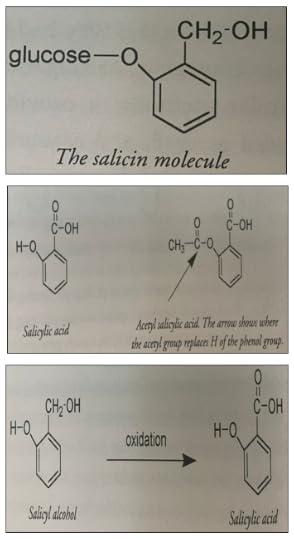
স্ট্রেপ্টোককি ব্যাক্টেরিয়া শিশুদের গলায় এবং কানে প্রচণ্ড প্রদাহের জন্ম দেয়, এবং ভীষণ জ্বরও ডেকে আনে। এ ব্যাক্টেরিয়ার বিরুদ্ধে মানুষ যে প্রতিরোধ-ব্যবস্থাটি গড়ে তুলেছে সেটির নাম সালফানিলঅ্যামাইড। প্রটোন্সিল রেড নামক এক ধরণের রঞ্জক পদার্থ মানুষের শরীরে ভেঙে সালফানিলঅ্যামাইড তৈরী করে। এ যৌগটি স্ট্রেপ ছাড়াও আরো বহু ব্যাক্টেরিয়ার বিরুদ্ধে এতটাই কার্যকর ফল দেয় যে বিভিন্ন রাসায়নিক পরিবর্তনের মাধ্যমে সালফাড্রাগ-এর বিশাল একটি পরিবারই তৈরী হয়ে যায়ঃ
সালফানিলঅ্যামাইড-এর কেরামতি’র একটি দিক না বললেই নয়। ক্লস্ট্রিডিয়াম ব্যাক্টেরিয়ার কথা মনে আছে তো? এর সংক্রমণে আক্রান্ত জায়গাটি পঁচে দুর্গন্ধযুক্ত পুঁজে পূর্ণ হয়ে যায়, এবং ব্যাক্টেরিয়ার বিষ থেকে বুদবুদ আকারে গ্যাস বেরোতে থাকে সে পুঁজ থেকে, যাকে গ্যাস গ্যাংগ্রিন বলে। ১ম বিশ্বযুদ্ধে প্রচুর মানুষ মারা গেছে এ রোগটি থেকে। ২য় বিশ্বযুদ্ধ নাগাদ এ মৃত্যুহার একদম নেমে আসে। এ ব্যাক্টেরিয়াটি আমাদের শরীরে বেঁচে থাকে ফলিক অ্যাসিড বা ভিটামিন বি খেয়ে। এই ফলিক অ্যাসিডের মাঝের অংশে থাকে পি-অ্যামাইনোবেঞ্জিন। সালফানিলঅ্যামাইড-এর আকারটি অনেকটাই অ্যামাইনোবেঞ্জিন-এর মতো, ফলে ব্যাক্টেরিয়া বিভ্রান্ত হয় এবং সালফানিলঅ্যামাইড গ্রহণ করতে থাকে। ফলিক অ্যাসিডের অভাবে একসময় ব্যাক্টেরিয়া না খেতে পেয়ে মারা যায়।
আফিম গাছে ২৪ রকম অ্যালকালয়েড থাকে, যার মাঝে অন্যতম মরফিন। ব্যাথানাশক হিসেবে মরফিনের সুখ্যাতি অনেকদিনের কিন্তু এটি ভীষণ আসক্তিও ঘটায়। স্যালিসাইলিক অ্যাসিডে যেমন CH3CO যোগ করে ব্যাথানাশক অ্যাস্পিরিন তৈরী করা হয়েছিলো, অনেকটা তেমনি, মরফিনের অ্যাসাইলেশন ঘটিয়ে নতুন একটি যৌগ প্রস্তুত করা হয়, যেখানে মরফিনের OH-এর Hকে প্রতিস্থাপন করে CH3CO বসে পড়ে। এর রাসায়নিক নাম ডাইঅ্যাসিটাইল মরফিন, আমরা সাধারণ ভাষায় একে হেরোইন নামে চিনি।
মরফিনের মূল বিশেষত্ব এটি ঘুম ডেনে আনে, ব্যাথা দূর করে, এবং তীব্র নেশা জাগায়। মরফিনের রাসায়নিক গঠনটি এর জন্য দায়ী। প্রথমত, মরফিনে বেটা-ফেনাইলইথাইলঅ্যামাইন নামক একটি যৌগ রয়েছে যেটি এলএসডি, কিংবা মেস্কালিন-এর মতো শক্তিশালী হ্যালুসিনোজেনিক ড্রাগে থাকে। এছাড়াও, মরফিন এবং মরফিনের মতো অন্যান্য যৌগগুলোর একটি নির্দিষ্ট কাঠামো আছে যা ৪টি শর্ত মেনে চলে। এই ৪টি শর্ত মেনে চললেই কেবল মরফিনের গুণগুলো ধারণ করা সম্ভবঃ (১) বেঞ্জিন রিং, (২), কোয়ার্টারনারি কার্বন অ্যাটম, অর্থাৎ কার্বন অণুর ৪টি বন্ধন, (৩) ১টি CH2-CH2 বন্ধন, এবং (৪) টার্শিয়ারি নাইট্রোজেন অ্যাটম, অর্থাৎ ৩টি কার্বন পরমাণুর সাথে ১টি নাইট্রোজেনঃ
যে সকল কার্বন শিকলের এক প্রান্তে COOH থাকে তাদের ফ্যাটি অ্যাসিড বলে। গ্লিসারিন (CH2-OH-CH-OH-CH2-OH) এবং ফ্যাটি অ্যাসিড (COOH-CH2-CH2-CH3) যখন এক হয়, তখন অনেক সময়ই গ্লিসারিনের ৩টি OH ফ্যাটি অ্যাসিডের COOH-এর সাথে বিক্রিয়া করে, যার ফলে ৩ অণু পানির অপসারণ ঘটে, এবং একটি নতুন যৌগ ট্রাইগ্লিসারাইড গঠিত হয়ঃ
ওপরের ছবিতে যে ফ্যাটি অ্যাসিডটি দেখা যাচ্ছে, সেটি স্যাচুরেটেড ফ্যাটি অ্যাসিড। স্যাচুরেটেড-এর অর্থ হলো এখানে কার্বন-কার্বন বন্ধনটি সিঙ্গেল বা একক বন্ধন (/\/\...), নতুন কোন হাইড্রোজেনের এখানে যুক্ত হবার সুযোগ নেই। সে সকল ফ্যাটি অ্যাসিডে কার্বন-কার্বন ডাবল বন্ড বিদ্যমান (//\//…), সেগুলো আনস্যাচুরেটেড। এ দুইয়ের মাঝে পার্থক্য হলো আনস্যাচুরেটেড ফ্যাটি অ্যাসিডের কাঠামোটি স্যাচুরেটেড-এর মতো ঋজু নয়, বেশ অনেকটাই বাঁকা। যতো বেশী ডাবল বন্ড, ততো বেশী বাঁকা, যার ফলে এদের ‘প্যাকিং ডেন্সিটি’ বেশ কম, তাই খুব অল্প তাপমাত্রাতেই এরা বিচ্ছিন্ন হয়ে যায় সহজে। স্বাভাবিক তাপমাত্রায় আনস্যাচুরেটেড ফ্যাটি অ্যাসিডকে আমরা তেল হিসেবে জানি (অলিভ অয়েল, পাম অয়েল ইত্যাদি)। কার্বন-কার্বন বন্ধন এবং ডাবল বন্ডটি একইদিকে থাকায় এটিকে ‘সিস’ ফ্যাটি অ্যাসিড বলে। যে তেলের ডাবল বন্ড যতো বেশী, তা ততো তাড়াতাড়ি পঁচে যায়। উচ্চ মাত্রার আনস্যাচুরেটেড ফ্যাটি অ্যাসিডকে তাই হাইড্রোজেন দিয়ে কিছুটা স্যাচুরেটেড করা হয়, অর্থাৎ ডাবল বন্ডের সংখ্যা কমিয়ে আনা হয়, কিন্তু এর ফলে ডাবল বন্ডের দিকটি ঘুরে কার্বন-কার্বন বন্ডের বিপরীত দিকে চলে যায়, যেটিকে ‘ট্রান্স’ ফ্যাটি অ্যাসিড বলে। ট্রান্স ফ্যাট আমাদের ভালো এবং খারাপ কোলেস্টেরল-এর ভারসাম্যটি নষ্ট করে দেয়।
বিউবোনিক প্লেগের বিরুদ্ধে জয়ফলের আইসোইউজেনলের কেরামতির কথা তো একদম শুরুতেই জেনে এসেছিলাম। ১৬০২ সালে ডাচদের যে ইস্ট ইন্ডিয়া কম্পানি (Vereengide Oostindische Compagnie-সংক্ষেপে VOC), তারা ইন্দোনেশিয়ার বান্দা দ্বীপের অধিবাসীদের সাথে একটি চুক্তি করে, বান্দায় যতো জয়ফল গাছ হবে, তার সবগুলোর মালিকানা হবে তাদের। বান্দা'র গোত্রপতিরা এই চুক্তিটি অমান্য করে গোপনে ব্রিটিশ এবং অন্যান্য ইওরোপীয়দের জয়ফল বিক্রি করতে থাকে উচ্চ দামে। ডাচরা তখন বন্দুক-কামান নিয়ে এসে ব্যাপক হত্যাযজ্ঞ চালায়, নিজেদের বাদে বাকী সব জয়ফল গাছ নষ্ট করে ফেলে। না, সব নয়, ব্রিটিশদেরও কিছু ছিলো। জয়ফল ব্যবসার দখল নিয়ে ইন্দোনেশয়ায় ব্রিটিশদের সাথে ডাচরা পরের ষাট বছর কামড়াকামড়ি করে যায়। অবশেষে ১৬৬৭ সালে ব্রেডা চুক্তির মাধ্যমে তারা সমঝোতায় আসে; ব্রিটিশরা ইন্দোনেশিয়ায় জয়ফলের দখল ছেড়ে দেবে, বিনিময়ে ডাচরা তাদের নিউ অ্যামস্টারড্যাম কলোনিটি ব্রিটিশদের হাতে তুলে দেবে। নিউ অ্যামস্টারড্যাম-এর দখল নেবার পর ব্রিটিশরা নামটি পরিবর্তন করে নতুন নাম দেয়- নিউ ইয়র্ক!
গোলমরিচের বরাতে তো পৃথিবীর হিসেব নিকেশই রাতারাতি পাল্টে গেলো। প্রশ্ন হচ্ছে, কী এমন আছে গোলমরিচে যার মোহে উন্মাদ হয়ে মানুষ পৃথিবীর এ মাথা থেকে ও মাথা দাবড়ে বেড়িয়েছে? মরিচের যে উপাদানটি আমাদের লালায়িত করে তার নাম পিপেরিন, যার রাসায়নিক সংকেত C17H19O3N। ব্যথার অনুভূতিটিকে শনাক্ত করবার জন্য আমাদের শরীরে যে পেইন নার্ভগুলো আছে, গোলমরিচের পিপেরিন আমাদের সে পেইন নার্ভের প্রোটিনের ওপর বসে পড়ে প্রোটিনটির আকার পাল্টে দেয়, তখনি আমাদের পেইন নার্ভ আমাদের মস্তিষ্কে জানান দেয়, ‘খাবারটি ঝাল”। মস্তিষ্কের এই সংকেতটি পাবার লোভেই আমরা বারবার ঝাল খাবারের কাছে ফিরে ফিরে যাই। গোলমরিচের পিপেরিন, লাল মরিচের ক্যাপ্সাইসিন, এবং আদা’র জিঞ্জারোন-এই ৩টি উপাদানেরই রাসায়নিক কাঠামো প্রায় একইরকম-একটি অ্যারোমেটিক চক্রকে ঘিরে কার্বন, অক্সিজেন, ও নাইট্রোজেনের দ্বিবন্ধন-যা আমাদের পেইন নার্ভকে প্রায় একইভাবে আন্দোলিত করে। ছবিতে দেখা যাচ্ছে আদার উপাদান জিঞ্জারোন আকারে বাকী দু’টি রাসায়নিক যৌগের তুলনায় কিছুটা ছোট, আদার “ঝাল”ও তাই বেশ খানিকটা কমঃ
মাংস রান্নায় আমরা প্রায়ই লং (লবঙ্গ) এবং জয়ফল ব্যবহার করি সুগন্ধের জন্য। যে রাসায়নিক উপাদানটির গুণে লবঙ্গের অমন চমৎকার সৌরভ, সেটির নাম ইউজেনল; জয়ফলের উপাদানটির নাম আইসোইউজেনল। ইউজেনল এবং আইসোজেনল হলো একে অপরের আইসোমার, অর্থাৎ এদের রাসায়নিক সংকেত একই, কিন্তু মৌলগুলোর অবস্থান ভিন্ন ভিন্ন স্থানে। মধ্যযুগে বিউবোনিক প্লেগে আক্রান্ত হয়ে ইওরোপের প্রায় ৬০ শতাংশ যখন উজাড় হবার পথে, তখন গুজব রটে, সাথে করে পোঁটলা ভর্তি জয়ফল নিয়ে ঘুরলে প্লেগের ছোঁয়াচ থেকে বাঁচা যাবে। এ কথাটির কিছুটা বৈজ্ঞানিক ভিত্তি সম্ভবত আছে! লবঙ্গ এবং জয়ফল জাতীয় গাছগুলো আসলে এই ইউজেনল বা আইসোইউজেনল ব্যবহার করে পোকামাকড়ের প্রতি তাদের প্রতিরক্ষা ব্যবস্থা হিসেবে। এই রাসায়নিক যৌগগুলোর গন্ধের কারণেই এই গাছগুলোতে পোকারা দাঁত বসাতে পারে না। বিউবোনিক প্লেগ ছড়াতো মূলত মাছির মাধ্যমে। জয়ফল ভর্তি পোঁটলা সাথে নিয়ে ঘুরলে আইসোইউজেনলের গন্ধে মাছির খুব একটা কাছে ভিড়তে না পারারই কথা!
আইসোইউজেনল ছাড়াও জয়ফলের আরো কিছু রাসায়নিক উপাদান আছে, যেমন মিরিস্টিসিন এবং ইলেমাইসিন; এই দুটি উপাদান মনের ওপর প্রভাব ফেলে, এবং দৃষ্টিভ্রম বা হ্যালুসিনেশন ঘটায়। মিরিস্টিসিন কেন মানুষকে উদ্ভ্রান্ত করে দেয় সেটি জানার জন্য এর রাসায়নিক গঠনের দিকে চোখ ফেরাতে হবে। মিরিস্টিসিন এবং স্যাফরোল-এর রাসায়নিক কাঠামো প্রায় একই রকম, পার্থক্য শুধু স্যাফরোলে OCH3 বন্ধনটির অনুপস্থিতি। এই স্যাফরোল হলো ৩,৪ মেথিলিনডাইঅক্সিন-এন-মেথাইলঅ্যাম্ফেটামিন বা সংক্ষেপে এমডিএমএ (নেশাজাত দ্রব্যের কালোবাজারে এক্সট্যাসি নামে পরিচিত) তৈরীর প্রাথমিক উপাদান। বিভিন্ন রাসায়নিক প্রক্রিয়ার মাধ্যমে স্যাফরোল থেকে এমডিএমএ তৈরী করা হয়ঃ
খাবারের আরো একটি উপকরণ আধুনিক বিশ্বে প্রায় একই মাত্রায় বড় প্রভাব বিস্তার করে চলেছে গত তিনশ বছর ধরেঃ চিনি। আমাদের নিত্যদিনের জীবনে চিনির ভূমিকা কতখানি সেটি বুঝতে হলে একটি চমকপ্রদ তথ্যের দিকে তাকাতে হবে। ১৭০০ সাল নাগাদ ইংল্যান্ডে বার্ষিক মাথাপিছু চিনি খাওয়ার হার ছিলো প্রায় ৪ পাউণ্ডের কাছাকাছি (~২ কেজি); ১৭৯০ সালে এসে পরিমাণটি দাঁড়ায় ১৬ পাউণ্ডে (~৮ কেজি)। আধুনিক সময়ে চিনির চাহিদা আরো ঢের বৃদ্ধি পেয়েছে; ১৯০০ - ১৯৬৪ সালের মাঝে বৈশ্বিক চিনি উৎপাদনের হার বাড়ে ৭০০ শতাংশ! পশ্চিমা বিশ্বের বহু উন্নত দেশেই তদ্দিনে বার্ষিক মাথাপিছু চিনি খাওয়ার হার পৌঁছে গেছে ১০০ পাউণ্ডে (~৫০ কেজি)।
মশলার বেলায় যে প্রশ্নটি ওঠে, চিনির বেলাতেও তাইঃ কী আছে চিনিতে? কেন আমরা চিনি খেতে এত ভালোবাসি? আনবিক বিন্যাসের দিক দিয়ে চিনি’র সবচেয়ে সহজ রূপটি হলো গ্লুকোজ, যাকে অনেক সময় মনোস্যাকারাইডও বলা হয়। কাগজে কলমে গ্লুকোজ বা মনোস্যাকারাইডকে একটি সরলরৈখিক শিকল আকারে আঁকা হলেও বাস্তবে তারা মূলত ষড়ভুজ আকৃতির। ৫টি কার্বন, ও ১টি অক্সিজেন পরমাণু এই ষড়ভুজের বিভিন্ন জায়গায় বসে গ্লুকোজ বানায়। গ্লুকোজে যে OH বন্ধনটি থাকে, সেটি এই ষড়ভুজের ১ম কার্বনের প্রেক্ষিতে কোন অবস্থায় বসছে তার ওপর ভিত্তি করে গ্লুকোজকে ২ ভাগে ভাগ করা যায়; ১ নাম্বার কার্বনের নিচে বসলে সেটি আলফা গ্লুকোজ, আর ওপরে বসলে বেটা গ্লুকোজঃ
চিনির রাসায়নিক নাম শুক্রোজ; শুক্রোজে দুটি উপাদান সমান পরিমাণে থাকেঃ গ্লুকোজ এবং ফ্রুক্টোজ। এই দুটি মনোস্যাকারাইড এক হয়ে শ্যুক্রোজ নামের ডাইস্যাকারাইড গঠন করে। গ্লুকোজ এবং ফ্রুক্টোজও একে অপরের আইসোমার, তবে পার্থক্য হচ্ছে গ্লুকোজের মতো ফ্রুক্টোজ ষড়ভুজ আকৃতির নয়, পঞ্চভুজ। ফ্রুক্টোজের ২য় কার্বনের প্রেক্ষিতে OH বন্ধনটি ওপরে না নিচে তার ওপর ভিত্তি করে একইভাবে আলফা এবং বেটা ফ্রুক্টোজে ভাগ করা যায়। আলফা গ্লুকোজ আর বেটা ফ্রুক্টোজের মাঝে এক অণু পানি অপসারণের মাধ্যমে চিনি গঠিত হয়ঃ
আমরা চিনির প্রতি এত আকৃষ্ট তার একটা বড় কারণ খুব সম্ভবত আমাদের মস্তিষ্কের মাস্তানী! চিনির যে গ্লুকোজ, সেটিই মস্তিষ্কের একমাত্র জ্বালানী। রক্তে গ্লুকোজের পরিমাণ ৫০ শতাংশের নিচে চলে গেলে মস্তিষ্ক কাজ করা বন্ধ করে দিতে পারে, তাই মস্তিষ্ক আমাদের প্রচ্ছন্নভাবে বেশী করে চিনি খেয়ে যেতে বলে।
তবে তা বলে যা কিছু মিষ্টি সবই কিন্তু শরীরের জন্য ভালো নয়! গাড়ীর ইঞ্জিন ঠাণ্ডা রাখবার জন্য যে শীতলীকরণ তরলটি আমরা ব্যবহার করি, সেই ইথিলিন গ্লাইকল বেশ মিষ্টি স্বাদের কিন্তু প্রকৃতিতে আদতে ভীষণ বিষাক্ত। এক চামচ ইথিলিন গ্লাইকল মৃত্যু ডেকে আনতে পারে সহজেই। ইথিলিন গ্লাইকল শরীরে জারিত হয়ে প্রচুর পরিমাণে অক্সালিক অ্যাসিড তৈরী করে যা বৃক্ককে অকেজো করে দেয়। বৃক্কে যে পাথর হয়, সেটি মূলত ক্যালসিয়াম অক্সালেট; অক্সালিক অ্যাসিডের এ লবণটি অদ্রবণীয়, ফলে জমে জমে পাথরে পরিণত হয়। পালং শাকে অক্সালিক অ্যাসিড থাকে সামান্য পরিমানে, কিডনী রোগীদের তাই পালং শাক খাওয়া বারণ!
প্রাচীন রোমানরা তাদের ওয়াইনের কষকষে স্বাদ দূর করবার জন্য চিনির বিকল্প হিসেবে লেড অ্যাসিটেট (Pb(CH3COO)2) ব্যবহার করতো, যা বেশ বিষাক্ত। সাম্প্রতিক সময়েও কিছু “বিকল্প চিনি” জনপ্রিয় হয়েছে, তবে এদের প্রতিটিরই কোন না কোন খারাপ দিক রয়েছে। স্যাকারিন কিছুটা বিষাক্ত, তাই সোডিয়াম সাইক্লাকেমট, অ্যাস্পার্টার্মি ইত্যাদি নকল চিনিগুলো এসেছে। রাসায়নিক কাঠামোর দিক থেকে এরা গ্লুকোজের চেয়ে ভীষণ আলাদা, কিন্তু এদের আনবিক গঠন, মৌলগুলোর অবস্থান ইত্যাদি এদের মিষ্টি স্বাদটি দিয়েছে। চিনির বিকল্প হতে হলে মূলত ৩টি শর্ত পূর্ণ করতে হয়ঃ (১) বিষাক্ত হওয়া যাবে না, (২) পানিতে দ্রবণীয় হতে হবে, এবং (৩) শরীরে বিপাক বা মেটাবলাইজড হতে পারবে না। অ্যাস্পার্টামি’র দু’টি অ্যামাইনো অ্যাসিড রয়েছে (ফেনাইলঅ্যামাইন, ও অ্যাস্পার্টিক অ্যাসিড) যা শরীরে মেটাবলাইজড হয় (অর্থাৎ ক্যালোরি যোগ করে), কিন্তু যেহেতু অ্যাস্পার্টামি চিনির চাইতে ২০০ গুণ বেশী মিষ্টি, তাই খুব অল্প পরিমাণে ব্যবহার করলেই চলে।
যাদের শরীর ফেনাইলঅ্যানাইন মেটাবলাইজ করতে পারেনা, তাদের জন্য অ্যাস্পার্টামি খাওয়া নিষেধ। এ রোগটির নাম ফেনাইলকিটোনুরিয়া। এসব সমস্যার প্রেক্ষিতে বর্তমানে কৃত্রিম চিনি হিসেব শুক্রালোজ বেশ ব্যবহৃত হচ্ছে, আনবিক গঠনের দিক দিয়ে যা শুক্রোজের বেশ কাছাকাছি। পার্থক্য হলো শুক্রোজের গ্লুকোজের স্থানে এখানে বসে দুধের গ্যালাক্টোজ, আর ডানে ফ্রুক্টোজের OH-এর স্থানে ক্লোরিন গিয়ে বসে পড়ে। ক্লোরিনের পরমাণু দুটির জন্য শরীর শুক্রালোজকে মেটাবলাইজ করতে পারে না, স্বাদও অবিকৃত থাকে। এ কারণেই শুক্রালোজ ‘জিরো ক্যালোরি শুগার’।
গ্লুকোজের ১ম কার্বনের প্রেক্ষিতে OH-এর ওপরে/ নিচে অবস্থানের ভিত্তিতে যে গ্লুকোজকে আলফা এবং বেটা এ দুই ভাগে ভাগ করা হয়েছে সে তো জেনেছিই। বেটা গ্লুকোজের কাজ শরীরের কাঠামোর দৃঢ়তা নিশ্চিত করা; আর আলফা গ্লুকোজ শক্তি জমিয়ে রাখে ভবিষ্যতের জন্য। বেটা গ্লুকোজ যেহেতু শরীরের কাঠামো গঠনে ভূমিকা রাখে, স্তন্যপায়ী প্রাণীদের মাঝে তাই বেটা গ্লুকোজ হজম করবার কোন এঞ্জাইম নেই। বেটা গ্লুকোজ পরিপাক করবার জন্য গরু, ছাগল বা ভেড়ারা তাই জাবর কাটে; তাদের হৃৎপিণ্ডের ৪টি প্রকোষ্ঠের একটিতে এই বেটা গ্লুকোজ ভাঙ্গবার জন্য উপযুক্ত ব্যাক্টেরিয়াটি বাস করে, জাবর কাটার পর এই ব্যাক্টেরিয়ারা তাদের কাজ শুরু করে। ইঁদুর বা খরগোশ গোত্রীয় প্রাণীদের কপাল আবার অতটা ভালো নয়; বেটা গ্লুকোজ হজম করবার জন্য এদের নিজেদের পুরীষ নিজেদেরই খেতে হয়! খাদ্যে (এবং পুরীষে) উপস্থিত পুষ্টি-উপাদানগুলো যখন দ্বিতীয়বার খাদ্যনালীতে পৌঁছায়, কেবল তখনি এদের ক্ষুদ্রান্ত বেটা গ্লুকোজ ভাঙ্গবার কাজে নামতে পারে।
উদ্ভিদের শারীরিক গড়নের মূল কারিগর সেলুলোজ, কিন্তু সেই সেলুলোজ থেকেই ভয়ানক বিস্ফোরক তৈরী করা সম্ভব! সুতি কাপড়ের ৯০ শতাংশই মূলত সেলুলোজ। এই সুতি কাপড়কে যদি কড়া নাইট্রিক অ্যাসিডে চুবিয়ে রাখা হয়, তখন নাইট্রিক গ্রুপ (NO2) সেলুলোজের OH-কে প্রতিস্থাপন করে নিজে সেখানে বসে পড়ে, তৈরী হয়ে যায় নাইট্রোসেলুলোজ যার অপর নাম গানকটন। খুব অল্প তাপমাত্রাতেই গানকটন ভীষণ বিস্ফোরণ ঘটাতে পারে। মানবজাতির ইতিহাসে বিস্ফোরক অবশ্য খুব নতুন কিছু নয়। ১০০০ সালের দিকেই চৈনিকেরা সালফার, কার্বন, এবং সল্টপিটার (KNO3)-এর মিশ্রণে বারুদ তৈরী করে। বারুদের গরম এবং আয়তনে ক্রমশ বেড়ে যাওয়া গ্যাসের ধাক্কার জোরেই প্রতিপক্ষের গায়ে বুলেট সেঁধানো কি কামান দাগানো যায়। বোমার ব্যাপারটিও অনেকটা তাই; খুব গরম কোন গ্যাস যদি প্রচণ্ড গতিতে আয়তনে বর্ধিত হতে থাকে, তখন তা চারপাশে একটি শকওয়েভ ছড়িয়ে দেয়, যত দূর অব্দি এই শক ওয়েভ যায় বোমাটি তত শক্তিশালী। বোমার শক্তি বাড়াবার জন্য প্রয়োজন তাপ। কী করে এত বিপুল পরিমাণ তাপ এত কম সময়ের মাঝে উৎপন্ন করা যায়?
বোমা বিস্ফোরণের ফলে নাইট্রোজেনের অণু (N2) গঠিত হয়, যার আনবিক গঠন অত্যন্ত দৃঢ়। N-এর পরমাণু দুটি একে অপরের সাথে ৩টি বন্ধন দ্বারা আবদ্ধ থাকে, বিপুল পরিমাণ শক্তি ক্ষয় করেই কেবল এ বন্ধনটি ভাঙা সম্ভব। উল্টো করে বলা যায়, যখন N-এর এ বন্ধনটি গঠিত হয়, তখন বিপুল পরিমাণ শক্তি মুক্তি পায় (এক্সোথার্মিক রিঅ্যাকশন), বোমা বিস্ফোরণে ঠিক যে জিনিষটি আপনি চান! এত শক্তিশালী একটি বিস্ফোরণ ঘটাতে N-এর পাশাপাশি আরো চাই O। যে সকল যৌগে N এবং O একসাথে বন্ধনে আবদ্ধ থাকে, সেসব নাইট্রো যৌগ বেশীরভাগই এমন বিস্ফোরক। N এবং O-এর এই বন্ধন বিস্ফোরণের জন্য কতটা গুরুত্বপূর্ণ তার একটি উদাহরণ দেয়া যেতে পারে। পি-নাইট্রোটলুইন এবং পি-অ্যামাইনোবেঞ্জয়িক অ্যাসিড-দুইয়েরই রাসায়নিক সংকেত একঃ C7H7NO2 (আইসোমার), কিন্তু উপাদানগুলোর অবস্থান ভিন্ন ভিন্ন জায়গায়। অ্যামাইনোবেঞ্জয়িক অ্যাসিডে N এবং O আলাদা বলে এটি মোটেই বিস্ফোরক নয়, বরং সানস্ক্রিন ক্রীমে হরহামেশাই ব্যবহৃত হচ্ছে। অপরদিকে নাইট্রোটলুইন ভয়ানক দাহ্য। টলুইন-এর সাথে যখন নাইট্রো গ্রুপ (NO2) যুক্ত হয়, তখনই তা বিস্ফোরকে পরিণত হয়। যতো বেশী নাইট্রো গ্রুপ, তত ভয়ানক সে বিস্ফোরক। ট্রাইনাইট্রোটলুইন বা টিএনটি’র কথা আমরা সবাই-ই জানি।
বিস্ফোরকের জগতে সবচেয়ে বিখ্যাত উপকরণটির নাম নাইট্রোগ্লিসারিন। প্রাণীজ চর্বি থেকে যে গ্লিসারিন পাওয়া যায়, সেটিকে নাইট্রিক এবং সালফিউরিক অ্যাসিডের দ্রবণে রেখে পানিতে ঢালবার পর তৈরী হয় নাইট্রোগ্লিসারিন, যা ভীষণ অস্থিতিশীল, সামান্য নাড়াচাড়াতেই বিকট বিস্ফোরণ ঘটে যেতে পারে। ডায়নামাইট-এ মূল বিস্ফোরক এই নাইট্রোগ্লিসারন; একে উত্তেজিত করবার জন্য অল্প কিছু বারুদ দেয়া থাকে। আলফ্রেড নোবেলকে আমরা ডায়নামাইট-এর উদ্ভাবক হিসেবেই জানি, তবে তিনি মূলত নাইট্রোগ্লিসারিনকে স্থিতিশীল করেছিলেন, কিসেল্গুর নামক এক বিশেষ ধরণের গুঁড়ো দিয়ে। নাইট্রোগ্লিসারিন এক চিমটি পরিমাণও যদি জিভে লাগে, তাহলে সারাদিনটাই বরবাদ; বিচ্ছিরি মাথাব্যাথা আর হাত পায়ে রাজ্যের দুর্বলতা এসে ভর করে। নাট্রোগ্লিসারিন আমাদের শরীরে আসলে নাইট্রিক অক্সাইড (NO) তৈরী করে, যা আমাদের ধমনীগুলোর প্রসারণ ঘটায়, ফলে রক্ত চলাচলের হারও বেড়ে যায়, এ কারণেই মাথাব্যাথা হয়। হৃৎপিণ্ডের একটি ব্যাধি আছে যেটিকে অ্যাঞ্জিনা পেক্টোরিস বলে, এ রোগটি হলে হৃৎপিণ্ডে রক্ত এবং অক্সিজেন উভয়ই কমে যায়। এ রোগটির চিকিৎসায় নাইট্রোগ্লিসারিন ব্যবহৃত হয়। NO যে আমাদের ধমণীর প্রসারণ ঘটায়, এ জ্ঞানটিকে কাজে লাগিয়েই বিজ্ঞানীরা পরে ভায়াগ্রা তৈরী করেন।
১৮৬০-এর দশকে যদি আপনি জন্মাতেন তাহলে খুব সম্ভব কোন শারীরিক আঘাত নিয়েই আপনি হাসপাতালে ভর্তি হতে চাইতেন না! সে সময়টাতে যে রোগীদের অঙ্গচ্ছেদ করা হতো, তাদের ৪০ শতাংশই মারা যেতো; সামরিক হাসপাতালের ক্ষেত্রে এ হারটি ছিলো ৭০-এর ঘরে। জীবাণু’র ধারণাটি তখনো পোক্ত হয়নি, বাতাসে ঘুরে বেড়ানো অদৃশ্য কিছু প্রাণী যে শরীরের কাটা ছেঁড়ার জায়গায়, কিংবা ডাক্তারি অপারেশনের কাঁচি/ হাতুড়িতে বসে সে জায়গাগুলোকে বিষাক্ত করে তুলছে এমন কথা কারো কল্পনাতেই আসেনি। ব্রিটিশ ডাক্তার জোসেফ লিস্টার এ নিয়ে ভাবলেন এবং কি করে ক্ষতস্থানকে জীবাণুমুক্ত করা যায় তা নিয়ে মাথা ঘামানো শুরু করলেন। লিস্টারের সময়ে রাস্তায় এবং বাসাবাড়ীতে যে গ্যাসলাইট ব্যবহার করা হতো, তার জ্বালানী হিসেবে কোল গ্যাস ব্যবহার করা হতো; কয়লাকে উচ্চ তাপমাত্রায় পোড়ালে ৫০ শতাংশ হাইড্রোজেন, ৩৫ শতাংশ মিথেইন, এবং কিছু ইথিলিন, কার্বন মনোঅক্সাইড, ও অ্যাসিটিলিন উৎপন্ন হয়। আর উৎপন্ন হয় কার্বোলিক অ্যাসিড, যা মূলত একটি বর্জপণ্য হিসেবে বিবেচিত হতো। এই কার্বলিক অ্যাসিডের শোধনের মাধ্যমে লিস্টার পৃথিবীর প্রথম অ্যান্টিসেপ্টিক তৈরী করেনঃ ফেনল।
লিস্টারের জীবাণুনিরোধকের নাম ফেনল, তবে ফেনল আসলে একটি আস্ত রাসায়নিক গ্রুপেরও নাম বটে। বেঞ্জিন চক্রের সাথে একটি OH যুক্ত থাকলেই সেটিকে ফেনল বলে। আমরা যে ইউজেনল, আইসোইউজেনল, ক্যাপ্সাইসিন, জিঞ্জারোন-বিবিধ মশলার এ উপকরণগুলোর কথা একেবারে শুরুতে জেনে এসেছি, এরা সবাই-ই ফেনল। ভিনেলা স্বাদের আইস্ক্রিমে যে ভিনেলা ব্যবহৃত হয়, সেটিও ফেনল; কাপড় রঙ করার কাজে ব্যবহৃত পিকরিক অ্যাসিড (ট্রাইনাইট্রোফেনল)-বিস্ফোরক হিসেবেও যার নামডাক আছে-সেটিও ফেনল। গাঁজার যে উপকরণটি আমাদের নেশা ধরায়, সেই টিট্রাহাইড্রোক্যানাবিনল (THC), সেটিও ফেনল। তুলাগাছের বীজে একটি উপকরণ রয়েছে, গসিপল, যা পুরুষদের বীর্য উৎপাদন কমিয়ে দিতে পারে। এই গসিপল থেকে এখন পুরুষদের জন্য জন্মনিরোধক প্রস্তুত করার গবেষণা চলছে। গ্রিন টি’র অন্যতম একটি উপকরণ এপিগ্যালোক্যাচেশিন-৩-গ্যালেইট যা বিভিন্ন প্রকার ক্যান্সারের বিরুদ্ধে প্রতিরোধ গড়তে সহায়তা করে। এগুলো সবই ফেনল।
মাথাব্যাথার জন্য যে অ্যাস্পিরিন খাই আমরা আজ, সেটির মূল উৎসও প্রকৃতি। উইলো এবং পপলার ধরণের গাছে স্যালিসিন বলে একটি উপাদান থাকে যেটি ভেঙে গ্লুকোজ এবং স্যালিসাইল অ্যালকোহলে পরিণত হয়। এই স্যালিসাইল অ্যালকোহলের সাথে অক্সিজেন যোগ হয়ে তৈরী করে স্যালিসাইলিক অ্যাসিড। এ অ্যাসিডটিও একটি ফেনল, কারণ এখানেও একটি অ্যারোমেটিক চক্রের সাথে OH যুক্ত আছে। এই OH-এর Hকে অ্যাসিটাইল গ্রুপ (CH3CO) দিয়ে প্রতিস্থাপন করে অ্যাসিটাইল স্যালিসাইলিক অ্যাসিড বা অ্যাস্পিরিন তৈরী করা হয়।
স্ট্রেপ্টোককি ব্যাক্টেরিয়া শিশুদের গলায় এবং কানে প্রচণ্ড প্রদাহের জন্ম দেয়, এবং ভীষণ জ্বরও ডেকে আনে। এ ব্যাক্টেরিয়ার বিরুদ্ধে মানুষ যে প্রতিরোধ-ব্যবস্থাটি গড়ে তুলেছে সেটির নাম সালফানিলঅ্যামাইড। প্রটোন্সিল রেড নামক এক ধরণের রঞ্জক পদার্থ মানুষের শরীরে ভেঙে সালফানিলঅ্যামাইড তৈরী করে। এ যৌগটি স্ট্রেপ ছাড়াও আরো বহু ব্যাক্টেরিয়ার বিরুদ্ধে এতটাই কার্যকর ফল দেয় যে বিভিন্ন রাসায়নিক পরিবর্তনের মাধ্যমে সালফাড্রাগ-এর বিশাল একটি পরিবারই তৈরী হয়ে যায়ঃ
সালফানিলঅ্যামাইড-এর কেরামতি’র একটি দিক না বললেই নয়। ক্লস্ট্রিডিয়াম ব্যাক্টেরিয়ার কথা মনে আছে তো? এর সংক্রমণে আক্রান্ত জায়গাটি পঁচে দুর্গন্ধযুক্ত পুঁজে পূর্ণ হয়ে যায়, এবং ব্যাক্টেরিয়ার বিষ থেকে বুদবুদ আকারে গ্যাস বেরোতে থাকে সে পুঁজ থেকে, যাকে গ্যাস গ্যাংগ্রিন বলে। ১ম বিশ্বযুদ্ধে প্রচুর মানুষ মারা গেছে এ রোগটি থেকে। ২য় বিশ্বযুদ্ধ নাগাদ এ মৃত্যুহার একদম নেমে আসে। এ ব্যাক্টেরিয়াটি আমাদের শরীরে বেঁচে থাকে ফলিক অ্যাসিড বা ভিটামিন বি খেয়ে। এই ফলিক অ্যাসিডের মাঝের অংশে থাকে পি-অ্যামাইনোবেঞ্জিন। সালফানিলঅ্যামাইড-এর আকারটি অনেকটাই অ্যামাইনোবেঞ্জিন-এর মতো, ফলে ব্যাক্টেরিয়া বিভ্রান্ত হয় এবং সালফানিলঅ্যামাইড গ্রহণ করতে থাকে। ফলিক অ্যাসিডের অভাবে একসময় ব্যাক্টেরিয়া না খেতে পেয়ে মারা যায়।
আফিম গাছে ২৪ রকম অ্যালকালয়েড থাকে, যার মাঝে অন্যতম মরফিন। ব্যাথানাশক হিসেবে মরফিনের সুখ্যাতি অনেকদিনের কিন্তু এটি ভীষণ আসক্তিও ঘটায়। স্যালিসাইলিক অ্যাসিডে যেমন CH3CO যোগ করে ব্যাথানাশক অ্যাস্পিরিন তৈরী করা হয়েছিলো, অনেকটা তেমনি, মরফিনের অ্যাসাইলেশন ঘটিয়ে নতুন একটি যৌগ প্রস্তুত করা হয়, যেখানে মরফিনের OH-এর Hকে প্রতিস্থাপন করে CH3CO বসে পড়ে। এর রাসায়নিক নাম ডাইঅ্যাসিটাইল মরফিন, আমরা সাধারণ ভাষায় একে হেরোইন নামে চিনি।
মরফিনের মূল বিশেষত্ব এটি ঘুম ডেনে আনে, ব্যাথা দূর করে, এবং তীব্র নেশা জাগায়। মরফিনের রাসায়নিক গঠনটি এর জন্য দায়ী। প্রথমত, মরফিনে বেটা-ফেনাইলইথাইলঅ্যামাইন নামক একটি যৌগ রয়েছে যেটি এলএসডি, কিংবা মেস্কালিন-এর মতো শক্তিশালী হ্যালুসিনোজেনিক ড্রাগে থাকে। এছাড়াও, মরফিন এবং মরফিনের মতো অন্যান্য যৌগগুলোর একটি নির্দিষ্ট কাঠামো আছে যা ৪টি শর্ত মেনে চলে। এই ৪টি শর্ত মেনে চললেই কেবল মরফিনের গুণগুলো ধারণ করা সম্ভবঃ (১) বেঞ্জিন রিং, (২), কোয়ার্টারনারি কার্বন অ্যাটম, অর্থাৎ কার্বন অণুর ৪টি বন্ধন, (৩) ১টি CH2-CH2 বন্ধন, এবং (৪) টার্শিয়ারি নাইট্রোজেন অ্যাটম, অর্থাৎ ৩টি কার্বন পরমাণুর সাথে ১টি নাইট্রোজেনঃ
যে সকল কার্বন শিকলের এক প্রান্তে COOH থাকে তাদের ফ্যাটি অ্যাসিড বলে। গ্লিসারিন (CH2-OH-CH-OH-CH2-OH) এবং ফ্যাটি অ্যাসিড (COOH-CH2-CH2-CH3) যখন এক হয়, তখন অনেক সময়ই গ্লিসারিনের ৩টি OH ফ্যাটি অ্যাসিডের COOH-এর সাথে বিক্রিয়া করে, যার ফলে ৩ অণু পানির অপসারণ ঘটে, এবং একটি নতুন যৌগ ট্রাইগ্লিসারাইড গঠিত হয়ঃ
ওপরের ছবিতে যে ফ্যাটি অ্যাসিডটি দেখা যাচ্ছে, সেটি স্যাচুরেটেড ফ্যাটি অ্যাসিড। স্যাচুরেটেড-এর অর্থ হলো এখানে কার্বন-কার্বন বন্ধনটি সিঙ্গেল বা একক বন্ধন (/\/\...), নতুন কোন হাইড্রোজেনের এখানে যুক্ত হবার সুযোগ নেই। সে সকল ফ্যাটি অ্যাসিডে কার্বন-কার্বন ডাবল বন্ড বিদ্যমান (//\//…), সেগুলো আনস্যাচুরেটেড। এ দুইয়ের মাঝে পার্থক্য হলো আনস্যাচুরেটেড ফ্যাটি অ্যাসিডের কাঠামোটি স্যাচুরেটেড-এর মতো ঋজু নয়, বেশ অনেকটাই বাঁকা। যতো বেশী ডাবল বন্ড, ততো বেশী বাঁকা, যার ফলে এদের ‘প্যাকিং ডেন্সিটি’ বেশ কম, তাই খুব অল্প তাপমাত্রাতেই এরা বিচ্ছিন্ন হয়ে যায় সহজে। স্বাভাবিক তাপমাত্রায় আনস্যাচুরেটেড ফ্যাটি অ্যাসিডকে আমরা তেল হিসেবে জানি (অলিভ অয়েল, পাম অয়েল ইত্যাদি)। কার্বন-কার্বন বন্ধন এবং ডাবল বন্ডটি একইদিকে থাকায় এটিকে ‘সিস’ ফ্যাটি অ্যাসিড বলে। যে তেলের ডাবল বন্ড যতো বেশী, তা ততো তাড়াতাড়ি পঁচে যায়। উচ্চ মাত্রার আনস্যাচুরেটেড ফ্যাটি অ্যাসিডকে তাই হাইড্রোজেন দিয়ে কিছুটা স্যাচুরেটেড করা হয়, অর্থাৎ ডাবল বন্ডের সংখ্যা কমিয়ে আনা হয়, কিন্তু এর ফলে ডাবল বন্ডের দিকটি ঘুরে কার্বন-কার্বন বন্ডের বিপরীত দিকে চলে যায়, যেটিকে ‘ট্রান্স’ ফ্যাটি অ্যাসিড বলে। ট্রান্স ফ্যাট আমাদের ভালো এবং খারাপ কোলেস্টেরল-এর ভারসাম্যটি নষ্ট করে দেয়।
বিউবোনিক প্লেগের বিরুদ্ধে জয়ফলের আইসোইউজেনলের কেরামতির কথা তো একদম শুরুতেই জেনে এসেছিলাম। ১৬০২ সালে ডাচদের যে ইস্ট ইন্ডিয়া কম্পানি (Vereengide Oostindische Compagnie-সংক্ষেপে VOC), তারা ইন্দোনেশিয়ার বান্দা দ্বীপের অধিবাসীদের সাথে একটি চুক্তি করে, বান্দায় যতো জয়ফল গাছ হবে, তার সবগুলোর মালিকানা হবে তাদের। বান্দা'র গোত্রপতিরা এই চুক্তিটি অমান্য করে গোপনে ব্রিটিশ এবং অন্যান্য ইওরোপীয়দের জয়ফল বিক্রি করতে থাকে উচ্চ দামে। ডাচরা তখন বন্দুক-কামান নিয়ে এসে ব্যাপক হত্যাযজ্ঞ চালায়, নিজেদের বাদে বাকী সব জয়ফল গাছ নষ্ট করে ফেলে। না, সব নয়, ব্রিটিশদেরও কিছু ছিলো। জয়ফল ব্যবসার দখল নিয়ে ইন্দোনেশয়ায় ব্রিটিশদের সাথে ডাচরা পরের ষাট বছর কামড়াকামড়ি করে যায়। অবশেষে ১৬৬৭ সালে ব্রেডা চুক্তির মাধ্যমে তারা সমঝোতায় আসে; ব্রিটিশরা ইন্দোনেশিয়ায় জয়ফলের দখল ছেড়ে দেবে, বিনিময়ে ডাচরা তাদের নিউ অ্যামস্টারড্যাম কলোনিটি ব্রিটিশদের হাতে তুলে দেবে। নিউ অ্যামস্টারড্যাম-এর দখল নেবার পর ব্রিটিশরা নামটি পরিবর্তন করে নতুন নাম দেয়- নিউ ইয়র্ক!

August 22, 2024
Great little history of chemistry book. Loved the relating chemical discoveries to the changing of the world’s path. Would recommend for anyone who likes science and history!

December 3, 2020
Napoleon’s Buttons was recommended to me by an organic chemistry professor at work. Chemistry-wise, it is a pretty interesting analysis on a few different chemicals that have played large roles in history.
However, I almost DNFed this book and finished only out of sheer stubbornness. Many of these chemicals were part of spices in European trade routes, all of which come at the expense of former African slaves. The way it was framed spoke to the economic growth of the European spice trade, acknowledging that slaves contributed to this, but not that this is bad. It’s very subtle, as I think the authors’ intention was to provide an unbiased factual retelling, but I don’t think we can actually talk about this in an unbiased manner. Doing so implies that we think nothing is wrong with the history of the slave trade.
Another example is how the book framed the Opium War in stating that China wanted opium. The Chinese side of the story is that the British forced opium onto them because they wanted to trade, but China didn’t want anything from the British. I don’t know what actually happened between the two sides of this story, but I think we need to acknowledge that both exist.
If we don’t point out what is wrong with these narratives, it writes a white narrative we subconsciously absorb. This is white supremacy at work.
I write this review because I feel like this needs to be pointed out. Representation and revised diverse framing of history needs to show in all of our education, not just in diverse reads. Even the prof I mentioned earlier probably did not realize this, because Eurocentric teaching is so immersive. However, to make progressive changes in society, we must rewrite and reframe education in all subjects.
People often tell me that science is factual and unbiased, and while I agree that our research results and findings are what they are, the way we frame it and what we decide is important to research is influenced by our politics and IS very biased. We must acknowledge that.
However, I almost DNFed this book and finished only out of sheer stubbornness. Many of these chemicals were part of spices in European trade routes, all of which come at the expense of former African slaves. The way it was framed spoke to the economic growth of the European spice trade, acknowledging that slaves contributed to this, but not that this is bad. It’s very subtle, as I think the authors’ intention was to provide an unbiased factual retelling, but I don’t think we can actually talk about this in an unbiased manner. Doing so implies that we think nothing is wrong with the history of the slave trade.
Another example is how the book framed the Opium War in stating that China wanted opium. The Chinese side of the story is that the British forced opium onto them because they wanted to trade, but China didn’t want anything from the British. I don’t know what actually happened between the two sides of this story, but I think we need to acknowledge that both exist.
If we don’t point out what is wrong with these narratives, it writes a white narrative we subconsciously absorb. This is white supremacy at work.
I write this review because I feel like this needs to be pointed out. Representation and revised diverse framing of history needs to show in all of our education, not just in diverse reads. Even the prof I mentioned earlier probably did not realize this, because Eurocentric teaching is so immersive. However, to make progressive changes in society, we must rewrite and reframe education in all subjects.
People often tell me that science is factual and unbiased, and while I agree that our research results and findings are what they are, the way we frame it and what we decide is important to research is influenced by our politics and IS very biased. We must acknowledge that.
April 19, 2010
This books takes a somewhat disjointed ride through how seventeen loosely defined classes of molecules changed world history.
I was intrigued by the book's premise - not to describe the history of chemistry, but rather to reveal the chemistry of history. The book does an admirable job of assembling anecdotes of interesting molecules that have affected our world. Unfortunately, the structure of the book is a bit disjointed, the tone is uneven, and the numerous stories could use either some additional background or some helpful editing.
While I am uncertain about the background of the authors, it did feel like the book could benefit from the help of a bona fide historian who could help place events more objectively into historical context. Also, I would have preferred footnotes on each page instead of only a bibliography at the end of the book.
The chapters are as follows:
1. Peppers, Nutmeg and Cloves (the spice trade, and world travel)
2. Ascorbic Acid (preventing scurvy)
3. Glucose (slavery and sugar cultivation, artificial sweeteners)
4. Cellulose (cotton/industrial revolution, guncotton)
5. Nitro Compounds (explosives, Roger Bacon/gunpowder, Alfred Nobel, Fritz Haber)
6. Silk and Nylon (silkworm, Wallace Carothers)
7. Phenol (antiseptic, THC, plastics, bakelite, lignin)
8. Isoprene (rubber, Charles Goodyear, stretchiness, gum, synthetic rubber)
9. Dyes (German dye companies)
10. Wonder Drugs (aspirin, sulfa drugs, penicillins)
11. The Pill (steroids, Russell Marker, Carl Djerassi)
12. Molecules of Witchcraft (strychnine, hyoscine, LSD)
13. Morphine, Nicotine, and Caffeine (Opium Wars)
14. Oleic Acid (Olive oil, trans/cis, unsaturated/saturated, soap)
15. Salt (purification, trade, structure, tax, physiology)
16. Chlorocarbon Compounds (refrigeration, CFCs, pesticides, anesthesia)
17. Molecules versus Malaria (synthesis of quinine)
I was intrigued by the book's premise - not to describe the history of chemistry, but rather to reveal the chemistry of history. The book does an admirable job of assembling anecdotes of interesting molecules that have affected our world. Unfortunately, the structure of the book is a bit disjointed, the tone is uneven, and the numerous stories could use either some additional background or some helpful editing.
While I am uncertain about the background of the authors, it did feel like the book could benefit from the help of a bona fide historian who could help place events more objectively into historical context. Also, I would have preferred footnotes on each page instead of only a bibliography at the end of the book.
The chapters are as follows:
1. Peppers, Nutmeg and Cloves (the spice trade, and world travel)
2. Ascorbic Acid (preventing scurvy)
3. Glucose (slavery and sugar cultivation, artificial sweeteners)
4. Cellulose (cotton/industrial revolution, guncotton)
5. Nitro Compounds (explosives, Roger Bacon/gunpowder, Alfred Nobel, Fritz Haber)
6. Silk and Nylon (silkworm, Wallace Carothers)
7. Phenol (antiseptic, THC, plastics, bakelite, lignin)
8. Isoprene (rubber, Charles Goodyear, stretchiness, gum, synthetic rubber)
9. Dyes (German dye companies)
10. Wonder Drugs (aspirin, sulfa drugs, penicillins)
11. The Pill (steroids, Russell Marker, Carl Djerassi)
12. Molecules of Witchcraft (strychnine, hyoscine, LSD)
13. Morphine, Nicotine, and Caffeine (Opium Wars)
14. Oleic Acid (Olive oil, trans/cis, unsaturated/saturated, soap)
15. Salt (purification, trade, structure, tax, physiology)
16. Chlorocarbon Compounds (refrigeration, CFCs, pesticides, anesthesia)
17. Molecules versus Malaria (synthesis of quinine)

March 20, 2015
Napoleon's Buttons: 17 molecules that changed history
Penn7 Le Couteur & Jay Burresbon
copyright: 2003
pages: 376
Ohhh, so that's why that happened!
I had a lot of those moments as I read the little details that huge events turned on; yes, even when they were chemistry related.
The book talked about the chemical history of silk and nylon, of certain spices, and the witch trials. AND, it flowed easily and managed to keep the technical jargon to a minimum. That made the information presented accessible and understandable for someone like me—a nonchemist. BUT, there was enough science for the info presented to be credible. If you need more, the authors provided pages of their "selected bibliography" at the back of the book.
I found it an entertaining and thought-provoking look at chemical compounds and the roles they played in historical events; e.g., the O-ring failure on the NASA space shuttle and some other unintended consequences relating to the chemical properties of materials.
Some might be put off because the title story is only about 2 pages of the intro and because it comes with the authors' admission that the theory of Napoleon's buttons being his army's downfall is of doubtful authenticity. BUT, those buttons are a metaphor for the power of chemical compounds to affect the fates of civilizations. After reading the book, most people will understand that.
What drew me to the book, recommended to me by Max H. (Richard Wolfe), was one of the stories he put into a reader's digest version: Sooo, "there are claims the first olive tree grew on top of Adam's grave." Who knew? I didn't. Anyway, "it subsequently became so important to the growth of civilizations in the Mediterranean that the authors confidently wrote that without oleic acid Western civilization and democracy might has followed a different path...a VERY different path."
this book is about more than science; there's history here, too. For example, the decline of the Roman Empire, the discovery of America, and the riots of the French Revolution; that's just a few of a host of historical events profoundly touched by one molecule or another. And there is also the fun "could-be" stories. I liked the one about the dinosaurs' inability to detect the bitter taste of alkaloid poisons in new flowering plants ... that may have helped lead to their extinction.
This is one of those books you can read a story and then set it down and read something else before coming back and reading another fascinating story/account.
Penn7 Le Couteur & Jay Burresbon
copyright: 2003
pages: 376
Ohhh, so that's why that happened!
I had a lot of those moments as I read the little details that huge events turned on; yes, even when they were chemistry related.
The book talked about the chemical history of silk and nylon, of certain spices, and the witch trials. AND, it flowed easily and managed to keep the technical jargon to a minimum. That made the information presented accessible and understandable for someone like me—a nonchemist. BUT, there was enough science for the info presented to be credible. If you need more, the authors provided pages of their "selected bibliography" at the back of the book.
I found it an entertaining and thought-provoking look at chemical compounds and the roles they played in historical events; e.g., the O-ring failure on the NASA space shuttle and some other unintended consequences relating to the chemical properties of materials.
Some might be put off because the title story is only about 2 pages of the intro and because it comes with the authors' admission that the theory of Napoleon's buttons being his army's downfall is of doubtful authenticity. BUT, those buttons are a metaphor for the power of chemical compounds to affect the fates of civilizations. After reading the book, most people will understand that.
What drew me to the book, recommended to me by Max H. (Richard Wolfe), was one of the stories he put into a reader's digest version: Sooo, "there are claims the first olive tree grew on top of Adam's grave." Who knew? I didn't. Anyway, "it subsequently became so important to the growth of civilizations in the Mediterranean that the authors confidently wrote that without oleic acid Western civilization and democracy might has followed a different path...a VERY different path."
this book is about more than science; there's history here, too. For example, the decline of the Roman Empire, the discovery of America, and the riots of the French Revolution; that's just a few of a host of historical events profoundly touched by one molecule or another. And there is also the fun "could-be" stories. I liked the one about the dinosaurs' inability to detect the bitter taste of alkaloid poisons in new flowering plants ... that may have helped lead to their extinction.
This is one of those books you can read a story and then set it down and read something else before coming back and reading another fascinating story/account.

February 21, 2024
If you love learning about chemistry through a historical lens, this is an interesting book. One caveat is that this book takes a very colonialist perspective to history.
My favorite chapter was on the chemical compounds partially responsible for the Salem witch trials.
My favorite chapter was on the chemical compounds partially responsible for the Salem witch trials.
April 30, 2008
The title of this book may put some readers off but for those that like looking at history as more than just a bunch of dates and dead people, it is a fascinating read.
The title comes from speculation that the tin buttons used by the French army may have decomposed as result from exposure to bitter cold during the Invasion of Russia. When Napoleon's Buttons (or at least those of his army) crumbled, the soldiers could not keep their coats closed and thus were further exposed to the weather. By looking other similar events and developements, the author demonstrates and speculates on how some basic chemicals and chemisty have or may have altered history.
It is not a chemistry book, but some knowledge of chemistry is helpful But even without that knowledge (and I am not a chemist other than chemistry that involves ethyl alcohol), the reader can understand why certain compounds, chemicals, and elements enfluenced events through time.
I found it very interesting and even entertaining.
The title comes from speculation that the tin buttons used by the French army may have decomposed as result from exposure to bitter cold during the Invasion of Russia. When Napoleon's Buttons (or at least those of his army) crumbled, the soldiers could not keep their coats closed and thus were further exposed to the weather. By looking other similar events and developements, the author demonstrates and speculates on how some basic chemicals and chemisty have or may have altered history.
It is not a chemistry book, but some knowledge of chemistry is helpful But even without that knowledge (and I am not a chemist other than chemistry that involves ethyl alcohol), the reader can understand why certain compounds, chemicals, and elements enfluenced events through time.
I found it very interesting and even entertaining.
January 24, 2021
La chimica della storia.
Il libro descrive come alcune molecole (gruppi di molecole in realtà) hanno influenzato eventi o dinamiche determinanti (in positivo e in negativo, spesso in entrambi i modi contemporaneamente) nella storia dell'uomo. Un approccio molto interessante. Sebbene molte dinamiche storiche qui descritte siano ben conosciute, e per quel che mi riguarda, essendo laureata in chimica, anche molte molecole, il modo in cui si intrecciano è descritto in maniera coinvolgente. Magari a volte può sembrare un po' forzato però ci sta comunque. Consigliato soprattutto a chi di chimica non sa molto ma gli interessa. Meno consigliato a chi vuole un approccio un po' più "sentito" alla storia, perché magari a volte parla di alcuni argomenti sensibili (tipo tutti i primi capitoli sulla schiavitù) nella quasi assoluta neutralità (dico quasi perché comunque se un evento è considerato terribile, la parola terribile è utilizzata, semplicemente non si sofferma poi troppo sull'aspetto etico ma più che altro sui fatti)
Il libro descrive come alcune molecole (gruppi di molecole in realtà) hanno influenzato eventi o dinamiche determinanti (in positivo e in negativo, spesso in entrambi i modi contemporaneamente) nella storia dell'uomo. Un approccio molto interessante. Sebbene molte dinamiche storiche qui descritte siano ben conosciute, e per quel che mi riguarda, essendo laureata in chimica, anche molte molecole, il modo in cui si intrecciano è descritto in maniera coinvolgente. Magari a volte può sembrare un po' forzato però ci sta comunque. Consigliato soprattutto a chi di chimica non sa molto ma gli interessa. Meno consigliato a chi vuole un approccio un po' più "sentito" alla storia, perché magari a volte parla di alcuni argomenti sensibili (tipo tutti i primi capitoli sulla schiavitù) nella quasi assoluta neutralità (dico quasi perché comunque se un evento è considerato terribile, la parola terribile è utilizzata, semplicemente non si sofferma poi troppo sull'aspetto etico ma più che altro sui fatti)

May 29, 2022
This book was great! Every chapter had tons of little interesting nuggets of information. I loved that it’s as much history as it is science; just gives so much interesting context! Also fascinated by anecdotes similar to the Napoleon’s buttons premise, where one tiny little detail changed the course of history.
This book really made me appreciate just how much research and figuring out has taken place in like every single area of modern life that I interact with. People had to discover, and then exhaustively fiddle with, so many little details along the way to create all the aspects of current technologies and understanding.
This book really made me appreciate just how much research and figuring out has taken place in like every single area of modern life that I interact with. People had to discover, and then exhaustively fiddle with, so many little details along the way to create all the aspects of current technologies and understanding.

May 1, 2016
Mình có cảm giác mình vớ đúng cuốn sách viết để cho mình đọc. Đúng là chủ đề của mình. Giống như là hai tác giả biết mình đang cần cái gì, đang cần gãi chỗ nào, và chiều lòng mình hết mực.
Kiểu như này:
- Biết New York từng là New Amsterdam không?
- Ờ ừm.
- Biết vì sao New Amsterdam bị đổi tên thành New York không?
- ???
- Vì isoeugenol.
Kiểu như này:
- Biết New York từng là New Amsterdam không?
- Ờ ừm.
- Biết vì sao New Amsterdam bị đổi tên thành New York không?
- ???
- Vì isoeugenol.
December 29, 2022
Maybe a 3.5 stars is closer to the mark for me, but still a very enjoyable and highly educational read. The historical speculations were often a little silly, especially the title itself and supposed role of tin decay in causing the downfall of la Grand Armee in 1812. Borodino, Kutuzov and Napoleon's own decisions seem slightly more consequential. But the tenet of tying the role of key molecules and their compounds to key moments and changes in human civilization is often undeniable and the details are generally fascinating. I won't expose my general ignorance of many aspects of chemistry and other reviews have listed the key molecules discussed in each chapter so will not do it here. The book is actually older than I realized (2004) and just briefly touches on the impending revolution in genetic engineering and its massive implications. I suppose a few books have already wandered down some of those byways.

May 14, 2020
It is a personal milestone for me to have finally read this book. One of my college professors was the one to recommend the book to me. And it reminded me of another professor of mine, who taught a course that was more technical, but he would stop and tell stories like this book of chemicals in the “real world”.

December 30, 2020
This book examines the history of different molecules and the social and economic impacts of these molecules have had on the world stage.
There were certainly some interesting stories in there and there is a level of humour to some of the tales which makes it a fairly light read. I must admit though, my eyes did start to glaze over during the discussions around the differences between chemical make up of the compounds.
There were certainly some interesting stories in there and there is a level of humour to some of the tales which makes it a fairly light read. I must admit though, my eyes did start to glaze over during the discussions around the differences between chemical make up of the compounds.

September 1, 2023
Definitely not a fast read but it was vv interesting and linked the science to historical context well. Did in fact take me two months to finish bc I never read more than a chapter at a time bc it’s pretty dense but all the content is worthwhile so still a high rating.

September 14, 2020
I read this book a while ago so I would have to re-read it at this point to provide greater detail, but do recall having enjoyed it and learning a lot about how chemistry affected the fate of the Napoleonic Wars in Russia in the early 19th century.

January 7, 2024
Davvero bello! Le semplici spiegazioni di chimica permettono di capire come determinate scoperte abbiano segnato il corso della storia e l’aspetto della nostra società

August 7, 2026
Veramente BELLO! Mi ha rapita con tutti questi racconti sulle varie molecole e di come queste in qualche modo abbiano influenzato il corso della storia. Una lettura piacevole, anche per appassionati di chimica e non!

October 12, 2025
Entrei tão fundo nesse livro que até as partes mais técnicas da química orgânica passaram a fazer parte do meu repertório (se alguém me perguntar sobre saponifição e a composição da heroína, consigo fazer um bom trabalho). Tem alguns trechos aqui e ali que considero ultrapassados (como a noção de que tomar vinho pode fazer bem para a saúde), mas no geral esse livro faz um bom trabalho em demonstrar como a química é um dos ramos mais importantes da história de vida e morte da raça humana.
April 19, 2019
Dünya tarihini, kimyasal moleküllerin keşif süreci ve bu keşiflerin sağladığı açılımlar ekseninde anlatan çok zengin içerikli, değerli bir kitap.
Kitapta dediğine göre, Napolyon'un 1812'deki Rusya seferinin başarısızlığının sebebi muhtemelen, Fransız askerlerinin düğmelerinin kalaydan yapılmış olması. Çünkü kalay, yapısı gereği Rusya kışının soğuklarında ufalanmış ve tek elleriyle pantolonlarını tutmak zorunda kalan Fransız askerlerinin savaşması pek mümkün olmamış. 600 bin kişilik ordudan geriye 10 bin askerin kalmasının sebeplerinden biri bu.
Tabii kitapta çok daha fazlası var. Örneğin, C vitaminin diyetteki öneminin keşfinin, deniz aşırı uzak mesafelere seyahati mümkün kılması ve bunun Amerika'nın keşfine imkan vermesi gibi.
Ya da, ipek neden yumuşak ve parlaktır? Sabun nasıl temizler? Ortaçağda cadılıkla itham edilenler kendileri de cadı olduklarına inanıyor muydu ve neden? Azot ve oksijenin birbirine bağlı olduğu bileşikler neden patlayıcıdır? İnsanların şeker zaafı Afrikalı insanların kaderini nasıl değiştirmiş?
Kitabın sayfalarını karıştırınca kompleks kimyasal formüllerle karşılaşıyoruz ama formüllerin veriliş amacı çoğunlukla, benzer moleküllerdeki ufak değişimlerin tamamen başka özelliklere sebep olduğunun altını çizmek.
Fark edip okuduğum için şanslı hissediyorum. Teşekkürler goodreads! :)
Kitapta dediğine göre, Napolyon'un 1812'deki Rusya seferinin başarısızlığının sebebi muhtemelen, Fransız askerlerinin düğmelerinin kalaydan yapılmış olması. Çünkü kalay, yapısı gereği Rusya kışının soğuklarında ufalanmış ve tek elleriyle pantolonlarını tutmak zorunda kalan Fransız askerlerinin savaşması pek mümkün olmamış. 600 bin kişilik ordudan geriye 10 bin askerin kalmasının sebeplerinden biri bu.
Tabii kitapta çok daha fazlası var. Örneğin, C vitaminin diyetteki öneminin keşfinin, deniz aşırı uzak mesafelere seyahati mümkün kılması ve bunun Amerika'nın keşfine imkan vermesi gibi.
Ya da, ipek neden yumuşak ve parlaktır? Sabun nasıl temizler? Ortaçağda cadılıkla itham edilenler kendileri de cadı olduklarına inanıyor muydu ve neden? Azot ve oksijenin birbirine bağlı olduğu bileşikler neden patlayıcıdır? İnsanların şeker zaafı Afrikalı insanların kaderini nasıl değiştirmiş?
Kitabın sayfalarını karıştırınca kompleks kimyasal formüllerle karşılaşıyoruz ama formüllerin veriliş amacı çoğunlukla, benzer moleküllerdeki ufak değişimlerin tamamen başka özelliklere sebep olduğunun altını çizmek.
Fark edip okuduğum için şanslı hissediyorum. Teşekkürler goodreads! :)
Displaying 1 - 30 of 701 reviews