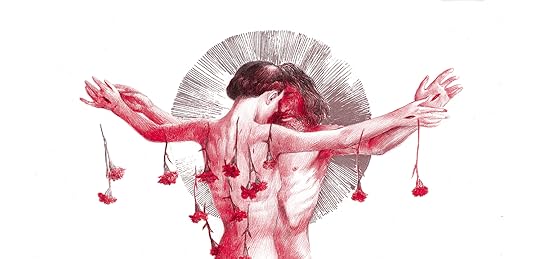
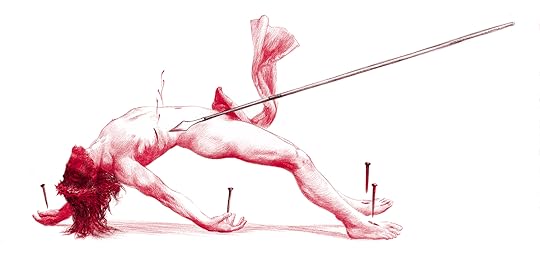
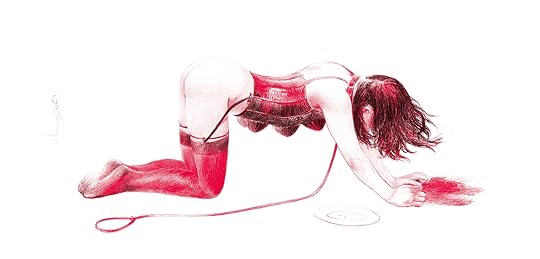
Before I start this review, I must note that this book completely shattered any expectation I had going into it having read the synopsis. I knew it was going to contain erotic and sensual topics, but not to the degree presented and especially not to the degree in which it disturbed me. Presenting intercourse between dogs to present sexuality as an animalistic and innate impulse, and then presenting a piss kink as a subversion of baptism and communion, shocked me which was the entire point of this novel. The constant references to Saint Augustine and his belief of man inherently being sinful due to the Original Sin reinforced that notion in my mind. At its core, Glantz tells a story, somewhat, about the intersection of religion, sexuality, and the arts. Portraits, music, and writing are all likened to some form of sensuality, from paintings representing the idealized self to writing being likened to sex in its private intimacies. However, everything surrounding the daughter was deplorable and I repressed it immediately after finishing the book because of how disgusting it was. I’m fine with the poodle penetration nonsense, but the subplot with the teenage daughter felt gross without any substance to warrant its inclusion. It’s just shocking to shock, disturbing with the goal to disturb. The voyeurism bullshit could easily be done with a flatmate of age and the plot about how the youth are influenced by societal standards in how they present themselves could still be done. To put it simply, it’s tactless.
However, the narrative of this novella fell a little short to me. Given the brevity of each chapter, ideas felt like they were presented without having enough substance to them. The most interesting parts of this book consist of lines that are lost in the sea of erotica. Describing this book as erotic feels simultaneously wrong and right. The constant references to intercourse and masturbation desensitized me to the entire thing, and Glantz presents these topics as common occurrences. With the dual narrative structure, mostly the one following the mother, it revolves mostly around how patriarchal beliefs manifest in human nature and sexuality. The mother derives pleasure from a relationship where she is dominated by her lover. On the other hand, the narrative about the nuns presents sexuality as this divine yet occult and tempting entity, but it felt too esoteric to land. Glantz knows she’s writing an esoteric story, the entire point of the novel is to shock and confront the reader’s notions of sexuality, but the book itself doesn’t entirely land for me with the narrative structure.