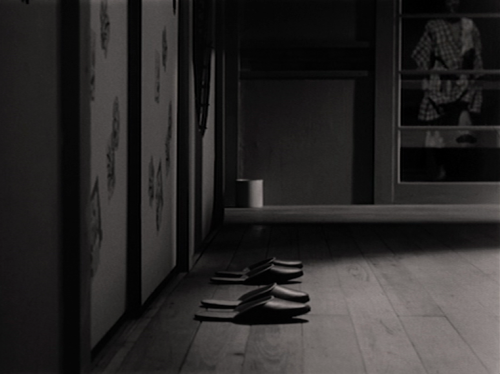
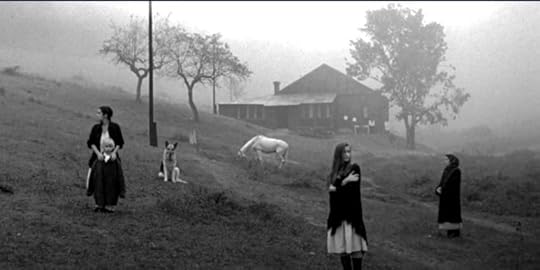
This monograph began as Paul Schrader's film school thesis and it reads like it. While it is not academic prose at its worst, there is a dry, fussily methodical quality that I found a little surprising from the screenwriter of The Yakuza and Taxi Driver and director of Blue Collar and American Gigolo, until it occurred to me that it was written for submission to UCLA. To Schrader's credit, Transcendental Style in Film is commendably free of jargon, but it features the sort of self-consciously scholastic argument that always feels just beyond my grasp. It would seem as though I understood it, more or less, sentence by sentence, but when I tried to condense the ideas in a paragraph for myself into layman's terms and rhythms, I wasn't always sure I'd gotten the real gist. This is, in fact, similar to the slightly restive and baffled feeling that I've had in the past watching Ozu and Bresson movies. I like both directors (I really like Dreyer, but as Schrader argues, his work, while similar to theirs, is also way different), I've just not entirely understood why some folks love them so.
Schrader argues that these three directors share a bracing, spare rigor (He makes a number of offhand references to the lean and mean Westerns of Budd Boetticher, who, I get the feeling, was examined a bit more in depth in an earlier draft of this argument. My loss.) because they are all working, whether consciously or not, in what he defines as a culture-spanning "transcendental style." If I understand correctly, the experience that a less-sophisticated viewer such as myself might have of their movies - being, okay, I'll say it, a little bored - is, in fact a deliberately cultivated, meditative state that opens an audience up to spiritual revelation. Whether, as in Ozu's films, this is a Zen-inflected, quiescent acceptance of essential Oneness, or, as in the work of the avowedly Catholic filmmaker Bresson, an availability to the reality of Divine grace, Schrader argues that the means are the same. He proposes a sort of Hegelian dialectic in which the filmmakers' meditatively deliberate style establishes a sense of the everyday which is extraordinary in its ordinariness. The everyday is then challenged by a narrative development that provokes an experience of disparity. The disparity, Schrader argues, is then resolved by a spiritual synthesis which establishes a new sense of stasis that incorporates a deeper awareness of the profoundly Other. "Transcendental style," he writes, "can express the endemic metaphors of each culture; it is like the mountain which is a mountain, doesn't seem to be a mountain, then is a mountain again; it is also like the prison in which man is involuntarily enclosed, yet through a dark night of the soul he can escape, choosing instead to enter a 'new' prison."