

What do you think?

The Canning Season
Love under trying circumstances
One night out of the blue, Ratchet Clark’s ill-natured mother tells her that Ratchet will be leaving their Pensacola apartment momentarily to take the train up north. There she will spend the summer with her aged relatives Penpen and Tilly, inseparable twins who couldn’t look more different from each other. Staying at their secluded house, Ratchet is treated to a passel of strange family history and local lore, along with heaps of generosity and care that she has never experienced before. Also, Penpen has recently espoused a new philosophy – whatever shows up on your doorstep you have to let in. Through thick wilderness, down forgotten, bear-ridden roads, come a variety of characters, drawn to Penpen and Tilly’s open door. It is with vast reservations that the cautious Tilly allows these unwelcome guests in. But it turns out that unwelcome guests may bring the greatest gifts.
By turns dark and humorous, Polly Horvath offers adolescent readers enough quirky characters and outrageous situations to leave them reeling! The Canning Season is the winner of the 2003 National Book Award for Young People's Literature.
One night out of the blue, Ratchet Clark’s ill-natured mother tells her that Ratchet will be leaving their Pensacola apartment momentarily to take the train up north. There she will spend the summer with her aged relatives Penpen and Tilly, inseparable twins who couldn’t look more different from each other. Staying at their secluded house, Ratchet is treated to a passel of strange family history and local lore, along with heaps of generosity and care that she has never experienced before. Also, Penpen has recently espoused a new philosophy – whatever shows up on your doorstep you have to let in. Through thick wilderness, down forgotten, bear-ridden roads, come a variety of characters, drawn to Penpen and Tilly’s open door. It is with vast reservations that the cautious Tilly allows these unwelcome guests in. But it turns out that unwelcome guests may bring the greatest gifts.
By turns dark and humorous, Polly Horvath offers adolescent readers enough quirky characters and outrageous situations to leave them reeling! The Canning Season is the winner of the 2003 National Book Award for Young People's Literature.
208 pages, Hardcover
First published April 7, 2003
About the author
Polly Horvath
44 books303 followersPolly Horvath is the author of many books for young people, including Everything on a Waffle, The Pepins and Their Problems, The Canning Season and The Trolls. Her numerous awards include the Newbery Honor, the National Book Award for Young People's Literature, the Boston Globe-Horn Book Honor, the Vicky Metcalf Award for Children's Literature, the Mr. Christie Award, the international White Raven, and the Young Adult Canadian Book of the Year. Horvath grew up in Kalamazoo, Michigan. She attended the Canadian College of Dance in Toronto and the Martha Graham School of Contemporary Dance in New York City. She has taught ballet, waitressed, done temporary typing, and tended babies, but while doing these things she has always also written. Now that her children are in school, she spends the whole day writing, unless she sneaks out to buy groceries, lured away from her desk by the thought of fresh Cheez Whiz. She lives on Vancouver Island with her husband and two daughters.
http://us.macmillan.com/author/pollyh...
http://us.macmillan.com/author/pollyh...
Ratings & Reviews
Friends & Following
Create a free account to discover what your friends think of this book!
Community Reviews
Displaying 1 - 30 of 302 reviews

January 13, 2017
Refreshing, delightful, authentic. Not every neglected child will see herself in either girls' shoes, but most children, whether lucky enough to have aunts like these or not, will laugh at the funny bits, and feel the worries at the suspenseful bits.
And, btw, I have no real idea why some reviewers think there's no plot. Of course there is! I won't spell it out, as that would be spoilery, but honestly, did those readers just skim the book or what? Maybe they don't have hearts open to empathize with 'eccentrics' like these two old ladies and two young girls....
-----
Reread. Still like and admire it. I do understand why some readers are confused... it starts off as almost a parody of 'issues' books and gets weirder before we learn enough of what all everyone is going on about before we finally can appreciate all the different stories. But I think it just fine for patient readers age 9 up.
I do want to research "Buddhist metta" : "May all beings be happy, content, and fulfilled. May all beings be healed and whole..."
And, btw, I have no real idea why some reviewers think there's no plot. Of course there is! I won't spell it out, as that would be spoilery, but honestly, did those readers just skim the book or what? Maybe they don't have hearts open to empathize with 'eccentrics' like these two old ladies and two young girls....
-----
Reread. Still like and admire it. I do understand why some readers are confused... it starts off as almost a parody of 'issues' books and gets weirder before we learn enough of what all everyone is going on about before we finally can appreciate all the different stories. But I think it just fine for patient readers age 9 up.
I do want to research "Buddhist metta" : "May all beings be happy, content, and fulfilled. May all beings be healed and whole..."

December 17, 2010
I really enjoyed listening to old stories of my aunts, uncles and most of all my grandparents. I really love my grandfather but he died before I ask him his love story and his life in Ilo-ilo fighting for his life from the cruelty of the Japanese armies. At least I still have my grandmother who can still talk but cannot remember everything from her past, but I know some of her secrets and stories that inspire me for so long still there are probabilities that she made fictitious stories.
My mom is a little bit chatty and ready to answer all your questions about her life with her sisters and parents. Well, they have normal life in the barrio and they love eating Filipino delicacies like papaya pickle, suman, ibos, bola-bola and many more. For their love to foods, they created a special bond between them. They are poor that time, not enough money to buy expensive clothes, shoes and supplies but they have the love that surrounds them all. Imagine no electricity that time and my mom suffer from studying using a gas lamp and candles, but it wasn't a hindrance for them to graduate and be successful in their related fields.
In 2003 The Canning Season received and won the National Book Award. Well, it was worth reading and seriously I was hoping for a sequel for this book. It was ended too soon and I think she can still continue to write Ratchet's love story. It wasn't that bad and it was an easy read, like listening to your parents or aunties talking about their life. The Epilogue sounds interesting but it only made the reader wanted to read it briefly and question behind my mind was still unclear. The Canning Season, will always be at your grandmother's backyard waiting for you to read her story.
Ratchet Clark a girl living in a very small basement apartment with her mother. Without window, a very thin wall divided the mother and her daughter with worms and bugs living in their floor and walls. She can't be like a normal girl like her classmates and she don't have friends, not being selfish but being a tail of her mother, Henrietta. It wasn't that bad at first living with her mother, but her mother's obsession to The Pensacola Hunt Club everything goes wrong, she ate her breakfast, dinner and lunch with chips, no allowance and no money to buy decent clothes.
One day her mother forced her to go to Maine to visit her twin aunties but she have to hide her secret behind her clothes under her shoulder blade. It was a big deal for her mother for having such a distortion on her daughter's shoulder. So she went to Maine for not having a decision and met the twins. Within 48 hours of travelling she met Penpen, a happy and fat, and Tilley who looked like a sphincter. They were well known and called as the blueberry ladies or the queer Menuto women.
Days passed, the aunties and Ratchet have the best days of their life having a nice warm beach at the side of the sister's villa and the best blueberry garden at the back. But when a girl named Harper step into their house the girls become more queer than before. Technologies and more secrets have been dig and one of the sisters is at stake to die. The funny story of the sisters and the fantastic friendship between the characters that blooms and ignites the story to the next level.
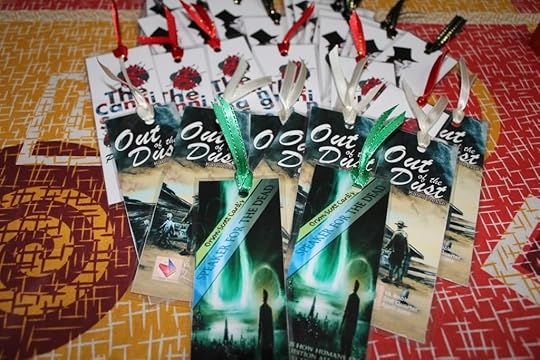
These are the bookmarks I made for the books that we will discuss this month of April and coming month of May and June hosted by me. I can't wait for others to read the books.
Rating - The Canning Season by Polly Horvath, 4 Sweets and the bears hiding in the forest! (I really recommend this book to everyone. The novel is more on dialogue and some parts were hilarious. The end part was charming but I want a longer ending to satisfy my tummy. Bit in fact over all, it was a great read! Cheers to Polly Molly! Anyway, this is my second book of Polly and I want more.)
Challenges:
Book #70 for 2011
Goodreads - Filipinos, 2nd Quarter: (Book 2) YA Book from Kwesi's Shelf

My mom is a little bit chatty and ready to answer all your questions about her life with her sisters and parents. Well, they have normal life in the barrio and they love eating Filipino delicacies like papaya pickle, suman, ibos, bola-bola and many more. For their love to foods, they created a special bond between them. They are poor that time, not enough money to buy expensive clothes, shoes and supplies but they have the love that surrounds them all. Imagine no electricity that time and my mom suffer from studying using a gas lamp and candles, but it wasn't a hindrance for them to graduate and be successful in their related fields.
In 2003 The Canning Season received and won the National Book Award. Well, it was worth reading and seriously I was hoping for a sequel for this book. It was ended too soon and I think she can still continue to write Ratchet's love story. It wasn't that bad and it was an easy read, like listening to your parents or aunties talking about their life. The Epilogue sounds interesting but it only made the reader wanted to read it briefly and question behind my mind was still unclear. The Canning Season, will always be at your grandmother's backyard waiting for you to read her story.
Ratchet Clark a girl living in a very small basement apartment with her mother. Without window, a very thin wall divided the mother and her daughter with worms and bugs living in their floor and walls. She can't be like a normal girl like her classmates and she don't have friends, not being selfish but being a tail of her mother, Henrietta. It wasn't that bad at first living with her mother, but her mother's obsession to The Pensacola Hunt Club everything goes wrong, she ate her breakfast, dinner and lunch with chips, no allowance and no money to buy decent clothes.
One day her mother forced her to go to Maine to visit her twin aunties but she have to hide her secret behind her clothes under her shoulder blade. It was a big deal for her mother for having such a distortion on her daughter's shoulder. So she went to Maine for not having a decision and met the twins. Within 48 hours of travelling she met Penpen, a happy and fat, and Tilley who looked like a sphincter. They were well known and called as the blueberry ladies or the queer Menuto women.
Days passed, the aunties and Ratchet have the best days of their life having a nice warm beach at the side of the sister's villa and the best blueberry garden at the back. But when a girl named Harper step into their house the girls become more queer than before. Technologies and more secrets have been dig and one of the sisters is at stake to die. The funny story of the sisters and the fantastic friendship between the characters that blooms and ignites the story to the next level.
These are the bookmarks I made for the books that we will discuss this month of April and coming month of May and June hosted by me. I can't wait for others to read the books.
Rating - The Canning Season by Polly Horvath, 4 Sweets and the bears hiding in the forest! (I really recommend this book to everyone. The novel is more on dialogue and some parts were hilarious. The end part was charming but I want a longer ending to satisfy my tummy. Bit in fact over all, it was a great read! Cheers to Polly Molly! Anyway, this is my second book of Polly and I want more.)
Challenges:
Book #70 for 2011
Goodreads - Filipinos, 2nd Quarter: (Book 2) YA Book from Kwesi's Shelf

May 1, 2023
blaubeersommer ist mein allerliebstes buch glaube ich mit zehn hab ich das hörbuch bekommen und da war ich grad mit gehirnhautentzündung im krankenhaus (omg die arme so mitleid grad) aber jedenfalls war es damals perfekt und IST ES NOCHIMMER- es ist unheimlich, traurig und wunderschön und LUSTIg und ich muss immer ein bisschen weinen. die menschen sind so vollständig geschrieben dass ich sie vermiss immer wenn ich das buch länger nicht besuche. alle zwei drei jahre kehr ich zurück und jedes mal ist es so gut ich habs mir jetzt als physikalisches buch bestellt damit ich mir dinge unterstreichen kann. bUch meines Lebens einfach falls ich jemals kinder hab dann les ich es ihnen vor . es ist für jede alters gruppe (ab 10 oderso) geeignet. meine eigene mama liebt das buch 📖 egal soviel dazu jetzt und viel spass das buch gibts nirgends ich hab die letzte secondhand version bestellt von medimops und die kommt in einen tresor #gatekeep

May 20, 2011
A Can of Humor and Warmth
(A Book Review of Polly Horvath’s The Canning Season)
Thirteen year old Ratchet Clark is a girl living in a windowless and grimy “sub-basement apartment” in Pensacola, Florida with her self-centered mom Henriette who has an unreasonable longing to become a member of the classy Hunts Club. Named after a tool by her mother to spite her no-good father, forbidden to make friends, with Cheerios as her only source of sustenance and taught at an early age to be mortally ashamed of ‘That Thing” on her shoulder, indeed, Ratchet lives a miserable life. As summer kicks in, Ratchet is unceremoniously dropped off by her mother to spend vacation with her great-second cousins in Maine, relatives she hasn’t even heard of.
Once in Glen Rosa, an isolated house next to the ocean and a sprawling estate surrounded by woods infested with bears, Ratchet meets the nonagenarian twin sisters Penpen and Tilly who can surprisingly still drive despite their age, has a phone that only allows incoming calls, have made a pact with each other to die together whenever the time comes and delight in their reputation as the “queer Menuto women.” In no time at all, the shy and timid Ratchet, with another young outcast named Harper, quickly becomes accustomed to the farm life of milking cows, taking care of the chickens, gardening and picking up blueberries in time for the caning season. This odd cast of characters will form an unlikely family of sorts all the while learning from one another. Both Ratchet and Harper’s lives will be changed forever as they slowly discover about surprising things about love and belonging but more importantly about themselves.
Contrasting themes of age and youth, selfish and caring adults, isolation against how technology links the world, The Caning Season, 2003 winner of the National Book Award for Young People’s Literature, by Polly Horvath takes us into some of the most outrageous situations of bizarre family stories, alongside comic and horrific incidents and characters facing rejection, loss and longing, that gives the book its humor and warmth with a few fits of giggles enough to keep the reader curious to find out what happens next. It’s a completely satisfying read and a story that seems to continue past its thoughtful sweet ending.
_________________________
Book Details: Book #17 for 2011
Published by FSG
(Trade Paperback, First Sunburst 2005 Edition)
196 pages
Started: May 24, 2011
Finished: May 27, 2011
My Rating: ★★★
[See this review on my book blog Dark Chest of Wonders and for many others.]

June 8, 2012
This book, meant (surprisingly) for children, was consistently funny and dark and vivid and odd. Nothing about the way the story unfolds is predictable, but at the same time, Horvath secures you so completely and convincingly with the characters and their setting (a rambling old house on the coast of Maine) that the twists and turns the story takes not only surprise you, they make you feel even more included in the offbeat nature of these character's lives. Ratchet, Tilly, Penpen and, eventually, Harper, along with the secondary characters, representing menace and comfort and absurdity, make this a deeply human, contemporary story, against the backdrop of a bleak and mysterious history.
The amazing part of this book, though, is that Horvath is laying out her story on her own terms--not subscribing to any obvious or tired diagram of pacing or plot or outcome. I read this book slowly so as to savor this aspect, and to relish in her choices and details. I'm still undecided about the ending, but I held off getting there for as long as I could--even so, it was satisfying; it made the book feel whole. A rare, unsettling, inspiring read.
The amazing part of this book, though, is that Horvath is laying out her story on her own terms--not subscribing to any obvious or tired diagram of pacing or plot or outcome. I read this book slowly so as to savor this aspect, and to relish in her choices and details. I'm still undecided about the ending, but I held off getting there for as long as I could--even so, it was satisfying; it made the book feel whole. A rare, unsettling, inspiring read.

August 22, 2014
Well, the book has been out for eleven years already. But I am a late-comer to Polly Horvath so here I am. This is hands down one of the best YA novels I've ever read.
Polly Horvath pulls no punches when she decides to let her characters go down difficult paths. There is a lot of Dickens and fairy-tales in the background with themes of abandonment, rescue, and self-reliance. But it's the way Horvath does it all that makes the book shine. Her prose and dialog are inviting and rhythmic. Tilly and Pen Pen made me laugh out loud many times, and even the lines of the minor characters are human and funny. One of the magical things is that the characters who don't do what we think they should do don't end up painted as villains. Somehow she writes it so I see them as just people, who probably don't know any better, or can't be what we want them to be. This is a tall order for youth fiction!
It has the same charms as The Trolls, but with a much more intricate novel narrative (where Trolls was episodic). I'll have to amend my review of Trolls, now!
Polly Horvath pulls no punches when she decides to let her characters go down difficult paths. There is a lot of Dickens and fairy-tales in the background with themes of abandonment, rescue, and self-reliance. But it's the way Horvath does it all that makes the book shine. Her prose and dialog are inviting and rhythmic. Tilly and Pen Pen made me laugh out loud many times, and even the lines of the minor characters are human and funny. One of the magical things is that the characters who don't do what we think they should do don't end up painted as villains. Somehow she writes it so I see them as just people, who probably don't know any better, or can't be what we want them to be. This is a tall order for youth fiction!
It has the same charms as The Trolls, but with a much more intricate novel narrative (where Trolls was episodic). I'll have to amend my review of Trolls, now!

August 25, 2011
Meandering in Portland, Oregon, we discovered the LARGEST bookstore in the whole world! It was a block long and wide, but inside were many different levels! Each one had different kinds of books. Only trouble was: We had barely one hour to be in it! I was so cranky about it, that when the kids came rushing over asking me to help them find their books i almost shouted at them: "Get lost", which would not have been too difficult. I knew there was no way any of us would have time enough, even if we were left to our own devises, so I explained to them I was on a five minute mission to find a couple of books I wanted and then I would help them out with their missions. Unfortunately, they only had Cutting for Stone, and not his other book, and well... this is not a story of that day, so I will move on, but if you ever find yourself in Portland, stop by and be amazed and amused in this the Powell Bookstore. Did I mention they sell new AND used books?
This book was my find! We drove down to Elmira, Oregon to visit some good friends from our life in San Diego, and happily I learned how to do Freezer Jam with the bucket of strawberries we picked earlier on that morning. Well, that was just a taste of what was to come! Two days later we picked four buckets full and my friend Stephanie and I spent the whole day making strawberry Jam! Luckily for me, I also had this book, which makes me wonder; What came first the book title or the desire to make Jelly?
The book is a coming of age (I LOVE THAT KIND OF BOOK) of a young girl (Ratchet) whose mom does not love her as much as any girl needs to be loved, and so is sent to visit some two aunties, old as the hills, in a little forgotten backwater country home in Maine. The Great Aunts do love her and lavish her with wacky stories and love, and though they forget to make and eat dinners with her, and have their own little upheavals, including a forest full of humongous and hungry bears, none-the-less, this little girl gets a bizarre and loving family. Not much later into the story another girl also gets dumped there by mistake, thinking the place is an orphanage, and she, as well, becomes part of the family. What they harvest is Blueberries with a shotgun to keep the bears away.
The story is filled with drama and slapstick no nonsense humor, a story full of gruesome stories that are poignant yet hilarious at times. I cried and laughed at the same time!
The only thing I wish was different, was that those two aunties were mine!
This book was my find! We drove down to Elmira, Oregon to visit some good friends from our life in San Diego, and happily I learned how to do Freezer Jam with the bucket of strawberries we picked earlier on that morning. Well, that was just a taste of what was to come! Two days later we picked four buckets full and my friend Stephanie and I spent the whole day making strawberry Jam! Luckily for me, I also had this book, which makes me wonder; What came first the book title or the desire to make Jelly?
The book is a coming of age (I LOVE THAT KIND OF BOOK) of a young girl (Ratchet) whose mom does not love her as much as any girl needs to be loved, and so is sent to visit some two aunties, old as the hills, in a little forgotten backwater country home in Maine. The Great Aunts do love her and lavish her with wacky stories and love, and though they forget to make and eat dinners with her, and have their own little upheavals, including a forest full of humongous and hungry bears, none-the-less, this little girl gets a bizarre and loving family. Not much later into the story another girl also gets dumped there by mistake, thinking the place is an orphanage, and she, as well, becomes part of the family. What they harvest is Blueberries with a shotgun to keep the bears away.
The story is filled with drama and slapstick no nonsense humor, a story full of gruesome stories that are poignant yet hilarious at times. I cried and laughed at the same time!
The only thing I wish was different, was that those two aunties were mine!

June 8, 2010
Ratchet (named for the tool) is sent to spend the summer with her great aunts - 91 year old twins, Tilly and Penpen - because her mother can't be bothered to look after her. Her mother is a strange and carelessly cruel person who casually abandons her daughter into the care of these estranged relatives who Ratchet has never met. They may be strange, but at least they are kind - if somewhat distracted. Ratchet is joined at the aunts by another young woman who is also abandoned by her caregiver who mistakes the aunts' home as the orphanage.
This was truly a very odd book. There seems to be a dark theme running through many of the recent releases for young adults and children. I listened to it on audio and felt that many times it was...pointlessly distressing? I became frustrated because the story didn't seem to be going anywhere. Yes, there were weird and wild happenings - tales of the aunts' mother committing suicide by chopping off her own head. I kept wondering if these things would have been more amusing and any less odd and off-putting if I had read them in my mind's own voice and not heard them read by someone else.
Plenty of oddball characters and wild events, but I'm not convinced that there was much here beyond a succession of strange vignettes haphazardly cobbled together.
This was truly a very odd book. There seems to be a dark theme running through many of the recent releases for young adults and children. I listened to it on audio and felt that many times it was...pointlessly distressing? I became frustrated because the story didn't seem to be going anywhere. Yes, there were weird and wild happenings - tales of the aunts' mother committing suicide by chopping off her own head. I kept wondering if these things would have been more amusing and any less odd and off-putting if I had read them in my mind's own voice and not heard them read by someone else.
Plenty of oddball characters and wild events, but I'm not convinced that there was much here beyond a succession of strange vignettes haphazardly cobbled together.

September 29, 2017
poco entusiasmante.....una storia psichedelica per bambini??

February 16, 2009
I bought this book because it was on sale at the bookstore downstairs in my building, and was the winner of the 2003 National Book Award for Young People's Literature. When I started it, I feared it was going to be one of those really odd children's books, the kind that wins awards, because grown-ups like it, but is too unsettling for actual children (such as, in my humble opinion, Tuck Everlasting, which I am sorry but is the creepiest damn book around - and I like Natalie Babbit). The book concerns Ratchett, whose mother clearly does not care for her, and who sends her to live with her ancient great-aunts in the middle of nowhere, Maine. The quirkiness seemed too forced - the bears, and the phone that you can't call out on, and the no meals - not to mention the fact that the great-aunts' mother had committed suicide by decapitating herself. It felt bizarre and uncomfortable - like Ellen Raskin's Figgs and Phantoms, another book about a truly weird family that I'm not sure I quite got.
And yet - something changed halfway through, and by the end, I found the book to be funny, and heartwarming and the quirkiness to serve a greater message - that we need love wherever it comes from and no matter how odd the source. I don't know if it was the introduction of Harper (another teenager dumped on the great aunts), who is angry but clever and winning (where Ratchett is quiet and withdrawn), or the couple of good jokes that Hovath threw in, or what, but I am left recommending the book whole-heartedly. Just realize that you might need a couple of chapters to get into it - don't give up before Harper.
And yet - something changed halfway through, and by the end, I found the book to be funny, and heartwarming and the quirkiness to serve a greater message - that we need love wherever it comes from and no matter how odd the source. I don't know if it was the introduction of Harper (another teenager dumped on the great aunts), who is angry but clever and winning (where Ratchett is quiet and withdrawn), or the couple of good jokes that Hovath threw in, or what, but I am left recommending the book whole-heartedly. Just realize that you might need a couple of chapters to get into it - don't give up before Harper.
January 19, 2011
Just finished reading The Canning Season by Polly Horvath. It's a bizarre little gem of character study. I found myself convicted by this particular exchange:
"You gals ought to keep abreast of things," said Mr. Feebles.
"Why?" asked Tilly grumpily. "What good does it do you? It seems to me, from what you've been telling us, that everyone these days knows everything about everyone and the split second it happens, too. What do they do with all this information? What does it get them? It just clutters up their peaceful quiet time. It seems to me, from what you've been describing, nobody has peaceful quiet time anymore. Television, bah! Radio, bah! Newspapers, magazines, bah, bah! Sounds like the world is running off half-cocked, people getting zapped with their little bits of information. Needing it every day. Zap, zap, zap. Well, deliver me. Contagious. Like hoof-and-mouth disease. I hope you're not contaminated. Don't go trekking it all over our property."
"You gals ought to keep abreast of things," said Mr. Feebles.
"Why?" asked Tilly grumpily. "What good does it do you? It seems to me, from what you've been telling us, that everyone these days knows everything about everyone and the split second it happens, too. What do they do with all this information? What does it get them? It just clutters up their peaceful quiet time. It seems to me, from what you've been describing, nobody has peaceful quiet time anymore. Television, bah! Radio, bah! Newspapers, magazines, bah, bah! Sounds like the world is running off half-cocked, people getting zapped with their little bits of information. Needing it every day. Zap, zap, zap. Well, deliver me. Contagious. Like hoof-and-mouth disease. I hope you're not contaminated. Don't go trekking it all over our property."

Read
December 25, 2007Great, great, great. And very funny.

November 28, 2023
who in the heck is the target audience for this book
April 22, 2011
My initial impression of this book is that it's almost exactly like the movie Secondhand Lions (though not nearly as good), which came out the same year (which one came first, I wonder...). Anyway, for being an award-winning book, this was very disappointing. The writing style is choppy, which makes it somewhat irritating to read, and there isn't any real...substance to the plot. There really isn't a plot, actually, until about halfway through the book, but even once it shows it's face, it really isn't that exciting or interesting. This book is mostly comprised of two very old sisters telling stories about their life back when they were younger to their young relation who has family issues of her own. I will give it points for being somewhat humorous, however, since the stories that are related are pretty funny, and the characters' reactions to things are sufficiently unrealistic and ridiculous that it's amusing. So, overall, this book wasn't terrible, but if you're looking for a book with decent writing, a good plot, and characters you can relate to, this isn't it.
Warnings (on a scale of 1-5):
Language: 3 Language isn't used all the time, but there are a few higher-level swear words used occasionally.
Sexual/Body: 1 There are a few questionable descriptions regarding people's bodies.
Warnings (on a scale of 1-5):
Language: 3 Language isn't used all the time, but there are a few higher-level swear words used occasionally.
Sexual/Body: 1 There are a few questionable descriptions regarding people's bodies.
April 26, 2011
This book disgusted me. The plot line failed to keep me hooked, and it was just disturbing. The grotesque images--particularly body parts--were rampant throughout the novel. Although these images contributed greatly to the story, I would not choose to write or read them again. Horvath does do a nice job of developing her characters, although they are extremely odd. She has her own unique voice that is obvious in the story, and there were times that I got a good laugh from her sense of humor. But overall, I did not enjoy the queer aspects and odd plot line that this novel consisted of. The story itself was simple--almost not complex enough to be considered young adult--but there were adult matters referenced. I would warn readers that they is some language, although not excessive. Probably the most disturbing parts of the book would be the detailed images. Unfortunately,I would not recommend this book to anyone.
October 13, 2011
The Canning Season is a wonderfully understated book. With quick, sharp humor, and a near-absence of intrusive modern technology, Horvath tells a story of two girls' coming of age, intertwined with life, death, and the making a family that hinges less on biology and more on love. It may be difficult at first to comprehend Tilly and Penpen's at times off-the-wall behavior, but anyone with elderly relatives should be familiar with how things said don't always quite make sense.
When Rachet comes to stay with her great-aunts in Maine, she has no idea what to expect - but what she finds is the family she has been unknowingly yearning for her whole life. Despite bears in the woods, a near-complete lack of electricity, and several weeks of non-stop blueberry canning, Rachet finds time to consider her life and what she wants from it. And when she makes her decision regarding her future, she has taken her first step into adulthood.
When Rachet comes to stay with her great-aunts in Maine, she has no idea what to expect - but what she finds is the family she has been unknowingly yearning for her whole life. Despite bears in the woods, a near-complete lack of electricity, and several weeks of non-stop blueberry canning, Rachet finds time to consider her life and what she wants from it. And when she makes her decision regarding her future, she has taken her first step into adulthood.
Read
February 4, 2016Narrated by Julie Dretzin. Ratchet's mother Henrietta sends Ratchet off to Maine to spend the summer with her eccentric elderly aunts Penpen and Tilly. They live in a remote wooded area where the only road in is populous with bears. Their phone receives calls only and doesn't call out. They don't like visitors and only venture into town every six months to pick up their mail. During Ratchet's visit, the aunts tell stories of their past, including their mother's suicide by beheading, Tilly's wedding, and their blueberry canning business. Soon, teenage Harper shows up at their door when her guardian misses the turnoff for the orphanage. Ratchet enjoys the solitude of the early mornings while Harper loves gardening. When the aunts die, the house is left to the girls. Not sure who the audience is for this book. Lib notes: Tilly imbibes regularly, there is some swearing and descriptions of their mother's suicide.

February 18, 2015
The Canning Season is a humor about a young teenage girl named Ratchet whose mother sends her off to live with her aunts, who live deep in the woods in a large house on a large plot of land. During her stay, her hostesses tell her a myriad of stories from their past in the area, and strangers suddenly and frequently turn up at their door after years of solitude.
While the book received a National Book Award, I don't understand why. Very little happens, and there are only a few truly funny parts. Overall, I was not impressed with it. As a word of caution, there is some gruesome humor, and there is language throughout, including frequent use of blasphemy and a couple instances of very strong language.
While the book received a National Book Award, I don't understand why. Very little happens, and there are only a few truly funny parts. Overall, I was not impressed with it. As a word of caution, there is some gruesome humor, and there is language throughout, including frequent use of blasphemy and a couple instances of very strong language.

June 30, 2009
The magical realism in The Canning Season did not work for me. In the 3 other Horvath books I've read, the "magic" manifested itself in unlikely but ultimately believable events, which I found refreshing and charming. But in this book, it was outlandish. For instance, I really could not suspend disbelief enough to allow that a mere birthmark could inspire fear and loathing. I also failed to appreciate several instances of profanity from a middle-grade novel.

May 5, 2011
The Canning Season confused me. It flowed like a children's book, and the main character was young, but it had some things in it that I consider inappropriate for younger readers. There was language worthy of a PG-13 rating, a reference to homosexuality, gory details, and a veiw on life, marriage, and death that creeps me out. While people could find that the endearing personalities of the characters, and the ridiculous storyline make the book worth it, I did not.

May 8, 2016
This book was added to my meh shelf. Honestly it is a super easy read and it wasn't all that interesting. It seemed very one noted to me. But I loved the name Ratchet because it seemed so fun to say in my head. The reason why the book felt one noted was because the idea of a neglectful parent, such as Ratchet's mother felt very unoriginal. I would recommend this book to somebody who can't find a book to read because that's what it felt like to me. An in-between book.

December 24, 2016
I read this book for a book report. I believe that this book is not appropriate for kids because it had bad words. It was not interesting at all. I came on this app to see how many stars it had and it had 4 so I thought it was going to be good I didn't read the reviews. Please don't waste your time to read the terrible book when you could be reading something else.
February 11, 2011
Amazing! I read it while in the woods in Maine.

July 17, 2013
17 August 2003 THE CANNING SEASON by Polly Horvath, Farrar Straus Giroux, May 2003, ISBN 0-374-39956-5
" 'How can we have opinions if we have no idea what you're talking about?' asked Penpen gently.
" 'You gals ought to keep abreast of things,' said Mr. Feebles.
" 'Why?' asked Tilly grumpily. 'What good does it do you? It seems to me, from what you've been telling us, that everyone these days knows everything about everyone and the split second it happens, too. What do they do with all this information? What does it get them? It just clutters up their peaceful quiet time. It seems to me from what you've been describing, nobody has peaceful quiet time anymore. Television, bah! Radio, bah! Newspapers, magazines, bah, bah! Sounds like the world is running off half-cocked, people getting zapped with their little hits of information. Needing it every day. Zap, zap, zap. Well, deliver me. Contagious. Like hoof-and-mouth disease. I hope you're not contaminated. Don't go trekking it all over our property.'
" 'Very funny,' said Mr. Feebles. 'You're a queer couple of ladies, is what you are.'
" 'Yes, yes,' said Tilly, 'those queer Menuto women. I know all about it. Now, you drive gently on those rutted roads and don't go breaking those blueberry jars.' "
We've just ended a two-and-a-half week stay in the Sierra Mountains at Norm's vacation house. Norm is my father-in-law. We'll get to see him again in a couple of weeks when we help him celebrate his eightieth birthday.
I read THE CANNING SEASON aloud to friends and family in the evenings during our first week at Norm's, following relatively peaceful and quiet days of hiking and swimming above 6,000 feet. On the trails we had sometimes run across piles of fresh berry-laden bear scat--a most appropriate happenstance in light of this story. (I got some digital photos of the scat, but never did get to see the bears.)
I also spent some time getting to sit down and hear Norm's stories. Norm's Southern California childhood included silent movies and the iceman with his horse-drawn cart. Norm was a teenager attending UCLA during W.W.II when the Navy came looking for quality math and science majors and trained him to be a meteorologist working with military air traffic in the Pacific theater. After the war, he made a career of that training, working for a series of airlines that swallowed each other up over the years. He talked about the inauguration of commercial jet flights in the 1950s and his use of computers in his work, beginning in the mid-1960s, as the pivotal technological breakthroughs during the course of his career. The other night I was reminiscing with Norm about such things as trolley cars on the Peninsula and those lines of spherical kerosene lanterns that I recall marking road construction sites when I was a little kid. Before we left for home, Norm and I did some birthday shopping online--investigating the latest compact disk editions of swing band recordings that he listened to at 78 rpms as a teenager.
Changes just keep creeping up on us.
"And Penpen's eyes welled up as she realized that Tilly was no longer a young girl, as if seeing her white kinked hair and wrinkles and suddenly realizing what they meant. That old age had come and what had seemed like an interesting diversion--the first few gray hairs, the stooping body--wasn't just a pleasant novelty. They weren't going back; they weren't ever going back. Their youth, their youth, was gone. It was as if, unwitnessed, out here, safe in the woods, they should have been out of time as well. If no one had seen their passing, they shouldn't have passed. She wondered if Tilly, lying upstairs alone, was suddenly as aware of it as she was."
THE CANNING SEASON is a complex dichotomy of age and youth, of selfish and nurturing adults, of world-shrinking technology and isolation, and of two teenage girls, Rachet and Harper, who are fortunate enough to land on the doorstep of "those queer Menuto women." What is so fascinating is seeing how Penpen and Tilly--twin nonagenarians--share a renaissance, despite their failing health, while the two teenage girls come of age in the unusual household, the old mansion on an isolated coast in Maine where Tilly and Penpen have spent their entire lives. Aside from the story's motherhood theme, the book is nonjudgmental in its approach to human existence and different lifestyles.
"Penpen said that living things were all critical mass, the definition of critical mass being the amount of fissionable material required to sustain a chain reaction. She tossed some weeds on the compost and said that people didn't like to see things rotting in the garden but there had to be all things to be growth. She told Rachet this over and over, and the things that someone repeats to you over and over you tend to remember."
Rachet, the first adolescent character we meet in the story, is a rather passive girl who has been long neglected by the mother who ships her off to Maine for the summer. She needs to grow. One of Rachet's catalysts for growth is the blunt, computer-saavy Harper, who also shows up at the end of that rutted, bear-plagued road. Harper, who has been rejected--first by her mother and then by a mother-figure--is a real piece of work:
" 'I can't eat these raspberries, they're moldy,' Harper said loudly, picking them off and putting them on the tablecloth.
" 'Please use a saucer,' said Penpen. 'You'll stain dear Mother's tablecloth.'
" 'I thought dear Mother stained her own tablecloth,' said Harper sourly, because Tilly had told her part of the story.
" 'Not this one,' said Penpen.
"Rachet breathed a sigh of relief and began to pick off her own moldy ones. She had been worrying quite a bit that they might make her sick. She didn't think they would kill her unless she was allergic to penicillin, which as far as she knew she was not, but she didn't like the idea of them whizzing around her system, and although in the end she had suffered no ill effects, she was glad she no longer had to shovel them down. This was the good thing about Harper. She did things which at first seemed unbelievably rude and obnoxious but which you secretly wished you could do yourself. Her remarks were less offensive once they realized that she was simply determined to speak the truth and be done with it. There didn't seem to be any hidden corners in Harper's soul, and she wasn't interested in allowing other people theirs. Often, as in the case of the raspberries, this alleviated delicate problems."
It is wonderful how the elderly characters act in a manner that young adults can totally relate to: Penpen trying on Zen philosophy and having a schoolgirl crush on Dr. Richardson; Tilly's self-absorption that often leaves everyone waiting all day for a meal. As a forty-eight year-old who identifies with being part of the younger generation, I can similarly identify with that shock of Penpen's in discovering that old age has arrived.
THE CANNING SEASON moves back and forth freely between Tilly and Penpen's younger years and the present. It hosts a series of hilarious, bizarre and horrific incidents and circumstances that keep readers (heads) rolling and wondering what will happen next. But for me, the multigenerational aspects to the story are what make this a uniquely exceptional tale with so much to ponder and discuss.
Richie Partington, MLIS
Richie's Picks http://richiespicks.com
BudNotBuddy@aol.com
Moderator http://groups.yahoo.com/group/middle_... http://slisweb.sjsu.edu/people/facult...
" 'How can we have opinions if we have no idea what you're talking about?' asked Penpen gently.
" 'You gals ought to keep abreast of things,' said Mr. Feebles.
" 'Why?' asked Tilly grumpily. 'What good does it do you? It seems to me, from what you've been telling us, that everyone these days knows everything about everyone and the split second it happens, too. What do they do with all this information? What does it get them? It just clutters up their peaceful quiet time. It seems to me from what you've been describing, nobody has peaceful quiet time anymore. Television, bah! Radio, bah! Newspapers, magazines, bah, bah! Sounds like the world is running off half-cocked, people getting zapped with their little hits of information. Needing it every day. Zap, zap, zap. Well, deliver me. Contagious. Like hoof-and-mouth disease. I hope you're not contaminated. Don't go trekking it all over our property.'
" 'Very funny,' said Mr. Feebles. 'You're a queer couple of ladies, is what you are.'
" 'Yes, yes,' said Tilly, 'those queer Menuto women. I know all about it. Now, you drive gently on those rutted roads and don't go breaking those blueberry jars.' "
We've just ended a two-and-a-half week stay in the Sierra Mountains at Norm's vacation house. Norm is my father-in-law. We'll get to see him again in a couple of weeks when we help him celebrate his eightieth birthday.
I read THE CANNING SEASON aloud to friends and family in the evenings during our first week at Norm's, following relatively peaceful and quiet days of hiking and swimming above 6,000 feet. On the trails we had sometimes run across piles of fresh berry-laden bear scat--a most appropriate happenstance in light of this story. (I got some digital photos of the scat, but never did get to see the bears.)
I also spent some time getting to sit down and hear Norm's stories. Norm's Southern California childhood included silent movies and the iceman with his horse-drawn cart. Norm was a teenager attending UCLA during W.W.II when the Navy came looking for quality math and science majors and trained him to be a meteorologist working with military air traffic in the Pacific theater. After the war, he made a career of that training, working for a series of airlines that swallowed each other up over the years. He talked about the inauguration of commercial jet flights in the 1950s and his use of computers in his work, beginning in the mid-1960s, as the pivotal technological breakthroughs during the course of his career. The other night I was reminiscing with Norm about such things as trolley cars on the Peninsula and those lines of spherical kerosene lanterns that I recall marking road construction sites when I was a little kid. Before we left for home, Norm and I did some birthday shopping online--investigating the latest compact disk editions of swing band recordings that he listened to at 78 rpms as a teenager.
Changes just keep creeping up on us.
"And Penpen's eyes welled up as she realized that Tilly was no longer a young girl, as if seeing her white kinked hair and wrinkles and suddenly realizing what they meant. That old age had come and what had seemed like an interesting diversion--the first few gray hairs, the stooping body--wasn't just a pleasant novelty. They weren't going back; they weren't ever going back. Their youth, their youth, was gone. It was as if, unwitnessed, out here, safe in the woods, they should have been out of time as well. If no one had seen their passing, they shouldn't have passed. She wondered if Tilly, lying upstairs alone, was suddenly as aware of it as she was."
THE CANNING SEASON is a complex dichotomy of age and youth, of selfish and nurturing adults, of world-shrinking technology and isolation, and of two teenage girls, Rachet and Harper, who are fortunate enough to land on the doorstep of "those queer Menuto women." What is so fascinating is seeing how Penpen and Tilly--twin nonagenarians--share a renaissance, despite their failing health, while the two teenage girls come of age in the unusual household, the old mansion on an isolated coast in Maine where Tilly and Penpen have spent their entire lives. Aside from the story's motherhood theme, the book is nonjudgmental in its approach to human existence and different lifestyles.
"Penpen said that living things were all critical mass, the definition of critical mass being the amount of fissionable material required to sustain a chain reaction. She tossed some weeds on the compost and said that people didn't like to see things rotting in the garden but there had to be all things to be growth. She told Rachet this over and over, and the things that someone repeats to you over and over you tend to remember."
Rachet, the first adolescent character we meet in the story, is a rather passive girl who has been long neglected by the mother who ships her off to Maine for the summer. She needs to grow. One of Rachet's catalysts for growth is the blunt, computer-saavy Harper, who also shows up at the end of that rutted, bear-plagued road. Harper, who has been rejected--first by her mother and then by a mother-figure--is a real piece of work:
" 'I can't eat these raspberries, they're moldy,' Harper said loudly, picking them off and putting them on the tablecloth.
" 'Please use a saucer,' said Penpen. 'You'll stain dear Mother's tablecloth.'
" 'I thought dear Mother stained her own tablecloth,' said Harper sourly, because Tilly had told her part of the story.
" 'Not this one,' said Penpen.
"Rachet breathed a sigh of relief and began to pick off her own moldy ones. She had been worrying quite a bit that they might make her sick. She didn't think they would kill her unless she was allergic to penicillin, which as far as she knew she was not, but she didn't like the idea of them whizzing around her system, and although in the end she had suffered no ill effects, she was glad she no longer had to shovel them down. This was the good thing about Harper. She did things which at first seemed unbelievably rude and obnoxious but which you secretly wished you could do yourself. Her remarks were less offensive once they realized that she was simply determined to speak the truth and be done with it. There didn't seem to be any hidden corners in Harper's soul, and she wasn't interested in allowing other people theirs. Often, as in the case of the raspberries, this alleviated delicate problems."
It is wonderful how the elderly characters act in a manner that young adults can totally relate to: Penpen trying on Zen philosophy and having a schoolgirl crush on Dr. Richardson; Tilly's self-absorption that often leaves everyone waiting all day for a meal. As a forty-eight year-old who identifies with being part of the younger generation, I can similarly identify with that shock of Penpen's in discovering that old age has arrived.
THE CANNING SEASON moves back and forth freely between Tilly and Penpen's younger years and the present. It hosts a series of hilarious, bizarre and horrific incidents and circumstances that keep readers (heads) rolling and wondering what will happen next. But for me, the multigenerational aspects to the story are what make this a uniquely exceptional tale with so much to ponder and discuss.
Richie Partington, MLIS
Richie's Picks http://richiespicks.com
BudNotBuddy@aol.com
Moderator http://groups.yahoo.com/group/middle_... http://slisweb.sjsu.edu/people/facult...
Read
March 6, 2020The Canning Season
Some spoilers
This book is very odd with themes of love, bad parenting, and dark humor. Ratchet Clark is sent to stay with her two aunts (Tilly and Penpen) for the summer while her careless mother does her own stuff. Growing up Ratchet was never allowed to have friends or do any sporting events because her mother was poor, and her father left. Later on in the story Harper was dropped off where Tilly and Penpen agreed to raise along with Ratchet. Together all four people form a family-type relationship. Ratchet’s and Harper’s life have changed from the neglected kids, to being loved by two old twins.
The most important aspect of this book is love. All of the main characters in this book, Tilly, Penpen, Ratchet, and Harper experience difficult times in their lives with love. Tilly and Penpen had an extremely strict dad, who drove their mother to commit suicide by decapitation.Then their father died leaving them on their own. Ratchet and Harper also had very irresponsible parents who did not care about them. But in the end they all found love. Another important aspect of this book is how dark it is. The characters in this story are always talking about death and other dark things.
“She killed herself in a particularly brutish and horrible way..” This quote shows one of many times how dark this story is. In the quote Penpen was telling Ratchet about her mother and how she commited suicide because of their father. “How long do you think you are going to stay?” asked Harper one day out in the field. “I was hoping no one would ask that question,” said Ratchet. “Me too,” said Harper. In this quote we see Harper and Ratchet wanted to stay with each other having a good friendship. Before this quote too, Penpen allowed Ratchet to stay for even longer showing their friendship.
This book is a rough ride through tough times for the main characters. The characters have been through alot and we see how they cope with their situations. Many themes are present through the story like dark humor/themes, bad parents, and love. My opinion about this book is that if you like reading about weird things then you will like it. Death is really common throughout this book even though the book is about littler kids. Personally I did not like the book, because of the weirdness.
I do not read many books, but I can say that I have never read a book like this in my life. Usually I like fantasy books with interesting characters that go through exciting adventures. This book is pretty dark and weird even though the book is for kids. So, personally I do not know what other books in the world are similar to this one.
My rating for this book is 4/10. My reasoning behind it is because I just did not like it. I like stories with action, plot twists, and big finales. Shows and books like Game of Thrones are what I like. This book is pretty easy going with no thrilling plot. Nothing in this book strikes me with the “read me,” message.
Review done by: Kian Harris.
Some spoilers
This book is very odd with themes of love, bad parenting, and dark humor. Ratchet Clark is sent to stay with her two aunts (Tilly and Penpen) for the summer while her careless mother does her own stuff. Growing up Ratchet was never allowed to have friends or do any sporting events because her mother was poor, and her father left. Later on in the story Harper was dropped off where Tilly and Penpen agreed to raise along with Ratchet. Together all four people form a family-type relationship. Ratchet’s and Harper’s life have changed from the neglected kids, to being loved by two old twins.
The most important aspect of this book is love. All of the main characters in this book, Tilly, Penpen, Ratchet, and Harper experience difficult times in their lives with love. Tilly and Penpen had an extremely strict dad, who drove their mother to commit suicide by decapitation.Then their father died leaving them on their own. Ratchet and Harper also had very irresponsible parents who did not care about them. But in the end they all found love. Another important aspect of this book is how dark it is. The characters in this story are always talking about death and other dark things.
“She killed herself in a particularly brutish and horrible way..” This quote shows one of many times how dark this story is. In the quote Penpen was telling Ratchet about her mother and how she commited suicide because of their father. “How long do you think you are going to stay?” asked Harper one day out in the field. “I was hoping no one would ask that question,” said Ratchet. “Me too,” said Harper. In this quote we see Harper and Ratchet wanted to stay with each other having a good friendship. Before this quote too, Penpen allowed Ratchet to stay for even longer showing their friendship.
This book is a rough ride through tough times for the main characters. The characters have been through alot and we see how they cope with their situations. Many themes are present through the story like dark humor/themes, bad parents, and love. My opinion about this book is that if you like reading about weird things then you will like it. Death is really common throughout this book even though the book is about littler kids. Personally I did not like the book, because of the weirdness.
I do not read many books, but I can say that I have never read a book like this in my life. Usually I like fantasy books with interesting characters that go through exciting adventures. This book is pretty dark and weird even though the book is for kids. So, personally I do not know what other books in the world are similar to this one.
My rating for this book is 4/10. My reasoning behind it is because I just did not like it. I like stories with action, plot twists, and big finales. Shows and books like Game of Thrones are what I like. This book is pretty easy going with no thrilling plot. Nothing in this book strikes me with the “read me,” message.
Review done by: Kian Harris.

May 2, 2019
I read this for the Greenlight PLG Young Readers Bookclub (YRBC).
What a strange book! Polly Horvath's young adult novel (we shelve it as YA at the store, likely because of a few errant F words and light scenes of violence, I read it with middle grade kids too so never fear), won the National Book Award a few years back.
This is another novel that doesn't pander to children. When the narrator, 12-year-old Ratchet is shipped from Florida to Maine to live with her eccentric great aunts, she feels out of place and lost. But the isolation is different than what she's used to living with her flighty mother who would, quite frankly, rather not be a mother. Ratchet's aunts, Pen Pen and Tilly, teach her about nature, tell long yarns of eccentric family lore, and teach her to drive! Ratchet is soon canning blueberries, breathing in the Maine sea air and dodging bears. This is a book that had my kids questioning things out loud. But any time I "worry" about what my young readers will think of a character or a topic, they embrace it with knowledge and empathy that always reminds me how quick I am to sell them short. No matter how weird and "edgy" their content is, writers like Ali Benjamin, Polly Horvath and Kelly Barnhill, who write distinctly children's literature with out losing the LITERATURE portion of that, will always stand far ahead of the pack.
What a strange book! Polly Horvath's young adult novel (we shelve it as YA at the store, likely because of a few errant F words and light scenes of violence, I read it with middle grade kids too so never fear), won the National Book Award a few years back.
This is another novel that doesn't pander to children. When the narrator, 12-year-old Ratchet is shipped from Florida to Maine to live with her eccentric great aunts, she feels out of place and lost. But the isolation is different than what she's used to living with her flighty mother who would, quite frankly, rather not be a mother. Ratchet's aunts, Pen Pen and Tilly, teach her about nature, tell long yarns of eccentric family lore, and teach her to drive! Ratchet is soon canning blueberries, breathing in the Maine sea air and dodging bears. This is a book that had my kids questioning things out loud. But any time I "worry" about what my young readers will think of a character or a topic, they embrace it with knowledge and empathy that always reminds me how quick I am to sell them short. No matter how weird and "edgy" their content is, writers like Ali Benjamin, Polly Horvath and Kelly Barnhill, who write distinctly children's literature with out losing the LITERATURE portion of that, will always stand far ahead of the pack.
October 30, 2018
There's lots to enjoy about this book, but I'm not sure quite what to say about it. We've really come to love Polly Horvath's writing, and I've been impressed with the variety found across the spectrum of her many books. There's still all of the things that we most enjoy about her work here. Colorful well developed characters, a gentle but genuine humor accompanying a poignant thoughtfulness, and a compelling slice of life touching upon family, friends, loyalty, and love. But I have some reservations, largely due to the fact that, while this has the outward trappings of a children's book, and the central character is a child (a young teen), the story itself and the telling of it are not entirely child appropriate. There's a fair amount of profanity sprinkled here and there throughout, as well as some fairly mature themes. It's not scandalous or gratuitous by any means, but, even though I filtered out most of the colorful expletives, my young listeners picked on the fact that it really didn't seem like a children's book (in contrast to the many other Polly Horvath books that we have recently read). In any case, it's well worth reading, but parents should be forewarned that it may not be the best choice for children.

February 21, 2026
This was a funny but endearing book about a 13-year-old girl, Ratchet, from Florida, whose inattentive mother drops her off with two old aunts (90-year-old twins!) in Maine (in the middle of nowhere!) for the summer!
There's quite a story that twists and turns through the book -- as Harper, another young girl, also gets dropped off at the aunts' house -- by accident!
Overall it is sweet, cute, and funny, and at times you'll also want to cry. But it is all very entertaining (especially the aunts!) and I highly recommend it :)
There's quite a story that twists and turns through the book -- as Harper, another young girl, also gets dropped off at the aunts' house -- by accident!
Overall it is sweet, cute, and funny, and at times you'll also want to cry. But it is all very entertaining (especially the aunts!) and I highly recommend it :)

November 14, 2019
Amazing character development of quirky, odd yet everyman individuals. Coming of age, family relationship, and most of all the art of being oneself in a world that often rewards us for hiding our truth. The author creates a pocket universe that vibrates with all the big questions of the human condition, especially in the be-an-individual and fit-in-at-the-same-time culture of the West.
March 27, 2021
By the time I had read to the end, I had forgotten that Ratchet had bad dreams about worms in her sub-basement in Pensacola. I don't remember ever reading a book with a worm thread running through it. Anyway, it's a great little novel, especially if you like, or don't like, worms.
Displaying 1 - 30 of 302 reviews