Napoli, 1931. Marzo sta per finire, ma della primavera ancora nessuna traccia. La città è scossa dal vento gelido e da una il grande tenore Arnaldo Vezzi – voce sublime, artista di fama mondiale, amico del Duce – viene trovato cadavere nel suo camerino al Real Teatro di San Carlo prima della rappresentazione di Pagliacci. La gola squarciata da un frammento acuminato dello specchio andato in pezzi.A risolvere il caso è chiamato il commissario Luigi Alfredo Ricciardi, in forza alla Squadra Mobile della Regia Questura di Napoli. Investigatore anomalo, mal sopportato dai superiori per la sua insofferenza agli ordini ed evitato dai sottoposti per il carattere introverso, Ricciardi coltiva nell’animo tormentato un segreto fin da bambino vede i morti nel loro ultimo attimo di vita e ne sente il dolore del distacco.Cominciano con l’inverno le stagioni di il cammino al confine tra due mondi di un uomo condannato a guardare e amare da una finestra, interprete del disagio di un luogo sospeso tra luce e ombra.
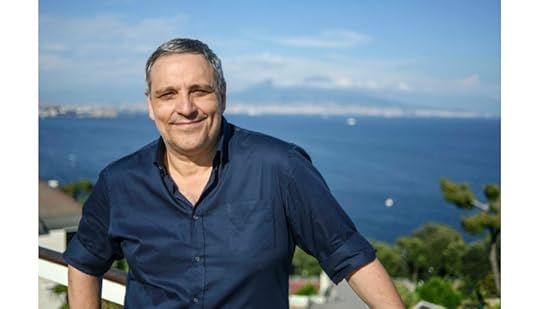
Maurizio de Giovanni è uno scrittore, sceneggiatore e drammaturgo italiano, autore perlopiù di romanzi gialli.
Maurizio de Giovanni is best known for his prize-winning series set in 1930s Naples featuring Commissario Ricciardi, a loner with the paranormal ability to see and hear the murdered dead. A banker by profession, de Giovanni also writes short stories and books about historic matches of the Neapolitan soccer team.
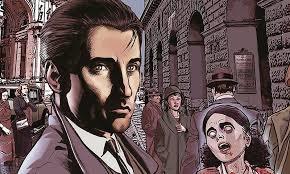
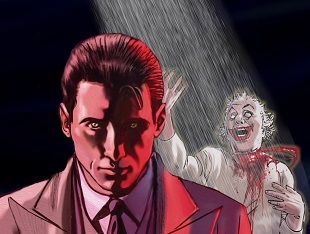
Sergio Bonelli Editore propone una versione a fumetti dei romanzi sul commissario Ricciardi. Ho la sensazione che sia un connubio che funziona meglio dei romanzi.
Non sapevo che Maurizio De Giovanni fosse una star: ho visto gente riconoscerlo e fermarlo per strada, e alla presentazione dell’altra sera hanno dovuto aggiungere sedie, la folla era stipata, e piena di gente di cinema e dell’editoria. Avendo letto solo una sua cosa piuttosto brutta, ma con niente a che fare con quelle che lo hanno reso famoso (Storie azzurre), ho sentito il bisogno di saperne di più. E così ho iniziato dal primo della serie Ricciardi.
E, pur essendo la prima volta, mi è sembrato d'averlo già letto: per quanto un ‘genere’, sia letterario che cinematografico che…, presuma regole, queste pagine mi sono sembrate più cliché di altre.
Ok, si sa, l’eroe deve essere sempre di statura superiore, rappresentare quello che si vorrebbe e non quello che è: ma tra occhi verdi, solitudine, carattere di ferro, intuito, questo Ricciardi ha del superuomo.
E l’affezione del suo brigadiere è più che scontata.
Qualcuno apprezzerà questa Napoli invernale immersa nei grigi del ventennio fascista, io meno. Anche perché io ho un’acuta idiosincrasia per la messe di rappresentazioni del ventennio dove i fascisti erano solo Benito, Galeazzo e un piccolo nugolo, il resto del paese era brava gente: se c’è stata dittatura per vent’anni, e leggi razziali (=razziste), e campi di concentramento, e deportazioni, e confino, e torture, e omicidi, e massicci massacri in terra straniera, è perché un paese intero l’ha voluto.
Immagino che piaccia la scrittura acchittata d’orpelli, a me non tanto. Che il capo del commissario sia il solito rompiscatole iracondo attento solo alla carriera… beh, è un altro stereotipo fra millanta. Eccetera. Fino a qui tutto male.
Però, mi è piaciuto il Fatto, cioè il senso del dolore. Questo sì, ha un sapore diverso, nuovo: e nelle descrizioni delle immagini che Ricciardi vede dove gli altri non vedono nulla, trovo che De Giovanni dia il meglio di sé (il meno peggio?).
*****RECENTLY FEATURED IN THE WALL STREET JOURNAL.*****
”He saw a man sitting on the ground holding both arms tightly around his stomach as if hugging himself. A yellowish foam bubbling with air oozed from his mouth. His eyes were glassy, Even from a distance like that, the Commissario could make out his words: I can’t live without you. I can’t live without you. I can’t live without you…. He poisoned himself, Ricciardi thought. Barbiturates, acid, bleach, Does anything ever change?"
Commissario Ricciardi would have a more peaceful existence if people would quit dying violently.
You see… He sees… Dead People... and they talk to him.
It is March 1931 in Naples and the world’s greatest tenor Maestro Arnaldo Vezzi is found murdered in his dressing room at the Naples’ San Carlo Theater. He also happens to be the favorite tenor of Il Duce, or better known as Benito Mussolini, or as I affectionately call him The Chin. Ricciardi’s bosses are receiving a little more pressure than normal to find the killer, and find them quickly. They assign the case to the officer that has closed more cases than anyone else in the history of the department, of course, that would be Ricciardi. With his gift or should I say his curse, he is able to obtain information that is not available to a normal detective.
”He felt the emotion more than anything else, Each time he grasped their sorrow, their surprise, their rage, their misery. Even their love…. This was what the Incident, his life sentence, was like. It came upon him like the ghost of a galloping horse, leaving him no time to avoid it; no warning preceded it, no physical sensation followed it except for the recollection of it. Yet another scar on his soul.”
The victims are frozen in time muttering the last thing they said or their last thought. It makes it so easy when they say “Guiseppe, you bastard you’ve killed me”. Not the case with Vezzi. He is muttering “I will have vengeance”.
Vezzi is loved/worshiped by thousands of ardent opera fans, but like many talented people of the genius level he was temperamental. He threw expensive fits that kept his manager busy trying to explain away his bad behavior. He had a particular fondness for girls barely out of the tween age group. This tends to upset fathers. He also enjoyed, as a pastime, seducing married women, which tends to upset husbands. He, in other words, always preferred the forbidden fruit. The suspect list grows the longer Ricciardi investigates.
Ricciardi is rich, titled, handsome, and sporting a pair of flashing green eyes that make women from all ages a little weak in the knees. Even though he is one of Naples most eligible bachelors the husband-seeking women of Naples receive little encouragement. He wears his melancholy like a shroud. His one joy, and he eats one almost every day, is a sfogliatella.
He does have another joy. It is so secret I don’t know if I should tell you, but I have to tell you because it is the very thing that raised this book from a locked room Agatha Christie with a supernatural twist up to a book that left an indelible impression on that part of my soul that still believes in love, unrequited love, true love.
”With the lights turned off, he went to the window and parted the curtains. The patch of sky, swept clear and cloudless by the strong north wind, displayed four bright stars; Ricciardi wanted to be illuminated, but not by the stars.
The light that mattered to him was that of a dim lamp on a small table, behind the window across from his building opposite. The table was beside an armchair in which a young woman sat, embroidering….Ricciardi knew that her name was Enrica.”
Every night, whenever possible, he parts the curtains of his bedroom and gazes upon Enrica. He has never spoken to her, nor been in her presence, but his longing for her is a soul yearning for another. He is completely smitten and so is she.
”...every night she felt those same feverish eyes on her, for hours. From behind a windowpane in winter, and unobstructed in summer, when the scent of the sea reached Santa Teresa, borne by the hot wind from the south. And how that gaze was everything, a promise, a dream, even an ardent embrace. Thinking about it, she instinctively turned to the window. The curtain opposite was open. Lowering her eyes and blushing, Enrica hid a small smile; good evening, my love.”
So yes I will have to read more about Commissario Ricciardi. I must see if Maurizio de Giovanni has the fortitude and the patience to handle this wonderful, brimming love affair with the deftness and the assurance that he did in this book. This is another in my growing stack of satisfying reads of the genre termed: Mediterranean Noir.
a beautiful and melancholy detective novel from italy, about a detective who sees the final moments of slain people like frozen tableau ghosts — reverberating echoes of despair.
i predict this will go down as one of the greats in the detective genre in just a few more decades. it’s gracefully written, literary without affectedness, and wrestles existentially with the darkness inside even the most blessed among us.
reading this, i was reminded of ross macdonald a lot, which is a high compliment and a big recommendation.
there are several more in the series, and hopefully they’re as good as this one.
An Italian detective story. All prose and TV detectives have their oddities, almost as if they are in a competition for the quirkiest. But here we have Commissario Ricciardi who is partly psychic in that he can “relive” the crime from the victim’s point of view and this psychic ability gets more and more accurate as he gets “warmer” in his pursuit of the culprit. A kind of “mental telepathy.”
His love life, if you can call it that, is basically voyeurism. But without giving anything away, I’ll qualify that statement and call it “chaste voyeurism.”
As in his countryman Andrea Camilleri’s Inspector Montalbano series set in Sicily, we are treated to descriptions of wonderful Italian food. Along the way we get a lot of local color of Naples in the 1930’s, particularly behind the scenes at an Italian opera company where the murder takes place.
Our victim is one of the world’s greatest opera tenors. But he’s also stereotypical - arrogant, egotistical, screaming. Most people he works with hate him, but would they risk losing their jobs if the superstar is gone? He’s also a favorite singer of Mussolini, will undoubtedly take an interest in the case.
The superstar also has an eye for women – especially married women and barely legal age girls. So there’s a long list of angry husbands and fathers who could have it in for him.
Good writing, reasonably paced and with local color of Naples.
The is the first book of 12 in the author’s Commissario Ricciardi series. It appears that ten are available in English. The author, b. 1958, has also written a half-dozen novels in his Ispettore Lojacono series, which in English is called The Bastards of Pizzofalcone series.
Naples in the 1930’s from vintag.es The author from charitystars.com
Ένα κλασικό detective story τοποθετημένο στη Νάπολη του 1931, με μια δόση υπερφυσικού στοιχείου. Ο commissario Ricciardi βλέπει φαντάσματα. Συγκεκριμένα, βλέπει και ακούει, ξανά και ξανά, τα τελευταία δευτερόλεπτα της ζωής των βίαια αποθανόντων. Είναι ένας άνθρωπος ώριμος, ένας χαρακτήρας απροσπέλαστος, γεμάτος θλίψη και μοναξιά. Οι συνάδελφοί του τον αποφεύγουν, παρότι ξέρουν πόσο αποτελεσματικός είναι, με εξαίρεση τον φίλο του, Maione. Λάτρεψα τον ίδιο και τους ανθρώπους που τον πλαισιώνουν: τον στρυφνό υπαρχηγό του τμήματος Garzo, τη νταντά του Rosa που ακόμα τον φροντίζει και τη γειτόνισσα Enrica που παρακολουθεί, αλλά κρατά σε απόσταση. Η υπόθεση είναι αρκετά ενδιαφέρουσα και ενισχύεται από τη μελαγχολική ατμόσφαιρα του βιβλίου. Το προτείνω ανεπιφύλακτα.
The Vice Questore would gladly have gotten rid of that strange, silent man, his eyes like daggers: not a friend, never a familiar overture, and according to what they said he had no attachments or particular sexual inclinations that might make him more vulnerable. Unfortunately, he was very capable. Cases that seemed extremely complex, that he couldn't even read in their entirety, were solved by that individual with almost supernatural ability. As if what was whispered around were true: that he conversed with the devil himself, who told him about his transgressions. Garzo thought that, in order to understand crime so well, you had to be something of a criminal yourself. That was why he, a good person, could never figure it out.
Many keep their distance from Commissario Riccardi, arriving as he does on a bittersweet wind to scenes of murder and cruel brutality in the city of Naples, circa 1931. The instincts of his brethren, while never proven out or adequately explained, are nonetheless reliable. Had they known he was a man to whom the dead appeared; who saw the freshly deceased soaked in the blood of their final moments and heard their final, aching words, it would not have drawn people any closer. And so he keeps this truth to himself, using his gruesome, preternatural ability to assist in the solving of crime.
In this, the first of de Giovanni's novels, we follow our cursed detective as he attempts to track down the killer of Il Duce's favorite tenor - an arrogant and abusive artist whose ruthless treatment of those around him results in no shortage of suspects. That his sanguinary ghost sings out two lines of opera to Riccardi is also not much help. Were these the lyrics of his next performance, or the singer's coded clue from beyond? Only time (and a brush-up on his operas) will come, in the end, to tell.
Lyrical, atmospheric, and peppered with scenes of dark, melancholy poignancy - there's such a heft of shadow to this that I find myself quite ensnared.
Penso che per apprezzare a pieno questo libro sul Commissario Ricciardi bisognerebbe quantomeno leggere il secondo della lunga serie, anche per capire se se ne può vivere senza o se sale la febbre di continuare. Per quanto mi riguarda, rullo di tamburi, a me è piaciuto e non escludo che in futuro possa decidere di affrontare anche un altro episodio. Quello che più mi ha colpita sono le riflessioni sulla fame e sull'amore che il Commissario definisce i due elementi principali che portano all'omicidio. Non si limita a enunciare il concetto, ma ne dà svariate motivazioni, sia in generale, sia nell'ambito del curioso omicidio che avviene in questo giallo. Nei dialoghi ci sono alcune frasi che sono perle sul male e il Commissario, che nel male è quotidianamente immerso fino al collo, riesce a non abituarsene mai. Anche questo non è un fatto scontato o appiccicato a forza dall'autore al personaggio, ma è motivato dalla sensibilità speciale che ha quest'ultimo di vedere i morti nel momento in cui stanno per spirare e pronunciano le loro ultime parole. Sensibilità che gli permette di interpretare il dolore dell'anima di chi la vita la perde in maniera violenta e di tessere una tela tra vivi e morti, ricostruendo una logica del male che ha le sue "giustificazioni". E questo spiega anche il forte senso di giustizia del Commissario, talvolta a prescindere dalla legge, senza escludere che «per riuscire a capire così bene il crimine, bisogna essere un po' criminali». Il seguito di questa citazione afferma che è per questo che le brave persone non ne capiscono niente.
I Will Have Vengeance is a near-perfect mystery novel. It is beautifully written -- at least it seems to be in this translation -- and meticulously plotted. There is nothing extraneous in either de Giovanni's writing style or the plot. But that's not to say that either is spare or stripped-down.
Unlike The Whisperer, which I just trashed for its lack of a clear setting (among other things), this book is completely opposite: it is set in magical Naples in 1931, March 25 to be exact. De Giovanni evocatively recreates the city during the pre-war years, with lots of historical detail about buildings, neighborhoods, and the life of the city. The translator, Anne Milano Appel, includes cultural and historical notes that enrich the reading experience. I especially liked the descriptions of food served at Caffe Gambrinus. It's still there, still famous, and still serving sfogliatella.
De Giovanni has also created a detective worthy of Raymond Chandler, the charismatic, green-eyed Commissario Luigi Alfredo Ricciardi. He has a strange "gift." In visions that Ricciardi thinks of as "the Incident," he sees the final moments of dead people who have suffered violent deaths -- by murder, suicide, and accidents. Many of these visions are heartbreaking deaths of children. These visions sometimes helps him solve crimes, but at least in this book, it was not creepy or too supernatural. Sadly, Ricciardi's gift has also cut him off from other people; with the exception of his partner Brigadier Maione and his tata Rosa, he has no relationships. He pines for a young woman whom he watches in the opposite apartment but he hasn't summoned the courage to speak to her. We learn that Enrica also loves Ricciardi from afar and I'm sure every reader hopes they will connect.
Finally, this book is set in the opera, with the murder of a brilliant and famous tenor, Arnaldo Vezzi, beloved by Mussolini, but universally reviled by just about everyone else. Vezzi is the type of genius who makes you glad you aren't one. De Giovanni expresses the role that opera used to play in the lives of Italians through the character of opera-loving priest don Pierino. The operas and life in and around the San Carlo Theater, Naples' opera house, are beautifully woven into the book. We learn about the connections between operas Cavallaria Rusticana and Pagliacci, both to be performed the night Vezzi is murdered, and connections between the operas and the murder.
So, yes, I'll start Book 2 in the Commissario Ricciardi series tonight. Can't wait to get back to Naples.
Primo romanzo con protagonista il commissario Ricciardi che leggo, pochi giorni dopo aver visto la prima puntata della serie TV su Rai 1 con Lino Guanciale, e devo dire che non mi deluso. La mia curiosità era di capire quanto la serie fosse fedele al romanzo, e devo dire che - al contrario di Mina Settembre, che è tratto liberamente, molto liberamente - la serie è fatta molto bene. Certo, mancano i classici capitoli dal punto di vista de* colpevol*, a cui De Giovanni mi ha abituata anche con i Bastardi di Pizzofalcone. L'ambientazione è teatrale, con la rappresentazione della prima al San Carlo di Napoli delle opere in un atto, Cavalleria rusticana e Pagliacci e l'omicidio di un rinomato tenore, Arnaldo Vezzi, molto stimato persino dal duce. E sì, perché ci troviamo durante il ventennio fascista, che cerca in ogni modo di negare la presenza di criminalità in uno stato in cui regna l'ordine. Il commissario Ricciardi potrebbe anche non lavorare, visto che è un ricco barone e possiede numerose terre, ma lui ha un talento particolare: sente il dolore dei morti ammazzati, vede i loro fantasmi che lo spronano a cercare i loro carnefici, ripetendogli le ultime parole che hanno pronunciato o suggerendogli degli indizi fondamentali per venire a capo dell'omicidio. Un giallo storico, dunque, ma anche un romanzo che potremmo senza problemi considerare come appartenente a un realismo magico tutto italiano. E poi, cavoli, non riesco a guardare le foto di De Giovanni per quanto somiglia a mio cugino che purtroppo non c'è più...
This book isn't out yet in English, it was sent to me as a review copy, but it came as a very pleasant surprise.
One of the world's greatest tenors (and also one of the most hated men in opera), Maestro Vezzi, is found murdered in his dressing room at Naples famous theatre, San Carlo Theatre. The aloof and enigmatic detective Commissario Ricciardi is called in to investigate. But Ricciardi carries his own unearthly secret.
The central idea behind this series, and one I really wish I'd thought of myself, is that the protagonist, Ricciardi, sees dead people, their ghosts apparently frozen in the final few seconds of their lives. This extraordinary talent gives him an edge in murder investigations, but leads to a very lonely, tormented existence.
I particularly enjoyed the descriptions of Naples in the 1930s and the sense of what life for Italians must have been like under Mussolini's rule.
Ricciardi is supported by a finely drawn cast of characters in this deceptively simple and very satisfying mystery story.
"A volte Ricciardi preferiva i morti: dicevano sempre la stessa cosa, ma almeno parlavano. "
1931 In una Napoli sferzata dal vento, il commissario Ricciardi deve risolvere un caso di omicidio particolare. Al pregiato teatro San Carlo è stato trovato il cadavere di Arnaldo Vezzi, considerato uno dei più grandi tenori di sempre e (cosa di non poco conto) amico del Duce. In un’epoca in cui il delitto è cancellato per decreto (” non esistono suicidi, non esistono omicidi, non esistono rapine e ferimenti, a meno che non sia inevitabile o necessario. Nulla per la gente, soprattutto nulla per la stampa: la città fascista è pulita e sana, non conosce brutture. L’immagine del regime è granitica, il cittadino non deve avere nulla da temere; noi siamo i custodi della sicurezza.” ) la gente, guarda caso, continua ad uccidere e, come dice il commissario due sono le fonti del lato oscuro umano: fame e amor, entrambe in tutte le loro varianti e che nessun decreto potrà mai cancellare.
Personaggio singolare questo Ricciardi e non solo perché ha lo strano potere di vedere i morti ma per quella forza empatica che lo rende recettore dei loro dolori.
Ho ascoltato l’audiolibro (in realtà, rileggendo alcuni passaggi anche sul libro a cui mi appoggio sempre anche quando ascolto un testo) e l’interpretazione di Paolo Cresta è veramente da dieci e lode.
Come al mio solito, brillo per il tempismo che mi caratterizza. Il romanzo è uscito nel 2006 con grande apprezzamento tra i lettori e dando il via ad una cosa come quindici libri della saga oltre che ad una serie tv. Continuerò o non continuerò? Non lo so proprio, ciò che è importante è che abbia messo un altro tassello nel mio obiettivo di quest’anno: andare oltre ai miei pregiudizi.
"Ma Ricciardi aveva capito, ben prima di studiarlo sui libri, che il delitto è la faccia oscura del sentimento: la stessa energia che muove l’umanità la devia, fa infezione e suppura esplodendo poi nell’efferatezza e nella violenza"
First Sentence: The dead child was standing motionless at the intersection between Santa Teresa and the museum.
Commissario Luigi Alfredo Riciardi is cursed by being able to see and hear the last few seconds of those who have died violently. He is called to Naples’ San Carlo Theater. The world’s greatest tenor, Maestro Arnaldo Vezzi, has been found murdered in his dressing room. He sees the shadow of the victim dressed in clown costume singing part of the aria from Pagliacii, “…I will have vengeance…” Although Vezzi had millions of adoring fans, he was generally hated by those who knew him. However, many depended upon him for their very livelihood. So who hated him enough to kill him?
What a fascinating, yet heart-rending, introduction to the character of Riciardi. The description truly paints a picture so vivid, you are grateful the character has his colleague, Brigadier Raffaele Maione. Maione death of his son in a tavern fight ensured Maione’s strong loyalty to Riciardi. Women are attracted to Riciardi, but the only woman in his life is Tata Rosa, who looks after him and his house. Riciardi is a man who doesn’t make assumptions, but seeks out the proof before making an arrest.
The setting is wonderful. This isn’t the Naples of tourists. It is the Naples during the early years of Mussolini. It is the Naples of those who live there; of the wealthy and the poor and the superstitious.
This is a book about opera. Through the character of an opera-loving priest, we are provided information on the two operas being performed and the workings behind the scenes. This information is fascinating and will be enjoyed and appreciated by those who are opera fans, as well as those who are not. Even aside from the world of opera, the story points out the impact the death of a star can have on those who work for them.
There is a wonderful wistfulness to the story in the relationship between Ricciardi and a woman he has never met, but that he sees every day through a window across the way. There is a sub-theme about dreams unable to be realized. When reading the book, do not ignore the excellent notes from the translator. They certainly answered one question I had.
“I Will Have Vengeance” is different, unusual and unique; all in very positive ways. The story is completely intriguing. This is an author from whom you’ll want to read more.
I WILL HAVE VENGEANCE (Pol Proc-Comm. Ricciardi-Naples, Italy-1931) – Ex de Giovanni, Maurizio- 1st in series Europa Editions, 2012
I'm not sure why the Wall Street Journal raved about this one. A mystery (not police procedural) set in 1931 Naples, the "period piece" aspects may be the highlight. It's the first in a series that only now are being translated into English.
But the detective/protagonist reads the minds of the dead. Not that that helps solving the crime too much; indeed, the motivation and murderer was the opposite of the ghostly pointer. It was a slow read. And one of the two plot elements was obvious from the start; the second, a last chapter surprise, all the more ridiculous for lacking a foundation.
I found myself agreeing with the reviews on Eurocrime, as well as Historical Novel Society. This is a near-perfect mystery, with masterfully developed character and setting. Commissario Ricciardi is, like many other protagonists in police procedurals, a tortured lonely soul. So far, so good. But why did he have to have a ghostly side? (Note: that's not a spoiler, because it comes up right away -- and it is, like everything else, very well-written).
I thought comparisons to the Bernie Gunther series would be inevitable, but people don't seem to make them. For the record, Ricciardi works in Italy under Il Duce. However, de Giovanni keeps the brutality of Fascism more in the background than Philip Kerr does that of the Nazis in the Gunther novels. The two characters couldn't have been more different in their love lives and general outlook in life.
That said, Commissario Ricciardi is quite unforgettable, and I will be looking forward to more in the series. The plot itself is just about competent, but in addition to character and place, this first book of the series scores highly on atmospherics and moral complexity.
Is this "world noir"? If you have to slot every book, it could well be. But it's best seen as cross-genre, in the tradition of the Gunther series. As a diehard Gunther fan, I think I will rate that series slightly "better" even as I explore this one. I look forward to testing that hypothesis.
Se devo recensire "Il senso del dolore" come giallo, mi viene da dire che non è un giallo di qualità, visto che si capisce chi sia l'assassino già a metà romanzo. Alcuni sostengono che più che un giallo sia un noir e su questa classificazione non mi so esprimere perché non ho le competenze per farlo. Cosa mi è piaciuto di questo romanzo? Innanzitutto il modo in cui è scritto; il modo in cui De Giovanni impregni i protagonisti di umanità. E poi originale è anche "il fatto": questo sentire di Ricciardi che lo differenzia dagli altri uomini per questo ponte che ha con i morti che non hanno avuto il tempo di chiudere i loro conti con la vita, quelli cioè che non sono morti di morte naturale.
Libro meraviglioso! L'autore sa tenere l'attenzione del lettore sulla vicenda senza perdersi troppo in "chiacchiere". Il giallo è ben scritto e la tensione è sempre alta. I personaggi sono tutti ben caratterizzati. La parte comica non manca. Consigliatissimo per una lettura sotto l'ombrellone.
3.5/5 Affascinante l'ambientazione nella Napoli al tempo del fascismo, ben riuscito il protagonista, con il suo dono/maledizione, il fatto, e la sua riflessione sul senso del dolore. La scrittura, di solito molto piacevole, purtroppo qualche volta scivolava in un'eccessiva retorica. Quello che funziona meno è proprio il giallo (niente di che) e il finale (meh!). Rimango strettina col voto perché è una serie che promette bene e nei volumi successivi mi aspetto casi migliori
Kryminał już dawno nie był tak piękny w swoim niepokojącym mroku, tak przejmujący w dochodzeniu do prawdy, tak bardzo wykraczający poza ramy gatunku. Maurizio de Giovanni intryguje brudnym pięknem, włoskim chłodem, do którego nie przywykliśmy, okrucieństwem i bezwzględnością czasów spowitych dyktaturą. To wszystko ubrane w opowieść o człowieku, który widzi zbyt wiele, bo ktoś widzieć musi, nie wszystkim jest dane, by unikać konfrontacji z rzeczywistością. I niby znów czytelnik trafia na historię walki dobra ze złem, niby znów trafia na trupa oraz związaną z nim zagadkę, niby znów zostaje wplątany w śledztwo, ale w „Łzach pajaca” dostaje też o niebo więcej – piękną literaturę, która przyciąga i zachwyca jednocześnie.
Un romanzo veloce, ma ricco di emozioni e sfaccettature degli stati d'animo dei personaggi, specialmente del protagonista, il commissario Ricciardi, sullo sfondo di una città, Napoli, dove il commissario è impegnato a risolvere uno dei suoi soliti casi, ma in "questo" c'è qualcosa di profondo, di doloroso... Per certi versi la scrittura di De Giovanni mi ha ricordato Jean Claude Izzo, per la malinconia, la caratterizzazione degli stati d'animo dei personaggi e per la descrizione dei viali, degli edifici di Napoli, che con quelli di Marsiglia di Izzo, hanno in comune molte sfumature.
Ho conosciuto questo autore proprio con la lettura anni fa di questo romanzo. Ho amato da subito, incondizionatamente, la sua Napoli con i suoi odori, colori e sapori. Ho empatizzato con questo suo Barone di Malomonte alias il commissario Luigi Alfredo Ricciardi, con i suoi occhi verdi e quella maledizione che si porta dalla nascita e che non gli fa vivere una vita ordinaria. Pian piano libro dopo libro ho letto tutto di lui e della sua storia fino all'ultimo volume disponibile "il pianto dell'alba" e non mi sono ancora persuasa di non poter leggere ancora e ancora su di lui.
Ο Ντε Τζιοβάνι στο πρώτο του βιβλιο στα ελληνικά μας παρουσιάζει τον Αστυνόμο Ριτσιάρντι.Εναν τύπο μονοχνωτο,ήρεμο μέχρι αηδίας,πανέξυπνο,έναν τύπο που σε γουστάρει συναναστροφές με άλλους ανθρώπους.Ο Ντε Τζιοβάνι μας συστήνει έναν υπέροχο τύπο και ανυπομονώ για τη συνέχεια.
I Will Have Vengeance: The Winter of Commissario, by Maurizio de Giovanni, Commissario Ricciardi Series, bk1. An excellent introduction to an excellent series, a one of a kind policeman, set in Naples during the Italian reign of fascism.
“Luigi Alfredo Ricciardi, the man without a hat, was Commissario of Police with the Mobile Unit of the Regia Questura di Napoli. He was thirty-one years old, the same number of years that marked that century, nine of them under the fascist regime.”
The inescapable Incident. “he set about defining the limits of the Incident. He saw the dead. Not all of them, and not for long: only those who had died violently, and only for a period of time that revealed extreme emotion, the sudden energy of their final thoughts. He felt their emotion more than anything else. Each time he grasped their sorrow, their surprise, their rage, their misery. Even their love. This was what the Incident, his life sentence, was like. It came upon him like the ghost of a galloping horse, leaving him no time to avoid it; no warning preceded it, no physical sensation followed it except for the recollection of it. Yet another scar on his soul. … decided to study law, completed a thesis on criminal law, then joined the police; it was the only way to acknowledge those demands, to lighten that burden. In the world of the living, in order to bury the dead.”
Scene of the Crime and Pursuit. “those first long moments when the Commissario was getting to know the victim, focusing his legendary intuition, and tracking down the fundamentals needed to begin the pursuit. … from Piazza Dante to Piazza del Plebiscito he would cross an invisible boundary between two distinct realities: below, the wealthy city of aristocrats and the bourgeoisie, of culture and entitlement; above, the working-class neighbourhoods in which a different system of laws and regulations applied, equally rigid or perhaps more so. The sated city and the hungry one; the city of feasting and that of despair. … “There are no suicides, no homicides, no robberies or assaults, unless it is inevitable or essential. Not a word to the people, especially not to the press: a fascist city is clean and wholesome, there are no eyesores. The regime’s image is granitic, the citizen must have nothing to fear; we are the guardians of assurance.”
Death at the Opera. “Ricciardi heard singing in a soft voice: “Io sangue voglio, all’ira m’abbandono, in odio tutto l’amor mio finì . . . ”, I will have vengeance, My rage shall know no bounds, And all my love. Shall end in hate. … How much blood could there be in the human body? And how much soul, Ricciardi thought, listening to the clown’s song as he stood in the corner with his upraised hand. Which will disappear first, this stain on the carpet, or the echo of that aria in my head?”
Priest close at Hand. “looking at a multifaceted panorama. There was sorrow: an old sorrow, yet still alive. A sorrow that was an old friend. Loneliness. Intelligence, and a touch of irony, of sarcasm, when the theater director was sputtering beside him. It had only been a moment, but the priest had sensed a complex and troubled personality” … “He never blinked, and he wore a slight frown. Loneliness and sorrow, but also irony. You, me. Always with our uniforms on.” “The important thing is not to frighten people, with a uniform. People should feel reassured seeing it. And in order not to frighten people, you have to not be frightened.” The Commissario gave a faint start, as if the priest had suddenly slapped him. “And you, Father? Aren’t you ever frightened?” “Yes, almost always. But I ask for help. From the Almighty, from people. And I get over it.” “Bravo, Father. Bravo. Good for you. … “ help me, since I don’t know either one. Would you make a deal, with a policeman?” Sarcasm again. No smile, no wink. The unchanging green glass of his eyes. “A priest doesn’t make deals, Commissario. I will give you any information you need; but don’t ask me, now or later, to help you accuse someone. Yours is human justice. I deal with another justice: one that can also forgive.”
Home with Tata Rosa. “Rosa Vaglio was seventy years old. She was born the same year as Italy, but she took no notice of it, then or later. For her, the homeland had always been the Family, of which she was a staunch, resolute custodian. Rosa had often wondered where that sorrow in the eyes of the young Baroness came from. She had everything she wanted, leisure, affluence, a loving husband. But when she accompanied her on long walks through Fortino’s countryside, amid the pungent smell of goats and the peasants who stopped working to take off their hats, she felt that sorrow walking with them, one step behind. Ricciardi felt the warmth of the house seep gradually into his wind-chilled bones. The scent of wood fire in the stove, the aromas from the kitchen: garlic, beans, oil. The lamp next to his armchair was lit, the newspaper on the armrest. In the bedroom, his flannel robe, soft leather slippers and hairnet. My tata, he thought. Rosa watched him eat, like a wolf, as usual. Bent over his plate, quick, silent mouthfuls. He denies himself even that, she thought, the pleasure of savouring. He never savoured anything, not food or anything else. In him, the sorrow that in his mother had been concealed became evident. The same green eyes. The same sorrow. She sensed the turmoil of his thoughts, though she didn’t know what these thoughts were. She had been his family and he had become her reason for living. She would have given her eye teeth to see him laugh, at least once. She would have liked to see him at peace.”
A Neighbor. “There wasn’t a single night when he didn’t spend some time at the window, experiencing Enrica’s life vicariously. It was the only time he granted his tormented spirit a brief respite. He had never spoken to her, but there was no one, surely, who knew her better than he did. Once there she was in front of him, face to face. He still shuddered at the memory of the extraordinary mixture of pleasure, awkwardness, joy and terror he had felt. Afterwards, in the drowsy state that preceded sleep, or at the moments when he woke up, he would see those deep, dark eyes hundreds of times. That day he had fled, his heart leaping in his chest, a loud pounding in his ears.” Ricciardi thought again about the clown and his desperate last song. “Io sangue voglio, all’ira m’abbandono, in odio tutto l’amor mio finì . . . ” I will have vengeance . . . , and all my love shall end in hate. … as the wind rattled the shutters, Ricciardi drifted into a muddled dream in which a left-handed girl embroidered in front of a weeping clown.” … the next day. “And how that gaze was everything, a promise, a dream, even an ardent embrace. Thinking about it, she instinctively turned to the window. The curtain opposite was open. Lowering her eyes and blushing, Enrica hid a small smile: good evening, my love.” … “Ricciardi watched Enrica. He enjoyed her slow, methodical, precise movements. It was the brightest moment of Ricciardi’s day: seeing her sitting there as she began embroidering with her left hand, her head slightly tilted to one side. It made his heart tremble.” Remembering. “Don Pierino telling him: “Seeing him up close, yesterday, made my heart tremble.”
The Morgue. “The man wheeled away the stretcher and no one ever saw Arnaldo Vezzi again in the flesh. “How absurd. Such greatness, so many dreams. The magic of an incomparable voice. The hubris, the omnipotence. Then, all this silence.” “Well then? In your opinion, how many chances does a person have in his life, to construct a little happiness?” “As many as he wants, Signora. Maybe none. But illusions, those for sure. Every day even, every moment. Illusions though. Only illusions.”
Return to the Opera. “I think the character Canio is one of the saddest of any opera. A man condemned to make people laugh, who instead is obsessed with not appearing ridiculous. It is hearing himself reminded by Beppe, Arlecchino, to perform, while he’s suffering from jealousy, that finally makes him lose control. … “you see it, do you understand, Father? I see it. I feel it, the sorrow of the dead who remain attached to a life they no longer have. I know it; I hear the sound of the blood draining away. The mind that deserts them, the brain clinging by the fingernails to the last shred as life runs out.” … “If you only knew how much death there is in your love, Father. How much hate. Man is imperfect, Father”
The victim… the investigation… killer(s) revealed. … Ricciardi Returns Home. “Even before raising her eyes from the embroidered pattern, she knew that the curtains in the window across the way had opened. As she went on embroidering, Enrica smiled.”
Ha sido todo un placer conocer al comisario Ricciardi y su Nápoles del año 1931, con el fascismo en Italia en su época de gloria. “𝐔𝐧 𝐩𝐨𝐥𝐢𝐳𝐨𝐧𝐭𝐞 𝐢𝐧𝐭𝐞𝐥𝐢𝐠𝐞𝐧𝐭𝐞 𝐲 𝐡𝐨𝐧𝐫𝐚𝐝𝐨, 𝐜𝐨𝐦𝐛𝐢𝐧𝐚𝐜𝐢𝐨́𝐧 𝐫𝐚𝐫𝐚 𝐲 𝐩𝐞𝐥𝐢𝐠𝐫𝐨𝐬𝐚” Nada más empieza ya conocemos qué es “El Asunto” que lo hace diferente y del que no quiero desvelar mucho porque es mejor descubrirlo poco a poco. Ricciardi está lleno de silencios, huye de lugares atestados y no cree en el destino (mejor creer en los hombres y en sus emociones). Por esto, este libro es más introductorio y tiene un ambiente serio, más sobrio. La investigación se centra en el asesinato del tenor Vezzi -amigo personal de Mussolini y con un talento sin par- en su camerino del Teatro San Carlo. Aquí nos encontramos con amor: amor por la ópera sanguinario y despiadado, amor como enfermedad mortal pero necesario, un amor en el fondo del alma y “una gracia divina que la música lleva de la mano hasta donde las mentes no saben llegar”. Al comisario lo acompañan personajes secundarios como Maione, la tata Rosa o Enrica desde su ventana que estoy segura que en libros posteriores tendrán aún más peso. No es un libro con grandes giros, sino pequeñas investigaciones que llevan a una resolución final, y que engancha en ocasiones gracias a las peculiaridades del comisario y a la ambientación de la época. No puedo asegurar que sea un libro que te cambie la vida (no lo busca), pero con el que pasas un buen rato investigando, intentando ponerte en la piel de Ricciardi y hasta acabas saboreando una sfogliatella en el Caffè Gambrinus. ¿Por qué siempre acabo hablando de comida cuando hay comisarios italianos por medio?
Δεν ήταν άσχημο σαν αστυνομικό, είχε αρκετό ενδιαφέρον ιδίως επειδή επικεντρωνόταν στον κόσμο της όπερας αλλά και η ιστορική περίοδος, η φασιστική Ιταλία παρουσίαζε μεγάλο ενδιαφέρον. Εκείνο που βρήκα αχρείαστο ήταν το μεταφυσικό "χάρισμα" του ήρωα που δεν νομίζω ότι πρόσθεσε κάτι τόσο σημαντικό που να το δικαιολογεί.
A fine example of the frequent unhelpfulness of genre categorizations.
Homicide detective Commissario Ricciardi of the Naples police has an unusual ability: like the kid at the heart of M. Night Shyamalan's The Sixth Sense, he can See Dead People -- specifically, those who have died a violent death, whether by accident or by malicious intent. These revenants aren't able to consciously communicate with him, but their actions can assist him in his investigations . . . or, sometimes, hinder him with equivocal signals.
So is this a ghost story? No. Well, maybe yes . . .
In Ricciardi's latest case, a brilliant operatic tenor has been discovered murdered in his dressing room. Although millions loved the Arnaldo Vezzi they saw on stage or heard on radio or records, Ricciardi soon discovers that in real life the man was an arrogant, exploitative swine. While all of Vezzi's colleagues are distressed that he's dead, because in one way or another he represented a meal ticket, none of them is especially unhappy or surprised that finally someone did what they've all dreamed of doing.
So is this a murder mystery? No. Well, maybe yes . . .
The time is 1931. Ricciardi must operate within a rigidly hierarchical establishment where everyone is ultimately beholden to the fascist overlords, rebellion against whom -- even minor -- can bring down terrible retribution on one's head. True, the restrictions aren't as yet too draconian for a man in Ricciardi's position, recognized as he is as the finest detective Naples possesses -- even if he is a bit strange, a loner who has funny habits and prickly manners -- yet the inhibitions are undoubtedly there.
So is this a historical novel? No. Well, maybe yes . . .
As for Ricciardi himself, because he's seeing dead people and their grief at every turn, he's become saturated with sorrow. People don't like looking him in the eyes because of the pain they see there. He lives in a self-imposed psychological exile from the society around him, capable of love yet incapable of letting himself love, yearning for the neighbor he can see embroidering in her room opposite his window every night yet tongue-tied on the solitary occasion he meets her face to face. He seems able to love only if there's an uncrossable distance between himself and the object of his love.
So is this a psychological novel? Well, maybe that's about as close as it comes to any of the standard genre classifications.
In other words, the best way to approach I Will Have Vengeance is, I think, simply to take it on its own terms as a novel, and forget any preconceptions as to what it's "supposed" to be.
Of course, the publisher isn't frightfully helpful here. The back of the cover bears the label "WORLD NOIR" while also carrying a review quote that says, "There's more than a touch of Agatha Christie in this tale." I'd vehemently dispute the latter comment on all sorts of grounds. At first I rejected the "noir" label, too, but later thought persuaded me it was more justified, in the same way that Camus's L'Etranger, which I recently read (for the first time, to my shame), could likewise be considered as "WORLD NOIR" even if that mightn't be the first way you'd think of it.
So is this a good novel? Well, yes, I'd say it probably is.
E gli italiani scriverebbero solo spazzatura? Chi l'ha mai detto? Chi l'ha mai decretato? Il panorama del noir italiano è ricco di giovani promesse talentuose, basta cercare per trovarle. E il napoletano Maurizio De Giovanni, classe '58, è indubbiamentre una di queste. Il suo Il senso del dolore mi ha letteralmente incollata alle pagine facendomi asssaporare e riscoprire cosa sia la gioia di leggere. Siamo nella Napoli degli anni '30 quando Arnaldo Vezzi, tenore di fama mondiale e personaggio eccentrico, viene ritrovato cadavere nel suo camerino del Teatro di San Carlo prima dell'esibizione nell'opera Pagliacci, con la gola tagliata da un frammento di specchio. A risolvere il caso è chiamato l'investigatore Ricciardi, un uomo dagli occhi di ghiaccio, freddo, introverso, impenetrabile, e dotato, sin dalla nascita, di un potere segreto, anomalo e inconfessabile: vede i morti nel loro ultimo instante di vita, il che gli consente di percepire e vivere, in maniera diretta e tangibile, il dolore del loro distacco e della loro fine. Aiutato dal fedele commissario Maione Ricciardi riuscirà a trovare l'insospettabile assassino. Il mio giudizio su Il senso del dolore sbalorisce me per prima: l'ho trovato ineccepibile da tutti i punti di vista, una gemma più unica che rara, brillante, totalizzante, perfetta. Meravigliose le atmosfere della Napoli di quegli anni, con tutti i suoi angoli noti, i caffè, i negozi, le vie sperdute, la gente che cammina nel vento, i colori, i rumori, gli schiamazzi e i silenzi, una città viva e palpitante nella quale ti sembra di esserci. Meraviglioso il dipinto dei personaggi, così umani nelle loro sventure e nelle loro debolezze, e del protagonista Ricciardi, un detective che esce da ogni schema, un uomo affascinate nella sua ambiguità, così sensibile al dolore, proprio e altrui, da riuscire a guardare in faccia la realtà con occhi altrui, a entrare nel cuore e nell'anima della gente con una capacità inaspettata. Meravigliosa la storia, che tocca temi importanti e contrastanti tra loro, quali l'odio e l'amore, insegnandoci tanto sull'importanza delle strade che siamo costretti, a volte, a prendere nella vita, e sul peso delle conseguenze che ne derivano. E meraviglioso, soprattutto, è lo stile di De Giovanni, limpido, fluido, cristallino, e a più riprese poetico; degna di nota è anche la sua capacità di passare, con una facilità disarmante, dalle inflessioni del napoletano in alcuni dialoghi, all'italiano standard della narrazione, esperimento che in passato, solo grandi della nostra letteratura avevano tentato e raggiunto con tali risultati. De Giovanni è a mio avviso esempio di cosa significhi saper scrivere bene, in questo esterna in maniera evidente tutto il suo enorme talento. In lui c'è classe, indubbiamente c'è classe. Non manca proprio nulla in Il senso del dolore: storia, stile, atmosfera, pizzico di suspense. Qui c'è creatività, talento, estro, genialità, tanto da abbattere ogni pregiudizio e generalizzazione sui romanzi sfornati da autori nostrani, molto spesso bistrattati e snobbati senza neppure essere stati letti. E a questo punto non mi manca che una sola cosa da fare: cercare e leggere le altre opere di De Giovanni...ho già iniziato!
... quer pasticciaccio ... napoletano Ricciardi – Maigret – Ingravallo … Leggo il titolo e penso: “lo stesso di Gadda!” Poi ricordo, stupid, che quello era la ... cognizione. Però ... Napoli 1931. Luigi Alfredo Ricciardi (sì, lui, quello con gli occhi verdi ...), 31 anni, è commissario di pubblica sicurezza presso la squadra mobile della Regia Questura di Napoli. È un poliziotto integerrimo e solitario, poco allineato con le ... camicie nere. E poi … ha le ‘visioni’ ... Scorrono le immagini di trasmissioni e vecchi film in bianco e nero di quando ero bambino. Di quando, per intenderci, la televisione la si andava a vedere a casa dei pochi fortunati che già la potevano esibire nel salotto buono. Il Musichiere, Ladri di biciclette, Sciuscià, Il Commissario Maigret ... ma certo! Maigret! Le atmosfere sono quelle. Napoli non sarà la Ville Lumière, ma la varia umanità che ruota intorno ai due commissari non è poi molto diversa. E i personaggi si assomigliano, stessa ricchezza interiore, stessa umanità. Più avanti, il dolente Ricciardi sbatte contro un omicidio ‘eccellente’. Subisce pressioni, ma lui se ne infischia; lui segue le sue intuizioni e le sue visioni. Lui va per la sua strada come don Ciccio Ingravallo del Pasticciaccio. E qui il cerchio si chiude. Sono tornato a Gadda, Roma 1927, passando per Simenon. A Giova’, te possino ... E allora il titolo? Un omaggio indiretto al milanesissimo ingegnere che ha magistralmente raccontato la Roma del pasticciaccio? http://www.youtube.com/watch?v=SytesB... Non lo so. So solo che don Ciccio (con la faccia di Pietro Germi), per il resto del libro accompagnerà, quasi come un angelo custode, il Commissario Ricciardi. Un po’ come Bogey e Allen in Provaci ancora Sam. Ricciardi mi fa venire in mente Levi dei Sommersi … “… posizioni di una tale severità e intransigenza da renderlo incapace di trovar gioia nella vita, anzi di vivere: chi “fa a pugni” col mondo intero ritrova la sua dignità ma la paga ad un prezzo altissimo, perché è sicuro di venire sconfitto.” Sensazioni, insomma. Tu chiamale, se vuoi, ... visioni ... ma quanta umanità. [Ago, 2015]
Così era il Fatto, la sua condanna: gli arrivava addosso come il fantasma di un cavallo in corsa, senza dargli il tempo di evitarlo; nessun avvertimento lo precedeva, nessuna sensazione fisica lo seguiva, se non il ricordo.
E’ sempre un piacere leggere un romanzo di Maurizio De Giovanni, non solo per la scrittura che è raffinata, ma anche per l’ambientazione napoletana, per i sentimenti che trasudano dalle pagine, per le atmosfere - quelle dell’epoca fascista - per i personaggi così capaci di trasmettere umanità e pietà per le brutture della vita. Ho deciso di rileggermi tutta la serie delle stagioni in attesa dell’uscita autunnale di un nuovo episodio, perché mi piace la compagnia di questo commissario dagli occhi verdi, così tormentato dalle sue terrificanti visioni, ma mai cinico o indifferente di fronte al dolore e alla morte.
e 1/2 * "Sentiva l'emozione, più di tutto: coglieva di volta in volta il dolore, la sorpresa, la rabbia, la malinconia. Perfino l'amore."
Non mi viene quasi di chiamarlo giallo.... questa è letteratura, non altro.... I tempi di risoluzione del caso sono lenti, pacati, meditati e assorbiti, dal nostro malinconico commissario Ricciardi, “senza un sorriso, un ammiccamento. Sempre con quei pezzi di vetro verde fissi negli occhi”; lui che “non alza nemmeno lo sguardo, abituato com'è ad ignorare i vivi e i morti che lo chiamano, pur ascoltandoli sempre”. Meraviglia. Me le faccio tutte e quattro le stagioni! [05/07/2011]