

What do you think?

The Three Hermits
Плыл на корабле архиерей из Архангельска-города в Соловецкие. На том же корабле плыли богомольцы к угодникам. Ветер был попутный, погода ясная, не качало. Богомольцы — которые лежали, которые закусывали, которые сидели кучками — беседовали друг с дружкой. Вышел и архиерей на палубу, стал ходить взад и вперед по мосту. Подошел архиерей к носу, видит, собралась кучка народа. Мужичок показывает что-то рукой в море и говорит, а народ слушает.
16 pages, Collection
First published January 1, 1886
About the author
Leo Tolstoy
8,776 books30.3k followersLev Nikolayevich Tolstoy (Russian: Лев Николаевич Толстой; most appropriately used Liev Tolstoy; commonly Leo Tolstoy in Anglophone countries) was a Russian writer who primarily wrote novels and short stories. Later in life, he also wrote plays and essays. His two most famous works, the novels War and Peace and Anna Karenina, are acknowledged as two of the greatest novels of all time and a pinnacle of realist fiction. Many consider Tolstoy to have been one of the world's greatest novelists. Tolstoy is equally known for his complicated and paradoxical persona and for his extreme moralistic and ascetic views, which he adopted after a moral crisis and spiritual awakening in the 1870s, after which he also became noted as a moral thinker and social reformer.
His literal interpretation of the ethical teachings of Jesus, centering on the Sermon on the Mount, caused him in later life to become a fervent Christian anarchist and anarcho-pacifist. His ideas on nonviolent resistance, expressed in such works as The Kingdom of God Is Within You, were to have a profound impact on such pivotal twentieth-century figures as Mohandas Gandhi and Martin Luther King, Jr.
See also:
French → Léon Tolstoï
Spanish → León Tolstói
His literal interpretation of the ethical teachings of Jesus, centering on the Sermon on the Mount, caused him in later life to become a fervent Christian anarchist and anarcho-pacifist. His ideas on nonviolent resistance, expressed in such works as The Kingdom of God Is Within You, were to have a profound impact on such pivotal twentieth-century figures as Mohandas Gandhi and Martin Luther King, Jr.
See also:
French → Léon Tolstoï
Spanish → León Tolstói
Ratings & Reviews
Friends & Following
Create a free account to discover what your friends think of this book!
Community Reviews
Displaying 1 - 30 of 74 reviews

May 6, 2022
One of the most profound stories I have ever read. The difference between prayer and faith is examined in this short story by Leo Tolstoy. Over the years I have met so many people that think that prayer (in and of itself) is faith; that one can just pray and that is all one needs to do. In this story Tolstoy points out that there is a fundamental difference between prayer and faith - highest recommendation.

January 29, 2025
"Father, who art in heaven”.
An important Bishop sailing a to a Monastery casually learns about a small indigenous island inhabited by three pious Hermits. The cleric decides pay them visit, in an effort to teach them the way to reach God.
Man this was good! My first Tolstoy and getting the feeling I should urgently read more by the man. This little 7 page shortie really stroke powerfully and resonated very strongly to my religious, lapsed catholic and deist side, all at the same time! Even inspired me to write an essay of my own which may or may not one day see the light someday. This was almost perfect, and left me quite an image I hope I don't ever forget. Highly Recommendable.
It’s public domain. You can find it HERE.
-----------------------------------------------
PERSONAL NOTE :
[1886] [7p] [Fiction] [4.5] [Highly Recommendable]
-----------------------------------------------
“Padre, que estás en los cielos”.
Un importante Obispo que navega hacia un Monasterio se entera casualmente de una pequeña isla indígena habitada por tres piadosos Ermitaños. El clérigo decide visitarlos, en un esfuerzo por enseñarles el camino para llegar a Dios.
Vaya, ¡esto sí que estuvo bueno! Mi primer Tolstoy y teniendo la sensación de que urgentemente debería leer más del hombre. Este pequeño corto de 7 páginas realmente impactó poderosamente y resonó con mucha fuerza en mi lado religioso, católico no practicante, y deísta, ¡todo al mismo tiempo! Incluso me inspiró a escribir un ensayo propio que puede que vea o no la luz algún día. Esto fue casi perfecto, y me dejó tal imagen que espero no olvidar nunca. Altamente Recomendable.
Es dominio público, lo pueden encontrar ACA.
-----------------------------------------------
NOTA PERSONAL :
[1886] [7p] [Ficción] [4.5] [Altamente Recomendable]
-----------------------------------------------
An important Bishop sailing a to a Monastery casually learns about a small indigenous island inhabited by three pious Hermits. The cleric decides pay them visit, in an effort to teach them the way to reach God.
Man this was good! My first Tolstoy and getting the feeling I should urgently read more by the man. This little 7 page shortie really stroke powerfully and resonated very strongly to my religious, lapsed catholic and deist side, all at the same time! Even inspired me to write an essay of my own which may or may not one day see the light someday. This was almost perfect, and left me quite an image I hope I don't ever forget. Highly Recommendable.
It’s public domain. You can find it HERE.
-----------------------------------------------
PERSONAL NOTE :
[1886] [7p] [Fiction] [4.5] [Highly Recommendable]
-----------------------------------------------
“Padre, que estás en los cielos”.
Un importante Obispo que navega hacia un Monasterio se entera casualmente de una pequeña isla indígena habitada por tres piadosos Ermitaños. El clérigo decide visitarlos, en un esfuerzo por enseñarles el camino para llegar a Dios.
Vaya, ¡esto sí que estuvo bueno! Mi primer Tolstoy y teniendo la sensación de que urgentemente debería leer más del hombre. Este pequeño corto de 7 páginas realmente impactó poderosamente y resonó con mucha fuerza en mi lado religioso, católico no practicante, y deísta, ¡todo al mismo tiempo! Incluso me inspiró a escribir un ensayo propio que puede que vea o no la luz algún día. Esto fue casi perfecto, y me dejó tal imagen que espero no olvidar nunca. Altamente Recomendable.
Es dominio público, lo pueden encontrar ACA.
-----------------------------------------------
NOTA PERSONAL :
[1886] [7p] [Ficción] [4.5] [Altamente Recomendable]
-----------------------------------------------

October 18, 2019
ورژن حکایت موسی و شبان روسها.
هیچ آدابی و ترتیبی مجو
هر چه می خواهد دل تنگت بگو
هیچ آدابی و ترتیبی مجو
هر چه می خواهد دل تنگت بگو

November 26, 2014
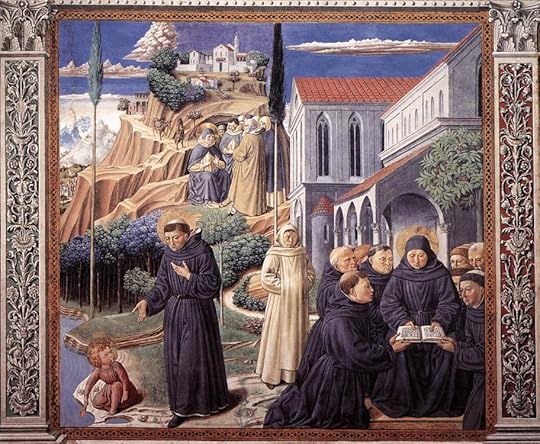
It's been mentioned this story has its origin from St. Augustine and while there does not seem to be anything written by St. Augustine resembling Tolstoy's story, there is a story about St. Augustine which might have served as the seed for this folk tale. In that story St. Augustine is said to have been walking along a beach when he came upon a boy carrying a seashell who was running back and forth between the sea and a hole he had dug in the sand. St. Augustine asked the boy what he was doing and the boy said he was going to empty the entire sea into the hole he had dug with the seashell. St. Augustine told the boy he was being silly but the boy replied that he had as good of a chance of completing his task as St. Augustine had at understanding God.
This story, obviously, is very much about faith and God, however, I think it can be applied to a larger context, and that is of understanding other people: empathy, especially empathy of people who are poor or humble. I first thought about this broader context when in the story the Bishop is the last person to be able to see the hermit's island. In fact he has to be pointed out the island numerous times and then even the boat itself has to be steered closer before it's visible. Everyone else on the boat is accustomed to looking out across the sea with the sun shining off of it, but the Bishop cannot see well. This feels very much like a metaphor for someone who has become far to specialized in their studies and have limited their ability to see a broader scope.
When the Bishop lands on the island he immediately sets to work to "improve" the hermit's lives by teaching them to pray the way he does. This was very anti-empathetic of the Bishop because he assumed these three men were living wrong and that only he had the answers. This could be applied to the greater context of being self-righteous in telling other people how to live. How do we know that our way of looking at the world is superior to someone else's? What gives us the right or the authority? How could we even know the heart and soul of another person the ever make that judgment?
And that's where this story's magic comes to: in the miracle at the end. These three simple monks innocently perform a great miracle to the astonishment of everyone on-board the boat, especially the Bishop. However, it's a little more complex than just witnessing a miracle for the betterment of the Bishops because this miracle occurs solely because the hermits think they have lost the "false" teaching given to them. They have been led astray and now stand on a ground which cannot hold them. They have faith enough to carry on standing, but it's inevitable they will fall through unless they turn back. And so our best intentions could very well lead someone else to abandon what is right for them and put them in a very precarious, even dangerous situation.
So like much of Tolstoy's work, empathy and humility of one's self is the major theme. And while he frames this as a religious story, it does carry further than that, too.
This is a wonderful little story with a fantastic ending (Tolstoy writes the best endings - better than any writer who has ever lived, in my opinion). It has even been turned into a short (untranslated) film on YouTube.
This story, obviously, is very much about faith and God, however, I think it can be applied to a larger context, and that is of understanding other people: empathy, especially empathy of people who are poor or humble. I first thought about this broader context when in the story the Bishop is the last person to be able to see the hermit's island. In fact he has to be pointed out the island numerous times and then even the boat itself has to be steered closer before it's visible. Everyone else on the boat is accustomed to looking out across the sea with the sun shining off of it, but the Bishop cannot see well. This feels very much like a metaphor for someone who has become far to specialized in their studies and have limited their ability to see a broader scope.
When the Bishop lands on the island he immediately sets to work to "improve" the hermit's lives by teaching them to pray the way he does. This was very anti-empathetic of the Bishop because he assumed these three men were living wrong and that only he had the answers. This could be applied to the greater context of being self-righteous in telling other people how to live. How do we know that our way of looking at the world is superior to someone else's? What gives us the right or the authority? How could we even know the heart and soul of another person the ever make that judgment?
And that's where this story's magic comes to: in the miracle at the end. These three simple monks innocently perform a great miracle to the astonishment of everyone on-board the boat, especially the Bishop. However, it's a little more complex than just witnessing a miracle for the betterment of the Bishops because this miracle occurs solely because the hermits think they have lost the "false" teaching given to them. They have been led astray and now stand on a ground which cannot hold them. They have faith enough to carry on standing, but it's inevitable they will fall through unless they turn back. And so our best intentions could very well lead someone else to abandon what is right for them and put them in a very precarious, even dangerous situation.
So like much of Tolstoy's work, empathy and humility of one's self is the major theme. And while he frames this as a religious story, it does carry further than that, too.
This is a wonderful little story with a fantastic ending (Tolstoy writes the best endings - better than any writer who has ever lived, in my opinion). It has even been turned into a short (untranslated) film on YouTube.

November 1, 2019
This story is from another level of writing...One of the best stories ever written.

July 26, 2020
This short story by Tolstoy is incredible. I’m not sure how he was able to gather so much meaning in so little words. The parable can be taken so many ways, but I believe at its core, humility is what shines through. I am also drawn to the emotionality of Tolstoy’s writing. Excellent!
⭐️⭐️⭐️⭐️⭐️Stars
⭐️⭐️⭐️⭐️⭐️Stars

December 21, 2007
by reading this short story I found that there are many ways to reach God. there is no special way to get to Him. just be yourself and He will listen to you.

October 29, 2021
Audiobook
Great story
Great story
April 24, 2014
Here Tolstoy explains that there is more than one way to reach God. If you have good intent, you will reach him

January 2, 2023
Beautiful short story!

September 23, 2021
explicit scenes: 0/5
violence: 0/5
language: 0/5
alcohol/drugs/smoking: 0/5
intense scenes: 0/5
age rating: 10+
MY RATING
-Plot: 4/5
-Characters: 4/5
-Writing: 5/5
-Pacing: 5/5
Overall: 18/20;
4.5 STARS
violence: 0/5
language: 0/5
alcohol/drugs/smoking: 0/5
intense scenes: 0/5
age rating: 10+
MY RATING
-Plot: 4/5
-Characters: 4/5
-Writing: 5/5
-Pacing: 5/5
Overall: 18/20;
4.5 STARS

February 21, 2025
Kali pertama membaca karyanya Leo Tolstoy. Hanya ada tiga cerpen di dalamnya, yang paling favorit berjudul “Berapa Banyak Tanah yang Diperlukan Orang?”. Di cerpen ini, Tolstoy menggambarkan bagaimana keserakahan secara perlahan mampu membinasakan manusia. Bahwa ambisi yang tak lagi menapaki tanah, justru membawa kita ke dalam tanah. Bisa dikatakan juga, keseluruhan cerpen disini memuat unsur-unsur religi yang tidak menggurui dan secara implisit memberi tahu bagaimana seharusnya manusia itu bermuamalah dengan manusia lainnya.
Terakhir, saya merekomendasikan kumcer ini tidak hanya kepada orang dewasa, tapi juga anak-anak.
Terakhir, saya merekomendasikan kumcer ini tidak hanya kepada orang dewasa, tapi juga anak-anak.

July 12, 2016
Drags a bit until the very end, when you are treated with a miraculous surprise and oh-so-just ending. Wonderful. Just took a while to get there :)

April 9, 2017
There are so many paths to god and true spirituality comes from within and is not taught through the performance of some empty rituals . So precise and neat .

April 5, 2018
Great lesson!
Tolstoy is also a master when it comes to short stories. This one has a great spiritual and moral lesson.
Tolstoy is also a master when it comes to short stories. This one has a great spiritual and moral lesson.

May 26, 2021
Nice little story with a beautiful message on prayer.

March 17, 2022
Cerpennya cuma ada tiga, semuanya bagus sekali. Aku paling suka cerita yang pertama judulnya "Berapa banyak tanah yang diperlukan orang?"

October 4, 2022
Torn on this. I simply loved the story, the characters, how it was written, the prose.
The message was best case passé, worst case cringe.
The message was best case passé, worst case cringe.

August 23, 2025
Хорошо книга и интересное чтение.

July 1, 2026
short n sweet ig

August 12, 2016
It is a sweet, gentle story of goodly people. Everyone is so, from the bishop to the captain, to the pilgrims. The merit of this story is the delightful imagery at the last few paragraphs. Is there a theology? No more than the desire for God is what Faith is about, whether one can perfect our acts or not, the intention -- or Paul Tillich's Ultimate Concern -- is the essence.

October 16, 2015
What a soulful short story. It reminds me of the parable of the rich man and the tax collector.

September 13, 2020
good simple story. Not much like other stories from Tolstoy.
There is not only one way to reach god. Everybody can pray to god just intentions should be right.
There is not only one way to reach god. Everybody can pray to god just intentions should be right.

January 20, 2023
"Three Hermits" by Leo Tolstoy is a short story that explores the themes of faith, spirituality, and the human condition. The story is a powerful and moving tale that is both thought-provoking and entertaining!
The story is set on an isolated island where three hermits live in seclusion, devoted to their faith and spiritual practices. They live simple lives, spending their days in prayer and contemplation. One day, a bishop visits the island and is struck by the hermits' devotion and simplicity.
The bishop is moved by the hermits' faith and decides to spend some time on the island to learn from them. He is initially taken aback by their simplicity and lack of material possessions, but as he spends more time with them, he begins to understand the depth of their spiritual practices and the true meaning of faith.
The story is a powerful and moving tale that explores the themes of faith, spirituality, and the human condition. Tolstoy's writing is masterful, and he creates a sense of mystery and wonder that will keep readers engaged until the very end. The story is full of vivid imagery that paints a picture of the island and the hermits in the reader's mind.
One of the most striking things about "Three Hermits" is Tolstoy's ability to convey the idea that true faith and spirituality cannot be found in material possessions and societal status. The three hermits, despite their simplicity and lack of material possessions, possess a deep and genuine faith that is truly inspiring.
Additionally, the story is a commentary on the human condition and the nature of relationships. The bishop's relationship with the hermits is a reminder of the importance of humility and the willingness to learn from others, regardless of their perceived status or societal standing.
In conclusion, "Three Hermits" by Leo Tolstoy is a powerful and moving short story that explores the themes of faith, spirituality, and the human condition. Tolstoy's writing is masterful, and he creates a sense of mystery and wonder that will keep readers engaged until the very end. The story is a reminder of the importance of humility, the willingness to learn from others, and that true faith and spirituality cannot be found in material possessions and societal status!
The story is set on an isolated island where three hermits live in seclusion, devoted to their faith and spiritual practices. They live simple lives, spending their days in prayer and contemplation. One day, a bishop visits the island and is struck by the hermits' devotion and simplicity.
The bishop is moved by the hermits' faith and decides to spend some time on the island to learn from them. He is initially taken aback by their simplicity and lack of material possessions, but as he spends more time with them, he begins to understand the depth of their spiritual practices and the true meaning of faith.
The story is a powerful and moving tale that explores the themes of faith, spirituality, and the human condition. Tolstoy's writing is masterful, and he creates a sense of mystery and wonder that will keep readers engaged until the very end. The story is full of vivid imagery that paints a picture of the island and the hermits in the reader's mind.
One of the most striking things about "Three Hermits" is Tolstoy's ability to convey the idea that true faith and spirituality cannot be found in material possessions and societal status. The three hermits, despite their simplicity and lack of material possessions, possess a deep and genuine faith that is truly inspiring.
Additionally, the story is a commentary on the human condition and the nature of relationships. The bishop's relationship with the hermits is a reminder of the importance of humility and the willingness to learn from others, regardless of their perceived status or societal standing.
In conclusion, "Three Hermits" by Leo Tolstoy is a powerful and moving short story that explores the themes of faith, spirituality, and the human condition. Tolstoy's writing is masterful, and he creates a sense of mystery and wonder that will keep readers engaged until the very end. The story is a reminder of the importance of humility, the willingness to learn from others, and that true faith and spirituality cannot be found in material possessions and societal status!

December 17, 2025
The Three Hermits is a testament to what is authentic versus what is imposed upon others. Tolstoy undermines the idea that anything religious or moral needs to be passed down by way of rules, formulas, or superiors, and instead, whatever is done out of personal belief is better than anything taught. Essentially, the more something becomes commonplace among people, the less it means, essentially aligning faith—which is understood as such here—as a living act—to the dead act of repetition, reprimands, and hierarchies. Tolstoy prefers the accidental, the imperfect, and the mute—what does not need to be approved by outsiders for it to exist. Therefore, the religious reading of the story is appropriate, but it's also a criticism of any system that praises form over personal, internalized truth. What people feel, think and believe does not always align with expectations—but that is where its power lies. Thus, The Three Hermits is not necessarily a transformative story that tries to persuade; rather, it leaves the reader with the notion that inaction does not suggest comprehension and what is learned is rarely what's learned but instead, what is lived.

July 4, 2025
There are very few stories that you read, and when you’re done, you just feel an “empty space” within you. That strange, lingering emptiness where you’re left wondering, What just happened? The Three Hermits is one of those rare stories.
Leo Tolstoy, known for his revolutionary mindset, has crafted not just a story, but a quiet revelation. In this short, yet profound tale, Tolstoy delves into the essence of simplicity in spiritual connection with the Creator. Through the lives of three hermits, he beautifully dissects how true faith is not about ritual or dogma but about an unpretentious, honest connection to something greater.
What’s even more remarkable is that Tolstoy doesn’t just deliver this powerful message; he wraps it in the same simplicity he encourages. There’s no heavy-handed preaching, no grandiose ideas. Instead, the story unfolds with subtlety, leaving you with a sense of deep reflection. It’s a powerful reminder that sometimes, the most profound truths are the simplest ones.
Leo Tolstoy, known for his revolutionary mindset, has crafted not just a story, but a quiet revelation. In this short, yet profound tale, Tolstoy delves into the essence of simplicity in spiritual connection with the Creator. Through the lives of three hermits, he beautifully dissects how true faith is not about ritual or dogma but about an unpretentious, honest connection to something greater.
What’s even more remarkable is that Tolstoy doesn’t just deliver this powerful message; he wraps it in the same simplicity he encourages. There’s no heavy-handed preaching, no grandiose ideas. Instead, the story unfolds with subtlety, leaving you with a sense of deep reflection. It’s a powerful reminder that sometimes, the most profound truths are the simplest ones.

November 25, 2025
Ένας επίσκοπος ταξιδεύει με κάποιους προσκυνητές, συναντά τρεις ερημίτες σε ένα νησί και προσπαθεί να τους διδάξει τη "σωστή" προσευχή. Το συγκεκριμένο διήγημα του Τολστόι δεν με άγγιξε γιατί είναι υπερβολικά θεολογικό και μονοδιάστατο. Το μήνυμα τονίζει την υπεροχή της απλής πίστης απέναντι στη μηχανική επανάληψη τυπικών προσευχών, αλλά παρουσιάζεται με πάρα πολύ άμεσο και διδακτικό τρόπο χωρίς να αφήνει χώρο στο όποιο αλληγορικό βάθος. Η αφήγηση έτσι χάνει την πολυπλοκότητα που θα μπορούσε να την κάνει πιο γόνιμη για πολλαπλές ερμηνείες. Παρά την αξιέπαινη έμφαση στην ταπεινότητα και στην αποδέσμευση από δογματισμούς, νομίζω πως η υπερβολική ευθύτητα περιορίζει τη λογοτεχνική του δύναμη. Φαντάζομαι θα αρέσει περισσότερο σε θρησκευόμενους ανθρώπους.

November 24, 2019
This story wasn't my style; albeit, I enjoyed the Erasmus-esque twist at the end. Sadly, there seems to be a limit to a non-Christian dude reading these Christian stories. I sense this dude is really nerd-jacking here and hammering down basic christian tenet thingos. Thence, this story was just okay to me, but it was written really well, despite not having a subject matter I was (really) interested in.

June 19, 2021
it seems to me it would behoove people who argue incessantly about whether there should or should not be prayer in grade schools to read this short story. Prayer is personal, it happens anytime, all of the time perhaps, and it's something no one can dictate to anyone else as to when and why. There is some kind of bill in some states in America allowing for a period of quiet time during school hours for students to pray. I'd probably nap then pray whenever I felt like it.
July 8, 2024
Rating :- 4 stars.
I heard this story for the first time in a sermon by Osho and I liked it very much. It is a short story but a very powerful one. This story teaches us that the way we have been told to pray or remember God may not necessarily be the only correct way. If you remember God with a sincere heart, it surpasses any formal prayer.
I heard this story for the first time in a sermon by Osho and I liked it very much. It is a short story but a very powerful one. This story teaches us that the way we have been told to pray or remember God may not necessarily be the only correct way. If you remember God with a sincere heart, it surpasses any formal prayer.
Displaying 1 - 30 of 74 reviews