

What do you think?

The Egoist
Virginia Woolf said of The Egoist: 'Meredith pays us a supreme compliment to which as novel-readers we are little accustomed ... He imagines us capable of disinterested curiosity in the behaviour of our kind.' In this, the most dazzlingly intellectual of all his novels, Meredith tries to illuminate the pretensions of the most powerful class within the very citadel of security which its members have built. He develops to their logical extremity his ideas on egoism, on sentimentality and on the power of comedy. Meredith saw egoism as the great enemy of truth, feeling and progress, and comedy as the great dissolver of artifice. The Egoist is the extreme expression of his recurrent theme: the defeat of egoism by the power of comedy.
608 pages, Paperback
First published January 1, 1879
About the author
George Meredith
1,566 books102 followersGeorge Meredith of Britain wrote novels, such as
The Ordeal of Richard Feverel
(1859), and poetic works, including
Modern Love
(1862).
During the Victorian era, Meredith read law, and people articled him as a solicitor, but shortly after marrying Mary Ellen Nicolls, a 30-year-old widowed daughter of Thomas Love Peacock, in 1849 at 21 years of age, he abandoned that profession for journalism.
He collected his early writings, first published in periodicals, into Poems, which was published to some acclaim in 1851. His wife left him and their five-year old son in 1858; she died three years later. Her departure was the inspiration for The Ordeal of Richard Feverel (1859), his first "major novel." It was considered a breakthrough novel, but its sexual frankness caused a scandal and prevented it from being widely read.
As an advisor to publishers, Meredith is credited with helping Thomas Hardy start his literary career, and was an early associate of J. M. Barrie. Before his death, Meredith was honored from many quarters: he succeeded Lord Tennyson as president of the Society of Authors; in 1905 he was appointed to the Order of Merit by King Edward VII.
His works include: The Shaving of Shagpat (1856), Farina (1857), Vittoria (1867) and The Egoist (1879). The Egoist is one of his most enduring works.
Librarian note: There is more than one author in the Goodreads database with this name.
George^Meredith
During the Victorian era, Meredith read law, and people articled him as a solicitor, but shortly after marrying Mary Ellen Nicolls, a 30-year-old widowed daughter of Thomas Love Peacock, in 1849 at 21 years of age, he abandoned that profession for journalism.
He collected his early writings, first published in periodicals, into Poems, which was published to some acclaim in 1851. His wife left him and their five-year old son in 1858; she died three years later. Her departure was the inspiration for The Ordeal of Richard Feverel (1859), his first "major novel." It was considered a breakthrough novel, but its sexual frankness caused a scandal and prevented it from being widely read.
As an advisor to publishers, Meredith is credited with helping Thomas Hardy start his literary career, and was an early associate of J. M. Barrie. Before his death, Meredith was honored from many quarters: he succeeded Lord Tennyson as president of the Society of Authors; in 1905 he was appointed to the Order of Merit by King Edward VII.
His works include: The Shaving of Shagpat (1856), Farina (1857), Vittoria (1867) and The Egoist (1879). The Egoist is one of his most enduring works.
Librarian note: There is more than one author in the Goodreads database with this name.
George^Meredith
Ratings & Reviews
Friends & Following
Create a free account to discover what your friends think of this book!
Community Reviews
Displaying 1 - 30 of 108 reviews

September 16, 2016
”Talking of Meredith, I have just re-read for the third or fourth time The Egoist. When I shall have read it the sixth or seventh, I begin to see I shall know about it. You will be astonished when you come to re-read it; I had no idea of the matter--human red matter--he has contrived to plug and pack into that strange and admirable book. Willoughby is, of course, a pure discovery; a complete set of nerves, not heretofore examined, and yet running all over the human body--a suit of nerves.”
Robert Louis Stevenson writing to W. E. Henley in 1882
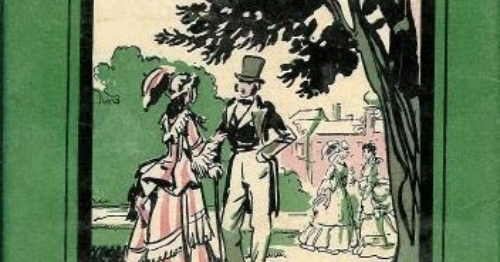
I first heard mention of George Meredith and, in particular, this book while reading a Stevenson biography. RLS was obsessed with the themes, the characters, and the poetry of the prose that are on such elaborate display in The Egoist. Meredith became a hero of his, and fortunately, they became acquaintances and even corresponded with each other.
Sir Willoughby is the sun, the moon, and the stars of his world. He collects people who become ”his shadows, his echoes.” He is generous to those who are loyal to him, but people who strike out on their own become “extinct” to him. Their leaving offends him, and if they wish to return to his service or his sphere, they are no longer welcome. Merriam-Webster supplied me with a definition of the philosophy of egoism.
egoism
1a : a doctrine that individual self-interest is the actual motive of all conscious action b : a doctrine that individual self-interest is the valid end of all actions
2: excessive concern for oneself with or without exaggerated feelings of self-importance
Willoughby had a fiancée, but she escaped. One could almost say she ran screaming into the night. This is mystifying to those who act as sycophants and even to those who are in his same social class as to why a man with his pedigree and money could be so careless as to lose his woman. Clara Middleton is dazzled by his possibilities, and even though she does ponder what made her predecessor flee, she puts those thoughts aside as she prepares for the upcoming marriage. As she gets to know his quirks of personality and experiences his intolerance to perceived disloyalty, she starts to realize who she will become once she has been indoctrinated into this self-love dictatorship over the coming decades.
Willoughby wants more than just a wife or companion. He wants a mirror of himself. Her opinions are interesting during the courtship phase, but once he slips the ring on her finger, he knows he can wear her down into the model wife he pictures in his mind. Clara is beautiful. In fact, one of Willoughby’s friends, the acerbic Mrs. Mountstuart, describes her as ”a dainty rogue in porcelain.”
This description is beautiful, but given the nature of the plot, we soon know how apt this description of her as an object is, possibly even as a collectible, in the mind of Willoughby.
I’m getting nervous for Clara. I start to telepathically whisper to her...to run.
There are three foils to the hopes of this courtship actually evolving into a marriage. One is the mind of Clara, who is starting to have more doubts than reassurances about her future. Two is the existence of Laetitia Dale, a long time friend of Willoughby who worships the ground he glides upon. She is really the perfect candidate as a wife, but Willoughby already has her devotion. He doesn’t have to make her his wife. Three is the arrival of Willoughby’s dashing cousin Colonel Horace De Craye. ”He seemed a refuge. He was very nice, he was a holiday character. His lithe figure, neat firm footing of the stag, swift intelligent expression, and his ready frolicsomeness, pleasant humor, cordial temper, and his Irishry...were soothing to think of. She luxuriated at a feast in considering him--shower on a parched land that he was!”
FEAST IN CONSIDERING HIM! That is Victorian speak for hubba hubba.
Willoughby has already put a check by the box marked wife, so even though he is starting to get pushback from his intended and can’t help but notice that she does seem unduly interested in De Craye, he is not too alarmed. After all, he is Sir Willoughby. Besides, if things do get too squirrelly, he can always ask Miss Dale to step into the vacuum left by yet another departed wife-to-be.
”There are situations too delicate to be clothed in positive definitions.”
There are so many interesting things about George Meredith’s life that adds some intrigue to reading this book. Meredith must have been quite the striking figure when he was younger. The artist Henry Wallis asked him to be the model for his painting titled The Death of Chatterton. I’ve heard of the model running off with an artist, but I haven’t heard of the wife of the model running off with the artist, but alas that proved to be the case. Like Willoughby, Meredith was rather careless with his woman.
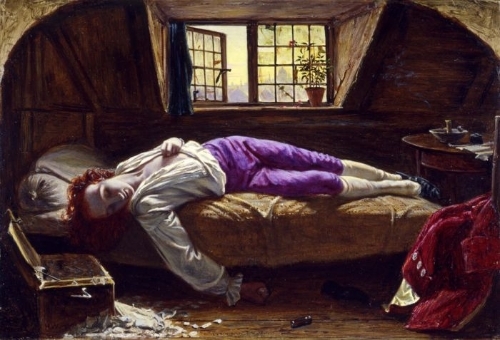
The Death of Chatterton by Henry Wallis. The modeling job that cost Meredith a wife.
Oscar Wilde considered him one of his favorite writers. He described him thus: "Ah, Meredith! Who can define him? His style is chaos illumined by flashes of lightning".
Meredith’s sentence structures are sometimes convoluted, reminding me of another boa constrictor sentence constructor, Henry James. His dialogue I found to be superb, especially whenever Mrs. Mountstuart entered a conversation. Her observations were always unsparingly accurate, laced with deadly satire. ”He sat sharpening his lower lip for cutting remarks.”
If that is the case, no one had a sharper lower lip than Mountstuart.
Meredith was exposing this system of complicity where fathers handed their daughters off to husbands and rarely was a woman given much of a choice in whom she married or even had a choice not to marry. He used comedy and wit to poke fun at this practice in hopes, I’m sure, that people would not feel like they were being lectured. The hope would be that some of what he was saying would stick in the minds of people, and maybe that spark of understanding would lead to future compassions for the plights of their daughters and wives.
I was advised not to read the prelude of the book. Of course, being who I am, a completist down to my bones, I had to read it. There is good reason why that suggestion was made. The chapter is a boring muddle where Meredith attempts to explain the comedic philosophy behind the novel. The novel truly begins at chapter one, so don’t judge the book by the prelude.
It took me a while to adjust to Meredith’s style. I was in the bog at times, but given the fact that this was one of Robert Louis Stevenson’s favorite books, I was determined to discover why he read and re-read this book. Men of this period, including Stevenson’s own overbearing but loving father, resembled aspects of the Willoughby character. I believe Stevenson was trying to look for insight into not only his father, but also given his struggles with women, maybe some insight into their motivations as well.
If you wish to see more of my most recent book and movie reviews, visithttp://www.jeffreykeeten.com I also have a Facebook blogger page at:https://www.facebook.com/JeffreyKeeten
Robert Louis Stevenson writing to W. E. Henley in 1882

I first heard mention of George Meredith and, in particular, this book while reading a Stevenson biography. RLS was obsessed with the themes, the characters, and the poetry of the prose that are on such elaborate display in The Egoist. Meredith became a hero of his, and fortunately, they became acquaintances and even corresponded with each other.
Sir Willoughby is the sun, the moon, and the stars of his world. He collects people who become ”his shadows, his echoes.” He is generous to those who are loyal to him, but people who strike out on their own become “extinct” to him. Their leaving offends him, and if they wish to return to his service or his sphere, they are no longer welcome. Merriam-Webster supplied me with a definition of the philosophy of egoism.
egoism
1a : a doctrine that individual self-interest is the actual motive of all conscious action b : a doctrine that individual self-interest is the valid end of all actions
2: excessive concern for oneself with or without exaggerated feelings of self-importance
Willoughby had a fiancée, but she escaped. One could almost say she ran screaming into the night. This is mystifying to those who act as sycophants and even to those who are in his same social class as to why a man with his pedigree and money could be so careless as to lose his woman. Clara Middleton is dazzled by his possibilities, and even though she does ponder what made her predecessor flee, she puts those thoughts aside as she prepares for the upcoming marriage. As she gets to know his quirks of personality and experiences his intolerance to perceived disloyalty, she starts to realize who she will become once she has been indoctrinated into this self-love dictatorship over the coming decades.
Willoughby wants more than just a wife or companion. He wants a mirror of himself. Her opinions are interesting during the courtship phase, but once he slips the ring on her finger, he knows he can wear her down into the model wife he pictures in his mind. Clara is beautiful. In fact, one of Willoughby’s friends, the acerbic Mrs. Mountstuart, describes her as ”a dainty rogue in porcelain.”
This description is beautiful, but given the nature of the plot, we soon know how apt this description of her as an object is, possibly even as a collectible, in the mind of Willoughby.
I’m getting nervous for Clara. I start to telepathically whisper to her...to run.
There are three foils to the hopes of this courtship actually evolving into a marriage. One is the mind of Clara, who is starting to have more doubts than reassurances about her future. Two is the existence of Laetitia Dale, a long time friend of Willoughby who worships the ground he glides upon. She is really the perfect candidate as a wife, but Willoughby already has her devotion. He doesn’t have to make her his wife. Three is the arrival of Willoughby’s dashing cousin Colonel Horace De Craye. ”He seemed a refuge. He was very nice, he was a holiday character. His lithe figure, neat firm footing of the stag, swift intelligent expression, and his ready frolicsomeness, pleasant humor, cordial temper, and his Irishry...were soothing to think of. She luxuriated at a feast in considering him--shower on a parched land that he was!”
FEAST IN CONSIDERING HIM! That is Victorian speak for hubba hubba.
Willoughby has already put a check by the box marked wife, so even though he is starting to get pushback from his intended and can’t help but notice that she does seem unduly interested in De Craye, he is not too alarmed. After all, he is Sir Willoughby. Besides, if things do get too squirrelly, he can always ask Miss Dale to step into the vacuum left by yet another departed wife-to-be.
”There are situations too delicate to be clothed in positive definitions.”
There are so many interesting things about George Meredith’s life that adds some intrigue to reading this book. Meredith must have been quite the striking figure when he was younger. The artist Henry Wallis asked him to be the model for his painting titled The Death of Chatterton. I’ve heard of the model running off with an artist, but I haven’t heard of the wife of the model running off with the artist, but alas that proved to be the case. Like Willoughby, Meredith was rather careless with his woman.

The Death of Chatterton by Henry Wallis. The modeling job that cost Meredith a wife.
Oscar Wilde considered him one of his favorite writers. He described him thus: "Ah, Meredith! Who can define him? His style is chaos illumined by flashes of lightning".
Meredith’s sentence structures are sometimes convoluted, reminding me of another boa constrictor sentence constructor, Henry James. His dialogue I found to be superb, especially whenever Mrs. Mountstuart entered a conversation. Her observations were always unsparingly accurate, laced with deadly satire. ”He sat sharpening his lower lip for cutting remarks.”
If that is the case, no one had a sharper lower lip than Mountstuart.
Meredith was exposing this system of complicity where fathers handed their daughters off to husbands and rarely was a woman given much of a choice in whom she married or even had a choice not to marry. He used comedy and wit to poke fun at this practice in hopes, I’m sure, that people would not feel like they were being lectured. The hope would be that some of what he was saying would stick in the minds of people, and maybe that spark of understanding would lead to future compassions for the plights of their daughters and wives.
I was advised not to read the prelude of the book. Of course, being who I am, a completist down to my bones, I had to read it. There is good reason why that suggestion was made. The chapter is a boring muddle where Meredith attempts to explain the comedic philosophy behind the novel. The novel truly begins at chapter one, so don’t judge the book by the prelude.
It took me a while to adjust to Meredith’s style. I was in the bog at times, but given the fact that this was one of Robert Louis Stevenson’s favorite books, I was determined to discover why he read and re-read this book. Men of this period, including Stevenson’s own overbearing but loving father, resembled aspects of the Willoughby character. I believe Stevenson was trying to look for insight into not only his father, but also given his struggles with women, maybe some insight into their motivations as well.
If you wish to see more of my most recent book and movie reviews, visithttp://www.jeffreykeeten.com I also have a Facebook blogger page at:https://www.facebook.com/JeffreyKeeten
May 21, 2008
This is a fantastic story about Willoughby, a man who is so self-centered he never considers the possibility that other people are separate human beings. Dead-on portrayal of awful social situations (think Jane Austen). I laughed over and over at the awkwardness of Willoughby's bride-to-be, and the painfully clueless behavior of the Egoist himself.
One caveat, though : you gotta love Victorian novels to make it through this one. The Egoist contains some of the densest English I have ever read. (I had to reread many sentences three times, and some I never really understood.)
This is my third time through The Egoist, and I am reading it aloud with my Sweetie.
One caveat, though : you gotta love Victorian novels to make it through this one. The Egoist contains some of the densest English I have ever read. (I had to reread many sentences three times, and some I never really understood.)
This is my third time through The Egoist, and I am reading it aloud with my Sweetie.

September 25, 2014
This is a fascinating literary curiosity: a late-Victorian novel (1879) with remarkable anticipations of modernism in some respects. I was reminded especially of Henry James, whose obliquities and curlicues of style Meredith can match like for like; though I could also see why Virginia Woolf admired Meredith’s novels and The Egoist in particular (she has a very nice essay on him in The Second Common Reader, written for the centenary of his birth in 1928.)
Meredith describes The Egoist on its title page as “a comedy in narrative” and the dramatic analogy is borne out by what follows. The novel sticks pretty closely to the Aristotelian unities: after a brief introductory sequence, the main action takes place within a few days, and in a very limited spatial arena, constituted by the country estate of the eponymous male lead, Sir Willoughby Patterne, with its drawing rooms and gardens and park and tied cottages. Curiously, the novel replicates near-exactly in its setting and geography Goethe’s Elective Affinities, which I read a few months ago. In both novels, the only scene set outside the charmed circle of the estate occurs when a young female character attempts an abortive bid for freedom before being dragged back into the novel’s intricate amatory geometries (in the case of Goethe via a coaching inn; in that of Meredith, via a train station.) This made me wonder whether Goethe should be added to the list of Meredith’s numerous influences and subtexts in The Egoist, along with the Roman satirist Horace, name-checked in the book; Jane Austen; Restoration comedy; and perhaps the George Eliot of Middlemarch, whose dozy, irrepressibly vain Mr Brooke is surely among the literary ancestors of Sir Willoughby.
One thing that made me think of Middlemarch in The Egoist is Meredith’s sensitivity to the predicament of women in his society. This is an aspect of the novel that surprised me. If The Egoist were written by a woman, it would certainly be considered an important early feminist classic (the same goes for George Gissing’s The Odd Women, written fourteen years later, in 1893.) Meredith’s satirical firepower is directed especially towards the Victorian obsession with purity and innocence in women, one of Sir Willoughby’s most cherished ideals (“he wished for [his betrothed] to have come to him out of an eggshell, somewhat more astonished at things than a chicken, but as completely enclosed before he tapped the shell.”) China and especially porcelain, with its daintiness and expensive fragility, is a recurrent motif in the novel, and it works very effectively as a satire on the stereotypical Victorian view of ideal womanliness (as well as adding delicious layers of irony to Sir Willoughby Patterne’s Congrevian name.)
There’s not too much more that I can say about this novel without risking spoilers, but I would certainly recommend it to anyone with sufficient familiarity with Victorian novels to recognize the conventions The Egoist is humorously riffing off. Once you get used to Meredith’s sometimes extravagantly mannered style, it’s an entertaining and lively read (although the absurdly elongated dénouement tried my patience a little.) The characterization is mainly strong, with some attractive and distinctive female characters in particular; and Sir Willoughby is a splendid and subtly realised comic creation—a highly original and quite memorable satirical take on the traditional gentlemanly romantic lead.
Meredith describes The Egoist on its title page as “a comedy in narrative” and the dramatic analogy is borne out by what follows. The novel sticks pretty closely to the Aristotelian unities: after a brief introductory sequence, the main action takes place within a few days, and in a very limited spatial arena, constituted by the country estate of the eponymous male lead, Sir Willoughby Patterne, with its drawing rooms and gardens and park and tied cottages. Curiously, the novel replicates near-exactly in its setting and geography Goethe’s Elective Affinities, which I read a few months ago. In both novels, the only scene set outside the charmed circle of the estate occurs when a young female character attempts an abortive bid for freedom before being dragged back into the novel’s intricate amatory geometries (in the case of Goethe via a coaching inn; in that of Meredith, via a train station.) This made me wonder whether Goethe should be added to the list of Meredith’s numerous influences and subtexts in The Egoist, along with the Roman satirist Horace, name-checked in the book; Jane Austen; Restoration comedy; and perhaps the George Eliot of Middlemarch, whose dozy, irrepressibly vain Mr Brooke is surely among the literary ancestors of Sir Willoughby.
One thing that made me think of Middlemarch in The Egoist is Meredith’s sensitivity to the predicament of women in his society. This is an aspect of the novel that surprised me. If The Egoist were written by a woman, it would certainly be considered an important early feminist classic (the same goes for George Gissing’s The Odd Women, written fourteen years later, in 1893.) Meredith’s satirical firepower is directed especially towards the Victorian obsession with purity and innocence in women, one of Sir Willoughby’s most cherished ideals (“he wished for [his betrothed] to have come to him out of an eggshell, somewhat more astonished at things than a chicken, but as completely enclosed before he tapped the shell.”) China and especially porcelain, with its daintiness and expensive fragility, is a recurrent motif in the novel, and it works very effectively as a satire on the stereotypical Victorian view of ideal womanliness (as well as adding delicious layers of irony to Sir Willoughby Patterne’s Congrevian name.)
There’s not too much more that I can say about this novel without risking spoilers, but I would certainly recommend it to anyone with sufficient familiarity with Victorian novels to recognize the conventions The Egoist is humorously riffing off. Once you get used to Meredith’s sometimes extravagantly mannered style, it’s an entertaining and lively read (although the absurdly elongated dénouement tried my patience a little.) The characterization is mainly strong, with some attractive and distinctive female characters in particular; and Sir Willoughby is a splendid and subtly realised comic creation—a highly original and quite memorable satirical take on the traditional gentlemanly romantic lead.

Read
January 21, 2021Egoist je možda najcenjeniji viktorijanski roman koji nikad nije ekranizovan :D
I dok ga čitam istovremeno mi je i jasno i nije jasno zbog čega. Kompozicija je savršena u smislu da prati konvencije scenske komedije i da se sve razrešava u dva-tri dana i noći na imanju glavnog junaka, imamo jednostavan zaplet (mlada verenica je shvatila da joj je verenik sebični, pompezni gad i očajnički pokušava da se iskobelja iz tog položaja, a verenik jednako očajnički odbija jer njegova sujeta ne može da podnese još jedan raskid veridbe), dosta lukavog humora i zanimljive sporedne likove. Ali Mereditov stil je solidno nepristupačan (zamišljam da ga je Henri Džejms čitao uz "toooo! ali možda ja mogu i jače!") i zahteva izvesno navikavanje i koncentraciju da biste onda mogli da počnete da uživate u a) humoru i b) angažovanosti. Jer, zapravo, solidan deo romana otpada na strastvenu argumentaciju sveznajućeg pripovedača koji nas iz sve snage ubeđuje da je položaj žena u Engleskoj njegovog doba UŽASAN i da to nije u redu i da treba da se menja i da je društveni pritisak odgovoran za stvaranje onoga što se tad smatralo najčešćim ženskim manama. Sve je to izuzetno intenzivno iako zakopano u zakučastim frazama. I sjajan je način na koji Meredit prikazuje kako se ljudska ličnost nosi sa teškim dilemama koje treba razrešiti u kratkom roku, kako se koleba, kako šetnja po sobi ili parku od pola sata može da obuhvati pet kriznih trenutaka, predomišljanja i novih namera: to važi za likove oboje verenika, ali, dosta prirodno, Klara od sveznajućeg pripovedača dobija mnogo više naklonosti nego Viloubi.
Moram da pomenem kako je Meredit verovatno jedinstven a svakako redak slučaj čoveka koji je ženskim pitanjem počeo da se bavi nakon što mu je žena pobegla s najboljim prijateljem slikarem, a on tugovao pa zaključio da je zapravo ona bila u pravu a da je on sam kriv: i od prvog romana nadalje kod njega se provlači taj lik pametne i osetljive žene koja prosto ne može više da izdrži nego sve baci i ode.
Šta još reći o ovoj knjizi. E da, sporedni likovi. Na drugo čitanje (koje od prvog razdvaja bogami više decenija nego što mi je milo reći) sporedni likovi su baš zablistali, i otac profesor koga je najlakše podmititi dobrim vinom, i veseli lokalni lekar, i otmena susetka britkog jezika koja sve vidi ali je srazmerno dobronamerna. Posebni bambiji sigurno idu za Leticiju Dejl, siromašnu usedelicu koja je od mladosti zaljubljena u Viloubija i koja se sad konačno suočava sa njegovim pravim karakterom. Jadnu Leticiju svi tretiraju kao da je jednom nogom u grobu i za današnjeg čitaoca (naročito onog od preko trideset godina) stvarno dođe kao šok kad ona pomene da ima dvadeset devet godina, uz jedan "beše si moje" uzdah. I na kraju je ostali kolektivno bace pod točkove radi višeg cilja tj. ona pristane da se uda za Viloubija, na opšti nagovor, jer samo tako će moći da se zauzdaju njegova sujeta i sebičnost: ne, nije to veseo kraj.
(Klara izvede uspešan gambit i udaje se za pozitivnog junaka koji je skroman ali čestiti naučnik&pisac i, avaj, mutav i krut kao lipov svetac. Internet mi kaže da je njegov lik zasnovan na mladom ocu Virdžinije Vulf, a po tome kako ga ona prikazuje u "Ka svetioniku", lako mi je da poverujem u to.)
I dok ga čitam istovremeno mi je i jasno i nije jasno zbog čega. Kompozicija je savršena u smislu da prati konvencije scenske komedije i da se sve razrešava u dva-tri dana i noći na imanju glavnog junaka, imamo jednostavan zaplet (mlada verenica je shvatila da joj je verenik sebični, pompezni gad i očajnički pokušava da se iskobelja iz tog položaja, a verenik jednako očajnički odbija jer njegova sujeta ne može da podnese još jedan raskid veridbe), dosta lukavog humora i zanimljive sporedne likove. Ali Mereditov stil je solidno nepristupačan (zamišljam da ga je Henri Džejms čitao uz "toooo! ali možda ja mogu i jače!") i zahteva izvesno navikavanje i koncentraciju da biste onda mogli da počnete da uživate u a) humoru i b) angažovanosti. Jer, zapravo, solidan deo romana otpada na strastvenu argumentaciju sveznajućeg pripovedača koji nas iz sve snage ubeđuje da je položaj žena u Engleskoj njegovog doba UŽASAN i da to nije u redu i da treba da se menja i da je društveni pritisak odgovoran za stvaranje onoga što se tad smatralo najčešćim ženskim manama. Sve je to izuzetno intenzivno iako zakopano u zakučastim frazama. I sjajan je način na koji Meredit prikazuje kako se ljudska ličnost nosi sa teškim dilemama koje treba razrešiti u kratkom roku, kako se koleba, kako šetnja po sobi ili parku od pola sata može da obuhvati pet kriznih trenutaka, predomišljanja i novih namera: to važi za likove oboje verenika, ali, dosta prirodno, Klara od sveznajućeg pripovedača dobija mnogo više naklonosti nego Viloubi.
Moram da pomenem kako je Meredit verovatno jedinstven a svakako redak slučaj čoveka koji je ženskim pitanjem počeo da se bavi nakon što mu je žena pobegla s najboljim prijateljem slikarem, a on tugovao pa zaključio da je zapravo ona bila u pravu a da je on sam kriv: i od prvog romana nadalje kod njega se provlači taj lik pametne i osetljive žene koja prosto ne može više da izdrži nego sve baci i ode.
Šta još reći o ovoj knjizi. E da, sporedni likovi. Na drugo čitanje (koje od prvog razdvaja bogami više decenija nego što mi je milo reći) sporedni likovi su baš zablistali, i otac profesor koga je najlakše podmititi dobrim vinom, i veseli lokalni lekar, i otmena susetka britkog jezika koja sve vidi ali je srazmerno dobronamerna. Posebni bambiji sigurno idu za Leticiju Dejl, siromašnu usedelicu koja je od mladosti zaljubljena u Viloubija i koja se sad konačno suočava sa njegovim pravim karakterom. Jadnu Leticiju svi tretiraju kao da je jednom nogom u grobu i za današnjeg čitaoca (naročito onog od preko trideset godina) stvarno dođe kao šok kad ona pomene da ima dvadeset devet godina, uz jedan "beše si moje" uzdah. I na kraju je ostali kolektivno bace pod točkove radi višeg cilja tj. ona pristane da se uda za Viloubija, na opšti nagovor, jer samo tako će moći da se zauzdaju njegova sujeta i sebičnost: ne, nije to veseo kraj.
(Klara izvede uspešan gambit i udaje se za pozitivnog junaka koji je skroman ali čestiti naučnik&pisac i, avaj, mutav i krut kao lipov svetac. Internet mi kaže da je njegov lik zasnovan na mladom ocu Virdžinije Vulf, a po tome kako ga ona prikazuje u "Ka svetioniku", lako mi je da poverujem u to.)

September 23, 2011
It’s quite sad that people always look eastward for enlightenment, when it can just as easily be found in our own native literature, if not for the sorry fact that ‘education’ makes people frightened of reading. Frightened of thinking in fact.
In any case, thinking about how lovely all the female characters are in The Egoist brought a little tear to my eye last night. It is a very lovely book. You end up loving them all, even the unbearable Egoist, who really just needs a sound thrashing from a capable woman. The core problem is, women sublimate their passion for their own animus into the adoration (worship) of real men. Which has an extremely toxic effect on the men in question, especially when this has been how they are raised. People in general worship others as reflections of themselves only. It is not a real human connection at all, and men do it just as much as women, the difference is that they have the power materially in the real world, and the ultimate expression of this mirror worship to them is to own its object. What the object thinks or feels about the matter is actually irrelevant in either case.
In 1879, when this novel was published, to win a womans hand meant to make her your possession. If women could not find someone to own them, they were quite often unable to survive. To have your survival depend on relinquishing your freedom is a truly horrible fate. I would have flung myself off the nearest bridge. So what does a young and unworldly woman do when she finds herself inexorably affianced to a man she has come to despise, a man whose entire ego gratification depends on making her his chattel? Especially when his wealth allows him to control and manipulate her father with his vintage wine cellar.
She relies on the comradeship of other women for aid and rescue. And even other men (though significantly NOT rich ones). And because the Egoist is fatally self defeating , he helps her most of all, even though he doesn’t realize it. But will she escape in time? It’s nail biting stuff! An anti-romance. Beats me why it’s never been dramatized. It’s one of those books that has changed the world and the whole course of literature, and yet hardly anyone reads it. What a shame!
The secret truth of the matter is that the whole of Capitalism is the Egoist writ large. With exactly the same self defeating tendencies. One thing he says about such character defects; they are most easily read in the muscles around the mouth. Surely it would be far more efficacious to use physiognomy to choose leaders than democracy. Looking at the asshole mouth of David Cameron, one is instantly enlightened as to the putrid nature of his soul.
In any case, thinking about how lovely all the female characters are in The Egoist brought a little tear to my eye last night. It is a very lovely book. You end up loving them all, even the unbearable Egoist, who really just needs a sound thrashing from a capable woman. The core problem is, women sublimate their passion for their own animus into the adoration (worship) of real men. Which has an extremely toxic effect on the men in question, especially when this has been how they are raised. People in general worship others as reflections of themselves only. It is not a real human connection at all, and men do it just as much as women, the difference is that they have the power materially in the real world, and the ultimate expression of this mirror worship to them is to own its object. What the object thinks or feels about the matter is actually irrelevant in either case.
In 1879, when this novel was published, to win a womans hand meant to make her your possession. If women could not find someone to own them, they were quite often unable to survive. To have your survival depend on relinquishing your freedom is a truly horrible fate. I would have flung myself off the nearest bridge. So what does a young and unworldly woman do when she finds herself inexorably affianced to a man she has come to despise, a man whose entire ego gratification depends on making her his chattel? Especially when his wealth allows him to control and manipulate her father with his vintage wine cellar.
She relies on the comradeship of other women for aid and rescue. And even other men (though significantly NOT rich ones). And because the Egoist is fatally self defeating , he helps her most of all, even though he doesn’t realize it. But will she escape in time? It’s nail biting stuff! An anti-romance. Beats me why it’s never been dramatized. It’s one of those books that has changed the world and the whole course of literature, and yet hardly anyone reads it. What a shame!
The secret truth of the matter is that the whole of Capitalism is the Egoist writ large. With exactly the same self defeating tendencies. One thing he says about such character defects; they are most easily read in the muscles around the mouth. Surely it would be far more efficacious to use physiognomy to choose leaders than democracy. Looking at the asshole mouth of David Cameron, one is instantly enlightened as to the putrid nature of his soul.
August 5, 2014
Dense, ornate, tricksy, bewildering, erudite, mannered, humane and witty, this book is likely to either delight or exasperate its readers.
It is the story of Sir Willougby Patterne, a handsome and well-bred young man, and the women he courts, whose names belie their characters: Laetitia being anything but joyful, Constantia inconstant, and Clara not at all clear-headed, except when she perceives that the man to whom she has just become engaged is a monstrous and self-centered Egoist.
Much of the book is devoted to Clara's increasingly desperate attempts to disengage herself from Sir Willoughby, and his equally desperate attempts to retain both her and his self-esteem, written in a style that combines 18th century artifice with 20th century psychology. Imagine Congreve crossed with Henry James. Meredith takes a scalpel to the thoughts and motives of all concerned so effectively that we can feel compassion for Sir Willoughby even as he plots revenge on his bride-to-be. His machinations end in a farcical merry-go-round of labyrinthine misunderstandings, until he ends up with the right partner and everyone is happy, or at least resigned. I loved this book. You might well hate it.
It is the story of Sir Willougby Patterne, a handsome and well-bred young man, and the women he courts, whose names belie their characters: Laetitia being anything but joyful, Constantia inconstant, and Clara not at all clear-headed, except when she perceives that the man to whom she has just become engaged is a monstrous and self-centered Egoist.
Much of the book is devoted to Clara's increasingly desperate attempts to disengage herself from Sir Willoughby, and his equally desperate attempts to retain both her and his self-esteem, written in a style that combines 18th century artifice with 20th century psychology. Imagine Congreve crossed with Henry James. Meredith takes a scalpel to the thoughts and motives of all concerned so effectively that we can feel compassion for Sir Willoughby even as he plots revenge on his bride-to-be. His machinations end in a farcical merry-go-round of labyrinthine misunderstandings, until he ends up with the right partner and everyone is happy, or at least resigned. I loved this book. You might well hate it.

February 26, 2017
George Meredith (1828-1909) este un exponent al realismului britanic, una dintre cele mai proeminente figuri ale epocii. Deşi caracterizată puternic de victorianism, opera sa se distanţează timid de acesta, motiv pentru care scrierile sale au constituit un vast subiect de vâlvă, multe dintre operele distinsului autor fiind retrase din bibliotecile publice într-un timp scurt de la apariţie. Putem spune, aşadar, că sobrietatea englezească şi tendinţele conservatoare rezistă, indiferent de şoriceii care s-au perindat pe la Palatul Buckingham sau de vocile revoluţionare (şi ele foarte timide) ale insulei.
În ceea ce mă priveşte, mă debarasez de o judecată obiectivă, la fel cum o fac adesea, dat fiind că realismul nu mi-a priit niciodată. Îmi repugnă. E sobru. E plat. Parcă te uiţi ore-n şir la o pălărie de epoca agăţată-n cui. Realiştii reduc intentsitatea sentimentului, favorizaţi, desigur, de cadrul social şi de sorgintea, de ereditatea personajelor, la ceva care trebuie exclusiv modelat. Egoismul, supus judecăţii, se află aici pe scaunul inchizitorului, pe când, de pildă, la romantici, un personaj de o asemenea anvergură, indiferent de obârşia caracterului, se află mereu sub auspiciile sacrificiului, deseori, deci, pe rugul încins al deloc preablandei realităţi.
Trebuie să recunosc faptul că acest vast roman a fost pentru mine ceva cu totul nou. Ceva care mi-a spus că realismul trebuie privit, totuşi, cu blândeţe, în dedesubturi. Bineînţeles: critic îl priveam şi până acum, dar mi-era foarte greu să mă transpun într-un anumit timp şi într-un anumit cadru geografic determinat (e de reţinut că realiştii occidentali au scris, cu precădere, romane surprinzând viaţă din afara marilor oraşe). În ce constă noul? Romanul se deschide cu un aşa-intitulat "Preludiu", în care autorul face o apologie hiperbolică (întreg capitolul e, de altfel, hiperbolic) a Marii Cărţi în care sunt transpuse principiile fiecărui element caracteristic unui anumit tip uman. Romanul nu este, de altfel, lipsit de analiză psihologică.
Ceea ce m-a atras cel mai mult a fost tocmai aceasta, analiza psihologică. Am citit şi eu câte ceva la viaţa mea şi am dat de toate: dialoguri pătimaşe, dialoguri plate, dialoguri vulgare etc., dar niciodată nu mi-a fost dat să citesc un asemenea dialog atât de abundent în subtilităţi. Romanul este plin de comedie neagră.
De asemenea, nu mi-am putut imagina că cineva şi-ar putea închipui nişte caractere atât de mârşave cum o face Meredith. Nu-i vorbă, mârşavi au fost Hitler, Stalin sau, deopotrivă, Jack Spintecătorul. Dar nu-i vorba de asta. E vorba de intenţia care se află în spatele micilor acţiuni din viaţa de zi cu zi, în spatele prieteniilor înfiripate şi al manierismelor alese. Intriga asta atrage. Şi mai mult, frustrează. Am ratat un examen pentru că am citit până târziu şi am dormit ca un bou.
Că să închei, trebuie să spun că ceea ce individualizează realismul lui Meredith este lipsa acelor dramatis personae, cum le spuneau latinii. Ştim că la realişti domină platitudinea de-a lungul povestirii, însă finalul se distanţează un strop şi aduce o schimbare, oricât de mică. A se vedea, de pildă, Eugenie Grandet. La Meredith nu. Personajul în jurul căruia se desfăşoară acţiunea romanului, Willoughby Patterne, nu crapă, nu se schimbă, nu-şi pierde averea şi toate alea. Nimic. Mai mult: îşi clădeşte, în aparenţă, nişte sentimente curate, dar sub aceeaşi masca a superficialităţii. Eventual, doar conştiinţa sa suferă anumite ghionturi, dar "drăcuşorii", care apar că laitmotiv în roman, ucid orice formă de trepidaţie a acesteia, concluzia rămânând cea statuată în prolog: din dragoste de sine, pe sine s-a răpus...
Andrei Tamaş,
26 februarie 2017
În ceea ce mă priveşte, mă debarasez de o judecată obiectivă, la fel cum o fac adesea, dat fiind că realismul nu mi-a priit niciodată. Îmi repugnă. E sobru. E plat. Parcă te uiţi ore-n şir la o pălărie de epoca agăţată-n cui. Realiştii reduc intentsitatea sentimentului, favorizaţi, desigur, de cadrul social şi de sorgintea, de ereditatea personajelor, la ceva care trebuie exclusiv modelat. Egoismul, supus judecăţii, se află aici pe scaunul inchizitorului, pe când, de pildă, la romantici, un personaj de o asemenea anvergură, indiferent de obârşia caracterului, se află mereu sub auspiciile sacrificiului, deseori, deci, pe rugul încins al deloc preablandei realităţi.
Trebuie să recunosc faptul că acest vast roman a fost pentru mine ceva cu totul nou. Ceva care mi-a spus că realismul trebuie privit, totuşi, cu blândeţe, în dedesubturi. Bineînţeles: critic îl priveam şi până acum, dar mi-era foarte greu să mă transpun într-un anumit timp şi într-un anumit cadru geografic determinat (e de reţinut că realiştii occidentali au scris, cu precădere, romane surprinzând viaţă din afara marilor oraşe). În ce constă noul? Romanul se deschide cu un aşa-intitulat "Preludiu", în care autorul face o apologie hiperbolică (întreg capitolul e, de altfel, hiperbolic) a Marii Cărţi în care sunt transpuse principiile fiecărui element caracteristic unui anumit tip uman. Romanul nu este, de altfel, lipsit de analiză psihologică.
Ceea ce m-a atras cel mai mult a fost tocmai aceasta, analiza psihologică. Am citit şi eu câte ceva la viaţa mea şi am dat de toate: dialoguri pătimaşe, dialoguri plate, dialoguri vulgare etc., dar niciodată nu mi-a fost dat să citesc un asemenea dialog atât de abundent în subtilităţi. Romanul este plin de comedie neagră.
De asemenea, nu mi-am putut imagina că cineva şi-ar putea închipui nişte caractere atât de mârşave cum o face Meredith. Nu-i vorbă, mârşavi au fost Hitler, Stalin sau, deopotrivă, Jack Spintecătorul. Dar nu-i vorba de asta. E vorba de intenţia care se află în spatele micilor acţiuni din viaţa de zi cu zi, în spatele prieteniilor înfiripate şi al manierismelor alese. Intriga asta atrage. Şi mai mult, frustrează. Am ratat un examen pentru că am citit până târziu şi am dormit ca un bou.
Că să închei, trebuie să spun că ceea ce individualizează realismul lui Meredith este lipsa acelor dramatis personae, cum le spuneau latinii. Ştim că la realişti domină platitudinea de-a lungul povestirii, însă finalul se distanţează un strop şi aduce o schimbare, oricât de mică. A se vedea, de pildă, Eugenie Grandet. La Meredith nu. Personajul în jurul căruia se desfăşoară acţiunea romanului, Willoughby Patterne, nu crapă, nu se schimbă, nu-şi pierde averea şi toate alea. Nimic. Mai mult: îşi clădeşte, în aparenţă, nişte sentimente curate, dar sub aceeaşi masca a superficialităţii. Eventual, doar conştiinţa sa suferă anumite ghionturi, dar "drăcuşorii", care apar că laitmotiv în roman, ucid orice formă de trepidaţie a acesteia, concluzia rămânând cea statuată în prolog: din dragoste de sine, pe sine s-a răpus...
Andrei Tamaş,
26 februarie 2017

November 11, 2017
Oscar Wilde's two most favorite writers were Balzac and Meredith, and this classic English stage comedy in the form of a novel is sort of an intellectual "Importance of Being Earnest." This quality of the writing is unsurpassed, and the frequent comparisons of Meredith to Shakespeare are wholly merited. While comedic in tone, there is a fair amount of seriousness, and the character of the "Egoist", Willoughby, is complex as well as pathetic. This is also quite the feminist novel, as it argues powerfully against conceptions of women as a mere appendage to their spouses, and certainly provides a model of a strong willed woman unwilling to submit despite incredible amounts of pressure. The women here are allied against the men, and the men allied and antagonists. It's a game of chess, and it all works brilliantly.
One highlight for me anyway was the long discourse on port wine by Willoughby to Dr. Middleton. Willoughby's long speeches were very amusing, but the chaotic plot carried the day. Especially of note is how the old ladies of the time were the arbiters of society, and certainly they were the intellectual equals of the men; although not as classically "learned", they quote Shakespeare and make classical allusions frequently.
This is an entirely different novel from my other Meredith book, Harry Richmond, which I enjoyed so much I read it twice and cleaned up the Wikipedia article. Oddly, despite the brilliance, not sure if I will continue, there's something rather hollow about Meredith, can't put my finger on it but he almost writes "too well", he doesn't inspire devotion. Still the quality of this novel is such that I strongly recommend it, although the language is challenging and it might be too difficult for the ordinary reader. The Norton edition is essential for the translations of the French, Latin and even Greek. This is a cultured book. Readers were far more and better educated back then.
One highlight for me anyway was the long discourse on port wine by Willoughby to Dr. Middleton. Willoughby's long speeches were very amusing, but the chaotic plot carried the day. Especially of note is how the old ladies of the time were the arbiters of society, and certainly they were the intellectual equals of the men; although not as classically "learned", they quote Shakespeare and make classical allusions frequently.
This is an entirely different novel from my other Meredith book, Harry Richmond, which I enjoyed so much I read it twice and cleaned up the Wikipedia article. Oddly, despite the brilliance, not sure if I will continue, there's something rather hollow about Meredith, can't put my finger on it but he almost writes "too well", he doesn't inspire devotion. Still the quality of this novel is such that I strongly recommend it, although the language is challenging and it might be too difficult for the ordinary reader. The Norton edition is essential for the translations of the French, Latin and even Greek. This is a cultured book. Readers were far more and better educated back then.
May 18, 2010
The Egoist is one of the strangest novels I have come across, a psychological analysis of a type particularly interesting because men like him often rise to positions of power in politics or commerce.
The novel would have been tedious, as well as confusing, if George Meredith had used the egoist as first person narrative. Instead, Meredith takes an oblique approach by viewing the egoist through the corners of other people’s eyes. There are problems with this approach, too, for the reader. The egoist’s betrothed, who is the main observer on our behalf, must not be clever, or that would spoil the plot, but her wilful obtuseness becomes annoying.
Meredith deliberately exasperates us, by providing readers with the full picture and letting us see how easy it is to deceive even the cleverest characters if they never see the whole man as we do. The most cynical and world-weary cannot overcome their native assumption that people generally tell the truth, and that lies come with visible signs of discomfort. Faced with an egoist or psychopath (is there a difference?), we have no defence, and the egoist can be sure that we will not discover the deception by sharing our portion of what he has said to each of us.
The early chapters of The Egoist read like a populist novel; the language is simple and there are no classical references. The egoist runs through his first disastrous betrothal quickly and dramatically, promising the inverse of a Jane Austen novel, one where the females are the prey and the male the hunter.
The long central section slowly builds up a mosaic of Sir Willoughby Patterne (awful Jane Austen type name) tile by tile. A quick dénouement is prevented by the simple fact that betrothals were legally binding. Clara cannot just walk away any more than the other dependents can. Only the last few chapters are high drama, and like other Meredith pieces, it ends unexpectedly and, given Willoughby's attraction to other Beautiful People, improbably.
The novel would have been tedious, as well as confusing, if George Meredith had used the egoist as first person narrative. Instead, Meredith takes an oblique approach by viewing the egoist through the corners of other people’s eyes. There are problems with this approach, too, for the reader. The egoist’s betrothed, who is the main observer on our behalf, must not be clever, or that would spoil the plot, but her wilful obtuseness becomes annoying.
Meredith deliberately exasperates us, by providing readers with the full picture and letting us see how easy it is to deceive even the cleverest characters if they never see the whole man as we do. The most cynical and world-weary cannot overcome their native assumption that people generally tell the truth, and that lies come with visible signs of discomfort. Faced with an egoist or psychopath (is there a difference?), we have no defence, and the egoist can be sure that we will not discover the deception by sharing our portion of what he has said to each of us.
The early chapters of The Egoist read like a populist novel; the language is simple and there are no classical references. The egoist runs through his first disastrous betrothal quickly and dramatically, promising the inverse of a Jane Austen novel, one where the females are the prey and the male the hunter.
The long central section slowly builds up a mosaic of Sir Willoughby Patterne (awful Jane Austen type name) tile by tile. A quick dénouement is prevented by the simple fact that betrothals were legally binding. Clara cannot just walk away any more than the other dependents can. Only the last few chapters are high drama, and like other Meredith pieces, it ends unexpectedly and, given Willoughby's attraction to other Beautiful People, improbably.
“Now, there, Clara, there you have the Egoist,” added Sir Willoughby. “That is the perfect Egoist. You see what he comes to -- and his wife! The man was utterly unconscious of giving vent to the grossest selfishness.”
“An Egoist!” said Clara.
“Beware of marrying an Egoist, my dear!” He bowed gallantly; and so blindly fatuous did he appear to her, that she could hardly believe him guilty of uttering the words she had heard from him.
-- The Egoist, George Meredith (1879)

June 25, 2019
'Clara had settled on a thought, though she did not readily concur with the torrents of semi-formed miasmical ideas that surged through her mind, that it mayhap have been the case that her desire for a super abundance of a type of affection was not in accordance with her womanly desire to transcend all ideas of a bodily form that were, in a type of unspoken dialogue, also desired by the unlooked for areas of Sir Willoughby's undeniable yet strangely unfathomable descent into the regions of the world that are yet to bask in the beams of light that represent, although unbidden, the true reflection of what it had represented had the world been different to that state in which it had not yet revealed itself to Clara in her most confused and tearful condition.'
Here's a riddle! Is the above quote actually from Meredith's novel or have I just made this drivel up? I think it's hard to tell. ANSWER: I just made it up, and yet I think it's much better than anything he wrote.
Here's a riddle! Is the above quote actually from Meredith's novel or have I just made this drivel up? I think it's hard to tell. ANSWER: I just made it up, and yet I think it's much better than anything he wrote.

October 22, 2020
The Egoist is definitely one of the most dense Victorian books I have read. It's a very unusual love triangle; a man torn between two women, both of them not willing to marry him. Sir Willoughby is very frustrating and arrogant but incredibly well developed characters, as well as Clara and Laetitia are. Finishing this feels like an accomplishment, but a good one because I really appreciated Meredith's writing and humour.
November 5, 2014
It's hard to explain quite what's not especially readable about this book and why I liked it anyway. Meredith has a distinct, very mannered, dense, allusive style, which is kind of reminiscent of Oscar Wilde and Ivy Compton Burnett but is ultimately more obscure even than the latter. Sometimes this is okay and sometimes Meredith isn't saying anything interesting and is just tripping himself up.
The book is introduced as the comedy of the Egoist, Sir Willoughby Patterne, as he tries to get married, having some difficulty at the beginning deciding who the lucky lady should be, and then with hanging on to her. The first chapter or so (once we've got the introduction to the nature of comedy out of the way) scythes through events quite briskly and I wasn't expecting the pace of the book to be so slow. Most of the book is a very thorough psychological exploration of one static situation. Clara, a spirited young girl, has got herself engaged to Willoughby only to realise fairly early on that she doesn't like him and would find it hellish to be married to him. The portrait of feminine ingenuity oppressed by a relentless male ego is very reminiscent of The Portrait of a Lady. Willoughby and her father put a lot of pressure on her to keep her engagement. Clara is even more hindered by her upbringing as a nice young Victorian lady, which has made her find it almost impossible to express strong, decisive negativity and reject Willoughby. No matter how desperate she is, she is still not quite able to say clearly that she doesn't want to marry Willoughby because his personality sucks. Meredith is interested in pointing how little good the conventionally ideal woman is to herself.
It's all quite depressing and it seemed almost inevitable that Willoughby was going to hoover Clara up regardless. I was wondering quite how this was a comedy. Then it changes into a formal comedy with partner swapping and misunderstandings and farcical attempts to prevent one's lies being discovered. I suppose if you were wanting a gritty treatment of social problems this would feel like a cop-out, but I feel Meredith did achieve his ultimate aim, which was to show how egoism is inevitably driven to deprive itself of what it wants most.
One of the odd things about this book was the way I could very easily imagine it as an adaptation, despite its frequent obscurity and despite the fact I don't generally think of books that way. There's a lot here that would be very easy to dramatise, creating a good mixture of drama and humour.
The book is introduced as the comedy of the Egoist, Sir Willoughby Patterne, as he tries to get married, having some difficulty at the beginning deciding who the lucky lady should be, and then with hanging on to her. The first chapter or so (once we've got the introduction to the nature of comedy out of the way) scythes through events quite briskly and I wasn't expecting the pace of the book to be so slow. Most of the book is a very thorough psychological exploration of one static situation. Clara, a spirited young girl, has got herself engaged to Willoughby only to realise fairly early on that she doesn't like him and would find it hellish to be married to him. The portrait of feminine ingenuity oppressed by a relentless male ego is very reminiscent of The Portrait of a Lady. Willoughby and her father put a lot of pressure on her to keep her engagement. Clara is even more hindered by her upbringing as a nice young Victorian lady, which has made her find it almost impossible to express strong, decisive negativity and reject Willoughby. No matter how desperate she is, she is still not quite able to say clearly that she doesn't want to marry Willoughby because his personality sucks. Meredith is interested in pointing how little good the conventionally ideal woman is to herself.
It's all quite depressing and it seemed almost inevitable that Willoughby was going to hoover Clara up regardless. I was wondering quite how this was a comedy. Then it changes into a formal comedy with partner swapping and misunderstandings and farcical attempts to prevent one's lies being discovered. I suppose if you were wanting a gritty treatment of social problems this would feel like a cop-out, but I feel Meredith did achieve his ultimate aim, which was to show how egoism is inevitably driven to deprive itself of what it wants most.
One of the odd things about this book was the way I could very easily imagine it as an adaptation, despite its frequent obscurity and despite the fact I don't generally think of books that way. There's a lot here that would be very easy to dramatise, creating a good mixture of drama and humour.

November 6, 2012
The Egoist might remind you of someone you know.
Sir Willoughby Patterne is self-centered, wealthy, unforgiving and worried about what people think. There are three women in his life and he plans to marry each one until he is dumped and then discovers a new one in the nick of time to save face. Sir. Willoughby can't make up his mind who will best set off his home and himself. It's all about appearances.
But this isn't at all a completely serious book. Enter Mrs. Mountstewart Jenkinson, a kind of Oscar Wilde character, who watches all and has a pointed word for every situation.
Sir Wiloughby is eventually sorted out but, even though he pledges to change some of his unattractive ways, there is some doubt he can.
Quotes: Mrs. Jenkinson: " I drove home your Green Man (gardener) to dry him, he was wet through and chattering; the man was exactly like a skeleton wrapped in a sponge."
Mrs. Jenkinson on the Professor: "..lean as a fork, with the wind whistling through the prongs."
Meredith on Willoughby: "His blind sensitiveness felt as we may suppose a spider to feel when plucked from his own web and set in the centre of another's."
Willoughby on Clara after being rejected: "Contemplating her in the form of a discarded weed...An illness, fever, fire, runaway horses, personal disfigurement, a laming were sufficient. And then a formal and noble offer on his part to keep to the engagement with the unhappy wreck: yes, and to lead the limping thing to the altar, if she insisted. His imagination conceived it, and the world's applause besides.
Sir Willoughby Patterne is self-centered, wealthy, unforgiving and worried about what people think. There are three women in his life and he plans to marry each one until he is dumped and then discovers a new one in the nick of time to save face. Sir. Willoughby can't make up his mind who will best set off his home and himself. It's all about appearances.
But this isn't at all a completely serious book. Enter Mrs. Mountstewart Jenkinson, a kind of Oscar Wilde character, who watches all and has a pointed word for every situation.
Sir Wiloughby is eventually sorted out but, even though he pledges to change some of his unattractive ways, there is some doubt he can.
Quotes: Mrs. Jenkinson: " I drove home your Green Man (gardener) to dry him, he was wet through and chattering; the man was exactly like a skeleton wrapped in a sponge."
Mrs. Jenkinson on the Professor: "..lean as a fork, with the wind whistling through the prongs."
Meredith on Willoughby: "His blind sensitiveness felt as we may suppose a spider to feel when plucked from his own web and set in the centre of another's."
Willoughby on Clara after being rejected: "Contemplating her in the form of a discarded weed...An illness, fever, fire, runaway horses, personal disfigurement, a laming were sufficient. And then a formal and noble offer on his part to keep to the engagement with the unhappy wreck: yes, and to lead the limping thing to the altar, if she insisted. His imagination conceived it, and the world's applause besides.

June 19, 2016
Nell’introduzione al romanzo si dice che André Gide l’abbia definito uno dei libri più noiosi che abbia mai letto. Io non sono d’accordo, tant’è che mi sono divertita parecchio. Riconosco che vi sono alcune lungaggini e alcune situazioni che si ripetono più volte quasi immutate. Indubbiamente, un certo numero di pagine in meno e qualche taglio qua e là avrebbero giovato. Ma, in generale, è spassoso, arguto e molto moderno, considerando che la sua pubblicazione risale al 1879. Quindi, mi ha fatto piacere colmare questa lacuna, perché non avevo mai letto nulla di George Meredith. E Sir Willoughby Patterne è un personaggio che vale la pena conoscere e seguire mentre si ingegna in tutti i modi per mantenere se stesso al centro dell’attenzione. Anche Letizia Dale è una figura interessante nel suo cambiare, di cui pochi si rendono conto.
Un’esperienza positiva.
Un’esperienza positiva.
July 9, 2016
I'm not quite sure to make of this one. I started out groping for meaning in a thick fog of polysyllables, fought my way to a fervent desire that Clara would just ditch the (rich, handsome, outwardly charming) loser and move on, stopped off to admire a few flashes of wisdom, and then watched as Mr Meredith far too rapidly resolved the kind of multiple misunderstanding that P G Wodehouse made a career out of. On the other hand it was, after a couple of hundred pages of "I understood every word of that sentence, but not the sentence itself," fun.

September 3, 2020
This is what happens when people spend 600 pages refusing to say "yes" and "no."

October 27, 2019
Ha legközelebb valaki ezt mondja: „Úgy irigyellek, hogy ennyit olvashatsz”, azt fogom felelni neki: „Igazán? Akkor talán próbálkozz meg George Meredith-tel.” Elképesztően szenvedtem ezzel a szöveggel. Pedig Babits szerint ez „a tökéletes társadalmi regény”, és ezt annyira komolyan gondolta, hogy a saját (és Tóth Árpád) csontos kacsójával fordította le – mi kellhet még az élvezethez? Én valami Henry James-i, Galsworthy-i angolszász gyönyörre számítottam, egy kis finom szellemesség, egy kis pszichológia – ehelyett egy olyan regényt kaptam, ami, ha nem is kérdőjelezi meg Babits józan ítélőképességét, de jelzi, hogy egy könyv, ami 100-150 éve elemi erővel világította meg a társadalmi játszmákat, mára olyan mondatmocsárrá lényegülhet át, amiből a XXI. század olvasója alig tud kikeveredni.
Pedig amúgy ez egy iszonyatosan érvényes történet, még mai szemmel is. A látszólagos főszereplő Sir Willoughby (az "Önző"), az egoista angol főrend, aki egész környezetét úgy igyekszik berendezni, hogy minden kizárólag az ő kényelmét szolgálja – legfőképpen az embereket, állítólagos barátait, akiket mesterien manipulál. Az igazi főszereplő azonban nem ő, hanem menyasszonya, Clara, aki a történet egy pontján rájön, mennyire szerencsétlen dolog volna összekötnie életét Willoughbyval, és megkísérel kikeveredni a jegyesség társadalmi csapdájából. Meredith szinte tökéletesen érzékelteti, micsoda szélmalomharc ez, és mennyire értetlenül áll a környezet azelőtt, hogy Clara érvényt akar szerezni szabad akaratának. Még alkalmi szövetségesei sem azt látják ebben a szándékban, ami – egyikük zavartságnak magyarázza, másikuk kacérságnak, a harmadik pedig hősiességnek, holott nincs többről itt szó, mint egy normális emberi igényről, hogy magunk dönthessünk saját életünk folyásáról. Meredith kétfajta típusú szövegből szerkeszti össze a regény korpuszát: egyrészt fejezetről fejezetre újabb és újabb párokba rendezi szereplőit, és azok végtelenszer állnak neki újabb és újabb aspektusból megvizsgálni a problémát. Ezzel kitágítják a regény értelmezési síkjait, és nem mellesleg ezekből a beszélgetésből az is nyilvánvalóvá válik lassacskán, hogy Clara annak ellenére, hogy szakítani akar vőlegényével (vagy éppen azért?), mégis a legtisztább erkölcsi lény a brancsban. Ám ez a töménytelen „párbaállás” egy idő után egyszerűen megőrjíti az embert. Amikor Dr. Middleton és De Craye ezredes megint meglátja egymást az ösvényen, nekem kedvem támad felordítani: „Meg ne szólaljatok! Forduljatok sarkon, és fussatok, bolondok! Ha valamelyikőtök kinyitja a száját, sose keveredünk ki ebből a fejezetből!”
A másik szövegtípus az olvasónak címzett írói monológ, ami tulajdonképpen menet közben kísérli meg elmagyarázni nekünk, mi is történik. Ez Meredithnek a hazai pálya – és a falra mászok tőle. Bizonyos korlátok között kecses, szellemes szöveg, csak éppen nincsenek korlátai. Az író elindul mondjuk a.) pontból, és meg sem áll w.)-ig. Eredeti asszociációkra és hasonlatokra fordítja le a mondanivalóját, de olyan gátlástalanul, hogy mire befejezi, én már konkrétan nem emlékszem, honnan is indultunk el. (Megjegyzem, talán Meredith is így volt ezzel. Lehet, hallucináltam, de én időnként meg mertem volna esküdni rá, hogy az agymenés végeztével nem azok a szereplők folytatták a csevegést, akik elkezdték.) Hangsúlyozom (illetve hadd mentegessem önmagam), én imádom, amikor Proust sütikről héderel, vagy amikor Dickens oldalakon keresztül kokettál az olvasójával. Most is folyamatosan vártam, hogy ráérzek e könyv ritmusára – de hiába. Egy ilyen brutálisan ornamentikus szószaporításra egész egyszerűen nem voltam felkészülve. Pedig egy iszonyatosan fontos sztori van a közepén, amit mindenképpen érdemes kibontani belőle. Csak épp az egész bele van tömködve valami pudingba, és ki se látszik. Úgyhogy mindenképpen ajánlom annak, akik bírják a nagy koncentrációt igénylő, lassúdad XIX. századi szövegeket. Hátha ők meg tudják mondani, én látom-e rosszul, és Babitsnak mégis igaza van… Mindenesetre olvasás előtt zárjanak ki minden zavaró tényezőt: biztosítsanak maguknak temperált környezetet, esetleg vonuljanak el egy faluba a Zemplén közepébe. Ártani nem árthat. (Ja, és vigyenek magukkal valami könnyedebb olvasmányt, kikapcsolódásképpen. Egy kis gazdaságszociológiát, mondjuk.)
Pedig amúgy ez egy iszonyatosan érvényes történet, még mai szemmel is. A látszólagos főszereplő Sir Willoughby (az "Önző"), az egoista angol főrend, aki egész környezetét úgy igyekszik berendezni, hogy minden kizárólag az ő kényelmét szolgálja – legfőképpen az embereket, állítólagos barátait, akiket mesterien manipulál. Az igazi főszereplő azonban nem ő, hanem menyasszonya, Clara, aki a történet egy pontján rájön, mennyire szerencsétlen dolog volna összekötnie életét Willoughbyval, és megkísérel kikeveredni a jegyesség társadalmi csapdájából. Meredith szinte tökéletesen érzékelteti, micsoda szélmalomharc ez, és mennyire értetlenül áll a környezet azelőtt, hogy Clara érvényt akar szerezni szabad akaratának. Még alkalmi szövetségesei sem azt látják ebben a szándékban, ami – egyikük zavartságnak magyarázza, másikuk kacérságnak, a harmadik pedig hősiességnek, holott nincs többről itt szó, mint egy normális emberi igényről, hogy magunk dönthessünk saját életünk folyásáról. Meredith kétfajta típusú szövegből szerkeszti össze a regény korpuszát: egyrészt fejezetről fejezetre újabb és újabb párokba rendezi szereplőit, és azok végtelenszer állnak neki újabb és újabb aspektusból megvizsgálni a problémát. Ezzel kitágítják a regény értelmezési síkjait, és nem mellesleg ezekből a beszélgetésből az is nyilvánvalóvá válik lassacskán, hogy Clara annak ellenére, hogy szakítani akar vőlegényével (vagy éppen azért?), mégis a legtisztább erkölcsi lény a brancsban. Ám ez a töménytelen „párbaállás” egy idő után egyszerűen megőrjíti az embert. Amikor Dr. Middleton és De Craye ezredes megint meglátja egymást az ösvényen, nekem kedvem támad felordítani: „Meg ne szólaljatok! Forduljatok sarkon, és fussatok, bolondok! Ha valamelyikőtök kinyitja a száját, sose keveredünk ki ebből a fejezetből!”
A másik szövegtípus az olvasónak címzett írói monológ, ami tulajdonképpen menet közben kísérli meg elmagyarázni nekünk, mi is történik. Ez Meredithnek a hazai pálya – és a falra mászok tőle. Bizonyos korlátok között kecses, szellemes szöveg, csak éppen nincsenek korlátai. Az író elindul mondjuk a.) pontból, és meg sem áll w.)-ig. Eredeti asszociációkra és hasonlatokra fordítja le a mondanivalóját, de olyan gátlástalanul, hogy mire befejezi, én már konkrétan nem emlékszem, honnan is indultunk el. (Megjegyzem, talán Meredith is így volt ezzel. Lehet, hallucináltam, de én időnként meg mertem volna esküdni rá, hogy az agymenés végeztével nem azok a szereplők folytatták a csevegést, akik elkezdték.) Hangsúlyozom (illetve hadd mentegessem önmagam), én imádom, amikor Proust sütikről héderel, vagy amikor Dickens oldalakon keresztül kokettál az olvasójával. Most is folyamatosan vártam, hogy ráérzek e könyv ritmusára – de hiába. Egy ilyen brutálisan ornamentikus szószaporításra egész egyszerűen nem voltam felkészülve. Pedig egy iszonyatosan fontos sztori van a közepén, amit mindenképpen érdemes kibontani belőle. Csak épp az egész bele van tömködve valami pudingba, és ki se látszik. Úgyhogy mindenképpen ajánlom annak, akik bírják a nagy koncentrációt igénylő, lassúdad XIX. századi szövegeket. Hátha ők meg tudják mondani, én látom-e rosszul, és Babitsnak mégis igaza van… Mindenesetre olvasás előtt zárjanak ki minden zavaró tényezőt: biztosítsanak maguknak temperált környezetet, esetleg vonuljanak el egy faluba a Zemplén közepébe. Ártani nem árthat. (Ja, és vigyenek magukkal valami könnyedebb olvasmányt, kikapcsolódásképpen. Egy kis gazdaságszociológiát, mondjuk.)

August 2, 2021
Meredith wrote The Egoist in 1879. It was his commentary on a subclass of "gentlemen" who didn't have room in their hearts for anyone but themselves, and on the real-life pain those around them are put through. With that as a starting point, we shouldn't expect a lighthearted or enjoyable read, and it's not. I don't have any issue with novels about life's troubles, or with books that have tragic endings for that matter. But reading one that spends 90% of its efforts upon a very unhappy chapter in two lives isn't very rewarding.
George Meredith was an accomplished writer, and there are certainly beautifully written scenes, and a searching examination of relationships - man and woman, man or woman and friend, adult and child. As Clara begins to sense serious shortcomings in Willoughby, she looks to a sensible acquaintance of them both, Laetitia Dale, for a fresh perspective:
" ... Clara knew of Miss Dale's romantic admiration of Sir Willoughby; she was curious to see Miss Dale and study the nature of a devotion that might be, within reason, imitable - for a man who could speak with such steely coldness of the poor lady he had fascinated!"
When Dr. Middleton makes a case for corporal punishment of children, certainly a hot button topic these days, we can contrast that with the way Willoughby was raised - without consequences for bad behavior. Corporal punishment or not, children allowed to do what they please become "adults" in age only, with their focus turned inwards. Examples of Willoughby's self-centered nature abound, but one is the strange trait that he forever shuns women acquaintances who marry!
I naturally compare Meredith to Thomas Hardy, who wrote at the same time. In my opinion, it's not a favorable comparison for Meredith, as he lacks, at least in The Egoist, the sense of dramatic development and emphasis on place that makes Hardy so enjoyable.
I laughed out loud when Willoughby's reaction to being slighted by Clara was to fantasize a scene wherein he magnanimously forgives her and becomes even more heroic in his circle. He envisions several scenarios that could fit the bill for leaving her spiritually and physically denigrated:
" ... an illness, fever, fire, runaway horses, personal disfigurement, a laming, were sufficient. (He would then chivalrously) lead the limping thing to the altar."
One wonders if that would be a wedding altar or a sacrificial altar!
As his relationship with his fiancee deteriorates, it becomes increasingly clear that Willoughby's refusal to release Clara from the agreement is not because he thinks her to be in error and expects that she will come to love him, and not because he cannot imagine a happy life without her. It is because he believes he could not stand to see his reputation tarnished.
George Meredith was an accomplished writer, and there are certainly beautifully written scenes, and a searching examination of relationships - man and woman, man or woman and friend, adult and child. As Clara begins to sense serious shortcomings in Willoughby, she looks to a sensible acquaintance of them both, Laetitia Dale, for a fresh perspective:
" ... Clara knew of Miss Dale's romantic admiration of Sir Willoughby; she was curious to see Miss Dale and study the nature of a devotion that might be, within reason, imitable - for a man who could speak with such steely coldness of the poor lady he had fascinated!"
When Dr. Middleton makes a case for corporal punishment of children, certainly a hot button topic these days, we can contrast that with the way Willoughby was raised - without consequences for bad behavior. Corporal punishment or not, children allowed to do what they please become "adults" in age only, with their focus turned inwards. Examples of Willoughby's self-centered nature abound, but one is the strange trait that he forever shuns women acquaintances who marry!
I naturally compare Meredith to Thomas Hardy, who wrote at the same time. In my opinion, it's not a favorable comparison for Meredith, as he lacks, at least in The Egoist, the sense of dramatic development and emphasis on place that makes Hardy so enjoyable.
I laughed out loud when Willoughby's reaction to being slighted by Clara was to fantasize a scene wherein he magnanimously forgives her and becomes even more heroic in his circle. He envisions several scenarios that could fit the bill for leaving her spiritually and physically denigrated:
" ... an illness, fever, fire, runaway horses, personal disfigurement, a laming, were sufficient. (He would then chivalrously) lead the limping thing to the altar."
One wonders if that would be a wedding altar or a sacrificial altar!
As his relationship with his fiancee deteriorates, it becomes increasingly clear that Willoughby's refusal to release Clara from the agreement is not because he thinks her to be in error and expects that she will come to love him, and not because he cannot imagine a happy life without her. It is because he believes he could not stand to see his reputation tarnished.

February 15, 2014
Free download available at Project Gutenberg.
The audio version is available at LibriVox.
From BBC Radio 4 Drama:
Episode 1: Laetitia has been carrying a candle for Sir Willoughby, but he's chosen the beautiful Constantia to be the future Lady Willoughby.
But when this doesn't happen, he chooses the young Clara Middleton.
It never occurs to him that she too has doubts...
Episode 2: "It is on your head if my ideal of woman is wrecked. Who robs me? You drew me to you so you could reject me?"
Is Sir Willoughby running out of options?
Conclusion of George Meredith's Victorian era novel.
George Meredith's novel first published in 1879 questions men's power and women's status in Victorian society.
Starring James Wilby and Keeley Hawes.
Dramatised in two parts by Jane Dauncey.
Sir Willoughby .... James Wilby
Clara Middleton .... Keeley Hawes
Mrs Mountstuart-Jenkinson .... Hannah Gordon
Laetitia Dale .... Nickie Rainsford
Vernon Witford. .... Simon Ludders
Horace de Craye .... Robert Patterson
Dr Middleton .... Bill Wallis
Crossjay .... Leo Brightmore
Lady Busshe .... Lawmary Champion
Lady Culmer .... Christine Pritchard
Constantia .... Anna North
Dr Corney .... Giles Thomas
Lady Patterne ....June Barrie
Mr Dale .... Paul Nicholson
Crossjay .... Leo Brightmore
Directed at BBC Wales by Alison Hindell.
First broadcast on BBC Radio 4 in April 1998
The audio version is available at LibriVox.
From BBC Radio 4 Drama:
Episode 1: Laetitia has been carrying a candle for Sir Willoughby, but he's chosen the beautiful Constantia to be the future Lady Willoughby.
But when this doesn't happen, he chooses the young Clara Middleton.
It never occurs to him that she too has doubts...
Episode 2: "It is on your head if my ideal of woman is wrecked. Who robs me? You drew me to you so you could reject me?"
Is Sir Willoughby running out of options?
Conclusion of George Meredith's Victorian era novel.
George Meredith's novel first published in 1879 questions men's power and women's status in Victorian society.
Starring James Wilby and Keeley Hawes.
Dramatised in two parts by Jane Dauncey.
Sir Willoughby .... James Wilby
Clara Middleton .... Keeley Hawes
Mrs Mountstuart-Jenkinson .... Hannah Gordon
Laetitia Dale .... Nickie Rainsford
Vernon Witford. .... Simon Ludders
Horace de Craye .... Robert Patterson
Dr Middleton .... Bill Wallis
Crossjay .... Leo Brightmore
Lady Busshe .... Lawmary Champion
Lady Culmer .... Christine Pritchard
Constantia .... Anna North
Dr Corney .... Giles Thomas
Lady Patterne ....June Barrie
Mr Dale .... Paul Nicholson
Crossjay .... Leo Brightmore
Directed at BBC Wales by Alison Hindell.
First broadcast on BBC Radio 4 in April 1998
April 10, 2008
The opening essay on comedy is a little heavy, and sometimes his allusions are so erudite, obscure and dated I have no idea what he's talking about.
But putting all that aside this is a surprisingly modern story. A young, rich, beautiful woman finds herself engaged to a not-so-young, rich and beautiful man. Both are considered the catch of the county. But she soon realizes, though she can't quite name or understand it, that something is very very wrong with him. Her growing realization, both of her position and the position of women as a whole, and her increasing desperate efforts to escape, make for a riveting read.
Meredith felt he ruined his own marriage to an intelligent, independent woman through his egoistic attempts to control her. She left him for a friend.
In this book the central figure of fun, the egoistic Willoughby, seems reminiscent of Meredith himself. And the hero of the story? The man she falls for instead...
To have written must have taken an extraordinary amount of self-knowledge, and brutal honesty. The book can be seen as a giant mea culpa, a reparation of sorts. And in written it, how far he must have come! what a pinnacle of maturity and philosophic detachment he must have reached!
Meredith was a popular as Dickens in his day, but has fallen sadly out of favor. I think he's due for a revival.
But putting all that aside this is a surprisingly modern story. A young, rich, beautiful woman finds herself engaged to a not-so-young, rich and beautiful man. Both are considered the catch of the county. But she soon realizes, though she can't quite name or understand it, that something is very very wrong with him. Her growing realization, both of her position and the position of women as a whole, and her increasing desperate efforts to escape, make for a riveting read.
Meredith felt he ruined his own marriage to an intelligent, independent woman through his egoistic attempts to control her. She left him for a friend.
In this book the central figure of fun, the egoistic Willoughby, seems reminiscent of Meredith himself. And the hero of the story? The man she falls for instead...
To have written must have taken an extraordinary amount of self-knowledge, and brutal honesty. The book can be seen as a giant mea culpa, a reparation of sorts. And in written it, how far he must have come! what a pinnacle of maturity and philosophic detachment he must have reached!
Meredith was a popular as Dickens in his day, but has fallen sadly out of favor. I think he's due for a revival.

April 28, 2023
I really can’t believe I made it to the end of this impenetrably dense book. A select few characters and some truly witty and entertaining dialogue provided brief moments of respite from the interminable philosophizing. Without the indomitable Mrs. Mountstuart, I might not have survived this one! I can genuinely recognize and acknowledge Meredith’s intellect on display here, but I can’t imagine myself tempted to ever read anything by him again. The overarching frustration for me was that this was supposed to be a book about an egoist (or maybe several of them) becoming a better person—but I felt like for 95% of this insufferably long book the characters all just sat around whining endlessly about how they were each a victim of someone else’s egoism and control, and then somehow by pulling a rabbit out of a hat at the end, Meredith suddenly transformed them all into previously-misunderstood and now-liberated individuals who could make their own choices, which included several instances of completely ludicrous and unbelievable couplings. Absurd, and to me it just felt like Meredith was completely unacquainted with how human relationships actually work in real life, and not in a metaphysical and completely imaginary dimension where they function as you want them to.

November 24, 2021
Read this with my Victorians! group. I was very surprised to find a book so critical of the arrogance of men written by a Victorian male! Meredith is ruthless with his brethren, though, laying bare the egotistical folly of some of the characters. The antagonist, Willoughby (a name I already suspected because of Sense and Sensibility) is the epitome of self-centered narcissism. The story is about his search for a bride, and his bewilderment about how rough his path is. I mean, how can that be? Do these girls not realize how lucky they are that he graced them with his attention?
Apparently, they don't realize their good fortune, because they keep trying to escape. His first fiancee dumps him to marry another man; his second is our protagonist, Clara Middleton, who finds the engagement an ever-tightening noose about her neck. This is complicated when her father shows up and turns out to be as big an egoist as her prospective husband. I kept wondering why she didn't just leave both of them, but I had to remind myself that this was a different time. Where would she go? How would she live? Women were so dependent on men then, so powerless.
Is Clara forced to spend her life with an arrogant ass? Does Willoughby ever get taken down a peg or two? I'm not going to spoil the ending--you'll just have to read it yourself!
Apparently, they don't realize their good fortune, because they keep trying to escape. His first fiancee dumps him to marry another man; his second is our protagonist, Clara Middleton, who finds the engagement an ever-tightening noose about her neck. This is complicated when her father shows up and turns out to be as big an egoist as her prospective husband. I kept wondering why she didn't just leave both of them, but I had to remind myself that this was a different time. Where would she go? How would she live? Women were so dependent on men then, so powerless.
Is Clara forced to spend her life with an arrogant ass? Does Willoughby ever get taken down a peg or two? I'm not going to spoil the ending--you'll just have to read it yourself!

February 19, 2016
This was a fascinating love story where the main character has to discern what love really means as she attempts to get out an engagement with a man who thinks he knows all about love. It makes one realize, we are sometimes not who we think we are...

August 22, 2021
Sir Willoughby Patterne, a rich landowner, is what Meredith calls The Egoist. Everything in his life must reflect to his own glory and his standing in local society, and he blithely disregards the vanity and cruelty in his manipulative behaviour. He pursues three women in the search for a prestigious marriage with a woman he can consider worthy of his attentions. When he meets Clara Middleton, she is initially impressed, but before long sees the egoism of Willoughby and begins a desperate attempt to free herself from a betrothal that can only lead to unhappiness and the loss of her own identity.
This is a skilful satire which often has the feel of a piece of theatre, a comedy of manners. There is much witty dialogue and description of various social gatherings, but also a real sense of the restrictions of the time and the assumptions about decent behaviour which conflict with truth and honesty. Willoughby is a grotesque but also pathetic character, yet his wealth and status allow him to dominate and manipulate others.
Although I found a lot to like in Meredith’s satire and the main characters, his prose is often long winded and he labours the point somewhat. In comparison with other Victorian novels I have read, The Egoist has relatively few characters and, like a play, the action largely takes place in and around Willoughby’s country estate. This can make it feel quite intense and overpowering at times.
I think this is a very clever book, which would probably reward being reread at some point in the future, and Sir Willoughby Patterne is certainly a character I will not forget. 3.5* for me.
This is a skilful satire which often has the feel of a piece of theatre, a comedy of manners. There is much witty dialogue and description of various social gatherings, but also a real sense of the restrictions of the time and the assumptions about decent behaviour which conflict with truth and honesty. Willoughby is a grotesque but also pathetic character, yet his wealth and status allow him to dominate and manipulate others.
Although I found a lot to like in Meredith’s satire and the main characters, his prose is often long winded and he labours the point somewhat. In comparison with other Victorian novels I have read, The Egoist has relatively few characters and, like a play, the action largely takes place in and around Willoughby’s country estate. This can make it feel quite intense and overpowering at times.
I think this is a very clever book, which would probably reward being reread at some point in the future, and Sir Willoughby Patterne is certainly a character I will not forget. 3.5* for me.

November 1, 2022
I devote the month of October, aka "Victober," to reading Victorian literature.This title has rightfully been suggested by several booktubers as one of the more challenging Victorian novels, and this year I was up for the challenge.
The prelude was nearly enough to scare me away; it was the author's essay on comedy as a social corrective. I found this writing obtuse, but I persevered and I'm glad the book itself was not nearly as difficult--- though it is dense.
Willoughby Patterne is one of the landed gentry, a young man who has money, status, education, and a shining future. He wants a wife. Being jilted once, he needs to choose between Laetitia, a faithful girl he's known forever, or the beautiful Clara. He sets his mind on Clara, and in short order they are engaged.
But Willoughby is an egoist. This description of him makes me smile: "He pulls his body up to the erectness of the letter 'I'." ["Ego" is the Latin word for "I" in English.]
Clara, an innocent 18 year old, is not worldly wise, but it doesn't take her long to be smothered by her fiancé's controlling nature and overly sentimental talk. She is repelled, then revolted by him as the layers of his egotism unfold. She is being suffocated and wants to break the engagement, but Willoughby refuses to release her.
The plot of the novel consists of the wranglings this young woman must undergo in order to be released from the grasp of this narcissistic, rich young ruler. Her helplessness and lack of power to escape portray the woman's plight of her age: no voice in her own future and little legal recourse.
Clara's loving Father unfortunately falls prey to Willoughby's manipulation and via vintage wine he is "bought" over to Willoughby's iron grip on his daughter. Her bondage seems inescapable.
There's a failed attempt on her part to escape, and she risks ruining her reputation. Then she gets help from a classy older woman, who knows how to humor Willoughby. Mrs. Mountstuart Jenkinson sized up Clara from the start, calling her "a dainty rogue in porcelain." This description eats away at Willoughby, because he is afraid of the embarrassment of being jilted a second time.
A little side note regarding that description of Clara: porcelain becomes a repeated symbol throughout the novel. There's significance to the fact that a wedding gift of porcelain arrives completely shattered and broken. Even the name of the protagonist, Willoughby Patterne, is evocative of the Blue Willow porcelain china so popular during the Victorian era. Even more fascinating, the Chinese art on the dishes can be traced to the story of a love triangle, mirroring what's happening in this novel.
The language in this novel is a work of genius, not just the extensive vocabulary (catarrh? planguncula?), but the unique way that each character wields words:
*Willoughby prides himself on what he calls his "lady's tongue," which is overly sentimental and artificial. Clara says," I loathe the lady's tongue."
*Clara's Father, a classical scholar, speaks in Latin phrases and with frequent references to Greek mythology.
*Mrs. Mountstuart Jenkinson speaks in witticisms and caricatures.
*Colonal De Craye, an Irish officer, is an avid conversationalist and is in high demand at Mrs. Mountstuart Jenkinson's table because he has the ability to be the life of the party.
*Clara is rather handicapped, because language fails her. She's an extremely bright woman, but when her Father and Willoughby insist she speak plainly the reasons why she doesn't want to marry, she cannot conjure them. It's impossible to speak what's in her heart, while maintaining the veneer of politeness required.
The author uses the comedic spirit and her "little imps" as a device to lampoon the ego in Willoughby. There's a LOT of psychologizing and sometimes I understood the gist and sometimes I didn't. It does get a little tedious at times because of the amount of mental effort it takes to plow through the language. I could definitely benefit from a re-read. This novel challenged me and made me think. For me, the considerable effort paid off.
The prelude was nearly enough to scare me away; it was the author's essay on comedy as a social corrective. I found this writing obtuse, but I persevered and I'm glad the book itself was not nearly as difficult--- though it is dense.
Willoughby Patterne is one of the landed gentry, a young man who has money, status, education, and a shining future. He wants a wife. Being jilted once, he needs to choose between Laetitia, a faithful girl he's known forever, or the beautiful Clara. He sets his mind on Clara, and in short order they are engaged.
But Willoughby is an egoist. This description of him makes me smile: "He pulls his body up to the erectness of the letter 'I'." ["Ego" is the Latin word for "I" in English.]
Clara, an innocent 18 year old, is not worldly wise, but it doesn't take her long to be smothered by her fiancé's controlling nature and overly sentimental talk. She is repelled, then revolted by him as the layers of his egotism unfold. She is being suffocated and wants to break the engagement, but Willoughby refuses to release her.
The plot of the novel consists of the wranglings this young woman must undergo in order to be released from the grasp of this narcissistic, rich young ruler. Her helplessness and lack of power to escape portray the woman's plight of her age: no voice in her own future and little legal recourse.
Clara's loving Father unfortunately falls prey to Willoughby's manipulation and via vintage wine he is "bought" over to Willoughby's iron grip on his daughter. Her bondage seems inescapable.
There's a failed attempt on her part to escape, and she risks ruining her reputation. Then she gets help from a classy older woman, who knows how to humor Willoughby. Mrs. Mountstuart Jenkinson sized up Clara from the start, calling her "a dainty rogue in porcelain." This description eats away at Willoughby, because he is afraid of the embarrassment of being jilted a second time.
A little side note regarding that description of Clara: porcelain becomes a repeated symbol throughout the novel. There's significance to the fact that a wedding gift of porcelain arrives completely shattered and broken. Even the name of the protagonist, Willoughby Patterne, is evocative of the Blue Willow porcelain china so popular during the Victorian era. Even more fascinating, the Chinese art on the dishes can be traced to the story of a love triangle, mirroring what's happening in this novel.
The language in this novel is a work of genius, not just the extensive vocabulary (catarrh? planguncula?), but the unique way that each character wields words:
*Willoughby prides himself on what he calls his "lady's tongue," which is overly sentimental and artificial. Clara says," I loathe the lady's tongue."
*Clara's Father, a classical scholar, speaks in Latin phrases and with frequent references to Greek mythology.
*Mrs. Mountstuart Jenkinson speaks in witticisms and caricatures.
*Colonal De Craye, an Irish officer, is an avid conversationalist and is in high demand at Mrs. Mountstuart Jenkinson's table because he has the ability to be the life of the party.
*Clara is rather handicapped, because language fails her. She's an extremely bright woman, but when her Father and Willoughby insist she speak plainly the reasons why she doesn't want to marry, she cannot conjure them. It's impossible to speak what's in her heart, while maintaining the veneer of politeness required.
The author uses the comedic spirit and her "little imps" as a device to lampoon the ego in Willoughby. There's a LOT of psychologizing and sometimes I understood the gist and sometimes I didn't. It does get a little tedious at times because of the amount of mental effort it takes to plow through the language. I could definitely benefit from a re-read. This novel challenged me and made me think. For me, the considerable effort paid off.
November 15, 2014
I had read this novel in my college days, as part of a tutorial on comedy. There was some vague recollection of its quality, and I re-read it last month with some anticipation of quietly chuckling. I didn't have that experience, and I wondered at my recollections; had I a better appreciation of the arch and precious writing then, was I simply awarding myself a recollection of pleasure for weathering the experience, or had I matured out of it, in the way one grows out of favor for the infantile pleasures of the The Three Stooges? Did I like my broccoli then and suddenly lose a taste for it now? I still can't reconcile memory with current experience...
Meredith creates a formal comedy of manners, but makes the matter more ponderous with long and very detailed accounts of mental states, especially of Clara Middleton (and to a lesser extent her affianced, the egoist Sir Willoughby). The precipitating event that awakens Clara to the pervasive self regard of Sir Willoughby is his treatment of a namesake whom he wishes to have visit then snubs because his appearance is too plebian. In the ensuing issue of how best to raise this plebian's scion to best succeed in the world in a manner best suited to his temperament and birth (which parallels the duration of their novel-long engagement), Willoughby and she clash. Meredith is able to use this long-running conflict, however lightly presented, as a means to show the social effect of Willoughby's egoism, a trait with which he endows (to varying degrees) in most of the patrician educated and idle class to which he belong. All are dead to Sir Willoughby who do not do him continuous honor as a beneficent being.
This is all good social commentary and effective, if tepid, satire. What makes things difficult is a certain preciousness of conceit concerning the comic muses which flutter about the events in the novel. These choruses make periodic pages-long appearances, and Meredith is at his most abstruse when detailing how these airy spirits of mischief are arranging matters to bring low the pretensions of the principals. These comic choruses are roccoco in their elaboration, and tedious in their elevated and convoluted diction; a questionable melding of style and substance, comedy that strains to be humorous. Echoes of these choruses occasionally appear, just a sentence or two, as commentary on the action, and they are at these times tolerable, though still no less abstruse and barely comic.
The Egoist and Wilde's The Importance of Being Earnest share much in common in a schematic sense—and both employ a dowager and comic spirit to deflate class and pretense—but one seems to lumber while the other nimbly darts. Together they illustrate just how difficult it is to define what it is that makes us laugh, how some comedy works and some only leaves us wondering.
Meredith creates a formal comedy of manners, but makes the matter more ponderous with long and very detailed accounts of mental states, especially of Clara Middleton (and to a lesser extent her affianced, the egoist Sir Willoughby). The precipitating event that awakens Clara to the pervasive self regard of Sir Willoughby is his treatment of a namesake whom he wishes to have visit then snubs because his appearance is too plebian. In the ensuing issue of how best to raise this plebian's scion to best succeed in the world in a manner best suited to his temperament and birth (which parallels the duration of their novel-long engagement), Willoughby and she clash. Meredith is able to use this long-running conflict, however lightly presented, as a means to show the social effect of Willoughby's egoism, a trait with which he endows (to varying degrees) in most of the patrician educated and idle class to which he belong. All are dead to Sir Willoughby who do not do him continuous honor as a beneficent being.
This is all good social commentary and effective, if tepid, satire. What makes things difficult is a certain preciousness of conceit concerning the comic muses which flutter about the events in the novel. These choruses make periodic pages-long appearances, and Meredith is at his most abstruse when detailing how these airy spirits of mischief are arranging matters to bring low the pretensions of the principals. These comic choruses are roccoco in their elaboration, and tedious in their elevated and convoluted diction; a questionable melding of style and substance, comedy that strains to be humorous. Echoes of these choruses occasionally appear, just a sentence or two, as commentary on the action, and they are at these times tolerable, though still no less abstruse and barely comic.
The Egoist and Wilde's The Importance of Being Earnest share much in common in a schematic sense—and both employ a dowager and comic spirit to deflate class and pretense—but one seems to lumber while the other nimbly darts. Together they illustrate just how difficult it is to define what it is that makes us laugh, how some comedy works and some only leaves us wondering.

August 21, 2014
Last night I finished reading The Egoist by George Meredith. I have to say it took me quite awhile and several attempts to get through it. But for the past week, the last 300 pages or so I got sucked in and could barely put it down. It was a very witty look at the lives of men and women, and the problems between the sexes in upper class England in the 1850's. Very enjoyable in a Jane Austin, Oscar Wilde kind of way. It was impressive how wonderfully the female characters were treated, how they were able to express themselves and their frustrations and come across as actual living and breathing people. It seemed like his treatment of the men was a little less sympathetic. I find it odd that it's not been adapted as a drama, some of the humour seemed a little out of date, but all in all I think it would be very appealing to fans of period movies. I seem to be slowly working my way through classics of literature and I am enjoying them a great deal. Next up I need to finish my copy of The Gods are Thirsty (this time in French) then I think Vanity Fair is next, followed by another HG Wells, and then I should really read Romance of the Three Kingdoms. It's odd how an interest in Chinese Classical literature has also brought about an interest in English and French classical literature. Hopefully this interest in the classics is not just a sign of middle age!

July 26, 2008
George Meredith's sentences are absolutely labyrinthine and took some getting used to (although, even at the end of the book I was rereading some passages to discern meaning). This made for a VERY slow read. What’s more, not a whole lot happens in the 400+ pages—Clara Middleton tries to disengage herself from Sir Willoughby. The story itself is a dry satire revolving around the (mock) epic battles that take place in aristocratic drawing rooms and dining rooms. Despite the seeming drawbacks, the book manages to be very enjoyable. I found myself really rooting for Clara Middleton and sympathizing with Victorian women due to their limited social choices. Sir Willoughby, on the other hand, is a caricature of pathetic male egoism and laughable sentimentalities, really an unforgettably abject character.

September 11, 2015
This story is about how a young woman, betrothed to a dazzlingly perfect man, trying her best to escape. The constraints of her condition -- Victorian strict mores and conducts -- is still rather lame stuff compared to Jane Eyre. The conversations are occasionally sparkling, particularly that of Mrs Mountstuart, but the whole plot is a light comedy with infrequent dark materials woven in it (I am a bit weary of the angelic boy Crossjoy and the caricature of Dr. Middleton). The center of the story is the egoistic life of our non-hero, who stationed himself at the altar of esteem and consideration. He would bend the will of others, as well as distort his own vision in order to the protect his view of Self. He maybe an exemplar par excellence of our modern age!
The omniscient authorial commentaries are often wearily long, prolix and even obscure.
The omniscient authorial commentaries are often wearily long, prolix and even obscure.

February 19, 2013
Rating this book is quite a challenge. There is a story in it worth reading; however, getting to the story may prove difficult for some readers -- Meredith spends (if I am remembering correctly) a whole two pages discussing a man's leg! When I first read this book back in the 70s for a class, there was some discussion about how we had to read books by 4th and 5th rated male writers, and women authors received little attention if they weren't an Austen, a Bronte, or an Eliot. Still, fifth rated or not, Meredith (like Trollope) is sometimes worth wading through.
Displaying 1 - 30 of 108 reviews