

What do you think?
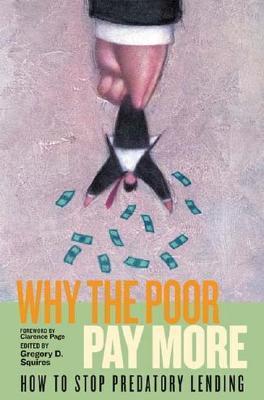
Why the Poor Pay More: How to Stop Predatory Lending
The proverbial American dream of owning a home has become an all-too-real nightmare for a growing number of families. The most vulnerable segments of our society―including minorities, the elderly, and working families―are being victimized by financiers who lure them into commitments they cannot fulfill. Collectively known as predatory lending, these practices include offering higher interest rates than can be justified by the risk, high pre-payment penalties that lock families into exploitative loans, and monstrous balloon payments that often result in default and the loss of the home. The net result can be damage to one's credit rating, bankruptcy, and even the loss of lifelong savings. Why the Poor Pay More is an incisive exposure of these how they have evolved, why they have become so prevalent in recent years, and how their negative effects can be quantified. It features in-depth analysis from prominent scholars, legal experts, and community leaders, who shed new light on the social, political, and economic consequences of predatory lending. Why the Poor Pay More is much more than an indictment of these insidious discriminatory practices. It is a call to arms for anyone concerned about how the financial-political system can be corrupted to serve the needs of the wealthy. Highlighting community initiatives already underway to combat predatory lending and an extensive listing of practical resources, Why the Poor Pay More outlines active roles that individuals, advocacy groups, financial and legal service providers, and policymakers can play in reversing this destructive trend.
248 pages, Hardcover
First published October 30, 2004
Ratings & Reviews
Friends & Following
Create a free account to discover what your friends think of this book!
Community Reviews
Displaying 1 - 1 of 1 review

June 11, 2010
People are getting into the debt at an alarming rate in the United States. While pundits have often blamed this on the American lack of frugality and financial responsibility, a group of economist are pointing their fingers to another culprit-the predatory lending institutions.
By definition, predatory lending is when credit is extended to those who do not deserve credit. These include the low income, the uneducated and the financially illiterate in general. These people are in turn charged exorbitant interest rates due to the extra risks that financial institutions have to bear with regards to these credits.
What results are chronic poverty and widening income gaps. The poor are perpetually trapped in a cycle of debt while the rich enjoy lower rates on credit which far better terms.
The book is a series of essays that documents several studies on the subject. Most have suggested viable solutions but it remains to be seen if the measures will be implemented in the near future.
By definition, predatory lending is when credit is extended to those who do not deserve credit. These include the low income, the uneducated and the financially illiterate in general. These people are in turn charged exorbitant interest rates due to the extra risks that financial institutions have to bear with regards to these credits.
What results are chronic poverty and widening income gaps. The poor are perpetually trapped in a cycle of debt while the rich enjoy lower rates on credit which far better terms.
The book is a series of essays that documents several studies on the subject. Most have suggested viable solutions but it remains to be seen if the measures will be implemented in the near future.
Displaying 1 - 1 of 1 review