

What do you think?

L'ultimo scapolo
Vite di coppia fatte di contraddizioni: tradimenti e condivisione, passioni adultere e sicurezze tutte casalinghe. Jay McInerney punta la sua lente sulla vita quotidiana di coppie dall’immagine invidiabile, coppie con un rapporto segnato a volte da grande passione, ma quasi sempre misterioso, ricco di silenzi e di segreti, più che di confidenza e di abbandono reciproco. E mentre le giornate scorrono - tra amplessi frettolosi, gravidanze interrotte ma in fondo desiderate, litigi familiari che non si fermano neanche di fronte a un lutto - la commedia umana va avanti, irresistibile e grottesca, malinconica e insidiosa, comunque sempre struggente.
364 pages, Paperback
First published January 1, 2009
About the author
Jay McInerney
62 books1,205 followersJohn Barrett McInerney Jr. is an American writer. His novels include Bright Lights, Big City, Ransom, Story of My Life, Brightness Falls, and The Last of the Savages. He edited The Penguin Book of New American Voices, wrote the screenplay for the 1988 film adaptation of Bright Lights, Big City, and co-wrote the screenplay for the television film Gia, which starred Angelina Jolie. He is the wine columnist for House & Garden magazine, and his essays on wine have been collected in Bacchus & Me (2000) and A Hedonist in the Cellar (2006). His most recent novel is titled The Good Life, published in 2006.
Ratings & Reviews
Friends & Following
Create a free account to discover what your friends think of this book!
Community Reviews
Displaying 1 - 30 of 35 reviews
February 12, 2012
This is the latest collection of short stories by Jay McInerney, who shot to prominence in 1984 with the publication of Bright Lights, Big City. The collection, largely peopled by those who call New York or its neighbouring environs home, is clearly set in a post 9/11 world.
While one story, 'I Love you, Honey', directly deals with the events of that day, there are oblique references to the day that changed America forever, and scarred that country and New Yorkers.
But this is not a collection about that tragic day, or its aftermath. It's a book peopled by ordinary people doing all the things that people do: bruise and punish each other with their infidelities, set out to marry rich men and have Thanksgiving parties where the muck of the past is raked through with regularity.
Although it's set mainly in New York, several of the characters have roots in the South, and the languid, humid South is contrasted with the more frenetic, neurotic mores of the north.
There are some lighter, fun pieces too, and McInerney shows a witty hand in 'Summary Judgement' in which a social climber who has "passed the first blush of youth", sets out to capture a rich man after the death of her husband leaves her in debt. The story is cattily delicious: there are hints of impropriety in Alysha de Sante's past, there are underhand dealings as she sets out to snag a businessman, and we watch as she reels him in, and cheer when she makes a fatal error.
Infidelity and its effects are dealt with in three of the stories, the aforementioned 'I Love you, Honey', 'Invisible Fences' and 'Putting Daisy Down'. In each of these tightly constructed tales, the married couples punish each other in ways that are scarcely imaginable. A woman has abortions to punish the wandering eye of her husband in the ironically titled, 'I Love you, Honey'; in 'Putting Daisy Down', a title that gives away the ending, a woman demands her husband put his 10-year-old cat to sleep, but pays the price as the story closes, and again we cheer.
Meanwhile, in 'Invisible Fences' Susan must pay the price for her infidelity as she and her husband start picking up men in bars to take home at night.
Observes her husband Dean: "When you're playing outside the regular borders, it's important to have rules and boundaries." But playing outside of the rules doesn't always lead to happiness: "I made her tell me everything. I was tortured by visions of her treachery, by my own roiling filthy imagination ? until we both realised that the actual circumstances would never be enough to match the visions in my head."
In 'The Madonna of Turkey Season' we are introduced to a family who have lost their mother and wife to cancer. The scene is played with yearly frequency: the father becoming maudlin, the brothers pushing against each other in ways that cannot be forgiven. At the heart of the story is the unhappiness the family feels over one of the brothers, Brian, who has written a play, subsequently made into a film, which explores the death of their mother and introduces a note of infidelity in the relationship of the parents.
It's hard to make doubt disappear once the seed has been planted, and hard to forgive the brother for planting the seed. Hard too, not to believe that Brian may have been privy to a deathbed confession none of the others were witness to. And it's hard to see the failings of a mother who has died too young: "We always believed in you Mother, more than anything, but we never for a moment thought you were human."
In 'Penelope on the Pond' a woman waits in a remote pond for her lover, a senator campaigning for the president, and yet to announce a forthcoming divorce. Out of sight of the tabloids, it's ultimately not the blogger journalist who will drive a knife into their relationship, but the smooth-talking wannabe president himself.
In the quietly thoughtful 'The Last Bachelor' Ginny encounters her long lost lover, AG, in the weekend before his first marriage at the ripe age of 40. The story passes back in time, detailing the dalliances of AG, who feels it's time to finally settle down.
When he visits Ginny the night before his nuptials, bringing lines of coke, old secrets are revealed, old loves given an audience. This is a tender, wise story, somewhat sad in execution. And sometimes, seems to be the message of the story, it really is too late to do the right thing.
While one story, 'I Love you, Honey', directly deals with the events of that day, there are oblique references to the day that changed America forever, and scarred that country and New Yorkers.
But this is not a collection about that tragic day, or its aftermath. It's a book peopled by ordinary people doing all the things that people do: bruise and punish each other with their infidelities, set out to marry rich men and have Thanksgiving parties where the muck of the past is raked through with regularity.
Although it's set mainly in New York, several of the characters have roots in the South, and the languid, humid South is contrasted with the more frenetic, neurotic mores of the north.
There are some lighter, fun pieces too, and McInerney shows a witty hand in 'Summary Judgement' in which a social climber who has "passed the first blush of youth", sets out to capture a rich man after the death of her husband leaves her in debt. The story is cattily delicious: there are hints of impropriety in Alysha de Sante's past, there are underhand dealings as she sets out to snag a businessman, and we watch as she reels him in, and cheer when she makes a fatal error.
Infidelity and its effects are dealt with in three of the stories, the aforementioned 'I Love you, Honey', 'Invisible Fences' and 'Putting Daisy Down'. In each of these tightly constructed tales, the married couples punish each other in ways that are scarcely imaginable. A woman has abortions to punish the wandering eye of her husband in the ironically titled, 'I Love you, Honey'; in 'Putting Daisy Down', a title that gives away the ending, a woman demands her husband put his 10-year-old cat to sleep, but pays the price as the story closes, and again we cheer.
Meanwhile, in 'Invisible Fences' Susan must pay the price for her infidelity as she and her husband start picking up men in bars to take home at night.
Observes her husband Dean: "When you're playing outside the regular borders, it's important to have rules and boundaries." But playing outside of the rules doesn't always lead to happiness: "I made her tell me everything. I was tortured by visions of her treachery, by my own roiling filthy imagination ? until we both realised that the actual circumstances would never be enough to match the visions in my head."
In 'The Madonna of Turkey Season' we are introduced to a family who have lost their mother and wife to cancer. The scene is played with yearly frequency: the father becoming maudlin, the brothers pushing against each other in ways that cannot be forgiven. At the heart of the story is the unhappiness the family feels over one of the brothers, Brian, who has written a play, subsequently made into a film, which explores the death of their mother and introduces a note of infidelity in the relationship of the parents.
It's hard to make doubt disappear once the seed has been planted, and hard to forgive the brother for planting the seed. Hard too, not to believe that Brian may have been privy to a deathbed confession none of the others were witness to. And it's hard to see the failings of a mother who has died too young: "We always believed in you Mother, more than anything, but we never for a moment thought you were human."
In 'Penelope on the Pond' a woman waits in a remote pond for her lover, a senator campaigning for the president, and yet to announce a forthcoming divorce. Out of sight of the tabloids, it's ultimately not the blogger journalist who will drive a knife into their relationship, but the smooth-talking wannabe president himself.
In the quietly thoughtful 'The Last Bachelor' Ginny encounters her long lost lover, AG, in the weekend before his first marriage at the ripe age of 40. The story passes back in time, detailing the dalliances of AG, who feels it's time to finally settle down.
When he visits Ginny the night before his nuptials, bringing lines of coke, old secrets are revealed, old loves given an audience. This is a tender, wise story, somewhat sad in execution. And sometimes, seems to be the message of the story, it really is too late to do the right thing.
December 23, 2013
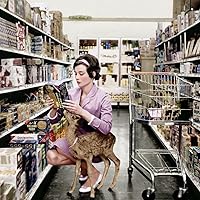
3.7 stars: good - well written - stories of rich (on the whole) New Yorkers (often adopted NYers), mainly media types, writers, film people, but also magnates and politicians attending parties and having lovers secreted in hideaways. All characters are well drawn and there are many funny moments. In one a wife becomes so attached to her potbellied pig she takes it to bed, in another a mother shoots her son in the arse (should say 'ass' I suppose) claiming to mistake him for a burglar. McInerney also exposes the class system in apparently classless USA, eg the woman who proves snobbish about waiters. Everyone's looking to upgrade to better lovers, better lifestyles. I enjoyed them all but felt maybe that was my fill of this type of story for now. Bernard McLaverty recently said the the short story is like a shot of a spirit taken alone at night (as opposed to a novel which is like a pint at the bar). This book was like a long line of G&T's drunk one after the other. Invigorating, bubbly: will get you drunk.

July 24, 2011
This collection of short fiction showcases the author's fine skill with words and demonstrates writing that is effortless and sleek, like a sexy sports car that handles well but is actually reliable and never breaks down. All of the stories deal with malcontent, disappointment, lost opportunity, and infidelity in some shape or form, in which context McInerney paints short, complex psychologies that astound and fascinate. A quick book to read but one I will remember for some time to come.

October 15, 2014
Jay McInerney is a great author, who writes with grace. I liked his style. The stories are good, but sometimes slightly bizarre and most of all tragic. They ask us the question what shape love takes in our world. Can we truly love in the long run? Doesn't the spark always die, sooner rather than later? Don't people always fall back in old habits? This collection is in its fiction a nice insight into the yuppie world of existence in (mostly) New York. It's also slightly discomforting.

November 2, 2010
Cannot really rate this book: I left it as soon as I realised that it was a collection of short stories. I am not a fan of short stories...

September 25, 2012
I am greatly pleased with this collection - on two fronts - it was a birthday present - secondly and most importantly all the stories worked for me and entertained!

May 7, 2014
These stories are great. Entertaining, amusing and chatty. You feel you know the people involved.

March 22, 2026
I bought this from the Vinnies in Glebe along with the Roald Dahl collection, because I liked its cover. That copy I had out on the ledge of my loft bedroom when Natalia came; I remember her distractedly flipping through the early pages of that and also the Martin Amis biography I couldn't bring myself to finish (too much millennial-adjacent humour though he's like Gen X at the youngest, and too much weirdness about Jewish people — seriously). I don't remember what I was doing on Parramatta Road anymore. My memory these days are just concentrated snapshots of random moments, devoid of context, situated in the black hole of my daily life. This book was dirty around the edges of the cover, and its exposed fore-edges are spotted with dark yellow mould, yet it was displayed, on a shelf high up to the left of the counter, proudly erect like some pre-loved Crown jewel. I had to stand on the tips of my toes, and use my fingers to awkwardly edge the book and the black metal stand it rested on towards me, while trying to ignore that fact that my full pit was probably in the face of the volunteer cashier. Whatever. It was summer.
On the actual substance: I find myself disagreeing with some of the endings, and many of the short story titles. The progression of the novel (the collection?) feels like a plane taking off, beginning with grounded concepts about the middle and working classes, so real I can feel them, and ending amongst the peers of Bret Easton Ellis, the rich and the glamorous, up in the untouchable sky. To read Ellis' peer is to understand the criticism leveraged at Ellis himself. I guess you really could call him an abuser of Carver's style. To take one negative facet of his work and exaggerate (okay, and sort of beat to death) it across an entire oeuvre does seem a little.... much. I still love him, though. The Shards changed my fucking life in a way that it never can again, no matter how many times I'll continue to try re-reading it.
The book has some strange politics at some point, but so long as it isn't the depressive omin-invasive nihilism of Ellis I'll take it. If anything, McInerney's stance on imperialism, war, race, sexual politics are too advanced in some places, but then strangely vague and perhaps regressive in others, if that makes sense. That one about the cuck, where a white couple attempts to initiate a young black man into their bedroom is still throwing me a bit...
I guess background and history does do a lot to influence someone's writerly interests. Ellis is from LA, California, and so apart from name-dropping every street known to cinematic man, canyons and coyotes, you don't get much else. When I read his work, I always envision West Harbour. McInerney must be from the South, and the way the stories repeatedly return to class, manner, language, and hierarchy felt fresh. Interesting that this was only really introduced towards the end, along with heiresses, sons and daughters of magnates, away from New York and into Southern wealth deeply steeped in Confederate history. Very interesting.
Ultimately, the review speaks for itself. Look how much I had to say. I feel like I sort of cheated Joyce, because Portrait was read over the course of over a month, in sporadic bursts when I could actually find the mental power to concentrate and try to decipher the sentences. This was, like the one I read before (what was it? I've already forgotten, holy shit) was easy, simple, grabbing. I finished it in what has to be less than 24 hours. So I guess it truly must be good. "Good" because easy. It's fucked.
Next up I'm waiting on my request for a Clarice Lispector from the Chatswood Library, and if City of Sydney Library catalogue turns up dry then I'll go with the electronic copy of The Last of the Savages for my next McInerney. But I really do hate reading on my laptop.
One Nation swept the Liberals in South Australia, Trump is threatening to "obliterate" Iran's power plants in the next 48 hours if they don't open the Strait of Hormuz and the supply chain delays are about to hit Australian markets. I hope we tax those fucking mining and gas exporting companies. Yesterday I opened a Google Drive folder from a link pasted in the comment section of a Reel titled "exposé," filled with screenshots incriminating Roger Rari and his friends for being weird. Weird about women, weird about race, weird and almost delusional about their path to fame and notoriety. I wonder if he ever thinks about Iran. (I) Stay paranoid.
On the actual substance: I find myself disagreeing with some of the endings, and many of the short story titles. The progression of the novel (the collection?) feels like a plane taking off, beginning with grounded concepts about the middle and working classes, so real I can feel them, and ending amongst the peers of Bret Easton Ellis, the rich and the glamorous, up in the untouchable sky. To read Ellis' peer is to understand the criticism leveraged at Ellis himself. I guess you really could call him an abuser of Carver's style. To take one negative facet of his work and exaggerate (okay, and sort of beat to death) it across an entire oeuvre does seem a little.... much. I still love him, though. The Shards changed my fucking life in a way that it never can again, no matter how many times I'll continue to try re-reading it.
The book has some strange politics at some point, but so long as it isn't the depressive omin-invasive nihilism of Ellis I'll take it. If anything, McInerney's stance on imperialism, war, race, sexual politics are too advanced in some places, but then strangely vague and perhaps regressive in others, if that makes sense. That one about the cuck, where a white couple attempts to initiate a young black man into their bedroom is still throwing me a bit...
I guess background and history does do a lot to influence someone's writerly interests. Ellis is from LA, California, and so apart from name-dropping every street known to cinematic man, canyons and coyotes, you don't get much else. When I read his work, I always envision West Harbour. McInerney must be from the South, and the way the stories repeatedly return to class, manner, language, and hierarchy felt fresh. Interesting that this was only really introduced towards the end, along with heiresses, sons and daughters of magnates, away from New York and into Southern wealth deeply steeped in Confederate history. Very interesting.
Ultimately, the review speaks for itself. Look how much I had to say. I feel like I sort of cheated Joyce, because Portrait was read over the course of over a month, in sporadic bursts when I could actually find the mental power to concentrate and try to decipher the sentences. This was, like the one I read before (what was it? I've already forgotten, holy shit) was easy, simple, grabbing. I finished it in what has to be less than 24 hours. So I guess it truly must be good. "Good" because easy. It's fucked.
Next up I'm waiting on my request for a Clarice Lispector from the Chatswood Library, and if City of Sydney Library catalogue turns up dry then I'll go with the electronic copy of The Last of the Savages for my next McInerney. But I really do hate reading on my laptop.
One Nation swept the Liberals in South Australia, Trump is threatening to "obliterate" Iran's power plants in the next 48 hours if they don't open the Strait of Hormuz and the supply chain delays are about to hit Australian markets. I hope we tax those fucking mining and gas exporting companies. Yesterday I opened a Google Drive folder from a link pasted in the comment section of a Reel titled "exposé," filled with screenshots incriminating Roger Rari and his friends for being weird. Weird about women, weird about race, weird and almost delusional about their path to fame and notoriety. I wonder if he ever thinks about Iran. (I) Stay paranoid.
This entire review has been hidden because of spoilers.

October 3, 2020
Whilst the author has produced some exceptional work in the past, I don't feel that this lives up to his better books. Like so many of the Bright Young Authors of that time, he seems to be trapped in the style and viewpoint of that era, reflecting a time and range of individuals who are not as interesting as they once were (or maybe I've just got older and more cynical). So many were self-referential or attempted autobiographical in nature, and reflect a shallowness and obsession with materialism that just bores me now. The stories were entertaining enough, and some were actually very good, but overall failed to challenge, question or inspire, all of which he had achieved comprehensively earlier.
November 13, 2018
Modern Day F. Scott Fitzgerald
Jay McInerney has often been compared to Fitzgerald, and for good reason. Beyond the fact that he writes often about the rich, his writing has the same ethereal, flowing beauty that characterized much of Fitzgerald’s best writing. This collection of short stories is an excellent sampling of what makes McInerney such a joy to read.
Jay McInerney has often been compared to Fitzgerald, and for good reason. Beyond the fact that he writes often about the rich, his writing has the same ethereal, flowing beauty that characterized much of Fitzgerald’s best writing. This collection of short stories is an excellent sampling of what makes McInerney such a joy to read.

February 10, 2020
An entertaining collection of short stories that capture something of the modern decadence & despair of New York & its outlying suburbs...& the conflicts between the old manners & the new of Americans trapped in their own restricted lifestyles...trying to make sense of it all. McInerney is a past master of this 'genre'...though his light is less bright in the big city!

March 31, 2022
Dodici storie una più bella dell’altra, scritte tutte con un registro diverso, come se sapessi entrare in mondi così culturalmente e socialmente diversi come si entra da una porta. Jay, sei magnifico
March 10, 2025
Also a kind of forgettable short story collection. THIS one is what I read to see his old characters revisited. I think craft-wise it's a good example of showing how characters change and grow. Which Jay is the master of
September 1, 2025
A collection of short stories that has mainly the (cultural) elites of New York as its protagonists. While well written, none of the stories really interested me. The word that often popped into my head while reading was 'Schadenfreude' and I don't really care for that.


April 9, 2020
book 22

October 5, 2020
'Sleeping with pills', 'I love you, Honey' & 'Invisible Fences' are the only that i found good stories. Other ones just flew past me!

May 7, 2023
A very fine writer, this is far from his best.
June 26, 2024
One quick note:
Anyone who has read McInerney’s “Story of My Life” will recognize Alison Poole in “Penelope of the Pond”.
Anyone who has read McInerney’s “Story of My Life” will recognize Alison Poole in “Penelope of the Pond”.

January 27, 2014
Options alpha) Una corsa incessante nei ventisei anni di produzione letteraria del pi� acuto cantore della brillante citt� delle luci, dagli esordi quando fu introdotto ai lettori italiani da Fernanda Pivano, all'epilogo riscoperto dell'ultimo romanzo "Good Life". Presenti alcune chicche, le alt-take o il racconto embrione (come spesso faceva Chandler, che aveva i suoi racconti di riserva quando doveva fare una sceneggiatura o trarre un romanzo) di tre suoi famosissimi romanzi: Le mille luci di New York, Tanto per Cambiare, e Professione Modella. Spicca su tutti il racconto title-track. bravo) Caro Jay, quanto ti ho voluto bene fratello in questi ventisei anni, leggendo questo caro volume dove mi rifili un finale alternativo ma sostanzialmente identico di LMLdNY, un riciclo di quella bimbo dell'Alison Poole che utilizzi per dimostrare che anche le squinzie soffrono poi fai lo stracotto e le polpette con gli avanzi di Philomena e ce le servi come Blue Plate Special, molto apprezzabile l'alt-take di Good Life, l'ultimo scapolo, quello della rimpatriata attorno al tacchino e la marcia pacifista di Corrine. Per il resto, permettimi di dire, niente di personale, siamo uomini ma il carnevale organizzato coi coriandoli di carta igienica usata, il circo dei tuoi personaggi dove devono prendere la polverina per aver il coraggio di provarci con una donna, mostrare un rotolo di $ o un deck di carte di credito per farsi accogliere in lei, reincipriarsi il naso per aver la presenza di spirito per entrarvi (e magari anche un rombetto color puffo per riuscirci) e fanno quelli in mezzo ai problemi, alle crisi, ai magoni, si danno arie da stuntman delle vicissitudini, da acrobati della vita quando hanno sette reti di sicurezza sotto al culo e un airbag, permettimi di dire che incominciano a darmi un po' fastidio; non fosse altro che mi ricordano troppo taluni squallidi che noi eleggiamo. Dici che � tutta invidia? Invidio qualcuno s�, ma solo quando la posso curare con l'ammirazione e l� non � cosa, fidati non sono un moralista, sono solo stanco, mooolto stanco. Arrivederci a non tanto presto. (il lettore opti) Colonna sonora: Eric Clapton - Cocaine Grandmaster Melle Mel - White lines

June 23, 2013
The excitement of some new Jay McInerney is always good news to me. Apart from when he is writing about the one subject I am trying to stay away from. That is wine, something that has extracted from me Paul Torday's fiction temporarily also. But a collection of stories that deal with all of the issues of the day, seeped in McInerney's trademark prose makes me very happy indeed. Happy enough to take a long barefoot, skip through the corn fields of Vermont or somewhere as equally as respectable or deserving of Jay's imitable homely style within his infectious and engaging prose. But not just that, there are surprises with this collection. It's not only quite graphic, but the subjects dealt within the stories are not only quite overtly sexual in parts, but the idealisms of sexuality, morals and all forms of belief are tackled with intense precision and clarity. Whether it's the couple who invite a pig into their bedroom, another who are dealing with the after effects of September 11th and the realizations of the future or those who have embraced a post traumatic open relationship trawling the bars of a small town for men for illicit threeways, he deals with a stark reality of modern New York that encapsulates the politics of the day, hope, change, racism, as well as his popular topics of the sublime and often torturous affectation of modern day relationships. Jay is a hero to a writer like me. He embodies women as much as he captures his own sex. This gives me hope too. Just like the brilliant characters he speaks of within these excellent stories that he shares with us. Plus, we get an update from the excellent characters of 'Brightness Falls', Luke and Connie in a 2003 update, during the protests against George Bush's invasion of Iraq and resulting madness, which is full of intrigue, wonder and gob smacking endearment for all involved. Excellent

May 23, 2012
-Pronto Jay? Sei sveglio?-Grmpff-Jay, sono George, il tuo editore-Credo che abbia sb...-Jay non ho sbagliato nessun numero. Mi avevi promesso il materiale la settimana scorsa. Ed era la quinta volta! E' mezzogiorno e mezzo di sabato. Se lunedì mattina non lo ricevo, addìo libro e addìo contratto. Puoi dire bye alla tua amica boliviana per un pezzo perché ti citerò per danni e per riavere l'anticipo, e non... click, tuuuu. Dev'essere andata così, più o meno. Perché una raccolta così raffazzonata, frettolosa e ineguale non s'era vista da tempo, con un racconto che è semplicemente l'ultimo capitolo di 'Riscatto' ripreso paro paro; un altro che è il-tipico-pezzo-di-Mc-Inerney già apparso su mille riviste, eccetera. Eppure quest'uomo ha un talento irritante, direi immorale, che gli consente comunque di cavarsela alla grande. Saranno scritti con la sinistra, ma questi racconti rimangono di gran lunga superiori alla media dei sofferti, curatissimi e leccati prodottini da scuola di scrittura creativa che tanto infestano i nostri scaffali. Il che è profondamente ingiusto per tutti quelli che credono che il risultato debba sempre essere proporzionato allo sforzo (chi scrive è spesso preda di calvinismi fuori tempo massimo). 'La madonna nel giorno del Ringraziamento', e 'L'ultimo scapolo' da soli valgono il libro, con il loro timbro fitzgeraldiano, la struggente e amara nostalgia dell'età dell'oro perduta.
August 12, 2013
The Last Bachelor is a collection of short stories by Jay McInerney. It is written after his very famous "Bright Lights, Big City" which unfortunately I havent read so far.
The stories are all set in New York, in fact you can say in the upper echelons of NY. All stories at least most of them are around the dark feelings and nature that people have deep down and are sometimes thrown out. Infidelity, jealousy, unusual relationships, sexual adventures, trying to become popular or rich by exploiting other's weaknesses or stories etc.
Some stories are funny, some are witty, some weid, some satirical and some just dark but almost are very well written and easy to read. You enjoy all of them though some are clearly much better than the rest.
I also felt that some stories are left a bit unfinished leaving the imagination of the reader to figure out.
Overall, its not the best collection that I have read but its still a good read.
The stories are all set in New York, in fact you can say in the upper echelons of NY. All stories at least most of them are around the dark feelings and nature that people have deep down and are sometimes thrown out. Infidelity, jealousy, unusual relationships, sexual adventures, trying to become popular or rich by exploiting other's weaknesses or stories etc.
Some stories are funny, some are witty, some weid, some satirical and some just dark but almost are very well written and easy to read. You enjoy all of them though some are clearly much better than the rest.
I also felt that some stories are left a bit unfinished leaving the imagination of the reader to figure out.
Overall, its not the best collection that I have read but its still a good read.
May 18, 2015
McInerney writes with a stunning clarity and crispness of prose, a forthwith smack in the face with blunt emotion. His intent is not to intrigue or prevaricate, or weave intricate plot lines around humanity's foibles. Rather he navigates on tangible wavelengths that are brazen as, say, a potbellied pig in the middle of a marital bed, or a money-hungry cougar who gets her comeuppance. Or a cheating husband's inevitable relapses. This candor is refreshing in a sea of convoluted darkness.

May 28, 2011
All about affluent New Yorkers and their bizarre lifestyles and interactions with other affluent New Yorkers.
I found his simple prose in all these tightly written short stories quite entertaining. There's a sense of loneliness and sadness in each story and they all evoke a feeling of time slipping away.
These stories were a good change after the plodding drama of 'The Good Life'.
I found his simple prose in all these tightly written short stories quite entertaining. There's a sense of loneliness and sadness in each story and they all evoke a feeling of time slipping away.
These stories were a good change after the plodding drama of 'The Good Life'.
September 14, 2012
Not sure how this hardcover copy of a book of short stories about affluent new yorkers ended up in Culburra Vinnies. Elegant and debauched and often very funny. Not sure if I would have got the rrp of $38.50 worth of enjoyment out of it but the $5 I paid was money well spent. Particularly enjoyed the last two stories.
March 30, 2009
This collection was a bit like reading the same short story over and over. Nearly all of them seemed to deal with adultery and nonfunctioning relationships.

July 11, 2010
would give the collection 3 stars overall if not for "the Madonna of turkey season" which elevates it to 4 stars. reread it twice and laughed each time.

Read
February 6, 2012love McInerney's writing so much. However I do prefer his full length novels to short stories.
But if you're an aficionado of his writing then you'll definitely enjoy the read.
But if you're an aficionado of his writing then you'll definitely enjoy the read.
Displaying 1 - 30 of 35 reviews