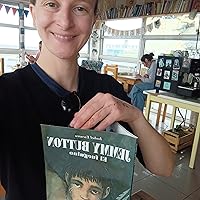
[Milano]. 24 cm. 181 p. : fumetti. Encuadernacin en tapa blanda de editorial ilustrada. Idioma Italiano. Tascabili Pratt ; 23 .. Este libro es de segunda mano y tiene o puede tener marcas y seales de su anterior propietario. 9788817031349
Hugo Pratt, born Ugo Eugenio Prat (1927–1995), was an Italian comic book writer and artist. Internationally known for Corto Maltese, a series of adventure comics first published in Italy and France between 1967 and 1991, Pratt is regarded as a pioneer of the literary graphic novel.
Born in Rimini, Italy, Pratt spent his childhood in Venice in a cosmopolitan family environment. In 1937, ten-years old Hugo moved with his parents to Ethiopia, East Africa, following the Italian occupation of the country. Pratt's father eventually died as a prisoner of war in 1942. Hugo himself and his mother spent some time in a British prison camp in Africa, before being sent back to Venice. This childhood experiences shaped Pratt's fascination with military uniforms, machineries and settings, a visual constant in most of his adult works. As a young artist in post-war Italy, Pratt was part of the so-called 'Venice Group', which also included cartoonists Alberto Ongaro, Mario Faustinelli. Their magazine Asso di Picche, launched in 1945, mostly featured adventure comics. In 1949 Pratt moved to Buenos Aires, Argentina, where he worked for various local publishers and interacted with well-known Argentine cartoonists, most notably Alberto Breccia and Solano López, while also teaching at the Escuela Panamericana de Arte. During this period he produced his first notable comic books: Sgt. Kirk and Ernie Pike, written by Héctor Germán Oesterheld; Anna nella jungla, Capitan Cormorant and Wheeling, as a complete author. From the summer of 1959 to the summer of 1960, Pratt lived in London drawing war comics by British scriptwriters for Fleetway Publications. He returned to Argentina for a couple more years, then moved back to Italy in 1962. Here he started collaborating with the comics magazine Il Corriere dei Piccoli, for which he adapted several classics, including works by Robert Louis Stevenson. In 1967, Hugo Pratt and entrepreneur Florenzo Ivaldi created the comics magazine Il Sergente Kirk, named after one of Pratt's original characters. Pratt's most famous work, Una ballata del mare salato (1967, The Ballad of the Salty Sea) was serialised in the pages of this magazine. The story can be seen as one of the first modern graphic novels. It also introduced Pratt's best known character, mariner and adventurer Corto Maltese. Corto became the protagonist of its own series three years later in the French comics magazine Pif gadget. Pratt would continue releasing new Corto Maltese books every few years until 1991. Corto's stories are set in various parts of the world, in a given moment in the first three decades of the 20th century. They often tangently deal with real historical events or real historical figures. The series gave Pratt international notoriety, being eventually translated into fifteen languages. Pratt's other works include Gli scorpioni del deserto (1969-1992), a series of military adventures set in East Africa during WWII, and a few one-shots published for Bonelli's comic magazine Un Uomo Un'Avventura ('One Man One Adventure'), most notably the short story Jesuit Joe (1980, The Man from the Great North). He also scripted a couple of stories for his pupil Milo Manara. Pratt lived in France from 1970 to 1984, then in Switzerland till his death from bowel cancer in 1995.
This may be my favorite of the series yet. It’s set in the Far East in the aftermath of the Russian Revolution and the Great War, with Bolshevism spreading in all directions, and, as always, Pratt brilliantly reconstructs the period’s complicated, dangerous web of political intrigue and conflicting loyalties. The story begins with Corto in Hong Kong and then moves to Shangai, then to the border between Mongolia and Central Siberia, and finally to Manchuria in his involvement in the pursuit of a train carrying the gold of the Tsars.
This was another epic adventure of Corto who is seeking the Tsar's treasure and who will cross paths with many historical figures of revolutionary Russia along with - as always - the enigmatic Rasputin.
When I want to relax, I read an essay by Engels. When I want to read something serious, I read Corto Maltese. Umberto Eco
The season hasn't been kind. Shit, 2016 was rather rough from the beginning. My soul has been in slow hemorrhage for over a week and my wife and I turned to Mr. Robot. Then my wife had the flu. Left in a slow drift, I picked up this novel as I did enjoy the compendium that Joel gave me for the Yule.
Titular man of adventure goes to Siberia during the blurred glory of the late Russian Civil War when the US and the west sent troops to support the White/Czarist forces against the Bolshies. The Wild East in its splendor, Hugo Pratt is a master at this. If only Flashman could manage such.
"Quando Veneza minha... ... sobre os telhados das tuas casas... ... um sol glorioso... ... se derramar... ... deixa-me saber... ... se te agrada que te compare... ... a uma bela donzela despreocupada."
Una storia cupa, tra Mongolia, Manciuria e Siberia, su treni corazzati che corrono attraverso paesaggi deserti e innevati tra il 1919 e il 1920. Signori della guerra cinesi, ma soprattutto i "bianchi" gli avversari irriducibili dei bolscevichi trionfanti. E soprattutto lui, Roman Nicolaus von Ungern-Sternberg, il "barone sanguinario" che si incontra con Corto Maltese e per una volta usa clemenza e gli salva la vita, per simpatia. Pratt accenna al sogno folle e visionario del barone sanguinario: restaurare l'impero di Gensis Khan ripartendo dalla Mongolia e dai cavalieri mongoli, per abbattere e soffocare l'odiata rivoluzione bolscevica, non solo, per ridare vitalità al decadente e vizioso occidente...
The same criticism as the preceding volume applies - CM being more of an observer than a participant in the stories - and the problem is exacerbated by the entire volume being a continuous tale rather that a collection of adventures, resulting in a loss of interest early that is never regained.
There are some people who really like Corto Maltese. I am not one of those people. I find the aesthetics, in all the comics, a bit dry, the characters unappealing, the story slow and the dialogue stiff.
Nonetheless, this particular adventure is pretty fun and wild, and you learn a lot about history and culture in the course of its exotic story.
Four stars for a book I find somewhat off-putting might seem like an overkill. Sure, call it elitism, but I admire it too much to give it anything less. There's something pretty amazing about the whole thing. Pratt was pushing the boundaries of what's possible in a comic book form, even if I don't particularly like the way it went about doing it.
Em que pensas Corto? Em Artur Rimbaud, um poeta francês ....Neste momento não me sai do pensamento.
Para me afastar um pouco da realidade do Gulag fui tirar este livro à estante. Não saí do mesmo sítio é certo, mas esta aventura de Corto e Rasputine tirou-me, por momentos, do pensamento a Sibéria de Soljenitsin .
Прочитал второй опубликованный на русском языке том приключений всемирно известного и так любимого, например, Умберто Эко пирата и авантюриста Корто Мальтезе под брутальным названием «Сибирь» (хотя если глянуть в википедию, выясняется, что между ею и «Балладой соленого моря» было еще несколько историй; а я так надеялся, что, хотя бы в случае европейских комиксов, можно не париться и просто идти по следу альбомов-банддессинешек; ну да ладно, не для того мы двадцать лет в комиксах Большой Двойки ковырялись, чтоб такого пугаться).
Если «Баллада» имела все признаки попытки Уго Праттом визуально рассказать вполне себе классический приключенческий роман (графический роман, йеп), то «Сибирь» гораздо больше напоминает вышедший из той же зиготы кинофильм: что-то на стыке вестерна и heist movie, слегка приправленного джеймсбондовщиной того покроя, когда ее не уносит за грань мироощущения «Остина Пауэрса», и по-хорошему так предвосхищающего «Индиану Джонса».
Экзотической (кавычки поставить по желанию) локацией на сей раз выступает та самая вынесенная в название Сибирь времен Революции, что представляет для нас особый интерес. То есть мы тут имеем комикс из середины семидесятых от итальянского автора про Россию, а клюквы, знаете ли, особо и нет! Есть романтизация и вольности приключенческого жанра, куда же без них, но в количестве, не превышающем их эквивалент в, например, «Неуловимых мстителях» - но только показанные с обратной стороны соцпатриотической линзы. Короче, ресерчил Пратт очень старательно – это чувствуется.
В комиксе снова появляется Распутин, и окончательно цементируется, подозреваю, продлившаяся еще долго динамика а-ля броманс между ним и Корто. Проблема лишь в том, что лично мне она опостылела уже к концу «Баллады». Не буду оправдываться – это стопроцентная вкусовщина: видимо, я просто уже наелся подобных препирательств за годы потребления различного развлекательного контента.
Несмотря на обилие экшена и БРОНЕПОЕЗДА-WARFARE, пэйсинг в комиксе все еще далек от совершенства. Хотя, если задуматься, даже в таком виде он на десять лет опередил достижения американской индустрии последовательных картинок.
Wonderful stuff, as ever, if you like sweeping adventure rooted in historical reality and rich with cultural detail. And I should mention the lovely production job done by Eurocomics. This time the setting is post WWI Russia (& China) in the final throes of the Bolshevik revolution, with armoured trains, an American expeditionary force looking to collect a billion dollars and a varied cast of warlords and adventurers.
The art is sublimely simple, with an economy of line that captures so much but leaves breathing space for the rich textual detail that enriches these stories.
This is an epic tale so, sweeping past chapters Two, Three, Four & Six: 'The Prisoner Of Chang'; 'The Romantic Duchess'; 'The Savage Division' & 'The End Of The Black Dragon', I'll attempt to give you an impression of its contents with a staccato summary of the first chapter and a more impressionist take on another.
Chapter One: 'The Red Lanterns' (pp 9-24) - The secret, magical, places of Venice; Goldtooth; Dante; "today is December 34th and New Year's hasn't come yet"; Sir Thomas Moore's 'Utopia', "what else is to be concluded from this, but that you first make thieves and then punish them" (all on the first page); The Book of Changes, I Ching; an inauspicious omen; 'Long Life'; secret societies as a geometry lesson; The 'Triad'; 'Brother of the Night'; a Sikh policeman; "war over in Europe"; Krazy Kat; Rasputin; Hong Kong; a 'Gentleman of Fortune', not a scoundrel; "I could kill you for that"; "a policeman must be suspicious of everything and everybody"; a disreputable neighborhood downtown .../... full of thieves and beautiful women; "the familiar smell of peach blossoms"; Hu; Wang; The Red Lanterns; scented paper, "do you remember a morning of butterflies"; a knife; that laugh; "that's not my knife"; a gun; "the Red Lanterns greet you"; Admiral Kolchak's gold train in Siberia; "everybody and everything that moves east of Moscow will be out to get us...".
Chapter Five: 'Ungern Of Mongolia' (pp 83-97) - in which Ungern quotes Coleridge (In Xanadu did Kubla Khan...), we discover that Corto's trademark hat is "the cap of an artillery officer of the Guard ... a pretty exclusive corps" and we learn Corto is in love. Nothing direct here of course (you have to wait till the next chapter to have your suspicions confirmed), but you're shown his distraction while being rounded up by rifle toting horsemen and made 'prisoners of the Asian cavalry division of Baron Roman Von Ungern-Sternberg' in the midst of the vast snowy Siberian waste - "When, my Venice.../...over the roofs of your houses.../...the sun in its glory..../...unfolds.../...let me say, if..../...the comparison pleases you.../...that you resemble a beautiful insouciant girl." ... "All I can think about at the moment is a Venetian vernacular poet, Eugenio Genero..." (who, the wonders of Wikipedia and Google translate tell us is Hugo Pratt's grandfather).
Hugo Pratt fá delle ricostruzioni storiche molto dettagliate e attente. Corto Maltese si trova in una "zona di frontiera", complessa, e i cui equilibri politici si frantumano e vengono ricreati continuamente. I personaggi principali non sono da meno, molti di essi sono instabili e le loro motivazioni e i fattori chiave che li muovono sono, in alcuni casi idealistici, poltici, ma spesso mercenari. Uno dei personaggi presenti in questo fumetto é Ungern Khan. La cosa che mi é rimasta di piú in mente é la sua descrizione nel fumetto, che effettivamente conbacia con la descrizione storica del vero personaggio. Non sapendo niente della storia della Mongolia, questo fumetto mi ha introdotta a eventi storici e personaggi storici realmente accaduti e complessi. Hugo Pratt ha dato origine a questo fumetto storico e piú in generale fumetto come medium di informazioni complesse e dettagliate. é impareggiabile e unico. L'attenzione ai dettagli, come ad esempio i treni, le barche, le divise, i vestiti ma anche il carattere dei personaggi che si sviluppa durante la storia é il lavoro di un artista in tutti i sensi, non semplicemente disegnatore.
Il rating alla storia sarebbe di quattro stelle anziché cinque, perché la "Ballata del Mar Salato" rimane l'opera migliore di Hugo Pratt che ho letto sin ora. La narrativa é incalzante e a tratti fulminea. Questo non é necessariamente un male perché durante una gurra con alleanze che si infrangono e ricostruiscono non é insolito.
Δεν υπάρχει άλλη λέξη για να περιγράψει αυτή την ονειρική περιπέτεια πέρα από την "μαγεία". Δράση, διεθνής κατασκοπία, παραμιλιταριστικές οργανώσεις, κινέζικος υπόκοσμος,απομεινάρια του μεγάλου πολέμου, ένας φλεγόμενος Κόρτο με ραγισμένη καρδιά, θάλασσα, βουνό, χιόνι, τραίνα, χρυσός, προδοσία, εσωτερική αναζήτηση, σκιτσάρα. Αυτό το άλμπουμ τα είχε όλα.
Δεν έχω ούτε ένα παράπονο. Ούτε ένα. Και σε σχέση με την back-to-back κριτική μου στην Μπαλάντα της Αλμυρής Θαλάσσης, μου άρεσε πολύ παραπάνω και σε σχέδιο και σε υπόθεση. Πολύ. Και ας δυσαρεστήσω μερικούς. Πιο πραγματιστικό, πιο ωμό. Η αίσθηση του απεγνωσμένου κυνηγιού για ελευθερία ψυχή τε και σώματι είναι διάχυτη σε κάθε σελίδα, πάντα όμως υποβόσκουσα και ποτέ άγαρμπα τοποθετημένη.
Και το να το διαβάζεις από την πρώτη έκδοση της μαμούθ, άλλη αίσθηση.
Πραγματικά θα ήθελα να γράψω κι άλλα πολλά για τα συναισθήματα που μου προκάλεσε, αλλά θα αρκεστώ στο ότι για μέρες μετά την τριπλή ανάγνωση που του έκανα έλεγα συνεχώς "Σήμερα είναι 34 Δεκέμβρη και η Πρωτοχρονιά δεν ήρθε ακόμα".
Buena historia que comienza en Hong Kong en 1918 y pronto encuentra a Corto envuelto en las disputas y conspiraciones de la época entre Japón, China y Rusia. No faltan los personajes históricos, sociedades secretas, Rasputín y algún que otro amor perdido. Tal vez un tanto entreverada, pero con acción y aventuras que nunca paran. El dibujo de Pratt como siempre alcanza un alto nivel.
Corto Maltese... la vostra faccia non mi e' nuova... la devo aver vista in qualche altro luogo!
Vi assicuro che e' impossibile, la mia faccia non ha cambiato mai di posto, generale... e' sempre stata con me! (87)
Quando Venexia mia... ... sopra i tetti de le tue case... ... una gloria de sol... ... xe sparpagnada... ... lassime dir se... ... el paragon te piase... ... che ti me par una bela tosa spenserada. (Eugenio Genero) (130-1)
Una historia de Corto Maltés que me ha enamorado. Tiene la mezcla perfecta de elementos que me tocan la fibra: la búsqueda de un tesoro, sociedades secretas, malos de pura cepa y aventura pura (bueno, eso es la esencia de Hugo Pratt y de este personaje). Por favor, leedlo, o releedlo como ha sido el caso para reencontrarse con las sensaciones de antaño. No es nostalgia barata, es volver a encontrarse con ese espíritu aventurero que tanto cuesta encontrar ahora.
The most absurd Corto story that I have read )of many(. He is way too important in the grand scheme of history- like anyone cares about the danger of one rogue sailor. Plus, he manages to meet all kinds of historical people in too short an amount of time. Nobody gets to visit all sides of a conflict. Rasputin is also my least favorite character of the whole series and he is, in the same fashion as Corto, everywhere within.
Pratt's art is a bit sloppy on this but it does the job well.
- Corto Maltés... su cara me resulta familiar, ¡creo haberla visto en otra parte! - Imposible general, mi cara nunca ha cambiado de sitio. ¡Siempre la he llevado conmigo!
Most enjoyable Corto comic by far. One continuous epic story that has several great elements; armored trains carrying czar gold, a heist, femme fatales, manchurian secret societies, Chinese assassins, Cossacks, and USAF pilot...all set in the snow. Stories like these keep me coming back for more
A reread inspired by a conversation husband and I had about Baron von Ungern-Sternberg recently, and the pretty color volume that was published in Finland only last year.
Un classico di Corto Maltese tra Cina e Russia all'inseguimento di un treno carico d'oro. Quanta eleganza tra le sue svolte narrative assurde e i personaggi romantici.
Vähän raskassoutuinen, mutta jollain lailla kiehtova klassikko. 1920-luvun Siperiassa ja Kiinassa pyörittiin. Corto Maltese päätyi Rasputinin ja kiinalaisen naississin porukkaan, ja panokset kävivät suureksi, kun he yrittivät mm. ryöstää kultaa täyteen lastattua junaa. Toimintakohtauksia oli useita, mutta ne olivat sopivan lyhyitä, toisin kuin monissa sarjakuvissa. Myös jo romahtaneen keisarillisen Venäjän paronitar oli omalla junallaan liikenteessä. Vallankumous Venäjällä oli tapahtunut siis pari vuotta aiemmin. Corto Maltese oli mystinen, tyylikäs ja kylmähermoinen läpi kirjan. Muutkin hahmot olivat todella cooleja. Poliittis-historialliset juonenkäänteet, taustakertomukset ja muu olivat sitä raskassoutuisempaa puolta. Ne eivät onnistuneet minun nähdäkseni niin kovin hyvin tekemään kirjasta jännittävää. Lopussa kyllä paljastettiin, että kultalasti oli päätynyt hyviin käsiin, mutta toisaalta loppu jäi kerronnassa antikliimaksiseksi, sillä junan räjähtämisen jälkeen tuli katkos kerrontaan, ja aikahyppäys myöhempiin vaiheisiin. Lopussa oli kiehtovaa se, kun Corto Maltesen vihjattiin olleen rakastunut tähän kiinalaiseen naississiin, mutta hänellä oli jo aviomies, jonka vuoksi Corto tyytyi vain silittämään hänen poskeaan lähtiessään.
This entire review has been hidden because of spoilers.
Fascinante aventura de Corto Maltes, en uno de los momentos históricos del siglo XX donde se mezcla historia y ficción, con los intereses de los bolcheviques, los rusos blancos, las triadas chinas, los japoneses, americanos, ingleses, tártaros, mongoles... tras la Revolución rusa y la posterior guerra civil.
Antes del triunfo de la Revolución rusa, el oro de los zares es embarcado en un tren que se va moviendo como el frente o por delante, hasta que supuestamente acaba hundiéndose en el Lago Baikal y desparece el oro., aunque puede que algunas personas de las implicadas en las luchas se hiciese con parte de el, o incluso las columnas checoslovacas que volvían a Centro Europa pero desde Vladivostok pudieron pagar sus pasajes.
Corto y Rasputin tendran algo que ver en toda esta aventura del oro y contactan con parte de los protagonistas principales. Muy recomendable el resumen histórico inicial para situarnos con mayor precisión y reconocer los personajes de la historia.
Todo lo que significa ese tren cargado de oro, toda la historia que lleva detrás, lo que termina significando a su vez para cada país es increíble, y donde nuevamente nuestro aventurero debe verse metido en una historia real de intriga política con toques de ficción es una maravilla. Ir a Siberia nos vuelve a demostrar que Corto Maltese es un cómic que no ha envejecido mal con el transcurso del tiempo, haciendo ver al público que muchos de los prejuicios que existían eran errados, y finalmente vivimos en un mundo más grande. Siento que ahí erradica la maestría de este cuento, como cada grupo está interesado en el oro, haciendo la pregunta: ¿para qué? El beneficio solo depende del punto de vista, porque cada personaje quiere defender lo que cree, y eso hará que nos deje un abanico de percepciones sobre lo que ocurría en esa época. Una gran historia del marinero, volviendo unirse con Rasputín, para liarla con todo en un relato donde nadie sabe en quién confiar.
It's the first one with a complete story, as opposed to short stories, since the first book. Being subdivided into chapters helps though, as does the more sophisticated plot. It's good, not quite as good as the fourth entry, but good nonetheless. This might be the first one where female breasts get shown and Corto has actual physical contact with a woman. I didn't mean sex, Corto is until this point still a virgin as far as anyone can tell, since we never see him interacting with a woman in an indecent way. He just embraces a woman here for a second. Still almost no blood though. It's difficult sometimes to tell whether someone was shot or not and how badly because of that. Ah well, maybe sex and violence would make Corto perfect for me, but I doubt it. What I actually want is it going more playful like it did in the Celts. Sex and violence would definitely make it even better though. We'll see.
This is a fabulous collection. All the chapters of this book form a single story rather than collected shorts. It’s a true graphic novel, epic in scope and magisterial in execution. It’s a monument of the genre, a masterpiece.
Corto takes part in a heist, ranging from Hong Kong through China, Mongolia, and Siberia at one of the most fascinating and least known times of the First World War between the Russian Revolution and the beginnings of the Chinese revolutionary movement, involving colonial and imperial powers, rebels, warlords, smugglers, and triads. It is so exuberant, this story can barely be described. It can only be enjoyed as a glorious rollercoaster ride.
This is my favourite Corto, the first one I discovered as a child, and the one I have reread the most. It is an absolute “wow” in every respect.