Two old dudes wander around Berlin. Its 1989, the Berlin Wall has fallen, East and West Germany are in the process of reuniting and there's a general sense of "what the heck just happened?" in the air, but these two seem to be having an okay time ambling about discussing the past and present. Except one of them seems to act like he's an author that died ninety years ago. And the other old guy at times seem like he's auditioning for a cut-rate George Smiley role. And why are our narrators seemingly a bunch of faceless people that work at "The Archives"?
Welcome to a late period Gunter Grass novel, where he thinks about a lot of stuff but not necessarily the reader's comprehension of events.
Part of that isn't his fault but more mine because I was reading it at home and not as part of a college course on modern German literature. The basics of the novel are basic enough . . . Theo Wuttke used to work for the East German government and the guy who keeps tagging along with him is Hoftaller, who used to be/might still be a spy and whose reasons for hanging around Wuttke constantly seem at times to be for less than altruistic reasons. Separately, they're the white-haired guys who occupy the tables outside the local doughnut shop on so many mornings that you start to wonder if they're paying rent or plotting crimes. Together, though, they're a metaphor.
How much of a metaphor is going to depend on how well-versed you are in moderately recent history. The reunification of Germany caused a lot of people to start thinking about both the past and the future and it seems that Grass was no different in that regard. One thing to remember about Grass (and will subsequently cause the novel to make a bit more sense) is that he wasn't a big fan of the whole idea of German reunification to begin with, apparently feeling that an intact Germany would become the Germany of old that kept starting wars (though I guess to be fair they didn't have a monopoly on that kind of thing in Europe, although they took it a little bit further than everyone else did). That skepticism tends to permeate the novel to the point where its pretty noticeable even beyond two guys discussing the good old days where everyone was poor and the police kept tabs on you constantly. Its not that Grass was a supporter of Soviet occupation and domination, its that his politics tended toward the German version of democratic socialism and as such he was a bit leery of capitalism sweeping in and turning everyone into profit seeking missiles.
Its an interesting point of view, especially as a lot of us in the West would probably take it for granted that of course Germany would want to be reunited (if not for East Germany's sake, unless you owned stock in barbed wire), and his decision to have the book star two senior citizens at least makes that slant seem somewhat logical at times. Showing the two of them coping with the changes that during the process of unifying would have been compelling enough but Grass of course has to one one step further in layering thematic elements over everything, which is where some of the reader confusion might come in, or at least knock on the window giving you sad puppy-dog eyes and begging to be allowed entrance.
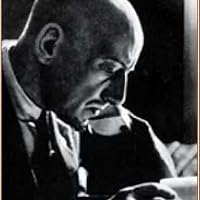
Because even as our two protagonists discuss current events, the narrative keeps doing a little two-step where the life of Wuttke is conflated with that of his literary idol, Theodor Fontane. Fontane, for those of you who don't know (and before this book I include myself among them) was a pretty famous German author of the 19th century, writing a number of novels late in life. The one you might have potentially heard of is "Effi Briest" since its been made into a movie a couple times (one of the more notable versions was directed by Rainer Fassbinder) but whether you have or not the book seemingly assumes that you know all about him, barely mentioning his name (Wuttke is called "Fonty" repeatedly, which helped me not at all figure out who they were referring to) but drawing constant parallels between his life and that of Wuttke. They have wives with similar names, daughters with similar names, both lived during periods of German reunification (that last bit seems to be where Grass is going with all this, as Fontane wrote extensively about the wars that eventually formed the German Empire) and there's probably a dozen more parallels that went over my head. To its credit, the book does point out a lot of this constantly, setting a tone somewhere between thoughtful discourse and "get a load of this guy".
What this all means is that book will sometimes dive without warning into the past to discuss Fontane, but not by shifting to a flashback or another narrative but by acting like Wuttke is some kind of medium to access the long deceased writer. It can make for some bewildering reading at times, especially if you aren't as up on all the history Grass is touching upon here as he thinks you are, making those passages at best merely admirable, at worst straight up hard to follow where the story is going, especially since its less than interested in telling a story as acting as commentary for what for the novel are current events.
It works better when it deals with the complex pasts of the two men. While Hoftaller seems to have his own place in the Fontane meta-narrative thing going on (he gets called Tallhover, who is apparently a cop/spy that was assigned to monitor Fontane) for me the book worked best when it danced around the relationship between the two men over the decades, a relationship that is often sketched around without necessarily being spelled out. Its clear after a while that Hoftaller is a sort of minder for Wuttke, for one reason or another, which adds an almost sinister edge to their conversations (abetted by how Hoftaller seems to be cheerfully and blissfully everywhere) as it becomes obvious that Wuttke can do whatever he wants, except what he's not allowed to do. Their talks dance around what a messy place Germany was for the half century prior to its two halves wanting to get back together and how just knocking walls down aren't necessarily going to make everything perfect. In a way, Wuttke's repeated attempts to take a trip just about anywhere stand for German citizens as a whole . . . its not so easy to get away when someone to always there to tap you on the shoulder and bring you back in.
Unsurprisingly, because this is a Gunter Grass novel (the last he wrote before winning the Nobel Prize in 1999), the accessible portion of the plot (such as it is) is nearly entirely buried under layers of history and commentary. I'm not going to lie to you, I did a decent amount of skimming online sources to even give myself a rudimentary idea of what was going on since Grass seems to go out of his way to obscure exactly what he's referencing to (hence Fontane never mentioned by name, only as "The Immortal") even when it comes to agencies like the Treuhandanstalt, which he repeatedly refers to as "The Handover Trust", which would be okay except a decent portion of the book is about the cast's reactions to the murder of Treuhand hand Detlev Rohwedder, who is also never mentioned by name even when its readily apparent in hindsight that who he's referencing to (a documentary, "A Perfect Crime" came out last year about his assassination, for those interested). On the one hand most German readers probably know exactly what he's talking about, but for Americans its going to rough sledding for a while until they either chase down the references for context or just accept they have no idea what's going on and roll with it.
And even without fully understanding the whole context the book is fairly enjoyable, even with all the density. If you can get past the plot being extraordinarily loose almost to the point of shambling, it definitely has its moments. When its not getting bogged down in showing off how Wuttke is a clone of Fontane there's a light hearted swing to it that is sometimes disarming, sometimes off-putting, as if Grass himself isn't taking this very seriously. But there's a barbed commentary hidden underneath all the jocular references to a dead writer, an old man standing outside his country's history and wondering if any of this is a good idea. It comes across as the remnants of a dismantling, an aircraft intentionally disassembled in mid-air and yet still expected to land properly so that the pieces can be reconstructed into something new. Wuttke and Hoftaller are old men walking around in wreckage that never quite looks like wreckage, perhaps because they're been immersed in it their entire lives, perhaps because something half-healed is better than completely broken. Grass has been criticized for leaning too heavily on the moralizing in his novels and while no one likes to be lectured here at least it feels like honest concern, a fear that opportunities (in this case, as the Pet Shop Boys so famously stated, to make lots of money) might lead nowhere good and wind up with unexpected consequences. The fact that past choices didn't lead to great outcomes either may not give him any confidence . . . either way, it leads to a certain sense of uneasiness, that the consequences of some choices can't be undone, how you're not allowed to forget anything when the reminders are all around.
How much patience you're going to have for all this may depend on how much knowledge you have going into this or how much you enjoy novels giving you extracurricular assignments. He captures a certain feeling of a very specific time but its not so much a cross-section as one man's concerns filtered on down to two people who are worried about change for two different reasons, and sometimes those reasons coincide and very often they do not. It’s a novel that takes its sweet time to go nowhere all that exciting (and perhaps could have been a tad bit shorter) but beneath all the postmodernesque tomfoolery there's a valiant attempt to convey a certain texture, to rewrite memories that were already rewriting themselves, to form a history that was already hardening. His linking of distant past and relative present may not be as deft as you'd like but neither was the reunification and the parts that stuck with me may have been the least clever, the constant idea that, fair or unfair, the world isn't going to stay the same and sometimes the best you can do is learn to live in it and perhaps survive long enough for it to change again, with the hope that for once, maybe, finally, it'll be for the better.