I saw this play some years ago when the A.C.T. performed it in San Francisco. I remember enjoying the rhythm of the language that carried the play. But recently, I wanted to start searching for literature that was focused on how generations inform one another. Especially after Ferguson, where there arose two types of discourse about what happened. On the one hand, the events were being described as an isolated incident where someone broke the law that led to tragic consequences. On the other hand, there was a history of police brutality that got tethered to the incident which made it part of a chain of a historical record of violence against the African-American community. I remembered in the play there was a motif of inheritance that gets mentioned over and over and I wanted to see how that developed, so I went back and read the play over again and I was pleasantly surprised about how this play is trying to look at the ways African-Americans have been and informed about their history and how they construct their realities out of them.
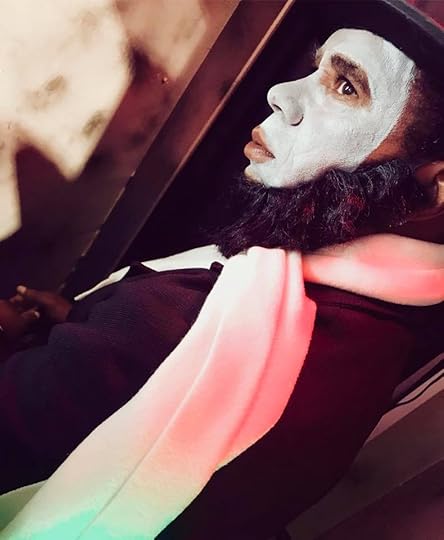
The two main characters, Booth and Lincoln, were named after their historical predecessors. But by doing so, it tethers them to a particular history. Their father initially said it was a joke to name them like that, but it was grave joke that would have severe consequences. But there are other incidents where history informs how the brothers are living. Lincoln works in an amusement park portraying the historical Lincoln, but earning almost slave wages. This almost suggests that freedom doesn't necessarily mean African-Americans have been better off.
Both brothers are students of the 3 card monte, street gambling, trying to make a living, which implies a certain randomness to how African-Americans have succeeded. Some have, some haven't, but whose fault has it been? There is a certain randomness to it that can be paralleled to gambling.
But the heart of the story is centered around Booth's "inheritance" which was given to him when their parents abandoned them. Booth is reluctant to part with his "inheritance" and chooses to hustle and steal instead of spending it. It's almost as if saying that this has informed his life and he doesn't wish to relinquish it or build on it, but rather his inheritance is a burden for him that he can't escape. I think this kind of burden is what leads to the tragic events at the end. He's doomed to repeat history because of his name, but also doomed because he can't change what he has inherited.
The whole play is about a hustle, and who is being hustled. But the important thing to figure out is, why they are hustling and why do they choose to hustle each other? I think you have to delve into what is informing their circumstance and I think that's the opening one could use to build a lens on how one generation can inform the other.