

What do you think?

The Mammoth Book of Apocalyptic SF
The last sixty years have been full of stories of one or other possible Armageddon, whether by nuclear war, plague, cosmic catastrophe or, more recently, global warming, terrorism, genetic engineering, AIDS and other pandemics. These stories, both pre- and post-apocalyptic, describe the fall of civilization, the destruction of the entire Earth, or the end of the Universe itself. Many of the stories reflect on humankind's infinite capacity for self-destruction, but the stories are by no means all downbeat or depressing - one key theme explores what the aftermath of a cataclysm might be and how humans strive to survive.
516 pages, Kindle Edition
First published May 1, 2010
About the author
Mike Ashley
287 books139 followersMichael Raymond Donald Ashley is the author and editor of over sixty books that in total have sold over a million copies worldwide. He lives in Chatham, Kent.
Ratings & Reviews
Friends & Following
Create a free account to discover what your friends think of this book!
Community Reviews
Displaying 1 - 30 of 60 reviews

March 26, 2013
Yes, my inner 15 year old told me this collection would be lots of fun, but you know, it really wasn’t. When you’ve met with one huddled stone-age family braising an old leather Givenchy handbag over a fire made from first editions of Plato and Proust filched from the shattered ruins of the nearby Louvre you’ve met them all. The overall tone of this book is mournful and elegiac, and 24 visions of the world dying in agony or slowly petering out by horrible degrees is, strangely, a bit of a downer. One reason is that the grand visions of hectic doom these writers had are on many occasions just too much for their powers as writers – it would take Tolstoy or Milton to deal adequately with the horrors herein, and they ain't them.
Science fiction and religion have the impending apocalypse in common. There have been so many prophets and cult leaders who have announced the end of the world is going to happen next Thursday at 3 pm, beginning in Tuscaloosa, or Hyderabad, or maybe just in the sky when God suddenly looms into view shouting "that's it, you had your chance, you're done". And so far, they've all been wrong.
Seems to me these beliefs are part of a spectrum you might call fallacies of significance. People can’t – just can’t – seem to give up the notion that they are special. Or if not themselves, then the times they live in are special. The music I grew up with was SO much better that the crap around these days. Everybody says that. Even people who grow up NOW will say that in the future! Well, they’ll be WRONG, but they’ll say it. Another fallacy is that life exists only on this planet so we’re ALL really special. Huh, sure. The entire vast limitless multiverse exists to prop up Planet Earth and specifically the town you live in because you, yes you, are truly unique, you matter like mad. This is what the religions say, although fair play to them, they said that when nobody knew about the solar system, much less the dazzling billions of galaxies like grains of sand lying around in the universe, and each with their dazzling billions of stars – whew. I don’t think we are so unique. Although I could be persuaded that we are uniquely irritating.
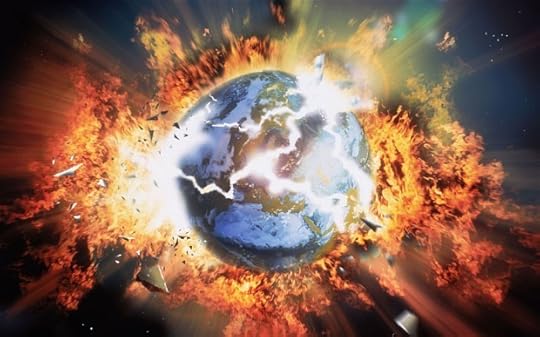
Ouch.
Science fiction and religion have the impending apocalypse in common. There have been so many prophets and cult leaders who have announced the end of the world is going to happen next Thursday at 3 pm, beginning in Tuscaloosa, or Hyderabad, or maybe just in the sky when God suddenly looms into view shouting "that's it, you had your chance, you're done". And so far, they've all been wrong.
Seems to me these beliefs are part of a spectrum you might call fallacies of significance. People can’t – just can’t – seem to give up the notion that they are special. Or if not themselves, then the times they live in are special. The music I grew up with was SO much better that the crap around these days. Everybody says that. Even people who grow up NOW will say that in the future! Well, they’ll be WRONG, but they’ll say it. Another fallacy is that life exists only on this planet so we’re ALL really special. Huh, sure. The entire vast limitless multiverse exists to prop up Planet Earth and specifically the town you live in because you, yes you, are truly unique, you matter like mad. This is what the religions say, although fair play to them, they said that when nobody knew about the solar system, much less the dazzling billions of galaxies like grains of sand lying around in the universe, and each with their dazzling billions of stars – whew. I don’t think we are so unique. Although I could be persuaded that we are uniquely irritating.
Ouch.

September 30, 2012
This is rather a disappointing collection. I found it hard to recommend a single story as a must-read. The few famous names appear to have produced relative pot-boilers although I liked Alastair Reynolds gritty contribution in 'Sleepover'. One or two of the rest are downright dull or silly.
What I found interesting was the sharp decline in quality between the first half, about the fact of apocalypse if you like, and the second half which was supposed to be more about what happened to the human race after it had happened.
Perhaps writers can somehow feed into the excitement and adventure of collapse and actual break-down but have greater difficulty in imagining the reality of life when humanity has been deprived of much of its social and material support structure.
A world like that of Cormac McCarthy's 'The Road' will have very little science in it and the fiction is likely to come down to describing a degradation of human complexity under conditions of survival.
There is also too much parochial Middle American angst in this volume to satisfy anyone outside that closed culture.
In this context, what was striking was how no writer appeared to get to grips with perhaps the most dramatic theoretical models for post-apocalyptic survival - the trans-human and the post-human. Intellectual circles are full of this for good or ill but not these writers.
Too many writers seemed stuck in the meme of climate change which, bluntly, might be fascinating to the more New Age type of Western political activist but is utterly boring to those of us who are far more interested in our species than in a somewhat abstract view of the planet's fate.
Many of these stories are already looking dated after only two years. The only writer who seems to come to terms with the real ideological struggle in the West – between ‘conservative’ transcendentalists looking to the past and forward-looking trans-humanists – is Paul di Fillipo.
His story – ‘Life in the Anthropocene’ – is not great but at least, with some irony and dark humour, he makes an attempt to play with the main intellectual themes of our time, with the ‘ordinary bloke’ caught between two types of fanatic much as most of us are.
The book is weak not because of poor editing – though I suspect Mike Ashley may have been a bit indulgent and not ruthless enough with some of his commissions – but because science fiction itself may be in crisis: well over half come from this century.
But the disappointment is not absolute – if you start on the basis of not expecting too much then there is stimulation to be found even if one or two stories result in a barely stifled yawn.
What would I recommend? I have praised Alastair Reynolds deeply dystopian ‘Sleepover’ and there was merit in Dominic Green’s ‘The Clockwork Atomic Bomb’ which sent a shiver down the spine at how failed state disorder and high weapons science might create a world permanently on the edge.
Cory Doctorow’s ‘When Sysdamins Ruled the Earth’ is just a daft nerd’s wet dream, but, though not science fiction at all, more the sort of transcendentalist allegory which I usually loathe, Linda Nagata’s ‘The Flood’ has a certain magic to it.
David Barnett’s ‘End of the World Show’ has a very British wry detached humour, although it has to be said that the SF style that tries to be funny and detached about serious matters becomes a little tiresome before too long.
There is something lazy about this style as if the social critic refuses to think in any depth about what he is trying to satirize. There are two or three examples in the book and only Barnett’s really amuses. One of them is almost unreadable in its attempted literary cleverness.
Frederick Pohl’s ‘Fermi and Frost’ is compassionate and grim but not in the first rank but I liked Kage Baker’s ‘The Books'. It was that rather rare thing in this volume, optimistic as well as charming and compassionate. I hope Baker gets the chance to develop the tale in a book one day.
I won’t moan about the weak or portentous ones or the ones that seem too dated or the obscure ones or the well written ones that went nowhere. I suppose it is hard to complain about anything by Fritz Leiber – he pulls off a bit of scientific nonsense in a ‘Pail of Air’ as only he could.
A last comment is left in praise of F. Gwynplaine MacIntyre’s ‘World Without End’ which postulates what might happen to someone who can’t die as the world dies. The story is not a complete success but this writer captures the post-apocalyptic human condition in a unique way and I recommend it.
His not-very-bright loser heroine is a clever invention – other writers like to have scientists and middle class people all at sea for their apocalypse but MacIntyre has been wiser.
An apocalypse is unlikely to spare those who think they deserve to survive – his heroine stands for the common humanity that most college-educated SF writers systematically and arrogantly ignore. Indeed. this book represents the crisis in SciFi.
Perhaps SciFi is in some sort of panic about its own relevance. It has become alternately excessively literary and wordy, excessively detached and ironic and excessively unthinking and ideological. It is a mere reflection of the déclassé educated middle class writer’s anxieties.
The best science fiction engages with humanity as humanity rather than seeking simply to ask how nice educated people will cope with change or else it centres itself on plausible investigation, not of too many ideas but one significant change and its effects.
That change could be dramatic – the arrival of aliens – but everything else remains solid and plausible in the reaction of the world to it.
Science fiction has forgotten the lessons of its master HG Wells, and it now pours out ideas and fantastic consequences in what can only be described as post-modern hysteria.
It is as if science fiction is desperate to get attention when it is probably only a matter of too many writers chasing too few opportunities to be published and getting desperate to be noticed.
Whether for this reason or its lack of engagement with the human condition, this volume is not bad but it is not good either.
What I found interesting was the sharp decline in quality between the first half, about the fact of apocalypse if you like, and the second half which was supposed to be more about what happened to the human race after it had happened.
Perhaps writers can somehow feed into the excitement and adventure of collapse and actual break-down but have greater difficulty in imagining the reality of life when humanity has been deprived of much of its social and material support structure.
A world like that of Cormac McCarthy's 'The Road' will have very little science in it and the fiction is likely to come down to describing a degradation of human complexity under conditions of survival.
There is also too much parochial Middle American angst in this volume to satisfy anyone outside that closed culture.
In this context, what was striking was how no writer appeared to get to grips with perhaps the most dramatic theoretical models for post-apocalyptic survival - the trans-human and the post-human. Intellectual circles are full of this for good or ill but not these writers.
Too many writers seemed stuck in the meme of climate change which, bluntly, might be fascinating to the more New Age type of Western political activist but is utterly boring to those of us who are far more interested in our species than in a somewhat abstract view of the planet's fate.
Many of these stories are already looking dated after only two years. The only writer who seems to come to terms with the real ideological struggle in the West – between ‘conservative’ transcendentalists looking to the past and forward-looking trans-humanists – is Paul di Fillipo.
His story – ‘Life in the Anthropocene’ – is not great but at least, with some irony and dark humour, he makes an attempt to play with the main intellectual themes of our time, with the ‘ordinary bloke’ caught between two types of fanatic much as most of us are.
The book is weak not because of poor editing – though I suspect Mike Ashley may have been a bit indulgent and not ruthless enough with some of his commissions – but because science fiction itself may be in crisis: well over half come from this century.
But the disappointment is not absolute – if you start on the basis of not expecting too much then there is stimulation to be found even if one or two stories result in a barely stifled yawn.
What would I recommend? I have praised Alastair Reynolds deeply dystopian ‘Sleepover’ and there was merit in Dominic Green’s ‘The Clockwork Atomic Bomb’ which sent a shiver down the spine at how failed state disorder and high weapons science might create a world permanently on the edge.
Cory Doctorow’s ‘When Sysdamins Ruled the Earth’ is just a daft nerd’s wet dream, but, though not science fiction at all, more the sort of transcendentalist allegory which I usually loathe, Linda Nagata’s ‘The Flood’ has a certain magic to it.
David Barnett’s ‘End of the World Show’ has a very British wry detached humour, although it has to be said that the SF style that tries to be funny and detached about serious matters becomes a little tiresome before too long.
There is something lazy about this style as if the social critic refuses to think in any depth about what he is trying to satirize. There are two or three examples in the book and only Barnett’s really amuses. One of them is almost unreadable in its attempted literary cleverness.
Frederick Pohl’s ‘Fermi and Frost’ is compassionate and grim but not in the first rank but I liked Kage Baker’s ‘The Books'. It was that rather rare thing in this volume, optimistic as well as charming and compassionate. I hope Baker gets the chance to develop the tale in a book one day.
I won’t moan about the weak or portentous ones or the ones that seem too dated or the obscure ones or the well written ones that went nowhere. I suppose it is hard to complain about anything by Fritz Leiber – he pulls off a bit of scientific nonsense in a ‘Pail of Air’ as only he could.
A last comment is left in praise of F. Gwynplaine MacIntyre’s ‘World Without End’ which postulates what might happen to someone who can’t die as the world dies. The story is not a complete success but this writer captures the post-apocalyptic human condition in a unique way and I recommend it.
His not-very-bright loser heroine is a clever invention – other writers like to have scientists and middle class people all at sea for their apocalypse but MacIntyre has been wiser.
An apocalypse is unlikely to spare those who think they deserve to survive – his heroine stands for the common humanity that most college-educated SF writers systematically and arrogantly ignore. Indeed. this book represents the crisis in SciFi.
Perhaps SciFi is in some sort of panic about its own relevance. It has become alternately excessively literary and wordy, excessively detached and ironic and excessively unthinking and ideological. It is a mere reflection of the déclassé educated middle class writer’s anxieties.
The best science fiction engages with humanity as humanity rather than seeking simply to ask how nice educated people will cope with change or else it centres itself on plausible investigation, not of too many ideas but one significant change and its effects.
That change could be dramatic – the arrival of aliens – but everything else remains solid and plausible in the reaction of the world to it.
Science fiction has forgotten the lessons of its master HG Wells, and it now pours out ideas and fantastic consequences in what can only be described as post-modern hysteria.
It is as if science fiction is desperate to get attention when it is probably only a matter of too many writers chasing too few opportunities to be published and getting desperate to be noticed.
Whether for this reason or its lack of engagement with the human condition, this volume is not bad but it is not good either.
November 17, 2016
I was overall very pleased and surprised by this bundle. It seems to get a lot of flak here for particularly its writers’ skills. There are indeed some below average narratives and some less-than-interesting stories. But there are so many concise pieces of brilliance and great ideas put in small format in here, it’s lovely.
Some of the stories I liked best:
The Clockwork Atom Bomb: Nice setting, lovely ‘Only In Afrika’ theme. Some nice irony and use of physics.
Bloodletting: Short , well-paced, tense and dark. Loved it.
When Sysadmins Ruled the World: Heads down one of my favorites! Human drama in the fore-front of total destruction. Human drama by those who typically are inclined to shun humans just for that. Great dialogues with real problems of survival. A nice red line provided by the internet as alternative world that takes over when the real one has gone to shit.
The End of The World Show: Very British, one of the stories poking fun at the whole idea of Apocalypse.
Fermi and Frost: Very bleak and well written, gave me a Letters from a Dead Man desperation kind of feel. Especially the short description of the actual nuclear holocaust was chilling.
Sleepover: Wonderful, another favorite, reminded me a lot of The Matrix, has some fresh ideas of which only the indirect repercussions are of consequences to the protagonist.
Moments of Intertia: This one would have fitted better on a larger stage, it feels. Big ideas, large movements, multiple timelines intermixing ,tight human drama. I loved the stark, matter-of-fact narrative, even if the protagonist appeared to be a dick at times. It is one of the larger stories in the collection. Its description tells of a unmarketable novella that had to be cut up. I think I’d have loved the bigger story; while very good, as this one stands, it feels like the cuts where a bit rough and made in the wrong places at times.
The Books: One of the bunch of stories that resort to a child’s perspective narrative. In this it falters at times, but makes up for it by conjuring up wonderful senses of loss and nostalgia that are simple wondering to the child. It’s a treat for booklovers as well.
Pallbearer: This one takes its time for telling the story in which we get a good glimpse in the protagonist and the world he lives in. In a sense, that is more important than the telling of the actually, live changing events going on in the background, as the ending verifies. Some great characters.
And the Deep Blue Sea: Loved it, one that comes closest to the Mad Max and Fallout type of Apocalypse. Wonderful pace and narrative
The Meek: Very dark, short and hopeless: wonderful. Of the religiously inclined stories in the collection, this is one of the better.
The Man Who Walked Home: Very good storytelling, very interesting setting and I loved seeing the world change and recover. Had a nice Fallouty taste.
Guardians of the Phoenix: Mad Max in Europe and North Africa. Loved the stories, characters and twists.
Terraforming Terra: This might be my favorite. It plays and works on so many levels and timespaces. The idea of bringing up clones by robotic parents who embody their originals as to try and keep the subsequent ‘children’ alike is both eerie and brilliant. Watching them, and the world beneath them, change over time and generations is wonderful. The ending seemed a bit of a shrug but that’s why it originally is a two part story, I suppose. Ought to find me the second part.
World Without End: Loved the setting. A 16-year-old London street prostitute and addict, immortal and stuck in time to watch the world dry out and die. One of the few diary-style stories, which the genre lends itself so well for.
Some of the stories I liked best:
The Clockwork Atom Bomb: Nice setting, lovely ‘Only In Afrika’ theme. Some nice irony and use of physics.
Bloodletting: Short , well-paced, tense and dark. Loved it.
When Sysadmins Ruled the World: Heads down one of my favorites! Human drama in the fore-front of total destruction. Human drama by those who typically are inclined to shun humans just for that. Great dialogues with real problems of survival. A nice red line provided by the internet as alternative world that takes over when the real one has gone to shit.
The End of The World Show: Very British, one of the stories poking fun at the whole idea of Apocalypse.
Fermi and Frost: Very bleak and well written, gave me a Letters from a Dead Man desperation kind of feel. Especially the short description of the actual nuclear holocaust was chilling.
Sleepover: Wonderful, another favorite, reminded me a lot of The Matrix, has some fresh ideas of which only the indirect repercussions are of consequences to the protagonist.
Moments of Intertia: This one would have fitted better on a larger stage, it feels. Big ideas, large movements, multiple timelines intermixing ,tight human drama. I loved the stark, matter-of-fact narrative, even if the protagonist appeared to be a dick at times. It is one of the larger stories in the collection. Its description tells of a unmarketable novella that had to be cut up. I think I’d have loved the bigger story; while very good, as this one stands, it feels like the cuts where a bit rough and made in the wrong places at times.
The Books: One of the bunch of stories that resort to a child’s perspective narrative. In this it falters at times, but makes up for it by conjuring up wonderful senses of loss and nostalgia that are simple wondering to the child. It’s a treat for booklovers as well.
Pallbearer: This one takes its time for telling the story in which we get a good glimpse in the protagonist and the world he lives in. In a sense, that is more important than the telling of the actually, live changing events going on in the background, as the ending verifies. Some great characters.
And the Deep Blue Sea: Loved it, one that comes closest to the Mad Max and Fallout type of Apocalypse. Wonderful pace and narrative
The Meek: Very dark, short and hopeless: wonderful. Of the religiously inclined stories in the collection, this is one of the better.
The Man Who Walked Home: Very good storytelling, very interesting setting and I loved seeing the world change and recover. Had a nice Fallouty taste.
Guardians of the Phoenix: Mad Max in Europe and North Africa. Loved the stories, characters and twists.
Terraforming Terra: This might be my favorite. It plays and works on so many levels and timespaces. The idea of bringing up clones by robotic parents who embody their originals as to try and keep the subsequent ‘children’ alike is both eerie and brilliant. Watching them, and the world beneath them, change over time and generations is wonderful. The ending seemed a bit of a shrug but that’s why it originally is a two part story, I suppose. Ought to find me the second part.
World Without End: Loved the setting. A 16-year-old London street prostitute and addict, immortal and stuck in time to watch the world dry out and die. One of the few diary-style stories, which the genre lends itself so well for.
December 22, 2022
Stories and writers I liked:
Robert Silverberg - when we went to see the end of the world
Great story to begin on. A great piece of writing and a great idea. Time travel and tourists pay to see the end of the world. But each and every one sees a different thing.
The rain at the end of the world - Dale Bailey
Interesting sorry focussing less on the end of the world and a declining relationship. Rain dominates this story and his descriptions of the rainfall reminded me of Ry Bradbury's Venus story.
Fermi and Frost Frederick Pohl
A story which talks about a nuclear attack, a saving of a boy and a colony in Iceland.
Sleepover - Alastair Reynolds.
This one was interesting. Talking about robot architects which are beyond our realm, and basically life is like a video game where the more characters on screen the more tax it takes on the world. We invented ai and they superseded this realm and discovered other sentient ai and were in war with them - came back told us and we decided to put the majority of the human race under sleep and have about 2000 care takers for them . A grim dark tale which was enjoyable.
The Last sunset - Geoffrey a Landis:
A quick easy tale more about love than the end of the world.
Pallbearer - Robert read
This one I quite like. Reminded me of Leigh Brackett. Religious and about a colony and not a virus that wiped out the world , a vaccine. More bout a family relationship than the end of the world. Did memories/flashbacks well.
The meek - Damien Broderick
Interesting tale about a galactic war and an alien race which provides us with a habitable sanctuary after a nuclear attack in exchange for warriors to fight an evil race
The man who walked home - james tiptree jr -
A sophisticated tale about a vacuum/ matter translator? And a man stuck in time. We see civilisation progress and surround this person who appears once a year. A horrible thought. A man suspended in space.
A Paul of air - Fritz Leiber:
An ice world about a family slowly going insane in the nest. But they find solace as other humans find them.
Guardians of the phoenix - Eric brown
A very good story about people and Pierre , I think he did the right thing. A band of people and cannibals.
Terraforming Terra - jack Williamson.
Clearly a man before his time. Clones on the moon acting as stewatds of the earth. Foreber dying and coming back to restore the earth. Various things happen, various relationships happen too. In the end they go down there and find a human society with a religion based on the moon.
Robert Silverberg - when we went to see the end of the world
Great story to begin on. A great piece of writing and a great idea. Time travel and tourists pay to see the end of the world. But each and every one sees a different thing.
The rain at the end of the world - Dale Bailey
Interesting sorry focussing less on the end of the world and a declining relationship. Rain dominates this story and his descriptions of the rainfall reminded me of Ry Bradbury's Venus story.
Fermi and Frost Frederick Pohl
A story which talks about a nuclear attack, a saving of a boy and a colony in Iceland.
Sleepover - Alastair Reynolds.
This one was interesting. Talking about robot architects which are beyond our realm, and basically life is like a video game where the more characters on screen the more tax it takes on the world. We invented ai and they superseded this realm and discovered other sentient ai and were in war with them - came back told us and we decided to put the majority of the human race under sleep and have about 2000 care takers for them . A grim dark tale which was enjoyable.
The Last sunset - Geoffrey a Landis:
A quick easy tale more about love than the end of the world.
Pallbearer - Robert read
This one I quite like. Reminded me of Leigh Brackett. Religious and about a colony and not a virus that wiped out the world , a vaccine. More bout a family relationship than the end of the world. Did memories/flashbacks well.
The meek - Damien Broderick
Interesting tale about a galactic war and an alien race which provides us with a habitable sanctuary after a nuclear attack in exchange for warriors to fight an evil race
The man who walked home - james tiptree jr -
A sophisticated tale about a vacuum/ matter translator? And a man stuck in time. We see civilisation progress and surround this person who appears once a year. A horrible thought. A man suspended in space.
A Paul of air - Fritz Leiber:
An ice world about a family slowly going insane in the nest. But they find solace as other humans find them.
Guardians of the phoenix - Eric brown
A very good story about people and Pierre , I think he did the right thing. A band of people and cannibals.
Terraforming Terra - jack Williamson.
Clearly a man before his time. Clones on the moon acting as stewatds of the earth. Foreber dying and coming back to restore the earth. Various things happen, various relationships happen too. In the end they go down there and find a human society with a religion based on the moon.
This entire review has been hidden because of spoilers.

December 9, 2011
It’s always an inherent problem with collected short storied that there will be duds and diamonds and you hope there will be more of the lather than the former. Unfortunately this was not the case with this particular anthology. Of the 25 stories in the collection only 5 stood out as worthy of mention and even then, they were just decent reads as opposed to mind blowing glimpses at an apocalyptic future. The stories I like were:
The End of the World Show:
I actually thought this was quite funny and liked the ‘stiff upper lipedness (sic)’ of a embarrassed Brit facing the end of the world. And it’s a zombie invasion quite like I’d never imagined!
The Books:
In a world where books are rare and treasured a bunch of kids discover a library where all the books remain intact. I thought the voice of the narrator was nice and love the ethos of the joy of reading. I’m actually reading this to my 9 year old daughter as a bed time story as it’s so nice.
Pallbearer:
Again, a story I enjoyed for the authors voice. The tale is of an outcast from religious enclave whose inhabitants survive a plague believing they were God’s chosen. The outcast was the son of one of the town’s founders and most ardent believers. The outcast, on a trip back into town to trade, meets with a band of travellers and the true nature of the plague is revealed.
A Pail of Air:
It had a couple of interesting ideas/concepts that I found interesting. The earth gets pulled out of orbit and away from the Sun by a rouge comet and everything becomes super cold as earth now drifts trough space. A lone family survives in their improvised shelter.....
World Without End:
Another funny story, this time about a sixteen year old drug addict hooker who gets injected with nanobots by one of her ‘johns’ and thereafter cannot die. She gives a lewd, foul mouthed discourse on how she survives the end of the human race and all life on earth until earth eventually plunges into the heart of the sun.
The End of the World Show:
I actually thought this was quite funny and liked the ‘stiff upper lipedness (sic)’ of a embarrassed Brit facing the end of the world. And it’s a zombie invasion quite like I’d never imagined!
The Books:
In a world where books are rare and treasured a bunch of kids discover a library where all the books remain intact. I thought the voice of the narrator was nice and love the ethos of the joy of reading. I’m actually reading this to my 9 year old daughter as a bed time story as it’s so nice.
Pallbearer:
Again, a story I enjoyed for the authors voice. The tale is of an outcast from religious enclave whose inhabitants survive a plague believing they were God’s chosen. The outcast was the son of one of the town’s founders and most ardent believers. The outcast, on a trip back into town to trade, meets with a band of travellers and the true nature of the plague is revealed.
A Pail of Air:
It had a couple of interesting ideas/concepts that I found interesting. The earth gets pulled out of orbit and away from the Sun by a rouge comet and everything becomes super cold as earth now drifts trough space. A lone family survives in their improvised shelter.....
World Without End:
Another funny story, this time about a sixteen year old drug addict hooker who gets injected with nanobots by one of her ‘johns’ and thereafter cannot die. She gives a lewd, foul mouthed discourse on how she survives the end of the human race and all life on earth until earth eventually plunges into the heart of the sun.
October 13, 2021
I enjoyed this. Most of the stories were good, some weren't, but that's to be expected in a large collection like this. The Pallbearer was chilling. That story was written long before anyone ever heard of COVID 19, but I hope the anti-vaxxers never realize it exists. It's creepy, to put it lightly. The author described a scenario that could be happening right now and we wouldn't know it until the final, miserable end. A plague out of China scares the entire world into pushing a vaccine through as quickly as possible. I'm sure people familiar with this sort of fiction - and the title of the collection- can guess the result, but I don't want to entirely spoil it for those that haven't read it yet.

March 26, 2021
Usually in a collection I hope to say I enjoyed at least half of the tales. My estimate runs around 90-95% in this book. Good variety, each with a unique storyline. I could have done without the tale of a global pandemic and it’s related vaccine considering ... well ... the current global pandemic and the vaccine I just got. But, it was probably one of my favorites. The book is well worth the read.

January 31, 2015
As with all collections of short stories, there are hits and misses from this reader's point of view. I skimmed through a few that did not grab me, and thoroughly enjoyed others. A solid 3 stars from me.
December 22, 2010
Very depressing... obviously the world ends in all the stories

March 17, 2012
I love the fact that this is a whole book devoted to Apocalyptic fiction. There are some amazing stories in here. Unfortunately there are also some that aren't so great but it's worth checking out!

August 12, 2015
Some of these novellas are downright brilliant.

September 1, 2021
Contents (5 stars = 100% awesome)
1. When we went to see the end of the world - Robert Silverberg -- 3🌟
2. The End of the World - Sushma Joshi -- 2.3🌟
3. The Clockwork Atom Bomb - Dominic Green -- 4.3🌟
4. Bloodletting - Kate Wilhelm -- 3.5🌟
5. When Sysadmins ruled the World - Cory Doctorow -- 4🌟
6. The Rain at the End of the World - Dale Bailey -- 3.5🌟
7. The Flood - Linda Nagata -- 2.5🌟
8. The End of the World Show - David Barnett -- 3.5🌟
9. Fermi and Frost - Frederik Pohl -- 4🌟
10. Sleepover - Alastair Reynolds -- 4🌟
11. The Last Sunset - Geoffrey Landis -- 4.5🌟
12. Moments of Inertia - William Barton -- 2🌟
13. The Books - Kage Baker -- 4🌟
14. Pallbearer - Robert Reed -- 4🌟
15. And the Deep Blue Sea - Elizabeth Bear -- 3.5🌟
16. The Meek - Damien Broderick -- 3.5🌟
17. The Man who Walked Home - James Tiptree JR -- 4.3🌟
18. A Pail of Air - Fritz Leiber -- 2.5🌟
19. Guardians of the Phoenix - Eric Brown -- 3🌟
20. Life in the Anthropocene - Paul di Filippo -- 4🌟
21. Terraforming Terra - Jack Williamson -- 3.9🌟
22. World Without End - F Gwynplaine MacIntyre -- 4🌟
23. The Children of Time - Stephen Baxter -- 4🌟
24. The Star called Wormwood - Elizabeth Counihan -- 3🌟
Total reading hours: 16 hours
1. When we went to see the end of the world - Robert Silverberg -- 3🌟
2. The End of the World - Sushma Joshi -- 2.3🌟
3. The Clockwork Atom Bomb - Dominic Green -- 4.3🌟
4. Bloodletting - Kate Wilhelm -- 3.5🌟
5. When Sysadmins ruled the World - Cory Doctorow -- 4🌟
6. The Rain at the End of the World - Dale Bailey -- 3.5🌟
7. The Flood - Linda Nagata -- 2.5🌟
8. The End of the World Show - David Barnett -- 3.5🌟
9. Fermi and Frost - Frederik Pohl -- 4🌟
10. Sleepover - Alastair Reynolds -- 4🌟
11. The Last Sunset - Geoffrey Landis -- 4.5🌟
12. Moments of Inertia - William Barton -- 2🌟
13. The Books - Kage Baker -- 4🌟
14. Pallbearer - Robert Reed -- 4🌟
15. And the Deep Blue Sea - Elizabeth Bear -- 3.5🌟
16. The Meek - Damien Broderick -- 3.5🌟
17. The Man who Walked Home - James Tiptree JR -- 4.3🌟
18. A Pail of Air - Fritz Leiber -- 2.5🌟
19. Guardians of the Phoenix - Eric Brown -- 3🌟
20. Life in the Anthropocene - Paul di Filippo -- 4🌟
21. Terraforming Terra - Jack Williamson -- 3.9🌟
22. World Without End - F Gwynplaine MacIntyre -- 4🌟
23. The Children of Time - Stephen Baxter -- 4🌟
24. The Star called Wormwood - Elizabeth Counihan -- 3🌟
Total reading hours: 16 hours
June 12, 2020
Another reread. I remember this book with great affection, maybe it spoke to me more in a past time. That said there are moments of exquisite beauty and breathtaking storytelling. Just not as consistently strong this time around.

August 11, 2026
Best short stories in the collection:
Bloodletting by Kate Wilhelm
The End of the World Show by David Barnett
Fermi and Frost by Frederik Pohl
Guardians of the Phoenix by Eric Brown
World Without End F. Gwynplaine MacIntyre
Bloodletting by Kate Wilhelm
The End of the World Show by David Barnett
Fermi and Frost by Frederik Pohl
Guardians of the Phoenix by Eric Brown
World Without End F. Gwynplaine MacIntyre
December 1, 2019
hate short stories :)

December 29, 2019
Some stories are interesting, but most of them quite boring.
February 23, 2020
Excellent anthology of this genre

August 29, 2021
Erg afwisselend maar over het geheel genomen onderhoudend. Het verhaal over the plague die ontstaan was in een Chinees laboratorium was wel erg omnieus.
December 15, 2021
A fine mixture of stories, some good, some not so good and some just a pain to slog through in the hope that someone would switch the light on!

November 2, 2024
Uneven, like many anthologies. But I found enough good tales to satisfy me.
August 7, 2026
7 out of 10. some great stories. some bad ones.

January 1, 2020
A very good collection of stories with only a couple of duds. And to those children/dim bulbs on here who write that it's too 'mournful', 'gloomy', 'depressing': the clue is in the title...
April 29, 2016
Another fine selection of themed stories in the Mammoth Book series of anthologies, the apocalyptic SF collection features mostly stories from the early 2000s with a few "legacy" stories sprinkled in. The collection is gathered into three sections - different types of calamity (natural disaster, plague, nuclear war, internet collapse, etc.), post-apocalypse, and distant future end of all things.
First, let's get to the low points. No story is a clunker; each is interesting in its own way. Linda Nagata's "The Flood" is about everyone being "saved" by ropes from heaven, with the one non-believer holdout as a fool until he makes what amounts to a near-death conversion. Its religious message falls dead to me. William Barton's "Moments of Inertia" has one of the most despicable narrators it has been my misfortune to read, a truly loathsome character, and not in the melodrama, mustache-twisting variety. The disaster is not explained particularly well, and the story has a confusing back-and-forth two-setting structure. Elizabeth Bear's "And the Deep Blue Sea" is a kind of "Devil went down to Georgia" story, except the character who meets the devil is a female motorcyclist courier in a post-apocalyptic American West.
The high points are very high indeed. The legacy stories are all well chosen. Kate Wilhelm is always reliable, and "Bloodletting" is a fascinating account of an escaped experimental disease from the perspective of the wife of one of the responsible scientists. Another always reliable writer is Frederik Pohl, whose "Fermi and Frost" is a great example of how to combine grand scope with human interest. Robert Silverberg's "When We Went to See the End of the World" comes across as a satire of the east-coast social set, each person at a party trying to outdo the others as having the best end of the world tour experience while the world is actually ending all around them. If one imagines science fiction as John Updike might have written it, one will get a sense of this story. Fritz Leiber's "A Pail of Air" is a classic of survivalism after the disaster. James Tiptree, Jr.'s, "The Man Who Walked Home" is one of my very favorite science-fiction stories, a superb example of telling a story in two temporal directions. Of the more recent stories, Kage Baker's "The Books" is both the author's final story and a moving tribute to the power of reading. As "third-world" countries move into modernity, they are gradually taking to science fiction. However, since many of these countries have not gone through an Enlightenment period, their type of science fiction is intriguingly different from the US and UK varieties. A good example of this is Sushma Joshi's "The End of the World," which relates how people in Nepal might react to news that comes from the rest of the world that the world will end at a particular time on a particular day. Stephen Baxter's "The Children of Time" tells its story in a manner reminiscent of Frederik Pohl's technique, using a distant and somewhat ironic third-person narrator who zooms into the lives and experiences of characters and then back out to describe global changes in totally unromancticized terms.
Because the subject of the end of the world in science fiction is rather limited, readers may find it a slog to try to get through the anthology in one go. I recommend reading a couple of stories at a time, then going on to something else, and then coming back.
First, let's get to the low points. No story is a clunker; each is interesting in its own way. Linda Nagata's "The Flood" is about everyone being "saved" by ropes from heaven, with the one non-believer holdout as a fool until he makes what amounts to a near-death conversion. Its religious message falls dead to me. William Barton's "Moments of Inertia" has one of the most despicable narrators it has been my misfortune to read, a truly loathsome character, and not in the melodrama, mustache-twisting variety. The disaster is not explained particularly well, and the story has a confusing back-and-forth two-setting structure. Elizabeth Bear's "And the Deep Blue Sea" is a kind of "Devil went down to Georgia" story, except the character who meets the devil is a female motorcyclist courier in a post-apocalyptic American West.
The high points are very high indeed. The legacy stories are all well chosen. Kate Wilhelm is always reliable, and "Bloodletting" is a fascinating account of an escaped experimental disease from the perspective of the wife of one of the responsible scientists. Another always reliable writer is Frederik Pohl, whose "Fermi and Frost" is a great example of how to combine grand scope with human interest. Robert Silverberg's "When We Went to See the End of the World" comes across as a satire of the east-coast social set, each person at a party trying to outdo the others as having the best end of the world tour experience while the world is actually ending all around them. If one imagines science fiction as John Updike might have written it, one will get a sense of this story. Fritz Leiber's "A Pail of Air" is a classic of survivalism after the disaster. James Tiptree, Jr.'s, "The Man Who Walked Home" is one of my very favorite science-fiction stories, a superb example of telling a story in two temporal directions. Of the more recent stories, Kage Baker's "The Books" is both the author's final story and a moving tribute to the power of reading. As "third-world" countries move into modernity, they are gradually taking to science fiction. However, since many of these countries have not gone through an Enlightenment period, their type of science fiction is intriguingly different from the US and UK varieties. A good example of this is Sushma Joshi's "The End of the World," which relates how people in Nepal might react to news that comes from the rest of the world that the world will end at a particular time on a particular day. Stephen Baxter's "The Children of Time" tells its story in a manner reminiscent of Frederik Pohl's technique, using a distant and somewhat ironic third-person narrator who zooms into the lives and experiences of characters and then back out to describe global changes in totally unromancticized terms.
Because the subject of the end of the world in science fiction is rather limited, readers may find it a slog to try to get through the anthology in one go. I recommend reading a couple of stories at a time, then going on to something else, and then coming back.

August 9, 2016
The sum total of this anthology wasn't quite as compelling for me as 'The Mammoth Book of Black Magic', collected by the same editor. All the stories were interesting and well selected however, and some definitely stood out to rate four stars on their own. These included 'Pallbearer' by Robert Reed, an author I'll definitely be reading more from. A deceptively simple table at first, which unlayered like the proverbial onion and still finished with the true 'ending' not yet revealed. I also enjoyed the baiting tragedy of 'The Man Who Walked Home' by James Triptree Jr, and the very different but equally tragic and spine-chilling 'Guardians of the Phoenix' by Eric Brown, and 'World Without End' by F. Gwynplaine MavIntyre. One of my old favourites was in there, 'A Pail of Air' by Fritz Leiber, a slightly uncomfortable tale of human adaptability while also our discomfort of change. The more hopeful 'The Children of Time' by Stephen Baxter, and 'Wormwood' by Elizabeth Counihan closed the anthology and left me with contented images of an ending to the human race which was okay - 'man' played out his time quietly dwindling till it was just.... time to be done.

May 16, 2020
ENJOYABLE
Sleepover - Alastair Reynolds
Guardians of The Phoenix - Eric Brown
When We Went To See The End of The World - Robert Silverberg
OK
Moments of Inertia - William Barton
When Sysadmins Ruled The Earth - Cory Doctorow
The Rain At The End of The World - Dale Bailey
The Meek - Damien Broderick
The End of The World Show - David Barnett
The Clockwork Atom Bomb - Dominic Green
And The Deep Blue Sea - Elizabeth Bear
The Man Who Walked Home - James Tiptree Jr
The Books - Kage Baker
Bloodletting - Kate Wilhelm
The Flood - Linda Nagata
Life in The Anthropocene - Paul Di Filippo
Pallbearer - Robert Reed
The Children of Time - Stephen Baxter
MEH
The Star Called Wormwood - Elizabeth Counihan
The Last Sunset - Geoffrey A. Landis
Terraforming Terra - Jack Williamson
The End of The World - Sushma Joshi
Moments of Inertia - William Barton
BLAH
World Without End - F. Gwynplaine Maclntyre
Fermi And Frost - Frederik Pohl
A Pail of Air - Fritz Leiber
Sleepover - Alastair Reynolds
Guardians of The Phoenix - Eric Brown
When We Went To See The End of The World - Robert Silverberg
OK
Moments of Inertia - William Barton
When Sysadmins Ruled The Earth - Cory Doctorow
The Rain At The End of The World - Dale Bailey
The Meek - Damien Broderick
The End of The World Show - David Barnett
The Clockwork Atom Bomb - Dominic Green
And The Deep Blue Sea - Elizabeth Bear
The Man Who Walked Home - James Tiptree Jr
The Books - Kage Baker
Bloodletting - Kate Wilhelm
The Flood - Linda Nagata
Life in The Anthropocene - Paul Di Filippo
Pallbearer - Robert Reed
The Children of Time - Stephen Baxter
MEH
The Star Called Wormwood - Elizabeth Counihan
The Last Sunset - Geoffrey A. Landis
Terraforming Terra - Jack Williamson
The End of The World - Sushma Joshi
Moments of Inertia - William Barton
BLAH
World Without End - F. Gwynplaine Maclntyre
Fermi And Frost - Frederik Pohl
A Pail of Air - Fritz Leiber
March 28, 2014
This is a decent collection of 24 stories with quite varied approaches to apocalyptic fiction. The nature of the disaster and the time frame are different in each case, as are the styles of writing. It that sense the book is good as there's bound to be something that most people would like. However, that also means that there's probably something that most people won't like.
I personally found a few stories that I thought were great, a few that were a chore to get through, and quite a lot that were not really what I was hoping for. I feel like a lot of the stories are not really apocalyptic enough for my tastes and don't really go anywhere. Perhaps I'm being a bit unfair and they are more clever than I give them credit for, but a lot of a the stories just bored me a bit.
A bit of a mixed bag, in my opinion.
I personally found a few stories that I thought were great, a few that were a chore to get through, and quite a lot that were not really what I was hoping for. I feel like a lot of the stories are not really apocalyptic enough for my tastes and don't really go anywhere. Perhaps I'm being a bit unfair and they are more clever than I give them credit for, but a lot of a the stories just bored me a bit.
A bit of a mixed bag, in my opinion.

December 31, 2011
I love end of the world stuff, even though I recognise that it is nothing more than a wish for an abrogation of responsibility. What better way to have all your endeavours exposed as pointless, than to endure an apocalyptic event? May as well just stay in bed.
The stories in this selection though were a very mixed bunch, often not offering anything more than a vignette or worse still, a rejected idea for a novel presented as a truncated short story.
There were those though who understood the demands of the short story and special mention should go to that venerable SF writer Frederick Pohl for his excellent Fermi and Frost. This contained a classic end of the world scenario, human frailty, human love, human endeavour and the most purely Sci-Fi of endings all within 37 pages.
The stories in this selection though were a very mixed bunch, often not offering anything more than a vignette or worse still, a rejected idea for a novel presented as a truncated short story.
There were those though who understood the demands of the short story and special mention should go to that venerable SF writer Frederick Pohl for his excellent Fermi and Frost. This contained a classic end of the world scenario, human frailty, human love, human endeavour and the most purely Sci-Fi of endings all within 37 pages.

April 24, 2014
A better than average collection of science fiction short stories. I always enjoy a good short story and the end of the world is a perfect setting for the form. By forgoing the details of how the world ended, these stories deal with human concerns amidst the science. I got this for a pound from Amazon. If you like short form science fiction, it's a bargain.
Some of my favourites were; When We Went to See the End of the World by Robert Silverberg, Sleepover by Alastair Reynolds, Pallbearer by Robert Reed, The Man Who Walked Home by James Tiptree, Jr, Terraforming Terra by Jack Williamson, and The Children of Time by Stephen Baxter.
Some of my favourites were; When We Went to See the End of the World by Robert Silverberg, Sleepover by Alastair Reynolds, Pallbearer by Robert Reed, The Man Who Walked Home by James Tiptree, Jr, Terraforming Terra by Jack Williamson, and The Children of Time by Stephen Baxter.

March 6, 2013
Like any anthology, there are always stories you love, and stories you hate. Fortunately, this one has more of the former than the latter. Ashley's chosen a wide range of possible 'ends' for the world, ranging from the familiar (flood, nuclear war, pandemics) to the downright weird (interdimensional intrusions). And there's more than a little humour here, too. Sure, some of it is tinged with irony (it's good for your blood, dearie, as Stephen King would say), but hey, if you can't laugh while the world is ending, when can you?
There's definitely something here to suit every palate.

May 26, 2014
A mixed bag, as is ever the case with short stories. Particular highlights include Pallbearer by Robert Reed, which was essentially the end result if the Network in Utopia had succeeded with their plan to deal with overpopulation, The End of the World Show by David Barnett, a very British romp featuring people returning from the grave only to grumble that no-one has looked after the guttering on their houses since they died, and And the Deep Blue Sea by Elizabeth Bear, in which the devil tries to make a deal to make an already post-apocalyptic world even worse.
Displaying 1 - 30 of 60 reviews