

What do you think?
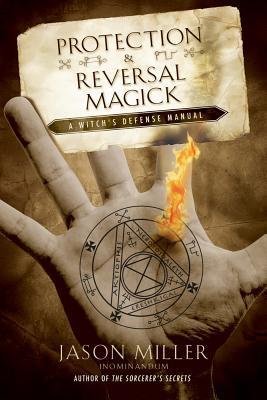
Protection & Reversal Magick: A Witch's Defense Manual
" You could be the target of a spell or curse and not even know it!
All people, witches or not, are susceptible to these attacks. The witches and magicians can do something about it. Now you can too.
Protection & Reversal Magick is a complete how-to manual on preventing, defending, and reversing magickal attacks of any kind. You will learn
These techniques aren't just for witches, either, but for ceremonial magicians, rootdoctors, and anyone else who puts magick to a practical use. Like the cunning men and women of old, now you can defend yourself and your loved ones against even the strongest attacks!
“This book is not only one of my favorite books on ‘defense against the dark arts’, but is actually one of my favorite books in my whole library. Throughout the book Jason provides not only on protection, but also on recognizing the symptoms of attack and creating early warning system to alert you of magickal attacks.” — Mat Auryn , author of Psychic Witch "
All people, witches or not, are susceptible to these attacks. The witches and magicians can do something about it. Now you can too.
Protection & Reversal Magick is a complete how-to manual on preventing, defending, and reversing magickal attacks of any kind. You will learn
These techniques aren't just for witches, either, but for ceremonial magicians, rootdoctors, and anyone else who puts magick to a practical use. Like the cunning men and women of old, now you can defend yourself and your loved ones against even the strongest attacks!
“This book is not only one of my favorite books on ‘defense against the dark arts’, but is actually one of my favorite books in my whole library. Throughout the book Jason provides not only on protection, but also on recognizing the symptoms of attack and creating early warning system to alert you of magickal attacks.” — Mat Auryn , author of Psychic Witch "
224 pages, Paperback
Published June 15, 2006
About the author
Jason Miller
14 books283 followersJason G. Miller, who also works as Inominandum, has devoted over 20 years to the study of witchcraft and magick in its many forms. He is a Sovereign of the Chthonic Ouranian Temple, and initiate of Ordo Templi Orientis, and a member of the Terra Sancta Sangreal Sodality, as well as an initiated Tantrika of the Nyingma and Bön lineages of Tibet. He writes regularly for the journal
Behutet
, and a frequent contributor to Witchvox, and Voice of the Old Ways.
Ratings & Reviews
Friends & Following
Create a free account to discover what your friends think of this book!
Community Reviews
Displaying 1 - 30 of 134 reviews

December 28, 2012
I found myself in the middle of the road on this book. Some of it felt alright compared to other material, some of it left my scratching my head asking if this was for real.
The author presents a myriad of protections and reversals so it holds true to its core teachings about trying to elevate the reader's knowledge about various forms of attack and defense. Intermingled are the usual vague anecdotes and allegories, though I didn't find them too obnoxious. What did irk me is that the author specifically says to do a divination before working any reversals to see the outcome of such magic before you attempt it. While I can appreciate the wisdom in such a suggestion, the almost dogmatic approach can drive a person up the wall with enough repetition throughout the book. Not to mention, if I had to divine every time before I did something, I'd never get much of anything else done in my life. There were some worthy mentions that I felt curious enough to go on and look up further information regarding or add to my practice (such as sigil craft).
Anyone who is at an intermediate level of witchcraft, exploring a variety of practices, or just wants something slightly different to read, may get some value out of this book. It is dry, eclectic, and ritualistic.
The author presents a myriad of protections and reversals so it holds true to its core teachings about trying to elevate the reader's knowledge about various forms of attack and defense. Intermingled are the usual vague anecdotes and allegories, though I didn't find them too obnoxious. What did irk me is that the author specifically says to do a divination before working any reversals to see the outcome of such magic before you attempt it. While I can appreciate the wisdom in such a suggestion, the almost dogmatic approach can drive a person up the wall with enough repetition throughout the book. Not to mention, if I had to divine every time before I did something, I'd never get much of anything else done in my life. There were some worthy mentions that I felt curious enough to go on and look up further information regarding or add to my practice (such as sigil craft).
Anyone who is at an intermediate level of witchcraft, exploring a variety of practices, or just wants something slightly different to read, may get some value out of this book. It is dry, eclectic, and ritualistic.
November 14, 2011
So far it is the best book on magickal self-defense I was able to find, out of nine, specialized in this matter. Author is dedicated to help, hat off for this.
Clear and concise writing, all essentials are provided. Involves rituals of asking for protection, and tools, coming from different kinds of magick, you never know from where the problem came. Excellent. Can't say yet how helping - I'm in progress, but gives high hopes.
Other reviews noted that proper pronunciation is very important, others - that it could be found on the internet, and on author's website inominandum.com is a good passage about it in Watchtower article.
I would also recommend The Practical Psychic Self Defense Handbook: A Survival Guide by Robert Bruce, that fits in category Emergency Basics 101, Before You Leap, in not religious, no spells, no spirits soliciting way.
Again, if you know better, please advise.
Clear and concise writing, all essentials are provided. Involves rituals of asking for protection, and tools, coming from different kinds of magick, you never know from where the problem came. Excellent. Can't say yet how helping - I'm in progress, but gives high hopes.
Other reviews noted that proper pronunciation is very important, others - that it could be found on the internet, and on author's website inominandum.com is a good passage about it in Watchtower article.
I would also recommend The Practical Psychic Self Defense Handbook: A Survival Guide by Robert Bruce, that fits in category Emergency Basics 101, Before You Leap, in not religious, no spells, no spirits soliciting way.
Again, if you know better, please advise.

December 31, 2021
This book is a mixed bag.
There is no doubt Miller has an in depth knowledge of various cultural systems and the way in which they work protection magic, but there are some strange inclusions like the protection bath which uses ammonia; the inclusion of offering to incubi and succubi without an explanation as to why one would ever want to do that (I would suggest never to invite those sorts of beings as things can go extremely wrong, being that they are rather parasitic, offering to them simply serves to make them stronger, and they are no different in their attitude to witches than other people) I do wonder if this is why Miller suggests to banish every day, multiple times a day with a ceremonial ritual. Personally I feel that is overkill for most people and witches, and if you don't actively invite parasitic spirits and offer to them, you probably will do fine with once a week, or month.
Our ancestors experienced a higher than normal paranoia surrounding these things due to lack of technology and medicine. Crop failures, illness, infant mortality and other things were attributed largely to spirits or witches. As science, electricity, medicine, technology developed many of these things became ellimated or better explained.
I still feel protection and reversal magic are important factors in witchcraft, and I agree that many modern authors play down how dangerous the spirit world can be, which is hugely problematic, however I think Miller plays too heavily into the other extreme.
I am glad Miller included folk magic practices, and his rituals to Hekate were interesting from a fellow devotee. I am not a fan of the ceremonial stuff, but I am sure some people are, and these practices are included as well. However, I am wary of invoking spirits that were revealed to one devotee, and not to yourself, again things can go wrong, and if you don't have a body of lore which can help when or if you ever need to banish the spirit, it can be a hefty process. I am not keen on giving people instructions on how to work with spirits revealed in my own UPG for those reasons and many others.
Overall this is a decent introduction to protection and reversal magic, with various rituals and spells which you can employ as your taste and comfort allow, however I did scratch my head a few times and feel some things should be taken with more than just a grain of salt.
There is no doubt Miller has an in depth knowledge of various cultural systems and the way in which they work protection magic, but there are some strange inclusions like the protection bath which uses ammonia; the inclusion of offering to incubi and succubi without an explanation as to why one would ever want to do that (I would suggest never to invite those sorts of beings as things can go extremely wrong, being that they are rather parasitic, offering to them simply serves to make them stronger, and they are no different in their attitude to witches than other people) I do wonder if this is why Miller suggests to banish every day, multiple times a day with a ceremonial ritual. Personally I feel that is overkill for most people and witches, and if you don't actively invite parasitic spirits and offer to them, you probably will do fine with once a week, or month.
Our ancestors experienced a higher than normal paranoia surrounding these things due to lack of technology and medicine. Crop failures, illness, infant mortality and other things were attributed largely to spirits or witches. As science, electricity, medicine, technology developed many of these things became ellimated or better explained.
I still feel protection and reversal magic are important factors in witchcraft, and I agree that many modern authors play down how dangerous the spirit world can be, which is hugely problematic, however I think Miller plays too heavily into the other extreme.
I am glad Miller included folk magic practices, and his rituals to Hekate were interesting from a fellow devotee. I am not a fan of the ceremonial stuff, but I am sure some people are, and these practices are included as well. However, I am wary of invoking spirits that were revealed to one devotee, and not to yourself, again things can go wrong, and if you don't have a body of lore which can help when or if you ever need to banish the spirit, it can be a hefty process. I am not keen on giving people instructions on how to work with spirits revealed in my own UPG for those reasons and many others.
Overall this is a decent introduction to protection and reversal magic, with various rituals and spells which you can employ as your taste and comfort allow, however I did scratch my head a few times and feel some things should be taken with more than just a grain of salt.

March 19, 2022
Very good information and concise! The only issue I have is that this is a white author using closed practices for black and native people that white people should not use. There are very good bits of information in here though if you can discern!

February 5, 2012
I must say that I bought this book on a whim. I had been trying to find a way to defend myself against other peoples emotions, I recently realized I was an empath. While this didn't help in that respect necessarily it did help me see that those strange headaches I was getting, that would niggle at one side of my head or the other for no reason at all, were in fact an attack from a disgruntled client.
What I particularly liked was the references to other older works from all over the world. Gave me plenty of ideas to do my own background research if I so choose to read further. Great compilation of rituals and daily routines to assist in keeping yourself safe from metaphysical attacks while encouraging the involvement of mundane protectors as well. i.e. informing the police when you have a stalker.
Definitely a book that will go on the bookshelf, instead of the second hand store, to be used many times over.
What I particularly liked was the references to other older works from all over the world. Gave me plenty of ideas to do my own background research if I so choose to read further. Great compilation of rituals and daily routines to assist in keeping yourself safe from metaphysical attacks while encouraging the involvement of mundane protectors as well. i.e. informing the police when you have a stalker.
Definitely a book that will go on the bookshelf, instead of the second hand store, to be used many times over.
June 4, 2019
I really wanted to love this book. It focuses on protection magic from a broad range of methodologies, but still from a pagan perspective, which I really appreciate. I did like some of the personal rituals to Hecate (I'm not sure of the spelling he used, as I got this in audiobook format) the author included, but my enjoyment of the book was hampered by the author Wiccan-baiting and insistence that all the cool kids are cursing people. Similarly, though it gave examples from a number of sources, there was a lot of Hoodoo in this book, but relatively little time spent on addressing some of the more exotic ingredients mentioned for those with a different background. Ultimately, this book has some interesting information, and it's not awful, but it hasn't ended up being one of my favorites, either.

August 20, 2024
I was hesistant to pick this book up for years, thinking it wouldn't fit in with my practice but I have recently been wanting to build a more solid foundation in protective and healing arts. Jason is eclectic in a way that may be considered appropriation. I don't feel like any of the traditions he plucked from were given context or respect. I may use some material on Hekate, after further looking into its origins.

December 2, 2025
I really enjoyed this book and I now understand why so many individuals recommend it. It’s easy to understand and very informative. Miller gives the reader many different perspectives and ways to go about protecting oneself in the metaphysical space. While at some points his warnings do seem a bit excessive, I get his point. My reason for giving it a 4/5 instead of a 5/5 is the fact that a lot of the books material is dedicated to Hekate/Hekatean magic, which does not apply nor interest me.

July 26, 2022
I like this one, it's very geared towards everyday practical magic, and it's not nearly as ceremonial as other books of his can be.

September 18, 2021
I thought this was very good. The book has a comprehensive plan for protecting yourself against magickal attack, as well as counter measures and cleanup after the fact. The book calls itself "Beyond 101," but I'm not quite sure I would go that far. It stops short of full rituals for things like exorcisms or soul retrieval, which is a perfectly acceptable decision by the author, but most of the information is just a step above basic. That's not to say it's not useful. On the contrary, I think the way the book is laid out makes it a very usable book.
My criticism is mainly that Miller draws from a wide variety of traditions, such that most practitioners would not be intimately familiar with all of them. He acknowledges this himself towards the end. Despite seeming like he is attempting to appeal to everyone, Jason Miller actually uses most of these in his own practice. I also would say that Miller's liberal use of UPG (unverified personal gnosis) in the rituals he provides is not my cup of tea. Again, this is not to say it's not effective. I'm sure it is. And one could take what is presented and tweak it to make it their own, which is what I plan to do, as well as do further research on some of the rituals mentioned.
The regular practices suggested, (meditation, banishing, and offerings) will definitely be helpful to any practitioner. There is something here for everyone. There are a LOT of ideas about how to protect yourself in different ways. It's also a very easy, quick read. This is absolutely a book to have on your shelf as a reference.
My criticism is mainly that Miller draws from a wide variety of traditions, such that most practitioners would not be intimately familiar with all of them. He acknowledges this himself towards the end. Despite seeming like he is attempting to appeal to everyone, Jason Miller actually uses most of these in his own practice. I also would say that Miller's liberal use of UPG (unverified personal gnosis) in the rituals he provides is not my cup of tea. Again, this is not to say it's not effective. I'm sure it is. And one could take what is presented and tweak it to make it their own, which is what I plan to do, as well as do further research on some of the rituals mentioned.
The regular practices suggested, (meditation, banishing, and offerings) will definitely be helpful to any practitioner. There is something here for everyone. There are a LOT of ideas about how to protect yourself in different ways. It's also a very easy, quick read. This is absolutely a book to have on your shelf as a reference.

July 30, 2021
Writing: ❤❤❤❤
Content: ❤❤❤
Enjoyability: ❤❤❤
Overall: ❤❤❤
Summary:
As a witch, I had higher hopes for the content presented within this book. While a lot of the information was useful, there was a lot of information I was already aware of. This may be a better book for beginners, however, I recommend you do your own research and only take what feels right for you. The most important point I should mention is Jason's encouragement to create a foundation of personal protection through meditation, banishing, and offering. The writing style Jason Miller uses is very accessible to everybody, which I highly appreciated but I think it did make the reading experience less enjoyable for me. He uses many personal anecdotes from his own experience which gives the reader a better understanding. He also provides a lot of rituals and spells, most of which I honestly did not care for but I think they are good to get inspired by what rituals and spells you may want to incorporate. If you are more advanced in magic/magick or witchcraft, I'd say you could skip this one but it will probably stay on my shelf as a reference book.
Content: ❤❤❤
Enjoyability: ❤❤❤
Overall: ❤❤❤
Summary:
As a witch, I had higher hopes for the content presented within this book. While a lot of the information was useful, there was a lot of information I was already aware of. This may be a better book for beginners, however, I recommend you do your own research and only take what feels right for you. The most important point I should mention is Jason's encouragement to create a foundation of personal protection through meditation, banishing, and offering. The writing style Jason Miller uses is very accessible to everybody, which I highly appreciated but I think it did make the reading experience less enjoyable for me. He uses many personal anecdotes from his own experience which gives the reader a better understanding. He also provides a lot of rituals and spells, most of which I honestly did not care for but I think they are good to get inspired by what rituals and spells you may want to incorporate. If you are more advanced in magic/magick or witchcraft, I'd say you could skip this one but it will probably stay on my shelf as a reference book.

January 7, 2022
This is a fantastic book not only for those currently practicing or interested in practicing witchcraft in the modern world, but also for those with intellectual curiosity regarding the subject and its subtle workings. In addition to rituals and practices, there is a fair amount of lore from various traditions in this book, as well as interesting anecdotes from the author's personal experiences.
My only criticism is that I would have liked a little more detail, or additional exercises, on visualization and intention. To be fair, that type of subject matter may be considered more basic, and the book implies that it is more of a supplement to discuss topics that some of the more marketable texts avoid mentioning.
My only criticism is that I would have liked a little more detail, or additional exercises, on visualization and intention. To be fair, that type of subject matter may be considered more basic, and the book implies that it is more of a supplement to discuss topics that some of the more marketable texts avoid mentioning.

February 2, 2025
I think 3.75 ⭐⭐⭐💫
While I am taking many aspects of this book with a grain of salt, it does feel like a deeper look into the craft in a sea of surface level texts. I think the level required to pursue some methods is beyond my current ability or outside my desired practice. I don't necessarily feel comfortable calling deities (or giving offerings to demons... No), and I think there is some fear mongering here -
But certain rituals were fascinating to learn about in greater depth and they were actually explained at the very least!
Cause for further study.
Also, so weird, the end of the book the author talks about finishing writing on Candlemas, which is today for me! the same day I finished reading it! Just worth noting.
While I am taking many aspects of this book with a grain of salt, it does feel like a deeper look into the craft in a sea of surface level texts. I think the level required to pursue some methods is beyond my current ability or outside my desired practice. I don't necessarily feel comfortable calling deities (or giving offerings to demons... No), and I think there is some fear mongering here -
But certain rituals were fascinating to learn about in greater depth and they were actually explained at the very least!
Cause for further study.
Also, so weird, the end of the book the author talks about finishing writing on Candlemas, which is today for me! the same day I finished reading it! Just worth noting.

October 8, 2023
This book is HEAVILY CEREMONIAL, so as a beginner, or a folk practitioner like myself, be aware going into this book that you may not take everything exactly as it is written into your practice. HOWEVER, everything he wrote, I learned from! Jason Miller has an extremely different practice from my own but he is a wealth of knowledge and personally I found it deeply intriguing to gain a glimpse into a ceremonial practitioner’s craft! Despite our drastically different ways of executing our magick, I felt very connected to this material and I’ve been able to incorporate a lot of new things and new ideas that were inspired by his work into my own craft! Ceremonial, folk practice, eclectic, whatever you identify with, you will gain something from this book!!! Be it whole rituals, routines, historical knowledge, or inspiration for your own new ideas; or all of the above like myself! I gave it four stars simply because the fact that it is SO heavily ceremonial did make it feel a little foreign to me and some parts were easier to connect with than others. Despite the author frequently warning against it and making it clear that you don’t have to do everything exactly as he does, I think many newer practitioners could easily fall under the impression that you have to be able to dedicate that much time and do such elaborate rituals and recite such elaborate incantations (multiple pages long in many instances) in order to be a valid practitioner and I think many people start with protection magic in order to venture into this new path safely and I think that if someone lacks the time or connection to these rituals they may just turn away from finding their own craft all together because it is a lot to take in if you’re not already somewhat aware of different general paths of witchcraft and know that there are options and ways to apply this information in a way that is more realistic for your lifestyle. But that’s really my only concern! The content itself is fantastic if you know what you are trying to learn from this book and how to determine what your limits and comforts are without feeling incomparable. I think Jason Miller is a wonderful teacher and a very VERY well studied practitioner that offers amazing historical insight into everything he teaches!!! I’d love to read more from this author in the future!

August 19, 2026
Protection & Reversal Magick is one of the books I recommend when someone realizes that magical practice isn't only about attracting things. Jason Miller approaches protection as an active discipline rather than an emergency measure you suddenly remember when something goes wrong, and that alone makes this substantially more useful than the protection chapter tucked into the back of the average introductory witchcraft book. Cleansing, protection, reversal, spirit work, and dealing with hostile magic are treated as skills worth developing before you desperately need them.
What I especially appreciate is Miller's emphasis on layered protection. There isn't one perfect ritual that makes you permanently untouchable. Magical defense works much more like mundane security: different measures address different vulnerabilities. Cleansing serves a different purpose from shielding, which serves a different purpose from wards, which serves a different purpose from reversal or active countermeasures. Thinking in layers makes considerably more sense to me than the idea that drawing one protective symbol or carrying one stone somehow solves every possible problem.
The practical material is where the book shines. Miller gives you things to actually do, and the practices feel like components of a system rather than disconnected spells. You can establish regular cleansing, reinforce boundaries, work with protective forces, maintain defenses, and develop responses for situations that require something stronger. I particularly like books that leave me with practices I can integrate into my existing Craft rather than demanding that I adopt an entirely new tradition before anything becomes useful, and this succeeds at that.
I also appreciate that Miller doesn't shy away from reversal and counter-magic. There is a tendency in some modern witchcraft writing to treat any defensive action beyond passive shielding as spiritually questionable, which has never made much sense to me. Protection sometimes means preventing something from reaching you, and sometimes it means sending something away. A magical defense manual that refused to address the second possibility would feel incomplete.
At the same time, I think the book is at its best when read with a healthy amount of discernment. One of the potential downsides of consuming a lot of protection and reversal material is that you can start interpreting every run of bad luck, interpersonal conflict, nightmare, uncomfortable feeling, or failed spell as evidence that someone is attacking you magically. Most bad days aren't curses. Sometimes a relationship is unhealthy, sometimes the house needs cleaning, sometimes you're exhausted, sometimes your own choices created the problem, and sometimes probability simply isn't being kind. Magical protection becomes much healthier when it exists alongside the ability to recognize when magic isn't the explanation.
That is probably the main reason this lands at four stars rather than five for me. I would have liked even more emphasis on diagnosis before escalation. Before deciding you're cursed, what evidence do you actually have? Have mundane explanations been ruled out? Is the perceived attack producing a consistent pattern? Does divination repeatedly indicate the same thing, or are you pulling cards until you get the frightening answer you expected? Can another experienced practitioner independently identify the problem without being told what you think is happening? Those questions are every bit as important as knowing how to perform a reversal.
I also think there is an important psychological dimension to protection magic that could be explored further. Protection practices can create confidence, establish boundaries, and reduce fear, which is valuable, but they can also become compulsive. If someone feels that they must cleanse themselves constantly, repeatedly rebuild wards, perform reversals against vaguely perceived enemies, or interpret ordinary discomfort as spiritual contamination, the practice has stopped making them feel safer and started teaching them that the world is perpetually dangerous. Effective protection should ultimately allow you to think about protection less, not more.
None of that is an argument against the techniques in the book. If anything, it's an argument for learning them well enough that you don't have to panic. Knowing that you have a functioning protective practice changes the way you respond to uncertainty. Instead of immediately escalating to magical warfare, you can cleanse, reinforce what you already have, observe what happens, perform divination if necessary, and respond proportionately. Good magical defense should produce confidence rather than paranoia.
I particularly like Miller's approach to spirits and protective allies because it expands protection beyond the image of the solitary witch maintaining an energetic bubble through sheer concentration. Magical traditions throughout history have relied on relationships with gods, spirits, angels, ancestors, guardians, and other protective powers. Building those relationships before a crisis makes considerably more sense than introducing yourself to a spirit for the first time while demanding emergency assistance.
The book also understands something that I think is often missed in discussions of magical protection: boundaries aren't the same thing as fear. Locking your front door doesn't mean you're terrified of everyone outside your house. Maintaining magical boundaries doesn't require believing that curses are flying at you constantly. Protection can simply be ordinary spiritual hygiene, something maintained quietly in the background so that you can focus your attention on more interesting parts of your practice.
There are portions of Miller's particular magical framework that I adapt rather than reproduce exactly, but that doesn't diminish the usefulness of the underlying technology. That's one of his strengths as an occult writer. Even when I'm not adopting his entire cosmology, I can usually understand what a technique is trying to accomplish well enough to translate the principle into my own practice.
Protection & Reversal Magick ultimately succeeds because it treats magical defense as a skill set rather than a mood. You don't need to become frightened of curses to benefit from knowing how to cleanse yourself, establish boundaries, recognize unwanted influences, work with protective powers, and respond when something genuinely does require intervention. I would just pair all of those skills with one additional discipline that deserves equal attention: learning when not to use them.
The strongest protection practice isn't the one that convinces you everything is an attack. It's the one that leaves you secure enough to tell the difference.
What I especially appreciate is Miller's emphasis on layered protection. There isn't one perfect ritual that makes you permanently untouchable. Magical defense works much more like mundane security: different measures address different vulnerabilities. Cleansing serves a different purpose from shielding, which serves a different purpose from wards, which serves a different purpose from reversal or active countermeasures. Thinking in layers makes considerably more sense to me than the idea that drawing one protective symbol or carrying one stone somehow solves every possible problem.
The practical material is where the book shines. Miller gives you things to actually do, and the practices feel like components of a system rather than disconnected spells. You can establish regular cleansing, reinforce boundaries, work with protective forces, maintain defenses, and develop responses for situations that require something stronger. I particularly like books that leave me with practices I can integrate into my existing Craft rather than demanding that I adopt an entirely new tradition before anything becomes useful, and this succeeds at that.
I also appreciate that Miller doesn't shy away from reversal and counter-magic. There is a tendency in some modern witchcraft writing to treat any defensive action beyond passive shielding as spiritually questionable, which has never made much sense to me. Protection sometimes means preventing something from reaching you, and sometimes it means sending something away. A magical defense manual that refused to address the second possibility would feel incomplete.
At the same time, I think the book is at its best when read with a healthy amount of discernment. One of the potential downsides of consuming a lot of protection and reversal material is that you can start interpreting every run of bad luck, interpersonal conflict, nightmare, uncomfortable feeling, or failed spell as evidence that someone is attacking you magically. Most bad days aren't curses. Sometimes a relationship is unhealthy, sometimes the house needs cleaning, sometimes you're exhausted, sometimes your own choices created the problem, and sometimes probability simply isn't being kind. Magical protection becomes much healthier when it exists alongside the ability to recognize when magic isn't the explanation.
That is probably the main reason this lands at four stars rather than five for me. I would have liked even more emphasis on diagnosis before escalation. Before deciding you're cursed, what evidence do you actually have? Have mundane explanations been ruled out? Is the perceived attack producing a consistent pattern? Does divination repeatedly indicate the same thing, or are you pulling cards until you get the frightening answer you expected? Can another experienced practitioner independently identify the problem without being told what you think is happening? Those questions are every bit as important as knowing how to perform a reversal.
I also think there is an important psychological dimension to protection magic that could be explored further. Protection practices can create confidence, establish boundaries, and reduce fear, which is valuable, but they can also become compulsive. If someone feels that they must cleanse themselves constantly, repeatedly rebuild wards, perform reversals against vaguely perceived enemies, or interpret ordinary discomfort as spiritual contamination, the practice has stopped making them feel safer and started teaching them that the world is perpetually dangerous. Effective protection should ultimately allow you to think about protection less, not more.
None of that is an argument against the techniques in the book. If anything, it's an argument for learning them well enough that you don't have to panic. Knowing that you have a functioning protective practice changes the way you respond to uncertainty. Instead of immediately escalating to magical warfare, you can cleanse, reinforce what you already have, observe what happens, perform divination if necessary, and respond proportionately. Good magical defense should produce confidence rather than paranoia.
I particularly like Miller's approach to spirits and protective allies because it expands protection beyond the image of the solitary witch maintaining an energetic bubble through sheer concentration. Magical traditions throughout history have relied on relationships with gods, spirits, angels, ancestors, guardians, and other protective powers. Building those relationships before a crisis makes considerably more sense than introducing yourself to a spirit for the first time while demanding emergency assistance.
The book also understands something that I think is often missed in discussions of magical protection: boundaries aren't the same thing as fear. Locking your front door doesn't mean you're terrified of everyone outside your house. Maintaining magical boundaries doesn't require believing that curses are flying at you constantly. Protection can simply be ordinary spiritual hygiene, something maintained quietly in the background so that you can focus your attention on more interesting parts of your practice.
There are portions of Miller's particular magical framework that I adapt rather than reproduce exactly, but that doesn't diminish the usefulness of the underlying technology. That's one of his strengths as an occult writer. Even when I'm not adopting his entire cosmology, I can usually understand what a technique is trying to accomplish well enough to translate the principle into my own practice.
Protection & Reversal Magick ultimately succeeds because it treats magical defense as a skill set rather than a mood. You don't need to become frightened of curses to benefit from knowing how to cleanse yourself, establish boundaries, recognize unwanted influences, work with protective powers, and respond when something genuinely does require intervention. I would just pair all of those skills with one additional discipline that deserves equal attention: learning when not to use them.
The strongest protection practice isn't the one that convinces you everything is an attack. It's the one that leaves you secure enough to tell the difference.

October 16, 2024
Interesting but too many practices devoted to hekate, I get that's their chosen deity but I was hoping for more in the way of generic protection rituals. I do appreciate these books that are more candid about practical advice than just magic through cooking or taking a nice bath or "love and light" 🙄 I will see what else this author has to offer.

November 23, 2023
Being still relatively new to my witchcraft journey, there were several things that I may not have understood to the fullest extent. That doesn't make the novel any less valuable; as a matter of fact this will probably be a book I revisit often. It offers protection for not only yourself, but your environment and your home as well. The types of protection Miller offers is very versatile. He not only includes banishing and cleansing, but also deflection, countering, traps, meditation, sigils, and so many more ways to offer protection for yourself and your loved ones that can fit into a lot of practices and crafts.
One thing I would have loved to see in this revised edition is more inclusive and less gendered language. The book was written in 2006, so I give Miller the benefit of the doubt, but the revision was written in 2022, so I think he could have done a little better with that.
Overall, I'd give this a solid 4/5 stars.
One thing I would have loved to see in this revised edition is more inclusive and less gendered language. The book was written in 2006, so I give Miller the benefit of the doubt, but the revision was written in 2022, so I think he could have done a little better with that.
Overall, I'd give this a solid 4/5 stars.

August 15, 2024
Solid Info But…
The info is pretty solid, but I feel like the author made up his situations a bit. I also don’t follow Hekate, and didn’t know she would be so heavily relied on through the book. However, the info itself is still good, and I do like seeing others views on their own practice!
The info is pretty solid, but I feel like the author made up his situations a bit. I also don’t follow Hekate, and didn’t know she would be so heavily relied on through the book. However, the info itself is still good, and I do like seeing others views on their own practice!

June 30, 2017
Really interesting
I am glad I read this book. Eclectic and intriguing. Even the stuff I won't be doing personally sparked my creativity and gave me some insight and knowledge on the different ways various people think and believe.
I am glad I read this book. Eclectic and intriguing. Even the stuff I won't be doing personally sparked my creativity and gave me some insight and knowledge on the different ways various people think and believe.

September 4, 2023
Amazing book, full of information on defensive and protection magick. A lot of his rituals and spells are Hekatean, which is great for me as someone who is interested in becoming a follower of Hekate. Can't recommend this book enough.

January 25, 2026
I am not doubting his ability as a practitioner. this book was not for me because it mentions one practice multiple times that I know is closed. I can't make judgments on why the author included those in the book, but that immediately turned me off.

April 13, 2021
Really good broad overview of protection magic and baneful magic.
I did skim when specific rituals or spells I am not interested in doing were described in detail
I did skim when specific rituals or spells I am not interested in doing were described in detail

August 29, 2026
Protection magic is often taught as something you do after you become frightened. Something feels wrong, a run of bad luck begins, a hostile person enters your life, or you suspect magical interference, and suddenly you are scrambling for cleansing herbs and protection spells.
Protection & Reversal Magick convinced me that this is backwards. Jason Miller approaches magical defense as infrastructure: something established during ordinary times so that you are considerably harder to affect when trouble actually arrives.
That distinction runs throughout the book. Rather than offering one universal shield, Miller builds layers of defense that serve different purposes and encourages the reader to determine what kind of problem is actually occurring before deciding how aggressively to respond.
The early-warning material is especially smart. If magical defense includes methods for detecting unusual activity before it becomes a serious problem, protection becomes proactive rather than reactive. Divination also plays an important role because Miller repeatedly encourages checking a situation before assuming that every difficulty is evidence of psychic attack or a curse.
I appreciated that because protection work can become unhealthy when it encourages paranoia. A bad week is sometimes simply a bad week, and effective magical defense requires discernment as much as it requires power.
The actual techniques cover an impressive range. Daily banishing, personal protection, household wards, amulets, magical decoys, offerings to troublesome spirits, guardian spirits, reversal work, binding, confusing, and expelling all have a place within the larger strategy.
What makes the system work is escalation. You do not need to approach every unpleasant energetic encounter as magical warfare, but you also do not have to pretend that cleansing and forgiveness are the appropriate responses to every situation.
Sometimes something needs to be cleaned. Sometimes it needs to be blocked, redirected, appeased, reversed, bound, or removed.
Miller's willingness to make those distinctions is refreshing. There is a practical streak running through the entire book that cares much more about solving the problem than maintaining an aesthetically pleasing idea of what magic should look like.
I also liked the presence of spirits and deities within the defensive system. Protection does not have to consist entirely of the magician generating endless personal energy because relationships with spiritual allies can become part of the architecture surrounding a practitioner.
The same practical attitude appears in the healing and self-care material. Magical intervention is presented as one tool among others rather than a substitute for appropriate mundane action, which gives the entire subject a much healthier sense of proportion.
Protection & Reversal Magick ultimately changed how I think about magical defense. The strongest protection is rarely one spectacular spell performed during an emergency because it is the accumulated effect of good habits, established wards, trusted allies, reliable diagnostic methods, and knowing which response belongs to which problem.
That is why this feels like a defense manual rather than a protection spellbook. Miller is teaching the reader how to build a security system, maintain it, recognize when something has breached it, and respond intelligently when necessary.
Protection & Reversal Magick convinced me that this is backwards. Jason Miller approaches magical defense as infrastructure: something established during ordinary times so that you are considerably harder to affect when trouble actually arrives.
That distinction runs throughout the book. Rather than offering one universal shield, Miller builds layers of defense that serve different purposes and encourages the reader to determine what kind of problem is actually occurring before deciding how aggressively to respond.
The early-warning material is especially smart. If magical defense includes methods for detecting unusual activity before it becomes a serious problem, protection becomes proactive rather than reactive. Divination also plays an important role because Miller repeatedly encourages checking a situation before assuming that every difficulty is evidence of psychic attack or a curse.
I appreciated that because protection work can become unhealthy when it encourages paranoia. A bad week is sometimes simply a bad week, and effective magical defense requires discernment as much as it requires power.
The actual techniques cover an impressive range. Daily banishing, personal protection, household wards, amulets, magical decoys, offerings to troublesome spirits, guardian spirits, reversal work, binding, confusing, and expelling all have a place within the larger strategy.
What makes the system work is escalation. You do not need to approach every unpleasant energetic encounter as magical warfare, but you also do not have to pretend that cleansing and forgiveness are the appropriate responses to every situation.
Sometimes something needs to be cleaned. Sometimes it needs to be blocked, redirected, appeased, reversed, bound, or removed.
Miller's willingness to make those distinctions is refreshing. There is a practical streak running through the entire book that cares much more about solving the problem than maintaining an aesthetically pleasing idea of what magic should look like.
I also liked the presence of spirits and deities within the defensive system. Protection does not have to consist entirely of the magician generating endless personal energy because relationships with spiritual allies can become part of the architecture surrounding a practitioner.
The same practical attitude appears in the healing and self-care material. Magical intervention is presented as one tool among others rather than a substitute for appropriate mundane action, which gives the entire subject a much healthier sense of proportion.
Protection & Reversal Magick ultimately changed how I think about magical defense. The strongest protection is rarely one spectacular spell performed during an emergency because it is the accumulated effect of good habits, established wards, trusted allies, reliable diagnostic methods, and knowing which response belongs to which problem.
That is why this feels like a defense manual rather than a protection spellbook. Miller is teaching the reader how to build a security system, maintain it, recognize when something has breached it, and respond intelligently when necessary.
September 27, 2024
Jason Miller’s Protection & Reversal Magick is a powerful and practical resource that stands as one of the definitive guides on defensive magic for modern practitioners. Unlike many books that focus solely on offensive spellcasting, this manual addresses a crucial aspect of the craft that is often overlooked—how to protect yourself from magical attacks, identify when you are being targeted, and effectively neutralize threats before they escalate. With his characteristic clarity and no-nonsense approach, Miller provides a comprehensive toolkit for dealing with hostile energies and reinforcing your magical boundaries.
From the outset, Protection & Reversal Magick distinguishes itself by tackling real-world issues that many witches, magicians, and rootworkers face. Miller’s emphasis on prevention and early detection is a breath of fresh air in a genre that often leans more heavily on reactive measures. He equips readers with a layered approach to defense that includes everything from household wards and protective talismans to more sophisticated techniques like creating decoys and establishing psychic shields. This multi-faceted approach ensures that practitioners can tailor their defenses based on the severity of the threat and the specific circumstances at hand.
Miller’s experience and expertise shine through in his detailed explanations of how to diagnose and respond to magical attacks. His guidance on recognizing the symptoms of curses, hexes, and psychic intrusions is invaluable, giving readers a clear framework for determining whether a run of bad luck is just that, or something more sinister. By breaking down the mechanics of these attacks, he demystifies the process and empowers readers to take control of their own protection.
One of the standout sections of the book is Miller’s focus on reversing and neutralizing harmful magic. He doesn’t just offer counter-curses or banishing rituals—he teaches the reader how to turn the tables, reflecting negative energy back to its source without harming oneself in the process. This balanced approach is key, ensuring that readers are equipped to defend themselves while minimizing the risk of escalation or backlash.
Miller’s inclusion of techniques for various magical traditions—ranging from folk magic to ceremonial systems—adds a level of versatility that makes this book accessible to a broad audience. Whether you are a witch, rootworker, or ceremonial magician, Protection & Reversal Magick offers something for everyone. His pragmatic style makes the material easy to follow, yet it is rich enough in content to provide valuable insights even for advanced practitioners. Protection & Reversal Magick is more than just a manual for self-defense—it is a call to proactive magical practice. Miller encourages readers to establish a solid foundation of protection that they maintain even in times of peace, treating defense not as an emergency measure, but as a core component of one’s magical practice. For those serious about safeguarding themselves and their loved ones, this book is a must-have addition to the library. With its practical advice, clear instructions, and comprehensive scope, Protection & Reversal Magick remains a cornerstone text for anyone looking to master the art of magical protection.
From the outset, Protection & Reversal Magick distinguishes itself by tackling real-world issues that many witches, magicians, and rootworkers face. Miller’s emphasis on prevention and early detection is a breath of fresh air in a genre that often leans more heavily on reactive measures. He equips readers with a layered approach to defense that includes everything from household wards and protective talismans to more sophisticated techniques like creating decoys and establishing psychic shields. This multi-faceted approach ensures that practitioners can tailor their defenses based on the severity of the threat and the specific circumstances at hand.
Miller’s experience and expertise shine through in his detailed explanations of how to diagnose and respond to magical attacks. His guidance on recognizing the symptoms of curses, hexes, and psychic intrusions is invaluable, giving readers a clear framework for determining whether a run of bad luck is just that, or something more sinister. By breaking down the mechanics of these attacks, he demystifies the process and empowers readers to take control of their own protection.
One of the standout sections of the book is Miller’s focus on reversing and neutralizing harmful magic. He doesn’t just offer counter-curses or banishing rituals—he teaches the reader how to turn the tables, reflecting negative energy back to its source without harming oneself in the process. This balanced approach is key, ensuring that readers are equipped to defend themselves while minimizing the risk of escalation or backlash.
Miller’s inclusion of techniques for various magical traditions—ranging from folk magic to ceremonial systems—adds a level of versatility that makes this book accessible to a broad audience. Whether you are a witch, rootworker, or ceremonial magician, Protection & Reversal Magick offers something for everyone. His pragmatic style makes the material easy to follow, yet it is rich enough in content to provide valuable insights even for advanced practitioners. Protection & Reversal Magick is more than just a manual for self-defense—it is a call to proactive magical practice. Miller encourages readers to establish a solid foundation of protection that they maintain even in times of peace, treating defense not as an emergency measure, but as a core component of one’s magical practice. For those serious about safeguarding themselves and their loved ones, this book is a must-have addition to the library. With its practical advice, clear instructions, and comprehensive scope, Protection & Reversal Magick remains a cornerstone text for anyone looking to master the art of magical protection.

August 20, 2026
If you're going to learn how to do magic, you should probably learn what to do when magic goes wrong.
Protection & Reversal Magick is Jason Miller's answer to that problem, and its greatest strength is how practical it is. This isn't a book interested in making psychic attack sound mysterious or terrifying. Miller treats magical protection the way you would treat any other skill: learn how to assess a situation, establish good defenses, recognize when something is actually wrong, clean up problems, and know how to respond when necessary.
That last point is important. A lot of magical protection material stops at shielding and cleansing. Miller doesn't. The book moves through preventative work, protection, purification, reversal, and more active responses when circumstances call for them. I appreciate that he doesn't pretend every magical conflict can be solved by imagining white light around yourself and wishing everyone involved well.
At the same time, the book doesn't encourage paranoia. That balance is one of its strongest qualities. When something goes badly, it is incredibly easy for magical practitioners to assume they've been cursed. Sometimes you have bad luck. Sometimes you made a bad decision. Sometimes your house needs cleaning more than it needs an exorcism. And sometimes there really is a situation that calls for spiritual or magical intervention. Learning to distinguish among those possibilities is part of becoming a competent practitioner.
Miller also understands protection as something layered. Cleansing, personal practices, spirits, wards, charms, ritual work, and other methods reinforce one another rather than depending upon a single supposedly impenetrable defense. I find this much more useful than the fantasy of creating one perfect shield that nothing can ever get through.
What I appreciate most about the book is the attitude it encourages: prepared rather than afraid.
You don't install locks on your doors because you spend every waking moment terrified of burglars. You install them so that you can stop thinking about burglars and get on with your life. Magical protection should function similarly. Good defensive practice creates the stability necessary to take risks, explore, experiment, and do more interesting magic.
That's why Protection & Reversal Magick has remained useful while so many books on psychic self-defense feel dated or alarmist. Miller isn't trying to convince you that invisible enemies are lurking everywhere.
He's teaching you what to do so that, if trouble ever does show up, you already know how to handle it.
Protection & Reversal Magick is Jason Miller's answer to that problem, and its greatest strength is how practical it is. This isn't a book interested in making psychic attack sound mysterious or terrifying. Miller treats magical protection the way you would treat any other skill: learn how to assess a situation, establish good defenses, recognize when something is actually wrong, clean up problems, and know how to respond when necessary.
That last point is important. A lot of magical protection material stops at shielding and cleansing. Miller doesn't. The book moves through preventative work, protection, purification, reversal, and more active responses when circumstances call for them. I appreciate that he doesn't pretend every magical conflict can be solved by imagining white light around yourself and wishing everyone involved well.
At the same time, the book doesn't encourage paranoia. That balance is one of its strongest qualities. When something goes badly, it is incredibly easy for magical practitioners to assume they've been cursed. Sometimes you have bad luck. Sometimes you made a bad decision. Sometimes your house needs cleaning more than it needs an exorcism. And sometimes there really is a situation that calls for spiritual or magical intervention. Learning to distinguish among those possibilities is part of becoming a competent practitioner.
Miller also understands protection as something layered. Cleansing, personal practices, spirits, wards, charms, ritual work, and other methods reinforce one another rather than depending upon a single supposedly impenetrable defense. I find this much more useful than the fantasy of creating one perfect shield that nothing can ever get through.
What I appreciate most about the book is the attitude it encourages: prepared rather than afraid.
You don't install locks on your doors because you spend every waking moment terrified of burglars. You install them so that you can stop thinking about burglars and get on with your life. Magical protection should function similarly. Good defensive practice creates the stability necessary to take risks, explore, experiment, and do more interesting magic.
That's why Protection & Reversal Magick has remained useful while so many books on psychic self-defense feel dated or alarmist. Miller isn't trying to convince you that invisible enemies are lurking everywhere.
He's teaching you what to do so that, if trouble ever does show up, you already know how to handle it.

December 6, 2025
Clear and concise, this is a book that easily delivers on its premise: to explore the topic of protection and reversal magic. There isn't a lot of fluff or fanfare, and definitely reads like a well-designed instruction manual for anyone feeling as if they are under attack and are looking for answers. While it did everything it promised, I found I wanted to enjoy it more than I did, though it took a bit of thinking to figure out why.
First of all, I really want to say I have an overall positive impression of this, more for how the author presented his subject matter than anything else. I read the revised version that included notes at the end of each chapter on what changes had been made, or anything he wished to add, and I thought that was really interesting. So many books of this type feel very written in stone, their rule the law, but Mr. Miller clearly explains why some of his thinking has evolved since the original publishing. It feels more authentic for a teacher to add nuance to the things they have to teach, and I liked how clear and upfront he was about this. I was also very relived to see consistent reminders to care for your mental and physical health, and to not skip mundane solutions to serious problems, such as contacting the police if you are in physical danger. Other books I've read will throw this in once as a disclaimer and then steam ahead with their advice; Mr. Miller clearly cares about the overall health and well being of his community, as he remains consistent on emphasizing contacting a doctor or law enforcement if needed.
As far as what didn't land for me, I did feel like I was missing quite a bit of cultural context for most of the instructions provided. Mr. Miller has been trained in a variety of magical practices and, I assume, speaks from a place of experience; as someone not from within those communities, I'm not sure I would actually be comfortable using any of those processes provided as Mr. Miller does. Couple that with much of the book involving working with Hekate, which isn't something that currently resonates with me, and that leaves me with a book that is less of an instruction manual and more of a really interesting look at
First of all, I really want to say I have an overall positive impression of this, more for how the author presented his subject matter than anything else. I read the revised version that included notes at the end of each chapter on what changes had been made, or anything he wished to add, and I thought that was really interesting. So many books of this type feel very written in stone, their rule the law, but Mr. Miller clearly explains why some of his thinking has evolved since the original publishing. It feels more authentic for a teacher to add nuance to the things they have to teach, and I liked how clear and upfront he was about this. I was also very relived to see consistent reminders to care for your mental and physical health, and to not skip mundane solutions to serious problems, such as contacting the police if you are in physical danger. Other books I've read will throw this in once as a disclaimer and then steam ahead with their advice; Mr. Miller clearly cares about the overall health and well being of his community, as he remains consistent on emphasizing contacting a doctor or law enforcement if needed.
As far as what didn't land for me, I did feel like I was missing quite a bit of cultural context for most of the instructions provided. Mr. Miller has been trained in a variety of magical practices and, I assume, speaks from a place of experience; as someone not from within those communities, I'm not sure I would actually be comfortable using any of those processes provided as Mr. Miller does. Couple that with much of the book involving working with Hekate, which isn't something that currently resonates with me, and that leaves me with a book that is less of an instruction manual and more of a really interesting look at

September 6, 2026
I wish more witches learned protection before they learned hexing. There is a slightly adolescent tendency in occult circles to become fascinated with magical offense while assuming that a white-light visualization and a bowl of salt constitute adequate defense. Jason Miller treats protection as an actual branch of magical practice, complete with diagnosis, prevention, maintenance, spiritual allies, decoys, reversal work, and what to do after something has already gone wrong.
One of the smartest choices in the book is beginning with the problem of recognizing attack at all. If every run of bad luck becomes evidence that someone has cursed you, magical practice can turn into paranoia very quickly. Miller instead gives the reader ways of thinking about warning signs, ongoing spiritual hygiene, and layered defenses before getting anywhere near retaliation. I also like that protection here is not synonymous with banishing everything unfamiliar. Offerings, appeasement, guardians, amulets, home protection, and relationships with spirits all have their place.
The material on reversal and counter-magick is where this departs most sharply from the gentler end of modern Wiccan publishing, and I found that refreshing. Sometimes the appropriate magical response is not another cleansing bath followed by a meditation on forgiveness. Miller is perfectly willing to discuss binding, confusing, expelling, and sending harmful influence back where it came from. He does so without turning the entire subject into occult machismo. There is a difference between being willing to defend yourself and developing an identity around having enemies.
I don't share every assumption Miller makes about spirits, attacks, or magical causation, but I trust a book more when it gives me procedures I can evaluate than when it gives me platitudes about staying positive. This is one of those volumes I would rather have on the shelf before I need it. Magical practice has enough uncertainty built into it already. Knowing how to lock the doors is not fearfulness. It is simply part of having a house.
One of the smartest choices in the book is beginning with the problem of recognizing attack at all. If every run of bad luck becomes evidence that someone has cursed you, magical practice can turn into paranoia very quickly. Miller instead gives the reader ways of thinking about warning signs, ongoing spiritual hygiene, and layered defenses before getting anywhere near retaliation. I also like that protection here is not synonymous with banishing everything unfamiliar. Offerings, appeasement, guardians, amulets, home protection, and relationships with spirits all have their place.
The material on reversal and counter-magick is where this departs most sharply from the gentler end of modern Wiccan publishing, and I found that refreshing. Sometimes the appropriate magical response is not another cleansing bath followed by a meditation on forgiveness. Miller is perfectly willing to discuss binding, confusing, expelling, and sending harmful influence back where it came from. He does so without turning the entire subject into occult machismo. There is a difference between being willing to defend yourself and developing an identity around having enemies.
I don't share every assumption Miller makes about spirits, attacks, or magical causation, but I trust a book more when it gives me procedures I can evaluate than when it gives me platitudes about staying positive. This is one of those volumes I would rather have on the shelf before I need it. Magical practice has enough uncertainty built into it already. Knowing how to lock the doors is not fearfulness. It is simply part of having a house.

September 18, 2026
Protection manuals often reveal more about the author’s fears than their methods. Jason Miller’s book is more disciplined than that. Protection & Reversal Magick treats magical defense as a field requiring preparation, judgment, and an understanding of proportion. The subject is not reduced to a single banishing ritual, and the reader is given a broader vocabulary for thinking about unwanted influence, magical attack, and the need to restore one’s boundaries.
Miller’s practical orientation is the book’s greatest strength. He discusses ways to establish protection, identify what kind of response a situation calls for, and reverse harmful workings when that becomes necessary. The emphasis on strategy gives the material a useful psychological dimension. A practitioner who interprets every difficulty as an attack may become less capable of responding clearly, so discernment belongs within protection work. I appreciate that the book gives readers techniques while also encouraging them to consider whether a ritual response is actually warranted.
The deeper value here is the restoration of agency. Defensive magic can easily become an extension of anxiety, with the practitioner continually scanning the world for invisible threats. Miller’s approach offers a more structured relationship to that uncertainty. The methods are serious enough for experienced readers while remaining accessible to anyone who has felt exposed and wanted a practical place to begin. I would have welcomed more historical context for some of the techniques, but as a working manual this is thoughtful, useful, and considerably more responsible than its subject might suggest.
Miller’s practical orientation is the book’s greatest strength. He discusses ways to establish protection, identify what kind of response a situation calls for, and reverse harmful workings when that becomes necessary. The emphasis on strategy gives the material a useful psychological dimension. A practitioner who interprets every difficulty as an attack may become less capable of responding clearly, so discernment belongs within protection work. I appreciate that the book gives readers techniques while also encouraging them to consider whether a ritual response is actually warranted.
The deeper value here is the restoration of agency. Defensive magic can easily become an extension of anxiety, with the practitioner continually scanning the world for invisible threats. Miller’s approach offers a more structured relationship to that uncertainty. The methods are serious enough for experienced readers while remaining accessible to anyone who has felt exposed and wanted a practical place to begin. I would have welcomed more historical context for some of the techniques, but as a working manual this is thoughtful, useful, and considerably more responsible than its subject might suggest.

September 26, 2024
Protection & Reversal Magick by Jason Miller is the second book of his that I’ve read, and it’s just as impressive as the first. Miller dives deep into the often-overlooked area of magical defense, providing a practical and thorough guide on how to protect yourself, recognize signs of attack, and reverse harmful magick aimed your way. Whether you're dealing with curses, psychic attacks, or just want to strengthen your protective wards, this book is packed with techniques that are accessible yet incredibly effective.
I appreciated how Miller breaks everything down in a clear, straightforward manner, making it easy to follow whether you’re a witch, ceremonial magician, or someone looking to incorporate magick into your life for practical purposes. His emphasis on prevention and building an early warning system is something I hadn’t encountered before, and it adds a valuable layer to the typical protection techniques found in other books. I’m really looking forward to exploring more of his work after this, as both books I’ve read so far have been insightful and immediately applicable to my practice. Five stars without hesitation—if you’re looking for a solid guide on magical defense, this is the book to get!
I appreciated how Miller breaks everything down in a clear, straightforward manner, making it easy to follow whether you’re a witch, ceremonial magician, or someone looking to incorporate magick into your life for practical purposes. His emphasis on prevention and building an early warning system is something I hadn’t encountered before, and it adds a valuable layer to the typical protection techniques found in other books. I’m really looking forward to exploring more of his work after this, as both books I’ve read so far have been insightful and immediately applicable to my practice. Five stars without hesitation—if you’re looking for a solid guide on magical defense, this is the book to get!

November 21, 2025
⭐️⭐️⭐️ — 3-Star Review of Protection & Reversal Magick by Jason Miller
Protection & Reversal Magick serves as a practical, straightforward guide for anyone interested in safeguarding themselves against unwanted energetic or magical influences. Jason Miller covers a wide range of defensive techniques—from early-warning systems and banishing rituals to creating amulets, calling on guardian spirits, and crafting magical decoys. The book is clearly written and organized in a way that makes the material accessible, especially for readers newer to the subject.
That said, the content can sometimes feel more like a broad overview than a deeply detailed manual. While there are solid techniques and useful concepts, some sections may leave more experienced practitioners wishing for greater depth, nuance, or expanded explanations behind the methods. The emphasis on potential magical threats might also feel a bit heavy-handed for readers who prefer a more balanced tone.
Still, the updated edition and practical focus make it a worthwhile introductory resource. For those looking to build foundational skills in protection and counter-magick, Miller offers a clear starting point with enough variety to begin exploring different approaches.
Protection & Reversal Magick serves as a practical, straightforward guide for anyone interested in safeguarding themselves against unwanted energetic or magical influences. Jason Miller covers a wide range of defensive techniques—from early-warning systems and banishing rituals to creating amulets, calling on guardian spirits, and crafting magical decoys. The book is clearly written and organized in a way that makes the material accessible, especially for readers newer to the subject.
That said, the content can sometimes feel more like a broad overview than a deeply detailed manual. While there are solid techniques and useful concepts, some sections may leave more experienced practitioners wishing for greater depth, nuance, or expanded explanations behind the methods. The emphasis on potential magical threats might also feel a bit heavy-handed for readers who prefer a more balanced tone.
Still, the updated edition and practical focus make it a worthwhile introductory resource. For those looking to build foundational skills in protection and counter-magick, Miller offers a clear starting point with enough variety to begin exploring different approaches.
Displaying 1 - 30 of 134 reviews