A biography of James Monroe who became the fifth president of the United States in 1816. Ammon recreates his remarkable career, through his service in the revolutionary army, the Confederation Congress, to his exertions in James Madison's cabinet and his subsequent presidency.
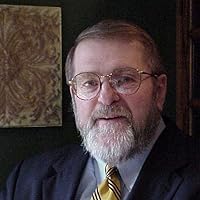
Harry Ammon was professor emeritus at Southern Illinois University, where he taught from 1950 until 1984. He earned his doctorate from the University of Virginia in 1948.
A couple of years ago, I read a few books about James Monroe and declared Tim McGrath’s then-new book James Monroe: A Life to be the definitive modern biography of the man. And then I moved on. But it nagged at me that I came to that conclusion without ever reading the previous definitive biography, written by Harry Ammon decades earlier.
So I’ve now rectified that by reading Ammon’s book. And I still think McGrath’s is the best. But for the James Monroe completist, Ammon is still a worthy read as well.
Monroe is generally elevated by his association with Washington, Jefferson, Madison, Hamilton and the like. So he’s often considered the “last of the Founding Fathers” who had the good fortune to preside over the Era of Good Feelings. Were it not for these reputation-enhancers, he might be remembered as a pleasant nonentity like, say, Benjamin Harrison, had he been president during a different era. Instead, he rates an impressive #12 in C-SPAN’s latest ranking of the presidents from best to worst.
To his credit, Monroe did have some foreign policy successes and no major blunders as president. And Ammon dutifully recounts it all. The book is factual and informative, with little analysis or evaluation of Monroe’s legacy - even the Doctrine that bears his name is not treated as a particularly major event. So McGrath’s book bests him there, as McGrath is a much better storyteller and provides plenty of insights along the way.
But Ammon does do well in describing Monroe’s personality, and he sees early signs of characteristics that Monroe later displayed as a prominent politician and president. "Without facile brilliance and tending to be slow in thought,” Monroe had "no talent for abstract thinking" as compared to his friends James Madison and Thomas Jefferson. He was “hypersensitive to criticism" and "frequently blamed setbacks to his ambitions on personal hostility" from others, and "usually withdrew into himself, quietly brooding" in response.
Yet he “possessed substantial qualities of judgment” and his reputed "indecisiveness and procrastination" was really his "reflective habit." Mostly, Monroe was known for the "warmth of his personality, his innate goodness and his ready response to the feelings of others." Though “none thought of him as possessing remarkable intellectual qualities," his “abilities as a practical leader were universally acknowledged.”
So a thorough description of Monroe results in something of a mix of criticism, praise, and faint praise.
This mix plays out during two failed diplomatic missions that Monroe undertook before becoming president. As minister to France during the Washington administration, Monroe’s loyalties were divided between serving his president, who merely wanted to placate France while negotiating a treaty with Britain, and his party, which was much more openly pro-France. Monroe ended up being much too pro-France for Washington’s liking, but Ammon largely absolves Monroe of blame, instead blaming the ambiguous and incomplete instructions coming from the administration. McGrath, in contrast, is more even-handed when he concludes that Washington "did not trust Monroe enough" to use his own judgment, while "Monroe put partisanship above mission. Both believed themselves betrayed by the other. They were both correct."
Later, while negotiating a treaty as minister to Britain during the Jefferson administration, Monroe went against Jefferson and Secretary of State Madison’s explicit instructions on the issues to be settled, in order to compromise on what he thought was the best deal possible - which did not please the administration at all. Ammon largely blames misunderstandings and slow transatlantic communications for the failed mission, though he also acknowledges that Monroe displayed his tendency to take criticism personally, and he allowed political foes of Jefferson and Madison to put a bug in his ear that it was all a plot by Madison to discredit him politically. Monroe, Madison and Jefferson eventually patched things up, though you can’t help but picture Monroe as that annoying friend who always gets their feelings hurt and you’re constantly having to bend over backwards to assuage them.
The faint praise of Monroe reaches a peak as he becomes essentially the default choice for president, as the “next in line” in 1816. The lack of strong opposition from the Federalists meant that "for the first time, the presidency seemed to be offered as a reward for meritorious service or as an honor bestowed on a respected public servant,” Ammon observes. So Monroe’s "sound judgment, his administrative abilities and his long service to the nation" - if not his outstanding talents - were good enough to win him the presidency.
On the question of whether Secretary of State John Quincy Adams or Monroe himself deserves the most credit for formulating the Monroe Doctrine, Ammon leans toward Adams, though he disputes that Adams was “the guiding force in foreign policy,” and instead credits Monroe for listening to advice but ultimately making his own decisions. On the Missouri Crisis that played out during Monroe’s administration, Ammon defends Monroe’s decision to stay mostly uninvolved, since Monroe and others of the time didn’t think it was the executive’s place to interfere in legislative concerns.
Perhaps due to the fact that this book was written more than five decades ago, there’s very little meaningful discussion of slavery. And when it is brought up, it’s treated only as an abstraction - how Monroe viewed the expansion of slavery into the territories, or the effort to resettle freed slaves in Africa. It’s only mentioned in passing that Monroe himself ever owned slaves. When describing his views on the practice, Monroe is merely depicted as "express(ing) the common Southern view" in making "arguments of a distinctly Southern character" - as if Ammon is saying, Monroe was a Virginia planter in the early 19th century, so obviously he owned slaves, and his views can be deduced from that and are therefore not really worth exploring.
There’s also not a lot of discussion about Monroe’s political philosophy. While he wasn’t a thinker like Jefferson and Madison, he was a strong believer in republicanism and wanted the U.S. to serve as an example to the rest of the world. Other biographers, like Brook Poston in James Monroe: A Republican Champion have much more of interest to say on this subject.
So Ammon’s book is an excellent collection of facts and events, with some good perspectives on Monroe’s personality. But it’s lacking the verve and readability of McGrath, and the thoughtful insight of Poston. For a president ranked twelfth-best in our history, though, there aren’t a whole lot of choices when it comes to Monroe biographies. So even a dry and somewhat dated effort like Ammon’s is better than none at all.
Right off the bat, you know you're probably in for a somewhat dry book when the author tells you in the Introduction portion of a book that the subject left very little correspondence of a personal or family nature. That is the case with Harry Ammon's biography of James Monroe. Ammon writes that only one letter from Monroe to his wife Elizabeth survives, and that most of his writings deal with strictly political subjects. Part of this is due to Monroe's somewhat reticent nature, part of it is due to the times in which he lived (expressing personal feelings or thoughts about private matters was frowned upon), and part of it is undoubtedly due to missing or destroyed letters.
Given that, Ammon rarely ventures into any personal aspects of Monroe. Here and there you get a glimpse of some personality trait (he seemed to have an odd fasciation with military uniforms) but for the most part this book is straight-up politics. Unlike his famous Virginia contemporaries Thomas Jefferson and James Madison, Monroe had no interests outside of politics. He did not write nor converse about natural science, philosophy, economics or any other area. The only thing that he seemed interested in outside of politics was doing some farming on his Virginia plantation.
Ammon does not spend long at all on Monroe's youth. Which is fine. Anyone reading biographies of these early Virginia presidents will get their fill of Virginia plantation living in other books. By page 7, Monroe is already fighting in the Revolutionary War. I thought Ammon breezed through this critical part of Monroe's life too quickly. Monroe performs loyally for George Washington, then seeks a command of his own but can never seem to find one. But very little context was given for this section. Perhaps Ammon thinks that most people reading this book would be familiar with the outlines of the Revolutionary War. That's fine, but I wanted to see what Monroe's experience was like, and how much of an impact he had in his own little sphere.
Monroe immediately goes into politics and more or less remains in the field the rest of his life. He serves in the Virginia House of Delegates, the Confederation Congress in the mid-1780s, as a U.S. Senator, Minister to France, Governor of Virginia, then back to France to negotiate the Louisiana Purchase, then Minister to Great Britain, Secretary of State, Secretary of War, and finally, President. What office didn't he have?
But what was Monroe's track record in these positions? Washington recalled him from France because he was overtly hostile to the aims of the administration (Monroe was extremely pro-France and anti-British while Washington wanted a practiced neutrality). And Monroe, a decade later, found himself in somewhat the same predicament then, which caused a temporary rift between he and Madison over his instructions concerning treaties. Monroe was a partisan, and he did not like being constrained by instructions sent from across the ocean. While Ammon does not give Monroe a free pass here, he is not very critical of him either. If someone cannot bring themselves to support the president and administration that they are serving, then they should not occupy the post to begin with.
That treatment - not hagiographic but definitely favorable - is consistent throughout the book. Ammon acknowledges that Monroe was thin-skinned and highly partisan, but he prefers to focus on Monroe's accomplishments. An example is where slavery is concerned. Monroe owned slaves. Ammon, when he even mentions this (which is not often) gives the tired and not-good-enough refrain that Monroe was personally abhorrent to slavery and that he wanted it to go away, that he promoted colonization in Africa (the capital of Liberia is named after him - Monrovia), and that he treated his slaves well. At one point he referred to them as "hands" instead of slaves. Come on.
Along those same lines, he tries to paint Monroe as friendly to Indians. There is some truth to this, especially if Monroe is compared with Andrew Jackson and many others. Monroe at least recognized that the various tribes were being abused and lied to. Yet he did little to help them out. Ammon, on page 400, demonstrates the outdated and unfortunate syntax that many mid-20th century historians used when writing about native people: "On occasion Indian delegations appeared, adding a savage note to the melange of official uniforms...". Was that really needed?
Monroe never comes across as more than a two-dimensional figure here. I recognize that Ammon is working with one hand tied behind his back due to both the lack of personal subjects mentioned by Monroe, and to Monroe's personality. Yet, nobody else in the narrative comes alive either. While President, Monroe had a Cabinet that was every bit Lincoln's celebrated "team of rivals" Cabinet: John Quincy Adams, William Crawford, John C. Calhoun. Jackson was floating around in and out of the administration. These people were all highly ambitious and they all wanted Monroe's job when he retired. Crawford (Secretary of the Treasury) and Monroe almost came to blows in the White House. But everything here comes across so antiseptic and devoid of emotion.
In the same vein, during his presidency, Monroe embarked on a very long western and southern tour, much like Washington had done a few decades earlier. But do we read about it? No. Ammon dispenses with it in a paragraph. In an era where long-distance travel such as this was difficult, costly, and thus rare, this is a glaring omission in my view. He did cover Monroe's northern trip however.
At times the narrative gets bogged down, especially when Monroe is in France. Page after page is devoted to which minister met with who first, and which letter was received the United State and when it was received. A similar occurrence happened later, during discussion of the formation of the Monroe Doctrine (although at least here Ammon does provide valuable context). On the other hand, Ammon does a very good job of explaining Monroe's Cabinet selection process. Monroe was not an active Chief Executive like we think of the role today. He refused to engage with Congress, thinking that was not part of his proscribed role in the Constitution. He also studiously avoided playing favorites with any of the ambitious members of his administration. Unfortunately, this led to Monroe at times being marginalized because his influence while President was circumscribed.
Ammon finishes with a final chapter about Monroe's somewhat sad life after leaving office. He was deeply in debt. And by deeply, I mean creditors coming after him. He said to sell part of his land, then give the remainder to a bank in exchange for debt relief. He also spent the better part of five years writing to Congress, pleading for reimbursement of expenses that he had incurred twenty to thirty years before. His wife, always sickly, died before him. Monroe had to move in with his daughter in New York, and died a penniless old man.
This is not a bad book, and there are not exactly bookshelves bubbling over with Monroe biographies. I appreciate that Ammon attempted to tackle what had to be a daunting task given the issues that I have already noted. Nonetheless, he fails to add color or excitement to a life that seemed rather full of both.
“James Monroe: The Quest for National Identity” by Harry Ammon was originally published in 1971, making it the oldest of the well-read biographies of our fifth president (though this is not a particularly crowded field). Ammon is formerly a Professor of History at Southern Illinois University and the author of “The Genet Mission.”
Long regarded as a “go to” biography of Monroe, Ammon’s book is clearly intended primarily to inform and not to entertain. Like most presidential biographies of its era, it is long on historical facts and wisdom and relatively short on captivating anecdotes and observations.
Some of the blame may rest on Monroe himself, who had little of Jefferson’s worldliness, John Adams’s irascibility or the keen political cunning of Madison. Monroe was not a man of tremendous intellectual brilliance or outstanding charisma. He may be a difficult subject around whom to wrap an exciting narrative; Ammon seems to have figured this out and avoided the attempt.
Instead, the author paints a picture of Monroe as a man who, like Washington, was less well-educated (at least formally) than other famous politicians of his era and relied on what we consider “street smarts” and personal likability to succeed. Although occasionally considered a “Founding Father” – a view that is by no means universal – he is the least well known of these historical figures, and the least well articulated of the first five presidents.
Ammon describes a Monroe I did not previously know well: a man who dropped out of college to serve in the Revolutionary War, who served as a member of the Continental Congress, the Virginia House of Delegates and the United States Senate, was diplomat in France, Great Britain and Spain, served as Governor of Virginia, Secretary of State, Secretary of War and, ultimately, as President for two terms. This leaves me feeling rather under-accomplished by comparison.
But while this thorough description of Monroe’s public service provides an excellent review of his most important accomplishments, Ammon fails (as do many presidential biographers) to provide much insight into his subject’s private life or inner personality. Though the biography briefly describes his upbringing, his family and his personality traits, Monroe’s inner-self is never really revealed. We know of his wife and children, but almost nothing about them or how they may have influenced him. Though I am not certain, this may be rooted in his failure to leave many personal documents to posterity (apparently only a single letter to his wife survives).
I found most chapters of Ammon’s biography well-written but tedious or dry. At times I was uncertain whether this was the result of dull writing or more the result of what seemed, on balance, a relatively dull presidency. And because I never developed a keen sense of who Monroe was as a person (excepting the author’s excellent description of Monroe as a politician) there was little to spice up the stretches of time when his political career provided little controversy or excitement.
While the biography generally proceeds chronologically, Ammon choose to review Monroe’s presidency thematically. Unfortunately, this meant I often found myself trying to stitch timelines together from different “themes” (such as the purchase of Florida, relations with England and the Economic Panic of 1819). I have a desire to digest history chronologically in order to more easily understand cause and effect of events (or at least their proximity) and Ammon’s approach in these two-hundred pages made that more difficult.
Although there were inspired observations and moments of genius, these were surrounded by lengthy workaday stretches where I could hear one of my college professor lecturing to a large room, unaware whether the class was even awake. Of special value, however, was Ammon’s discussion of President Monroe’s choice of cabinet officers at the beginning of his first term. This section was particularly interesting, insightful and memorable and was perfectly timed to capture the reader’s attention at a critical time in Monroe’s life.
Overall, “James Monroe: The Quest for National Identity” was a worthwhile read. I would have preferred a more captivating narrative but, like Monroe, the book is straightforward and unexciting. I also wish Ammon had been more vocal about his own views of Monroe’s successes and failures as a politician and leader, but he ultimately leaves those decisions to the reader. But what Ammon does provide is a complete dissection of Monroe’s political life that will leave the reader extraordinarily informed, if not often entertained.
James Monroe was the fourth of first five presidents who were from Virginia and for a while it looked like no other state but Virginia was going to elect anyone. At that time Virginia and West Virginia were one state and they were up there with New York and Pennsylvania in population. They also with the Declaration of Independence author Thomas Jefferson as the third president had with them the intellectual force of the American Revolution. James Monroe was kind of like a kid brother to Jefferson and James Madison. He was born in 1757. But that was not always so.
Monroe had one experience the other two didn't, he served in George Washington's army. Monroe saw action at Trenton, Monmouth, Brandywine Creek and other battles and spent a freezing winter at Valley Forge. Nevertheless when he was discharged and told to get a regiment of Virginians together to replace some of the Continental Army troops he did not do it. He fell in with Governor Thomas Jefferson at the time and his chief lieutenant.
When the Continental Congress made Jefferson Minister to France, Madison and Monroe kind of watched things on the home front in Virginia. Monroe was opposed to the new Constitution placing himself firmly in the camp of the anti-Federalists.
Washington may have been a Virginian, but it was Jefferson and Madison who gained an upper hand in the state. Monroe served as a Senator from Virginia 1790-1794 and was a partisan of the first rank. He was part of a delegation of anti-Feds who threatened Alexander Hamilton over his indiscreet affair with Maria Reynolds. Hamilton was ruined nationally, but he told said delegation where they got off.
Foreign policy was coming to the fore as the Federalists favored closer ties to mother country Great Britain and the opposition which included Secretary of State Thomas Jefferson wanted us to stay loyal to our ally in the revolution, France. Things were kind of dicey in France in the 1790s. Monroe was made our Minister to France because of his sympathy to the French and the revolution they were having. The previous minister Gouverneur Morris was a thoroughgoing Federalist and Washington felt an anti-Federalist would be better in the position.
Monroe's chief accomplishment there was getting Thomas Paine free from the guillotine. But soon enough Washington declared for an all Federalist administration before his second term ended. Secretary of State Timothy Pickering gave Monroe the heave ho.
After a few years of idleness, farming and raising his family which consisted of wife Elizabeth Kortwright and two daughters Monroe became Governor of Virginia. He had the misfortune to be Governor when a slave revolt occured that was put down with the usual brutality. When his mentor Jefferson became president Monroe was sent as a special envoy to France to get Napoleon Bonaparte to part with New Orleans. As it happens Bonaparte was looking to unload all of his continental possession of Louisiana. Monroe and regular Minister to France Robert Livingston did the deed and the USA doubled in size.
With that bit of prestige behind him Monroe was then made Minister to Great Britain where he tried to negotiate a treaty to end the emnity between us and the British. Secretary of State Madison rejected it and led to some bad feelings. Monroe was thrown up against Madison as an alternative to succeeding Jefferson. Monroe's candidacy went nowhere and Madison was elected.
Monroe stood idle again for two years. But the guy Madison made his Secretary of State one Robert Smith of Maryland was a bust. Monroe became the new Secretary of State with all forgiven and forgotten.
We went to war in 1812 with the British and Madison sadly displayed a lack of ability to pick decent cabinet ministers. Except for Monroe who became is can-do and Mr. fixit of the administration. For a while Monroe was both Secretary of State and acting Secretary of War. He was truly indispensable to Madison. In that he was the clear and odds on favorite to succeed him.
The Federalist party which because of the Hartford Convention was tinged with secession and just evaporated almost everywhere save New England. Monroe could and did manage to unify the country and his administration became known as the Era of Good Feelings where partisan was abated. At least on the surface. Monroe being a war hero from the Revolution certainly helped as the shrinking Federalists respected that.
He also had a true Cabinet of all the talents. He also in his second term had to deal with said Cabinet intriguing like crazy to succeed him. John Quincy Adams, William H. Crawford, and John C. Calhoun the Secretarys of State, Treasury and War were all active candidates. Even Navy Secretary Smith Thompson took the same notion until Monroe put him on the Supreme Court.
The Rush-Bagot agreement which eventually led to a demilitarized border between the USA and Canada was put through. The Adams-Onis treaty between us and Spain got us Florida although that was after Andrew Jackson invaded and conquered it. The capstone to our foreign policy in that time was the Monroe Doctrine which said the USA would take a dim view of Europe, especially Spain trying to get into the colonial game further and in the case of Spain trying to get her lost Western Hemisphere empire back.
Monroe's administration also helped settle the slavery issue for 30 years with the Missouri compromise which admitted Missouri as a slave state, but split Maine off from Massachusetts and admitted it as a free state. The southern border line of Missouri was declared to be the boundary of free and slave states. Monroe did have a remarkable record of achievement. My belief is that as he grew older and served in more and varied positions he grew intellectually and was no longer the partisan of his younger days. It's what author Harry Ammon is stating as well. And Monroe kept a scrupulous neutrality as to his successor, a fact recognized by all.
Monroe did not have a good ex-Presidency in fact spent his last years until his death on July 4, 1931 trying to get back monies owed him by the government. He got some back, but was forced to live with one of his married daughters after his wife died.
There's a lot worse things than to have as a slogan for your White House years be the Era of Good Feelings. Something James Monroe can be proud of.
This is probably my least favorite presidential biography so far. Ammon's sentence structure was confusing and I often I had to re-read sentences to try and figure out what he was saying. However, I did appreciate that Ammon did not "modernize" the direct quotations. I enjoyed being able to experience the original written style.
Though published over forty years ago, it is easy to see at a glance why Ammon's biography of James Monroe has never been bettered. This is an exhaustive examination of the political life of our fifth president -- and an exhausting one. Ammon goes through Monroe's life with a thoroughness that makes this a book an excellent source of information about Monroe, but at the price of making it an excruciatingly dull read at times. If you want to know everything there is to know about Monroe's political career or about diplomacy in the Federalist Era, then this is your book; otherwise, I would recommend either Noble Cunningham's The Presidency of James Monroe or Gary Hart's short James Monroe in the "American Presidents" series.
A remarkably detailed account of his life as a public servant, while sadly lacking much personal detail due mostly to Monroe's own desires. My only disappointment is that Ammon wrote almost nothing about Monroe's slave ownership, despite ample opportunities to broach the subject. The book masterfully sets up the biographies of John Quincy Adams--a brilliant and loyal cabinet member, and Andrew Jackson--an eccentric and determined general; the next two American Presidents.
This book was truly atrocious. Atrocious I say! So long with nothing to say! I don't know Monroe any better from when I started! The Monroe Doctrine was given short shrift! The MD is LITERALLY the only thing anyone knows about the man and Ammon couldn't be bothered!
There were simultaneously too many and too few details. The important stuff was glossed over with no information and things that didn't matter went on for dozens and dozens of pages!
Monroe comes across as a dullard and his wife a bitch. Maybe they were, maybe they weren't but that's what I get from Ammon. Just awful stuff! Avoid at all costs!
I can't even begin to acknowledge how letdown I felt after reading this biography. After reading numerous books on the 4 preceding Presidents, as well as several books on both the American & French Revolution, I was looking forward to a warm, but bittersweet, conclusion to the revolutionary era. Unfortunately all I got was disappointment after disappointment.
My first and biggest complaint is the ridiculous amount of time and space dedicated to inconsequential matters. Was it really necessary to dedicate multiple chapters and 50+ pages to the effort of acquiring Florida from Spain when what it really boiled down to Spain dragging its feet and America getting really annoyed? And this long-winded, unnecessary explanation about topics that went nowhere, or didn't warrant such in-depth information, were numerous throughout the book!!!
My next biggest complaint has to do with how little time and effort was put forward on important topics like the Monroe Doctrine, slavery (the book literally never even mentions that Monroe owned slaves), the Missouri Compromise, Lafayette's American Tour, etc. Shouldn't these incredibly important topics of history gotten have more consideration than subjects of no bearing whatsoever? Or ones that could've been understood with a paragraph or two verses the 50+ pages they were allotted?
My third complaint is how nothing in this book represented Monroe on a personal level. I understand Monroe was not as open as many of his contemporaries, but the lack of any insight regarding relationships outside of the government seems rather suspect to me. Could nothing be deduced from letters? Did his wife just not keep in contact with her family? Did his children have no friends? The lack of information is astounding even if Monroe wasn't obsessed with record keeping or letter writing. Even the pictures provided in the book lacked any real connection to Monroe. Where are the pictures of all of his properties? Where is a picture of his wife & family? Shouldn't they take precedence over John C. Calhoun and John Quincy Adams?
My fourth and final issue with this biography is how poor the context and index was. For example the author mentions (out of nowhere) a French minister named Fouchet. No first name, no background information, nothing. So I look in the index to find a first name so I can look him up on my phone (something I had to do numerous times because people and information were mentioned out of nowhere and no background information was provided to allow for a better understanding). Anyway, back to Fouchet.... I look him up in the index and he isn't there. So I look up Fouchet on my phone and the first listing is about a man who isn't even alive during Monroe's lifetime so I have to keep searching. I eventually figured out who Fouchet was, but only after wasting a ridiculous amount of time utilizing my amateur detective skills. Again, this is something I had to do on multiple occasions.
Bottomline, this book is terrible. It is extremely lacking in interesting content or any real understanding of who James Monroe was AND focuses entirely way too much on non-important fillers that drag on and on making the book a difficult and boring read. If I could rate it less than 1 star I would.
Harry Ammon tackles a tough subject in his biography of James Monroe because Monroe left scant information about his life for historians to examine. Unlike the Adams, who were compulsive savers of correspondence and records, Monroe destroyed them routinely.
We don't really get to know James Monroe, the man. Nor do we get to know much about his wife, Elizabeth.
Ammon is superb in his policy and political analysis. This is a good book for presidential biography wonks. Ammon comes up short in animating Monroe the man. He had only the commentaries of Monroe's contemporaries -- who all saw Monroe through their own biases -- to use. So Ammon can be forgiven his lack of “character development" within his biography.
A very solid, informative read. It tended to be somewhat on the flattering side, but it seemed relatively objective. I learned a great deal about this period and it showed very nicely how Monroe fit into the succession of Presidents, and particularly his relationships with jefferson and madison.
For a thick presidential biography, this one is not very good. a lot of details that didn't really need to be in there, and I didn't feel like I knew Monroe as well as I should have after reading it.
James Monroe, although not our most exciting president, was certainly popular being the last president to run unopposed in the election of 1820. I think there is some debate over whether we can call James Monroe a Founding Father. Although he is certainly of the founding generation, he played only a minor role in founding of the country. He was a company officer in the Army of George Washington, fighting in the famous Battle of Trenton in which Washington and his men crossed the Delaware to surprise the Hessians after Christmas. He was only president to be on the Anti-Federalist side during the ratification debates. Yet, he is also the president responsible for his famous Monroe Doctrine, and the Era of Good Feelings.
Although this book was written in 1971, my copy (paperback) was not produced until 1991. What is very amusing about this, is in the new preface Harry Ammon states in the first paragraph that there is no difference between the two editions, because in the two decades between them no new information has come out about the life of James Monroe. Unlike Jefferson or Lincoln whom how they are presented can vary wildly between each generation that followed them, poor plain James Monroe is that same as he ever was.
The first few chapters focus on Monroe's youth and education, the book follows his brief military career during the Revolutionary War. Monroe earns the rank of colonel, and recommend by Washington to lead a regiment but the war ends before Monroe's regiment can be raised. Monroe would go on to serve in the Virginia House of Delegates, and then into the Congress of the Confederation. After the Constitutional Convention wrote a new constitution for the nation to be presented for ratification, Monroe would take the side of the Anti-Federalists in those debates, despite later becoming a strong supporter of the U.S. Constitution.
Monroe would try to be elected to First Congress but he would lose to another famous Virginian named James Madison. In 1790, he would earn a seat in the United States Senate; there he would act as a member of the opposition, but in 1794 he was appointed by President Washington to serve as Minster to France. As a foreign minister, he would act in the exact opposite way Washington wanted. His reputation would be so damaged that he had to publish a defense of his actions, which Washington, now retired, bought a copy and critiqued it in the margins.
"Monroe never saw the comments made by Washington, which would have interested him far more than any others. The former President read Monroe's book carefully, jotting comments in the margin of his copy. These extensive notations, occupying more then forty pages in his printed correspondence, constituted a running argument with the opinions of the former Minister. Washington felt, and in this he was correct, that Monroe had been less then just in his refusal to acknowledge the strict neutrality adopted by the administration. Somewhat less correctly Washington believed that Monroe's subservience to France led him to sacrifice the interests of the United States" p.168
He would then go on to serve as Governor of Virginia, which was an honorable but powerless office. Monroe did oversee the suppression of Gabriel's Rebellion, but his effort to pardon the rebels or at least spare their lives was undermined by the executive council. After his time as governor was over he was sent, by President Jefferson, to Europe to serve as our Minster to the Court of St. James.
"The council after approving his request for six pardons, was divided in October when the Governor proposed to reprieve all who were less deeply involved until the legislature should meet. Without the right to break the tie, Monroe had no alternative then to let the executions take place." p.188
During his second tour of Europe, Monroe would meet many interesting personalities, most notably, King George III and Napoleon Bonaparte. It is interesting, unlike Jefferson and more like John Adams, Monroe found himself really liking King George III. Monroe was very disappointed in the way the French Revolution was going. It seemed to him that the British Monarchy had principals that were more republican then the French Republic, which soon was not going to a republic.
"Monroe naturally looked forward with curiosity to his presentation to the King--a rebel encountering his former sovereign. His long-cherished animosity towards George III was modified by the courtesy of the King's reception. When the American Minister voiced the desire of the President to maintain friendly relations with the two nations, the King, expressing reciprocal sentiments, spoke of the great interest he had taken in the welfare of the United States since the Revolution. After these formal remarks George III inquired about conditions in Virginia, and revealed, to Monroe's surprise, a considerable knowledge of the early history of the College of William and Mary. The only embarrassing moment during the interview occurred when the King queried about the French: 'They have no religion, have they?' After a momentary hesitation Monroe cautiously ventured the opinion that he believed there were many in France, who, indeed, had none. Since this seemed to accord with the King's opinion, the reception ended on an amicable noted. The new Minister felt that the King, at the request of the Foreign Secretary, Lord Hawkesbury, had made a sincere effort to create a friendly atmosphere."p.225-6
Returning to the United States, he goes on to be Governor of Virginia again, but left soon after Robert Smith had proven to be a disappointment to President James Madison as secretary of state. Monroe was then called to fill that role for the country. In next few years, the War of 1812 erupted and the country was invade and Washington D.C. was sacked and burnt. After President Madison fired John Armstrong, Jr. as Secretary of War, he had Secretary Monroe succeed him and therefore be the nation's war and state chiefs all at the same time. Monroe had served with distinction although what he really wanted a field command. Nevertheless, the country was so pleased with his performance that he was elected President of the United States, over the last Federalist nominee, Rufus King, in 1816.
"For the first time the Presidency seemed to be offered as a reward for meritorious service or as an honor bestowed on a respected public servant, rather then as a prize to be carried off by the strongest party in a bitterly fought contest." p.357
As Monroe took office the United States began what we refer to as the 'Era of Good Feelings,' because the Federalist Party was now dead, and there was a national consensus in support of President Monroe. During his presidency, we would gain the Florida as a territory; adopt a new code for the Flag of the United States, with thirteen stripes for the original colonies and stars to represent the states. The most important foreign policy accomplishment was enacted with the Monroe Doctrine, which declared the Americas off limits to further colonization and recolonization from European powers. He was reelected without opposition in 1820*, however since no one else ran there was a record low voter turn out. When Monroe declined to run in 1824, that year marked one of the most contested elections of all, which would restore the country's two party system.
"The Monroe Doctrine has had a long and varied history as the keystone of American policy toward Latin America. Only in recent times has it faded into the background, as a result of the imperial connotations attached to it. Most of these subsequent developments were not contemplated by Monroe; if he had guessed at them, he would indeed have been alarmed." p.491
The end of the book focuses on his quite post-presidency, that would only last six years of him leaving the White House. Monroe's legacy would, on occasion, in the chaos that was going to come would often be one of nostalgia. I would highly recommend this book to anyone who would like to know more or anything about our nation's fifth president.
*However he did not get a unanimous vote in the Electoral College, because William Plummer, who did not like Monroe, did not want to see anyone but Washington get that honor.
James Monroe is one of our more overlooked Founding Fathers; in fat, he is often not considered one of the Founding Fathers at all, or at least is seen as a more peripheral one. It is rather astonishing, when one considers that he fought in the Revolution under Washington, rising to the rank of Colonel, represented his constituents in the Virginia Assembly, became the Washington Administration's Minister to France, was elected Governor of Virginia, helped negotiate the Lousinan Purchase, became Minister to Britain under Jefferson, Secretary of State and Secretary of War (for a time, simultaneously) in the Madison Administration, and finally became the fifth President of the US, winning re-election by almost unanimous vote in the electoral college, and insituted what became known as the Monroe Doctrine.
Why, then, does Monroe get short shrift? Harry Ammon's biography sheds some light on this, and it is perhaps the fault of his subject that Ammon's book does not always captivate the reader. In short, Monroe was a politician, though an uncommonly well-liked and principled one, and not much of a thinker, innovator or theoretician. He was, by contemporary accounts, extremely nice, scrupulous and honest. Cue the yawns from the drama seekers.
In truth, Monroe's era was a highly dramatic and consequential one, and he played a role in many significant conflicts, both international and internecine, throughout his (almost entirely) political career. He left behind very little of color, though- very little in the way of personal notes, letters or effects that would indicate a tendency to impose a forceful personality to shape events. Rather, he seems to have been a good soldier in the nascent Republican Party, and a loyal Jeffersonian both overseas and back at home. The controversies that he became embroiled in were usually misunderstandings, and it is hard to conclude that many of his direct actions had lasting consequences for the Republic.
His time as Minister to France, for instance, occurred just after Robespierre's Reign of Terror was put to an end, along with the Jacobin's life. France was entering a particularly strange lull, in which the early promise of the Republic had been subverted, and the Committee for Public Safety still exercised most power in the government. Monroe was a Francophile, yet found that his efforts to encourage the French to treat America with greater respect, which might have had the benefit of rallying America to the side of her old ally, largely fell on deaf ears as continued conflict with Britain took precedence. Monroe managed to get sideways with the Washington Administration, mainly through the intransigence of Sec. of State Timothy Pickering, but suffered no real political damage. As a protege of Jefferson's, he was able to vindicate his actions and become governor of Virginia with relative ease. He then came into conflict again with political friends and foes, including, briefly, Jefferson and Madison, the latter of whom he did not contact for over two years at one point. But always, things cleared up, rifts were healed, and he sailed forward- the setbacks in his life were rare, short and always led to something greater, it seemed.
And yet, he never seemed to be the Prime Mover. Sent as a special envoy to help negotiate for the purchase of New Orleans, the offer to sell all of Louisiana was made to the then-Minister, Robert Livingston, just before Monroe's arrival in Paris. Working diligently to negotiate a treaty with Britain that (almost certainly) would have prevented the War of 1812, a stupid and pointless war from the perspective of both sides, he failed to secure the approval of Jefferson and Madison due o the lack of an accommodation over impressment, which was not (for most Americans) a hugely significant issue. As Secretary of State, and then of War, for Madison during the War of 1812, he again failed to prevent the war, then competently managed his departments but failed to convince Madison to take his (sound) advice over that of other, less qualified cabinet members. Even as President, with his own "Team of Rivals" serving beneath him (John Quincy Adams, John Calhoun, William Crawford in the Cabinet and Andrew Jackson as his general on the Florida frontier), he seemed buffeted by the rivalries and was unable to tap his own direct line of influence in Congress. The "Era of Good Feelings" identified with him due to the implosion of the Federalist Party after 1815 was largely a mirage, masking the new factionalism that was ready to tear the Republican Party in two. The acquisition of Florida was precipitated by Jackson's rash actions, and the Missouri Compromise was largely a Congressional exercise.
To be sure, Monroe was a competent and honest administrator, who was very progressive for his era (especially as it related to Indians), and served in all of his roles with distinction, if not brilliance. The Monroe Doctrine justly bears his name, as he laid the groundwork for Adam's expression of the principle that European powers ought not to meddle in the affairs of the Western Hemisphere. It is refreshing to think that a President who wished for the Constitutional authority to enact internal improvements, but sincerely did not believe he had that authority, would ask Congress to amend the Constitution for that purpose, rather than do what he wised and wait for the Supreme Court to arbitrate. Monroe took his powers, and the limitations upon those powers, quite seriously, and there is a humility in that which is quite admirable.
Ultimately, the trouble with this book is that too little time was spent giving the background or broader context for the major geopolitical events that determined the course of Monroe's life, and too little of Monroe's life was spent directly impacting these events. So the detailed, blow-by-blow account of the difference of opinion he had with Jefferson over the British treaty effort, fo example, are hard to place into context without a greater understanding of why Jefferson and Madison were so intransigent over impressment. Many times, the events that affected him, or motivations of those who opposed him, were too quickly glossed over, leaving a great deal of detail about Monroe's specific actions and impressions, but not much broader knowledge of the meaning and impact of the life he led. It seems, perhaps, an odd criticism of a biographer that he focused to much on his subject. But Monroe's life serves, in many ways, to show how competence, honesty and loyalty in politics can lead one to great heights- but perhaps also demonstrates how a force of will from a strong personality, or lack thereof, can shape events, or be shaped by them. Washington, Hamilton, Adams, Jefferson, Madison and Jackson were all shapers, in one way or another, for good or ill. Monroe was more or less shaped by the world and personalities around him, and though it was, in the end, a fine shape, it mainly reflects the mold that created it. We would have done better, perhaps, to examine the mold more closely.
Certainly an authoritative biography of our nation’s 5th president. Ammon is extremely thorough in his treatment of the events of Monroe’s life. He also gives a good amount of attention to his actual presidency which I appreciated… some biographies of presidents are rather light on treatment of the actual presidency. I would have appreciated though some more analysis by the author of what Monroe’s career added up to. The author almost never steps back and assesses the events he so painstakingly records- indeed one is struck by the end of the biography of how much Monroe did to achieve national unity of the young country and to set it up as a major power in the western hemisphere. In particular I was struck by the many failures of Monroe’s early career- passed over for command of a revolutionary army despite his heroism at Trenton, left out of original constitutional convention, lost to Madison in his first congressional bid and then a very frustrating first ambassadorship under Washington. I think all of these failures earlier in his career made Monroe a stronger person and more able to rise to the occasion with strength and confidence when crisis arose, especially during the war of 1812 when Monroe’s dedication saved the nation. I would have loved more analysis too that connected Monroe’s experience as ambassador to his most famous contribution as president- the Monroe doctrine. Surely the disrespect and yanking around he received as an ambassador in Europe contributed to his eventual repudiation of Europe’s involvement in the western hemisphere. Also a major defect in this biography is the extremely scant reporting it gives of Monroe’s personal life and family life. We almost never hear of his wife despite the fact that they apparently had a very loving marriage. While a lot of biographies these days seem to lean too heavily in this direction to the exclusion of the great events of a person’s day, some more personal depth would’ve greatly improved this biography.
What a great read about a fantastic president. He may not have been the philosopher like Jefferson or the wordsmith of Madison but his advanced polices and foreign policy were top notch.
Obtained Florida from Spain by peaceful means despite the wild and uncontrollable Jackson. Extended America to the Pacific and set up what is today's boundary with Canada. Pushed for military enlargement after the extreme need for it during the war of 1812. Pushed for lands for the native Americans, a very forward thinking policy at the time. Pushed for compromise during the brink of an early civil war with the Missouri compromise of 1820. Pushed for slavery to be abolished and help end the illegal slave trade. Pushed for independence and a strong show against the European powers helping Spain in South America Pushed for national unity since at this time there was essentially one party since Federalism was destroyed.
How is this man not in the top 10 all time presidents?
The things that hurt him;
A horrendous 4 way fight between the presidency which included 3 people from his own cabinet. One of those(Crawford) constantly undermined him. The apathetic sense of congress to rally behind him to get his work done. This comes from only having one party in control at the time. His misunderstanding of the emergence of a new party combined of New Republicans and Old Federalist that sharply divided the North and South. He thought it was an reemergence of the Federalist.
A very detailed scholarly book that leaves few if any stone unturned on James Monroe.
I just finished a great book about our fifth president, James Monroe. As I said in another review about President Monroe, he was the last of the revolutionaries to serve as President. Throughout his adult life he served as soldier, officer, delegate to the Congress of Confederation, U.S. Senator, Minister to France and England, Secretary of State, Secretary of War, and a two term President. His time as President was called the “Era of Good Feeling”. Even though he did so much for our country; expanded the country to the Pacific Ocean, negotiated Florida from Spain, settled the boundaries of the Louisiana Purchase, and took out personal loans to help fund the War of 1812, he was financially destitute when he left office. Congress did appropriate money to not only repay him for his service but also to help him pay his debts. When he died, “people saw in his death the passing of one of the last heroes of the revolutionary generation.” The fact that President Monroe, like Presidents Adams and Jefferson, died on the Fourth of July, “called to mind all the more sharply his association with the struggle for independence.” President John Quincy Adams said it best, “Thus strengthening and consolidating the federative edifice of his country’s Union, till he was entitled to say, like Augustus Caesar of his imperial city, that he had found her built of brick and left her constructed of marble.”
Book that is good but not great. Part of the issue is that Monroe has left us little in the way of personal letters so we never feel like we get to know the man the way we can with the first 3 presidents. In addition, the writing style was definitely quite dry. The other issue is that little attention was paid to the issue of slavery other than some words in passing of Monroe owning 20 enslaved people. Even the chapter entitled “the politics of slavery” largely just dealt with the politicking of getting the Missouri compromise passed. I know that more focus is placed on slavery these days and don’t expect it to be a central focus of the book, but I would have liked to have known more about Monroe’s feelings on the institution.
I will say that the book picks up a lot when you get to his position as Secretary of State and especially as president. That is typical of most presidential biographies but is doubly true here. I also throughly enjoyed the author going through the reality of “the era of good feelings” and the tightrope that needed to walked with Latin American independence.
While I have not read the newer McGrath bio to compare it to, this book was unfortunately a little underwhelming. It’s not bad, especially if you are like me trying to read a bio on each President, but it’s not in the league of something like Chernows Washington or McCulloughs John Adams that I could recommend to anyone.
Just finished this substantial biography of James Monroe. It wasn’t a quick read - many portions plod along and I thought that Ammon’s style was tedious. I managed to get through it by reading it in small doses in between time spent on some more engaging titles. Nevertheless, the effort was well worth it.
This was the first Monroe biography that I started and I finished two “lighter” Monroe bios before I was done with this one. However, having finished it, I’m pretty certain that I got a true, balanced, picture of an under-appreciated President who was far better than most. I started knowing little about Monroe other than a vague understanding of the Monroe Doctrine. I came away with an appreciation of a President with principles who built a foundation for much that followed.
Monroe certainly wasn’t perfect. He was a slave owner who embraced the relocation of slaves to Africa. His attitude toward indigenous people was heavy on the idea of “civilizing” them. He was perhaps unacceptably passive in addressing the “Missouri” issue. He was often thin-skinned. Nevertheless, his motivations were almost always pure and he was tireless in his effort to solidify the union in spite of the fact that he was often criticized and treated unfairly.
Ammon’s book certainly isn’t a page-turner, but it does a remarkable job of revealing a fascinating life worthy of study.
The first quarter of the book moves quickly over Monroe’s early life and does not dwell long on much of anything. In fact, it moves so fast that it leaves the reader with the fear that the rest of the book will end up being 600 pages of cursory information.
However, by the time it gets to Monroe’s appointment as Minister to France, Ammon slows down and really dives into the complexities of American foreign policy and Monroe’s role, and reputation, through it. He continues that pace for the rest of the book with great rigor.
Ammon states up front that Monroe was essentially a political person. Politics is what Monroe lived and breathed with the exception of his family and some agriculture. Even though Ammon prepares the reader for this in the introduction, I was not ready for just how absent Monroe the man is from this biography. It’s almost as if Monroe himself plays a secondary role in the book, while the political events of the time are the main character of this book. As such, this is not a great source to understand James Monroe on a personal level, but it is an excellent book to inform the reader of America’s history during his lifetime and public service; including his role in the Louisiana Purchase, Secretary of State during the War of 1812, and obviously the development of the Monroe Doctrine as President.
This has a lot of information about James Monroe that is for certain. It was a slog to read though. I found this at times to be bogged down with almost too much detail. There was a reason it took so long for me to finish reading this one. Monroe seems like the last founding Father who struggled to be on time with ideas. Meaning, he seemed to be forward thinking and advise Washington or Madison of ideas that they and the nation were not ready for, but eventually would be. I feel that Monroe wasn’t given as much recognition for his political victories as he was for his military. It essentially says that through John Quincy Adam’s eulogy too.
I liked that this book is very thorough. This book has a detailed description of the political life and accomplishments of James Monroe. His major successes were in foreign policy, including negotiation of the Louisiana Purchase. The reading can be dry at times (some of the foreign policy matters are arguably hard to make interesting), but overall the work is highly informative. You do not get much of a picture of James Monroe as a human as there is little mention of family and personal matters, though Ammon makes this disclaimer.
Very informative, especially the part about the Monroe Doctrine and the Rise of the Giants for the election of 1824/1828, but for the most part I found the book to be slow as Monroe (A founding Father) spent his career as a diplomat and a bureaucrat. The clearest representation I had of him was when the book discussed his being elected due to being the last founding father who wanted the job and because he had worked at the highest levels of government long enough that they should just give it to him.
James Monroe: The Quest for National Identity certainly isn't the most engaging or exciting biography to read. However, not knowing much about the man going into the book, I came out with a wealth of knowledge. I think the primary raison d'être for a biography is to educate; entertainment is strictly secondary. For that, this one does the trick and shines a light on a man sadly overshadowed by others.
If you want to understand Monroe, this book will help to get you a good part of the way. This has been a bucket list read for a long time, and it did not disappoint, though the narrative style may not be the most engaging for modern readers. It is highly informative for readers who like to get into the weeds a bit.
Really in-depth biography! I learned a lot, however, it was lacking information about his personal life. Never had any information about his wife, much about his children or even himself outside of politics. Overall definitely an interesting and worth it read.
James Monroe is not the most exciting President, so it should not come as a surprise that making a readable biography about him would be a difficult task. Harry Ammon does his best, but at times he is dry and dwells on irrelevant information and details.
There being few comprehensive bios on Monroe, I give this 4 stars for its depth although it goes way in the weeds of policy and politics during his presidency; however that’s a good thing for the researchers and not so great for the curious amateurs.