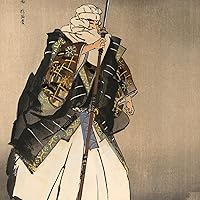
In the year, 354 A.D., Julian, a sheltered scholar and pacifist lives in peace-until a summons from Emperor Constantine the Great changes the young man's life forever. Dispatched to Gaul to help reclaim a beaten Roman territory from German barbarians, Julian displays a surprising and brutal genius for survival against impossible odds. Emerging as an unlikely hero and adored by a legion of zealots, his untapped ambition is ignited-to reign as the new emperor. It's a position of power that'll test the loyalty of his friends, stir the ire of enemies, and cast an ominous shadow over his mad, and most magnificently impossible conquest of all...
From the author of the acclaimed The Ten Thousand comes a breathtaking recreation of the historic rise to power of a ruthless yet unlikely leader plunged into the chaos of war-and his shocking fall that would become one of the most fascinating mysteries of the ages. A novel of courage and conviction, of loyalty and betrayal, of personal victory and dark ambition, Gods and Legions is epic storytelling at its most riveting.
Michael Curtis Ford is an American historical novelist, writing novels about Ancient Rome and Ancient Greece. He has worked variously as a laborer, a ski patrolman, a musician, a consultant, a banker, a Latin teacher, and a translator. He holds degrees in Economics and Linguistics and lives in Oregon, where he and his wife homeschool their three children. He has also written numerous articles on ancient military themes.
This is technically brilliant historical fiction. Like Ford's earlier novel, The Ten Thousand, it was a laborious but ultimately worthwhile read. It is crowded with actual historical figures who are brought to life in vivid detail. The dialogue, much of which is derived from classical sources, rings true. The details of daily life, travel, politics, warfare and religious rituals are also given painstaking attention.
From the point of view of a trusted court physician, this novel narrates the reversion of the Emperor Julian from Christianity to a fervent and fanatical paganism. But in spite of this he emerges as a likeable and serious soul pulled in different ways by opposing forces and finally dominated by a sort of frenzy.
I'll try to write a more complete review later. Suffice it to say, this is excellent historical fiction. It's set in the late 4th Century A.D. when the Roman Empire is in decline. A new emperor appears who wants to restore the greatness of the Empire. Emperor Julian is a scholar turned warrior- and, incredibly, nearly pulls it off. NO spoilers here as we know Rome is headed for its downfall...
A take on Emperor Julian, the last Roman emperor who tried to eradicate Christianity as the main religion of the Roman Empire (then situated mostly in Constantinople, now Istanbul).
A lot of it seems to be Historically accurate though there are some areas that are considered to be questionable and the author does take liberties in certain areas where we really do not know, for sure, what happened.
Great battles and ideas, especially in the beginning against the Persian elephants and the Germanic tribes fooling the Romans along the river.
The take on Julian's reasons for having problems with Christianty were done well enough, but, for such a hot topic, they could have spent more time detailing it as we are mostly a Christian country and a superb reason is needed for people to understand why one might want to not make it the main religion.
HISTORICAL FOCUSES: B to B plus; STORY/PLOTTING: B minus; CHARACTERS/DIALOGUE: B minus to B; OVERALL GRADE: B minus to B.
Juliano es un personaje histórico muy interesante que, yendo contracorriente, en el siglo IV intentó revertir Roma al paganismo después de la conversión de su predecesor, Constantino.
En realidad sus creencias estaban muy influidas por los filósofos griegos y estaba más cerca del neoplatonismo que del paganismo romano original. Esta novela relata su lucha por impedir la expansión del cristianismo, emprendiendo, por ejemplo, la reconstrucción de templos paganos que habían sido arruinados por los emperadores anteriores.
El relato no me ha resultado tan interesante como prometía el tema, así que leeré la novela de Gore Vidal sobre el mismo personaje.
-Más que una reinterpretación, un camino diferente con destino similar al de la historiografía.-
Género. Novela Histórica.
Lo que nos cuenta. El obispo de Constantinopla escribe una misiva al Papa que va acompañada del diario que siguió su fallecido hermano, Cesáreo, que ejerció como médico del emperador Juliano a quien conoció por primera vez en Atenas cuando ambos eran jóvenes, en tiempos del emperador Constancio.
¿Quiere saber más de este libro, sin spoilers? Visite:
This book is rife with problems, most importantly the narrator. Ford admits in his intro that Julian is one of history's most fascinating characters yet saddles Julian and the readers with a vitriolic, unsympathetic narrator which makes much of the book, especially the latter half, an unpleasant read.
Perhaps that was Ford's intention; by making the narrator, his cause and his viewpoint so vile that the reader would naturally feel empathy for Julian and his cause. If that is his intention it doesn`t work well as the narrator becomes tedious and the reader is left wondering why Julian bothers keeping him alive, let alone in his presence. The narrator is more than a foil, he is annoying. If Ford's intention was to vilify Julian, and that is possible, he again fell flat because of the weak device of the narrator. He makes the Christian position a caricature. It reads like a shallow polemic from the 19th century.
All the characters ended up being painted with a cartoonist's touch: Christian zealot narrator; a tortured Julian in first half of book, insane Julian in the second half simply because he reverts to the religious beliefs of the majority of his subjects and ancestors. They are stock characters all of them. Maximus especially comes across as a caricature; he is depicted as an evil little dwarf, simply because he opposes the Christian position.
The world Ford creates does not feel like the 4th century, it feels like the 9th or 10th. He does not understand the ancient world-he might have a better go at the Middle Ages in future fiction because this isn`t his forte. The Christianity of the 4th century was divided and turbulent and did not have the "Church is eternal" aura of the Middle Ages but that is the canvas Ford paints. Christianity was still a new, novel belief system to most Romans in East and West. It had only been in power 30 or 40 years and it was not evident to most people of the time whether it would remain in power. One doesn`t get that sense from Ford, rather it seems as if Julian has disrupted the longstanding natural order of things, which in fact it was not.
The first half of this book is its real strength and flies along as a real page-turner. While it suffers from many of the problems already mentioned, they are more in the background. The battle scenes are the strongest, most well written parts of the book. They really come to life, as do many of the scenes in Gaul. That first half of the book is what earns this work its two stars rather than one. Overall this is poor history and weaker fiction with some exciting moments in the first half. Comment
I had read Gore Vidal's novel of Roman emperor Julian, and this is a good account for comparison. Ford delivers the goods with descriptions of Roman battles, bizarre feasting rights, and lots of pagan rituals.
A pretty good rendition of the degenerate Roman empire. The novelization follows closely Julian's actual life, so - kids - get over it - yes, the actual life was not all that Hollywood, though it had its moments.
I love the characterization of Emperor Constantius. The other characters are drawn fairly well, and the action pretty good. The conceit of the narrator I thought worked OK, but could have been better.
Roman History buffs will like it, others, maybe not so much.
Ford does an excellent job of immersing the reader in the time period. This is my second read from Ford, and I can say that he does a great job of conveying the gritty and awful nature of combat in the ancient era. I could not pull myself away from this book when there was an action sequence.
Πολύ καλό, ιστορικό μυθιστόρημα για μια αμφιλεγόμενη μορφή του Βυζαντίου. Έντεχνα αποφεύγει τα δύσκολο (και μικρό είναι η αλήθεια) διάστημα που ο Ιουλιανός είναι αυτοκράτορας και επικεντρώνεται στο πριν και το μετά. Έχει καλή ροή, δεν κουράζει και είναι αρκετά σωστό ιστορικά. Με χάλασε λίγο που κάνει σπόιλερ το τέλος του από τις πρώτες σελίδες, αλλά πιθανότατα δεν θα χαλάσει πολλούς.
A great book that puts you in the time when the Roman Empire was divided into the western and eastern empire. Ford chronicles the brief stint of Emperor Julian, the ruler of the western empire while he was constantly watched and suspected by his rival Constantius II, ruler of the eastern empire in Constantinople.
Ford puts us beside Julian as he campaigns against the Franks in western Europe and later against the Sassanid (Persian) Empire in the East. We see how the Caesar of the western empire strives to bring Rome back to her former glory as he tries to reunite the eastern and western parts of the empire, midst the clashes of the roman pagan and newly formed christian sects, conspiracy within the senate, and barbarians threatening roman peace.
I cannot remember the last time it took me two weeks to get through a book of 450 pages. I can't fully blame the oft-times slow paced action or the unlikeable character at the centre of the plot: Julian the Apostate. It has been a busy two weeks, but the unpredictable Emperor lends himself to a novel that seems to be more a compilation of his triumphs and tragedies than a well plotted novel. Julian starts out as the intelligent hero you want to cheer for, but ends the book as the pompous dolt you hope dies quickly in some ironic Hollywood ending. Nevertheless, Ford's first book, The Ten Thousand, was much better and I hope his next is too.
"Gods and Legions" is the second book that I have read by Michael Curtis Ford. It is written in a style very similar to that of his first book: "The Ten Thousand." Some of the stylistic similarities come in the form of the narrator being a close friend and not the subject of the story itself. Ford also goes to great lengths to bring the characters, so far removed from our time, to life in a believable way. Ford also strives to capture the transitionary nature of the time period, as the Western World was going from Classical sensibilities to Medieval ones, shedding its Pagan and philosophical past for a new Christian and dogmatic one. In the case of "Gods and Legions" we follow the life of the Roman Emperor Julian (330-363 CE), known to history as Julian the Apostate. Julian the Apostate by Ford's own admission was difficult to write due to the vast corpus of works that Julian leaves to modern readers, the Emperor wrote on a variety of subjects, mainly philosophy and religion. As mentioned before the narrator while connected to Julian is his own historic giant St. Caesarius of Nazianzus (331-368 CE), an early hero of Christianity, a physician, and one of the few Christians allowed to remain at Julian's court. St. Caesarius is in a lot of ways the Emperor's foil, Christian, rational and psychologically reliable; as the story progresses St. Caesarius documents Julian's changes, his adaptation of paganism, namely the worship of Ares, the Roman God of War, and Mithras, the Legionary's soldier god. As Ford states what helped is both Caesarius and his brother Bishop Gregory of Nazianzus left detailed records of their interpretations and time with Julian. If you are a fan of history, religion, or ancient philosophy I can't think of a better fictional story about Rome's great time of transition as "Gods and Legions."
"Gods and Legions" is a solid book, worth it for fans of Roman history/historical fiction but probably a bit dry for everyone else. Julian is a complex man and an interesting character, and for the most part Ford does well at presenting him, especially his transition (descent) from philosopher to General to power-crazed Emperor. Caesarius is a good narrator and character too; I like when relatively minor "periphery" historical figures are the main narrator in historical fictions. Sallustius is also dynamic, although Constantius II is a bit of a caricature. The prose is descriptive but maybe a bit too much and the story moves fairly slowly, although there are some very exciting parts like the big battle against the Germans, trying to build the bridge (for being a lot of pages about a small event this part was surprisingly a favorite), or the ending invasion of Sassanid Persia. One problem I had with the plot was how others' reacted to Julian. When he is Caesar it's presented like all Constantius's courtiers sneered and mocked Julian, but then once he's Emperor--and tries to change the Empire's religion back to paganism--everyone (except Caesarius) just goes along with this without question. Both read false. As the heir there would have been some courtiers hedging their bets and currying his favor, and as Emperor there would have been some influential Christians who would balk at his reversion. Seemed like Ford was arbitrarily trying to make Julian seem isolated at the beginning and Caesarius seem isolated at the end.
I read this book a bit slower than the first one, and because they're very similar in style, and in a way in the topic, too, I felt I had to read other types of books between the two (as it happens to me all the time). This one was more of a war story than 'The Ten Thousand', but it was also a tale of how a person who's (I can't find a better word) completely normal at the beginning gets crazier and crazier when power has reached him. I mean, psychologically, I'm pretty sure he went insane, and it was thoroughly and enjoyably demonstrated.
I also enjoyed the banters between the Julian and Caesarius regarding religion, it was interesting to see, how everybody thinks that they're beliefs are the truth, and nothing else. It was both scary and raised a smile.
I can't say I liked any of the characters, but that doesn't mean they weren't good ones. I just couldn't particularly associate with any of them. This may be because my thinking is pretty far from ancient roman, and even farther from being religious (which makes a huge part of this book). Taking the historical period the novel is set in, the characters behaved believably. I thought this strong bigotry started later with Christians, though. Sometime more into the dark Middle Ages...
Those who like ancient roman history will probably like this book very much.
Novela histórica centrada en la figura del emperador Juliano "El Apóstata" y en las tribulaciones por las que atravesó el Imperio Romano tardío mientras se iba imponiendo el cristianismo como religión dominante. Asistimos al surgimiento inesperado de un líder cuando más lo necesitaba el Imperio para, a medida que avanza el relato, verlo apagarse paulatinamente.
This is a very good novel. I enjoyed reading it. If you are interested in the history of the Roman Empire I would highly recommend reading this novel. It is written with great detail and uses characters that really existed to tell a very exciting and interesting story. I learned a lot about the Roman Empire that I did not know and I loved this book.
A hidden gem of a book, and the one responsible for rekindling my love of reading. I finished this novel back in grade 6, and boy was it enthralling. Meticulously researched, from the tactics to the equipment to the internal politics. The story will grip you, take you from the dark forests of Germania to the sands of Persia, and not let go until the sun rises on another day...
Awesome read that gives you a fascinating view into what it may have been like to live in a tumultuous Roman period. Interesting character development with a historical backing to make it impactful.
If you are interested in Roman history, military history, stories about how power corrupts (or empowers), and the influence of religion on historical figures, then I'd say give this a shot.
Interesting depictions of political intrigue and battles kept me tuned in for about two thirds of the book. Then as the story became more about religious contention, I grew bored.
I suppose it is time to see what Vidal made of it.
Five stars for being a well crafted and interesting novelistic portrait of Julian the Apostate. The form borrows much from Robert Graves' "Belisarius", not that this is a bad thing.
Simplesmente um dos piores livros que já li. Demasiado descritivo, cenas que nada adicionam ao enredo em geral e personagens sem personalidade nenhuma. Não consegui acabá-lo, mas não é preciso para saber que é um péssimo livro.