

What do you think?
Jason Bourne #8
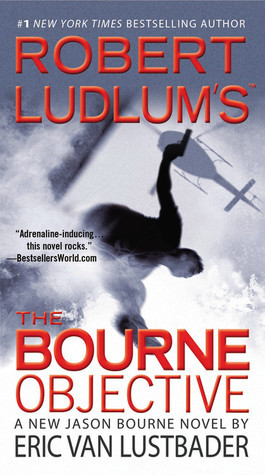
The Bourne Objective
New York Times bestselling author, Eric Van Lustbader, returns with another Jason Bourne thriller as he spars off against another deadly agent--and he might be the perfect match for Bourne.
Facing down mercenaries in Africa, Jason Bourne witnesses the death of an art dealer named Tracy Atherton. Her killing dredges up snatches of Bourne's impaired memory, in particular the murder of a young woman on Bali who entrusted him with a strangely engraved ring-an artifact of such powerful significance that people have killed to obtain it. Now he's determined to find the ring's owner and purpose. But Bourne never knows what terrible acts he'll discover he committed when he digs into the past.
The trail will lead him through layers of conspiracy to a vicious Russian mercenary, Leonid Arkadin, who was also a graduate of the Central Intelligence training program Treadstone. A covert course designed to create ruthless assassins for C.I., it was shuttered by Congress for corruption. Yet before it was dismantled, it produced Bourne and Arkadin, giving them equal skills, equal force, and equal cunning.
As Bourne's destiny circles closer to Arkadin's, it becomes clear that the eventual collision of these men is not of their own making. Someone else has been watching and manipulating them. Someone who wants to know, Who is the more deadly agent?
Facing down mercenaries in Africa, Jason Bourne witnesses the death of an art dealer named Tracy Atherton. Her killing dredges up snatches of Bourne's impaired memory, in particular the murder of a young woman on Bali who entrusted him with a strangely engraved ring-an artifact of such powerful significance that people have killed to obtain it. Now he's determined to find the ring's owner and purpose. But Bourne never knows what terrible acts he'll discover he committed when he digs into the past.
The trail will lead him through layers of conspiracy to a vicious Russian mercenary, Leonid Arkadin, who was also a graduate of the Central Intelligence training program Treadstone. A covert course designed to create ruthless assassins for C.I., it was shuttered by Congress for corruption. Yet before it was dismantled, it produced Bourne and Arkadin, giving them equal skills, equal force, and equal cunning.
As Bourne's destiny circles closer to Arkadin's, it becomes clear that the eventual collision of these men is not of their own making. Someone else has been watching and manipulating them. Someone who wants to know, Who is the more deadly agent?
539 pages, Mass Market Paperback
First published June 1, 2010
About the author
Eric Van Lustbader
233 books1,252 followersEric Van Lustbader was born and raised in Greenwich Village. He is the author of more than twenty-five best-selling novels, including The Ninja, in which he introduced Nicholas Linnear, one of modern fiction's most beloved and enduring heroes. The Ninja was sold to 20th CenturyFox, to be made into a major motion picture. His novels have been translated into over twenty languages.
Mr. Lustbader is a graduate of Columbia College, with a degree in Sociology. Before turning to writing full time, he enjoyed highly successful careers in the New York City public school system, where he holds licenses in both elementary and early childhood education, and in the music business, where he worked for Elektra Records and CBS Records, among other companies.
http://us.macmillan.com/author/ericva...
Mr. Lustbader is a graduate of Columbia College, with a degree in Sociology. Before turning to writing full time, he enjoyed highly successful careers in the New York City public school system, where he holds licenses in both elementary and early childhood education, and in the music business, where he worked for Elektra Records and CBS Records, among other companies.
http://us.macmillan.com/author/ericva...
Ratings & Reviews
Friends & Following
Create a free account to discover what your friends think of this book!
Community Reviews
Displaying 1 - 30 of 273 reviews

June 19, 2012
Eric van Lustbader is not a writer. A writer would use words appropriately. In the first few pages of The Bourne Objective, van Lustbader uses logarithm when he means algorithm, twice (at least), and he uses precipitously when he means either vertically or perpendicularly.
Pellet-sized ultrasonic screamers that paralyze large rooms of people, files locked using "logarithms", burner cellphones a "local call" then one using a 10-digit number, laptop computers with ejectable drives and netbooks that can be massively upgraded by an agent in the field litter this inconclusive chapter of David Webb's life, conflict with reality, adding nothing except length to the book.
-Jason's world used to revolve around Marie. Suddenly, in Van Lustbader's second Bourne novel, Marie caught a cold, died and Jason decided to dump their kids with her parents in Canada in the first 25 pages of his 2nd novel and has not seen, mentioned or thought about them since.
-Ludlum built some great supporting characters over his 3 Bourne novels and they fleshed out who Jason was. Van Lustbader killed off the remainder of those characters in his 2nd and early pages of his 3rd books. Now, he has introduced a much different supporting cast that dominate, rather than compliment Jason, in his books.
-In Van Lustbader's first Bourne novel he told a pretty decent story about Jason, seemingly in his early 40's, finding his long lost son, Khan. Thinking Khan would be a featured character going forward, he has not been heard from since.
-Jason, in Ludlum's books, hated Jason Bourne and wanted to be David Webb. Within the first few chapters of Van Lustbader's second novel, Jason gives up being David Webb and little more is mentioned of his life as David Webb.
The problem may have been that after having started his series pretty true to Jason Bourne ,due to poor reviews, publisher feedback or trying to fit better to the fans of Matt Damon's younger/edgier Jason Bourne, Van Lustbader then threw away Jason's life and identity, as well as, began killing off Ludlum's supporting characters and introducing his own by the his second book. Not to mention de-aging Jason. Then, he seemly started over from scratch for the next 3 books. Basically reinventing the character with an overhaul of his life and personality. In my opinion, this is where he went wrong. He should have simply did his best to stay with Ludlum's character for Bourne books and write this character as his own character (different name and background) for these last three adventures.
Pellet-sized ultrasonic screamers that paralyze large rooms of people, files locked using "logarithms", burner cellphones a "local call" then one using a 10-digit number, laptop computers with ejectable drives and netbooks that can be massively upgraded by an agent in the field litter this inconclusive chapter of David Webb's life, conflict with reality, adding nothing except length to the book.
-Jason's world used to revolve around Marie. Suddenly, in Van Lustbader's second Bourne novel, Marie caught a cold, died and Jason decided to dump their kids with her parents in Canada in the first 25 pages of his 2nd novel and has not seen, mentioned or thought about them since.
-Ludlum built some great supporting characters over his 3 Bourne novels and they fleshed out who Jason was. Van Lustbader killed off the remainder of those characters in his 2nd and early pages of his 3rd books. Now, he has introduced a much different supporting cast that dominate, rather than compliment Jason, in his books.
-In Van Lustbader's first Bourne novel he told a pretty decent story about Jason, seemingly in his early 40's, finding his long lost son, Khan. Thinking Khan would be a featured character going forward, he has not been heard from since.
-Jason, in Ludlum's books, hated Jason Bourne and wanted to be David Webb. Within the first few chapters of Van Lustbader's second novel, Jason gives up being David Webb and little more is mentioned of his life as David Webb.
The problem may have been that after having started his series pretty true to Jason Bourne ,due to poor reviews, publisher feedback or trying to fit better to the fans of Matt Damon's younger/edgier Jason Bourne, Van Lustbader then threw away Jason's life and identity, as well as, began killing off Ludlum's supporting characters and introducing his own by the his second book. Not to mention de-aging Jason. Then, he seemly started over from scratch for the next 3 books. Basically reinventing the character with an overhaul of his life and personality. In my opinion, this is where he went wrong. He should have simply did his best to stay with Ludlum's character for Bourne books and write this character as his own character (different name and background) for these last three adventures.

May 20, 2010
3.5 stars but rounded up
I’ve always been a big fan of Robert Ludlum’s books. The Jason Bourne books were amongst my favourites. So I was really excited to find out that I had won this book in a Goodreads First Reads Giveaway.
Sadly, Robert Ludlum passed away a few years ago, but someone is still writing the Jason Bourne series. Eric Van Lustbader has taken over this franchise and seems to have succeeded in doing so. The book is written in Robert Ludlum’s style. My expectations of a Robert Ludlum were met. Reading the book felt like I was watching one of the Bourne movies, complete with *swoon* Matt Damon and the Bourne movie soundtrack.
If you have never read a Robert Ludlum book, it can be a little confusing. There are many exotic locations all over the world and a huge cast of characters. The plot skips from Bangalore to Russia, Bali, London, Mexico, Morocco, and the United States. Jason Bourne and those that plot to abduct/assassinate him travel a lot.
The plot reminded me of “Lord of the Rings.” Everyone is searching for a ring, a ring with special symbols engraved on it. This ring is the key to a computer that has some information about a very spectacular treasure. There are further references to “Lord of the Rings” when Jason visits a small British town, he remarks to himself that the place was missing Hobbits and Orcs and that the place was straight out of a Tolkien novel.
As mentioned above, the cast of characters is vast and you practically need a scorecard to keep up. There are all sorts of conspiracies and power struggles and the resurrection of the Treadstone program. Nothing is as it should be.
I liked how Jason Bourne was portrayed in this book. Jason still has not recovered all of his memory and the bits that come to him add to confuse him. A memorable quote ”A man with no memory isn’t difficult to lie to. In fact, Bourne reflected, it was probably fun to lie to an amnesiac and watch his reactions.”
The bad guys are exceptionally heinous. There is lots of violence and some particularly nasty torture. There was an incredibly nasty scene involving a shark and another with battery acid.
The Bourne Objective is a fun book to read. There is a lot of action, suspense, and explosions. Suspend belief and enjoy!
I’ve always been a big fan of Robert Ludlum’s books. The Jason Bourne books were amongst my favourites. So I was really excited to find out that I had won this book in a Goodreads First Reads Giveaway.
Sadly, Robert Ludlum passed away a few years ago, but someone is still writing the Jason Bourne series. Eric Van Lustbader has taken over this franchise and seems to have succeeded in doing so. The book is written in Robert Ludlum’s style. My expectations of a Robert Ludlum were met. Reading the book felt like I was watching one of the Bourne movies, complete with *swoon* Matt Damon and the Bourne movie soundtrack.
If you have never read a Robert Ludlum book, it can be a little confusing. There are many exotic locations all over the world and a huge cast of characters. The plot skips from Bangalore to Russia, Bali, London, Mexico, Morocco, and the United States. Jason Bourne and those that plot to abduct/assassinate him travel a lot.
The plot reminded me of “Lord of the Rings.” Everyone is searching for a ring, a ring with special symbols engraved on it. This ring is the key to a computer that has some information about a very spectacular treasure. There are further references to “Lord of the Rings” when Jason visits a small British town, he remarks to himself that the place was missing Hobbits and Orcs and that the place was straight out of a Tolkien novel.
As mentioned above, the cast of characters is vast and you practically need a scorecard to keep up. There are all sorts of conspiracies and power struggles and the resurrection of the Treadstone program. Nothing is as it should be.
I liked how Jason Bourne was portrayed in this book. Jason still has not recovered all of his memory and the bits that come to him add to confuse him. A memorable quote ”A man with no memory isn’t difficult to lie to. In fact, Bourne reflected, it was probably fun to lie to an amnesiac and watch his reactions.”
The bad guys are exceptionally heinous. There is lots of violence and some particularly nasty torture. There was an incredibly nasty scene involving a shark and another with battery acid.
The Bourne Objective is a fun book to read. There is a lot of action, suspense, and explosions. Suspend belief and enjoy!

Read
August 4, 2011The book starts, "Night descended like a curtain of scuttling insects, coming alive with the setting of the sun. The noise was atrocious, as was the stench of unwashed bodies, human excrement, rotting food, and decomposing bodies. The garbage of Bangalore shifted back and forth like a sludgy tide...."
And while it does get better, it doesn't get much better. We face a character list out of Tolstoy, baal worship, secret societies, lesbianism, King Solomon's gold and transmutation. Yes, transmutation (turning lead into gold).
I am just glad I borrowed this new book in the Bourne series from the library. The writing is terrible, the plot arcane and ridiculous at the same time and the revelations about Treadstone unending. I'm not sure what guilty pleasure keeps any of us reading about Bourne (Yes, I confess to having read all of them) but this book may be the innoculation that sticks. Yes, Ludlum could get predictable and he did recycle the same themes throughout his numerous books but there is no excuse for this, the latest in the series. For a good portion of the book I couldn't decide if I or the characters were supposed to be taking the things said seriously or if it was all a bizarre plot twist with everyone at one particular moment jumping out at Jason and yelling 'Surprise!' in honor of his birthday.
Do yourself a favor if you love the Bourne series,...skip this one.
And while it does get better, it doesn't get much better. We face a character list out of Tolstoy, baal worship, secret societies, lesbianism, King Solomon's gold and transmutation. Yes, transmutation (turning lead into gold).
I am just glad I borrowed this new book in the Bourne series from the library. The writing is terrible, the plot arcane and ridiculous at the same time and the revelations about Treadstone unending. I'm not sure what guilty pleasure keeps any of us reading about Bourne (Yes, I confess to having read all of them) but this book may be the innoculation that sticks. Yes, Ludlum could get predictable and he did recycle the same themes throughout his numerous books but there is no excuse for this, the latest in the series. For a good portion of the book I couldn't decide if I or the characters were supposed to be taking the things said seriously or if it was all a bizarre plot twist with everyone at one particular moment jumping out at Jason and yelling 'Surprise!' in honor of his birthday.
Do yourself a favor if you love the Bourne series,...skip this one.

July 28, 2010
Robert Ludlum must be turning over in his grave. This book was a terrible facsimile of the wonderful Jason Bourne series started by Ludlum. There was little or no research into the various locations visited during this novel and it was horribly dull throughout. There was also no explanation of some of the events from previous novels so, unless you had just read one, you really didn't know what was going on. I do know that I've read my last Eric Van Lustbader book. May Robert Ludlum rest in peace!
July 29, 2010
This being the 8th novel within the world famous Jason Bourne, I expected it to be a bore, but my expectation were hugely shattered, and fortunately so.
BOURNE STILL HAS IT,Eric Van Lustbader has managed to pen another contriving, fast paced and explosive plot, where we are introduce to old and new alike characters...
Bourne Objective, is a direct follow-up of its predecessor Bourne Deception, its a riveting continuation of the deadly chase between Leonid Danilovich Arkadin and Jason Bourne, the result of which will prove who the world's ultimate warrior, along with the hunt for the legendary treasure of King Solomon which results in a penultimatium and explosive show-down.
Lustbader has manage to smoothly integrate a certain level of mysticism into a thorough modern story, fans of his Ninja Cycle will instantly recognise this. Bourne Objective is well-worth a read if you're a long term fan of the Bourne Series, even if you're unfamiliar with them there something here for every action thriller fanatics to enjoy
BOURNE STILL HAS IT,Eric Van Lustbader has managed to pen another contriving, fast paced and explosive plot, where we are introduce to old and new alike characters...
Bourne Objective, is a direct follow-up of its predecessor Bourne Deception, its a riveting continuation of the deadly chase between Leonid Danilovich Arkadin and Jason Bourne, the result of which will prove who the world's ultimate warrior, along with the hunt for the legendary treasure of King Solomon which results in a penultimatium and explosive show-down.
Lustbader has manage to smoothly integrate a certain level of mysticism into a thorough modern story, fans of his Ninja Cycle will instantly recognise this. Bourne Objective is well-worth a read if you're a long term fan of the Bourne Series, even if you're unfamiliar with them there something here for every action thriller fanatics to enjoy

July 1, 2018
I wouldn't say I'm a fan of the Bourne franchise. I had only seen the second film, and it's still the only film where I was thinking about walking out of the cinema. But this book came my way and we all know books tend to be better than films so here I am.
I jumped in a book 8, which meant I didn't have a clue who was who. There were lots of characters, each who seemed to have very complicated relationships with each other and all who worked for secret agencies, with different agendas. It took me a little while to sort them all out and I'm still not sure I did this correctly.
Bourne has amnesia, so he didn't know what was going on either, though he did know some of the other characters.
This was an action packed book, with they mystery of Solomon's gold thrown it, it was enjoyable but didn't make me want to hunt out any of the others in the series.
I jumped in a book 8, which meant I didn't have a clue who was who. There were lots of characters, each who seemed to have very complicated relationships with each other and all who worked for secret agencies, with different agendas. It took me a little while to sort them all out and I'm still not sure I did this correctly.
Bourne has amnesia, so he didn't know what was going on either, though he did know some of the other characters.
This was an action packed book, with they mystery of Solomon's gold thrown it, it was enjoyable but didn't make me want to hunt out any of the others in the series.

September 5, 2011
An odd end to the Arkadin trilogy. After two years between The Bourne Sanction and The Bourne Objective, but a matter of months to this third one, it feels a little rushed. A slight side step into pseudo-religion and mysticism leaves you wondering if this is the same Bourne that we're used to.

April 23, 2019
Maybe it wasn't the best to jump into the Bourne series at book number 8 but I just did not like anything about this book really.
Way too much action with not much purpose. People shooting guns and hitting each other repeatedly with little effect. I was getting confused about who was who but I didn't really care so didn't go back to reread.
Bourne seemed to have some memory problems but I thought that was the problem in the first instalment in the series?
My partner assures me that the first film is amazing but after reading this book, I don't think this series is for me.
Way too much action with not much purpose. People shooting guns and hitting each other repeatedly with little effect. I was getting confused about who was who but I didn't really care so didn't go back to reread.
Bourne seemed to have some memory problems but I thought that was the problem in the first instalment in the series?
My partner assures me that the first film is amazing but after reading this book, I don't think this series is for me.
July 13, 2010
First thing with this book is that you need to remember that it is not Robert Ludlum writing it (my mistake also) and it's Eric Van Lustbader. EvL is not Ludlum and never will be. It's a brave person stepping in to the shoes of Ludlum and putting yourself out there in the firing line given the die-hard fans that exist already for Jason Bourne. So once you have understood and convinced yourself that it is not Robert Ludlum writing this novel, then your enjoyment increases significantly.
Jason Bourne is still the same although his powers of physical combat and awareness levels have waned compared to his previous adventures. Still... the dude is suffering from Amnesia so it can't be helped I guess. This book, by itself, is not a bad read at all. I managed to finish it quite quickly so it must have kept my interest levels to a high and in fact I was sad to see it end. The author does make you hate the villains and you feel a sense of relief when they do get punished. The storyline is OK except that if you have not read previous novels then you might have some trouble keep up with the storyline and the sudden appearance of certain characters.
When I read books, I tend to put a face on characters. The hero is quite difficult to shake off given Matt Damon has starred in several movies in the role of Jason Bourne. Previously I never put a face to Leonid Arkadin in the last novel but I think Clive Owen would be good in the role.
Good read. Better than his previous efforts to revive Jason Bourne.
Jason Bourne is still the same although his powers of physical combat and awareness levels have waned compared to his previous adventures. Still... the dude is suffering from Amnesia so it can't be helped I guess. This book, by itself, is not a bad read at all. I managed to finish it quite quickly so it must have kept my interest levels to a high and in fact I was sad to see it end. The author does make you hate the villains and you feel a sense of relief when they do get punished. The storyline is OK except that if you have not read previous novels then you might have some trouble keep up with the storyline and the sudden appearance of certain characters.
When I read books, I tend to put a face on characters. The hero is quite difficult to shake off given Matt Damon has starred in several movies in the role of Jason Bourne. Previously I never put a face to Leonid Arkadin in the last novel but I think Clive Owen would be good in the role.
Good read. Better than his previous efforts to revive Jason Bourne.

March 14, 2022
Picked up a Bourne book after about 5-6 years and yep he's still the same.
I'm having a tough time trying to figure out why he doesn't age or why he just doesn't die at all. The first three books are on a pedestal of its own and no subsequent book can reach those heights but Lustbader's Bourne version still manages to do okayish.
There isn't plots within plots within plots made complicated by amnesia and cover names that made the trilogy an instant hit but there is still amnesia and maybe puzzles that is good enough to carry the tale forward.
I reaaaally really want to go back to the trilogy again but apparently that has to wait. There are a few more books left in this series before I restart.
Onward to the next one, thank God it's already released. Saves me the trouble of remembering names, just like David Webb.
I'm having a tough time trying to figure out why he doesn't age or why he just doesn't die at all. The first three books are on a pedestal of its own and no subsequent book can reach those heights but Lustbader's Bourne version still manages to do okayish.
There isn't plots within plots within plots made complicated by amnesia and cover names that made the trilogy an instant hit but there is still amnesia and maybe puzzles that is good enough to carry the tale forward.
I reaaaally really want to go back to the trilogy again but apparently that has to wait. There are a few more books left in this series before I restart.
Onward to the next one, thank God it's already released. Saves me the trouble of remembering names, just like David Webb.

June 6, 2010
I wish Van Lustbader would stop writing these books so I wouldn't feel compelled to read them just because they are supposedly a continuation of one of my favorite series. In his latest gravy train of Ludlum (seriously, RL's name is 3-4x larger than EVL's on the cover) the franchise continues to wander. This time, there is even a mysterious powerful secret society (maybe EVL should have put Dan Brown's name on the cover too).
I hope we aren't subjected to movie adaptations of these new Bourne books. Then again, if Greengrass and Damon aren't part of future movies (as reported), the disconnect between the movies should parallel the disconnect between the books.
I hope we aren't subjected to movie adaptations of these new Bourne books. Then again, if Greengrass and Damon aren't part of future movies (as reported), the disconnect between the movies should parallel the disconnect between the books.
December 19, 2016
Sooo many characters to keep track of - it was sometimes difficult to follow.
Do I think Arkadin is dead? No not unless Eric wants him to be
and I am not sure I like Treadstone being an "official" approved government agency as implied in the end.
Do I think Arkadin is dead? No not unless Eric wants him to be
and I am not sure I like Treadstone being an "official" approved government agency as implied in the end.
This entire review has been hidden because of spoilers.

June 12, 2019
Jason Bourne is forced into yet another mission in which everyone knows more than he does, and everything is done by the seat of his pants. It is so formulaic that it's almost impossible to enjoy it.

August 2, 2012
Okay. I'm lost. This book is clearly for Bourne aficionados. I have no idea what the heck is going on so I am throwing in the towel on page 65.
August 2, 2021
I read up to page 98. I don't know if that can classify as being read.
This story is so convoluted. It is so difficult to follow the characters and story line, I just gave up.
I used to love Robert Ludlum, but no longer.
If you can't enjoy reading a story and get into the storyline, why bother reading it.
This story is so convoluted. It is so difficult to follow the characters and story line, I just gave up.
I used to love Robert Ludlum, but no longer.
If you can't enjoy reading a story and get into the storyline, why bother reading it.
October 12, 2023
ce livre est un cauchemard
Un deluge de personnages et de multiples histoires croisées impossible a suivre. J’ai termine la lecture par entêtement…
Je m’ennuie du vrai Ludlum. JAMAIS je ne relirai un livre de cet auteur impossible à suivre avec ses centaines de personnages entremêlés.
J’ai vraiment détesté…. Robert Ludlum génie du thriller on s’ennuie de toi!
Un deluge de personnages et de multiples histoires croisées impossible a suivre. J’ai termine la lecture par entêtement…
Je m’ennuie du vrai Ludlum. JAMAIS je ne relirai un livre de cet auteur impossible à suivre avec ses centaines de personnages entremêlés.
J’ai vraiment détesté…. Robert Ludlum génie du thriller on s’ennuie de toi!

June 18, 2018
2.5 This was part of a series. There was some flashback to explain what was going on. Difficult for me to keep everything straight. It killed my suspension of disbelief with the mysterious and powerful society and the implied Solomon treasure being real. This just didn’t work for me.
June 28, 2023
Another Suspenseful Bourne Novel
This novel is in the same space as other books about the activities of Bourne. There was much action and suspense as Bourne maneuvers through various situations and escapes death multiple times. This was a great read!
This novel is in the same space as other books about the activities of Bourne. There was much action and suspense as Bourne maneuvers through various situations and escapes death multiple times. This was a great read!

July 26, 2011
Interesting, but not my favourite one in the series. A little slower until about midway through. Regardless, I will still read the rest in the series.

September 19, 2016
This is my first (and last) attempt to read a Lustbader Bourne book.
November 2, 2017
At least all the people who kept screaming about Bourne being a threat to national security are dead now. We'll have to see where it goes from here.

July 26, 2017
Thanks to Mr. Lustbader, Jason Bourne has devolved from a tortured amnesiac assassin to stock action hero which is outright disappointing. The Bourne Objective is yet another cookie-cutter instalment in the series in the hands Eric Van Lustbader. I am sure Mr. Ludlum would never have let Bourne get so far away from the Bourne that he had envisioned. In Bourne Objective, he is further degraded to a mere co-star with his nemesis Leonid Arkadin. Trust me, even this Arkadin chap is nothing like the original nemesis, Carlos.
This book follows the typical style of Mr. Lustbader’s “moving chess pieces across the globe” which is supposed to converge into the climax of the story. If you had read “Angel Eyes” by Mr. Lustbader, you will know what I mean when I say “typical”. Even the climax is pretty Hollywood B-Grade action movie types and definitely not up to the mark for a legendary character like Jason Bourne. As usual, way too much time is spent on descriptions that mean nothing to the overall setup of the book. You can also expect the trademark clichés. The entire series and movement of events are overwhelming sometimes. There are just too many things going on with way too many players playing way too many angles. The action sequences and the inevitable betrayals are way too predictable as well. The prose continues to be clumsy.
In the hands of Mr. Ludlum, Jason Bourne was superb in every way. His thinking, his combat abilities, his investigative techniques, his journey was full of intrigue. Unfortunately in this rendition in Mr. Lustbader’s hands, Jason Bourne seems way too stupid for his reputation at times and then suddenly develops superhuman powers. The most interesting thing about Jason Bourne is his vulnerability and therefore his survival skills. This aspect is completely missing in the Jason Bourne as depicted by Mr. Lustbader in “The Bourne Objective”.
Some interesting things in the book could be listed as: the reviving of Treadstone by Willard, the ascensions of corrupt, power hungry, anti-bourne folks in the Central Intelligence, the appearance of a new organization and secret cabal called “Severus Domna”.
Overall, another very average read meant only for the hardcore Jason Bourne fans to trudge through it.
This book follows the typical style of Mr. Lustbader’s “moving chess pieces across the globe” which is supposed to converge into the climax of the story. If you had read “Angel Eyes” by Mr. Lustbader, you will know what I mean when I say “typical”. Even the climax is pretty Hollywood B-Grade action movie types and definitely not up to the mark for a legendary character like Jason Bourne. As usual, way too much time is spent on descriptions that mean nothing to the overall setup of the book. You can also expect the trademark clichés. The entire series and movement of events are overwhelming sometimes. There are just too many things going on with way too many players playing way too many angles. The action sequences and the inevitable betrayals are way too predictable as well. The prose continues to be clumsy.
In the hands of Mr. Ludlum, Jason Bourne was superb in every way. His thinking, his combat abilities, his investigative techniques, his journey was full of intrigue. Unfortunately in this rendition in Mr. Lustbader’s hands, Jason Bourne seems way too stupid for his reputation at times and then suddenly develops superhuman powers. The most interesting thing about Jason Bourne is his vulnerability and therefore his survival skills. This aspect is completely missing in the Jason Bourne as depicted by Mr. Lustbader in “The Bourne Objective”.
Some interesting things in the book could be listed as: the reviving of Treadstone by Willard, the ascensions of corrupt, power hungry, anti-bourne folks in the Central Intelligence, the appearance of a new organization and secret cabal called “Severus Domna”.
Overall, another very average read meant only for the hardcore Jason Bourne fans to trudge through it.

July 27, 2026
The Bourne Objective is exactly what I look for in a Bourne novel. It's fast-paced, intelligent, and packed with international intrigue. The action never lets up, and Jason Bourne remains a compelling character whose resourcefulness and determination keep the story moving. The globe-spanning settings and intricate conspiracy make for an entertaining read, even if the plot occasionally requires suspending disbelief. While I found some of the twists a little predictable and a few secondary characters less developed than I'd hoped, the novel still delivered plenty of suspense and satisfying action. It's not my favorite book in the Bourne series, but it's a solid thriller that kept me turning the pages and is well worth reading for fans of espionage fiction.
Jason Bourne is drawn into a dangerous mystery after witnessing the murder of art dealer Tracy Atherton during a mission in Africa. Her death triggers fragments of Bourne's lost memories, including the recollection of a young woman in Bali who entrusted him with an intricately engraved ring before she was killed. Convinced the ring is the key to a much larger conspiracy, Bourne sets out to discover its origins and purpose. His investigation leads him into a secretive struggle over the legendary treasure known as King Solomon's Gold, placing him in the crosshairs of intelligence agencies, powerful criminal organizations and Severus Domna. At the center of the conflict is Leonid Arkadin, a ruthless Russian assassin who graduated from the same CIA Treadstone program as Bourne. Matched in intelligence, combat skills, and determination, the two become locked in a deadly game of hunter and hunted, only to discover they are both pawns in someone else's plan. As Bourne races across Africa, Europe, and Asia, he must piece together his fragmented past while uncovering who is orchestrating the conflict between him and Arkadin.
Jason Bourne is drawn into a dangerous mystery after witnessing the murder of art dealer Tracy Atherton during a mission in Africa. Her death triggers fragments of Bourne's lost memories, including the recollection of a young woman in Bali who entrusted him with an intricately engraved ring before she was killed. Convinced the ring is the key to a much larger conspiracy, Bourne sets out to discover its origins and purpose. His investigation leads him into a secretive struggle over the legendary treasure known as King Solomon's Gold, placing him in the crosshairs of intelligence agencies, powerful criminal organizations and Severus Domna. At the center of the conflict is Leonid Arkadin, a ruthless Russian assassin who graduated from the same CIA Treadstone program as Bourne. Matched in intelligence, combat skills, and determination, the two become locked in a deadly game of hunter and hunted, only to discover they are both pawns in someone else's plan. As Bourne races across Africa, Europe, and Asia, he must piece together his fragmented past while uncovering who is orchestrating the conflict between him and Arkadin.

May 5, 2026
By book eight, you might wonder if the Bourne series still has anything left to give. It does. Eric Van Lustbader, who took over the series after Robert Ludlum's passing, keeps the engine running with The Bourne Objective — a fast-paced, globe-trotting thriller that picks up right where The Bourne Deception left off.
The central conflict between Jason Bourne and his Russian Treadstone counterpart Leonid Arkadin continues to be one of the most compelling dynamics in the continuation series. The idea of two men forged by the same program, equally lethal and equally haunted, creates a tension that goes beyond typical cat-and-mouse — it is almost a mirror image story, and Lustbader uses that effectively here.
Add in a hunt for a mysterious artifact, layers of CIA intrigue, and the ever-present question of who Jason Bourne really is beneath all the conditioning, and you have a thriller that delivers exactly what fans of the series are looking for.
Not Ludlum's originals, but a solid and entertaining continuation that keeps Bourne very much alive.
The central conflict between Jason Bourne and his Russian Treadstone counterpart Leonid Arkadin continues to be one of the most compelling dynamics in the continuation series. The idea of two men forged by the same program, equally lethal and equally haunted, creates a tension that goes beyond typical cat-and-mouse — it is almost a mirror image story, and Lustbader uses that effectively here.
Add in a hunt for a mysterious artifact, layers of CIA intrigue, and the ever-present question of who Jason Bourne really is beneath all the conditioning, and you have a thriller that delivers exactly what fans of the series are looking for.
Not Ludlum's originals, but a solid and entertaining continuation that keeps Bourne very much alive.

July 22, 2017
After Bourne is ambushed and nearly killed In Indonesia he fakes his death and
takes on a new identity and mission - to find out who is trying to assassinate him.
In the process Bourne begins to question who he really is and what he would become
if he no longer carried the Bourne identity. Across the globe an American passenger plane
is shot down over Egypt apparently by an Iranian missile leaving the world to wonder
if it was an accident or an act of aggression. A huge global team headed by Soraya More
is assembled to investigate before the situation gets out of hand. Bourne's search for the
assassin intersects with Soraya's search for the group behind the bombing. Bourne is
thrust into a race to prevent a new world war. But it may already be to late.This is book
eight in the Bourne series and it's a continuation of the story. I thought that it got a little
confusing in parts and gave it a 3.5.
takes on a new identity and mission - to find out who is trying to assassinate him.
In the process Bourne begins to question who he really is and what he would become
if he no longer carried the Bourne identity. Across the globe an American passenger plane
is shot down over Egypt apparently by an Iranian missile leaving the world to wonder
if it was an accident or an act of aggression. A huge global team headed by Soraya More
is assembled to investigate before the situation gets out of hand. Bourne's search for the
assassin intersects with Soraya's search for the group behind the bombing. Bourne is
thrust into a race to prevent a new world war. But it may already be to late.This is book
eight in the Bourne series and it's a continuation of the story. I thought that it got a little
confusing in parts and gave it a 3.5.

May 2, 2021
As promised, it was an action-packed thriller. However, the entire novel suffered with too many characters and side plots that never converged in the end. Van Lustbader was introducing new characters until the very last chapter! With so many characters and parallel plots, the main arc was convoluted and confusing. And of course, the ending was not this epic stand-off between Bourne and his arch rival Arkadin. The final fight scene, as Hollywood calls it, ended up being a one-sided undoing of Arkadin.
I haven’t read the original Bourne novels written by Robert Ludlum, so I can’t compare this rendition to the originals. The issue is that Van Lustbader assumes that the reader read his previous Bourne novels before this one. So many allusions and references to plot lines and characters from previous books without any refreshers. I get a better “catch you up in the recent drama” on reality TV than this Bourne novel. The mark of a good author is to entice readers to want to go back and read previous novels. I’m on the fence whether I want to attempt to read Ludlum’s original Bourne originals.
I haven’t read the original Bourne novels written by Robert Ludlum, so I can’t compare this rendition to the originals. The issue is that Van Lustbader assumes that the reader read his previous Bourne novels before this one. So many allusions and references to plot lines and characters from previous books without any refreshers. I get a better “catch you up in the recent drama” on reality TV than this Bourne novel. The mark of a good author is to entice readers to want to go back and read previous novels. I’m on the fence whether I want to attempt to read Ludlum’s original Bourne originals.

August 10, 2022
I'm mostly reading the Lustbader novels in this series for completion. I don't really have much expectation beyond the typical page-turner plot so my ratings seem artificially high because I expect to get frustrated with these, haha (and I do to some extent). I didn't even realise the climax of the plot was the climax, so it felt like it ended very suddenly. I also have a suspicion . Also, I don't know if I'm remembering wrong or not but: Arkadin was always a misogynist, but was he always Anyway I will probably persevere with the series but we'll see if I can get through all that are left, lol

December 11, 2022
Near the halfway mark of the Lustbader era Bourne. Turns out it's not merely the Berry-esque artifact hunt that was distracting me. It wasn't also merely the way the female protagonists and new characters were used this time. It also wasn't merely the scenes I already saw in past books.
It's a combination of all three, and ultimately, my realization that while Lustbader had a thrilling writing formula, it is already several books down the series and he is still largely using the same formula. Not to the point of being tiresome, but at least to some points of boredom.
Nonetheless I do stick by my comment that Lustbader's is a winning formula. So I would be happy to finish out the back half of Lustbader Bournes before they transition to Freeman Bournes.
It's a combination of all three, and ultimately, my realization that while Lustbader had a thrilling writing formula, it is already several books down the series and he is still largely using the same formula. Not to the point of being tiresome, but at least to some points of boredom.
Nonetheless I do stick by my comment that Lustbader's is a winning formula. So I would be happy to finish out the back half of Lustbader Bournes before they transition to Freeman Bournes.

July 5, 2017
It gets going by page 229.
Sequence:
It read like a well meaning story with the attempt to surround the story with an explanation of History. However, I did not like the journey it took to climax Bourne and Arkadin but when it happened it is thrilling but it just ends. Too much surround sound plot build up in the first 2 two books that at times seem irrelevant to the heart of the story. At times the descriptions of people, places and jokes felt like an attempt to thrust every technique or knowledge that the writer knows into the storyline.
Sequence:
It read like a well meaning story with the attempt to surround the story with an explanation of History. However, I did not like the journey it took to climax Bourne and Arkadin but when it happened it is thrilling but it just ends. Too much surround sound plot build up in the first 2 two books that at times seem irrelevant to the heart of the story. At times the descriptions of people, places and jokes felt like an attempt to thrust every technique or knowledge that the writer knows into the storyline.

April 10, 2020
Good, Not Great!
I have read the first seven Jason Bourne novels leading up to this one, and I must say (so far) this one is my least favorite. Don’t get me wrong it is a decent read and not bad for an eighth installment. The ending of the book was much better than the beginning and middle. The character development was okay but not great. It is still worth your time if you’ve enjoyed reading the first seven books. I thought the action was good; the development of the story was lackluster.
I have read the first seven Jason Bourne novels leading up to this one, and I must say (so far) this one is my least favorite. Don’t get me wrong it is a decent read and not bad for an eighth installment. The ending of the book was much better than the beginning and middle. The character development was okay but not great. It is still worth your time if you’ve enjoyed reading the first seven books. I thought the action was good; the development of the story was lackluster.
Displaying 1 - 30 of 273 reviews