

What do you think?
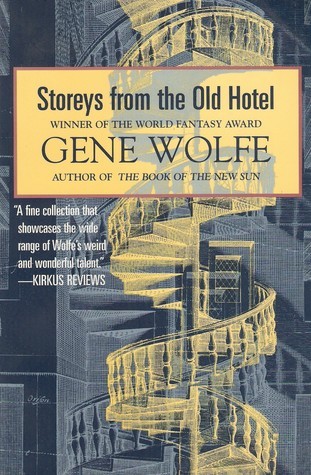
Storeys from the Old Hotel
Hailed as "one of the literary giants of science fiction" by The Denver Post, Gene Wolfe is universally acknowledged as one of the most brilliant writers the field has ever produced. Winner of the World Fantasy Award for best fiction collection, Storeys from the Old Hotel contains thirty-one remarkable gems of Wolfe's short fiction from the past two decades, most unavailable in any other form.
Storeys from the Old Hotel includes many of Gene Wolfe's most appealing and engaging works, from short-shorts that can be read in single setting to whimsical fantasy and even Sherlock Holmes pastiches. It is a literary feast for anyone interested in the best science fiction has to offer.
Contents:
- The Green Rabbit from S'Rian
- Beech Hill
- Sightings at Twin Mounds
- Continuing Westward
- Slaves of Silver
- The Rubber Bend
- Westwind
- Sonya, Crane, Wessleman, and Kittee
- The Packerhaus Method
- Straw
- The Marvelous Brass Chessplaying Automaton
- To the Dark Tower Came
- Parkroads - A Review
- The Flag
- Alphabet
- A Criminal Proceeding
- In Looking-Glass Castle
- Cherry Jubilee
- Redbeard
- A Solar Labyrinth
- Love, Among the Corridors
- Checking Out
- Morning Glory
- Trip, Trap
- From the Desk of Gilmer C. Merton
- Civis Laputus Sum
- The Recording
- Last Day
- Death of the Island Doctor
- Redwood Coast Roamer:
● On the Train
● In the Mountains
● At the Volcano's Lip
● In the Old Hotel
- Choice of the Black Goddess
Storeys from the Old Hotel includes many of Gene Wolfe's most appealing and engaging works, from short-shorts that can be read in single setting to whimsical fantasy and even Sherlock Holmes pastiches. It is a literary feast for anyone interested in the best science fiction has to offer.
Contents:
- The Green Rabbit from S'Rian
- Beech Hill
- Sightings at Twin Mounds
- Continuing Westward
- Slaves of Silver
- The Rubber Bend
- Westwind
- Sonya, Crane, Wessleman, and Kittee
- The Packerhaus Method
- Straw
- The Marvelous Brass Chessplaying Automaton
- To the Dark Tower Came
- Parkroads - A Review
- The Flag
- Alphabet
- A Criminal Proceeding
- In Looking-Glass Castle
- Cherry Jubilee
- Redbeard
- A Solar Labyrinth
- Love, Among the Corridors
- Checking Out
- Morning Glory
- Trip, Trap
- From the Desk of Gilmer C. Merton
- Civis Laputus Sum
- The Recording
- Last Day
- Death of the Island Doctor
- Redwood Coast Roamer:
● On the Train
● In the Mountains
● At the Volcano's Lip
● In the Old Hotel
- Choice of the Black Goddess
331 pages, Paperback
First published November 1, 1988
About the author
Gene Wolfe
529 books3,784 followersGene Wolfe was an American science fiction and fantasy writer. He was noted for his dense, allusive prose as well as the strong influence of his Catholic faith, to which he converted after marrying a Catholic. He was a prolific short story writer and a novelist, and has won many awards in the field.
While attending Texas A&M University Wolfe published his first speculative fiction in The Commentator, a student literary journal. Wolfe dropped out during his junior year, and was drafted to fight in the Korean War. After returning to the United States he earned a degree from the University of Houston and became an industrial engineer. He edited the journal Plant Engineering for many years before retiring to write full-time, but his most famous professional engineering achievement was a contribution to the machine used to make Pringles potato crisps. He lived in Barrington, Illinois, a suburb of Chicago.
A frequent Hugo nominee without a win, Wolfe nevertheless picked up several Nebula and Locus Awards, among others, including the World Fantasy Award for Life Achievement and the 2012 Damon Knight Memorial Grand Master Award. He was also a member of the Science Fiction Hall of Fame.
http://us.macmillan.com/author/genewolfe
While attending Texas A&M University Wolfe published his first speculative fiction in The Commentator, a student literary journal. Wolfe dropped out during his junior year, and was drafted to fight in the Korean War. After returning to the United States he earned a degree from the University of Houston and became an industrial engineer. He edited the journal Plant Engineering for many years before retiring to write full-time, but his most famous professional engineering achievement was a contribution to the machine used to make Pringles potato crisps. He lived in Barrington, Illinois, a suburb of Chicago.
A frequent Hugo nominee without a win, Wolfe nevertheless picked up several Nebula and Locus Awards, among others, including the World Fantasy Award for Life Achievement and the 2012 Damon Knight Memorial Grand Master Award. He was also a member of the Science Fiction Hall of Fame.
http://us.macmillan.com/author/genewolfe
Ratings & Reviews
Friends & Following
Create a free account to discover what your friends think of this book!
Community Reviews
Displaying 1 - 30 of 45 reviews

July 6, 2018
Contents:
Introduction
The Green Rabbit from S'Rian
Beech Hill
Sightings at Twin Mounds
Continuing Westward
Slaves of Silver
The Rubber Bend
Westwind
Sonya, Crane Wessleman, and Kittee
The Packerhaus Method
Straw
The Marvelous Brass Chessplaying Automaton
To the Dark Tower Came
Parkroads - A Review
The Flag
Alphabet
A Criminal Proceeding
In Looking-Glass Castle
Cherry Jubilee
Redbeard
A Solar Labyrinth
Love, Among the Corridors
Checking Out
Morning Glory
Trip, Trap
From the Desk of Gilmer C Merton
Civis Laputus Sum
The Recording
Last Day
Death of the Island Doctor
Redwood Coast Roamer
On the Train
In the Mountains
At the Volcano's Lip
In the Old Hotel
Choice of the Black Goddess
Introduction
The Green Rabbit from S'Rian
Beech Hill
Sightings at Twin Mounds
Continuing Westward
Slaves of Silver
The Rubber Bend
Westwind
Sonya, Crane Wessleman, and Kittee
The Packerhaus Method
Straw
The Marvelous Brass Chessplaying Automaton
To the Dark Tower Came
Parkroads - A Review
The Flag
Alphabet
A Criminal Proceeding
In Looking-Glass Castle
Cherry Jubilee
Redbeard
A Solar Labyrinth
Love, Among the Corridors
Checking Out
Morning Glory
Trip, Trap
From the Desk of Gilmer C Merton
Civis Laputus Sum
The Recording
Last Day
Death of the Island Doctor
Redwood Coast Roamer
On the Train
In the Mountains
At the Volcano's Lip
In the Old Hotel
Choice of the Black Goddess

January 27, 2018
Finished reading whooping 32 short stories by Wolfe, and these stories are a combination of fantasy, science fiction and horror. Although some stories are very short, but Wolfe manages to leave a suspicion in your mind as to whether you have got all the angles from a story.
I also went through many podcasts of
Clay temple media.
And these guys have gone through some of the stories in great detail, which helps you understand not only what you have read, but also many times what you have missed.
With Wolfe there is no single interpretation with which you can say that this explains everything, but the clues in text, and uncovering these clues and finding a satisfactory conclusion makes Wolfe a genius in this genre.
Some of the stories which I enjoyed were
Sonya, Crane, Wessleman, and Kittee
This story is set in dystopian future, where in society is clearly divided between lines of rich and future. Thrown into the mix is also human-animal cross engineering.
Alphabet
This story probably shows us how aliens could have been involved with humanity receiving the gift of letters and symbols.
Cherry Jubilee
This is a sort of mystery where we have wolfe's trademark i.e. twins being involved in a murder mystery, also thrown in the mix is a spy.
Morning Glory
Involves a botanical professor suffering from depression, this story can be interpreted in multiple ways.
Had fun discussing this story with guys from podcast.
All in all I really enjoyed going through little mind benders by Wolfe.
I give this book 4/5 stars.
I also went through many podcasts of
Clay temple media.
And these guys have gone through some of the stories in great detail, which helps you understand not only what you have read, but also many times what you have missed.
With Wolfe there is no single interpretation with which you can say that this explains everything, but the clues in text, and uncovering these clues and finding a satisfactory conclusion makes Wolfe a genius in this genre.
Some of the stories which I enjoyed were
Sonya, Crane, Wessleman, and Kittee
This story is set in dystopian future, where in society is clearly divided between lines of rich and future. Thrown into the mix is also human-animal cross engineering.
Alphabet
This story probably shows us how aliens could have been involved with humanity receiving the gift of letters and symbols.
Cherry Jubilee
This is a sort of mystery where we have wolfe's trademark i.e. twins being involved in a murder mystery, also thrown in the mix is a spy.
Morning Glory
Involves a botanical professor suffering from depression, this story can be interpreted in multiple ways.
Had fun discussing this story with guys from podcast.
All in all I really enjoyed going through little mind benders by Wolfe.
I give this book 4/5 stars.

August 2, 2008
2018 reread review:
If I were only allowed to read one writer, I would choose Gene Wolfe. It took me a while on this reread of the excellent collection in part because I read most of the stories twice (because his stories demand reflection) and in part because I kept reading novels in between stories. There's a wide array of work here. Horror, SciFi, literary, mystery. Only a couple that didn't work for me. I liked it even more than I did in 2007 when I first read it.
Some standouts: Slaves of Silver which reads like a Sherlock Holmes pastiche set in the future (Watson is a robot!) but upon closer examination it's a particularly terrifying dystopia. A Solar Labyrinth, a muted literary horror story that also seems like a tribute to Borges, and some have tied to his Book of the New Sun and its sequels. Morning Glory, a literary story set at a university that doubles as a critique of how society had come to a point where mutually assured nuclear destruction seemed like a good idea but is somehow not bereft of hope. Trip, Trap which takes elements of Star Trek style storytelling and sword and sorcery storytelling to retell Three Billy Goats Gruff and turns it into high art. Wolfe has real range.
Highly recommended!
Originally al 2007 review:
This is the fourth book of short stories I've read by Wolfe. From nearly hard sf to satire of the academic humanities, to horror to "literary" short stories he's consistently great. Nearly all his stories merit much thought, as much as some novels. Ideas, stories, characters, prose, he can do it all.
If I were only allowed to read one writer, I would choose Gene Wolfe. It took me a while on this reread of the excellent collection in part because I read most of the stories twice (because his stories demand reflection) and in part because I kept reading novels in between stories. There's a wide array of work here. Horror, SciFi, literary, mystery. Only a couple that didn't work for me. I liked it even more than I did in 2007 when I first read it.
Some standouts: Slaves of Silver which reads like a Sherlock Holmes pastiche set in the future (Watson is a robot!) but upon closer examination it's a particularly terrifying dystopia. A Solar Labyrinth, a muted literary horror story that also seems like a tribute to Borges, and some have tied to his Book of the New Sun and its sequels. Morning Glory, a literary story set at a university that doubles as a critique of how society had come to a point where mutually assured nuclear destruction seemed like a good idea but is somehow not bereft of hope. Trip, Trap which takes elements of Star Trek style storytelling and sword and sorcery storytelling to retell Three Billy Goats Gruff and turns it into high art. Wolfe has real range.
Highly recommended!
Originally al 2007 review:
This is the fourth book of short stories I've read by Wolfe. From nearly hard sf to satire of the academic humanities, to horror to "literary" short stories he's consistently great. Nearly all his stories merit much thought, as much as some novels. Ideas, stories, characters, prose, he can do it all.

August 16, 2026
Five-star stories:
“Sightings at Twin Mounds”
“The Packerhaus Method”
“The Marvelous Brass Chessplaying Automaton”
“A Solar Labyrinth”
Four-star stories:
“Beech Hill”
“Straw”
“Alphabet”
“In Looking-Glass Castle”
“Cherry Jubilee”
“Redbeard”
“Trip, Trap”
“Death of the Island Doctor”
“On the Train”
“At the Volcano’s Lip”
The rest, imo, are skippable.
“Sightings at Twin Mounds”
“The Packerhaus Method”
“The Marvelous Brass Chessplaying Automaton”
“A Solar Labyrinth”
Four-star stories:
“Beech Hill”
“Straw”
“Alphabet”
“In Looking-Glass Castle”
“Cherry Jubilee”
“Redbeard”
“Trip, Trap”
“Death of the Island Doctor”
“On the Train”
“At the Volcano’s Lip”
The rest, imo, are skippable.

Currently Reading
February 17, 2024The Green Rabbit from S'Rian (1985)
Beech Hill (1972) 21/7-24 (3 stars)?
Sightings at Twin Mounds (1988)
Continuing Westward (1973) 21/7-24 (4 stars)
Slaves of Silver (1971) 19-21/7-24 (3 stars)?
The Rubber Bend (1974) 23-25/7-24 (3 stars)?
Westwind (1973) 22(7-24 (5 stars)
Sonya, Crane Wessleman, and Kittee (1970) 19/2-24 (4 stars)
The Packerhaus Method (1970)
Straw (1975) 25/7-24 (3 stars)?
The Marvelous Brass Chessplaying Automaton (1977)
To the Dark Tower Came (1977)
Parkroads - A Review (1987)
The Flag (1988)
Alphabet (1988)
A Criminal Proceeding (1980)
In Looking-Glass Castle (1980)
Cherry Jubilee (1982)
Redbeard (1984)
A Solar Labyrinth (1983)
Love, Among the Corridors (1984)
Checking Out (1986)
Morning Glory (1970) 17/2-24 (4 stars)
Trip, Trap (1967) 14-18/2-24 (4 stars)
From the Desk of Gilmer C. Merton (1983)
Civis Laputus Sum (1975) 25/7-24 (5 stars)?
The Recording (1972)) 21/7-24 (4 stars)
Last Day (1982)
Death of the Island Doctor (1983)
Redwood Coast Roamer
-On the Train (1983)
-In the Mountains (1983) Four Wolves
-At the Volcano's Lip (1983) Four Wolves
-In the Old Hotel (1983)
Choice of the Black Goddess (1986)
Sightings at Twin Mounds (1988)
The Packerhaus Method (1970)
The Marvelous Brass Chessplaying Automaton (1977)
To the Dark Tower Came (1977)
Parkroads - A Review (1987)
The Flag (1988)
Alphabet (1988)
A Criminal Proceeding (1980)
In Looking-Glass Castle (1980)
Cherry Jubilee (1982)
Redbeard (1984)
A Solar Labyrinth (1983)
Love, Among the Corridors (1984)
Checking Out (1986)
From the Desk of Gilmer C. Merton (1983)
Last Day (1982)
Death of the Island Doctor (1983)
Redwood Coast Roamer
-On the Train (1983)
-In the Mountains (1983) Four Wolves
-At the Volcano's Lip (1983) Four Wolves
-In the Old Hotel (1983)
Choice of the Black Goddess (1986)
November 26, 2021
You can find this is the “Storeys from the Old Hotel” collection. I wanted to read it after enjoying Adrian Tchaikovsky’s ‘Elder Race’ which was inspired by this.
July 22, 2017
His best collection of short stories in my opinion. As the title hints, there are often, maybe always, more than one storey in these stories. And often, it is quite hard to categorize them between sci-fi, fantasy, history or none of the three.
Let's take a quick look at some of the best stories of this collection.
Slaves Of Silver and Rubber Band (1971, 1974): two mystery stories with the famous Sherlock Holmes, but it takes place in a far future and his Watson is a bot (still somewhat stupid). Both are excellent, but even better the last one. Wolfe is a terrific mimicker. Because, of course, he's not only mimicking; he gives much more than he has to.
Westwind (1973): a moving quest story. Emotion is rare enough, I feel, in Wolfe's work, so it is even more precious. The odd thing with this is his more moving stories are usually led by a female character and not of the young or gorgeous sort.
The Packerhaus Method (1970): one of his oldest fictions. And one of his very good ones. The plot is really good but pretty sneaky, as often with Wolfe, and will give you a thrilling twist about the end if you contrive to grasp its meaning.
The Marvelous Brass Chessplaying Automaton (1977): a mystery story located in a kind of ancient germanic kingdom. Just... marvelous ! Wolfe is almost always successful in making mystery stories but in this case, he is at the top of his craft writing. Remind me of "Maelzel's Chess-player" by Poe, one of my favorites too.
In Looking-Glass Castle (1980): a story taking place in a dystopian America when womankind is in command and male people are almost gone (their nickname is 'pigs'). In those days, Women have clones, several if they are rich enough, have no relation with men, or at risk of being excluded from society, even worse, and engage in pig hunts. Wolfe doesn't say what happened to men. Don't take me wrong : although the gender war may usually seem rude and lacking of nuance, in this case, it's a beautiful, subtle and moving narrative. My guess is the girl is mad (not a big spoiler).
Cherry Jubilee (1982): again a mystery story but this time in a star cruiser. Wonderful tale. I am always not sure of the whodunit but it doesn't matter. A kind of "Mystery Of The Yellow Room" but here, the killing happens in a coffin launched in outer space.
A Solar Labyrinth (1983) : a huge masterpiece, and yet a miniature. There are so many levels in this tale of a maze maker that we could write a library about it. In a way, it is the Book of The New Sun condensed on three pages, perfect achievement in addition. Wolfe could indeed entitle his short story : Shadows of the (New) Sun.
Death Of The Island Doctor (1983): fourth and last of the variations around these three words : island, doctor and death. The simpler, the lighter, the shorter and the more touching of the four.
Choice Of The Black Goddess (1986) : a very entertaining quest story about a treasure hunt. It takes place in a desert island and features sailors and comedians... and a goddess? Good characters and very interesting plot.
There are other big stories in this book and I think all of them are worth reading. As you could see, another interest is that the collection covers a wide range of time, from the very first, Trip-Trap (1967) to In the Old Hotel (1988), which is also the range of time when Wolfe was at his best.
This collection is not necessarily better than his first, The Island Of Doctor Death And Other Stories And Other Stories, but this one is definitely more touching.
Let's take a quick look at some of the best stories of this collection.
Slaves Of Silver and Rubber Band (1971, 1974): two mystery stories with the famous Sherlock Holmes, but it takes place in a far future and his Watson is a bot (still somewhat stupid). Both are excellent, but even better the last one. Wolfe is a terrific mimicker. Because, of course, he's not only mimicking; he gives much more than he has to.
Westwind (1973): a moving quest story. Emotion is rare enough, I feel, in Wolfe's work, so it is even more precious. The odd thing with this is his more moving stories are usually led by a female character and not of the young or gorgeous sort.
The Packerhaus Method (1970): one of his oldest fictions. And one of his very good ones. The plot is really good but pretty sneaky, as often with Wolfe, and will give you a thrilling twist about the end if you contrive to grasp its meaning.
The Marvelous Brass Chessplaying Automaton (1977): a mystery story located in a kind of ancient germanic kingdom. Just... marvelous ! Wolfe is almost always successful in making mystery stories but in this case, he is at the top of his craft writing. Remind me of "Maelzel's Chess-player" by Poe, one of my favorites too.
In Looking-Glass Castle (1980): a story taking place in a dystopian America when womankind is in command and male people are almost gone (their nickname is 'pigs'). In those days, Women have clones, several if they are rich enough, have no relation with men, or at risk of being excluded from society, even worse, and engage in pig hunts. Wolfe doesn't say what happened to men. Don't take me wrong : although the gender war may usually seem rude and lacking of nuance, in this case, it's a beautiful, subtle and moving narrative. My guess is the girl is mad (not a big spoiler).
Cherry Jubilee (1982): again a mystery story but this time in a star cruiser. Wonderful tale. I am always not sure of the whodunit but it doesn't matter. A kind of "Mystery Of The Yellow Room" but here, the killing happens in a coffin launched in outer space.
A Solar Labyrinth (1983) : a huge masterpiece, and yet a miniature. There are so many levels in this tale of a maze maker that we could write a library about it. In a way, it is the Book of The New Sun condensed on three pages, perfect achievement in addition. Wolfe could indeed entitle his short story : Shadows of the (New) Sun.
Death Of The Island Doctor (1983): fourth and last of the variations around these three words : island, doctor and death. The simpler, the lighter, the shorter and the more touching of the four.
Choice Of The Black Goddess (1986) : a very entertaining quest story about a treasure hunt. It takes place in a desert island and features sailors and comedians... and a goddess? Good characters and very interesting plot.
There are other big stories in this book and I think all of them are worth reading. As you could see, another interest is that the collection covers a wide range of time, from the very first, Trip-Trap (1967) to In the Old Hotel (1988), which is also the range of time when Wolfe was at his best.
This collection is not necessarily better than his first, The Island Of Doctor Death And Other Stories And Other Stories, but this one is definitely more touching.

November 17, 2022
3.5
Didn't now this was a pastiche/homage
Very funny while delving into serious themes, socialism, civil rights and the violation of them.
Merged review:
Not a memorable one, a bit predictable
Didn't now this was a pastiche/homage
Very funny while delving into serious themes, socialism, civil rights and the violation of them.
Merged review:
Not a memorable one, a bit predictable

March 31, 2019
Probably Wolfe's second best short stories collection after The island of Doctor Death and other stories and other stories. Winner of the world fantasy award for best collection, storeys from the old hotel compile some of Wolfe's best short fiction. A must read for the fans of the genre or good, strange, cryptic literature.
Highlights:
A solar labyrinth (a labyrinthian masterpiece probably inspired by Borges but with a twist. The ending will haunt you and puzzle you for days)
Death of the island Doctor (the fourth story of Wolfe Archipelago. Warm and nostalgic. Wolfe on Bradbury mode here. It doesn't get better than that)
Love, among the corridors (the story of Amor, wandering through the strange marble corridors of life and history)
Redbeard (A Wolfean dramatic horror story. Loved it)
Trip, Trap (This is where all begun. The first story that Wolfe ever sold. The beginning of his career as a writer and the story that Damon Knight "grew him out of a bean". We need several pages in order to deconstruct Trip, Trap but I strongly recommend Marc Aramini's analysis.)
Highlights:
A solar labyrinth (a labyrinthian masterpiece probably inspired by Borges but with a twist. The ending will haunt you and puzzle you for days)
Death of the island Doctor (the fourth story of Wolfe Archipelago. Warm and nostalgic. Wolfe on Bradbury mode here. It doesn't get better than that)
Love, among the corridors (the story of Amor, wandering through the strange marble corridors of life and history)
Redbeard (A Wolfean dramatic horror story. Loved it)
Trip, Trap (This is where all begun. The first story that Wolfe ever sold. The beginning of his career as a writer and the story that Damon Knight "grew him out of a bean". We need several pages in order to deconstruct Trip, Trap but I strongly recommend Marc Aramini's analysis.)

February 12, 2016
I finished Storeys from the Old Hotel, a series of fantasy/ science fiction short stories by Gene Wolfe this afternoon. I enjoyed the book very much. The stories are difficult to categorize but they are interesting. The stories vary from tales about robots, other worlds, fantastical adventures, but each story keeps you on your toes. There always seems to be something just out of the corner of your eye that you are missing. There were no laugh out loud moments but there is a sense of whimsy at times. It's worth reading just to experience the different writing styles in each story. I've never read anything by Wolfe before but I will search out others of his books.

March 1, 2021
The boundaries of humanity.
This 1988 collection of Wolfe stories runs the gamut from weird to super-weird. To say the book has a "theme" would be an overstatement. We have SF and fantasy tales, horror, mysteries (murder and otherwise), and combinations of all of the above. If there's any type of story that predominates, it's those that feature an automaton (whether it be a chess-playing machine or a Sherlock Holmes-ian synthetic) -- what it means to be "human" gets sent through the wringer a few times in this (as Wolfe describes it) "obscure" collection.
I love everything Wolfe writes, even if I understand maybe 37% of it. Wolfe stories are invariably laden with hidden meaning and clues. Sometimes those clues are textual, sometimes contextual (though rarely sexual). I find the more I read Ol' Gene the more (and less) I get out of it. I want to be in on the joke, but I usually find more than enough pleasure in a "surface level" appreciation of a thoroughly solid writer writing quirky stories. The (generally brief) stories in this collection leave themselves open to the reader to find their clues and hints.
Did I get them right? Who knows, but I enjoyed the journey. Like any good easter egg hunt, there's always a few you miss.
This 1988 collection of Wolfe stories runs the gamut from weird to super-weird. To say the book has a "theme" would be an overstatement. We have SF and fantasy tales, horror, mysteries (murder and otherwise), and combinations of all of the above. If there's any type of story that predominates, it's those that feature an automaton (whether it be a chess-playing machine or a Sherlock Holmes-ian synthetic) -- what it means to be "human" gets sent through the wringer a few times in this (as Wolfe describes it) "obscure" collection.
I love everything Wolfe writes, even if I understand maybe 37% of it. Wolfe stories are invariably laden with hidden meaning and clues. Sometimes those clues are textual, sometimes contextual (though rarely sexual). I find the more I read Ol' Gene the more (and less) I get out of it. I want to be in on the joke, but I usually find more than enough pleasure in a "surface level" appreciation of a thoroughly solid writer writing quirky stories. The (generally brief) stories in this collection leave themselves open to the reader to find their clues and hints.
Did I get them right? Who knows, but I enjoyed the journey. Like any good easter egg hunt, there's always a few you miss.
December 15, 2017
This is bold text. [This is bold text ]
This is italic text. [This is italic text ]
This text is underlined. [This is underlined text ]
This text is striked out. [This is striked out text ]
This is block quote [
This would be a new paragraph on GR.com but not a new paragraph on the device. [
This is italic text. [This is italic text ]
This text is underlined. [This is underlined text ]
This text is striked out. [
This is block quote [
This is block quote text]
This would be a new paragraph on GR.com but not a new paragraph on the device. [
This would be a new paragraph on GR.com but not a new paragraph on the device
]
January 14, 2018
Most of these stories are very short, and seems that Wolfe thought that they were his best even if most people didn't agree.
At least i can say that "Trip, Trap" "Slaves of sliver"(I really wish that he had expanded into this) and "The recording" were my favorites from the bunch.
At least i can say that "Trip, Trap" "Slaves of sliver"(I really wish that he had expanded into this) and "The recording" were my favorites from the bunch.

March 16, 2014
Μια συλλογή ανέκδοτων ιστοριών του Τζιν Γουλφ. Γιατί ανέκδοτες; Μα φυσικά επειδή κάποτε είχαν απορριφθεί και έμειναν στο συρτάρι, μέχρι να μαζευτούν για τούτον εδώ τον τόμο. Ιδού λοιπόν που και τέτοιο συγγραφείς γνωρίζουν την απόρριψη. Μα ακόμα και αυτές αποτελούν έναν άκρως ικανοποιητικό ανάγνωσμα. Άλλοτε αδιάφορες, μα άλλοτε εξαιρετικά διασκεδαστικές, αποτελούν μια συλλογή αντάξια του ονόματος. Επιστημονική και επική φαντασία, καθημερινές ιστορίες, εναλλακτική ιστορία, μα και πειραματισμοί με καταβύθιση στον υποσυνείδητο και τον κόσμο των ονείρων.
Θα ξεχώριζα το Continuing Westward με τους χαμένους πιλότους στην Άπω Ανατολή και το συναπάντημά τους με την ημιάγρια φυλή, τις Χολμικές ιστορίες στο μέλλον, Slaves of Silver και the rubber band, τον εναλλακτικό μεσαίωνα με τα αερόπλοια του Straw, την πανέμορφη και θλιβερή, τελικά, ιστορία με τη μηχανή που παίζει σκάκι, The Marvelous Brass Chessplaying Automaton, η μελαγχολική ηρωίδα στο μεγάλο σπίτι της, σε έναν κόσμο όπου η γυναίκα είναι το μόνο φύλο, και που έρχεται αντιμέτωπη με τον λαθραίο γενειοφόρο παρείσακτο του In Looking-glass castle, η έξυπνη, διαστημική sci-fi ίντριγκα του Cherry Jubilee, το γλυκόπικρο Redbeard, το αναίτιο μα τρυφερό A Solar Labyrintth, το Trip Trap με τις εναλλακτικές εκδοχές μιας πλήρους και αμιγούς sci-fi ιστορίας, το Civis Laputus Sum πάνω σε ένα κομμάτι ξεριζωμένης γης που υπερίπταται για να σωθεί από την οικολογική καταστροφή κουβαλώντας το ετερόκλητο πλήθος του στον αναπόδραστο χαμό του, η αναμνήση της απόκτησης του πρώτου δίσκου στο The Recording και ο καθηγητής ιστορίας στο πανέμορφο Death of the Island Doctor.
Μια συλλογή, θα έλεγα, για όσους ξέρουν ήδη τον Γουλφ και όχι ένα βιβλίο για να μυηθεί κάποιος στη δουλειά του. Για εμένα, ένας λόγος να περάσω χρόνο με τον τεράστιο αυτό συγγραφέα.
Θα ξεχώριζα το Continuing Westward με τους χαμένους πιλότους στην Άπω Ανατολή και το συναπάντημά τους με την ημιάγρια φυλή, τις Χολμικές ιστορίες στο μέλλον, Slaves of Silver και the rubber band, τον εναλλακτικό μεσαίωνα με τα αερόπλοια του Straw, την πανέμορφη και θλιβερή, τελικά, ιστορία με τη μηχανή που παίζει σκάκι, The Marvelous Brass Chessplaying Automaton, η μελαγχολική ηρωίδα στο μεγάλο σπίτι της, σε έναν κόσμο όπου η γυναίκα είναι το μόνο φύλο, και που έρχεται αντιμέτωπη με τον λαθραίο γενειοφόρο παρείσακτο του In Looking-glass castle, η έξυπνη, διαστημική sci-fi ίντριγκα του Cherry Jubilee, το γλυκόπικρο Redbeard, το αναίτιο μα τρυφερό A Solar Labyrintth, το Trip Trap με τις εναλλακτικές εκδοχές μιας πλήρους και αμιγούς sci-fi ιστορίας, το Civis Laputus Sum πάνω σε ένα κομμάτι ξεριζωμένης γης που υπερίπταται για να σωθεί από την οικολογική καταστροφή κουβαλώντας το ετερόκλητο πλήθος του στον αναπόδραστο χαμό του, η αναμνήση της απόκτησης του πρώτου δίσκου στο The Recording και ο καθηγητής ιστορίας στο πανέμορφο Death of the Island Doctor.
Μια συλλογή, θα έλεγα, για όσους ξέρουν ήδη τον Γουλφ και όχι ένα βιβλίο για να μυηθεί κάποιος στη δουλειά του. Για εμένα, ένας λόγος να περάσω χρόνο με τον τεράστιο αυτό συγγραφέα.

February 12, 2018
I have resumed reading this book after placing it on hold last year. It is a mesmerizing book although not all short stories here have pleased me. But this is Gene Wolfe, so, sometimes if you read them again you will encounter a favorite story. I could not care less for what is called academic literature as I am in for the fun but Wolfe gives us both.

June 14, 2011
This particular collection of Gene Wolfe short stories is something of a hodge-podge, covering a vast period of time (1967 - 1988) from his very earliest published works to the height of his golden period.
One thing that links most of them though is their brevity, they are mostly very short stories indeed, no more than a few pages each. Within 300 pages are a whopping 34 stories!
Compare that to the outstanding The Death of Doctor island and Other Stories and Other Stories, which has just 14 stories over 400+ pages.
None of these stories quite hit the spot with me like some of the stories from that other collection, but there was some interesting stuff none the less.
'Straw' is a typical example of join-the-dots Wolfe where a sparse first person narration merely outlines the hidden story, a clever piece of speculation.
'Redbeard' is a pretty straight forward horror story. 'Trip, Trap' is an obvious pre-cursor to the subsequent, superior The Fifth Head of Cerberus.
Even within a handful of pages at a time Wolfe can still baffle and delight.
One thing that links most of them though is their brevity, they are mostly very short stories indeed, no more than a few pages each. Within 300 pages are a whopping 34 stories!
Compare that to the outstanding The Death of Doctor island and Other Stories and Other Stories, which has just 14 stories over 400+ pages.
None of these stories quite hit the spot with me like some of the stories from that other collection, but there was some interesting stuff none the less.
'Straw' is a typical example of join-the-dots Wolfe where a sparse first person narration merely outlines the hidden story, a clever piece of speculation.
'Redbeard' is a pretty straight forward horror story. 'Trip, Trap' is an obvious pre-cursor to the subsequent, superior The Fifth Head of Cerberus.
Even within a handful of pages at a time Wolfe can still baffle and delight.

January 9, 2010
Fantastic collection of Wolfe's short stories from the 1970s and 1980s. There's still quite a bit of overlap between this collection and The Best of Gene Wolfe owing to the high quality of so many of the stories in this collection. You can trace Wolfe's evolution as a writer in this collection. His stories from the 1980s are much more sophisticated and deep than his stories from the 1970s. As such, the collection is a bit uneven, especially in the first half, but, when Wolfe is firing on all cylinders, he produces some of the best short fiction I've ever read. My favorites from this collection include "Parkroads—A Review", "In Looking-Glass Castle", "Cherry Jubilee", "Trip, Trap", and the wonderful "Death of the Island Doctor". I also enjoyed the tetralogy of vignettes that make up "Redwood Coast Roamer", which I found rather profound. "The Marvelous Brass Chessplaying Automaton" also stands out as just solidly entertaining.

March 30, 2021
This is an exceptional story, with Wolfe's characteristic hard-working yet economical prose here in the service of some nifty world building that imagines a fantasy setting that would fit right into the universe of The Witcher -- some 20 years before Geralt was even a thought.

July 13, 2022
A wonderful collection of his short stories from the 1970s and 80s in a variety of genres and narrative styles. Some quite short. I love reading anything Gene Wolfe has written and there are many gems here.
My favourites included Sighting at Twin Mounds on UFO sightings told via a frame story that is the story; Westwind, which I found very touching; To the Dark Tower Came; Parkroads - A Review; In Looking-Glass Castle, which is a dystopian female-only society with many layers and a tense mood; Redbeard, a horror story that deals with guilt told with a beautiful eye to the past in its setting; Trip, Trap; and Death of the Island Doctor, which is really charming and in my opinion the best of the collection.
The ideas in the following stories were also really interesting:
The Marvellous Brass Chessplaying Automaton, which is terrific storytelling (although yes there is a scene where a maiden can only fit into the machine by removing her clothing) - the idea being that a technology from the past has supposedly survived a civilisational collapse;
Morning Glory, in which vines are tested to distinguish between different levels of light, yet the morning glory’s seeds have undergone radiation and keep growing towards the dark instead of noticing and being able to correct.
Most of his stories work on multiple levels with moments of great prose and tone. Many linger in the memory and reward re-reading. 4 and 1/2 stars.
My favourites included Sighting at Twin Mounds on UFO sightings told via a frame story that is the story; Westwind, which I found very touching; To the Dark Tower Came; Parkroads - A Review; In Looking-Glass Castle, which is a dystopian female-only society with many layers and a tense mood; Redbeard, a horror story that deals with guilt told with a beautiful eye to the past in its setting; Trip, Trap; and Death of the Island Doctor, which is really charming and in my opinion the best of the collection.
The ideas in the following stories were also really interesting:
The Marvellous Brass Chessplaying Automaton, which is terrific storytelling (although yes there is a scene where a maiden can only fit into the machine by removing her clothing) - the idea being that a technology from the past has supposedly survived a civilisational collapse;
Morning Glory, in which vines are tested to distinguish between different levels of light, yet the morning glory’s seeds have undergone radiation and keep growing towards the dark instead of noticing and being able to correct.
Most of his stories work on multiple levels with moments of great prose and tone. Many linger in the memory and reward re-reading. 4 and 1/2 stars.

May 19, 2023
500 stars, of course. I mean it's Gene Wolfe.
Some of these stories were baffling, some very challenging to understand, some simple, all pretty perfect.
You have: Pirates, magicians, magic, ai robot priests, academics VS athletes, islands in the sky, black goddeses, The death of Dr Island (really loved that story), radioactive / evolved plants, bluebeard/Redbeard, serial killers, aliens, half-cat people, steampunk androids... So much more.
And all written in a unique way - Wolfe doesn't repeat himself in tone or concepts. He is always playing, always exploring, always pushing boundaries. This is probably his most obscure collection that I have read, as he notes in his introduction. I wouldn't recommend starting here with Gene Wolfe (start with The Best of Gene Wolfe or The Island of Dr Death and Other Stories), but if you do like Wolfe's stories, its an absolute must-read.
Some of these stories were baffling, some very challenging to understand, some simple, all pretty perfect.
You have: Pirates, magicians, magic, ai robot priests, academics VS athletes, islands in the sky, black goddeses, The death of Dr Island (really loved that story), radioactive / evolved plants, bluebeard/Redbeard, serial killers, aliens, half-cat people, steampunk androids... So much more.
And all written in a unique way - Wolfe doesn't repeat himself in tone or concepts. He is always playing, always exploring, always pushing boundaries. This is probably his most obscure collection that I have read, as he notes in his introduction. I wouldn't recommend starting here with Gene Wolfe (start with The Best of Gene Wolfe or The Island of Dr Death and Other Stories), but if you do like Wolfe's stories, its an absolute must-read.

April 21, 2024
I remember enjoying Gene Wolfe fantasy novels in the 1970s, so I decided to try this book of short stories. Either my tastes have changed or these aren't as good. There were a few stories that I did like, but most were just "meh". I had to force myself to finish the book since I was using it for a challenge.
The introduction explains when each of the stories was written and, in some cases, what the impetus was. This would have been better as a separate page or heading for each story. I was continually flipping back to the intro to find out what he had to say about the story and see if that changed anything about my perspective.
The introduction explains when each of the stories was written and, in some cases, what the impetus was. This would have been better as a separate page or heading for each story. I was continually flipping back to the intro to find out what he had to say about the story and see if that changed anything about my perspective.

September 18, 2022
Gene Wolfe is the best. This collection of short stories is actually a pretty good introduction to the writer too. IMO his short stories feel far more accessible to non-Wolfe fans than his more ambitious novels. I enjoyed bookending the collection with Green Rabbit from S'Rian and Choice of the Black Goddess. From the Desk of Gilmer C Merton is fantastic (also shows up in Castle of Days). I also enjoyed Slaves of Silver, Westwind (a nod to Eastwind in A Story by John V Martsch), and Morning Glory.

May 19, 2024
“Storeys From the Old Hotel” comprises 31 short stories by Gene Wolfe. There are different genres like science fiction, mystery, and fantasy.
One of my favorite things about these stories is how short they are (like some are finished within 6 pages), I also liked the endings; some of the stories leave you there thinking about what the heck you’ve just read.
My favorites:
Sightings at Twin Mounds
Westwind
The Packerhaus Method
Cherry Jubilee
Redbeard
One of my favorite things about these stories is how short they are (like some are finished within 6 pages), I also liked the endings; some of the stories leave you there thinking about what the heck you’ve just read.
My favorites:
Sightings at Twin Mounds
Westwind
The Packerhaus Method
Cherry Jubilee
Redbeard
October 24, 2024
Pretty decent short story collection, but the hit/miss ratio is worse than usual for Wolfe. It is constructed specifically as a grab-bag of his less celebrated stories (up to 1988, when it was first published), and as such a certain inconsistency is perhaps to be expected. Full review: https://fakegeekboy.wordpress.com/202...

December 18, 2022
About 50% of these short stories are great, which is about the best you can hope for from a short story collection I feel.
I highly recommend "Westwind", "The Packerhouse Method", "Redbeard", and "Morning Glory". And a bunch of others but those ones as well.
I highly recommend "Westwind", "The Packerhouse Method", "Redbeard", and "Morning Glory". And a bunch of others but those ones as well.

May 25, 2026
As Gene Wolfe himself states in the introduction, these are stories from his career that didn’t do so well, either with editors or the public. I think it shows, unfortunately. Some exceptions to the general rule, however - a few gems in and amongst the rest.

July 8, 2026
This is a solid collection of Gene’s stories. The previous collection of his I was not enamored with, this one is excellent. Some stories are under ten pages, others pretty long. They all have that aura he projects so well, mystic, mythic, some horror, but all engaging.

January 6, 2018
Short stories ... enough said.

March 16, 2019
A good SF short story collection.
Gene Wolfe is one of the good ones.
Gene Wolfe is one of the good ones.

February 27, 2020
Excellent collection.
Displaying 1 - 30 of 45 reviews