

What do you think?

The Non-Runner's Marathon Trainer
Athlete. Runner. Marathoner. Are these words you wouldn't exactly use to describe yourself? Do you consider yourself too old or too out of shape to run a marathon? But somewhere deep inside have you always admired the people who could reach down and come up with the mental and physical strength to complete such a daunting and rewarding accomplishment? It doesn't have to be somebody else crossing the finish line. You can be a marathoner.
The Non-Runner's Marathon Trainer is based on the highly successful marathon class offered by the University of Northern Iowa, which was featured in a Runner's World article titled "Marathoning 101." The class has been offered five times over 10 years, and all but one student finished the marathon. That is approximately 200 students -- all first time marathoners and many with absolutely no running background. This book follows the same 16-week, four-day-a-week workout plan. What makes the success rate of this program so much higher than any other? The special emphasis on the psychological aspects of endurance activities. You don't have to love to run -- you don't even have to like it -- but you have to realize that you are capable of more than you have ever thought possible. One participant in the program explained it like this: "I'm doing this for me -- not for others or the time clock. I just feel better when I run, plus it helps me to cope with things in general. The skills we've learned in this class don't apply just to marathoning -- they apply to life! Just like you never know what the next step in a marathon will bring, so too, you never know what will happen next in life. But if you don't keep going, you're never going to find out. By staying relaxed, centered, and positive you handle just about anything that comes your way."
This is marathon running for real people, people with jobs and families and obligations outside of running. The Non-Runner's Marathon Trainer has proven successful for men and women of all ages. Now let it work for you.
The Non-Runner's Marathon Trainer is based on the highly successful marathon class offered by the University of Northern Iowa, which was featured in a Runner's World article titled "Marathoning 101." The class has been offered five times over 10 years, and all but one student finished the marathon. That is approximately 200 students -- all first time marathoners and many with absolutely no running background. This book follows the same 16-week, four-day-a-week workout plan. What makes the success rate of this program so much higher than any other? The special emphasis on the psychological aspects of endurance activities. You don't have to love to run -- you don't even have to like it -- but you have to realize that you are capable of more than you have ever thought possible. One participant in the program explained it like this: "I'm doing this for me -- not for others or the time clock. I just feel better when I run, plus it helps me to cope with things in general. The skills we've learned in this class don't apply just to marathoning -- they apply to life! Just like you never know what the next step in a marathon will bring, so too, you never know what will happen next in life. But if you don't keep going, you're never going to find out. By staying relaxed, centered, and positive you handle just about anything that comes your way."
This is marathon running for real people, people with jobs and families and obligations outside of running. The Non-Runner's Marathon Trainer has proven successful for men and women of all ages. Now let it work for you.
288 pages, Paperback
First published January 11, 1998
Ratings & Reviews
Friends & Following
Create a free account to discover what your friends think of this book!
Community Reviews
Displaying 1 - 30 of 180 reviews
July 11, 2008
UPDATE: May 18th, 2009
I said in my original review I'd come back to give an update. I wished more people had done that when I was reading the reviews of this book. So....my husband and I ran the Ogden, UT marathon two days ago. Long story short...this book helped get us there. Follow this plan...you can do it.
---------------------------------------------------------------------------
This book is so much more than just a training schedule, as I originally assumed it would be. It gives you the tools to be able to accomplish one of the most physically and mentally challenging (Not that I know from experience, but I'm hoping to know very soon) things a person can do. It's inspiring, motivating, exciting, challenging. I teared up a few times imagining what it will feel like to do this and to cross that finish line. I already know I'm going to bawl like a baby.
This book appealed to the psychology major in me. It talks a lot about having an internal locus of control. Which is basically when we believe the place of control in our lives is somewhere inside of us as compared to believing that our lives are controlled by forces outside ourselves. It's realizing that we can do what we put our minds to. No one is stopping me but me. I control my own destiny. We shape our own realities, other people and situation don't. And although I can't control everything that happens TO me, I can control how I react to and use those things. And I can let them hurt or help me.
There were people in this program who had never run, people who HATED to run, people who had not run in years or more than 2 miles in their lifetime. Some people had bad knees, bad backs, flat feet, were over weight, a few middle aged, young, parents, single, and some experienced runners, but none who had run a marathon. I found myself relating to many of them. I'm scared about my back and scared about my knees. I don't want more injuries. I worry that I am too out of shape, that I don't have what it takes, that I will fail. Many people who shared their stories had these same problems, some didn't. But every person in the book shared the same fear, and all but one finished the marathon.
The book gives information on what clothing to wear for specific weather and types of runs, advice on shoes, types of feet and gait, what foods to eat when training, mental tricks to help motivate ourselves, how to warm up, warm down, stretches, how to avoid and take care of injuries, running on different types of terrain, and everything in between. I will be re-reading it during the 16 weeks that I train because that is how it is meant to be read. One chapter a week focusing on what you need to know for that specific week you are in. The runs are scheduled for only 4 days a week as opposed to 6 days a week like in many other training schedules. I would recommend this book for non runners and runners as I know a few seasoned runners who swear by this program for their repeat marathons.
According to this book, and all the testimonies inside it, if you are apparently healthy and you follow this plan, you CAN run a marathon. I intend to find out. I'm excited to do this. I begin the formal 16 week plan in 3 1/2 weeks. I'll be back in 20 weeks or so after the big race to give my update.
I said in my original review I'd come back to give an update. I wished more people had done that when I was reading the reviews of this book. So....my husband and I ran the Ogden, UT marathon two days ago. Long story short...this book helped get us there. Follow this plan...you can do it.
---------------------------------------------------------------------------
This book is so much more than just a training schedule, as I originally assumed it would be. It gives you the tools to be able to accomplish one of the most physically and mentally challenging (Not that I know from experience, but I'm hoping to know very soon) things a person can do. It's inspiring, motivating, exciting, challenging. I teared up a few times imagining what it will feel like to do this and to cross that finish line. I already know I'm going to bawl like a baby.
This book appealed to the psychology major in me. It talks a lot about having an internal locus of control. Which is basically when we believe the place of control in our lives is somewhere inside of us as compared to believing that our lives are controlled by forces outside ourselves. It's realizing that we can do what we put our minds to. No one is stopping me but me. I control my own destiny. We shape our own realities, other people and situation don't. And although I can't control everything that happens TO me, I can control how I react to and use those things. And I can let them hurt or help me.
There were people in this program who had never run, people who HATED to run, people who had not run in years or more than 2 miles in their lifetime. Some people had bad knees, bad backs, flat feet, were over weight, a few middle aged, young, parents, single, and some experienced runners, but none who had run a marathon. I found myself relating to many of them. I'm scared about my back and scared about my knees. I don't want more injuries. I worry that I am too out of shape, that I don't have what it takes, that I will fail. Many people who shared their stories had these same problems, some didn't. But every person in the book shared the same fear, and all but one finished the marathon.
The book gives information on what clothing to wear for specific weather and types of runs, advice on shoes, types of feet and gait, what foods to eat when training, mental tricks to help motivate ourselves, how to warm up, warm down, stretches, how to avoid and take care of injuries, running on different types of terrain, and everything in between. I will be re-reading it during the 16 weeks that I train because that is how it is meant to be read. One chapter a week focusing on what you need to know for that specific week you are in. The runs are scheduled for only 4 days a week as opposed to 6 days a week like in many other training schedules. I would recommend this book for non runners and runners as I know a few seasoned runners who swear by this program for their repeat marathons.
According to this book, and all the testimonies inside it, if you are apparently healthy and you follow this plan, you CAN run a marathon. I intend to find out. I'm excited to do this. I begin the formal 16 week plan in 3 1/2 weeks. I'll be back in 20 weeks or so after the big race to give my update.

October 31, 2017
Reading this in the middle of traing for the 1st full marathon while got injured at the 9th week, I applied some tips on marathon day and it worked.
It is very basic and informative book to train your first FM in 16 weeks if you are able to complete 5Km before. It provides not only the physical preparation but also (very importly) mental one.
Just need more time to summarize it
"Training for and running a marathon is not a single event; rather, it is an experience. It is a discovery of self that will forever change your perceptions, perspectives, priorities, and possibilities. You will meet yourself at what you thought were the boundaries of your potential and endurance and watch in awe as they evaporate to reveal only open expanse. To know that the only boundaries in life are those which we create ourselves is a discovery which can not be taught — it must be experienced. For once you have seen the view from the mountain top, living a life of voluntary blindness is no longer an option."
It is very basic and informative book to train your first FM in 16 weeks if you are able to complete 5Km before. It provides not only the physical preparation but also (very importly) mental one.
Just need more time to summarize it
"Training for and running a marathon is not a single event; rather, it is an experience. It is a discovery of self that will forever change your perceptions, perspectives, priorities, and possibilities. You will meet yourself at what you thought were the boundaries of your potential and endurance and watch in awe as they evaporate to reveal only open expanse. To know that the only boundaries in life are those which we create ourselves is a discovery which can not be taught — it must be experienced. For once you have seen the view from the mountain top, living a life of voluntary blindness is no longer an option."

August 30, 2007
I'm signed up for the Chicago Marathon and I'm training by myself using the Non-Runner's Marathon Trainer.
This is a book that comes out of a class at the University of Northern Iowa that is a joint class between a psychology professor and a phys. ed. professor -- the phys. ed. professor brings the training you need to complete a marathon and the psychology professor brings a lot of self-helpy stuff about the mental preparation you need to get through the training process and then the race itself. I'd make fun of the self-helpy stuff, except that it seems to be helping already. And the book is aimed squarely at the non-runner and getting you to complete a marathon. Not do it with a great time or lose a lot of weight or any other side goals -- simply complete a marathon. Since that's what I'm trying to do, it seems like the perfect training program for me.
This is a book that comes out of a class at the University of Northern Iowa that is a joint class between a psychology professor and a phys. ed. professor -- the phys. ed. professor brings the training you need to complete a marathon and the psychology professor brings a lot of self-helpy stuff about the mental preparation you need to get through the training process and then the race itself. I'd make fun of the self-helpy stuff, except that it seems to be helping already. And the book is aimed squarely at the non-runner and getting you to complete a marathon. Not do it with a great time or lose a lot of weight or any other side goals -- simply complete a marathon. Since that's what I'm trying to do, it seems like the perfect training program for me.
October 21, 2025
An absolute must read for marathon training !!

July 23, 2013
I actually started this book 10 years ago. I was training for a marathon with a group of friends from work; however, I quit after I reached the 8 mile long run. At the time, my children were very young, and I just couldn't find the time needed for the runs. My Dad also trained with this group of friends 10 years ago, and he & one other girl, Isabelle, actually ran the half marathon together in Seattle. Isabelle continued with the training and completed his first marathon run!
Ten years later, I give this book to my father as a birthday gift and tell him that I will be his running partner in completing our first marathon. At the time, neither of us could run 30 minutes straight which is the baseline for starting the training. We spend about a month completing the preliminary training program so that we could run 30 minutes. We then followed the book religiously. The book is a great resource for all of the tools that you will need to complete a marathon - nutrition, mental focus strategies, encouragement, and a well-researched plan. My father and I finished our first marathon on November 3, 2013. It was a memorable experience that I will never forget.
I highly recommend this book for any beginner runner who is wanting to train for any type of race.
Ten years later, I give this book to my father as a birthday gift and tell him that I will be his running partner in completing our first marathon. At the time, neither of us could run 30 minutes straight which is the baseline for starting the training. We spend about a month completing the preliminary training program so that we could run 30 minutes. We then followed the book religiously. The book is a great resource for all of the tools that you will need to complete a marathon - nutrition, mental focus strategies, encouragement, and a well-researched plan. My father and I finished our first marathon on November 3, 2013. It was a memorable experience that I will never forget.
I highly recommend this book for any beginner runner who is wanting to train for any type of race.
October 20, 2009
READ THIS if you've ever thought about running a marathon, or even a half. My loving hubby got this for me for Christmas and he made a great choice. There's a lot of useful information - not all of which I followed to a T - but it was very good to read and think about. I was able to pick and choose what worked for me. It had some good advice that I did take to heart though! And what can I say? It obviously works! I finished my first marathon using this training plan!
PS: I read it twice: once before I started training and once during my training. First I wanted to know what I was getting into and then I wanted to remember what I was supposed to be doing each week.
PS: I read it twice: once before I started training and once during my training. First I wanted to know what I was getting into and then I wanted to remember what I was supposed to be doing each week.
January 11, 2008
Even though I'm training for my 2nd marathon and consider myself a runner, I wanted to read this book to follow the 16-week training program. The chapters are broken down by weeks of training, so I'm only reading one chapter a week and focusing on that week's training tip and schedule. I would recommend this book to both "non-runners", as well as "runners" who are training for a marathon.

October 6, 2019
The book works. Not only did I finish, but I had fun in the process as promised.
Some details like how to deal with blisters and how to pin a race bib are missing, but those you can easily look up on reddit/youtube.
Some details like how to deal with blisters and how to pin a race bib are missing, but those you can easily look up on reddit/youtube.

May 25, 2011
This is an awesome book for someone training for their first marathon. After two months of training for my first half-marathon, I've been shocked by how much of running is mental. This book has given me tons of great ideas for handling that part of running.
The authors are a psychology professor and a pysh ed professor who have taken multiple groups of students through a class termed "the marathon class." Most of these students have not been runners but all but one of them has been able to complete a marathon by the end of the training. Each chapter goes through a week of training, outlining what to expect physically, mentally, and emotionally, with lots of quotes from students about their own training experiences and mental exercises.
I loved the discussions about injury prevention, hydration, and nutrition.
Some of the mental suggestions that have helped me or intrigued me:
* When you encounter negative thoughts ("I'm tired," "this is too hard," "I don't have enough time," "I'm sore," etc.), add an "but it doesn't matter" to the end of it until you can train yourself not to have those thought in the first place.
* Tell yourself you are a marathoner long before your race. Tell others as well.
* When you encounter struggles in your runs, greet them by saying, "Hello, pain, come run along with me." or "Hello, hills, come run along with me."
* Do some creative mental exercises when you're exhausted. One person imagines an army of little green-hatted soldiers entering each cell of her body ready to give her the energy she needs. Another suggested picturing your exhaustion as a skin that you shed at your hardest moments.
* You can either handle long runs by disassociating (getting your mind on other things, distraction, music) or associating (really paying attention to your body). Both work but the authors suggest the second, as it is more likely to keep you in tune with your body and help you avoid injury as well as help you reach "flow."
The authors are a psychology professor and a pysh ed professor who have taken multiple groups of students through a class termed "the marathon class." Most of these students have not been runners but all but one of them has been able to complete a marathon by the end of the training. Each chapter goes through a week of training, outlining what to expect physically, mentally, and emotionally, with lots of quotes from students about their own training experiences and mental exercises.
I loved the discussions about injury prevention, hydration, and nutrition.
Some of the mental suggestions that have helped me or intrigued me:
* When you encounter negative thoughts ("I'm tired," "this is too hard," "I don't have enough time," "I'm sore," etc.), add an "but it doesn't matter" to the end of it until you can train yourself not to have those thought in the first place.
* Tell yourself you are a marathoner long before your race. Tell others as well.
* When you encounter struggles in your runs, greet them by saying, "Hello, pain, come run along with me." or "Hello, hills, come run along with me."
* Do some creative mental exercises when you're exhausted. One person imagines an army of little green-hatted soldiers entering each cell of her body ready to give her the energy she needs. Another suggested picturing your exhaustion as a skin that you shed at your hardest moments.
* You can either handle long runs by disassociating (getting your mind on other things, distraction, music) or associating (really paying attention to your body). Both work but the authors suggest the second, as it is more likely to keep you in tune with your body and help you avoid injury as well as help you reach "flow."

May 27, 2007
What can I say, it all made good sense, and got me to the starting line of my first marathon. Excellent as far as offering psychological support to people who are building up to long distance runs -- I initially started training for a marathon with a team of five people, and they all dropped out... none were reading this. I was the only one who made it through the sixteen weeks of training. I'm glad I read this. It champions the idea that by taking gradual steps towards a goal, most people can do just about anything.

April 20, 2023
I couldn’t help reading everything ahead. This book has a pre-training program to get you to 5k and then it is a 16-week program after that to get you ready for a marathon. I’m adopting a lot of the advice mentioned for long 10 mile training runs into pre-training program and it has been immensely helpful!
July 5, 2019
I said I'd just read it for inspiration. I said I wouldn't run a marathon after reading it.
And I'm not.
But I *have* signed up for a half-marathon, and am putting the training guidance - both mental and physical -from this book into practice!
And I'm not.
But I *have* signed up for a half-marathon, and am putting the training guidance - both mental and physical -from this book into practice!
May 19, 2019
Well, it took 6 years and one aborted attempt that ended in injury and a half marathon, but I did it! I finished the book and I ran a marathon! Gotta give this book 5 stars for the result!
February 12, 2013
No - I don't have any plans to run a marathon anytime soon. I have, however, been looking into running a Ragnar Relay or a 1/2 marathon sometime this spring. I checked out several different books from the library and this is by far my favorite.
The book gives a schedule to use for training, and then the book is divided into chapters - one chapter for each week of training. Each chapter is also divided into three sections: The first talks about psychological aspects of running, the second talks about physical aspects of running, and the third gives lots of personal stories of people to give the reader someone to relate to.
Apparently a university offered marathon prep as a class and it was so successful that they put the info into a book. It truly is just for beginners - helping you simply finish the marathon safely. At that point you can check out a different book if you want to get faster or challenge yourself in any way other than just safely training and completing a marathon.
The one thing I don't like is the section on nutrition. Simply because I have been reading and researching quite a bit on the topic lately, I disagree with a lot of what is advised. That said, however, it is great advice according to the generally-accepted norm of today for how to best get your protein and a balanced diet.
Final analysis: Effectively does what it sets out to do - guides a non-runner to successfully run a marathon. (I guess I can't personally attest to this, but only one student who followed the plan hasn't finished out of hundreds of students.)
The book gives a schedule to use for training, and then the book is divided into chapters - one chapter for each week of training. Each chapter is also divided into three sections: The first talks about psychological aspects of running, the second talks about physical aspects of running, and the third gives lots of personal stories of people to give the reader someone to relate to.
Apparently a university offered marathon prep as a class and it was so successful that they put the info into a book. It truly is just for beginners - helping you simply finish the marathon safely. At that point you can check out a different book if you want to get faster or challenge yourself in any way other than just safely training and completing a marathon.
The one thing I don't like is the section on nutrition. Simply because I have been reading and researching quite a bit on the topic lately, I disagree with a lot of what is advised. That said, however, it is great advice according to the generally-accepted norm of today for how to best get your protein and a balanced diet.
Final analysis: Effectively does what it sets out to do - guides a non-runner to successfully run a marathon. (I guess I can't personally attest to this, but only one student who followed the plan hasn't finished out of hundreds of students.)
September 5, 2021
Read this because of a friend. I'm an athlete, but more on the strength-endurance spectrum than pure endurance. I skimmed through the emotional aspects of the book, only because I've been there and done that. It's still top tier advice, and I did stop and read a story or three since, well, who doesn't love emotional comeback and breakthroughs? For me, the technical parts of the book are where I feel the book shines. There is a lot of information on nutrition, cardiovascular and musculoskeletal systems, injuries, mental techniques and training that I didn't expect. Then again, there was a whole class taught on the subject, so I suppose that's only natural to include in the book. An experienced athlete, even if not a runner, probably doesn't need all the aspects of the book to run a marathon. However, for the compete novice, this is worth it's weight in gold.
February 17, 2009
A very thorough training program for the first time marathoner. The most helpful parts of the book are the mental techniques outlined in each chapter. I've already started using several of them though I am only on my second week of training and they really work!
The running schedule itself is probably better for the person who is completely new to running, rather than someone who has been running for a while but is attempting her first marathon. As someone in the latter category I would recommend modifying the training schedule to your own fitness level. The mental techniques are great for runners of all levels.
I give this book four stars for now. We'll see whether that changes this July after I (hopefully) finish my first marathon!
The running schedule itself is probably better for the person who is completely new to running, rather than someone who has been running for a while but is attempting her first marathon. As someone in the latter category I would recommend modifying the training schedule to your own fitness level. The mental techniques are great for runners of all levels.
I give this book four stars for now. We'll see whether that changes this July after I (hopefully) finish my first marathon!
June 9, 2008
Interesting thesis: that non-runners can run a marathon (the distance that was once defined as "running this far once killed a man"). I liked the story of the fact that this book is based on a college semester course that involves training for and then running a marathon. There were a few good points, and the fact that they used their semester one year to test half the students running only 4 days a week and found that they could still complete the Marathon was very helpful when I was training to run one. Worth reading if you ever consider running one, though I couldn't finish it. (The book, not the marathon)

April 29, 2025
I think this is an awesome book. I started it pretty deep into training after my stepdad gave it to me for Christmas. It affirmed the mental techniques I’d been learning and made me feel like I was really ready to go. The week before race day, I speed ran the remaining chapters and finally finished this book a week after my marathon because of the “what comes next?” chapter. I enjoyed the accounts of the students in the marathon class because like me, they’re just regular people who decided to sign up for a marathon. Unfortunately some of it is a bit outdated since it was written in the 90s so it gets four stars. Fuel and technology have come a long way since then! Shoutout to Chris!

August 8, 2012
I used this book to train for my first three marathons, as well as the upcoming 2012 NYC Marathon. I completed all races w/o any major injuries. The 16-week plan demands novice runners complete hundreds of miles w/o any recommended speed work. The goal of these authors was to provide an accessible training plan for the novice runner to complete a marathon. The information is presented in a very concise, non-technical language.

April 25, 2015
My marathon is still seven months away, but this is the book that will get me across the finish line. Practical, instructional, and inspirational, the program within is as much about mental toughness as it is physical development. More impressive is the perspective that the authors' are pushing, with the race itself and the training that leads to it serving as a very tangible argument for each individual's internal control of the surrounding world.

July 13, 2014
I will be running my first Marathon within 2 weeks. I have been following this training program and feel great so far. This book is wonderful because it shares lots of useful stories and tips that help with mental strength. I also love the approach of the experience of running the marathon as a metaphor of the challenging nature of life.

September 1, 2014
Be prepared! I particularly enjoyed the focus on mental toughness. These tools are useful in all spheres of life. Such demanding training proves that we can create our own reality. The process includes several meetings with yourself during tough conditions, little time is left to spend at the couch. Sounds like fun!

May 20, 2015
đọc xong chỉ muốn rèn luyện và rèn luyện nữa để nhanh nhanh chóng chóng có đủ nền tảng thể lực còn đăng ký tham gia một cuộc thi marathon trong năm tới, Danang International Marathon 2016 chẳng hạn, biết đâu, ờ
April 12, 2022
Loved the psychological advice and feeling like I had a peer group of other runners while I was training for my own marathon. Training advice from 1995 doesn't universally stand up to decades of subsequent research. I've also read more compelling writing.

October 6, 2015
I read this while training for my first marathon. The mental strategies provided in this book were key to getting me to the finish line.
November 5, 2016
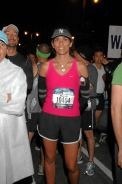
Read ten years ago when I was a non-runner. The book alone fueled my successful first marathon. Now, I'm soon to run marathon #13 and I still feel comforted by the advice.

December 21, 2024
A friend mentioned this as the best book ever to prepare for a marathon. I like my friend a lot and bought it on his recommendation. June I broke my arm and finished surgery for a shoulder replacement, and a week later my grandson was born 2 months premature. The doctor told me 3 months for surgery recovery, 2 years to gain maximum capacity from my new prosthetic. Elliot’s parents commuted 3 hours round trip daily for 2 months to see him in the NICU.
Why this preface? We all found ourselves in a marathon and needed some encouragement.
I’m not going to run but I learned much practical about supporting the mind/ body intertwining in accomplishing something big over time. A plan. Stepwise prep. Visualization and self talk. The support of training with others. Who doesn’t need to be reminded that water, sleep and good food are needed to support your body and mind?
I have some great learnings from this book. Be careful how you set your goal so you don’t discourage yourself. ( it’s to finish)
There is a beautiful story about the class helping an injured man exceed a probable recovery. Learning: probabilities are not possibilities. Be grateful for good care, but know only you set what is possible.
It’s a keeper for me. I love that they included the runners reflections on how the training helped them.
Why this preface? We all found ourselves in a marathon and needed some encouragement.
I’m not going to run but I learned much practical about supporting the mind/ body intertwining in accomplishing something big over time. A plan. Stepwise prep. Visualization and self talk. The support of training with others. Who doesn’t need to be reminded that water, sleep and good food are needed to support your body and mind?
I have some great learnings from this book. Be careful how you set your goal so you don’t discourage yourself. ( it’s to finish)
There is a beautiful story about the class helping an injured man exceed a probable recovery. Learning: probabilities are not possibilities. Be grateful for good care, but know only you set what is possible.
It’s a keeper for me. I love that they included the runners reflections on how the training helped them.

April 15, 2020
Fantastic guide to prepping for a (hopefully) running a marathon. I'm not using their training plan simply because I'm not quite to their athletic level they require before starting. Still, this book - far above others I've seen - emphasizes that training is not only a physical matter. Mental training is just as, if not more important than, running in itself.
I'd love to reach out to Mr. Whitsett once I've run my marathon in October (Chicago 2020!) to let him know how much this book meant to me. What's anyone's guess that the address stated in book is still a valid place to send a letter? Also - this book predates (by my estimation) the widespread use of email. Hard to believe.
Anyway... if you're not "a runner" or consider yourself capable of running a marathon, but you want to train for and run one? This is the book for you.
I'd love to reach out to Mr. Whitsett once I've run my marathon in October (Chicago 2020!) to let him know how much this book meant to me. What's anyone's guess that the address stated in book is still a valid place to send a letter? Also - this book predates (by my estimation) the widespread use of email. Hard to believe.
Anyway... if you're not "a runner" or consider yourself capable of running a marathon, but you want to train for and run one? This is the book for you.

January 16, 2019
This book worked for me. I liked the plan, followed it, and found myself able to run a marathon. I think this could work for anyone in reasonably healthy condition. I completed the plan overweight and finished a little less overweight. Try something else for weight loss. This book prepares you for endurance running, which requires fuel. My only complaint with this book is the overabundance of stories and trivial information. I liked the stories, but one or two short ones per chapter could have made the point. Lastly, I highly recommend reading the chapters in correspondence with the week they cover. I found it much more helpful, encouraging, manageable, and interesting to read it that way.

December 28, 2024
treinando pra uma prova de 16km e apaixonado nesse aqui.
baseado na cadeira 'Marathoning 101' da Universidade de IOWA, em que os alunos tinham 16 semanas pra aprender e praticar juntos a correr a maratona, sendo a avaliação da cadeira era correr maratona em si (e todo mundo conseguia!).
é dividido em 16 capítulos (16 semanas de treino e um extra no final sobre o pós-prova) e cheio de dicas pra treinar o corpo e a cabeça pra terminar uma prova.
o que é incrível é que puseram vários relatos dos alunos ao longo dos capítulos e dá pra acompanhar a evolução deles, as angústias, os truques, a realização... quero parar de correr nuncaaaa e esse livro me deu o gás pra isso
baseado na cadeira 'Marathoning 101' da Universidade de IOWA, em que os alunos tinham 16 semanas pra aprender e praticar juntos a correr a maratona, sendo a avaliação da cadeira era correr maratona em si (e todo mundo conseguia!).
é dividido em 16 capítulos (16 semanas de treino e um extra no final sobre o pós-prova) e cheio de dicas pra treinar o corpo e a cabeça pra terminar uma prova.
o que é incrível é que puseram vários relatos dos alunos ao longo dos capítulos e dá pra acompanhar a evolução deles, as angústias, os truques, a realização... quero parar de correr nuncaaaa e esse livro me deu o gás pra isso
Displaying 1 - 30 of 180 reviews