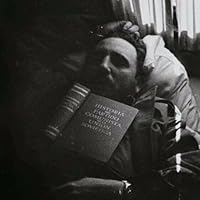
Theodore H. "Ted" Draper was an American historian and political writer. Draper is best known for the 14 books he completed during his life, including work regarded as seminal on the formative period of the American Communist Party, the Cuban Revolution, and the Iran-Contra Affair. Draper was a fellow of the American Academy of Arts and Sciences and the 1990 recipient of the Herbert Feis Award for Nonacademically Affiliated Historians from the American Historical Association.
-He treated Castro’s ideological evolution as a impossibility as if to argue one cannot grow over time or become dissolutioned to imperialist propaganda. -He also paints castros support for armed revolutionary struggle as a negative in his ideology despite that being a consistent view from any non-revisionist communist, some even viewing it as an inescapable necessity. Therefore his criticism is null and void(bc it was being used to paint Castro as not a “true communist”). -Explains communist subtypes like Castroism or Maoism as complete seperate from communism rather than as a specific field of thought within it. -Seems to be an attempt at a “gotcha” moment or “exposé” of his supposed contradictions, rather that an actual analysis of his polical theory. I’ve read better explanations of his theory and execution in Castro’s religious talks with Frei Betto.
Overall, seems highly bias and I would go so far as to say misguided & purposely misleading, but interesting nonetheless.
A tour de force coming from an enemy of the Cuban Revolution. Draper saw the "guerrilla road to socialism" for what it was, an exceptional occurrence that could not be repeated in Latin America, yet his concept of Fidel Castro's "declasse revolution" rings hollow. How did Cuba produce a socialist revolution in the absence of class struggle?
Theodore Draper was too blinded by the anti-communist dogma of the 1950s and early 1960s in the United States to understand the nature and significance of the Cuban revolution and its relevance to the Cuban people and their history. His work on “Castroism” is now largely ignored and forgotten.