How to make your writing appeal to the highest common denominator. "Brian McDonald is one of the world’s wisest teachers of the elements that create great storytelling....If you a writer in any genre, read The Golden Theme. If you are a non-writing reader who just loves stories, read it. If you are a teacher, share it with your students. And give it to friends, who will thank you for the clarity Brian McDonald so generously brings to our lives."
From the forward by Dr. Charles Johnson, National Book Award winner for Middle Passage
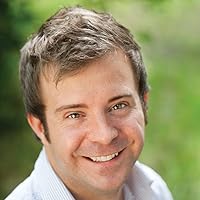
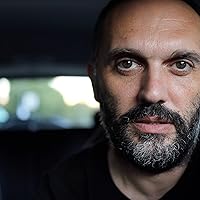
Brian McDonald has taught his story seminar at PIXAR, DISNEY FEATURE ANIMATIION and George Lucas' ILM. His award-winning short film WHITE FACE has run on HBO and Cinemax and is used in corporations nation-wide as a diversity-training tool.
The best book I've read on story theme. A beautiful analogy of the Golden Ratio as applied to storytelling, and a profound message that has the power to heal all of humanity. Yes, this little book contains the secret to that. Profound, and so elegantly simple, it just might change your life.
Very simple but I think I will get more from multiple readings. McDonald explains how storytelling is no less than a life-saving skill along with other basics about the power of story. What gives a story the potency to last for thousands of years? Important powerful lessons are contained in them, that's why. McDonald shows you how that works.
Points to Brian McDonald for clarity - this book has a very simple thesis, and sticks to it. The central idea is that great stories tell us that we are all the same. Each chapter in this short book supports that point and explores a different aspect of it. We learn why stories are so important to culture, how they communicate survival information, why they need conflict to be relevant, how heroes understand that we are all the same, how villains misunderstand that truth, why fiction can be a great medium for allowing us to view ourselves more objectively, and why the story shouldn't be about you.
It's a simple book, and could have easily been half the length. This is not a course on screenwriting or the three-act structure, but rather a helpful over-arching theme to keep in mind as you craft a story. I'll definitely be thinking of that theme in the future, so in that sense the book is a success.
I'll dock him a point for fairly banal, straightforward prose, and for presenting some examples that really don't fit if one knows much about the subject matter (especially when he wanders into the world of religion, which he does often). Still, it's a quick read, and a good reminder for anyone who's in the business of storytelling.
The loveliest book on writing I've ever read. This has surpassed Bird By Bird by Anne Lamott as my favorite book on writing. Simple, lovely and to the point. This is where story comes from. Brian McDonald hits it home, and it is not surprising that Pixar gets him to teach story.
There are passages in this book that I read to friends, as the author reminds us why stories are important, and what they need to tell us to resonate.
A quick and delightful read, for aspiring writers, and people who appreciate the craft of writing.
I read this book in college and decided to give it another read. I was blown away the first time by the bold idea McDonald presented and even more so the second time. His book is easy to read and flows nicely with information, well made points, and engaging analogies. As a lover of stories, McDonald does an excellent job explaining his idea in all the different forms stories can take, touching on folklore and verbal traditions as well. Filled with many quotable points, his book transcends mere writing advice, and offers life advice.
Brian McDonald’s book “The Golden Theme” claims to be a lesson on how to make your writing more accessible to people everywhere. But it is much more than that. It is a wonderful collection of stories and powerful anecdotes on how to live a more connected and fulfilling life.
Referencing insights from Rod Serling to the Epic of Gilgamesh, McDonald directs you straight to the heart of what makes art resonate with people across cultures and centuries of time. Why does the eons old tale of “The Boy Who Cried Wolf” still make sense to us in our techno-centric society? How is it possible that we continue to teach our children the lessons taught in the story of the “Tortoise and the Hare”? Because they are both derived out of the truth spoken in what McDonald has wisely named “The Golden Theme”.
This book is nothing short of miraculous. It shines a bright spotlight on insights that are so seemingly obvious that we forget how important they are not only in our ability to create, but also in our ability to be human beings. I am very grateful to have been able to read this book. I know that I will be keeping it close at hand in m office so that I can open it often for inspiration and confirmation. I simply cannot recommend it enough.
Read the author's book, invisible ink, then read this book. Both are excellently crafted and simply explain story telling. The Golden Theme discusses the reason that we tell stories: we need them to survive. One thing that really sticks out to me is his discussion of why poorly written stories are dangerous. A quick, great read for anyone looking to get to know story telling better.
Really liked this. Invisible Ink is stronger in my opinion, but this one poses the question "What is at the base of every story?" then tries to answer it, and Brian does a great job with the debate.
Rating... 5/5, will continue to reread every year.
At its heart, the Golden Theme is a universal bedrock upon which every great story sits. And what is that theme? It's quite simple: we are all the same.
If you're like me, when you read that, you sighed. But think more of it. Think of why that is true and of how it matters.
The brilliance of this small book is that this serves as a deep study and punchy study into this theme and how writers should approach it.
At the heart of every story is a narrative about survival of which we carry with us everywhere we go. The best stories tap into this core so it makes it evermore important to understand how the clock ticks therefore we can construct our own.
But how can we make stories?
One of my favorite quotes from this book, "Technique is secondary. Technique is what comes from how you do what you do."
In other words, to make stories, we mustnt fixate on style for we become obsessed with ourselves and the greatest stories are not about what we think but what we show how others think.
"Art is not to show people who you are; it is to show people who they are."
So how does your way of showing come from the Golden Theme? Simple answer: Since we are all the same then focus on what makes us so similar and not what makes us different.
There is a whole section I could quote here but I'd much rather you go read the book for it is quick, simple, and extremely profound.
Nevertheless, this will be a read I return to again and again.
This is such a pleasure, and an eye-opening experience, to read. IMHO this should be part of the storytelling canon (Story by Robert McKee, The Anatomy of Story by John Trudy, Moral Premise by Stanley D. Williams, PhD, Anatomy of a Premise Line by Jeff Lyons, Writing for Emotional Impact by Karl Iglesias, The Golden Theme by Brian McDonald, Hero with a Thousand Faces by Joseph Campbell, Narratology by Mieke Bal, The Authentic Swing by Steven Pressfield, etc...)
I strongly believe that this wonderful, and quite frankly vital, a that should be read regardless if you're a Storyteller or not. This is without question a gem in my catalog/library.
I think I have an addiction to writing books, I own and have read over 100 books on the craft. Every single one of those books left huge questions unanswered- namely, how do you write a cohesive, meaningful book with an idea that works? The Golden Theme is deceptively simple, but along with Invisible Ink, the author gives definitive, practical advice on how to write a book that truly works. Brian McDonald is the best writing teacher out there. If you want whatever you're working on to resonate and if you want to understand the ins and outs of crafting a meaningful, well-written story, this book is for you.
I am grateful for this exploration of the Golden Theme. It makes a lot of things clear about the deep power of stories to help us understand that 'we are all the same,' and does so with an abundance of ... richly told stories. An inspiring read that I believe can be applied to other art disciplines. As a composer and songwriter I will definitely be pondering these words as I take up my pencil.
I enjoyed this. There were several good reminders, though I think it's geared for writers who haven't obtained formal education and those who plan to self-publish. (That is not meant to belittle either group of folks--to each their own--it's just not the path I happen to be on.) I'm glad I read it, but it's probably not one I'll return to for advice later on.
My brother got this for me ages ago, so I suppose it's fitting I read it when I finally got to see him again. This is a book with a very simple, straightforward premise, and there's a lot here that I hope to use in the future. That said, I would have liked more concrete examples of how to implement it, rather than the idea alone.
Profound short book on the goal of storytelling, with life lessons as well. I got the germ of an exciting story idea from this and will probably re-read to refine it more as I start to write. Highly recommended.
This really isn't a self-help book, when in the end, it's the only self-help book you'll ever need to read. The complexity of life focused on one simple solution to all obstacles: The Golden Theme... A must-read for anyone born with a heart in their chest...
sort of a nothing book, i think — filled with so many generalities and platitudes that it all sort of blurs together. like a ted talk in written form, i think
I have spent many years teaching creative writing, so I am always interested in new craft books. Based on Brian McDonald's opening pages, I did not expect The Golden Theme to tell me anything new. I was pleasantly surprised. I learned quite a bit about Brian's perspective on story, and while I can't say I'm a complete convert, I can say that I'll add a few of his tools to my toolbox and would consider using his book for introductory and intermediate classes, and will pass along the recommendation to other teachers of craft.
I do not truly believe, as the book asserts, that we are all the same, however. I've lived too long and seen too much to buy that part. I know for a fact that I am not a Jeffrey Dahmer, nor am I a Mother Theresa, or a Barack Obama, or a Saddam Hussein. But the golden theme is a foundational idea that is a very good place for a beginning storyteller to start. I do believe that the goal of many good stories is to explicate our humanity, to reveal what exactly humanity is. And I do believe that the reader should be able to recognize some part of him- or herself in the pages of a good story. Reader-response theory is something we talk about in literature classes, but it is also considered to be the simplest way to look at a text, and if that is all we are about to see in a tale, then we give it that awful tag: Hollywood.
What makes me so excited about the Golden Theme is the story the book itself tells. It tells the story of a man who has found something in which to believe--that all of humankind can be whittled down to a sentence: we are all the same. Brian McDonald made a discovery about himself and projected onto all of us as readers in a way that we are happy to accept. And he included so much incredible information and knowledge that I felt I was the recipient of some similar gift--even if I didn't completely agree with him. What he discovered is that he belongs. He belongs to this place and to this time. What a gift! As a writer and a human I have always felt quite the opposite--out of time, out of place, out of sync. It's what keeps me going back to the page, because that is the only place I know to be home. But for the time it took me to read, I felt as full of faith as he, because he reflected my humanity back to me. He devised the book to demonstrate his own theory, and that, my friends, takes talent.
His theory did give me pause, though. I also felt something like faith and hope. And he did reiterate some assertions that I've made for years about "diversity," and that is that drawing attention to our differences makes us all just that much more different. I so appreciate the fact that he is drawing attention to our sameness. When we were having racial problems on the university campus where I teach, I encouraged people to engage in an old-fashioned foot washing. We do all look the same on the soles of our feet. Brian McDonald's book reminds me of that. He actually managed to break through my cynicism. And that very pleasantly surpised me.
This book resonated deep within me on a lot of levels, but most of all as a reader and a parent. Although I often told my daughters stories, I never really thought of it as deeply as I did with this book gently guiding me. Only time will tell if it has changed the way I look at fiction, but I suspect his points will quietly return to my thoughts again and again.
Thank you, Libertary, for making it possible for me to read Mr. McDonald's book. I will be seeking out more of his books, I liked it that much! Now to find a copy of his short film "White Face".
Note: This book was provided free through the GoodRead's First Reads program with an expectation of an honest review. My opinion is my own.
A very small but very potent work. Sometimes seems a little repetitive, but in the end I think comes up with a brilliant point. The Golden Theme: we are all the same. I will need some time to process what I've stumbled on in this book, at this moment all I can say is that simple, brilliant thought is genuinely a contribution to my way of thinking, something so clear and in many ways so obvious that I might never have run across it, but once it's pointed out is abundantly clear as of central importance.
I want to read his other book now...
I was recommended this book by "Paper Wings" Podcast.
This book comes at you like a one point sermon. It has one message. And the way the author expounds is like drawing a daisy - start at the center. Go out to form the petal, then come back to the center. Go out to form another petal, come back to center.
Thankfully he didn't elaborate more than necessary. He gets the point across with stories. It could be summed up in an article, but the stories and his experience give credence to what he writes.
Because it's one point, it's memorable and useful.
This book is not at all what I expected. From the title I was expecting a style manual like Strunk and White. I'd like to get back into writing anything that is worthwhile to read.
Rather this book is about living life and the human story telling. And the title is named after "The Golden Rectangle," what mathematician could not love that.
This book is filled with wonderful quotes on being human and how we are all the same.
As an aspiring writer, I am always interested in books that offer good ideas on improving the craft of writing. The Golden Theme offered several thought provoking ideas which I will indeed keep in mind as I continue to work on my novel. Books of this genre can only help a writer better their storytelling. I love to read these kinds of books, to hear an accomplished authors take on the art of creating a story that others truly want to read.