

What do you think?
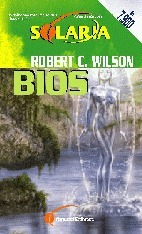
Bios
Nel XXII secolo l'umanità ha colonizzato il sistema solare. I viaggi stellari sono possibili ma incredibilmente costosi, cosí gli sforzi umani si sono concentrati su Isis, il piú vicino dei mondi simile alla Terra. Isis è un pianeta verde, paradisiaco, abitato da una flora e da una fauna complessa. Ma ogni singola molecola della vita di Isis è incredibilmente tossica per gli esseri umani... Nonostante questo, Isis è la scoperta piú importante del millennio: una biologia parallela con molte lezioni da impartire all'umanità. Ma è anche il piú spietato degli ambienti, e il luogo piú solitario dell'universo. Zoe Fisher era nata per esplorare Isis. Clonata e geneticamente progettata, Zoe possiede tutte le caratteristiche per affrontarne i pericoli. E alla fine è giunta su Isis, ma vi sono dei segreti impiantati in lei di cui è all'oscuro... e il pianeta stesso serba alcune rivelazioni che potrebbero cambiare la nostra comprensione della vita nell'universo.
246 pages, Paperback
First published November 13, 1999
About the author
Robert Charles Wilson
93 books1,735 followersI've been writing science fiction professionally since my first novel A Hidden Place was published in 1986. My books include Darwinia, Blind Lake, and the Hugo Award-winning Spin. My newest novel is The Affinities (April 2015).
Ratings & Reviews
Friends & Following
Create a free account to discover what your friends think of this book!
Community Reviews
Displaying 1 - 30 of 130 reviews

November 7, 2018
Imagine a place where everything is toxic, where poison suffuses everything and scientists and researchers enter only at the risk of their lives.
Now stop imagining a Trump rally and turn your gaze to the stars.
Suppose that in the airless desert of our galaxy, amongst the gas giants and the rocks and the radiation-blasted wastes of space you discovered a paradise, an untouched verdant world of rains , forests and unique life, seemingly perfectly suited for human habitation.
Then imagine that the tiniest part of this world, a microscopic fragment of it even, is so poisonous that to touch it will kill you.
And you won't die easy. You will suffer, your body slowly poisoned, blood seeping from your pores and eyes as your cells liquefy under the assault of an unstoppable alien pathogen. (Are you still imagining the Trump rally? I am. It's a stretch to make the comparison now, but there are still parallels - perhaps the analogy would be closer if it was only your brain that liquified)
Anyway, back to space - this lethal world is Isis, the planet that Robert Charles Wilson's novel Bios is set upon and around, and it's a fantastic setting that fired my imagination and kept me reading into the night.
Many times while reading Bios I found my mind wandering to another seminal work of ecologically themed SF - Robert Mann's The Disestablishment of Paradise. Like Mann's work Bios is set on a planet hostile to humans, and explores human relationships with place, our misguided attempts to exploit the natural world and our place in the universe. Like Mann's book Isis is among the more thoughtful SF I've read - a story of interesting ideas combined with a fresh take on the Fermi paradox, all presented sensitively and with much pathos.
But whereas Phillip Mann's Paradise is a once edenic world that has become more dangerous the longer it is occupied by humans, Isis is utterly and incurably toxic to our species from the moment it is discovered.
To survive on Isis humans need to hide behind multiple containment and sterilization zones with massive sealed bulkheads and can only visit the surface via remotes or in hulking, armored environmental suits. Isis' biome is a uniquely dangerous place, utterly alien in its cellular construction where every spore, every microbe, every tiny fragment of a prion can lead to a 12 hour death by deliquescence.
Constant vigilance is the only thing that stops the biome of Isis exploiting any weakness in biosecurity, the aggressive microbes native to the world taking any opportunity to break in and destroy the scientists and researchers within.
Making the already difficult near impossible, interstellar travel is horrifically expensive, requiring the fusion destruction of a large asteroid every time it is used. As a result only small amounts of supplies and aid can be sent from Earth, and the human bases on Isis, along with the station orbiting above it, are perpetually short of equipment.
To this world comes Zoe Fisher, a woman bred and designed by the Families of Earth (The ruling aristocracy that runs Earth like a feudal empire) to push the envelope of human engagement with Isis. Zoe is trained to use revolutionary new equipment and has been designed from the ground up with the best genetic and artificial immune system enhancements humanity can build. She's an interesting character, traumatised by events from her childhood, wary of human contact, and magnetically drawn to the poisonous world that she knows her whole life has been preparation for.
What Zoe doesn't know is that the emotional regulator the families installed in her to keep her docile and controlled has been removed. For the first time in her life, among the scientists and technicians on Isis, she is going to experience the full beauty and tragedy of being human, in a place where to be human is to live under a perpetual death sentence.
All of this builds with hastening pace to a fascinating conclusion, one that reveals a theory of life in the universe and the uniqueness of life on Earth that I've not encountered in a dozen other novels that have addressed the Fermi paradox. It's genuinely thought provoking, and I won't spoil it here as it's a beautiful concept to underpin a novel with. Like some of the best stories however, you should expect some grimness in Bios. A world where a single puff of air could kill a thousand people is not a natural home for happy endings.
Four stars.
Now stop imagining a Trump rally and turn your gaze to the stars.
Suppose that in the airless desert of our galaxy, amongst the gas giants and the rocks and the radiation-blasted wastes of space you discovered a paradise, an untouched verdant world of rains , forests and unique life, seemingly perfectly suited for human habitation.
Then imagine that the tiniest part of this world, a microscopic fragment of it even, is so poisonous that to touch it will kill you.
And you won't die easy. You will suffer, your body slowly poisoned, blood seeping from your pores and eyes as your cells liquefy under the assault of an unstoppable alien pathogen. (Are you still imagining the Trump rally? I am. It's a stretch to make the comparison now, but there are still parallels - perhaps the analogy would be closer if it was only your brain that liquified)
Anyway, back to space - this lethal world is Isis, the planet that Robert Charles Wilson's novel Bios is set upon and around, and it's a fantastic setting that fired my imagination and kept me reading into the night.
Many times while reading Bios I found my mind wandering to another seminal work of ecologically themed SF - Robert Mann's The Disestablishment of Paradise. Like Mann's work Bios is set on a planet hostile to humans, and explores human relationships with place, our misguided attempts to exploit the natural world and our place in the universe. Like Mann's book Isis is among the more thoughtful SF I've read - a story of interesting ideas combined with a fresh take on the Fermi paradox, all presented sensitively and with much pathos.
But whereas Phillip Mann's Paradise is a once edenic world that has become more dangerous the longer it is occupied by humans, Isis is utterly and incurably toxic to our species from the moment it is discovered.
To survive on Isis humans need to hide behind multiple containment and sterilization zones with massive sealed bulkheads and can only visit the surface via remotes or in hulking, armored environmental suits. Isis' biome is a uniquely dangerous place, utterly alien in its cellular construction where every spore, every microbe, every tiny fragment of a prion can lead to a 12 hour death by deliquescence.
Constant vigilance is the only thing that stops the biome of Isis exploiting any weakness in biosecurity, the aggressive microbes native to the world taking any opportunity to break in and destroy the scientists and researchers within.
Making the already difficult near impossible, interstellar travel is horrifically expensive, requiring the fusion destruction of a large asteroid every time it is used. As a result only small amounts of supplies and aid can be sent from Earth, and the human bases on Isis, along with the station orbiting above it, are perpetually short of equipment.
To this world comes Zoe Fisher, a woman bred and designed by the Families of Earth (The ruling aristocracy that runs Earth like a feudal empire) to push the envelope of human engagement with Isis. Zoe is trained to use revolutionary new equipment and has been designed from the ground up with the best genetic and artificial immune system enhancements humanity can build. She's an interesting character, traumatised by events from her childhood, wary of human contact, and magnetically drawn to the poisonous world that she knows her whole life has been preparation for.
What Zoe doesn't know is that the emotional regulator the families installed in her to keep her docile and controlled has been removed. For the first time in her life, among the scientists and technicians on Isis, she is going to experience the full beauty and tragedy of being human, in a place where to be human is to live under a perpetual death sentence.
All of this builds with hastening pace to a fascinating conclusion, one that reveals a theory of life in the universe and the uniqueness of life on Earth that I've not encountered in a dozen other novels that have addressed the Fermi paradox. It's genuinely thought provoking, and I won't spoil it here as it's a beautiful concept to underpin a novel with. Like some of the best stories however, you should expect some grimness in Bios. A world where a single puff of air could kill a thousand people is not a natural home for happy endings.
Four stars.

December 19, 2017
The managing physician was sick.
With fear.
Let it be fear, Degrandpre thought. For once, he envied his father’s stubborn faith. A prophet to pray to. Here, there was no prophet, no Mecca, no Jerusalem. No paradise or forgiveness, no margin of error. Only a devil. And the devil was fecund, the devil was alive.
Isis is a toxic planet far away from Earth. Humans established a station here, on the arctic pole, in the ocean and on the planet’ surface and for several years everything was fine: they managed to keep a safe closed environment and conducted their research with no incidents. Until one day…
RCW brilliantly succeeded to create a very realistic and terrifying world. The characters are also very well done, as I got used by now. The story is not action packed – it is a coming of age story, to be more precise, Isis’ biosphere story. There is no actual plot and does not have a surprising ending – it is all about the journey. And at the end, you’ll get that this was no story about humans and their roles on Isis, but, as I said, about Isis bios, the power of nature, insignificance and helplessness of humans facing it. And in a small amount, about humans’ deceiving nature, persistence and not ultimately, love.
So much to think about in just 200 odd pages. One of the best stories in this genre.
With fear.
Let it be fear, Degrandpre thought. For once, he envied his father’s stubborn faith. A prophet to pray to. Here, there was no prophet, no Mecca, no Jerusalem. No paradise or forgiveness, no margin of error. Only a devil. And the devil was fecund, the devil was alive.
Isis is a toxic planet far away from Earth. Humans established a station here, on the arctic pole, in the ocean and on the planet’ surface and for several years everything was fine: they managed to keep a safe closed environment and conducted their research with no incidents. Until one day…
RCW brilliantly succeeded to create a very realistic and terrifying world. The characters are also very well done, as I got used by now. The story is not action packed – it is a coming of age story, to be more precise, Isis’ biosphere story. There is no actual plot and does not have a surprising ending – it is all about the journey. And at the end, you’ll get that this was no story about humans and their roles on Isis, but, as I said, about Isis bios, the power of nature, insignificance and helplessness of humans facing it. And in a small amount, about humans’ deceiving nature, persistence and not ultimately, love.
So much to think about in just 200 odd pages. One of the best stories in this genre.

November 26, 2024
I have had a soft spot for Wilson for years, beginning with his super novel Spin. Bios, more of a novella, still packs quite a punch for being so slim. Set a few hundred years from now, Earth has become ruled by the Families, some sort of oligarchy, but deep space habitats rebelled, and now co-exist with Earth. Humanity discovered some means to transport people/things instantaneously (some hand waving here with quantum stuff), but it is very, very expensive to do so. Nonetheless, humanity has established a colony on Isis, an earth-like world many light years away.
The problem with Isis, however, is that its flora/fauna are amazingly toxic to humanity! I really liked Wilson's depiction of the planet and it gave this a hard science fiction flair (although I almost had to break out a biology text!). The plot, however, revolves around one Zoe, a 'bottle baby' from Earth. The Families (there is some politics here, but I will skip that) designed Zoe and equipped her with cutting edge immune system boosters. The hope is she will survive on Isis, but she is an experiment and she does not even realize it. Besides the saga of Zoe and the forlorn colony, Wilson also addresses the Fermi paradox-- where are all the aliens?
I think people may be mixed on the ending, but I liked it. Quick read and thought provoking. 3.5 stars, rounding up!!
The problem with Isis, however, is that its flora/fauna are amazingly toxic to humanity! I really liked Wilson's depiction of the planet and it gave this a hard science fiction flair (although I almost had to break out a biology text!). The plot, however, revolves around one Zoe, a 'bottle baby' from Earth. The Families (there is some politics here, but I will skip that) designed Zoe and equipped her with cutting edge immune system boosters. The hope is she will survive on Isis, but she is an experiment and she does not even realize it. Besides the saga of Zoe and the forlorn colony, Wilson also addresses the Fermi paradox-- where are all the aliens?
I think people may be mixed on the ending, but I liked it. Quick read and thought provoking. 3.5 stars, rounding up!!
November 24, 2019
Ah..., no.... Fans of detailed world-building might like that aspect of this, and ppl who like those kinds of SF stories that start small and turn into something that encompasses galaxies might, but overall it's awkward, tedious, and overly ambitious (I really don't think all that political stuff about Works vs. D&P or whatever was necessary).
Read Lightread's review.
Read Lightread's review.

January 12, 2026
I loved the concept of this book. We've found a planet that's millions of years ahead of ours evolutionally. While it's never had any mass extinctions, it is hellbent on destroying us because our immune systems just can't handle the micro-organisms there, which seem to learn very quickly how to infect us. The answer? Bio-engineer humans who can withstand it. And Zoe is the first one who can go out into this new planet without full armor. There's also a population on the planet of seemingly sentient beings who know how to use fire and bury the dead, and they seem as curious about us as we are of them.
I will say that this book was more of a challenge than Wilson's other books I've read. Until the last 20% or so, it felt like every paragraph was packed full of new information, which was necessary for the world-building the author was doing. While I appreciate it as a whole, it made the book move slower than it could have. The concept and the ending were well worth it though.
I will say that this book was more of a challenge than Wilson's other books I've read. Until the last 20% or so, it felt like every paragraph was packed full of new information, which was necessary for the world-building the author was doing. While I appreciate it as a whole, it made the book move slower than it could have. The concept and the ending were well worth it though.

March 22, 2010
Interesting, but a bit disappointing in the end.
Figured out the scenarios about Zoe and the planet in advance (and if you've ever read Powers That Be, you'll also have a leg up on figuring things out), so no real surprises, a lot of buildup with no actual climax to the story. Kinda tapers off into the cycle beginning again.
That being said, I loved the environment on Isis, the descriptions are great, and the idea of a whole planet that humanity can look at but not touch is very cool - especially when it's so lush and beautiful.
I would love to read more by this author in the larger universe he's created. The corporate-run Earth, with it's aristocratic Families, and the complex interrelationships with the varying cultures of the different cultures in the Kuiper and Mars colonies all sounded fascinating. Something set in that environment I would definitely pick up.
Figured out the scenarios about Zoe and the planet in advance (and if you've ever read Powers That Be, you'll also have a leg up on figuring things out), so no real surprises, a lot of buildup with no actual climax to the story. Kinda tapers off into the cycle beginning again.
That being said, I loved the environment on Isis, the descriptions are great, and the idea of a whole planet that humanity can look at but not touch is very cool - especially when it's so lush and beautiful.
I would love to read more by this author in the larger universe he's created. The corporate-run Earth, with it's aristocratic Families, and the complex interrelationships with the varying cultures of the different cultures in the Kuiper and Mars colonies all sounded fascinating. Something set in that environment I would definitely pick up.

April 3, 2023
Robert Charles Wilson írta az egyik, szívemhez leginkább közel álló science-fiction regényt, a Pörgést, ezért bizalommal kezdtem neki a Bioszférának is. Ugyanakkor némi aggodalom is dolgozott bennem, mert nem tudtam nem észrevenni a rengeteg kritikát, amellyel amúgy gazdag életművének egyéb köteteit illették.
Nos nálam ez a regény is kifogástalanul működött: pont megfelelő arányú tech, társadalomrajz, filozófia, izgalom, érzelem és értelem keveredik benne, és a történet is szépen ível az előkészítéstől a felvillanyozódáson át a teljes, maga módján purifikáló megsemmisülésig. A biohorror nyomasztás azért alaposan megviselt: késő este fejeztem be a könyvet és az utolsó lapok után még egy jó órán át csak néztem magam elé és próbáltam megnyugodni.
Mizofóbiásoknak és hipochondereknek erősen kerülendő könyv :)
Nos nálam ez a regény is kifogástalanul működött: pont megfelelő arányú tech, társadalomrajz, filozófia, izgalom, érzelem és értelem keveredik benne, és a történet is szépen ível az előkészítéstől a felvillanyozódáson át a teljes, maga módján purifikáló megsemmisülésig. A biohorror nyomasztás azért alaposan megviselt: késő este fejeztem be a könyvet és az utolsó lapok után még egy jó órán át csak néztem magam elé és próbáltam megnyugodni.
Mizofóbiásoknak és hipochondereknek erősen kerülendő könyv :)

November 11, 2018
Full disclosure: I picked up this book because of another Goodreads review (from Scott, who gives GREAT reviews. I'm jealous.)
I think of Robert Charles Wilson as a dependable writer. He comes up with interesting ideas and works through them in interesting ways.
Here the Big Ideas are 1) a really, REALLY toxic planet and 2) life in the universe.
There's an outpost on the planet Isis. Isis is the toxic planet. A human who has even a short exposure to the atmosphere/organisms of Isis can expect a rapid and painful death and deliquescence as their cells are broken down and destroyed. And the planetary organisms are getting better and better at attacking the seals that keep the humans somewhat safe on the surface of the planet.
Into this mix comes Zoe, who's the last living part of a clone group. Zoe is basically on Isis to test a new kind of environment suit plus physical modifications to allow the humans to move more safely on the planet's surface. Basically, she's a guinea pig, a test subject. Woven around her and Isis are the planet's administrator, a bureaucrat who is trying to keep his status by keeping bad news away from his superiors; Zoe's (unknown to her) lack of an implant that smooths her emotions, so she's experiencing FEELINGS now; the cascading collapse of installations on the planet; etc.
This was a really interesting book to think about. One thing that boggled me a little: this world has access to almost instantaneous travel, but it requires the destruction of an asteroid or similar planetesimal to accomplish it. Not easy OR cheap, which makes you wonder why they've spent so much time and money on a planet that is so hostile to human life. Sunk cost fallacy, maybe? Sure, there's lots of life there, but WE CAN'T LIVE THERE. At least, not in the short term.
There's no big happy Star Rangers Save the DAY!! ending. But is does have a way of making you think about life and its place in the universe. I liked it.
I think of Robert Charles Wilson as a dependable writer. He comes up with interesting ideas and works through them in interesting ways.
Here the Big Ideas are 1) a really, REALLY toxic planet and 2) life in the universe.
There's an outpost on the planet Isis. Isis is the toxic planet. A human who has even a short exposure to the atmosphere/organisms of Isis can expect a rapid and painful death and deliquescence as their cells are broken down and destroyed. And the planetary organisms are getting better and better at attacking the seals that keep the humans somewhat safe on the surface of the planet.
Into this mix comes Zoe, who's the last living part of a clone group. Zoe is basically on Isis to test a new kind of environment suit plus physical modifications to allow the humans to move more safely on the planet's surface. Basically, she's a guinea pig, a test subject. Woven around her and Isis are the planet's administrator, a bureaucrat who is trying to keep his status by keeping bad news away from his superiors; Zoe's (unknown to her) lack of an implant that smooths her emotions, so she's experiencing FEELINGS now; the cascading collapse of installations on the planet; etc.
This was a really interesting book to think about. One thing that boggled me a little: this world has access to almost instantaneous travel, but it requires the destruction of an asteroid or similar planetesimal to accomplish it. Not easy OR cheap, which makes you wonder why they've spent so much time and money on a planet that is so hostile to human life. Sunk cost fallacy, maybe? Sure, there's lots of life there, but WE CAN'T LIVE THERE. At least, not in the short term.
There's no big happy Star Rangers Save the DAY!! ending. But is does have a way of making you think about life and its place in the universe. I liked it.

April 10, 2022
Настоящая классическая НФ, какой она должна быть. Литература идей. В неполные двести страниц умещается и космический боевик в стиле «Неукротимой планеты» (только без гротескных монстров; все битвы с гиперагрессивной биотой здесь ведутся на клеточном/бактериальном уровне), и социальный комментарий про жуткие перспективы корпоративного капитализма, и яркие характеры, и история Любви, и ворох занимательных рассуждений на самые разные темы, от «какая часть нашего Я реально наша, а какая сформирована фармацевтически» до «почему во вселенной нет следов чужих цивилизаций».
Холодная, отстраненная, мрачная (но не пессимистическая!) проза. За героев переживаешь до последней страницы, даже когда уже, казалось бы, шансов на спасение нет.
Уилсон, как всегда, держит уровень. Сразу по прочтении — уверенные 9/10. Если первые восторги поутихнут, исправлю оценку на 8.
Холодная, отстраненная, мрачная (но не пессимистическая!) проза. За героев переживаешь до последней страницы, даже когда уже, казалось бы, шансов на спасение нет.
Уилсон, как всегда, держит уровень. Сразу по прочтении — уверенные 9/10. Если первые восторги поутихнут, исправлю оценку на 8.

June 30, 2019
This was my first encounter with the pen of Robert Charles Wilson, and not even in its original form. His famed Spin trilogy is on my TBR-pile, also in a French (omnibus-)version: La trilogie Spin.
Bios takes place in the far future, somewhere not too far from (or inside, I didn't quite get that) the Kuiper belt (Wikipedia-page, NASA-page) and is about the colonisation of a distant planet called Isis. Isis has its own fauna (miners, more animal than human) and flora. The planet is a hostile place to anything non-native. Humans have been trying to colonise it for many years, mainly because both Earth and Isis are very much related on an evolutionary level. However, life has developed differently on Isis.
There are at least two hubs/stations for Research and Development: Marburg and Yambuku. Scientists and engineers going outside must undergo a thorough cleaning before re-entering a station. The suits they wear contain protective material and sensors. Other accessories complete the package. However, one cannot stay outside for too long, because the batteries and alike don't last for days on end. This doesn't mean that there is no supervision; there is: self-driving robots on the ground, telecommunication, scanners, ... There's always someone in the central control room to provide help/assistance when needed.
The local stations are supervised by a floating spaceship, which provides for itself: it has its own gardens, its recycling system (I forgot: the space suits also have a sort of recycling system for sweat and other fluids), and so on. Turing machines make sure there are enough resources coming from the moon.
Rescue shuttles (Higgs spheres) are very few in number and can carry only a handful of people. No one thought more would be necessary, even if there are several tens/hundreds of people (scientists, directors, the lot) involved in the project.
The project is set up and financed by two parties: the ancient Families (rich people, entrepreneurs) and a sort of company/corporation called Trusts. Mainly the latter's department Mécanismes & Personnel is responsible for the development and integration of specific tools to suppress emotions. Test objects are girls who live in an orphanage. Each of them has the same kind of "protection", though in a different form. One of them, Zoé Fisher, will be the sole survivor and sent out to investigate the environment of Isis, to prepare the way for human colonisation. Or, at least, that is the official explanation.
Zoé embarks on this mission, full of confidence and aware that she has an implant that will help her overcome any feelings of fear, stress, or emotional outbursts.
Next to that, she was genetically modified to withstand attacks from harmful bacteria, in case her suit would not provide enough protection.
All is not well on a dangerous planet like Isis. Anything alien to the local environment, will be destroyed within a short period of time. Anything, not just humans, but also infrastructure, no matter the material from which it is made. Once the specific bacteria (or similar) gets inside, there's no way of stopping the invasion. When touched, it takes only a few hours before Death comes around to collect the bodies. At some point, that's what happens: Isis' ecosystem refused to allow mankind to stay any longer. So, the inevitable happened, despite the measures that were taken.
Isis is not just a planet, its ecosystem also has its own voice, its own mind, its own memory. It communicates through telepathy with Zoé (by which Isis takes on the form of someone dear to its interlocutor), as she is trapped underground and thinks about her feelings, about her time aboard one of the stations, about Tam Hayes (one of the scientists with whom she got along very well). Isis conveys a message about life, about nature, about evolution. A philosophical message, in other words.
To properly describe the world, not in the least because of the context, you get a lot of scientific wording and descriptions about the planet, the plants, the bacteria, molecules, ... Hard SF, as they call it, but not so that the wording gets in the way of the reading pleasure. Not at all; on the contrary, they're a valuable addition, I find.
The characters all have a different background (religious or otherwise) and come from different places, not necessarily the US, but also Asia, for example. The orphanage where Zoé stayed, was in Teheran, Iran, for example.
----------
Bios is a story whose message is still relevant today, even after 20 years. Ecology, the environmental issues are very hot today (as is the weather; what climate change?), as they are in Wilson's story. Mankind has still a lot to learn about its proper planet, yet decides to "destroy" it for the love of money. Colonising other planets is out of the question, because even of those, not sufficient knowledge has been collected. Nature will find a way to respond to man's interventions, as the various viruses, floods, draughts and so on prove, time and again. And still mankind does not learn or refuses to.
Bios is recommended reading, without question. Is it RCW's best novel? Probably not (isn't Spin wearing that crown?). It is, on the other hand, an entertaining story, one with an important message (not just about nature, but also about appreciating and respecting life), and very accessible at that.
----------
The story reminded me a bit of Lum'en by Laurent Genefort, which I read a year ago. See here.
----------
I was sent this book by Éditions ActuSF for review. Many thanks to them for the trust.
Bios takes place in the far future, somewhere not too far from (or inside, I didn't quite get that) the Kuiper belt (Wikipedia-page, NASA-page) and is about the colonisation of a distant planet called Isis. Isis has its own fauna (miners, more animal than human) and flora. The planet is a hostile place to anything non-native. Humans have been trying to colonise it for many years, mainly because both Earth and Isis are very much related on an evolutionary level. However, life has developed differently on Isis.
There are at least two hubs/stations for Research and Development: Marburg and Yambuku. Scientists and engineers going outside must undergo a thorough cleaning before re-entering a station. The suits they wear contain protective material and sensors. Other accessories complete the package. However, one cannot stay outside for too long, because the batteries and alike don't last for days on end. This doesn't mean that there is no supervision; there is: self-driving robots on the ground, telecommunication, scanners, ... There's always someone in the central control room to provide help/assistance when needed.
The local stations are supervised by a floating spaceship, which provides for itself: it has its own gardens, its recycling system (I forgot: the space suits also have a sort of recycling system for sweat and other fluids), and so on. Turing machines make sure there are enough resources coming from the moon.
Rescue shuttles (Higgs spheres) are very few in number and can carry only a handful of people. No one thought more would be necessary, even if there are several tens/hundreds of people (scientists, directors, the lot) involved in the project.
The project is set up and financed by two parties: the ancient Families (rich people, entrepreneurs) and a sort of company/corporation called Trusts. Mainly the latter's department Mécanismes & Personnel is responsible for the development and integration of specific tools to suppress emotions. Test objects are girls who live in an orphanage. Each of them has the same kind of "protection", though in a different form. One of them, Zoé Fisher, will be the sole survivor and sent out to investigate the environment of Isis, to prepare the way for human colonisation. Or, at least, that is the official explanation.
Zoé embarks on this mission, full of confidence and aware that she has an implant that will help her overcome any feelings of fear, stress, or emotional outbursts.
Next to that, she was genetically modified to withstand attacks from harmful bacteria, in case her suit would not provide enough protection.
All is not well on a dangerous planet like Isis. Anything alien to the local environment, will be destroyed within a short period of time. Anything, not just humans, but also infrastructure, no matter the material from which it is made. Once the specific bacteria (or similar) gets inside, there's no way of stopping the invasion. When touched, it takes only a few hours before Death comes around to collect the bodies. At some point, that's what happens: Isis' ecosystem refused to allow mankind to stay any longer. So, the inevitable happened, despite the measures that were taken.
Isis is not just a planet, its ecosystem also has its own voice, its own mind, its own memory. It communicates through telepathy with Zoé (by which Isis takes on the form of someone dear to its interlocutor), as she is trapped underground and thinks about her feelings, about her time aboard one of the stations, about Tam Hayes (one of the scientists with whom she got along very well). Isis conveys a message about life, about nature, about evolution. A philosophical message, in other words.
To properly describe the world, not in the least because of the context, you get a lot of scientific wording and descriptions about the planet, the plants, the bacteria, molecules, ... Hard SF, as they call it, but not so that the wording gets in the way of the reading pleasure. Not at all; on the contrary, they're a valuable addition, I find.
The characters all have a different background (religious or otherwise) and come from different places, not necessarily the US, but also Asia, for example. The orphanage where Zoé stayed, was in Teheran, Iran, for example.
----------
Bios is a story whose message is still relevant today, even after 20 years. Ecology, the environmental issues are very hot today (as is the weather; what climate change?), as they are in Wilson's story. Mankind has still a lot to learn about its proper planet, yet decides to "destroy" it for the love of money. Colonising other planets is out of the question, because even of those, not sufficient knowledge has been collected. Nature will find a way to respond to man's interventions, as the various viruses, floods, draughts and so on prove, time and again. And still mankind does not learn or refuses to.
Bios is recommended reading, without question. Is it RCW's best novel? Probably not (isn't Spin wearing that crown?). It is, on the other hand, an entertaining story, one with an important message (not just about nature, but also about appreciating and respecting life), and very accessible at that.
----------
The story reminded me a bit of Lum'en by Laurent Genefort, which I read a year ago. See here.
----------
I was sent this book by Éditions ActuSF for review. Many thanks to them for the trust.

April 15, 2013
A young woman is sent to help study a distant alien planet, full of life but that is completely toxic to Earth life... but she's been manipulated her whole life, and there might be ulterior motives for sending her to the planet... and meanwhile, the number of fatal accidents keeps escalating.
There's not much to say about this book. It was okay. I normally come to this author for two things, really great concepts with a hint of weird to them, and well-developed realistic characters. This story pretty much explored a classic SF trope in a way that never really surprised me, and the characters never really engaged me like some of his others. It probably didn't help that I was rooting for most of Earth society's leadership to get infected and die off.
It was competently done and I don't regret reading it, but I doubt I'm going to remember much of it for very long either.
There's not much to say about this book. It was okay. I normally come to this author for two things, really great concepts with a hint of weird to them, and well-developed realistic characters. This story pretty much explored a classic SF trope in a way that never really surprised me, and the characters never really engaged me like some of his others. It probably didn't help that I was rooting for most of Earth society's leadership to get infected and die off.
It was competently done and I don't regret reading it, but I doubt I'm going to remember much of it for very long either.

December 27, 2013
Tai kas galėjo būt neblogas apsakymas, virto prastoku ištęstu romanu. Nea. #LEBooks #RobertCharlesWilson #Bios

November 26, 2017
Three and half stars

March 25, 2025
SPOILERS BELOW FOR A MAJOR PLOT POINT
.
.
.
.
.
Recommended to me, I think by someone during the online discussion about Scavengers Reign.
Published in 1999! And the book is only 218 pages long, and costs 5.99! How much is that in turn-of-the-century money?
Its Gaia, again. That was all I cooled on, the rest I loved. God bless short, well written books with big ideas. I can only imagine how this would have drivelled on in the hands of another writer.
Two main elements; first, Isis, a just about-acessable lifeworld which, having placidly evolved in a six-billion year nanoscale biological arms race, has developed a level of cellular, genetic and baseline biological complexity far, far, far above anything Earth has ever known. Earth has baked some neat big animals; one group is even self-aware, meanwhile, Isis has been hyper-engineering *cells*, and all the molecular machinery that goes with them. She is made of poison. When Earthling meets Isisian, even at the cellular level, the Terran melts. Small man-labs pin-prick Isis; hermetic ultra-forts amidst scoured circles of blackened earth, where the seals are multiply sealed against the other seals, and to even check *those* seals, you will need to wear a bio-neutral hulkbuster Iron-Man suit, (which may well fail). This aspect is a little like a classic Michael Crichton novel, in which a group of science-types investigate an ultra-thing against the clock.
The second element, almost more-interesting than the first, is the reflection of a post-bio-nightmare overcrowded earth. We never go there, and see its ways and systems only through the memories of our extra-solar cast, and through the systems of power it marks upon their lives; orchidectomy bureaucrats, Tehran orphan farms, plagues like summer storms, a Brave-New-World billionaire-descended 'Alpha' aristocracy, Kuiper-belt radicals who worship Gods and Republics, men made like tools, all crammed together in these little rings of steel on, and above, a poisoned world.
The story follows the final excursion to Isis; a heavily bioengineered young woman who thinks she is there to explore, and the measured collapse of this fractured micro-society as Isis finally learns to invade the seals, and begins to melt the Terran crew, (its nothing personal).
It turns out to be the Gaia hypothesis again; sentient biospheres communicated with each other across interstellar distances like a chorus of angels. Humans were the only ones left out. I don't love this idea any more than I did in Scavengers Reign; its faith-based vibes conflict with an image of nature as indifferent majesty. Both fictions hold out deep wonder of Nature as an 'other'-force, yet collapse that relationship at the end with Camerons Avatar; the planet was a spirit after all, and also kind of heaven maybe? Welcome to the council of biospheres. The horror was Wonder all along. It feels cheap to me, or maybe just doesn't tickle my priors. Good book though.
.
.
.
.
.
Recommended to me, I think by someone during the online discussion about Scavengers Reign.
Published in 1999! And the book is only 218 pages long, and costs 5.99! How much is that in turn-of-the-century money?
Its Gaia, again. That was all I cooled on, the rest I loved. God bless short, well written books with big ideas. I can only imagine how this would have drivelled on in the hands of another writer.
Two main elements; first, Isis, a just about-acessable lifeworld which, having placidly evolved in a six-billion year nanoscale biological arms race, has developed a level of cellular, genetic and baseline biological complexity far, far, far above anything Earth has ever known. Earth has baked some neat big animals; one group is even self-aware, meanwhile, Isis has been hyper-engineering *cells*, and all the molecular machinery that goes with them. She is made of poison. When Earthling meets Isisian, even at the cellular level, the Terran melts. Small man-labs pin-prick Isis; hermetic ultra-forts amidst scoured circles of blackened earth, where the seals are multiply sealed against the other seals, and to even check *those* seals, you will need to wear a bio-neutral hulkbuster Iron-Man suit, (which may well fail). This aspect is a little like a classic Michael Crichton novel, in which a group of science-types investigate an ultra-thing against the clock.
The second element, almost more-interesting than the first, is the reflection of a post-bio-nightmare overcrowded earth. We never go there, and see its ways and systems only through the memories of our extra-solar cast, and through the systems of power it marks upon their lives; orchidectomy bureaucrats, Tehran orphan farms, plagues like summer storms, a Brave-New-World billionaire-descended 'Alpha' aristocracy, Kuiper-belt radicals who worship Gods and Republics, men made like tools, all crammed together in these little rings of steel on, and above, a poisoned world.
The story follows the final excursion to Isis; a heavily bioengineered young woman who thinks she is there to explore, and the measured collapse of this fractured micro-society as Isis finally learns to invade the seals, and begins to melt the Terran crew, (its nothing personal).
It turns out to be the Gaia hypothesis again; sentient biospheres communicated with each other across interstellar distances like a chorus of angels. Humans were the only ones left out. I don't love this idea any more than I did in Scavengers Reign; its faith-based vibes conflict with an image of nature as indifferent majesty. Both fictions hold out deep wonder of Nature as an 'other'-force, yet collapse that relationship at the end with Camerons Avatar; the planet was a spirit after all, and also kind of heaven maybe? Welcome to the council of biospheres. The horror was Wonder all along. It feels cheap to me, or maybe just doesn't tickle my priors. Good book though.

May 30, 2024
Bios by Robert Charles Wilson is probably his most sci-fi novel (at least what I have read so far).
It takes place entirely on the planet Isis, which is some light years away from Earth and is supposed to serve as a new settlement for humanity. Earth has been plagued by epidemics and is now controlled by corporations and oligarchic families. In addition, most people on Earth have regulated immune systems to avoid future diseases and to control their emotions. Humanity has already spread throughout the Milky Way, settling in particular in the Kuiper Belt. There, humans live a more natural, uncontrolled life. It's the first time I've chosen a Wilson book set in the more distant future, where space travel is more or less commonplace and another planet is involved. The other books I have read by him are more modest in their scope. I really enjoyed this new side, it was a very refreshing read.
All in all, Isis is a horror planet for the explorers consisting of Earth and Kuiper people. They have to protect themselves from the Isian flora and fauna, as microorganisms and plants attack everything and would kill them if they were contaminated. Does it make sense to explore this world at all? The great families on Earth say yes, because a completely different evolution has taken place on Earth with semi-sentient animals on Isis. It is worth investigating and taking the risk.
Into this already captivating setting enters Zoe Fisher, a human clone with a suppressed immune system and equipped with the latest body suit. Her mission: to survive on Isis without the protective (?) and sterile environment in which the other explorers live on Isis. Her story is beautifully written and Wilson is able to give us glimpses of her tragic past throughout the book that can make the reader shudder.
Perhaps Zoe and the technology she has brought with her are the only chance to tame the wild life on Isis and make Isis a human planet...
The setting of Bios reminds me of two other all-time favorites of mine: Stanislaw Lem's Solaris, because of the eerie, intangible planet of Isis that seems to have its own collective mind, but also Alan Dean Foster's Midworld, because the alien nature seems to protect itself from humanity. Wilson weaves his very own style into this book, the very quiet atmosphere and detailed character study, and brings in a rather new (for him) element: subliminal horror combined with the inability of humanity to adapt or understand this alien planet. This is first class SF and exactly what SF is all about!
It takes place entirely on the planet Isis, which is some light years away from Earth and is supposed to serve as a new settlement for humanity. Earth has been plagued by epidemics and is now controlled by corporations and oligarchic families. In addition, most people on Earth have regulated immune systems to avoid future diseases and to control their emotions. Humanity has already spread throughout the Milky Way, settling in particular in the Kuiper Belt. There, humans live a more natural, uncontrolled life. It's the first time I've chosen a Wilson book set in the more distant future, where space travel is more or less commonplace and another planet is involved. The other books I have read by him are more modest in their scope. I really enjoyed this new side, it was a very refreshing read.
All in all, Isis is a horror planet for the explorers consisting of Earth and Kuiper people. They have to protect themselves from the Isian flora and fauna, as microorganisms and plants attack everything and would kill them if they were contaminated. Does it make sense to explore this world at all? The great families on Earth say yes, because a completely different evolution has taken place on Earth with semi-sentient animals on Isis. It is worth investigating and taking the risk.
Into this already captivating setting enters Zoe Fisher, a human clone with a suppressed immune system and equipped with the latest body suit. Her mission: to survive on Isis without the protective (?) and sterile environment in which the other explorers live on Isis. Her story is beautifully written and Wilson is able to give us glimpses of her tragic past throughout the book that can make the reader shudder.
Perhaps Zoe and the technology she has brought with her are the only chance to tame the wild life on Isis and make Isis a human planet...
The setting of Bios reminds me of two other all-time favorites of mine: Stanislaw Lem's Solaris, because of the eerie, intangible planet of Isis that seems to have its own collective mind, but also Alan Dean Foster's Midworld, because the alien nature seems to protect itself from humanity. Wilson weaves his very own style into this book, the very quiet atmosphere and detailed character study, and brings in a rather new (for him) element: subliminal horror combined with the inability of humanity to adapt or understand this alien planet. This is first class SF and exactly what SF is all about!
June 21, 2026
Robert Charles Wilson schreibt "Ideen-Science Fiction". Er entwickelt oft eine interessante Grundprämisse und baut darauf auf. Anders als bei anderen Autoren, stehen bei ihm die Protagonisten im Mittelpunkt.
So auch in "Bios". Die Menschheit versucht seit Jahrzehnten den von Leben strotzenden, aber für Menschen tödlichen Planeten Isis zu besiedeln. Nur leider ist alles auf Isis den Menschen feindlich gesinnt. Jeder kleinste Kontakt mit der Biosphäre ist tödlich. So leben die Menschen in verschiedenen Habitaten und erforschen den Planeten. Nun kommt Zoe Fisher auf den Planeten. Eine geklonte junge Frau mit einem Immunsystem auf Basus von Nanotechnologie. Sie soll, so die Theorie den Planeten ohne Schutzanzug betreten können.
Zeitgleich zu ihrer Ankunft versucht Isis immer aggressiver in die Habitate einzudringen.
Das ist die grobe Handlung. Wilson hat das ganze als eine Art Thriller verfasst. Die Kapitel sind kurz und spannend. Ständig ist die Bedrohung von Isis und seinen Orgsnismen spürbar. Es gibt nur eine geringe Anzahl von handelden Personen, welche alle eher oberflächlich behandelt werden. Im Zentrum steht Zoe als interessanter Charakter mit einer mysteriösen Vergangenheit.
Die Ereignisse spitzen sich nach einem ruhigen Einstieg von ca. 50 Seiten immer weiter zu. Es kommt zu Todesfällen und die Abwehrmaßnahmen gegen die Mikroorganismen werden immer ineffizienter.
Wilson hat einen spannenden kleinen Thriller im Gewand einer Novelle geschrieben. Vieles bleibt bei der kürze oberflächlich, ist aber sehr spannend und unterhaltsam geschrieben.
So auch in "Bios". Die Menschheit versucht seit Jahrzehnten den von Leben strotzenden, aber für Menschen tödlichen Planeten Isis zu besiedeln. Nur leider ist alles auf Isis den Menschen feindlich gesinnt. Jeder kleinste Kontakt mit der Biosphäre ist tödlich. So leben die Menschen in verschiedenen Habitaten und erforschen den Planeten. Nun kommt Zoe Fisher auf den Planeten. Eine geklonte junge Frau mit einem Immunsystem auf Basus von Nanotechnologie. Sie soll, so die Theorie den Planeten ohne Schutzanzug betreten können.
Zeitgleich zu ihrer Ankunft versucht Isis immer aggressiver in die Habitate einzudringen.
Das ist die grobe Handlung. Wilson hat das ganze als eine Art Thriller verfasst. Die Kapitel sind kurz und spannend. Ständig ist die Bedrohung von Isis und seinen Orgsnismen spürbar. Es gibt nur eine geringe Anzahl von handelden Personen, welche alle eher oberflächlich behandelt werden. Im Zentrum steht Zoe als interessanter Charakter mit einer mysteriösen Vergangenheit.
Die Ereignisse spitzen sich nach einem ruhigen Einstieg von ca. 50 Seiten immer weiter zu. Es kommt zu Todesfällen und die Abwehrmaßnahmen gegen die Mikroorganismen werden immer ineffizienter.
Wilson hat einen spannenden kleinen Thriller im Gewand einer Novelle geschrieben. Vieles bleibt bei der kürze oberflächlich, ist aber sehr spannend und unterhaltsam geschrieben.

February 23, 2025
Robert Charles Wilson’s Bios feels like a poor man’s Blood Music by Greg Bear. It’s a half-hearted attempt at a bioterror planetary thriller that never fully commits to its most interesting ideas. The book advertises itself as “a novel of planetary exploration,” but there’s barely any actual exploration! Instead, we get a sterile, uninspired setting with a handful of characters drifting through a plot that never really takes off. It teases big themes—governmental intrigue, human conditioning, and the terrifying nature of alien life—only to leave them half-baked and unresolved.
At first, it seems like the novel might lean into political intrigue or even a character-driven survival story. But Wilson abandons all of that to deliver something much duller: a series of fleeting biological horror scenes that lack tension or purpose. The planet Isis is described vaguely as a nightmarish death world, but Wilson’s descriptions are too vague to make it feel threatening. There’s a fascinating idea buried here—the notion of an ecosystem operating like a single, interconnected intelligence—but the book never stops long enough to actually explore what that means. It skims the surface, dropping hints without following through.
The characters are even more frustrating. Theo seems like he should be the kind of scheming government villain that adds some added depth to the story, but he goes nowhere. Zoe’s arc is just as frustrating. The book teases the idea that she’s starting to develop real emotions, only to immediately drop it. And then there’s Old Man, an alien “digger” that is setup as this omen of alien intelligence, but by the end that idea is dropped too. Was the Old Man curious? Intelligent! Hungry? The book never clearly decides.
Then there’s the book’s big conceptual underpinning: there’s a psychic connection between all life in the universe that travels across planets, except Earth. Earth has been mutated, so it can’t hear this psychic communication.
“Wow!” you might say. “That sounds really interesting!”
Why yes, it is. Conceptually, at least.
Yet Wilson barely does anything with it. He reveals this great idea at the end of the book then moves on, as if he doesn’t realize it’s the one thing that could have made the novel stand out. He then slaps on a needless epilogue that’s completely disconnected from the rest of the story, confusing the book’s already weak themes.
Ultimately, Bios reads like a first draft of a much better book. It’s not bad, just frustratingly rings hollow. There’s potential here, but Wilson never commits to any of his own ideas. He pitter-patters around never developing his characters, exploring his setting, or making use of his big sci-fi concepts. The book just coasts like a senior in the last week of high school, leaving everything feeling shallow and unfinished.
At first, it seems like the novel might lean into political intrigue or even a character-driven survival story. But Wilson abandons all of that to deliver something much duller: a series of fleeting biological horror scenes that lack tension or purpose. The planet Isis is described vaguely as a nightmarish death world, but Wilson’s descriptions are too vague to make it feel threatening. There’s a fascinating idea buried here—the notion of an ecosystem operating like a single, interconnected intelligence—but the book never stops long enough to actually explore what that means. It skims the surface, dropping hints without following through.
The characters are even more frustrating. Theo seems like he should be the kind of scheming government villain that adds some added depth to the story, but he goes nowhere. Zoe’s arc is just as frustrating. The book teases the idea that she’s starting to develop real emotions, only to immediately drop it. And then there’s Old Man, an alien “digger” that is setup as this omen of alien intelligence, but by the end that idea is dropped too. Was the Old Man curious? Intelligent! Hungry? The book never clearly decides.
Then there’s the book’s big conceptual underpinning: there’s a psychic connection between all life in the universe that travels across planets, except Earth. Earth has been mutated, so it can’t hear this psychic communication.
“Wow!” you might say. “That sounds really interesting!”
Why yes, it is. Conceptually, at least.
Yet Wilson barely does anything with it. He reveals this great idea at the end of the book then moves on, as if he doesn’t realize it’s the one thing that could have made the novel stand out. He then slaps on a needless epilogue that’s completely disconnected from the rest of the story, confusing the book’s already weak themes.
Ultimately, Bios reads like a first draft of a much better book. It’s not bad, just frustratingly rings hollow. There’s potential here, but Wilson never commits to any of his own ideas. He pitter-patters around never developing his characters, exploring his setting, or making use of his big sci-fi concepts. The book just coasts like a senior in the last week of high school, leaving everything feeling shallow and unfinished.

May 3, 2011
I really wanted to like Bios. It's from my favorite SF author, after all: Robert Charles Wilson, the author of The Chronoliths, Darwinia and Spin. If this novel had been produced by an unknown author, I might have been more lenient; but unfortunately, as a Wilson novel, it lacks many of the characteristics that make Wilson's work great.
Wilson has made his mark in contemporary SF with his blend of mind-boggling SF concepts, and intimate character story arcs. Bios does present some interesting concepts, but the novel is sorely lacking in the characterization department. There is something to be said for the main character, Zoe Fisher: she has an interesting background, but at the same time, there is no conflict at the core of her being. But be that as it may, the novel spends a lot of time giving us the point of views of other characters, most of which are bland and unsympathetic, and ultimately offer no insight nor closure.
Fortunately, the core concept of the novel - that of a planetary "hot zone" deeply hostile to human life, and of the men exploring it - is a good one. There's even a nice twist in there that makes the novel memorable, but it comes very late in the novel - at a mere 224 pages, it felt very strange to see the story building momentum only past the halfway mark. As a matter of fact, the resolution of the story felt abrupt, as if the novel had ended 150 pages too soon.
I don't mean to say Bios is a bad novel; it's just not excellent, and coming from Wilson, that's a shock. It plays out as a novella with an intriguing core concept and weak characters; it's over fast, and some of it is redeemable, but unfortunately, it fails to realize the immense potential of its premise.
If you've never picked up a book by Robert Charles Wilson before, don't pick this one: go for The Chronoliths or Spin, both absolutely brilliant books. As it is, I can only recommend Bios to the Wilson completists, and even then with the caveat that this is the weakest I've read of him to date.
Wilson has made his mark in contemporary SF with his blend of mind-boggling SF concepts, and intimate character story arcs. Bios does present some interesting concepts, but the novel is sorely lacking in the characterization department. There is something to be said for the main character, Zoe Fisher: she has an interesting background, but at the same time, there is no conflict at the core of her being. But be that as it may, the novel spends a lot of time giving us the point of views of other characters, most of which are bland and unsympathetic, and ultimately offer no insight nor closure.
Fortunately, the core concept of the novel - that of a planetary "hot zone" deeply hostile to human life, and of the men exploring it - is a good one. There's even a nice twist in there that makes the novel memorable, but it comes very late in the novel - at a mere 224 pages, it felt very strange to see the story building momentum only past the halfway mark. As a matter of fact, the resolution of the story felt abrupt, as if the novel had ended 150 pages too soon.
I don't mean to say Bios is a bad novel; it's just not excellent, and coming from Wilson, that's a shock. It plays out as a novella with an intriguing core concept and weak characters; it's over fast, and some of it is redeemable, but unfortunately, it fails to realize the immense potential of its premise.
If you've never picked up a book by Robert Charles Wilson before, don't pick this one: go for The Chronoliths or Spin, both absolutely brilliant books. As it is, I can only recommend Bios to the Wilson completists, and even then with the caveat that this is the weakest I've read of him to date.

December 15, 2007
Robert Charles Wilson's Bios is a short but rewarding novel about the exploration of Isis, a distant planet that is earthlike in many important but that is also toxic to humans. Humans can only leave the protected outposts in bulky and not always reliable containment suits. Until Zoe arrives. Zoe brings with her new technology, both external (a new type of suit) and internal (she has been biologically modified in order to better withstand the toxic environment of Isis). The book is concerned with the scientists who are living on the planet and trying to understand its dangers and its promise, Zoe and her place as a pioneer and an unwitting experiment, and the bureaucrats and managers who live and watch all of this from a space station orbiting Isis. Over the course of the book, one crisis after another arises as Isis rejects the newcomers, breaching their defenses and killing them, sometimes one by one and sometimes en masse. In the end, the question is not whether any of them will survive but what the future will bring for Isis and for humanity as a whole, how this doomed expedition might affect the lives of each and what it can reveal about life in its entirety.
Bios is ultimately about the fragility and the strength of life itself. The novel illuminates the fragility of human life in the context of a foreign and hostile world, in the presence of biological hazards and unfamiliar life forms, while simultaneously revealing the strength of life itself, in all its many forms. Zoe asks,
"Why do humans worship gods, Tam?"
Because we're descended from them, Zoe thought. We're their mute and crippled offspring, in all our millions. (205)
For Wilson, in this novel, conscious life, whether seated in planets like Isis or humans like ourselves, is what is truly sacred. It can be damaged and, at least on the individual level, it can be taken away, but it is nothing less than the center of the universe.
Bios is ultimately about the fragility and the strength of life itself. The novel illuminates the fragility of human life in the context of a foreign and hostile world, in the presence of biological hazards and unfamiliar life forms, while simultaneously revealing the strength of life itself, in all its many forms. Zoe asks,
"Why do humans worship gods, Tam?"
Because we're descended from them, Zoe thought. We're their mute and crippled offspring, in all our millions. (205)
For Wilson, in this novel, conscious life, whether seated in planets like Isis or humans like ourselves, is what is truly sacred. It can be damaged and, at least on the individual level, it can be taken away, but it is nothing less than the center of the universe.

September 18, 2013
This is a lean, economical (just over 200 pages) and yet very satisfying SF read. Many writers would have got a trilogy out of this, or at least a 500-page epic, but Wilson instead focuses tightly. We have a far future space-opera sort of environment, in which humanity has spread into space, which has led to social fragmentation and new human communities and cultural norms developing, notably among the inhabitants of the Kuiper Belt. One of the grounds of differentiation between different human strains is the extent of their post-humanness: how much they have permitted bio-engineering to modify the basic human form. This could be a whole book in itself, as could the political world hinted at in the dystopian model it is suggested has emerged on Earth. Instead, the focus is on first contact, and the human attempt to come to terms with the radically inimical life forms--or bios-of the planet Isis, a planet that seems determined to kill humanity, despite lacking any evident intelligent life. The explanation for this hostile state of affairs is perhaps a bit disappointing, but Wilson gets us there with such carefully-etched characters and finely-honed (even poetic) language that the journey is well worth making. Some readers might find the conclusion bleak, for want of a better word, but I'd be more inclined to go with "transformative." Intelligent, well-crafted SF, for the discerning fan of the genre.

December 29, 2008
Zoe, a carefully engineered and physiologically augmented clone, is sent from autocratically-controlled earth to an exploration outpost on a new world. It’s hoped that she will be able to cope with the virulent Isis atmosphere, which eats people alive in under a minute. But Zoe has been tampered with, and no one knows that her mind and emotions might actually be her own now.
I’m reading Wilson’s catalog backwards, pretty much by accident, and it’s kind of shocking really. Sometime in the past twelve books he figured out how to write (see the mostly excellent Spin). It was a few books after this one, apparently.
Because . . . ouch. Good worldbuilding, flat characters, dreadful construction. This book doesn’t so much fall apart at the end as fail utterly to come together in the middle.
The idea was there, though, potentially rich and tragically . . . I was going to say under-executed, but actually I think it’s over-executed. I’m glad to see he’s always had good ideas, and something of a sense of how they ought to come together. Just, uh, it’s a lot better without all the flailing and hopping around on one foot.
I’m reading Wilson’s catalog backwards, pretty much by accident, and it’s kind of shocking really. Sometime in the past twelve books he figured out how to write (see the mostly excellent Spin). It was a few books after this one, apparently.
Because . . . ouch. Good worldbuilding, flat characters, dreadful construction. This book doesn’t so much fall apart at the end as fail utterly to come together in the middle.
The idea was there, though, potentially rich and tragically . . . I was going to say under-executed, but actually I think it’s over-executed. I’m glad to see he’s always had good ideas, and something of a sense of how they ought to come together. Just, uh, it’s a lot better without all the flailing and hopping around on one foot.

June 2, 2014
As I traverse through Robert Charles Wilson's body of work, I'm somewhat impressed by how hit or miss it can be. This book is almost a love letter to scientific/science fictional exploration and study, but it doesn't work more than it works, even if the ending is enjoyable and the parts are greater than the whole. It's a simple tale, almost a novella, about clones and alien races and the dangers in study, and it is a markedly different take than a lot of the books like it I've read.
What is it lacking? I'd say a sense of wonder, but also a sense of horror. It's surprisingly mundane in its presentation, which, in one sense, may have been the point, but this is where relying on existing tropes does matter. We're very conditioned to find the extremes when we read about new races, civilizations, and so on. This doesn't give that sense of revelry throughout, and, if that was in fact the point, it's simply not direct enough to be clear or engaging.
I just felt disappointed. So much promise unfulfilled on this one. I can't imagine recommending this to anyone other than really solid fans of his.
What is it lacking? I'd say a sense of wonder, but also a sense of horror. It's surprisingly mundane in its presentation, which, in one sense, may have been the point, but this is where relying on existing tropes does matter. We're very conditioned to find the extremes when we read about new races, civilizations, and so on. This doesn't give that sense of revelry throughout, and, if that was in fact the point, it's simply not direct enough to be clear or engaging.
I just felt disappointed. So much promise unfulfilled on this one. I can't imagine recommending this to anyone other than really solid fans of his.
July 7, 2013
This is more a horror science fiction story than RCW typically goes for, but he pulled it off. It was really scary, even though there was only one way it could end, so it shouldn't have been that suspenseful. There were a lot of interesting concepts - perhaps too many for such a short work; the dystopian nature of his future Earth is only a backdrop to the broader story. But he has developed that concept in later works, for example, Vortex, and the question of whether humans could recognize intelligence in alternative forms of life, the focus of this story, was amply discussed. Bios would make a good movie if Hollywood wasn't so committed to the sequel format.

May 28, 2025
3.25 Stars. It was good but not really my kinda story. I like exploring new planets but there was maybe too much science and not enough character development. Definitely some interesting parts though. This was my first by this author and even though I didn’t love it, I will be checking out some more of his work. “Spin” and “Darwinia”, I think, are much more well received. I’m also interested in “The Harvest”. Hopefully it’s all uphill from here.
Quotes:
- “He had always wanted to see Isis. And in a sense, he was going with her. You can't take much baggage across the bridge to the stars, he used to say. But memories were massless, and her memories of him were deeply held. She wanted to tell him so, but her throat closed on the words.” (p12)
- “Everything born had to die, and if life meant anything, then even a brief life was better than none.” (p13)
- “Well, don't wish me luck. It's bad luck, wishing people luck.” (p79)
- “We don't recognize them, but I do believe they recognize us. We build our walls, our barriers, but life talks to life. Life talks to life; that was the rule.” (p84)
- “So hard to hold yourself in your hand, weigh yourself, render a judgment. She felt better. She felt worse.” (p134-135)
- “…The killer has the key, and all she has to do is use it, patiently open the doors one by one, because it's too late to change the locks.” (p184)
- “Consciousness is born in the small things of the universe, though no small thing is itself conscious.” (p193)
Quotes:
- “He had always wanted to see Isis. And in a sense, he was going with her. You can't take much baggage across the bridge to the stars, he used to say. But memories were massless, and her memories of him were deeply held. She wanted to tell him so, but her throat closed on the words.” (p12)
- “Everything born had to die, and if life meant anything, then even a brief life was better than none.” (p13)
- “Well, don't wish me luck. It's bad luck, wishing people luck.” (p79)
- “We don't recognize them, but I do believe they recognize us. We build our walls, our barriers, but life talks to life. Life talks to life; that was the rule.” (p84)
- “So hard to hold yourself in your hand, weigh yourself, render a judgment. She felt better. She felt worse.” (p134-135)
- “…The killer has the key, and all she has to do is use it, patiently open the doors one by one, because it's too late to change the locks.” (p184)
- “Consciousness is born in the small things of the universe, though no small thing is itself conscious.” (p193)
May 18, 2025
je l'ai fini en tournant les pages et en lisant une ligne sur 12, je crois que pour l'instant ça ne m'a pas trop convaincue de me mettre à la science fiction. les conflits politiques (comme mentionné dans un autre avis de quelqu'un sur ce livre) sont trop présents pour un si "petit" (au sens SF) livre, et en même temps pas assez développé (car le livre est petit justement). je n'arrivais pas vraiment à me représenter, à imaginer, les décors. je n'avais pas vraiment d'empathie pour les personnages et les histoires secondaires étaient ennuyantes. la romance était artificielle et même si c'était le seul point un peu fun, eh bah c'était décevant. l'écriture manquait de soin, c'était très efficace, descriptif, il n'y a pas forcément d'énorme travail sur la forme et le style, ou alors c'est des phrases qu'un proto auteur de 15 ans écrirait en les pensant trop deep - et puis ça se sent que c'est écrit par un homme. sur le style d'écriture globalement, ce sont les mêmes commentaires que je ferais à Bernard Werber dans les Thanatonautes.
bref j'ai eu du mal à entrer dans cette lecture et je n'y suis pas vraiment entrée, c'était pas exceptionnel (désolée à celui qui m'a prêté le livre)
bref j'ai eu du mal à entrer dans cette lecture et je n'y suis pas vraiment entrée, c'était pas exceptionnel (désolée à celui qui m'a prêté le livre)
November 24, 2022
Zoe Fisher has been gene modified since a toddler to be virus and bacteria resistant, as part of a clandestine project run by Devices & Personnel, a political bloc in constant rivalry with Trusts, all aligned with the powerful Old Families of Earth. The object is settlement and exploitation of Isis, a planet at the farthest reaches of explored space, accessible only by Higgs capsules and entangled particle data links. Isis has proved inimical in the past and body armour has been necessary but lately the failure rate of seals and suits has exponentially increased. It’s almost as if the planet itself is trying to find a way to assimilate the invaders. There are semi-sentient subterranean tool users called diggers who have also lately become more aggressive. Finally the micro-organisms of Isis have reached the surface stations and panic starts to set in as it becomes clear that the orbital station may also hve been infected by the bios of Isis. Robert Charles Wilson has given us a nice piece of contagion SF with exciting battles against invisible pathogens, antagonistic tool-users and political and societal realities that cannot possibly last. A good, fast read.

June 27, 2024
I've read three books by RCW and every one has been a low key intelligent scfi banger. He's quietly becoming my favorite scifi writer. This one starts slow, but the second half is a race to the finish as the story unfolds and the blood starts to flow. Sad, smart, and beautiful.

April 13, 2022
I liked it, mmmmmm.... mostly. It's too short and I rarely say that. It's a great concept that Wilson doesn't fully flesh out. It's still a hell of interesting story.

Read
February 2, 2012I recently finished Wilson's Spin trilogy and I was thoroughly amazed at Wilson's writing. I decided to read more of him, so I picked up Bios, expecting great things of it. Now that I have read it, though, I think I should have read Darwinia first instead, or at least something else, because this was just awful. In fact, the only reason I didn't give it a single star is because of the name on the cover, Robert Charles Wilson, and I know he is capable of much, much more.
What makes this book horrible isn't that Wilson installed no character development or plot, it was that Wilson tried to install character development and plot but he failed. He failed miserably. He tried penetrating deep into his characters’ minds, but he only made them seem stereotyped and useless. That one guy, that Head of the IOS, Degrandpre or something (one of the stupidest names I’ve ever read), he was utterly useless. Not only is he loathsome, he also has no point in the story and reveals nothing about nothing; he is the definition of meaningless. The main character, the Zoe girl, is also meaninglessly developed. Only until the very end, moments before her death, is she even partially understood, perhaps because there’s nothing about her to understand. I mean, truly, I don’t think you can consider these characters actual characters; they are so flat and predictable and static and utterly stupid that they don’t even count.
The plot… there was no plot. I’ll sum it up in a sentence: A bunch of humans are sent to explore some strange planet that kills everything that breathes its air, and they all die. There’s some false emotional parts that make you want to throw up here and there, and then this Zoe girl gets abducted by some upright-walking turtle-moles who stick her in a hole to die. Then this stupid guy who thinks he loves her just because he had sex with her goes to “save” her even though he knows everybody is gonna die. They die. Everyone dies. There. You don’t have to read this book anymore.
If you’re considering reading this book, don’t. Read something else. Anything else.
What makes this book horrible isn't that Wilson installed no character development or plot, it was that Wilson tried to install character development and plot but he failed. He failed miserably. He tried penetrating deep into his characters’ minds, but he only made them seem stereotyped and useless. That one guy, that Head of the IOS, Degrandpre or something (one of the stupidest names I’ve ever read), he was utterly useless. Not only is he loathsome, he also has no point in the story and reveals nothing about nothing; he is the definition of meaningless. The main character, the Zoe girl, is also meaninglessly developed. Only until the very end, moments before her death, is she even partially understood, perhaps because there’s nothing about her to understand. I mean, truly, I don’t think you can consider these characters actual characters; they are so flat and predictable and static and utterly stupid that they don’t even count.
The plot… there was no plot. I’ll sum it up in a sentence: A bunch of humans are sent to explore some strange planet that kills everything that breathes its air, and they all die. There’s some false emotional parts that make you want to throw up here and there, and then this Zoe girl gets abducted by some upright-walking turtle-moles who stick her in a hole to die. Then this stupid guy who thinks he loves her just because he had sex with her goes to “save” her even though he knows everybody is gonna die. They die. Everyone dies. There. You don’t have to read this book anymore.
If you’re considering reading this book, don’t. Read something else. Anything else.
This entire review has been hidden because of spoilers.

August 6, 2020
This story supposes a world where the native life is not only toxic to Earth life forms, it is aggressively so on a cellular level. Zoe Fisher arrives on this world, genetically engineered to be resistant and technologically protected, but emotionally immature due to her own life history. Her interactions with the station personnel are interesting and well developed. The tension extends right to the last page, as the various stations encounter ever worsening difficulties.
I loved to hate a few of the authority figures. But I have to say that the portrayal of those characters as sniveling autocratic bad-guys, and the nature of Zoe's environment suit, make me wonder if Wilson has targeted a more adolescent audience with this book. This is not a sense I have picked up in his other books, such as Darwinia and The Chronoliths (consequently I liked them better). Nonetheless, this is an intriguing science fiction adventure story.
I loved to hate a few of the authority figures. But I have to say that the portrayal of those characters as sniveling autocratic bad-guys, and the nature of Zoe's environment suit, make me wonder if Wilson has targeted a more adolescent audience with this book. This is not a sense I have picked up in his other books, such as Darwinia and The Chronoliths (consequently I liked them better). Nonetheless, this is an intriguing science fiction adventure story.
Displaying 1 - 30 of 130 reviews