

What do you think?

Guitar: An American Life
Brookes, a regular commentator on National Public Radio, traces the history of the guitar in America, from its arrival with the conquistadors to the present day. He also considers the instrument's cultural role as a symbol for ideals such as freedom, youthful sexuality, and protest. Interspersed with the historical narrative are essays describing step-by-step the creation of the author's custom Vermont cherry "dream guitar" by luthier Rick Davis. Annotation ©2006 Book News, Inc., Portland, OR (booknews.com)
352 pages, Hardcover
First published January 1, 2005
About the author
Tim Brookes
37 books20 followersI was born in England to parents who were poor, honest, and loved nothing more than going for long walks, preferably in the rain. My education consisted of being forced to take written exams every five or six weeks, and eat school lunches of liver and onions-until I got to Oxford, where we had written exams every eight weeks and had lunches of pickled onions and Guinness.
This was quite enough to make me flee the country and seek gainful employment in Vermont, where I have lived for 24 years, writing a great deal, playing the guitar, carving endangered alphabets, and trying to grow good raspberries.
This was quite enough to make me flee the country and seek gainful employment in Vermont, where I have lived for 24 years, writing a great deal, playing the guitar, carving endangered alphabets, and trying to grow good raspberries.
Ratings & Reviews
Friends & Following
Create a free account to discover what your friends think of this book!
Community Reviews
Displaying 1 - 30 of 62 reviews

June 30, 2021
So much of this book is very good. The history and background of guitars and their role as the key instrument in American music are fantastic and thoughtful. I think each person can have a pitch for bands, musicians, and genres that they felt needed to be highlighted more, but I respect the author's right to his selections. The personal journey of creating his guitar is perhaps a bit self-indulgent but interesting enough to be forgivable. Brookes can be humble at the right moments.
That said, this feels like a book for old white guys. I want to recommend this to a few people I know who either love the guitar or a few people who might let this book spark some already simmering interest. There are several out-of-place and unnecessary sexist references that belong to a bygone era. Reading through the reviews here before I publish this review, I notice I'm the only person with this critique, so this isn't a widely shared belief, obviously.
That said, this feels like a book for old white guys. I want to recommend this to a few people I know who either love the guitar or a few people who might let this book spark some already simmering interest. There are several out-of-place and unnecessary sexist references that belong to a bygone era. Reading through the reviews here before I publish this review, I notice I'm the only person with this critique, so this isn't a widely shared belief, obviously.

April 15, 2012
This was a great book for a die hard guitar geek and I am one so it gets five stars from me. It is not only a history of the guitar in America and a description of the acoustic guitar making process but an exploration of the personalities and quirks of guitar players themselves. I think it is entertaining and well written enough to appeal to various folks that have just a casual interest in the guitar too. Good job Tim Brookes.
October 31, 2017
This book was fun to read, but it did get a bit dull at points. Being a history book, I would recommend to people who enjoy history, and guitarists. Guitar takes a historical look at guitar, as well as exploring the story of a man building his dream guitar.
November 27, 2021
An interesting book that blends the story of the author’s custom guitar build along with his playing history and the history of the guitar. I was most interested in the guitar build as I’m in the process now of making a triple O acoustic. The guitar history was mostly interesting but could get dry at times. In fact I often put this book down when it got too deep into guitar history; hence, it took me nearly a year to read. I’m glad I stuck it out.

April 28, 2010
This is an interesting history of the guitar, and instruments that developed into the guitar, in America. The books main focus is on the acoustic instruments as the electrics did not come on scene until later years.The book also looks at how the guitar was used throughout the various styles of American music. As someone who is looking forward to purchasing my first acoustic guitar I was quite excited when I began reading this book. By the end I felt somewhat put off by the author Throughout the book the author intersperses the history with the story of how his custom made guitar was concieved and built. Towards the end of the book the author places a subtle slam on "mass produced" guitars and attempts to make a person feel guilty for not being able to set aside the money for a custom guitar. The other downside of this book for me was the authors treatment of country music. The author briefly glosses over this portion of musical development. He does go into great detail on the use of the guitar during the history of jazz, and more, and more jazz music. As for me I think I will be purchasing myself one of those "mass produced" guitars so I can start strumming out some Cash, Robbins, Reeves, Kristofferson and other country greats. Perhaps I may end up insulting some stuffed shirt author somewhere.

March 17, 2023
This audio/book is structured so that you are following along as a luthier builds a new guitar for Tim Brookes and meanwhile we are taken through the history of the guitar itself and how it arrived to its image/status right now. I enjoyed hearing all the fine details about the various aspects of the guitar, like the choice of wood, bracing, rosette, fretboard, strings, all of that. It was as satisfying as watching YouTubers who brew a random cup of coffee before starting their vlog.
I would recommend this if you are very eager to learn about the guitar because you would need that interest to make it past Brookes's initial language about women and the suspicious way he uses the n word via quotation marks that makes you wonder if he were looking for opportunities to say it.
Chapter 17 / 10:55:13
Thu, Mar 16 | 8:16:53 AM
Most guitarists in first 400 years taught themselves how to play, it was a point of pride
Chapter 17 / 10:47:44
Thu, Mar 16 | 8:09:32 AM
History of Augustine nylon strings that came out of plastics Revolution after WWII, sold with Segovia’s face on cover
Chapter 17 / 10:43:18
Wed, Mar 15 | 11:19:48 PM
Re: strings
Chapter 15 / 10:03:03
Wed, Mar 15 | 8:02:27 PM
R.E. Brune and the guitar that supposedly belonged to Marie Antoinette
Chapter 14 / 09:14:33
Wed, Mar 15 | 4:18:33 PM
Sharon Isbin reference: her important role in commissioning pieces.
Chapter 13 / 08:05:45
Mon, Mar 13 | 2:33:17 PM
Re: flamenco—as we know it today, it’s only about 150 years old but it dates farther back to moorish (Arabic Spain before 1492). All three cultures, Jews Gypsies Arabs, were persecuted during inquisition. Their music, a kind of Spanish blues, became flamenco and uniquely combined Hebraic and Arab modal scales and melodies with North African rhythms, Spanish folk dances and European harmonies.
Chapter 13 / 08:00:04
Mon, Mar 13 | 2:20:01 PM
Re: classical guitar
Chapter 13 / 07:51:59
Mon, Mar 13 | 9:57:02 AM
Inlays turning guitars into artwork
Chapter 13 / 07:48:24
Mon, Mar 13 | 9:53:31 AM
My ebony fingerboard also looks dusty like charcoal too
Chapter 12 / 07:30:23
Mon, Mar 13 | 9:32:00 AM
The long history of who studied there and how the school was at the east west divide
Chapter 12 / 07:29:46
Mon, Mar 13 | 9:31:14 AM
Old Town School of Folk Music mentioned
Chapter 9 / 05:44:07
Fri, Mar 10 | 2:26:43 AM
She left so many works that it took alternating crews or 50 men working 5 full days a week, 2 ½ weeks to remove WOW Oh nevermind the wiki page says 15, it’s not 50
Chapter 9 / 05:43:59
Fri, Mar 10 | 2:24:06 AM
Varda Alcott bickford (sp??) fascinating, founded first classical guitar society, woman carrying torch of Mexican American tradition: need to listen/learn more! Vahdah Olcott-Bickford wow she was also an astrologist
Chapter 9 / 05:45:43
Fri, Mar 10 | 2:22:23 AM
Lorendo almeda (sp?) brazilian
Chapter 8 / 05:03:55
Fri, Mar 10 | 1:11:27 AM
The cowboy guitar myth: hard scrabble life, portable expressive and cheap, western
Chapter 8 / 05:01:13
Fri, Mar 10 | 1:08:57 AM
Context on why Sears Roebuck influenced guitar sales. They also owned the Harmony guitar company.
Chapter 8 / 04:48:40
Fri, Mar 10 | 12:55:44 AM
“Jazz violin”
Chapter 8 / 04:45:40
Fri, Mar 10 | 12:52:38 AM
Re: the Classical Guitar
Chapter 8 / 04:44:23
Fri, Mar 10 | 12:51:22 AM
Segovia part
Chapter 8 / 04:32:34
Fri, Mar 10 | 12:35:34 AM
“You start off playing guitar to get chicks and you end up talking with middle-aged men about your fingernails” 😂
Chapter 8 / 04:21:46
Fri, Mar 10 | 12:24:11 AM
He really likes using the n word whenever he gets the chance smh
Chapter 6 / 03:19:43
Tue, Mar 7 | 10:45:32 PM
Wrestling the rosette (chapter title)
Chapter 6 / 03:04:11
Mon, Mar 6 | 10:32:34 PM
The twist: the guitar’s strength as an intimate instrument was very compatible with radio stations broadcasting it bc other instruments were too loud or too complex to set up
Chapter 6 / 02:36:24
Sun, Mar 5 | 9:38:11 PM
Rosette, relic of the baroque guitar, decoration sounds like it was added to distract from some functional rose thing inserted into guitar
Chapter 5 / 02:12:54
Sun, Mar 5 | 9:21:51 PM
African American guitar blues period. We don’t know origins of why it’s more finger style, reinvented guitar
Chapter 4 / 01:52:14
Sun, Mar 5 | 8:01:57 PM
Ukulele, origin of name. Guitars in Hawaii setting off chain of events that would result in guitar boom in US
Chapter 1 / 00:39:08
Sun, Mar 5 | 3:48:44 PM
Outsider folk music : “flamenco” after person who bankrolled Columbus did ethnic cleansing.
Chapter 1 / 00:37:33
Sun, Mar 5 | 3:46:48 PM
Juan Garcia Italvereja (sp??) : possible first person in America to own a guitar, 16th century
Chapter 1 / 00:08:14
Sun, Mar 5 | 3:44:19 PM
Um, a girl on his lap who is now “dead weight” as he realizes he made a mistake. Sexist. Not the first time.
Chapter 1 / 00:35:00
Sun, Mar 5 | 9:21:41 AM
Tar, Persian word for 3-string
Chapter 1 / 00:32:29
Sun, Mar 5 | 9:19:34 AM
How the guitar made it to the top: it was able to adapt/reinvent along with changing times. Not just because it’s portable etc
Chapter 1 / 00:23:59
Sat, Mar 4 | 11:32:44 PM
Another “girl” flirtation reference 🙄
Chapter 1 / 00:22:34
Sat, Mar 4 | 11:30:26 PM
How to fill crack! Need this for my bamboo Go board
Chapter 1 / 00:18:07
Sat, Mar 4 | 11:25:22 PM
Parlor guitar: 19th century popularity
I would recommend this if you are very eager to learn about the guitar because you would need that interest to make it past Brookes's initial language about women and the suspicious way he uses the n word via quotation marks that makes you wonder if he were looking for opportunities to say it.
Chapter 17 / 10:55:13
Thu, Mar 16 | 8:16:53 AM
Most guitarists in first 400 years taught themselves how to play, it was a point of pride
Chapter 17 / 10:47:44
Thu, Mar 16 | 8:09:32 AM
History of Augustine nylon strings that came out of plastics Revolution after WWII, sold with Segovia’s face on cover
Chapter 17 / 10:43:18
Wed, Mar 15 | 11:19:48 PM
Re: strings
Chapter 15 / 10:03:03
Wed, Mar 15 | 8:02:27 PM
R.E. Brune and the guitar that supposedly belonged to Marie Antoinette
Chapter 14 / 09:14:33
Wed, Mar 15 | 4:18:33 PM
Sharon Isbin reference: her important role in commissioning pieces.
Chapter 13 / 08:05:45
Mon, Mar 13 | 2:33:17 PM
Re: flamenco—as we know it today, it’s only about 150 years old but it dates farther back to moorish (Arabic Spain before 1492). All three cultures, Jews Gypsies Arabs, were persecuted during inquisition. Their music, a kind of Spanish blues, became flamenco and uniquely combined Hebraic and Arab modal scales and melodies with North African rhythms, Spanish folk dances and European harmonies.
Chapter 13 / 08:00:04
Mon, Mar 13 | 2:20:01 PM
Re: classical guitar
Chapter 13 / 07:51:59
Mon, Mar 13 | 9:57:02 AM
Inlays turning guitars into artwork
Chapter 13 / 07:48:24
Mon, Mar 13 | 9:53:31 AM
My ebony fingerboard also looks dusty like charcoal too
Chapter 12 / 07:30:23
Mon, Mar 13 | 9:32:00 AM
The long history of who studied there and how the school was at the east west divide
Chapter 12 / 07:29:46
Mon, Mar 13 | 9:31:14 AM
Old Town School of Folk Music mentioned
Chapter 9 / 05:44:07
Fri, Mar 10 | 2:26:43 AM
She left so many works that it took alternating crews or 50 men working 5 full days a week, 2 ½ weeks to remove WOW Oh nevermind the wiki page says 15, it’s not 50
Chapter 9 / 05:43:59
Fri, Mar 10 | 2:24:06 AM
Varda Alcott bickford (sp??) fascinating, founded first classical guitar society, woman carrying torch of Mexican American tradition: need to listen/learn more! Vahdah Olcott-Bickford wow she was also an astrologist
Chapter 9 / 05:45:43
Fri, Mar 10 | 2:22:23 AM
Lorendo almeda (sp?) brazilian
Chapter 8 / 05:03:55
Fri, Mar 10 | 1:11:27 AM
The cowboy guitar myth: hard scrabble life, portable expressive and cheap, western
Chapter 8 / 05:01:13
Fri, Mar 10 | 1:08:57 AM
Context on why Sears Roebuck influenced guitar sales. They also owned the Harmony guitar company.
Chapter 8 / 04:48:40
Fri, Mar 10 | 12:55:44 AM
“Jazz violin”
Chapter 8 / 04:45:40
Fri, Mar 10 | 12:52:38 AM
Re: the Classical Guitar
Chapter 8 / 04:44:23
Fri, Mar 10 | 12:51:22 AM
Segovia part
Chapter 8 / 04:32:34
Fri, Mar 10 | 12:35:34 AM
“You start off playing guitar to get chicks and you end up talking with middle-aged men about your fingernails” 😂
Chapter 8 / 04:21:46
Fri, Mar 10 | 12:24:11 AM
He really likes using the n word whenever he gets the chance smh
Chapter 6 / 03:19:43
Tue, Mar 7 | 10:45:32 PM
Wrestling the rosette (chapter title)
Chapter 6 / 03:04:11
Mon, Mar 6 | 10:32:34 PM
The twist: the guitar’s strength as an intimate instrument was very compatible with radio stations broadcasting it bc other instruments were too loud or too complex to set up
Chapter 6 / 02:36:24
Sun, Mar 5 | 9:38:11 PM
Rosette, relic of the baroque guitar, decoration sounds like it was added to distract from some functional rose thing inserted into guitar
Chapter 5 / 02:12:54
Sun, Mar 5 | 9:21:51 PM
African American guitar blues period. We don’t know origins of why it’s more finger style, reinvented guitar
Chapter 4 / 01:52:14
Sun, Mar 5 | 8:01:57 PM
Ukulele, origin of name. Guitars in Hawaii setting off chain of events that would result in guitar boom in US
Chapter 1 / 00:39:08
Sun, Mar 5 | 3:48:44 PM
Outsider folk music : “flamenco” after person who bankrolled Columbus did ethnic cleansing.
Chapter 1 / 00:37:33
Sun, Mar 5 | 3:46:48 PM
Juan Garcia Italvereja (sp??) : possible first person in America to own a guitar, 16th century
Chapter 1 / 00:08:14
Sun, Mar 5 | 3:44:19 PM
Um, a girl on his lap who is now “dead weight” as he realizes he made a mistake. Sexist. Not the first time.
Chapter 1 / 00:35:00
Sun, Mar 5 | 9:21:41 AM
Tar, Persian word for 3-string
Chapter 1 / 00:32:29
Sun, Mar 5 | 9:19:34 AM
How the guitar made it to the top: it was able to adapt/reinvent along with changing times. Not just because it’s portable etc
Chapter 1 / 00:23:59
Sat, Mar 4 | 11:32:44 PM
Another “girl” flirtation reference 🙄
Chapter 1 / 00:22:34
Sat, Mar 4 | 11:30:26 PM
How to fill crack! Need this for my bamboo Go board
Chapter 1 / 00:18:07
Sat, Mar 4 | 11:25:22 PM
Parlor guitar: 19th century popularity
June 3, 2015
It's nice to know the history of the Guitars -if you're familiar with guitars and their history this book might have nothing new to add but it's told in a pleasant way. Chronicling the birth of a new a guitar from the hands of a Guitar Maker - and this musical portable wooden traveling companion's history was good enough to be excerpted in Vintage Guitar Player.
April 13, 2008
An interesting description of the history of the guitar in the United States, along with some insights in the journey of a guitar's construction. Somewhat baby-boomer-centric, and over simplifies a couple of small points but all-in-all I found it informative.

March 15, 2017
If you have ever wondered about the history of the guitar, Brookes' Guitar should hit all of the right notes. Even if you are not a musician, the song of the narrative helps to bring the instrument to life. Myself, I am a drummer, and the language of the guitar has always remained somewhat foreign. But what Brookes does here is use a select instrument to explore the power of music as a whole.
Brookes chooses an interesting narrative approach to his subject, using the gradual construction of a custom acoustic guitar as the window through which to explore its surrounding history. The end of the book lets us in on why he gives such attention to the slow and arduous practice of creating a "custom" guitar (exposing as well his feelings about the modern shift towards mass production... an economic reality in which guitar making companies find themselves competing against themselves, while also helping us see that where a guitar is made, culturally speaking, has as much to say about that culture as anything else... thus defining his interest in seeing American life through the eyes of the guitar), but the immediate reward of this approach is an awareness of why making an acoustic guitar remains a work of art.
The book dips us in and out of differing cultural perspectives as it follow the guitars emergence in American life and culture, but the other theme that emerges (along with the custom/mass produced discussion as mentioned above) is the way the guitar helps to capture an intimate picture of the growth and development of American culture at large. I love when books do this. It is one thing to look at an event in history, but I remain fascinated by the way in which different things can offer us new and fresh perspectives on these generalized histories. As we follow the guitar from places like India, and ultimately Spain, it arrives on American soil encompassing a spirit of individuality, creativity and revolution. That the guitar resisted the confines of institutionalization and elitism on American soil for such a long period of time (remaining the sign of the impoverished musician and the non-conformist) is no coincidence given the general development of American society as a whole. That it had to fight for a right to exist alongside the piano (a relationship that still seems a bit rocky to this day) is simply interesting.
Brookes avoids Country music as a whole, which is both questionable and interesting, but watching the development of jazz and blues was a ton of fun. It lets us in on some interesting facts, such as the development of nylon strings, the tendency of a portion of the Church to see the guitar as a symbol of evil, and Hawaii's influence on the way the guitar development in the rest of the Country (not to mention the way it gave definition to Hawaiian music). It was also very interesting to see the way in which the emergence of electric pushed the guitar into a whole new level of musical and cultural development.
But perhaps the best part of this journey (for me) was found in the trenches of watching the guitar making process unfold through the pages. What an incredible talent it takes to see it completed. The book doesn't dive much into electric, but a reason for this is that it can't match the creativity that goes into forming the acoustic. I found myself sitting on the edge of my seat as I read about the intricate process of bending the wood, heating the wood and letting it sit. I found myself amazed at the ways in which every custom guitar is absolutely unique, and wincing at the risk that guitar makers must accept with heating and bending such fine wood (one wrong move and the whole process has to start over with new wood... an expensive mistake).
I found myself mourning the loss of investment and interest in the custom work. It's a lost art that seems to have gone the way of everything else from the 80's/90's. It is a casualty, and what's more, as this book appears to argue, a true loss of culture. Appreciation of the art of making the guitar goes hand in hand with appreciation of creating the art through its playing, and this appreciate as a whole appears to be waning in what is increasingly becoming an entitled and impatient culture. But there is hope in the fact that music never truly dies, a concept that he captures near the end when he describes music as reaching into the past to create something that can also move us into the future. Music is indeed a universal language, and the guitar a distinctly American voice in engaging in this universal discussion. Whether you are a musician or not, this is something that would be hard not to appreciate.
Brookes chooses an interesting narrative approach to his subject, using the gradual construction of a custom acoustic guitar as the window through which to explore its surrounding history. The end of the book lets us in on why he gives such attention to the slow and arduous practice of creating a "custom" guitar (exposing as well his feelings about the modern shift towards mass production... an economic reality in which guitar making companies find themselves competing against themselves, while also helping us see that where a guitar is made, culturally speaking, has as much to say about that culture as anything else... thus defining his interest in seeing American life through the eyes of the guitar), but the immediate reward of this approach is an awareness of why making an acoustic guitar remains a work of art.
The book dips us in and out of differing cultural perspectives as it follow the guitars emergence in American life and culture, but the other theme that emerges (along with the custom/mass produced discussion as mentioned above) is the way the guitar helps to capture an intimate picture of the growth and development of American culture at large. I love when books do this. It is one thing to look at an event in history, but I remain fascinated by the way in which different things can offer us new and fresh perspectives on these generalized histories. As we follow the guitar from places like India, and ultimately Spain, it arrives on American soil encompassing a spirit of individuality, creativity and revolution. That the guitar resisted the confines of institutionalization and elitism on American soil for such a long period of time (remaining the sign of the impoverished musician and the non-conformist) is no coincidence given the general development of American society as a whole. That it had to fight for a right to exist alongside the piano (a relationship that still seems a bit rocky to this day) is simply interesting.
Brookes avoids Country music as a whole, which is both questionable and interesting, but watching the development of jazz and blues was a ton of fun. It lets us in on some interesting facts, such as the development of nylon strings, the tendency of a portion of the Church to see the guitar as a symbol of evil, and Hawaii's influence on the way the guitar development in the rest of the Country (not to mention the way it gave definition to Hawaiian music). It was also very interesting to see the way in which the emergence of electric pushed the guitar into a whole new level of musical and cultural development.
But perhaps the best part of this journey (for me) was found in the trenches of watching the guitar making process unfold through the pages. What an incredible talent it takes to see it completed. The book doesn't dive much into electric, but a reason for this is that it can't match the creativity that goes into forming the acoustic. I found myself sitting on the edge of my seat as I read about the intricate process of bending the wood, heating the wood and letting it sit. I found myself amazed at the ways in which every custom guitar is absolutely unique, and wincing at the risk that guitar makers must accept with heating and bending such fine wood (one wrong move and the whole process has to start over with new wood... an expensive mistake).
I found myself mourning the loss of investment and interest in the custom work. It's a lost art that seems to have gone the way of everything else from the 80's/90's. It is a casualty, and what's more, as this book appears to argue, a true loss of culture. Appreciation of the art of making the guitar goes hand in hand with appreciation of creating the art through its playing, and this appreciate as a whole appears to be waning in what is increasingly becoming an entitled and impatient culture. But there is hope in the fact that music never truly dies, a concept that he captures near the end when he describes music as reaching into the past to create something that can also move us into the future. Music is indeed a universal language, and the guitar a distinctly American voice in engaging in this universal discussion. Whether you are a musician or not, this is something that would be hard not to appreciate.

December 14, 2022
Unlike some of my musician friends who are true guitar enthusiasts, I have a tough time remembering the models of my Takemine and Martin acoustics. More so than I, my friends would probably appreciate this thorough study of the guitar: its origins, history, evolution, and artistry. Although guitars appeared in many different areas around the world, Spain seemed to capitalize on the instrument, which would extend to Latin America and help define the music of those regions even to the present day.
Along the way, Brookes provides interesting vignettes of some of the guitar great players, concentrating on the 20th century folk-country-rock musicians. Some of the most fascinating stories involve how musicians modified their instruments and accompanying equipment, sometimes completely by accident, to produce a new and unusual sound. The antics of some of these people were outrageous, not the least of which was Pete Townsend's famous guitar destruction on stage. He wasn't the first to do it, but he was probably the most famous for it. A more moving story is how some famous musicians like Jimi Hendrix were so poor as youngsters but so desperate to play that they made their own guitars out of household items such as cigar boxes and screen wire - incredible.
Brookes correctly recognizes how amplification transformed the guitar from a background rhythm instrument to a front-and-center showcase, especially in popular music. In many ways country and rock music would have been almost impossible as a major American musical movement without the amplified guitar. He mentions how the guitar was so important to early country music performance on radio and television, including the Grand Ole Opry, the various barn dance shows, and even Hee Haw. One glaring omission in his list was the Ozark Jubilee hosted by Red Foley (whom Brookes does mention in another context) and broadcast nationally by ABC Television from Springfield, Missouri, during the last half of the 1950s. I would venture to say that such a program would have been nearly impossible without the guitar.
Brookes strings a thread throughout this book of his relationship with famous luthier Rick Davis, which gives him the opportunity to discuss the finer points of design, construction, and aesthetics of the guitar. I was exposed to much more technical information than I can comprehend or will ever remember, but I'm glad the author included it all. This is a good book that takes a deep dive into an instrument that has become iconic in the modern western world.
Along the way, Brookes provides interesting vignettes of some of the guitar great players, concentrating on the 20th century folk-country-rock musicians. Some of the most fascinating stories involve how musicians modified their instruments and accompanying equipment, sometimes completely by accident, to produce a new and unusual sound. The antics of some of these people were outrageous, not the least of which was Pete Townsend's famous guitar destruction on stage. He wasn't the first to do it, but he was probably the most famous for it. A more moving story is how some famous musicians like Jimi Hendrix were so poor as youngsters but so desperate to play that they made their own guitars out of household items such as cigar boxes and screen wire - incredible.
Brookes correctly recognizes how amplification transformed the guitar from a background rhythm instrument to a front-and-center showcase, especially in popular music. In many ways country and rock music would have been almost impossible as a major American musical movement without the amplified guitar. He mentions how the guitar was so important to early country music performance on radio and television, including the Grand Ole Opry, the various barn dance shows, and even Hee Haw. One glaring omission in his list was the Ozark Jubilee hosted by Red Foley (whom Brookes does mention in another context) and broadcast nationally by ABC Television from Springfield, Missouri, during the last half of the 1950s. I would venture to say that such a program would have been nearly impossible without the guitar.
Brookes strings a thread throughout this book of his relationship with famous luthier Rick Davis, which gives him the opportunity to discuss the finer points of design, construction, and aesthetics of the guitar. I was exposed to much more technical information than I can comprehend or will ever remember, but I'm glad the author included it all. This is a good book that takes a deep dive into an instrument that has become iconic in the modern western world.

May 2, 2022
This was a free listen included in the Audible catalog, which has been hit or miss for me. I took a chance as it had great reviews, and was so pleasantly surprised not only with the quality (of audio, narrator and content) but also with how much I genuinely enjoyed it.
I’ve been playing guitar since 2000, but have had no proper training or even basic knowledge in the history of the instrument. I was worried this would have been over my head, but the information was presented in such an engaging and entertaining way that I never felt out of the loop.
Each chapter is broken into two parts: in the first, the author describes the stages of making a guitar. He documents the making of his own guitar by an expert craftsman in Vermont and dives into everything from what types of wood are used and why to variations and options for inlays and rosettes.
In the second part of each chapter, he explores the totally amazing history of the instrument. This history includes where the first guitars were created, how they got to America, how the perception of the guitar changed over time, and the major players who altered or influenced the trajectory of the instrument from its creation up through the 2000’s.
I have recommended this to any and all guitarists I know.
I’ve been playing guitar since 2000, but have had no proper training or even basic knowledge in the history of the instrument. I was worried this would have been over my head, but the information was presented in such an engaging and entertaining way that I never felt out of the loop.
Each chapter is broken into two parts: in the first, the author describes the stages of making a guitar. He documents the making of his own guitar by an expert craftsman in Vermont and dives into everything from what types of wood are used and why to variations and options for inlays and rosettes.
In the second part of each chapter, he explores the totally amazing history of the instrument. This history includes where the first guitars were created, how they got to America, how the perception of the guitar changed over time, and the major players who altered or influenced the trajectory of the instrument from its creation up through the 2000’s.
I have recommended this to any and all guitarists I know.
August 28, 2017
Half of this book was the history of the guitar, and half was the author's experience of having a custom guitar made by a local builder. I enjoyed the history up until the point where I knew a lot of it (around early Rock & Roll), when it started to sour. The author looks steeply down his nose at electric guitars and while he can attribute deep knowledge to classical guitarists, he cannot extend the same courtesy to storied electric guitar players. I also tend to prefer history books not to involve personal stories, since that just seems like vanity to me, and I'm not terribly interested in it. At least this one involved the process of making a guitar, so I did get some enjoyment from it. Ultimately, though, that disparaging of the second half of the guitar's history really did sour my enjoyment of this book.

June 10, 2018
A wonderful book for anyone who loves music, craft, or history; Guitar, An American Life has them all. I love music and the guitar which is what sparked my interest in this book. Through Tim Brookes' storytelling of his custom guitar being crafted by a luthier, after the guitar from his youth was broken, and the history of the guitar, both as an instrument and its social position, I have a much broader understanding and a deeper appreciation of the guitar and those who make and play them. (A great delivery on audiobook, too.)

December 3, 2020
I don't quite know why I should care about confederate slave owners forced to leave their guitars behind while fleeing the Union army, or why the history of Southern parlor guitar playing should take precedence over, i dunno the history of the guitar in blues, but here we are. Boomer guitar nerd history that hasn't aged well 15 years later.
December 14, 2020
Required reading for guitar lovers
The author mixes the history of the guitar and guitar place in music with the drama of watching his custom guitar made. The style is engaging and makes for easy reading.
The author mixes the history of the guitar and guitar place in music with the drama of watching his custom guitar made. The style is engaging and makes for easy reading.

November 23, 2022
Woven into a story about the making of his custom, handmade acoustic guitar, Brookes recounts the history of the guitar from its roots through to the early 2000s in an entertaining and informative book. As a bit of a guitar geek I thoroughly enjoyed it.

October 27, 2024
This is one of the best books on the guitar I have ever read. The history interlaced with the building of the authors custom acoustic guitar. Learned so much about the styles of guitar and how they interlaced and influenced each other. Brilliant.
October 22, 2025
fantastic and witty overview of the rise of the guitar
A real fun and informative read, chock full of rich anecdotes and insights, all told in an engaging manner. Should be on the reading list of any serious player of acoustic guitars.
A real fun and informative read, chock full of rich anecdotes and insights, all told in an engaging manner. Should be on the reading list of any serious player of acoustic guitars.

September 5, 2019
Good stuff. Entertaining and some very interesting bits I didnt know. I was delighted to see a part with Rich Kirby, one of my all time favorite guitar players and Appalachian historians!

October 5, 2019
I liked the personal narrative, and following the construction of the guitar. Sometimes the history got a little too far into the weeds and I ended up skipping over those sections. Very good read!

July 20, 2021
Would have given this book four stars, except for (other than a couple passing references) his omission of Les Paul's influence on the guitar and recording industry.

March 9, 2023
I’m turning into a guitar nerd so I found this book pretty interesting. Recommend

March 17, 2023
Loved this. Will be re-reading plenty.

September 19, 2026
Thoroughly Engaging
Very informative and very entertaining, an easy but thoroughly engaging read. Bounces between guitar making and guitar history in a delightful way.
Very informative and very entertaining, an easy but thoroughly engaging read. Bounces between guitar making and guitar history in a delightful way.

February 13, 2021
Great story about guitar builders and the history of the guitar. Well worth the read.

March 16, 2017
Local author definitely worth a read.

March 13, 2017
Interesting

March 12, 2017
A engaging and thorough review of the history of the guitar and guitar music. The author's wife wants to buy a custom built guitar for her husband's birthday. The author takes the reader back and forth between the history of the guitar and the building of his new guitar. This book gave me a greater appreciation for the skill it takes to build a guitar and to make music with a guitar.
February 19, 2017
A charming social history of the guitar. I was less interested in the physical side of the author's guitar being created.
April 2, 2021
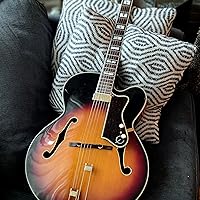
Brookes does a good job of recounting the history of the guitar in America and touches upon interesting details that I, as a guitar student in college, didn't even know about. Brookes' history is interspersed with a personal narrative about the construction of his own custom-made guitar by a luthier, but this account functions mainly as a springboard for the discussion of guitar construction. The format works better than it did in The Rise and Fall of the Dinosaurs: A New History of a Lost World, which I also have reviewed.
I'd be lying if I said that certain elements of the book didn't frustrate me. In light of the changing American social climate, certain passages have not aged well. While Brookes gives female guitarists their due, there's some annoying gender stereotyping sprinkled throughout, including at the very beginning. The connection of the guitar to African-American history and American racial politics is discussed, but Brookes sometimes reprints historical figures' virulent racism with little warning, which I found off-putting. Brookes' attempts at humor in the glossary were, to me, cringe-inducing. Typographical errors appeared throughout the text with surprising frequency.
Are there better layperson's texts on the subject out there? I couldn't tell you, because I haven't done enough research. Guitar: An American Life can be an enjoyable read if examined with a critical eye. I don't regret having read it, but I am glad that I borrowed a library copy.
I'd be lying if I said that certain elements of the book didn't frustrate me. In light of the changing American social climate, certain passages have not aged well. While Brookes gives female guitarists their due, there's some annoying gender stereotyping sprinkled throughout, including at the very beginning. The connection of the guitar to African-American history and American racial politics is discussed, but Brookes sometimes reprints historical figures' virulent racism with little warning, which I found off-putting. Brookes' attempts at humor in the glossary were, to me, cringe-inducing. Typographical errors appeared throughout the text with surprising frequency.
Are there better layperson's texts on the subject out there? I couldn't tell you, because I haven't done enough research. Guitar: An American Life can be an enjoyable read if examined with a critical eye. I don't regret having read it, but I am glad that I borrowed a library copy.
Displaying 1 - 30 of 62 reviews