What do you think?
Rate this book


320 pages, Hardcover
First published January 1, 1997


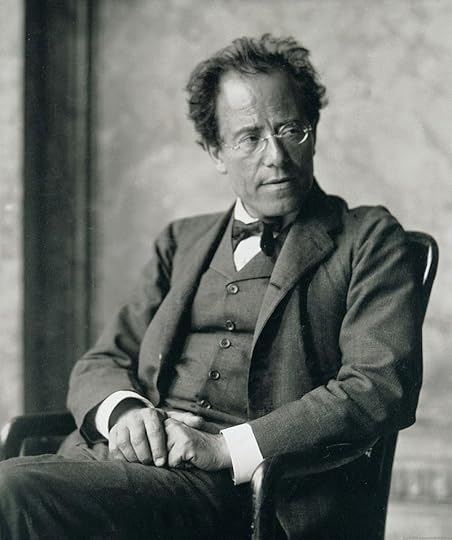
They could not be pinned down bar by bar but they can be very broadly identified symphony by symphony: worldly triumph in the First, resurrection in the Second, pantheism in the Third, salvation through innocence in the Fourth. Each proposes a new answer to the riddle of life & death but never starts from scratch. Rather, it builds on the experience of its predecessors, musically & philosophically. As the American conductor James Levine puts it, the works "are all inter-related through the use of musical quotes, cross references or ideas hinted at in one symphony only to be fully developed in the next".Mahler's symphonies have also been described as akin to chapters in an epic novel. Interestingly, The Brothers Karamazov was said to be Gustave Mahler's favorite novel. Throughout the death of his beloved daughter, marital difficulties with his wife Alma, struggles for dominance with Toscanini & women's board members while conducting in New York early in the 20th century & the realization of his own mortality later in his life due to a deteriorating heart condition, Mahler continued to find answers to perplexing questions through music..
In other words, Mahler did not so much compose nine & a half separate symphonies (with the last unfinished at his death), or ten & a half if one includes Das Lied von der Erde, as a single, vast, constantly evolving one.
Strange! When I hear music--even while I am conducting--I hear quite specific answers to all of my questions--and am completely clear & certain. Or rather, I feel quite distinctly that they are not questions at all.I first heard Mahler, with his uplifting Fifth symphony conducted by Czech-British conductor Walter Susskind, in St. Louis many years ago. It was also the 1st time I heard a political or ethnic comment attributed to a symphony, with a man in the row behind me complaining that Mahler had "pretended not to be Jewish". The fact is that he did at one point convert to Catholicism while living & conducting in Vienna but no single religion could ever completely sustain an internationalist like Gustav Mahler.