Immanuel Velikovsky called this book the "fulfillment of his oath of Hippocrates - to serve humanity." In this book he returns to his roots as a psychologist and psychoanalytical therapist, yet not with a single person as his patient but with humanity as a whole. After an extremely revealing overview of the foundations of the various psychoanalytical systems he makes the step into crowd psychology and reopens the case of Worlds in Collision from a totally different point of view: as a psychoanalytical case study. This way he shows that the blatant reactions to his theories (which are still going on today) have not been surprising but are actually inevitable from a psychological perspective - which equally holds for those who have defined our view of the world. At the same time he is able to reclassify the theories of Siegmund Freud and of C. G. Jung by finding a common basis for them. A journey through history, religion, mythology and art shows the overall range of the collective trauma and gives us - the patients - a message of extraordinary urgency and importance for the future.
Immanuel Velikovsky was a Russian-born American independent scholar, best known as the author of a number of controversial books reinterpreting the events of ancient history, in particular the US bestseller Worlds in Collision, published in 1950. Earlier, he played a role in the founding of the Hebrew University of Jerusalem in Israel, and was a respected psychiatrist and psychoanalyst.
His books use comparative mythology and ancient literary sources (including the Bible) to argue that Earth has suffered catastrophic close-contacts with other planets (principally Venus and Mars) in ancient times. In positioning Velikovsky among catastrophists including Hans Bellamy, Ignatius Donnelly, and Johann Gottlieb Radlof[2], the British astronomers Victor Clube and Bill Napier noted ". . . Velikovsky is not so much the first of the new catastrophists . . . ; he is the last in a line of traditional catastrophists going back to mediaeval times and probably earlier." Velikovsky argued that electromagnetic effects play an important role in celestial mechanics. He also proposed a revised chronology for ancient Egypt, Greece, Israel and other cultures of the ancient Near East. The revised chronology aimed at explaining the so-called "dark age" of the eastern Mediterranean (ca. 1100 – 750 BCE) and reconciling biblical history with mainstream archeology and Egyptian chronology.
In general, Velikovsky's theories have been vigorously rejected or ignored by the academic community. Nonetheless, his books often sold well and gained an enthusiastic support in lay circles, often fuelled by claims of unfair treatment for Velikovsky by orthodox academia. The controversy surrounding his work and its reception is often referred to as "the Velikovsky affair".
كانت هناك ثلاثة قوى أعاقت تقدم العلم في أوروبا وهي: الحشود القادمة من الشرق والشمال وتأثير الكنيسة و سيطرة تعاليم أرسطو على العقل والذي جعل الأرض مركز العالم وهي الثابتة التي لا تتحرك، الملفت أن أرسطو وجد من يعيد قرن تعاليمه مع بتعاليم الأدبان السماوية، فظهر ابن رشد المسلم موسى بن ميمون اليهودي توماس الأكويني المسيحي.
حاول المؤلف استحضار التاريخ وعلم النفس معاً في محاولته لإنعاش ذاكرة القارئ عن العنف والحرب والصراع، إلا أن الكتاب فيه تدفق مُشتت للمعلومات حتى أنك لا تعرف في نهاية الفصل ماذا يريد أن يقول لك المؤلف.
Immanuel Velikovsky has been one of the giants of pseudo-science/pseudo-history. Pseudoscience is an examination of events, happenings or phenomenon through a perspective which lacks sufficient supporting evidence, which is not verifiable to the extent required for it to be categorised as scientific, and which lacks clear and convincing proof. In essence, it fails to satisfy even the minimal conditions that the scientific community asks for before accepting any theory or explanation.
Velikovsky relies on a technique that can, at a most general level, be categorised as ‘comparative mythology’. By comparing the accounts mentioned in the earliest works of literature, the scriptures of various religions, and the myths and legends prevalent in various parts of the world, he tries to understand the world of antiquity and reconstruct events that, supposedly, actually happened, but which gradually got lost in folklore and metaphors used in all of the above works.
Velikovsky’s principal claim is that the human race has faced a series of catastrophes throughout its existence, including cosmic collisions involving inter-planetary bodies. Just like a victim of a trauma, who tends to repress memories of the event by pretending as if the event never happened, the trauma of these events has taken the form of repressed memories in the human collective, passing down from generation to generation.
Additionally, the last such cataclysm happened before effective means of recording information had developed. As a result, the knowledge of the happenings could only be passed down orally and thus took the form of legends over the centuries.
To begin with, Velikovsky must be commended for the amount of research he has done. He quotes from the Old and New Testament and from the writings of Plato with equal ease; he delves into ancient Egyptian mythology as comfortably as ancient Greek mythology. It is but obvious that rigorous research is a prerequisite for the kind of hypotheses that he puts forward, especially since it is predestined to receive intense opposition.
Therefore, the principal issue with the book is not in misrepresentation of facts, but in their misinterpretation.
Velikovsky starts off with a few pertinent ideas. For example, he says Plato was able to understand the violent past that mankind had suffered, and repeatedly tried to give such signs through his writings. However, his disciple Aristotle could never agree with his teacher and tried to spread uniformitarianism, for example, by giving the idea of Celestial Spheres, according to which the stars and planets were so placed that no collision among them was even theoretically possible – thus being diametrically opposed to the supposed ideas of his predecessor.
Again, he quotes from the journals of Darwin where he noted observing collections of bones of dead animals of a wide range of species - both extinct and extant – spread over large areas. This was clearly an indication that it was one single sudden event that led to their deaths, and very unlike the mass extinction events that took place over millions of years - for example the Permian-Triassic extinction event. In both these cases, Velikovsky claims, Aristotle and Darwin gave ideas that were most suited to man’s sense of security.
Aristotle’s Spheres appealed to the people as it assured that they were safe – no cosmic bodies could possibly come hurtling towards them and end their lives in an instant. Similarly, Darwin’s idea of ‘survival of the fittest’ augured well for man as it almost justified the right of the more powerful and ‘fitter’ (human species) to exploit the weaker species (flora and fauna) according to its needs. Darwin’s findings, Velikovsky notes, touched such primitive parts of the human psyche, that they even readily accepted their descent from monkeys, if only it could assure them that their home, the Earth, was a safe and secure place.
However, in his zeal, Velikovsky ends up presenting such crude examples and tries to find forced patterns in such areas where, quite clearly, none exist, that the quality of the narrative nosedives into absurdity, almost amnesiac of the quality of the previous chapters.
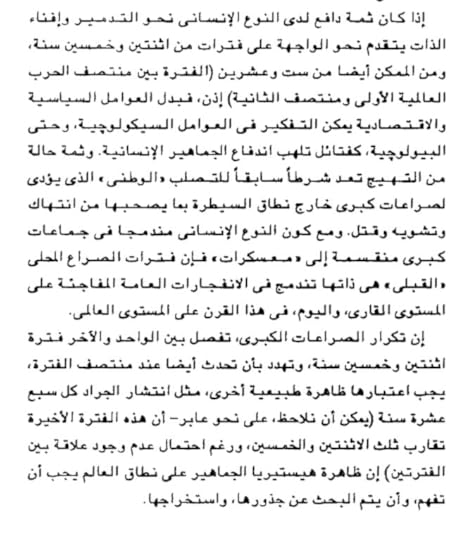
He quotes Darkness by Lord Byron and says it is the spontaneous outpour of the repressed memories present in every human, Lord Byron in this case. He says psychiatry was capable of preventing the World Wars as the leaders were only falling prey to their darkest inner fears and repeating the mistakes mankind had made in the past. This is such a simplistic and reductionist interpretation, that even I will reduce my arguments against it. Then, he mentions the periodicity of 17 years at which locusts appear, and for which “no terrestrial or extra-terrestrial cause is obvious”, and somehow tries to draw a parallel with a periodicity of 104 years at which important wars have been fought since the start of the eighteenth century, with wars of correspondingly lesser degrees at 52 years and 26 years as well.
The appearance of locusts every 17 years has a brilliant bit of evolutionary logic behind it, which I can’t explain here due to lack of space, but maybe it had not been discovered in Velikovsky’s time. I do not know.
Then in some areas, for example Chapter 3, “In Fear and Trembling”, he goes into a frenzy of quoting from various sources. Velikovsky tries to find literal meanings in metaphorical accounts, and does this so often that it loses its novelty value.
Velikovsky’s work is pseudoscience for precisely this reason – after a point it is nothing but speculation. It stays consistent within its boundaries but the moment it steps out to be scrutinised, it stands absolutely no chance. His ideas are radical and revolutionary. But they cannot stand if there is not enough proof to support them.
While definitely not for everyone by any means for me the premise of Mankind in Amnesia - even if not 100% absolute truth is definitely 5/5 engaging and the author's rigorous insights into the effects on humankind of the cataclysms he had researched inspired courage and reflection.
Primarily the pages of Mankind in Amnesia resound with the author's concern for people. It's this personal characteristic that continues to drive the development of our wellness sciences, most recently to evidence- and trauma-based practice. In one sense the entire book may be seen as a form of proto- public-interest psycho-education,
With regards to the study of Earth catastrophism the author started conversations that continue to this day and help inform many peoples' long term risk management planning.
Imho overall the book promotes a realistic view of the value of gratitude for life's gifts. 5/5.
اترددت كتير اوى قبل ما اكتب الريفيو لانى ببساطة مش قادرة اكون راى واضح عن فكرة الكتاب وهدف الكاتب من طرحه هذا الكاتب إما عبقرى فذ -لدرجة لم يستطيع عقلى استيعابها - لذلك لم يقنعنى بفكرته او مهرطق كبير ولهذا ايضا لم اقتنع بالكثير مما تم طرحه
Interesting tidbits of information, but this reads as more of an essay. The subject is spoken about but then Velikovsky vears off into different tangents. He does make correlation between them. But I was hoping for more contained information regarding ‘mankind in amnesia’ not really various history lessons.
Having never read his other works I was very lost. This book doesn't a great job piquing my interest in his other works but with out reading "Earth in Upheaval" and "Worlds in Collision" I was left with only contextual inferences most of the time.
Very random and unheard of book but actually raised quite a few interesting points. The biggest take away for me was the points that the author makes around us as a humanity and how we may be suffering from an enormous amount of trauma based not necessarily on what a couple of generations of our ancestors or great great great great grandfathers might have done, which some believe could be passed through the generations, but more about some of the historic trauma that could have been caused by catastrophic events like a meteor hitting the earth or the great flood for example. And how that traumatic event at a macro level can still be seen reverberating through individuals at a micro level.
Anyway I did find it very interesting and here are some of the best bits from the book:
30 days psychoanalysis was called catharsis by Freud because we're getting a sick person once again to live through a painful scene before it is able to restore the mental health of the patient and free him or her from pathological reactions.
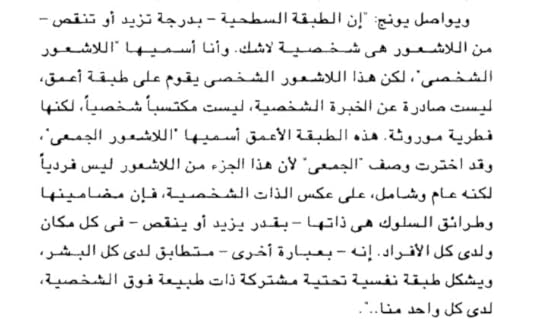
The instinctual side of a human being called by him the “id” and it's super ego which denotes the collective consciousness of which the individual is partly conscious and partly unconscious because it is repressed.
The archetype is essentially an unconscious content that is altered by becoming conscious and being perceived. Some portion of the cultural acquisitions have undoubtedly left a precipitate behind them in the id.
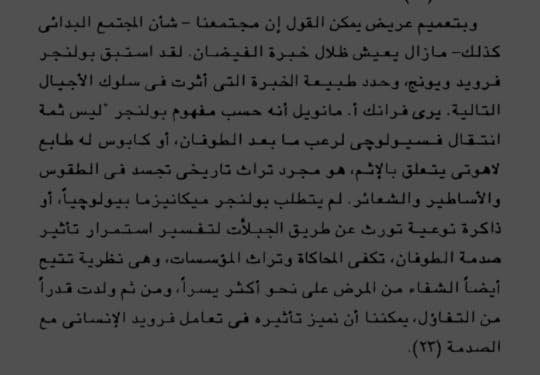
We followed Freud in his early observations that a traumatic experience of psychic or physical nature often results in amnesia.
It is often said that character is fate.
In the 12th century averrhoes a learned Muslim and physician in Spain wrote aristotelian commentaries and fused Islam with Aristotle: since then this fusion has become inseparable. Moshe Ben maimon also known as maimonides was born in Spain but lived and practiced medicine in Cairo, wrote the guide of the perplexed and fused rabbinical Judaism with aristotelianism. These two contemporaries born 9 years apart were followed by Thomas Aquinas a Dominican monk who wrote summa theologica and fused Catholicism with aristotelianism.
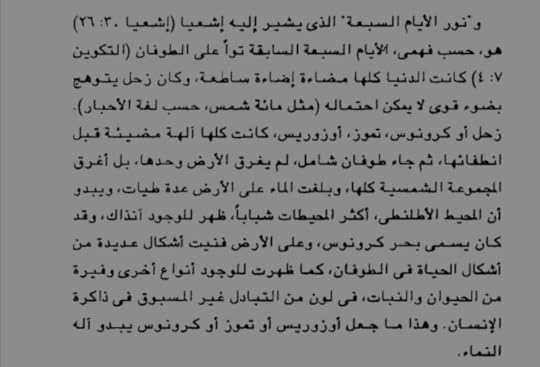
We are still troubled today from the consequences of the deluge and our institutions without our knowing it still have apocalyptic ideas. Terror subsists from race to race and the experience of the centuries can only weaken it but cannot make it entirely disappear. The child will forever fear what frightened his ancestors.
Should a comet of mass of the earth pass close by the axis and the movement of rotation would be changed. The seas would abandon their ancient positions in order to precipitate themselves towards the new equator
Siwalik hills at the foot of the Himalayas the several 100 miles of length practically packed with bones of animals.
And though the colonial expansion of the British goes back to the 16th century it never reached the scope of the glamour and the degree of extortion that it did in the days of Victoria.
The modern originator of the idea of communism was Moses Hess. German born living and writing in France. To him in 1840 came the young Friedrich Engels and a year later Engels introduced Marx to hesse's ideas. Several years thereafter they composed the communist manifesto.
that phenomenon is the psychic life of man which like its biological namesake is characterized by a special sensitivity to an agent which has at one time happens to act on the individual and which when again experienced causes a second reaction far exceeding the first in intensity. It is evident that the changes in the body or mind must have been far reaching at the time they first produced by the initial agent. However the latent sensitivity they produced led to explosive acts only later through the action of a similar agent.
my view derived at that time from psychoanalytical thinking saw in repressed homosexuality of entire nations the source of hatred and of lust for doing bodily harm on a mass scale of the massacres and the triumphs of a race motivated by male homosexuality against an over and effeminate nation. Is not the lust of the Turks carrying massacres to an Armenian village enhanced by these diversities in subconscious national makeup? Is not Germany with its national emblem of an eagle with talons spread for piercing the victims flesh a natural enemy of a french maiden in a phrygian cap?
the idea that wars begin in the minds of men and that it is in their minds of men that defenses of peace must be constructed is as old as the history of relations between organised societies.
A major portion of “death in life” (another book) deals with defence mechanisms against trauma: repression, denial, reaction formation, blotting out, screen memory, scapegoating and alibi, self hatred in order to avoid the anxiety of abandonment, identification with the power that has harmed one in order to avoid the anxiety of impotence, turning of anger against the self and becoming guilty.
It has been observed since ancient times that during and following great wars the birth of males is definitely greater than the birth of females: nature acting as a regulator.
Proper psychoanalytical procedure is violated by revealing all at once instead of making the patient arrive at its insights gradually.
A man who wished to lead human society to peace devised the original formula underlying atomic weapons: and destruction: before him the man who invented dynamite established a yearly prize for peace (Nobel): which of the contradicting endeavours of each man prevailed?
In all this pandemonium two or three million students in the United states alone many of them burdening family resources to gain the benefits of higher education are told to write weekly papers, to submit mechanically to written examinations and to keep up their grades. Helplessly caught up in the system losing individuality they are molded into report writers and graded punch cards.
As much as I liked Velikovsky's other stuff, this was dry, dull and boring; chock full of human supremacy and psychobabble and scientific gabbling. Definitely not what I expected and not recommended. The overall idea might have some merit; the book was too boring to read far enough to find out.
HIS LAST BOOK (PUBLISHED POSTHUMOUSLY): SURPRISINGLY ‘PSYCHOANALYTICAL’
Immanuel Velikovsky (1895-1979) was a Russian, Israeli, and American writer, researcher, and psychoanalyst. His book, ‘Worlds in Collision,’ was first published in 1950 by Macmillan and was a bestseller (at least in part because it seemed to provide support for certain biblical miracles), but strong negative criticism from the mainstream scientific community caused Macmillan to stop publishing it, and to transfer the book rights to Doubleday.
The Foreword to this posthumously-published book explains, “The subject that Immanuel Velikovsky has chosen is the psychological condition and case history of the human race. Virtually every aspect of human behavior, every pattern in human history, and every article of human belief, if examined and illuminated in the light of the thesis of this book, reveals how human thought and action have been shaped and molded by repressed collective memories of cosmic catastrophes that befell our ancestors as recently as one hundred generations ago.”
He notes, “Velikovsky wrote ‘Mankind In Amnesia’ over the course of many years. Most of it was written in the 1950s and early 1960s, but he added sections as late as 1979, the last year of his life… he considered it imperative that [this book] appear without delay.”
Velikovsky states in the Prologue, “The study of catastrophic events that took place in historical times, as late as the beginning of the seventh century before the present era, and on a greater scale eight hundred years earlier, in the fifteenth century before the present era, these being the last of a series of such events---a study offered in ‘Worlds in Collision’---makes if abundantly clear that more than once our planet escaped destruction by a narrow margin. Further, in times past neither the size nor the form of the Earth’s orbit, nor the duration of its year and its seasons, nor the direction of its axis, nor the rate of rotation and thus the length of the day, were the same as at present. Thus fate willed that the Earth should survive---but whether it was by blind fate or a protective Providence, we are, as I put it at the end of ‘Earth in Upheaval,’ ‘descendants of survivors, themselves descendants of survivors.’” (Pg. 6)
He suggests, “A racial memory is not a transmigration of the soul; it is, however, an inherited unconscious memory. And through a racial memory we can consider ourselves as having been present at some horrible cataclysmic scenes amid unchained elements, devastation by which no creature in the world, on land or in sea, could conceivably have been unaffected. Thus the accumulation of the genetic mnemes codes down to every representative of the species in our days through every one of the genealogical lines: all ascendancy reaches back to the same generation what was exposed to the trauma.” (Pg. 30)
He states, “In the frame of collective amnesia, which is the syndrome I first discussed in ‘Worlds in Collision,’ the amnesia that occurs in a single victim closely following the trauma is not an exact parallel: the collective mind does not immediately forget what it went through. What occupies us are the two processes in which the heritage was transmitted: the conscious oral and later written relay, and the unconscious, racial mneme, inherited and occasionally activated after some related experiences.” (Pg. 33)
He says of ‘Worlds in Collision,’ “The story told in that book is no mere hypothesis and no idle theory: it is a reconstruction of events that took place in the historical past, thirty-four and twenty-seven centuries ago, or, in the main, close to one hundred generations ago. Each page of the text bears references to sources, and therefore the evidence presented is subject to control. The narrative is horrifying and doubly so. On the one hand is the anguished, bloodcurdling spectacle of our forebears suffering the paroxysms of nature. On the other hand is the horrifying realization that we were brought up in a deception---in a view of the past which is but a guile that dulled our inquiry, put our vibrant curiosity to sleep, taught us, together with our statesmen, philosophers and scientists, a lesson of apathy as to our true identities, and at the same time imbued us with the self-assurance that nothing earth-shaking can happen to us.” (Pg. 39)
He suggests, “The example of Darwin, a victim of amnesia with respect with respect to experiences of his fieldwork, is not a unique case. It is more in the nature of a rule. The denial of terrifying experiences, or the suppression of awesome thoughts suggested by observations, can be witnesses again and again. Any one of us who chances to have a mishap that is more than he can live with in conscious memory is likely to deny the experience, or misinterpret it.” (Pg. 89)
He asserts, “As a psychoanalyst I returned many times to the problem of awakening the human conscious mind to the forgotten heritage of ages. The traumatic experiences that humans keep buried in oblivion possess enormous power over the destiny of nations. If the human race is not made able to face its past, the traumatic experience that caused cultural amnesia will demand repetition---and since the atomic age began, humans have lived under the sword of Damocles.” (Pg. 93)
He argues, “I still believe that suppressed homosexuality has much to do with aggression. In the series of conflicts between Israel and the Arab states the latter were thoroughly and repeatedly trounced by the Jews whose image through centuries of dispersion was that of a persecuted and violated nation. Thus the long-cherished self-esteem of Arabs as a male race suffered so greatly that no concessions on the part of Israel would pacify them.” (Pg. 141)
He says, “If there is in the human race an urge for destruction and self-annihilation that comes to the fore at intervals of fifty-two and possibly also of twenty-six years (the span from the midpoint of World War I to the midpoint of World War II), then instead of political and economic factors, psychological or even biological factors must be thought of as fuses igniting outbursts in human masses. A state of irritability is a precondition for the ‘patriotic’ intransigence that leads to great uncontrollable conflicts with trespass and maiming and killing.” (Pg. 145)
He proposes, “I pose the question: Would the reading of my books and the absorbing of their contents alleviate the pressure caused by racial memories existing in all of us? Proper psychoanalytical procedure is violated by revealing all at once instead of making the patient arrive at his insights gradually. This is only one of the violations. But there is a great advantage over the accepted procedure in that instead of working on the assumption that the dominant traumatic experience of the human race was in Oedipal and castration experiences, the true traumas as laid bare.” (Pg. 161)
He concludes, “For twenty-eight years now, before the eyes of the generation now retreating to make room for the next, a psychological time fuse has made the scientific community go through all the facets of self-degradation in order not to face and not to let others face what was our common past.” (Pg. 208)
Those wanting more information about Velikovsky’s theories---both pro and con---might want to read the books, ‘Scientists Confront Velikovsky,’ and ‘Scientists Confront Scientists Who Confront Velikovsky.’
"Mankind in Amnesia" by Immanuel Velikovsky is a thought-provoking book that challenges many of the prevailing assumptions about human history and evolution. In this book, Velikovsky argues that humanity has forgotten much of its past, and that this amnesia has profound implications for our understanding of who we are and where we came from.
Velikovsky begins the book by examining the history of human civilization, arguing that many of the events that we take for granted may not have happened in the way that we think they did. He suggests that ancient myths and legends may hold important clues about our past, and that we need to look beyond the conventional narratives to truly understand our history.
One of the key themes of the book is the idea that human memory is fallible, and that we often forget important details about our past. Velikovsky argues that this amnesia is not accidental, but is instead the result of a deliberate effort by those in power to control the narrative of history.
Velikovsky also explores the role of mythology in shaping our understanding of the world, arguing that many of the myths and legends that have been passed down through the ages contain important truths that have been lost or forgotten over time.
Throughout the book, Velikovsky challenges many of the prevailing assumptions about human history and evolution, offering a compelling alternative narrative that is sure to provoke thought and debate. He also offers a warning about the dangers of forgetting our past, arguing that we need to remember where we came from if we are to chart a course for our future.
Overall, "Mankind in Amnesia" is a fascinating and thought-provoking book that is sure to challenge readers to reconsider many of their assumptions about human history and evolution. Velikovsky's insights and arguments are sure to spark debate and discussion, and the book is a must-read for anyone interested in the mysteries of human existence.