

What do you think?

Suburbio e fuga
Jacques L’Aumône mieszka w Rueil pod Paryżem, codziennie odwiedza kino i marzy o innym życiu, o swoich wielu przyszłych wcieleniach. Kto może mu zabronić być generałem w Chinach, piratem, wynalazcą, papieżem? Jak mówi jego ojciec, lubił strategię i sporządzał mapy. Ciągle rysował statki. Jako dwunastolatek wymyślił nowy sposób pompowania opon w rowerze. Miał modelową komunię, opanował łacinę, żeby czytać brewiarz.
Podobnie jak w innych powieściach Raymonda Queneau elementy ludyczne splatają się tu z erudycyjnymi, a narracja jest pokrewna narracji filmowej.
Przejścia od marzenia do rzeczywistości w obu kierunkach podtrzymują intrygę i pozwalają śnić na jawie. Ironiczny cudzysłów idzie w parze z (czarnym) humorem.
Autor posłowia Harry Mathews tak pisze o twórczości Queneau: „Faktem jest, że nikt jeszcze nie rozszyfrował do końca żadnej z powieści Queneau, i podejrzewam, że nikomu się to nigdy nie uda. Być może o to, między innymi, w nich chodzi. Być może powieści, w równym stopniu te, jak wszystkie inne, nie po to powstają, żeby je rozszyfrowywać, lecz by stanowić pożywkę dla niekończących się prób rozszyfrowania, co sugerowałoby, że sam proces rozszyfrowywania więcej nam daje satysfakcji niż jego ukończenie. Z pewnością przy lekturze Queneau niewyjaśnione osady znaczenia nie pomniejszają przyjemności czytania, wręcz przeciwnie: skłaniają do zwracania szczególnej uwagi na to, co robi autor, gdyż wiemy, że nie poda nam eksplikacji tekstu na talerzu. On sam napisał gdzieś, że tylko literatura trywialna daje odpowiedzi, poważna zaś stawia pytania. Opublikowane w 1944 roku Daleko od Rueil z pewnością zalicza się do literatury poważnej, a zarazem posługuje się takim nagromadzeniem banałów, które w przypadku innego rodzaju pisarstwa szybko by nas zniecierpliwiło – tymczasem wzbudza tylko radosną ciekawość”.
Podobnie jak w innych powieściach Raymonda Queneau elementy ludyczne splatają się tu z erudycyjnymi, a narracja jest pokrewna narracji filmowej.
Przejścia od marzenia do rzeczywistości w obu kierunkach podtrzymują intrygę i pozwalają śnić na jawie. Ironiczny cudzysłów idzie w parze z (czarnym) humorem.
Autor posłowia Harry Mathews tak pisze o twórczości Queneau: „Faktem jest, że nikt jeszcze nie rozszyfrował do końca żadnej z powieści Queneau, i podejrzewam, że nikomu się to nigdy nie uda. Być może o to, między innymi, w nich chodzi. Być może powieści, w równym stopniu te, jak wszystkie inne, nie po to powstają, żeby je rozszyfrowywać, lecz by stanowić pożywkę dla niekończących się prób rozszyfrowania, co sugerowałoby, że sam proces rozszyfrowywania więcej nam daje satysfakcji niż jego ukończenie. Z pewnością przy lekturze Queneau niewyjaśnione osady znaczenia nie pomniejszają przyjemności czytania, wręcz przeciwnie: skłaniają do zwracania szczególnej uwagi na to, co robi autor, gdyż wiemy, że nie poda nam eksplikacji tekstu na talerzu. On sam napisał gdzieś, że tylko literatura trywialna daje odpowiedzi, poważna zaś stawia pytania. Opublikowane w 1944 roku Daleko od Rueil z pewnością zalicza się do literatury poważnej, a zarazem posługuje się takim nagromadzeniem banałów, które w przypadku innego rodzaju pisarstwa szybko by nas zniecierpliwiło – tymczasem wzbudza tylko radosną ciekawość”.
204 pages, Paperback
First published January 1, 1944
About the author
Raymond Queneau
221 books611 followersNovelist, poet, and critic Raymond Queneau, was born in Le Havre in 1903, and went to Paris when he was 17. For some time he joined André Breton's Surrealist group, but after only a brief stint he dissociated himself. Now, seeing Queneau's work in retrospect, it seems inevitable. The Surrealists tried to achieve a sort of pure expression from the unconscious, without mediation of the author's self-aware "persona." Queneau's texts, on the contrary, are quite deliberate products of the author's conscious mind, of his memory, and his intentionality.
Although Queneau's novels give an impression of enormous spontaneity, they were in fact painstakingly conceived in every small detail. He even once remarked that he simply could not leave to hazard the task of determining the number of chapters of a book. Talking about his first novel, Le Chiendent (usually translated as The Bark Tree), he pointed out that it had 91 sections, because 91 was the sum of the first 13 numbers, and also the product of two numbers he was particularly fond of: 7 and 13.
Although Queneau's novels give an impression of enormous spontaneity, they were in fact painstakingly conceived in every small detail. He even once remarked that he simply could not leave to hazard the task of determining the number of chapters of a book. Talking about his first novel, Le Chiendent (usually translated as The Bark Tree), he pointed out that it had 91 sections, because 91 was the sum of the first 13 numbers, and also the product of two numbers he was particularly fond of: 7 and 13.
Ratings & Reviews
Friends & Following
Create a free account to discover what your friends think of this book!
Community Reviews
Displaying 1 - 30 of 81 reviews

September 24, 2026
Now Raymond Queneau decided to jeer at fashionable existentialism…
Reality is a bore… It is much more fascinating to abide inside dreams… There is a poet… And he is suffering from existing in actuality…
But a son of the poet’s patron dreams easily… He dreams madly… He dreams that he is the poet’s illegitimate offspring… His dreams are a melange of pop culture romantic clichés… He is a mighty emperor and he has a fiancée…
The boy grows up and his dreams grow even more ridiculous… The poorer his reality, the crazier his dreams… To his dreamy transformations there is no end…
We all enjoy taking walks in a dreamland but it is important not to go astray there.
Reality is a bore… It is much more fascinating to abide inside dreams… There is a poet… And he is suffering from existing in actuality…
“What is it that he’s actually got? The strangles?”
“What?”
“The strangles. That’s what they call it back in Tancarville in the Seine-Inférieure.”
“They likely haven’t heard of this illness back home among your bum kins, seeing as it’s a very recent illness, and existential, to top it all off.”
“Well, howdja explain it to me?”
“Existential, like I said. They’ve got a name for it but they still don’t cure you.”
“Say, do lice count as an illness?”
“They might even be existential, lice. You’d have to ask a doctor.”
“In any case he sure does look like he’s in a lot of pain, the poor old fellow.”
But a son of the poet’s patron dreams easily… He dreams madly… He dreams that he is the poet’s illegitimate offspring… His dreams are a melange of pop culture romantic clichés… He is a mighty emperor and he has a fiancée…
But then he notices that the Italian princess is cheating on him despite his triple crown. She has taken a lover a general which general a general the general of the Guard Marshal Pastourelle why Pastourelle? Why not Pastourelle? One day, while returning from the hunt he happens upon the two of them sitting under an apple tree in bloom; with a single shot from his carbine he bumps off the soldier and since his bride runs from him he fires at her as well. The Italian princess, her posterior disfigured by the buckshot, enters a convent where she spends her remaining days. And her nights. Honor is saved.
The boy grows up and his dreams grow even more ridiculous… The poorer his reality, the crazier his dreams… To his dreamy transformations there is no end…
…now he forgets all about ambition, there are so many other possibilities, triumvir, uhlan, plumber, tetrarch, retiarius, shah, salt smuggler, white elephant (by magical transformation), adulterous grasshopper, Chinese tunic, lump of sugar, melting nub of soap.
We all enjoy taking walks in a dreamland but it is important not to go astray there.

November 21, 2017
LA PELLE DEI SOGNI
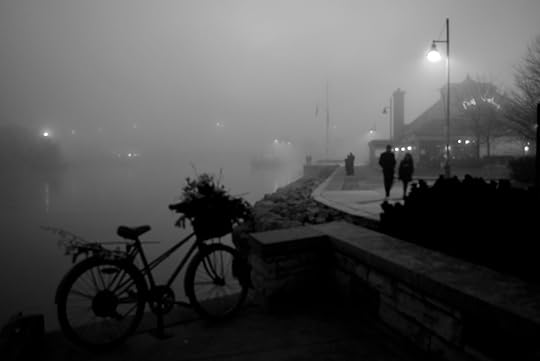
Brassaï, pseudonimo di Gyula Halász, fotografo ungherese naturalizzato francese.
Letto in un’età della mia vita nella quale ero impegnato a definire il mio futuro (domanda numero uno: che fare?), questo libro, più di tutti gli altri di Queneau, ha avuto una notevole influenza sui miei anni a seguire.
Al punto che, per la prima storia che ho scritto, ho preso in prestito il titolo in traduzione italiana (quello originale è Loin de Rueil, cioè lontano da Rueil, e Rueil-Malmaison è un sobborgo di Parigi). La quale storia era tutta originale (anche se palesemente piena di influenze, omaggi e citazioni) al contrario del titolo, che comunque trattandosi di diverso dall’originale, potevo legalmente usare.

Alla mia storia ho dato poco seguito.
Invece a Queneau sono tornato per anni (Zazie nel metro, I fiori blu, Pierrot amico mio, La domenica della vita, Esercizi di stile, Icaro involato…), mi ha felicemente (almeno per parte mia) accompagnato per una fetta di vita, l’ho letto e goduto e amato, nonché inserito nel mio personale olimpo.
Il protagonista di questo divertentissimo romanzo, Jacques L’Aumone (aumone vuol dire elemosina), è un sognatore, a occhi aperti, e a occhi chiusi, sogna 24/7. Ma a occhi aperti riesce a farlo persino meglio: in un battere d’occhi, dimenticandosi di sé e di chi è, riesce a trasformarsi in un personaggio, un tizio incrociato per strada, un eroe dello schermo, una comparsa, un santo o re o scienziato,.
Riesce forse a trasformarsi in chi è veramente?
Non è che forse Jacques riesce davvero a diventare qualcun altro, a vivere vite che non sono la sua?
Il confine tra la vita e i suoi sogni è labile, altri mondi diventano possibili, e quindi reali, nel momento in cui Jacques, come il lettore, si dice: non è vero, ma ci credo.
Jacques (e Queneau con e prima di lui) è veloce, perennemente in movimento, turbinante, le vite iniziano e finiscono all’interno della stessa pagina. Non ci sono capitoli, paragrafi, spazi per segnare un confine, un inizio e una fine tra un mondo, e una vita, e l’altro.

Suo padre vende le calze e la mamma è una madre insignificante - e neppure Rueil sembra avere molta importanza – quindi, Jacques, seguendo i suoi sogni, diventa capitano dell’esercito olandese, campione del mondo di scacchi, campione di boxe, fachiro, cercatore d’oro, membro dell’ambasciata di Pechino, lord inglese (per adozione), gran lama (per vocazione), presidente della repubblica di Nicaragua (per elezione), presidente della repubblica di Costa Rica (per rivoluzione) e presidente della repubblica di Guatemala (per occupazione).
Ma soprattutto, Jacques diventa James Charity (charity = elemosina), eroe del cinema: da spettatore entra nello schermo e diventa cowboy, protagonista ed eroe.
Il cinema, i film impregnano queste pagine. E come può non tornare a mente quel magnifico film di Woody Allen dove la spettatrice Mia Farrow finiva con avere una storia con il protagonista del suo film prediletto, La rosa purpurea del Cairo?

Surrealismo e dadaismo nelle invenzioni linguistiche, nello sfalsamento dei piani temporali narrativi, nelle improvvisazioni, leggerezza, poesia, gioco, divertimento, ironia, personaggi smisuratamente teneri… questo e altro me l’hanno resi cari e indimenticabili, Queneau e questo suo romanzo.
Italo Calvino, che fu membro dell’OuLiPo, il laboratorio di letteratura potenziale inventato e fondato da Queneau, ha scritto:
Da Flaubert in poi sappiamo come i sogni d’evasione colorino i pensieri dei buoni provinciali, ma mai s’era data vocazione di sognatore irrefrenabile come quella del ragazzo Jacques L’Aumone che vive mentalmente tutte le vite possibili, da re a papa a grande scienziato o grande criminale. Ogni discorso, ogni notizia, ogni lettura sono trasformati da lui all’istante in nuovi capitoli di una ininterrotta autobiografia futura. E ogni film: perché nel nostro secolo il sogno a occhi aperti dispone d’uno strumento che la povera Emma Bovary non fece in tempo a sperimentare: il cinematografo. ‘Suburbio e fuga’ è, oltretutto, il romanzo del posto che ha il cinema nella immaginazione dell’uomo contemporaneo. I piani tra cui la narrazione oscilla, più che vita e sogno, sono vita sogno e cinema, e i confini più invcerti lì in mezzo sono quelli della vita.

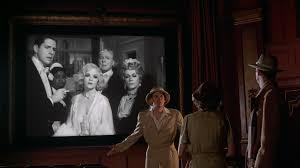
Questa e le immagini che precedono sono tratte dal film “La rosa purpurea del Cairo” di Woody Allen, del 1985, con Mia Farrow, Jeff Daniels e Danny Aiello.
Brassaï, pseudonimo di Gyula Halász, fotografo ungherese naturalizzato francese.
Letto in un’età della mia vita nella quale ero impegnato a definire il mio futuro (domanda numero uno: che fare?), questo libro, più di tutti gli altri di Queneau, ha avuto una notevole influenza sui miei anni a seguire.
Al punto che, per la prima storia che ho scritto, ho preso in prestito il titolo in traduzione italiana (quello originale è Loin de Rueil, cioè lontano da Rueil, e Rueil-Malmaison è un sobborgo di Parigi). La quale storia era tutta originale (anche se palesemente piena di influenze, omaggi e citazioni) al contrario del titolo, che comunque trattandosi di diverso dall’originale, potevo legalmente usare.
Alla mia storia ho dato poco seguito.
Invece a Queneau sono tornato per anni (Zazie nel metro, I fiori blu, Pierrot amico mio, La domenica della vita, Esercizi di stile, Icaro involato…), mi ha felicemente (almeno per parte mia) accompagnato per una fetta di vita, l’ho letto e goduto e amato, nonché inserito nel mio personale olimpo.
Il protagonista di questo divertentissimo romanzo, Jacques L’Aumone (aumone vuol dire elemosina), è un sognatore, a occhi aperti, e a occhi chiusi, sogna 24/7. Ma a occhi aperti riesce a farlo persino meglio: in un battere d’occhi, dimenticandosi di sé e di chi è, riesce a trasformarsi in un personaggio, un tizio incrociato per strada, un eroe dello schermo, una comparsa, un santo o re o scienziato,.
Riesce forse a trasformarsi in chi è veramente?
Non è che forse Jacques riesce davvero a diventare qualcun altro, a vivere vite che non sono la sua?
Il confine tra la vita e i suoi sogni è labile, altri mondi diventano possibili, e quindi reali, nel momento in cui Jacques, come il lettore, si dice: non è vero, ma ci credo.
Jacques (e Queneau con e prima di lui) è veloce, perennemente in movimento, turbinante, le vite iniziano e finiscono all’interno della stessa pagina. Non ci sono capitoli, paragrafi, spazi per segnare un confine, un inizio e una fine tra un mondo, e una vita, e l’altro.
Suo padre vende le calze e la mamma è una madre insignificante - e neppure Rueil sembra avere molta importanza – quindi, Jacques, seguendo i suoi sogni, diventa capitano dell’esercito olandese, campione del mondo di scacchi, campione di boxe, fachiro, cercatore d’oro, membro dell’ambasciata di Pechino, lord inglese (per adozione), gran lama (per vocazione), presidente della repubblica di Nicaragua (per elezione), presidente della repubblica di Costa Rica (per rivoluzione) e presidente della repubblica di Guatemala (per occupazione).
Ma soprattutto, Jacques diventa James Charity (charity = elemosina), eroe del cinema: da spettatore entra nello schermo e diventa cowboy, protagonista ed eroe.
Il cinema, i film impregnano queste pagine. E come può non tornare a mente quel magnifico film di Woody Allen dove la spettatrice Mia Farrow finiva con avere una storia con il protagonista del suo film prediletto, La rosa purpurea del Cairo?
Surrealismo e dadaismo nelle invenzioni linguistiche, nello sfalsamento dei piani temporali narrativi, nelle improvvisazioni, leggerezza, poesia, gioco, divertimento, ironia, personaggi smisuratamente teneri… questo e altro me l’hanno resi cari e indimenticabili, Queneau e questo suo romanzo.
Italo Calvino, che fu membro dell’OuLiPo, il laboratorio di letteratura potenziale inventato e fondato da Queneau, ha scritto:
Da Flaubert in poi sappiamo come i sogni d’evasione colorino i pensieri dei buoni provinciali, ma mai s’era data vocazione di sognatore irrefrenabile come quella del ragazzo Jacques L’Aumone che vive mentalmente tutte le vite possibili, da re a papa a grande scienziato o grande criminale. Ogni discorso, ogni notizia, ogni lettura sono trasformati da lui all’istante in nuovi capitoli di una ininterrotta autobiografia futura. E ogni film: perché nel nostro secolo il sogno a occhi aperti dispone d’uno strumento che la povera Emma Bovary non fece in tempo a sperimentare: il cinematografo. ‘Suburbio e fuga’ è, oltretutto, il romanzo del posto che ha il cinema nella immaginazione dell’uomo contemporaneo. I piani tra cui la narrazione oscilla, più che vita e sogno, sono vita sogno e cinema, e i confini più invcerti lì in mezzo sono quelli della vita.
Questa e le immagini che precedono sono tratte dal film “La rosa purpurea del Cairo” di Woody Allen, del 1985, con Mia Farrow, Jeff Daniels e Danny Aiello.

February 12, 2025
I think of the things that make us maybe laugh: the punchline, the pratfall, a Presidential address. A mime in the park. And sometimes just words. Wordplay, wordjinx, gedazzled language. Preambled thought or postconviction excuse. To say nothing of mixed metaphors, well-hung clauses, and the literally infinite things that can be impossible, literally.
The "story" in this novel is confabulated, semi-linear, trite at times, implausible enough. And spectacular. Because sometimes the Webster's or the Oxford didn't get out enough.
And so our hero ingurgitates a café crème. He gets to his feet and so-longs them. He is asked how his documentary of an exceptionally savage indigenous tribe went, It went well, your voyage?
Well, the usual sorts of problems. Without bringing up the crocodiles, tigers, and jaguars, there had been the mosquitos, the yellow fever, the vomito negro, the curare arrows, not to mention the lack of women, which created a climate favorable to the disappearance of venereal diseases, sure, but all the same, not to mention the lack of women.
He gets to Chicago, hears a piano player accompanied by a trumpet that wasn't lacking in style despite being a bit too Armstrongian to be truly individualistic.
That would be in America, the Youessuvehh. Where of someone it might be said, He speaks awfully well for an American. Literally.
The "story" in this novel is confabulated, semi-linear, trite at times, implausible enough. And spectacular. Because sometimes the Webster's or the Oxford didn't get out enough.
And so our hero ingurgitates a café crème. He gets to his feet and so-longs them. He is asked how his documentary of an exceptionally savage indigenous tribe went, It went well, your voyage?
Well, the usual sorts of problems. Without bringing up the crocodiles, tigers, and jaguars, there had been the mosquitos, the yellow fever, the vomito negro, the curare arrows, not to mention the lack of women, which created a climate favorable to the disappearance of venereal diseases, sure, but all the same, not to mention the lack of women.
He gets to Chicago, hears a piano player accompanied by a trumpet that wasn't lacking in style despite being a bit too Armstrongian to be truly individualistic.
That would be in America, the Youessuvehh. Where of someone it might be said, He speaks awfully well for an American. Literally.

January 7, 2024
Ta książka mnie utwierdziła w przekonaniu, że francuskie OuLiPo trafia do mnie dużo bardziej niż włoskie.
O ile jednak Zazi (tego samego autora) mnie rozbawiła, ale nie powaliła na kolana, to ta powieść jest już produktem OuLiPo pełną gębą (chociaż zdaje się, że sama powieść powstała długo przez ukonstytuowaniem się tej literacko-matematycznej grupy): przemyślana w każdym detalu forma połączona z wciągającą historią. A dodatkowo duża domieszka surrealizmu.
Myślę, że niedługo do tej powieści wrócę, bo z posłowia wynika, że wiele smaczków przegapiłem.
O ile jednak Zazi (tego samego autora) mnie rozbawiła, ale nie powaliła na kolana, to ta powieść jest już produktem OuLiPo pełną gębą (chociaż zdaje się, że sama powieść powstała długo przez ukonstytuowaniem się tej literacko-matematycznej grupy): przemyślana w każdym detalu forma połączona z wciągającą historią. A dodatkowo duża domieszka surrealizmu.
Myślę, że niedługo do tej powieści wrócę, bo z posłowia wynika, że wiele smaczków przegapiłem.
February 13, 2025
Minor Queneau. Like Asia Minor, only I can remember much about Hittites, Assyrians, Rome, the Byzantine, Ottoman, etc. and I can’t remember a fucking thing about a book I finished Saturday and it’s Thursday. That said, it was fun while it lasted. Feel free to add your own puerile zinger here —> ___________.
Go on, just to see what it feels like.
Go on, just to see what it feels like.

May 13, 2022
Come sono belli questi personaggi di Queneau, che non si lasciano abbattere da nulla, che restano sempre coerenti con se stessi, che vanno dritto per la propria strada malgrado gli ostacoli, e che di fronte ad ogni difficoltà reagiscono al massimo con una scrollata di spalle, questi personaggi così fuori dagli schemi e dal mondo, stravaganti e insoliti ma ai quali questo loro essere al di fuori non importa granché - anche a questo reagiscono con una scrollatina di spalle.
Jacques l'Aumône è forse il più esemplare tra questi adorabili scapestrati, con la sua irrefrenabile immaginazione cui basta nulla a far vivere a Jacques mille e una altre vite, che lui elabora in ogni particolare fino al punto da farci dubitare, spesso, su cosa sia vero e cosa invece no; con la sua fortissima ambizione che però non approda a nulla, perché si lascia deviare e affascinare da ogni nuova persona o idea in cui si imbatte - eppure, c'è coerenza in questa apparente incoerenza e c'è soprattutto, e sempre, quella capacità di reinventarsi che non è (sempre) solo finzione. La miseria e la fame lo attanagliano a causa delle sue scelte sbagliate? Che problema c'è, lui si reinventa umile e santo, i suoi sono digiuni fatti per scelta, le privazioni servono a mostrare la sua umiltà e raggiungere l'assoluta purezza... Almeno fino al prossimo incontro, o idea.
Certo non è un esempio da imitare - da un altro punto di vista, le sue sono mere autogiustificazioni, in fondo è un egoista spinto solo dall'idea del momento, che non tiene conto né del futuro né di chi gli sta intorno - ma Queneau riesce, chissà come, a renderlo adorabile...
Jacques l'Aumône è forse il più esemplare tra questi adorabili scapestrati, con la sua irrefrenabile immaginazione cui basta nulla a far vivere a Jacques mille e una altre vite, che lui elabora in ogni particolare fino al punto da farci dubitare, spesso, su cosa sia vero e cosa invece no; con la sua fortissima ambizione che però non approda a nulla, perché si lascia deviare e affascinare da ogni nuova persona o idea in cui si imbatte - eppure, c'è coerenza in questa apparente incoerenza e c'è soprattutto, e sempre, quella capacità di reinventarsi che non è (sempre) solo finzione. La miseria e la fame lo attanagliano a causa delle sue scelte sbagliate? Che problema c'è, lui si reinventa umile e santo, i suoi sono digiuni fatti per scelta, le privazioni servono a mostrare la sua umiltà e raggiungere l'assoluta purezza... Almeno fino al prossimo incontro, o idea.
Certo non è un esempio da imitare - da un altro punto di vista, le sue sono mere autogiustificazioni, in fondo è un egoista spinto solo dall'idea del momento, che non tiene conto né del futuro né di chi gli sta intorno - ma Queneau riesce, chissà come, a renderlo adorabile...

January 29, 2024
Jacques L’Aumône is a dreamer. The details of his life are sketchy, but The Skin of Dreams provides a detailed account of his jaunts through imagination.
...and there he was now captain in the Royal Netherlands Army, plant manager, attaché to the embassy in Peking, banker, clown (famous), painter (famous), archivist-paleographer, midshipman (aboard the last tall ship), racing cyclist (winner of the Tour d’Europe), world chess champion (inventor of the L’Aumône Gambit and the f2-f3, h7-h5 opening), gentleman sorghum cockie in Australia (and damn if he didn’t exterminate himself some rabbits)...
We meet Jacques as a child, watch him grow, fall in love, cartwheel through careers, switch identities, and disappear into the cinema screen. Which events belong to his true life, his daydreams, or the movies remains unclear.
Queneau wrote The Skin of Dreams after abandoning Breton and the Surrealists, prior to joining la Société Mathématique de France, and well before co-founding the OULIPO. This shifting allegiance from the realm of the unconscious to the realm of mathematics can be felt in the book’s tension between unruliness and formalism. If the former often appears to be winning the tug-of-war, it’s only because Queneau is all too happy for the hand of his generative process to remain invisible, though he often hints at its operations through his use of language.
As translator Chris Clarke elucidated in an email exchange:
…what you're pointing out is one of the stylistic tendencies that was most evident in his prose in this period: his clear enjoyment in shifting from the casual to the formal to the technical and back, often within the same sentence. From the first few pages of this novel, we can see him use working-class syntax and oral-tinged dialog alongside a carefully deployed scattering of mots savants: often difficult or even obscure high-register word choices that one doesn’t tend to find in literature. For example, borrowing heavily from earlier periods or states of French, and occasionally employing words where the meaning has shifted over time, but instead intending their earlier usages, or using archaisms in contemporary situations, or incorporating neologisms, mostly based on Latin or Greek roots and following the classic methods of derivation.
This linguistic slipperiness provides a heap of thrills. Characters colloquiate natcherally or gawdawfully while the narrator has Jacques grope a hot ancilla and a potential beau warns against stercoraceous sex. Further nuggets sent me skipping to my dictionary:
dehiscence
n. the splitting or bursting open of a pod or wound
anfractuosity
n. sinuousness or circuitousness
gangue
n. the commercially valueless material in which ore is found
abscissa
n. (in a system of coordinates) the x -coordinate, the distance from a point to the vertical or y -axis measured parallel to the horizontal or x -axis
stercoraceous
adj. consisting of or resembling dung or feces
I asked Clarke about his process of translating such obscure and fascinating language from the French. Was he able to match the words directly or was some substitution involved?
Read the full article, including further comments from translator Chris Clarke, at Blathering Struldbrugs.
...and there he was now captain in the Royal Netherlands Army, plant manager, attaché to the embassy in Peking, banker, clown (famous), painter (famous), archivist-paleographer, midshipman (aboard the last tall ship), racing cyclist (winner of the Tour d’Europe), world chess champion (inventor of the L’Aumône Gambit and the f2-f3, h7-h5 opening), gentleman sorghum cockie in Australia (and damn if he didn’t exterminate himself some rabbits)...
We meet Jacques as a child, watch him grow, fall in love, cartwheel through careers, switch identities, and disappear into the cinema screen. Which events belong to his true life, his daydreams, or the movies remains unclear.
Queneau wrote The Skin of Dreams after abandoning Breton and the Surrealists, prior to joining la Société Mathématique de France, and well before co-founding the OULIPO. This shifting allegiance from the realm of the unconscious to the realm of mathematics can be felt in the book’s tension between unruliness and formalism. If the former often appears to be winning the tug-of-war, it’s only because Queneau is all too happy for the hand of his generative process to remain invisible, though he often hints at its operations through his use of language.
As translator Chris Clarke elucidated in an email exchange:
…what you're pointing out is one of the stylistic tendencies that was most evident in his prose in this period: his clear enjoyment in shifting from the casual to the formal to the technical and back, often within the same sentence. From the first few pages of this novel, we can see him use working-class syntax and oral-tinged dialog alongside a carefully deployed scattering of mots savants: often difficult or even obscure high-register word choices that one doesn’t tend to find in literature. For example, borrowing heavily from earlier periods or states of French, and occasionally employing words where the meaning has shifted over time, but instead intending their earlier usages, or using archaisms in contemporary situations, or incorporating neologisms, mostly based on Latin or Greek roots and following the classic methods of derivation.
This linguistic slipperiness provides a heap of thrills. Characters colloquiate natcherally or gawdawfully while the narrator has Jacques grope a hot ancilla and a potential beau warns against stercoraceous sex. Further nuggets sent me skipping to my dictionary:
dehiscence
n. the splitting or bursting open of a pod or wound
anfractuosity
n. sinuousness or circuitousness
gangue
n. the commercially valueless material in which ore is found
abscissa
n. (in a system of coordinates) the x -coordinate, the distance from a point to the vertical or y -axis measured parallel to the horizontal or x -axis
stercoraceous
adj. consisting of or resembling dung or feces
I asked Clarke about his process of translating such obscure and fascinating language from the French. Was he able to match the words directly or was some substitution involved?
Read the full article, including further comments from translator Chris Clarke, at Blathering Struldbrugs.

January 17, 2026
3.5 ⭐️Really great use of surrealism’s that ties the story together from start to finish. The mention of all the lice makes my skin crawl.

April 17, 2025
Jacques L'Aumone is a daydreamer who makes a masterpiece of his own life that transforms him into the King of the World in his own mind.
Queneau has plenty of verbal inventiveness where for example he uses four synoynms for 'pipe' in the space of eight lines. This can be a bit startling and perhaps unnecessary and made me think that the author was showing off regarding the range of his vocabulary.
Queneau also changes tense from past to present and back again, perhaps flitting between reality and the imaginary.
Besides the changes of tense and verbal inventiveness, this is a good story.
Queneau has plenty of verbal inventiveness where for example he uses four synoynms for 'pipe' in the space of eight lines. This can be a bit startling and perhaps unnecessary and made me think that the author was showing off regarding the range of his vocabulary.
Queneau also changes tense from past to present and back again, perhaps flitting between reality and the imaginary.
Besides the changes of tense and verbal inventiveness, this is a good story.

Read
March 27, 2024Second book of my NYRB Classics Book Club:
Clever, inventive, and genuinely fun to read. Queneau's language has a fluidity in the way it mixes slang and the tics of the spoken word with a more traditional literary approach. The reader's doubt as to whether each section is another daydream or another step in our main character's life makes the content and form coalesce really effectively. Really interested to check out another book of his.
Clever, inventive, and genuinely fun to read. Queneau's language has a fluidity in the way it mixes slang and the tics of the spoken word with a more traditional literary approach. The reader's doubt as to whether each section is another daydream or another step in our main character's life makes the content and form coalesce really effectively. Really interested to check out another book of his.

February 29, 2024
Chances are if you’re reading this – you are familiar with Queneau and Oulipo. If not – abandon what you know of typical reading and prepare to be baffled. Queneau writes like a man who has read it all and has little interest in repeating any of it. He’s a brilliant linguist and also a pretty good storyteller in a very non-traditional sense. Not as readable as Perec – but also not completely impenetrable.
Basically equal parts cinematic dream and splashing about in a pool of words – the translation here is delightful and in lesser hands – this could prove to be a torturous experience. The characters are fairly thinly sketched and the plot takes a back seat to the train of thoughts that trundles with more lucidity than clarity. I wonder what Chekhov might have thought of this; If Queneau ever did get around to telling you it was nighttime – by the time it was reflected off the shard of broken glass – you’d still not trust your oneiric foothold on reality. Think parts of Jarry’s poor-man-genius aesthetic rot, Groucho’s cigar wiggle and Panurge’s fleas combined in Rabelaisian joyful debauchery and you’re getting pretty close.
If you must be concerned with plot – a man struggles with his identity and possible existences as boxer, lord, bishop, poet or flea wrangler. Throw in a few visits to the cinema with an assortment of young ladies and society folk that serve as a backdrop to Queneau’s dreamlike vision of just how language can comprise what functions as reality. If you need to be pulled by the nose – don’t bother. At the same time – if you are aware of the torture that can result in listening to a toddler explain a half-remembered dream – be brave. You’re in solid hands with one of France’s most creative 20th-C writers. Highly recommended for those that purposely eat things before bed to induce a night of visions unseen by less expansive motivations.
Cool Delvaux cover also - NYRB covers always suit the text so well.
Basically equal parts cinematic dream and splashing about in a pool of words – the translation here is delightful and in lesser hands – this could prove to be a torturous experience. The characters are fairly thinly sketched and the plot takes a back seat to the train of thoughts that trundles with more lucidity than clarity. I wonder what Chekhov might have thought of this; If Queneau ever did get around to telling you it was nighttime – by the time it was reflected off the shard of broken glass – you’d still not trust your oneiric foothold on reality. Think parts of Jarry’s poor-man-genius aesthetic rot, Groucho’s cigar wiggle and Panurge’s fleas combined in Rabelaisian joyful debauchery and you’re getting pretty close.
If you must be concerned with plot – a man struggles with his identity and possible existences as boxer, lord, bishop, poet or flea wrangler. Throw in a few visits to the cinema with an assortment of young ladies and society folk that serve as a backdrop to Queneau’s dreamlike vision of just how language can comprise what functions as reality. If you need to be pulled by the nose – don’t bother. At the same time – if you are aware of the torture that can result in listening to a toddler explain a half-remembered dream – be brave. You’re in solid hands with one of France’s most creative 20th-C writers. Highly recommended for those that purposely eat things before bed to induce a night of visions unseen by less expansive motivations.
Cool Delvaux cover also - NYRB covers always suit the text so well.
January 31, 2026
A quirky, playful, mind-bending little novel about dreams, escape from reality, movies, and lice. I was honestly somewhat baffled through the first half of this novel. No clue where it was going, but Queneau’s prose was always a joy to read so I pushed on and sure enough he really managed to pull all the threads together for a poignant ending.

July 5, 2012
"Jacques continues to smoke. Then the sea stretches out before him and Jacques realizes that he is now alone. The other passengers have been swept away, the rest of humanity was drowned. He takes the helm and steers his vessel towards a non-existant destination. Moreover, the water begins to boil gently: for the earth is approaching the sun. The water boils, boils, boils and the oceans slowly evaporate. Jacques continues to breathe: doubtless his lungs have undergone the necessary transformation. By a brusk mutation Jacques has become a salamander, heliocolic, incombustible, living abestos. The earth is now visible only as a pebble which slowly reddens in the fires of the celestial furnace and naturally, surely, evidently for a long time now the motorboat has been no more, having been wrecked and burned to a crisp. Then, as the sun has suddenly gone out, snuffed by some stellar wind, it straightaway becomes very cold and the burst earth projects a thousand frozen pieces through the abysses of space. On one of these fragments is Jacques L'Aumone, but in the form of an extremely hard-shelled spore. But this germ has only to receive the warmth of a dream and once again awakens the human form of Jacques L'Aumone, who is consulting a racing form."
A hallucinatory, tail-swallowing novel about cowboys, poetry, slang, seizures, the cinema, lice, decay, and the mysteries of love. Pre-Oulipo Queneau occasionally frustrates, but he doesn't disappoint.
A hallucinatory, tail-swallowing novel about cowboys, poetry, slang, seizures, the cinema, lice, decay, and the mysteries of love. Pre-Oulipo Queneau occasionally frustrates, but he doesn't disappoint.

September 30, 2016
Άνετα η χειρότερη μετάφραση που έχω δει.

September 28, 2025
Written in 1944 by French surrealist author Queneau, this is the story of a man, Jacques, who lives in, as the cover blurb says, waking dreams. He seamlessly transitions from chatting with his friends to imagining himself in a certain situation, and then back to everyday life. I was about a quarter of the way through when I realized that I had seen this movie before. And sure enough, in the afterword, the author reveals that he was highly influenced by the James Thurber short story, The Secret Life of Walter Mitty. Hah! Knew I wasn’t imagining it.
But in a clever twist, Jacques ends up finding himself a career as an extra in the French film industry. His friends keep assuring him that he could become a real star, but that’s not what he wants at all.
He is thought highly of by them, because he doesn’t seem to have any ambition, whereas they all have their sights set on stardom. Jacques just doesn’t give a damn. [H]e’s amazed that there isn’t a single one in the whole lot of them who is satisfied with the idea of remaining an extra, nothing more than an extra.
A fun read with snappy dialogue (much like the movies of the era) and it’s easy to buy into his world. By the way, I’ve just got to say that the Danny Kaye movie version is the gold standard. And might I just add, ta-pocketa pocketa pocketa. If you know, you know.
But in a clever twist, Jacques ends up finding himself a career as an extra in the French film industry. His friends keep assuring him that he could become a real star, but that’s not what he wants at all.
He is thought highly of by them, because he doesn’t seem to have any ambition, whereas they all have their sights set on stardom. Jacques just doesn’t give a damn. [H]e’s amazed that there isn’t a single one in the whole lot of them who is satisfied with the idea of remaining an extra, nothing more than an extra.
A fun read with snappy dialogue (much like the movies of the era) and it’s easy to buy into his world. By the way, I’ve just got to say that the Danny Kaye movie version is the gold standard. And might I just add, ta-pocketa pocketa pocketa. If you know, you know.

February 8, 2024
Framed as a sort of modern bildungsroman this is a work of linguistic invention, revelling in wordplay and verbal inventiveness. Beneath the playful rhythm of the narrative, Queneau excels in creating a medium of storytelling that is learned, creative, and sometimes even disconcerting in the impact it has on the readers- he tends to blur the line between reality and imagination, as we see in the doings and musings of the chief protagonist Jacques L’Aumône, who uses the everyday inspirations of his life to catapult himself into the realm of imagination. Dreams, waking dreams, and daydreams that occupy Jacques' life are probably set into motion by some of the most trivial and inconsequential things like a chance encounter or some remark overheard in passing. He imagines himself to be a boxer, a general, a bishop, a lord, and these transitions seem and feel so natural throughout the narrative that it would seem to the reader a sort of existential crisis.
Published in 1944, Loin de Rueil was preceded by Albert Camus’s L’Étranger (variably translated as The Stranger and The Outsider) in 1942 and by Jean-Paul Sartre’s L’Être et le néant (Being and Nothingness) in 1943. In keeping with the general sense of the absurdity of the human condition, manifested in this novel by way of the host of ailments (both psychological and “ontological”) that assail the characters in the throes of their identity crises, Queneau brings to bear his sense of humor and derision, and his awareness of the pettiness of people and the unimportance of things.
- From the Afterword.
The principal theme running through the novel is daydreams- they take centerstage- and through them, Queneau tries to depict the inherent absurdity of the modern human condition in the very same tradition of Camus and Sartre prior to him. But he does not try to impose upon the reader this ontological melancholy of absurdities; instead, he tries to blend in a sense of positivity in the narrative and the characters by 'making it clear that creativity and dreams are ways out that may be ridiculous but that improve the human condition'.
Elsewhere, Paul Fournel writes in his illuminating afterword to the novel:
Taking up a theme introduced in “The Secret Life of Walter Mitty,” a 1939 short story by James Thurber that Queneau had almost certainly encountered during his years as Gallimard’s English reader, Queneau makes of Jacques L’Aumône a semiprofessional dreamer who grants to his own life the dimensions of all other lives, possible and impossible. A hero of all stripes, he makes of his ridiculous life an enduring masterpiece, a garland of heroic acts that transform him into a King of the World. In the grand finale, he ends up being an imaginary, dreamed-of hero in the world of dreams and imagination that is Hollywood.
This novel's narrative firstly highlights the development and growth of a character through the everyday occurrences in his life, and also through the medium of daydreams, and in that sense, it is a bildungsroman in every sense of the word. At the same time, it is a deft exposition of the tension between character and language play- and indeed his entire body of work is marked by this trait. It is wordplay that is not gratuitous because it is underpinned by years of erudite reflection on the separate evolutions of written and spoken French. Very early into his career Queneau was aware of the ever-widening gap between the official language and the colloquial vernacular (the 'argot'), and he was a master at expounding this notion of “néo-français” in his works. Indeed, one of the seminal events in his literary career was the founding of the Oulipo- the literary group founded in 1960 with his associate and friend François Le Lionnais- and it would then go on to explore this semblance of linguistic inventiveness and narrative form in several key literary texts.
The Skin of Dreams is full of this sort of linguistic play, and far from underlining the absurdity of language, it offers a hopeful image of how language continually reinvents and transforms itself. This dynamic quality of language is, for Queneau, the dynamic of life itself. He toils ceaselessly to make the most working-class and slang elements of the language rub elbows with the most scholarly and formal, such as in the opening lines of the novel where a garbage can is fastidiously described and then, through the use of every register of language, torn from its oh so banal reality.
-From the Afterword.
One of the most unique facets of this novel is are neologisms that abound in the narrative. Several which I cannot remember but I can mark out a few like 'placidacious', 'thespianic', 'Youessuvehh'.
Besides he manipulates the verb tenses to his will- he shifts from the past to the present at will highlighting the shifts from the imaginary to the real. The translator, Chris Clarke must be commended for his painstakingly accurate rendering in English of a text whose linguistic inventiveness knows no parallels.
Published in 1944, Loin de Rueil was preceded by Albert Camus’s L’Étranger (variably translated as The Stranger and The Outsider) in 1942 and by Jean-Paul Sartre’s L’Être et le néant (Being and Nothingness) in 1943. In keeping with the general sense of the absurdity of the human condition, manifested in this novel by way of the host of ailments (both psychological and “ontological”) that assail the characters in the throes of their identity crises, Queneau brings to bear his sense of humor and derision, and his awareness of the pettiness of people and the unimportance of things.
- From the Afterword.
The principal theme running through the novel is daydreams- they take centerstage- and through them, Queneau tries to depict the inherent absurdity of the modern human condition in the very same tradition of Camus and Sartre prior to him. But he does not try to impose upon the reader this ontological melancholy of absurdities; instead, he tries to blend in a sense of positivity in the narrative and the characters by 'making it clear that creativity and dreams are ways out that may be ridiculous but that improve the human condition'.
Elsewhere, Paul Fournel writes in his illuminating afterword to the novel:
Taking up a theme introduced in “The Secret Life of Walter Mitty,” a 1939 short story by James Thurber that Queneau had almost certainly encountered during his years as Gallimard’s English reader, Queneau makes of Jacques L’Aumône a semiprofessional dreamer who grants to his own life the dimensions of all other lives, possible and impossible. A hero of all stripes, he makes of his ridiculous life an enduring masterpiece, a garland of heroic acts that transform him into a King of the World. In the grand finale, he ends up being an imaginary, dreamed-of hero in the world of dreams and imagination that is Hollywood.
This novel's narrative firstly highlights the development and growth of a character through the everyday occurrences in his life, and also through the medium of daydreams, and in that sense, it is a bildungsroman in every sense of the word. At the same time, it is a deft exposition of the tension between character and language play- and indeed his entire body of work is marked by this trait. It is wordplay that is not gratuitous because it is underpinned by years of erudite reflection on the separate evolutions of written and spoken French. Very early into his career Queneau was aware of the ever-widening gap between the official language and the colloquial vernacular (the 'argot'), and he was a master at expounding this notion of “néo-français” in his works. Indeed, one of the seminal events in his literary career was the founding of the Oulipo- the literary group founded in 1960 with his associate and friend François Le Lionnais- and it would then go on to explore this semblance of linguistic inventiveness and narrative form in several key literary texts.
The Skin of Dreams is full of this sort of linguistic play, and far from underlining the absurdity of language, it offers a hopeful image of how language continually reinvents and transforms itself. This dynamic quality of language is, for Queneau, the dynamic of life itself. He toils ceaselessly to make the most working-class and slang elements of the language rub elbows with the most scholarly and formal, such as in the opening lines of the novel where a garbage can is fastidiously described and then, through the use of every register of language, torn from its oh so banal reality.
-From the Afterword.
One of the most unique facets of this novel is are neologisms that abound in the narrative. Several which I cannot remember but I can mark out a few like 'placidacious', 'thespianic', 'Youessuvehh'.
Besides he manipulates the verb tenses to his will- he shifts from the past to the present at will highlighting the shifts from the imaginary to the real. The translator, Chris Clarke must be commended for his painstakingly accurate rendering in English of a text whose linguistic inventiveness knows no parallels.
July 30, 2026
I reminded me of the dangers of reckless, unbounded self-obsession

December 13, 2023
Wonderlijk, heerlijk, hallucinant boek. Aanrader voor wie - net zoals ik toen ik het las - een herinnering nodig heeft aan hoe leuk en fris en vleugels gevend lezen kan zijn.
Wat de andere Nederlandse lezer elders zegt over de vertaling is wat mij betreft onzin: de speelsheid en het plezier van Queneau komen mooi over, hoewel ik natuurlijk niet weet of aan álle woordgrapjes uit het origineel recht wordt gedaan.
Wat de andere Nederlandse lezer elders zegt over de vertaling is wat mij betreft onzin: de speelsheid en het plezier van Queneau komen mooi over, hoewel ik natuurlijk niet weet of aan álle woordgrapjes uit het origineel recht wordt gedaan.

January 9, 2025
Kort geleden verscheen er weer eens een vertaling van Raymond Queneau (1904- 1976): "De vlucht van Icarus", een weldadig speels boek. Daardoor totaal opgemonterd trok ik "De droomheld" weer uit mijn boekenkast, dat ik in 2003 al eens gelezen had. En ook daar werd ik weer helemaal vrolijk van. Met veel dank aan de prima vertaling van Jan Pieter van der Sterre. Oké, volgens sommige recensies sprankelt dit boek in het Frans nog meer, maar ik kan het Frans van Queneau niet lezen, en Van der Sterres Nederlands is naar mijn smaak bruisend genoeg. Bovendien schreef hij ook een mooi informatief nawoord, waardoor ik blij werd verrast met allerlei details die ik zelf helemaal niet had gezien. En dat geldt hopelijk ook voor u, dus ik verklap die details niet.
De roman werd gepubliceerd in 1944, maar speelt jaren voor WO II. De “droomheld” en hoofdpersoon is Jacques l'Aumône (te vertalen als: ‘Sjaak Aalmoes’), een ongeneeslijke dagdromer die zich helemaal overgeeft aan de stomme zwart- wit films van toen, en zich volkomen vereenzelvigt met de personages die hij daarin ziet. Zodanig zelfs dat hij in films niet een acteur ziet optreden die een personage speelt, maar ZICHZELF ziet en beleeft alsof hij dat personage is. Alsof alles in de film echt gebeurt, hier en nu. En alsof Jacques volop onderdeel daarvan is. Want hij kijkt en fantaseert gretiger dan de meest gretige filmkijker, en verliest zichzelf letterlijk in films. Op een voor de lezer vaak benijdenswaardige wijze. Want ook als volwassene kijkt Jacques naar films met de volstrekte overgave en de open blik van een kind, dat niet nadenkt over die films maar zich daarin helemaal onderdompelt. En zelfs bijna letterlijk in die films verdwijnt.
In elke filmscène van elke film krijgt Jacques dus een nieuwe fictieve identiteit, die door een daarop volgende filmscène meteen door een andere identiteit wordt vervangen. En elke filmscène is een nieuw hoofdstuk van zijn steeds rijkere en gevarieerdere fictieve levensverhaal. Toevallige ideeën, voorvallen op straat, opgevangen gesprekken, of zelfs ontmoetingen met onbekenden hebben hetzelfde effect. Jacques heeft dus niet één vastomlijnd ik, maar bestaat uit een hele reeks van verschillende ikken en rollen, die allemaal uit dagdromen en ongeremde fantasieën zijn opgetrokken. Eigenlijk is Jacques alleen een verzameling van pijlsnelle decorwisselingen en scènewisselingen, zonder vaste kern.
Precies dat maakt Queneau op werkelijk virtuoze wijze voelbaar, door de hele roman te vullen met pijlsnelle decorwisselingen en adembenemende scènewisselingen. De dagdromen van Jacques zijn er dus ook voor de lezer zomaar ineens, soms totaal onverwacht en midden in een zin. Zonder enige uitleg van de overgang tussen de realiteit van alledag naar de dagdroomrealiteit, en ook zonder informatie over waarom Jacques zoveel dagdroomt en wat hij daarbij voelt of denkt. Jacques lijkt nauwelijks greep op zijn binnen- en buitenwereld te hebben, en als lezer heb je dat evenmin.
Temeer omdat het verhaalverloop tussen alle dagdromen door eveneens vol pijlsnelle en onverklaarde scènewisselingen is, met soms opmerkelijke sprongen in tijd en plaats. Zodat ook het niet- dagdromende deel van Jacques’ leven zich ontrolt als een pijlsnel afgedraaide film en een zich rap voltrekkende grillige droom. Daardoor wordt hij een steeds ongrijpbaardere droomheld, een voor de lezer steeds ongrijpbaarder personage, ook als hij niet dagdroomt. Zo ongrijpbaar zelfs dat hij nauwelijks lijkt te bestaan. Alsof hij een contourloze lege huls is, een droombeeld zonder vorm en inhoud, een vormloze vorm die wegvalt uit de concrete werkelijkheid en uit de geschiedenis.
Dat wordt nog versterkt door passages waarin zijn niet- zijn en niet- nadenken wordt benadrukt. Bijvoorbeeld: “Als hij klaar is met niet nadenken staat hij op, maakt een ronde door het lab […]. Na afloop van zijn rondreis gaat hij weer zitten en laat zijn niet gedachten de vrije loop terwijl zijn ogen staren door de glazen oppervlakken die hem volgens de onvergankelijke wetten van de geometrische optiek weerspiegelen.”. Een door zijn plotsklapse en maffe gebruik van wetenschappelijk jargon wel heel vervreemdende en ook nogal komische zin, waarin de niet-gedachten en de spiegeleffecten (de ogen kijken naar een spiegelend oppervlak, die gespiegelde ogen kijken terug) in mijn beleving een totaal oningevuld Niets oproepen. Bovendien zegt Jacques later dat hij "Niets" wil doen. Want: “Niets biedt voordelen. Niets wekt geen aanleiding tot ijdelheid”. Dus door daadloosheid wil hij het "Niets" bereiken, zelf gelijk worden aan het Niets. Ook wil hij “een absolute nul” worden, al vreest hij dat hij daarin niet zal slagen. Terwijl hij daar toch best ver in komt: “De lange dagen die niet door zijn werk in beslag werden genomen verdeelde hij over verschillende onledigheden en zo wist hij algauw welke besteding van zijn tijd te voorkomen en zijn bestaan te ontdoen van de gewenste en gevreesde evenementen die een mens het idee geven dat hij leeft”.
Dat vind ik een virtuoze en ook heel komische zin, die voor mijn gevoel fraai onderstreept dat Jacques het ondefinieerbare Niets bewust zoekt. En dat dit Niets, net als Jacques’ eigen ongrijpbare vormloosheid, heel verlokkend is. De droomheld verscheen in de oorlogsjaren, zoals ik al zei: misschien was het toen extra verlokkend om tussen het zijn en het niet- zijn te zweven, om te ontsnappen in de droom, om te vervluchtigen in het Niets. En om ongrijpbaar te zijn voor iedereen die ons wil definiëren en overheersen. Maar tegelijk heeft die ongrijpbaarheid en onwerkelijkheid volgens mij ook negatieve en angstwekkende kanten. Jacques en alle nevenpersonages dwalen immers in een wereld zonder vaste grond en zonder fundament, en zijn van elk houvast beroofd. Wat misschien voortkomt uit de spirituele crisis die Queneau schijnt te hebben doorleefd. Of uit de spirituele crisis die veel mensen tijdens WO II moesten doormaken. Of wellicht uit andere vormen van existentiële leegte.
Die leegte komt volgens mij ook terug in de “ontalgie”, waaraan de miskende dichter Louis- Philippe des Cigales lijdt. “Ontalgie” is volgens mij een niet bestaand woord, een maffe samentrekking van “otalgie” (oorpijn) en “ontologie” (zijnsleer). Het wordt beschreven als een “existentiële ziekte, astma maar dan deftiger” en als een “existentiële epilepsie”. En als “erger dan gewurgd worden, erger dan ingesloten worden, erger dan verstikt worden, het is een fysiologische afgrond, een anatomische nachtmerrie, een metafysische paniek”. Dat gaat samen met een verstikkend gevoel van nietigheid: “De grote dampkring rondom deze aardbol, de woonplaats van Louis- Philippe des Cigales, die niet omvangrijker is dan een luis, de grote dampkring slaagt er niet in door te dringen tot zijn binnenste, het binnenste van een man die niet groter is dan een luis […]”. De ontalgie doet zich alleen voor bij Des Cigales, een bijfiguur, en niet bij droomheld Jacques. Maar de passages over ontalgie zijn wel heel indringend, en de zo “existentiële” luizen keren overal in het boek terug. Op soms heel nadrukkelijke en symbolische wijze. Dat, in combinatie met het dolende karakter van Jacques’ levensweg en de onwerkelijkheid waarin hij voortdurend verkeert, lijkt mij symbolisch voor een diepe existentiële crisis. En ook die wordt, in mijn beleving, door Queneau mooi geëvoceerd.
Dat echter doet voor mij niets af aan het enorm verlokkende karakter van het Niets en van de zo onwerkelijke, in het niets zwevende dromen. Temeer ook omdat Queneau dat alles in een enorm swingende en meeslepende stijlen opschrijft. Ik zeg bewust ‘stijlen’, want hij wisselt voortdurend tussen allerlei verschillende stijlregisters, soms zelfs meerdere keren in één zin. Zodat je pijlsnel van gedragen naar plat naar quasi- wetenschappelijk naar poëtisch naar filosofisch beweegt, en weer terug. Of van verstilde korte zinnen naar lange zinnen zonder leestekens. En omgekeerd. Dat alles wordt ook nog eens afgewisseld met ellenlange en soms heel maffe dialogen, met hilarische opsommingen, met even pregnante als raadselachtige filmische sfeerbeelden, en nog veel meer. En dat geeft nog veel extra dynamiek, aan een roman die door al zijn pijlsnelle scènewisselingen toch al bol stond van de dynamiek. En dan zijn veel zinnen ook nog eens tragisch en dolkomisch tegelijk, of vol van leegte die beklemmend is en tegelijk verlokkend.
Ook zorgt Queneau voor veel levendige spreektaligheid. Soms worden woorden fonetisch gespeld: “kliantelle” (i.p.v. clientèle), “webben” (i.p.v. we hebben), “bikoz” (i.p.v. because). Daarmee worden de grenzen tussen gesproken en geschreven taal poreus gemaakt, wat – ook in het Nederlands- zorgt voor extra kleur en vaart. Ik word ook vrolijk van vondsten als “goorijnzen” (het grijnzen van een gore schurk) en “depresgetatoeëerde zon” (een zon die onbeweeglijk aan de hemel hangt in een snikheet, van verveling vergeven oord). En dan zijn er steeds weer van die terloopsigheden, zoals een pianist die begeleid wordt door “een trompet met onmiskenbaar verdiensten zij het een tikje te armstrongerig om echt persoonlijk te kunnen zijn”. Tja, er zijn minder maffe en meer directe manieren om te zeggen dat iemand Louis Armstrong imiteert, maar dit is veel leuker. En op dat soort pareltjes van terloopse humor trakteert Queneau ons dus voortdurend. Zoals ook in de volgende terloopse zin over een in een café optredende violist: “De fiedelharker kwam zijn centenbakje onder de neus van het publiek houden met de airs van een afgeroste maar arrogante boerenlul”.
Heel prachtig is bovendien een passage waarin Jacques zich helemaal identificeert met een seniel en blijmoedig mannetje, zo sterk zelfs dat Jacques en dat mannetje ononderscheidbaar worden en met elkaar versmelten. Want Jacques WORDT dat mannetje, zoals hij eerder helemaal versmolt met personages op het witte doek en die personages WERD. Dat is totaal anders dan de afstandelijke blik die we meestal op onze medemensen werpen: het kijkende subject verandert immers helemaal, door de intensiteit waarmee hij naar het object kijkt. Zodat Jacques zijn hele levensloop, althans de opsomming van fictieve identiteiten die hij op dat moment voor zijn levensloop aanziet, met totale blijmoedigheid beziet. En dat is precies de blijmoedigheid van dat seniele mannetje. Alsof Jacques ook zelf, door die imaginaire identificatie, een andere en meer blijmoedige persoon wordt. En dat maakt mij als lezer weer blij. Queneau beschrijft die identificatie en versmelting bovendien uitzonderlijk vernuftig. En met duizelingwekkende verbeeldingskracht.
Kortom, ik ben opgetogen. Zelden zag ik een zo ongrijpbaar personage zovele uiteenlopende identiteiten aannemen in zovele dromen. Zelden zag ik een personage met zo’n gretige, alles indrinkende blik. Zelden zag ik een zo aanstekelijk verlangen naar het niet- zijn dat tegelijk ook zoveel existentiële leegte suggereerde. Zelden las ik een zo fantasievol boek dat ik zoveel verschillende stijlen geschreven was. En zelden werd ik van een boek zo vrolijk. "De droomheld" is volgens mij niet meer in de boekhandels, helaas. Maar ik zou zeggen: grijp uw kansen bij antiquariaten of via de bibliotheek. En in mijn boekenkast staan gelukkig nog een paar Queneautjes.
De roman werd gepubliceerd in 1944, maar speelt jaren voor WO II. De “droomheld” en hoofdpersoon is Jacques l'Aumône (te vertalen als: ‘Sjaak Aalmoes’), een ongeneeslijke dagdromer die zich helemaal overgeeft aan de stomme zwart- wit films van toen, en zich volkomen vereenzelvigt met de personages die hij daarin ziet. Zodanig zelfs dat hij in films niet een acteur ziet optreden die een personage speelt, maar ZICHZELF ziet en beleeft alsof hij dat personage is. Alsof alles in de film echt gebeurt, hier en nu. En alsof Jacques volop onderdeel daarvan is. Want hij kijkt en fantaseert gretiger dan de meest gretige filmkijker, en verliest zichzelf letterlijk in films. Op een voor de lezer vaak benijdenswaardige wijze. Want ook als volwassene kijkt Jacques naar films met de volstrekte overgave en de open blik van een kind, dat niet nadenkt over die films maar zich daarin helemaal onderdompelt. En zelfs bijna letterlijk in die films verdwijnt.
In elke filmscène van elke film krijgt Jacques dus een nieuwe fictieve identiteit, die door een daarop volgende filmscène meteen door een andere identiteit wordt vervangen. En elke filmscène is een nieuw hoofdstuk van zijn steeds rijkere en gevarieerdere fictieve levensverhaal. Toevallige ideeën, voorvallen op straat, opgevangen gesprekken, of zelfs ontmoetingen met onbekenden hebben hetzelfde effect. Jacques heeft dus niet één vastomlijnd ik, maar bestaat uit een hele reeks van verschillende ikken en rollen, die allemaal uit dagdromen en ongeremde fantasieën zijn opgetrokken. Eigenlijk is Jacques alleen een verzameling van pijlsnelle decorwisselingen en scènewisselingen, zonder vaste kern.
Precies dat maakt Queneau op werkelijk virtuoze wijze voelbaar, door de hele roman te vullen met pijlsnelle decorwisselingen en adembenemende scènewisselingen. De dagdromen van Jacques zijn er dus ook voor de lezer zomaar ineens, soms totaal onverwacht en midden in een zin. Zonder enige uitleg van de overgang tussen de realiteit van alledag naar de dagdroomrealiteit, en ook zonder informatie over waarom Jacques zoveel dagdroomt en wat hij daarbij voelt of denkt. Jacques lijkt nauwelijks greep op zijn binnen- en buitenwereld te hebben, en als lezer heb je dat evenmin.
Temeer omdat het verhaalverloop tussen alle dagdromen door eveneens vol pijlsnelle en onverklaarde scènewisselingen is, met soms opmerkelijke sprongen in tijd en plaats. Zodat ook het niet- dagdromende deel van Jacques’ leven zich ontrolt als een pijlsnel afgedraaide film en een zich rap voltrekkende grillige droom. Daardoor wordt hij een steeds ongrijpbaardere droomheld, een voor de lezer steeds ongrijpbaarder personage, ook als hij niet dagdroomt. Zo ongrijpbaar zelfs dat hij nauwelijks lijkt te bestaan. Alsof hij een contourloze lege huls is, een droombeeld zonder vorm en inhoud, een vormloze vorm die wegvalt uit de concrete werkelijkheid en uit de geschiedenis.
Dat wordt nog versterkt door passages waarin zijn niet- zijn en niet- nadenken wordt benadrukt. Bijvoorbeeld: “Als hij klaar is met niet nadenken staat hij op, maakt een ronde door het lab […]. Na afloop van zijn rondreis gaat hij weer zitten en laat zijn niet gedachten de vrije loop terwijl zijn ogen staren door de glazen oppervlakken die hem volgens de onvergankelijke wetten van de geometrische optiek weerspiegelen.”. Een door zijn plotsklapse en maffe gebruik van wetenschappelijk jargon wel heel vervreemdende en ook nogal komische zin, waarin de niet-gedachten en de spiegeleffecten (de ogen kijken naar een spiegelend oppervlak, die gespiegelde ogen kijken terug) in mijn beleving een totaal oningevuld Niets oproepen. Bovendien zegt Jacques later dat hij "Niets" wil doen. Want: “Niets biedt voordelen. Niets wekt geen aanleiding tot ijdelheid”. Dus door daadloosheid wil hij het "Niets" bereiken, zelf gelijk worden aan het Niets. Ook wil hij “een absolute nul” worden, al vreest hij dat hij daarin niet zal slagen. Terwijl hij daar toch best ver in komt: “De lange dagen die niet door zijn werk in beslag werden genomen verdeelde hij over verschillende onledigheden en zo wist hij algauw welke besteding van zijn tijd te voorkomen en zijn bestaan te ontdoen van de gewenste en gevreesde evenementen die een mens het idee geven dat hij leeft”.
Dat vind ik een virtuoze en ook heel komische zin, die voor mijn gevoel fraai onderstreept dat Jacques het ondefinieerbare Niets bewust zoekt. En dat dit Niets, net als Jacques’ eigen ongrijpbare vormloosheid, heel verlokkend is. De droomheld verscheen in de oorlogsjaren, zoals ik al zei: misschien was het toen extra verlokkend om tussen het zijn en het niet- zijn te zweven, om te ontsnappen in de droom, om te vervluchtigen in het Niets. En om ongrijpbaar te zijn voor iedereen die ons wil definiëren en overheersen. Maar tegelijk heeft die ongrijpbaarheid en onwerkelijkheid volgens mij ook negatieve en angstwekkende kanten. Jacques en alle nevenpersonages dwalen immers in een wereld zonder vaste grond en zonder fundament, en zijn van elk houvast beroofd. Wat misschien voortkomt uit de spirituele crisis die Queneau schijnt te hebben doorleefd. Of uit de spirituele crisis die veel mensen tijdens WO II moesten doormaken. Of wellicht uit andere vormen van existentiële leegte.
Die leegte komt volgens mij ook terug in de “ontalgie”, waaraan de miskende dichter Louis- Philippe des Cigales lijdt. “Ontalgie” is volgens mij een niet bestaand woord, een maffe samentrekking van “otalgie” (oorpijn) en “ontologie” (zijnsleer). Het wordt beschreven als een “existentiële ziekte, astma maar dan deftiger” en als een “existentiële epilepsie”. En als “erger dan gewurgd worden, erger dan ingesloten worden, erger dan verstikt worden, het is een fysiologische afgrond, een anatomische nachtmerrie, een metafysische paniek”. Dat gaat samen met een verstikkend gevoel van nietigheid: “De grote dampkring rondom deze aardbol, de woonplaats van Louis- Philippe des Cigales, die niet omvangrijker is dan een luis, de grote dampkring slaagt er niet in door te dringen tot zijn binnenste, het binnenste van een man die niet groter is dan een luis […]”. De ontalgie doet zich alleen voor bij Des Cigales, een bijfiguur, en niet bij droomheld Jacques. Maar de passages over ontalgie zijn wel heel indringend, en de zo “existentiële” luizen keren overal in het boek terug. Op soms heel nadrukkelijke en symbolische wijze. Dat, in combinatie met het dolende karakter van Jacques’ levensweg en de onwerkelijkheid waarin hij voortdurend verkeert, lijkt mij symbolisch voor een diepe existentiële crisis. En ook die wordt, in mijn beleving, door Queneau mooi geëvoceerd.
Dat echter doet voor mij niets af aan het enorm verlokkende karakter van het Niets en van de zo onwerkelijke, in het niets zwevende dromen. Temeer ook omdat Queneau dat alles in een enorm swingende en meeslepende stijlen opschrijft. Ik zeg bewust ‘stijlen’, want hij wisselt voortdurend tussen allerlei verschillende stijlregisters, soms zelfs meerdere keren in één zin. Zodat je pijlsnel van gedragen naar plat naar quasi- wetenschappelijk naar poëtisch naar filosofisch beweegt, en weer terug. Of van verstilde korte zinnen naar lange zinnen zonder leestekens. En omgekeerd. Dat alles wordt ook nog eens afgewisseld met ellenlange en soms heel maffe dialogen, met hilarische opsommingen, met even pregnante als raadselachtige filmische sfeerbeelden, en nog veel meer. En dat geeft nog veel extra dynamiek, aan een roman die door al zijn pijlsnelle scènewisselingen toch al bol stond van de dynamiek. En dan zijn veel zinnen ook nog eens tragisch en dolkomisch tegelijk, of vol van leegte die beklemmend is en tegelijk verlokkend.
Ook zorgt Queneau voor veel levendige spreektaligheid. Soms worden woorden fonetisch gespeld: “kliantelle” (i.p.v. clientèle), “webben” (i.p.v. we hebben), “bikoz” (i.p.v. because). Daarmee worden de grenzen tussen gesproken en geschreven taal poreus gemaakt, wat – ook in het Nederlands- zorgt voor extra kleur en vaart. Ik word ook vrolijk van vondsten als “goorijnzen” (het grijnzen van een gore schurk) en “depresgetatoeëerde zon” (een zon die onbeweeglijk aan de hemel hangt in een snikheet, van verveling vergeven oord). En dan zijn er steeds weer van die terloopsigheden, zoals een pianist die begeleid wordt door “een trompet met onmiskenbaar verdiensten zij het een tikje te armstrongerig om echt persoonlijk te kunnen zijn”. Tja, er zijn minder maffe en meer directe manieren om te zeggen dat iemand Louis Armstrong imiteert, maar dit is veel leuker. En op dat soort pareltjes van terloopse humor trakteert Queneau ons dus voortdurend. Zoals ook in de volgende terloopse zin over een in een café optredende violist: “De fiedelharker kwam zijn centenbakje onder de neus van het publiek houden met de airs van een afgeroste maar arrogante boerenlul”.
Heel prachtig is bovendien een passage waarin Jacques zich helemaal identificeert met een seniel en blijmoedig mannetje, zo sterk zelfs dat Jacques en dat mannetje ononderscheidbaar worden en met elkaar versmelten. Want Jacques WORDT dat mannetje, zoals hij eerder helemaal versmolt met personages op het witte doek en die personages WERD. Dat is totaal anders dan de afstandelijke blik die we meestal op onze medemensen werpen: het kijkende subject verandert immers helemaal, door de intensiteit waarmee hij naar het object kijkt. Zodat Jacques zijn hele levensloop, althans de opsomming van fictieve identiteiten die hij op dat moment voor zijn levensloop aanziet, met totale blijmoedigheid beziet. En dat is precies de blijmoedigheid van dat seniele mannetje. Alsof Jacques ook zelf, door die imaginaire identificatie, een andere en meer blijmoedige persoon wordt. En dat maakt mij als lezer weer blij. Queneau beschrijft die identificatie en versmelting bovendien uitzonderlijk vernuftig. En met duizelingwekkende verbeeldingskracht.
Kortom, ik ben opgetogen. Zelden zag ik een zo ongrijpbaar personage zovele uiteenlopende identiteiten aannemen in zovele dromen. Zelden zag ik een personage met zo’n gretige, alles indrinkende blik. Zelden zag ik een zo aanstekelijk verlangen naar het niet- zijn dat tegelijk ook zoveel existentiële leegte suggereerde. Zelden las ik een zo fantasievol boek dat ik zoveel verschillende stijlen geschreven was. En zelden werd ik van een boek zo vrolijk. "De droomheld" is volgens mij niet meer in de boekhandels, helaas. Maar ik zou zeggen: grijp uw kansen bij antiquariaten of via de bibliotheek. En in mijn boekenkast staan gelukkig nog een paar Queneautjes.
April 4, 2025
A bit confused about the frequent verb tense shifts. Only on page 90, so maybe it will make sense to me later.
Later: It did not. In the afterword it says:
"The creative manipulation of the verb tenses here is particularly interesting: He shifts from the past to the present according to laws of his own that highlight the interplay between the real and the imaginary".
Sometimes, present and past tense would be used in the same paragraph, for instance in a conversation. I would have liked to catch on, to understand the laws, but I didn't. And of course you don't have to to enjoy the book. I would also have liked to read it in French (and would recommend reading it in French for those who can), but my French is not good enough. On top of that I feel like rereading it, to have yet another tensed up look at those verbs, but have I become too obsessed? I fear the answer is yes.
Walter Mitty, the busy daydreamer, was mentioned in the afterword, and I kept thinking about him while reading. Will have to find my Thurber and reread "The secret life of Walter Mitty".
Later: It did not. In the afterword it says:
"The creative manipulation of the verb tenses here is particularly interesting: He shifts from the past to the present according to laws of his own that highlight the interplay between the real and the imaginary".
Sometimes, present and past tense would be used in the same paragraph, for instance in a conversation. I would have liked to catch on, to understand the laws, but I didn't. And of course you don't have to to enjoy the book. I would also have liked to read it in French (and would recommend reading it in French for those who can), but my French is not good enough. On top of that I feel like rereading it, to have yet another tensed up look at those verbs, but have I become too obsessed? I fear the answer is yes.
Walter Mitty, the busy daydreamer, was mentioned in the afterword, and I kept thinking about him while reading. Will have to find my Thurber and reread "The secret life of Walter Mitty".
March 1, 2025
«دور از روئی» (نشر نی)، به قلم رمون کنو با ترجمه مهسا خیراللهی، رمانی توهمآمیز و سورئال درباره گذشته دور، شعر، زبان عامیانه، تشنج و بیماری، سینما، شپش، تواضع و رازهای عشق است. ژاک لومون، قهرمان داستان در حالی که زندگی خود را در واقعیت دارد، صدها زندگی ممکن را در سر می پروراند. او بعد از یک برخورد با دنیای بیرونی، خود را رها می کند و در خیال خود تبدیل به یک بوکسور، یک ژنرال، یک اسقف یا یک لرد بزرگ می شود. او زندگی خود را با پشتکار و پایداری می گذراند و گذر از واقعیت به رویا برای او آنقدر طبیعی است که بدون شک دیگر نمی داند دقیقاً کیست. او سرانجام به هالیوود راه می یابد تا نقطه شروع رویاهای بی پایانش را رقم بزند. این شخصیت به نوعی شبیه شخصیت های تخیلات ماست. خیال، در اینجا، از طریق انحراف طنزآمیز، طنزی که گاهی سبک و گاهی بیرحمانه است، نمود و واقعیت عینی پیدا می کند، تا جایی که امکان تشخیص خیال از واقعیت را نداریم.

Did Not Finish
August 31, 2011I went along to the NLS to read this, but had to pack it in when the multi-character screwball antics got too much. I love Queneau but he really wrote one too many of these novels: a little disappointing for such a daring innovator! The same thing again and again! I won’t get around to finishing this unless I go back because the book is going for £100 on Amazon. All my rich uncles passed away in the 1800s, so it doesn’t look like a finisher. I have to admit, though Queneau is brilliant and witty, and well worth reading . . . reading ALL Queneau’s works in English isn’t a good idea. Or maybe I need a little time away to really appreciate them. Unless this title is reprinted, I’ll have eternity away.

March 8, 2013
Sogno o realtà
Queneau ci ha regalato con questo libro un altro piccolo gioiello: la storia di Jacques L'Aumône è un costante intreccio di realtà e sogno: non si sa mai (ma non è importante saperlo) se ciò che viene narrato è un episodio della vita del protagonista o è da lui immaginato, anche grazie alla sua passione per il cinema, che lo proietta costantemente in altre esistenze, dove sfugge alla sua realtà quotidiana di periferia parigina. Il linguaggio di Queneau è come al solito fantasmagorico e a tratti onomatopeico. Oltre al cinema, altro fil rouge del racconto sono i pidocchi, che tornano e sono evocati più volte. Non credo serva granché cercare motivazioni.
Queneau ci ha regalato con questo libro un altro piccolo gioiello: la storia di Jacques L'Aumône è un costante intreccio di realtà e sogno: non si sa mai (ma non è importante saperlo) se ciò che viene narrato è un episodio della vita del protagonista o è da lui immaginato, anche grazie alla sua passione per il cinema, che lo proietta costantemente in altre esistenze, dove sfugge alla sua realtà quotidiana di periferia parigina. Il linguaggio di Queneau è come al solito fantasmagorico e a tratti onomatopeico. Oltre al cinema, altro fil rouge del racconto sono i pidocchi, che tornano e sono evocati più volte. Non credo serva granché cercare motivazioni.

March 3, 2019
if you like this review, i now have website: www.michaelkamakana.com
201001: late late late note. have to explain why this is on favoritefiction rather than Pierrot mon ami. decided i would have only one book/author on that shelf and this is the one that came first in reading, i do not love everything by queneau but really enjoyed this one, need to read it again to write out why, but mainly i loved the way his dreams were fulfilled. comic, droll, beautiful...
201001: late late late note. have to explain why this is on favoritefiction rather than Pierrot mon ami. decided i would have only one book/author on that shelf and this is the one that came first in reading, i do not love everything by queneau but really enjoyed this one, need to read it again to write out why, but mainly i loved the way his dreams were fulfilled. comic, droll, beautiful...
May 8, 2008
donc loin de chez moi

Read
May 2, 2011un romanzo sul sogno, un romanzo sui sogni, un romanzo da sogno
fa sognare la scrittura di Queneau grazie alla continua interruzione del sogno
March 12, 2012
Formidable roman, injustement méconnu et délicieusement flottant.

May 25, 2012
Mi sono perso un po' per strada, ma ho amato l'inizio e la conclusione e riso di cuore su certi passi, al che tre stelline non gliele leva nessuno a monsieur Queneau.
July 16, 2013
Ho letto altri libri di Queneau e li ho trovati acuti e divertenti, questo invece mi ha dato solo fastidio. Forse non era il momento giusto per leggerlo.

October 11, 2024
"Daleko od Rueil", czyli ontalgia marzyciela – Queneau z językową brawurą opisuje losy człowieka nienasyconego, człowieka w ciągłym stawaniu się. Jacques, zanim wreszcie przebije srebrny ekran i przejdzie na jego drugą stronę, wciela się w różne role. Jest naukowcem, kryminalistą, wanna-be ascetą. Jednak przede wszystkim jest cieniem dziecka-marzyciela, sumą postaci, których nie zdołał zmaterializować. Podróżuje od wcielenia do wcielenia poprzez iście kinowe ujęcia (nawiązania do kinematografii znaleźć można zresztą zarówno w warstwie językowej książki, jak i w samej jej narracji, a autor często tłumaczył dialogi filmowych klasyków).
Język powieści to typowy Quenueau – rynsztok miesza się tu z poezją, codzienność z gnozą. Inteligentny humor i poczucie absurdu zostawia posmak goryczy w ustach. Postaci albo wiodą życie bezrefleksyjnych średnioklasowców, albo cierpią na nieuleczalne poczucie braku satysfakcji, ciągle poszukując. Wszystkim im ciągle towarzyszą wszy. Czym są wszy w świecie Queneau? Wytartymi komunikacyjnymi kalkami, banałem materialnej rzeczywistości, a przy okazji obsesją głównego bohatera. Chce wyhodować wszy gigantyczne, zupełnie jak z poślednich marzeń nastolatka chciał kiedyś uczynić swoją tożsamość.
Kiedy główny bohater wreszcie dociera do Hollywood, miejsca spełniania marzeń, nie dowiadujemy się o tym od niego. Jedynie wycinek prasowy odczytany podczas rodzinnego popołudnia pozwala nam to wywnioskować. Ten Jacques, którego poznaliśmy, rezyduje już po drugiej stronie ekranu, a wspomniana rodzinka dawno okrzyknęła go przegrywem i łajdakiem, choć żadnych wiadomości o nim nie miała, jego syn zaś wlepia się w kinowe kreacje swojego ojca bez świadomości, na kogo patrzy. Jacques, jak się wydaje, odnosi ostateczną porażkę w pogodzeniu ze sobą trywialnego świata materii z tym doniosłym i duchowym.
"Daleko…" jest świetnie wyreżyserowaną powieścią, wstępem do, nieco późniejszych, działań QuLiPo, którą to grupę założył właśnie Queneau. W posłowiu przeczytać możemy, że nikt do końca nie rozszyfrował żadnej z jego powieści i rzeczywiście, może ona nastręczać kłopotów logicznemu rozumowi. Jednak nie o rozszyfrowanie tu chodzi, bo "Daleko…" stanowi coś dalece więcej niż szyfr, a jej złożoność daje mnóstwo satysfakcji czytelnikowi.
Język powieści to typowy Quenueau – rynsztok miesza się tu z poezją, codzienność z gnozą. Inteligentny humor i poczucie absurdu zostawia posmak goryczy w ustach. Postaci albo wiodą życie bezrefleksyjnych średnioklasowców, albo cierpią na nieuleczalne poczucie braku satysfakcji, ciągle poszukując. Wszystkim im ciągle towarzyszą wszy. Czym są wszy w świecie Queneau? Wytartymi komunikacyjnymi kalkami, banałem materialnej rzeczywistości, a przy okazji obsesją głównego bohatera. Chce wyhodować wszy gigantyczne, zupełnie jak z poślednich marzeń nastolatka chciał kiedyś uczynić swoją tożsamość.
Kiedy główny bohater wreszcie dociera do Hollywood, miejsca spełniania marzeń, nie dowiadujemy się o tym od niego. Jedynie wycinek prasowy odczytany podczas rodzinnego popołudnia pozwala nam to wywnioskować. Ten Jacques, którego poznaliśmy, rezyduje już po drugiej stronie ekranu, a wspomniana rodzinka dawno okrzyknęła go przegrywem i łajdakiem, choć żadnych wiadomości o nim nie miała, jego syn zaś wlepia się w kinowe kreacje swojego ojca bez świadomości, na kogo patrzy. Jacques, jak się wydaje, odnosi ostateczną porażkę w pogodzeniu ze sobą trywialnego świata materii z tym doniosłym i duchowym.
"Daleko…" jest świetnie wyreżyserowaną powieścią, wstępem do, nieco późniejszych, działań QuLiPo, którą to grupę założył właśnie Queneau. W posłowiu przeczytać możemy, że nikt do końca nie rozszyfrował żadnej z jego powieści i rzeczywiście, może ona nastręczać kłopotów logicznemu rozumowi. Jednak nie o rozszyfrowanie tu chodzi, bo "Daleko…" stanowi coś dalece więcej niż szyfr, a jej złożoność daje mnóstwo satysfakcji czytelnikowi.
Displaying 1 - 30 of 81 reviews