Jump to ratings and reviews
Rate this book

The Best Short Stories of O. Henry

Rate this book
A collection of 100 or more short stories by O. Henry? My mouth waters already! It's hard to imagine any literary treat that can be enjoyed in small doses more pleasurable than this. I have spent over a year savouring these stories, reading them one by one, tasting his delightful choice of words, digesting his fascinating story-lines, and the warm satisfying afterglow that comes after a typical twist at the end. O. Henry began writing short stories as a prison inmate, and he quickly fine tuned his skills behind the bars and developed into an excellent storyteller. Born William Sydney Porter (1862-1910), he produced 270 stories under the pseudonym O. Henry. His stories are superbly outstanding in at least four ways, each illustrated with five of my personal favorites.

338 pages, Hardcover

First published January 1, 1945

282 people are currently reading
3960 people want to read

About the author

O. Henry

2,913 books1,863 followers
Such volumes as Cabbages and Kings (1904) and The Four Million (1906) collect short stories, noted for their often surprising endings, of American writer William Sydney Porter, who used the pen name O. Henry.

His biography shows where he found inspiration for his characters. His era produced their voices and his language.

Mother of three-year-old Porter died from tuberculosis. He left school at fifteen years of age and worked for five years in drugstore of his uncle and then for two years at a Texas sheep ranch.

In 1884, he went to Austin, where he worked in a real estate office and a church choir and spent four years as a draftsman in the general land office. His wife and firstborn died, but daughter Margaret survived him.

He failed to establish a small humorous weekly and afterward worked in poorly-run bank. When its accounts balanced not, people blamed and fired him.

In Houston, he worked for a few years until, ordered to stand trial for embezzlement, he fled to New Orleans and thence Honduras.

Two years later, he returned on account of illness of his wife. Apprehended, Porter served a few months more than three years in a penitentiary in Columbus, Ohio. During his incarceration, he composed ten short stories, including A Blackjack Bargainer , The Enchanted Kiss , and The Duplicity of Hargraves .

In 1899, McClure's published Whistling Dick's Christmas Story and Georgia's Ruling .

In Pittsburgh, Pennsylvania, he sent manuscripts to New York editors. In the spring of 1902, Ainslee's Magazine offered him a regular income if he moved to New York.

In less than eight years, he became a bestselling author of collections of short stories. Cabbages and Kings came first in 1904 The Four Million, and The Trimmed Lamp and Heart of the West followed in 1907, and The Voice of the City in 1908, Roads of Destiny and Options in 1909, Strictly Business and Whirligigs in 1910 followed.

Posthumously published collections include The Gentle Grafter about the swindler, Jeff Peters; Rolling Stones , Waifs and Strays , and in 1936, unsigned stories, followed.

People rewarded other persons financially more. A Retrieved Reformation about the safe-cracker Jimmy Valentine got $250; six years later, $500 for dramatic rights, which gave over $100,000 royalties for playwright Paul Armstrong. Many stories have been made into films.

Ratings & Reviews

What do you think?
Rate this book

Friends & Following

Create a free account to discover what your friends think of this book!

Community Reviews

5 stars
2,042 (46%)
4 stars
1,594 (36%)
3 stars
609 (13%)
2 stars
102 (2%)
1 star
39 (<1%)
Displaying 1 - 30 of 218 reviews
Profile Image for Nataliya.
986 reviews16.1k followers
April 27, 2023
"Of course there are two sides to the question. Let us look at the other."
The writers of short stories, the bar has been set. And it's really high. I've known it since I was about eight or nine, when my mother (bless the heart of the amazing literature teacher I have the privilege to be descended from!) slipped me a nondescript brown-cover book opened to the page with the title 'The Gift of the Magi'.

I read the story, and then the rest of a hundred or so in that little brown book, and the impossible standard for all the writers of short fiction has been firmly set in my stubborn over-cluttered brain.

This bar was really set over a hundred years ago by a certain O.Henry, a prolific New York magazine writer (and, of course, former rancher, bank teller, fugitive and convicted criminal, and a man whose last words, the legend has it, were, "Pull up the shades so I can see New York. I don't want to go home in the dark") who was easily cranking out a story or two a week - and yet somehow despite the rush and demand and the copious amounts of alcohol was able to create sketches and snippets of the life of everyday people that carried that *something* for which a regular typewriter/keyboard word-churner would probably have given a limb or two without the slightest hesitation.

It's been over a hundred years since these stories were published, and the population of New York has doubled since the days of The Four Million, and yet O.Henry's writing has not aged, has not become obscure or irrelevant or any other of the disparaging adjectives one can apply to fiction.

The are many reasons why these stories remained timelessly readable and relevant. For instance, the conversational, gently playful but yet kind tone that somehow manages to teeter just on the verge of irony. The humor that shines in every page, in every sentence. The we-came-to-expect-it twist at the end of every story - still taking the reader by surprise, even when we think we got this O.Henry twist thingy down. The humorous and meandering introductions to the stories that may or may not have direct relationship to the actual storyline, but nevertheless are essential to it. The amazing amount of subtle and gentle and yet very apt characterization that manages to happen in the stories that are just a few pages long.

But I think the main reason for the timelessness is that people essentially have not changed over the century.
"Of course there are two sides to the question. Let us look at the other. We often hear "shop-girls" spoken of. No such persons exist. There are girls who work in shops. They make their living that way. But why turn their occupation into an adjective? Let us be fair. We do not refer to the girls who live on Fifth Avenue as "marriage-girls."

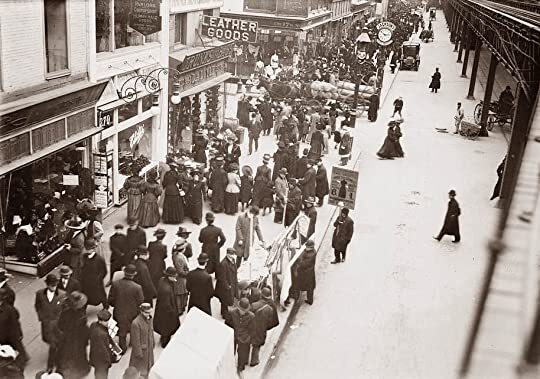
O.Henry wrote about people; the everyday 'little people', mostly those of New York (even though there will be a fair few set in the West and the South of the US, and an entire collection in a 'banana republic' of South America). Those who were usually beneath the notice of the 'great and powerful' of this world.
According to the 'connoisseur' of the 'cream of society' of that time Ward McAllister, there were only about four hundred people in New York who mattered (the list lives on, despite its idiocy - think of Forbes 400, for example). According to O.Henry, there were a few more - four million, to be exact, the entire population of the metropolis at the time.

As the introduction to his best-known collection 'The Four Million' simply states:

"Not very long ago some one invented the assertion that there were only "Four Hundred" people in New York City who were really worth noticing. But a wiser man has arisen--the census taker--and his larger estimate of human interest has been preferred in marking out the field of these little stories of the "Four Million."
The stories focus on the moments in life of the 'four million', always keeping their unique individuality in focus and not the study of them as a group. We see the shop girls, and struggling clerks, cabbies, small-time crooks, residents of furnished rooms or cheap furnished apartments, artists, secretaries, and even a likely few of the 'four hundred' in their run-ins with the remaining 3,999,600, those who "came to the big city to find work because there was not enough to eat at their homes to go around."
"Dulcie lived in a furnished room. There is this difference between a furnished room and a boarding-house. In a furnished room, other people do not know it when you go hungry."

Most of the stories are the simple snippets of life - be it in a big city or on a remote ranch. The everyday troubles and pleasures. Many of them are love stories - not the romance stories kind of love but the kind that springs to life in the tiny furnished apartments after long hours of low-paid work which still does not manage to leech the humanity of those who are not the society's cream:
"One dollar and eighty-seven cents. That was all. And sixty cents of it was in pennies. Pennies saved one and two at a time by bulldozing the grocer and the vegetable man and the butcher until one's cheeks burned with the silent imputation of parsimony that such close dealing implied. Three times Della counted it. One dollar and eighty-seven cents. And the next day would be Christmas.
[...]
Tomorrow would be Christmas Day, and she had only $1.87 with which to buy Jim a present. She had been saving every penny she could for months, with this result. Twenty dollars a week doesn't go far. Expenses had been greater than she had calculated. They always are. Only $1.87 to buy a present for Jim. Her Jim."
Our world is a constant contrast of haves and have nots, and have nots have to try very hard just to stay afloat, just to get something out of life that is not very gentle to them. The differences between the wealthy and the poor are highlighted - but the decision of what to do with the highlights is left up to you. O.Henry does not preach; he just provides a gentle voice to those who usually don't get it.
"During her first year in the store, Dulcie was paid five dollars per week. It would be instructive to know how she lived on that amount. Don't care? Very well; probably you are interested in larger amounts. Six dollars is a larger amount. I will tell you how she lived on six dollars per week.
[...]
For the room, Dulcie paid two dollars per week. On week-days her breakfast cost ten cents; she made coffee and cooked an egg over the gaslight while she was dressing. On Sunday mornings she feasted royally on veal chops and pineapple fritters at "Billy's" restaurant, at a cost of twenty-five cents—and tipped the waitress ten cents. New York presents so many temptations for one to run into extravagance. She had her lunches in the department-store restaurant at a cost of sixty cents for the week; dinners were $1.05. The evening papers—show me a New Yorker going without his daily paper!—came to six cents; and two Sunday papers—one for the personal column and the other to read—were ten cents. The total amounts to $4.76. Now, one has to buy clothes, and—

I give it up. I hear of wonderful bargains in fabrics, and of miracles performed with needle and thread; but I am in doubt. I hold my pen poised in vain when I would add to Dulcie's life some of those joys that belong to woman by virtue of all the unwritten, sacred, natural, inactive ordinances of the equity of heaven. Twice she had been to Coney Island and had ridden the hobby-horses. 'Tis a weary thing to count your pleasures by summers instead of by hours."
And yet the stories are not written to be the social critique, to pursue an agenda, to stir up anger. They seem to be written just to give the voice to the 3,999,600 that otherwise just quietly go about their lives in the streets of a big city or the fields of the West, keeping their dignity, and finding little pleasures in life, and asking for no condescending pity, and just being people.

You don't need to write angry speeches about social injustices when you can just leave your reader with this:
"As I said before, I dreamed that I was standing near a crowd of prosperous-looking angels, and a policeman took me by the wing and asked if I belonged with them.
"Who are they?" I asked.
"Why," said he, "they are the men who hired working-girls, and paid 'em five or six dollars a week to live on. Are you one of the bunch?"
"Not on your immortality," said I. "I'm only the fellow that set fire to an orphan asylum, and murdered a blind man for his pennies."
--------
It was an amazing read when I was a child, and remained such through the years. The bar set high back then still holds. And what I found interesting was that the same stories that struck me the most as a child had the same impact on me, the proud owner of about 50 gray hairs. They are here, and I encourage you to take a look, and revisit the magic of O.Henry - or maybe discover it for the very first time:

The Gift of the Magi
The Last Leaf
An Unfinished Story
The Furnished Room
The Trimmed Lamp
While the Auto Waits
Profile Image for Werner.
Author 4 books720 followers
December 23, 2024
Note: Dec. 22, 2024: I've now finished reading this collection intermittently, at intervals. I'd also been reviewing it piecemeal; but I've now edited the review into a (hopefully) more coherent whole.

Bennett Cerf was one of the founders of Random House, which remains a pillar of American Big Publishing. Not surprisingly, he was also an avid and serious reader, and often an editor of well-regarded anthologies, a number of which remain in print. To encourage the reading of classics, in the mid-20th century Random House brought out its reasonably-priced Modern Library editions of a large number of them; and as part of the project produced "Best of" collections of short fiction by masters of the form. This book is an example of the latter, compiled in 1945 by Cerf himself in collaboration with Van H. Cartmell, a well-known writer and anthologist of the day. Together, they selected 38 of what they felt to be the best-quality examples of the more than 600 stories O. Henry wrote in his relatively short career. Although he had actually been writing stories, sketches and poetry for newspapers (including a short-lived weekly he published himself) as a hobby since the 1880s, most of his fiction was written during and after his prison term that began in 1898, and he died at 48 in 1910. The selections here are taken from the eight collections published during the author's lifetime, starting with Cabbages and Kings in 1904, as well as the three posthumous ones.

O. Henry, whose real name was William Sydney Porter (there are conflicting explanations for his pen name), is best viewed as a Realist, and primarily as a regionalist Realist, if we understand the region he particularly wanted to bring to life as his adopted hometown of New York City. (He was actually born in North Carolina, and had moved to Texas for his health in 1882.) Of course, literary critics, for whom New York City is the center of the civilized earth, and "regionalism" is by definition associated with locales away from the center and populated by people different from the supposed norm embodied in that center, don't view him in those terms. But if we shed those blinders, it's clear that NYC plays the same role in his fiction that, for instance, New England, or the rural Midwest, or Appalachia play in the work of other Realist regionalists --a place with a distinct ethos, culture, speech and lifestyle, for which he had a special affection and an object of faithfully bringing to life in fiction. The great majority of his stories, and the majority of those collected here, are set there; and to a great extent that's where his heart was as a writer. But this collection also includes a significant number of tales set in Texas or other parts of his native South, and even some set in Latin America (he lived in Honduras from July 1896 until Jan. 1897).

The most characteristic feature of Henry's style is his trademark surprise ending; his tales always feature a twist which is unexpected, but which at the same time is consistent with the internal logic of the story (not dragged in from left field with no grounding, just for the sake of "surprise"). He was American literature's greatest master of that technique (and perhaps the same could be said for world literature, though there I'm less familiar with possible competitors!). But his stories are not simply exercises in technique. He wrote about people with believable personalities and relatable problems and challenges; and while a few of his characters are wealthy (but human the same as the rest of us!), he mostly wrote about simple common, working class or poor people, whose speech, education and living conditions were those of his readers. Moreover, he views his characters sympathetically and compassionately; his heart tends to be with the underdog. (Interestingly, he was one of the few U.S. writers whose work the Soviet government would allow to be published in their country during the Cold War, and he proved to be highly popular with Russian readers.) A number of his stories also revolve around romantic attractions, and he has a very positive view of clean romance for deserving couples and (usually) of married life where the union is loving. (His Honduran sojourn occurred when he was trying to escape arrest for embezzlement at the bank where he worked --he claimed to be innocent, and possibly was; bookkeeping in that particular bank was lamentably slipshod-- but when he learned that his wife was too ill to join him in Honduras, he voluntarily returned to Texas, and cared for her until she died later that year.) At times, the early 20th-century slang and pop-culture references in his dialogue or narration is a bit opaque, and he can strain too hard for humor in places; but usually his diction is very clear and readable, and his humorous strain (though some stories are quite serious!) enhances the tales.

This was my third read of this collection (the other two were pre-Goodreads). Six of the stories I'd also encountered in other collections: "The Gift of the Magi" (which I consider a crown jewel of English-language short fiction!), "The Ransom of Red Chief," "The Furnished Room," "The Cop and the Anthem," "A Retrieved Reformation," and "The Last Leaf." (I believe I've commented on or mentioned all or most of these in reviews of the anthologies where they appear; and all of them are gems.) Even more so than most short stories, Henry's work can be hard to comment on very meaningfully without spoilers. But to mention a few of the other selections here, some of my favorites were "The Love-Philtre of Ikey Schoenstein," "Transients in Arcadia," "The Trimmed Lamp," and "The Count and the Wedding Guest." "Roads of Destiny," one of the longer stories, is unique in that it's historical fiction set in 17th-century France (and also one of the very serious tales, as is "The Renaissance at Charleroi"). A few stories have traces of racially insensitive language, but that type of reference is particularly bad in "A Municipal Report," set in Nashville --but that one is also the selection that's, IMO, the most directly subversive of racist attitudes. Although I wasn't very impressed with "The Lost Blend," the only story that I really disliked was "A Harlem Tragedy." That one tries to find humor in brutal wife-beating, which it actually romanticizes and suggests that some women like. With over 600 possibilities to choose from, it's frankly amazing that Cerf and Carmell could have considered this one of the author's "best;" even without having read any of the rest, I'd say it's easily in contention for his worst. But thankfully this isn't at all characteristic of his usual tone and messaging; and overall, I found this a really rewarding collection, that I would recommend to both short fiction fans and students of American literature.
Profile Image for Emiliya Bozhilova.
1,921 reviews378 followers
July 15, 2025
Всяка голяма земя си има своите малки жители, всеки голям град си има своите малки граждани, а всички те си имат големия О. Хенри, който да разкаже техните уж простички, но пронизващи и безвременни истории.

Когато като малка се опитах да чета О. Хенри, бързо го захвърлих с досада и неразбиране. Едва след много години разбрах, че картичките му разкази, макар уж подкупващо изчистени до кокал откъм думи, са само за големи хора, поопознали и заплели се в капаните на действителността, но - подобно на героите му - незагубили през годините детето, влюбения и авантюриста в себе си. Хуморът и тъгата са така оплетени с оптимизъм и тъжно намигване, че и досега два от най-любимите ми разкази на всички времена са тъкмо на О. Хенри и за моя радост са включени в сборника.

Хората, населяващи света на О. Хенри, няма да останат в капризните страници на историята, а само в сърцата на читателите. Техните велики дела са случайни и неосъзнати, но не по-малко разтърсващи:

✔️ Влюбени, готови на тихичка саможертва и благородна лъжа, за да дадат миг светлина на другия;
✔️ Скотовъдци, използващи дамгата върху кравите като най-романтичното в света обяснение в любов;
✔️ Бандити, превъплътили се в принцове за едно самотно и отчаяно дете и шерифи, пожалили последното късче достойнство у арестантите си;
✔️ Крадци, превърнали се в спасители и похитители, готови да платят те откупа;
✔️ Звезди от далечни галактики, слезли на земята да спасят тези, които се взират в тях от бездънния кладенец на нищетата си.

И още много… Всички те - жадни да получат и дарят поне една истинска ласка…

Подвеждащо клише е, че думите правят света по-красив. По-красив го правят делата, а всички герои на О. Хенри намират сили за едно уж незначително, но преломно и спасително действие. А действието на писателя пък са неговите думи. (Животът на самия О. Хенри съвсем неслучайно следва меандрите на съдбите на героите в разказите му).

Прекрасен подбор и оформление на издателство “Пергамент Прес”! Най-любимите ми разкази вече са повече от два…
Profile Image for Sketchbook.
698 reviews265 followers
December 1, 2018
Accused of embezzling money from a Texas bank, O Henry (1862-1910) bolted to SoAmerica in the late 1900s and only returned when his wife was dying of TB. There seems to be a murkiness about what actually happened, but I'm not keen enough to read a bio. OH's wife expired and he spent 3 years in prison. A gifted writer and a likeable chap, he had a venturesome life. The big question for me, still lacking an ending - twist or not - is, why did he bolt? Well, so much for that.

Like most GRs, I read OH in middle school and forgot about him until soppy reviews on GR tweaked me with a sense of nostalgia, and---. Everyone here cites 3 stories : The Gift of the Magi, The Last Leaf, and The Ransom of Red Chief. Didn't they read anything else? OH is very, very sentimental and heartwarming; his stories, w elements borrowed by Hollywood for decades, are aimed at pre-teens, Scout's honor. Unselfishness, sacrifice, kindness are qualities throughout his homespun fables....qualities that children should be taught.

Example: A young woman, dying of pneumonia in "The Last Leaf" is certain she will die when the last leaf falls from a tree outside her wintry window. The leaf doesnt fall and she regains her health. Then we find out : an elderly neighbor painted the leaf, though he caught a cold for his good deed and quickly withered away....(OH can't resist the cheap ending).

OH has stories for all seasons...all giving voice to a (dated), sugared, Sunday School Americana. I prefer Maupassant and a Seidlitz powder.
Profile Image for Христо Блажев.
2,603 reviews1,792 followers
February 17, 2025
Разказите на О. Хенри са лекарство за униние: https://knigolandia.info/nai-hubavite...

Този сборник може да се чете на малки дози, може и стремително да осмисли няколко часа. Тук ще откриете историята за виолетовата и червената рокля, защото „Вие не знаете какво е да живееш с постоянен копнеж по красиви неща – да гладуваш осем месеца, за да имаш виолетова рокля за един празник“; ще съчувствате на момичето, което си осигурява прехраната „през една студена мрачна зима“, като всеки ден грижливо преписва менюта и страда по една изгубена любов; ще се възрадвате на двамината млади, които ще приемат всяка работа, за да помогнат на другия да изпълни творческите си мечти; ще научите какво може да се крие зад една обикновена зелена врата; ще научите и защо една звезда просто трябва да се казва Били Джексън.

Издателство "Пергамент Прес"
https://knigolandia.info/nai-hubavite...
Profile Image for Amy.
3,051 reviews620 followers
February 9, 2017
Dearest Reader,
It is with the greatest pleasure I bring to your attention one of the most excellent writer of the nineteen and twentieth centuries, O. Henry. In his time, O. Henry wrote over six hundred short stories that continue to delight readers to this day. His work is entirely memorable, once you have read “The Ransom of Red Chief” or “Two Thanksgiving Day Gentlemen”, you will never forget them. The writing is generally humorous, with a profound awareness of social ills.
Some may find the stories pointless; I think this is to be expected. He writes about ‘real life’, but in such a way as to make it fascinating. O. Henry creates awareness about our culture even while making fun of it. How can that be, you might ask, when O. Henry was writing to a completely different generation of people? Well, that is just part of the fun! We might not live in an era of shop-girls and cabbie horses, but human nature is still the same and that is exactly what O. Henry writes about. He encourages one to come in, sit down, and simply enjoy. Read with tongue in cheek, a dose of humor, and willingness for awareness, you are sure to enjoy!
One of my favorite stories is “The Cop and the Anthem.” “Soapy”, as the main character is known, is an all-around loafer who’s goal is to get sent to prison for the winter months. They provide warmth, food, and in his mind, the perfect winter retreat. Unfortunately, he can’t seem to get arrested! No matter what he does, it doesn’t work. He breaks a window, eats without paying, even attempts to abduct a woman, but nothing works! Finally, as he walks past a church, he experiences a “sudden and wonderful change in his soul.” He decides to completely turn his life around, get a job, and become a productive man of society. At that moment a police officer wanders over and arrests him for loafing. He is sentenced to jail for the winter months!
Not all of his works are humorous, such as “The Unfinished Story” or the ever depressing, “Gift of the Magi.” This does not mean they are bad. They tend to express more awareness of human life and rely more on the bitter-sweet then funny. To say that one is better than the other is beyond me, all of O. Henry is excellent.
I hope you will read and enjoy as much as I.
Yours Truly,
Profile Image for Mara Sundwall.
80 reviews2 followers
April 1, 2008
And you thought O. Henry was just a witty name for a mediocre candy bar..."O" no!! This guy's another master of the English language, and I'm a sucker for a good short story. "Gift of the Magi" and "The Last Leaf" are unmatched. Its just a shame they couldn't have named a tasty Ben & Jerry's ice cream flavor after him instead.
Profile Image for Desislava Mihaylova.
196 reviews35 followers
December 29, 2023
В тази малка книжка са събрани три вълшебни разказа на О’Хенри. Изданието е красиво и идеално за подарък. Самите разкази са популярни, поучителни и изпълнени с магията на Коледа.
Profile Image for Onur.
348 reviews20 followers
March 18, 2020
Actually, the book is better than my expectations. Stories are so funny, fluent and a bit ironic. As summary; a love service, medicine and robbery, Jim's watch and Della's hairs, voluntarily to have a feud! Voluntarily to had beat up! If the love elixir given the wrong person, one police convict at the train, A loft, one meeting after 20 years at the same place, social triangle, farewell of robber, able to friend with burglar. I like it, the book recommended.
Profile Image for Kandice.
1,652 reviews354 followers
November 17, 2021
I read these stories over and over. Even though you know the ending, it's still cool the way they twist!
Profile Image for Peter.
40 reviews1 follower
August 11, 2010
Some touching moments (see the Leaf story), some very unusual settings, and some poignant twists. At other times, however, the reader can see his trademark twist coming a mile away. Maybe he's a victim of his posterity. Like when you go to watch Spaceballs because it was so awesome when you saw it 20-something years ago, but the humor has been redone so many times since then the movie is innefective. It's not Mel Brooks's fault! Or maybe Spaceballs is just lame, and you were only 12 so the lameness was mistaken for awesomeness...

In any case, I liked, but didn't love O. Henry's stories as a whole.
Profile Image for Lauren.
22 reviews1 follower
May 31, 2008
I love O. Henry. I've a collection of his stories, but I'm not sure if it's actually this edition or not. At any rate, my favorite of his short stories is "The Pride of the Cities". It's probably available as an e-text SOMEwhere. Give it a perusal, the ending is too perfect for words. (There's a bit of a pun in that last comment)
Profile Image for Steve.
396 reviews1 follower
Read
June 20, 2021
I read these thirty-eight stories with various degrees of engagement; some I finished following the plot with ease, others I felt I had just scanned without any ability to recall who did what to whom. O. Henry appeared to construct his stories with a similar plot device, a surprise hook at the very end of each tale. I enjoyed several, including The Gift of the Magi and The Ransom of Red Chief. As I was reading along, I thought all these stories are the right length to be recited aloud following a family meal, maybe a weekly undertaking that could become a tradition, involving other authors, something to break the electronica invading our lives and unite families for a brief moment.
Profile Image for Slavi Stoyanova.
171 reviews5 followers
November 18, 2023
Прекрасна книжка!

Книжката съдържа три разкази. Има и прекрасни картинки. Много хубаво издание. Уникална!
Препоръчвам я!
Profile Image for Lahni Johnson.
27 reviews8 followers
February 28, 2008
I discovered this book one day long ago on my parents bookshelf. It's kind of a smaller book and had been stuck between a huge atlas of the universe and the wall. Once I liberated it I decided to take my dad's advice (If you're bored go read O. Henry) and now I have my own copy sitting on my bookshelf gathering dust and waiting to be discovered by someone new.
Profile Image for Благовеста.
87 reviews36 followers
December 20, 2016
Едно малко бижу, което се чете на един дъх.
Любим О.Хенри.
Profile Image for Veselina Stefanova.
170 reviews33 followers
December 14, 2018
Много приятни, леко тъжни, но много обнадеждаващи разкази. Три къси истории, които много ми напомнят "Щастливият принц" на Оскар Уайлд. Същата тъга, но и благородна любов, човешка топлина има в тях.
Чете се бързо и леко, а има над какво да се помисли по тях.
Първият разказ "Хиляда долара" ми е любим.
Profile Image for Thomas.
290 reviews4 followers
April 4, 2008
I'm sure these had a time and place but in the present(jaded, cynical) world the stories had a saccharine overload. I eventually needed to bail and toss this in the trash. (I was never a big fan of the O. Henry candy bar, either.)
Profile Image for Perihan.
480 reviews135 followers
July 1, 2016
O.Henry hikayelerinde genelde mizahi bir dil kullanıyor. İroni hakim tüm anlattıklarında. Yüreğindeki tüm trajedileri, şaşırtıcı sonlarıyla hikayeleştirmiş.
Benim, O.Henry deyince hep aklıma, en sevdiğim hikaye olan , Son Yaprak hikayesi geliyor.
Herkesin bildiği bir hikaye...
Profile Image for Barack Liu.
600 reviews20 followers
May 31, 2020

077-Short Stories of O. Henry-O. Henry-Novel-1887
Barack

—— "The key point is not which path we choose. The kind of people we eventually become is determined by our inner nature."

"Selected Stories of O. Henry" contains the representative works of O. Henry's short stories. A Novel book. The biggest feature of these short stories is that the plot is compact and the ending is amazing.

O. Henry, born in Greensboro, North Carolina, the USA in 1862, died of cirrhosis in 1910. He dropped out of high school in 1977 and began to be an apprentice in a pharmacy. In 1887, he and 19-year-old Athol Estes secretly ran to the church to marry the girl's parents. In the same year, O. Henry began publishing works in public journals.

In 1897, his wife died of tuberculosis. In 1898, O. Henry was arrested and imprisoned. In 1901, he was released after serving his sentence. In 1902, O. Henry became a professional writer, gaining fame and fortune. But he was squandering and was caught in the habit of alcoholism. Later, to alleviate economic pressure, he had to write novels at a rapid rate in exchange for manuscript fees, which also led to the uneven quality of his works.

He often drinks and gambles on Saturdays and Saturdays, and spends a day writing a short story on the seventh day, which is then published to magazines. Representative works: "Maggie's Gift", "The Last Leaf", "Police and Hymns", etc.

Sometimes I am confused by people's attitudes towards love and bread. Some people say that without bread, there is no love because love can endure momentary hunger and cold, but it cannot give people the patience to endure hardship for a long time. Some people say that without love, bread is tasteless. Because money can buy marriage, but not true love.

This story is very touching and shocking. When I was a freshman, the English teacher asked everyone to perform this play. But, when painting in the rain, heavy rain should immediately wash away the paint. Only on sunny days can painting succeed. So, I think this is a minor flaw in this novel.

The novel depicts several scammers who sell fakes, thieves who steal, or robbers who kill more people. It is doubtful whether such scammers are everywhere in the United States at the end of the 19th century? At the end of the 20th century, the film described the westward movement as desirable. It can be seen that most of them do not care much about the facts, they are willing to believe in the beautifying description.

It doesn't look like a good person's liar, it's not a clever one. Only those thieves who look sincere and reliable can be regarded as outstanding. So how can you ignore appearance? Most people still judge the quality of people through vision, especially when people lack long enough contact with each other.

Stealing also makes sense. Some people who violate the law may also have their moral standards. And some people who have not violated the law may be criticized on certain moral standards. The law must be obeyed by everyone, but the ethical rules and rules of handling that each person makes for himself may be very different. The former often have clear right and wrong, while the latter is probably nothing wrong.

A type of writer's novel makes it easy for the reader to guess the ending, or the ending is not so important for the story itself. Because the purpose of this type of writer is not to tell the reader what happened later. Instead, it leads the reader to experience the whole process together. Get some kind of feeling or revelation.

O. Henry is another writer. He does not seem to deliberately want readers to experience any truth or inspiration in the process of reading the story. His creative motivation seems to be more entertaining. As long as the reader is a little surprised at the end of the story, his purpose seems to be achieved.

In "The Way We Choose" and "The Way of Destiny," the author shows us what happens if the protagonist makes a different choice. Both novels reveal fatalistic determinism. No matter how the protagonist chooses. Only the process path and manifestation are different. The final fate of the protagonist is similar.

We cannot simulate what has not happened. But because of the infinite possibilities of what has not happened, it is even more unforgettable. Life is made of a series of choices, and we are making choices almost every moment. It is like a binary tree or even a multi-branch tree that extends infinitely downward.

From small to what to eat for dinner, big to choose which university to go to study, choices drive our lives. We continually conceive of choices that have not been made and compare them with our current lives in our minds. Therefore, feel happy or regretful. Even if we only make a two-for-one bifurcation at each choice. There are almost endless possibilities for our entire life.

Compared with the denominator of infinity, the only path we are taking now is a trivial numerator. I think, do other possibilities exist in a parallel universe? In those universes, I made a different choice from me in this universe.

Every time I saw the story "Twenty Years Later", I couldn't help thinking. If I were Jimmy, what would I do? Will I personally arrest Bob? Will they still ask other police officers to do the work? Or just leave straight to avoid meeting? Or is it possible for me to set aside his fact that Bob is a wanted criminal and myself as a police officer and meet him as a childhood friend?

"Witch's Bread" reveals the truth in life that without your knowledge, good intentions may do bad things. So, if you want to help others, it is best to let them know in advance. Otherwise, your self-righteous kindness will instead cause trouble for others. I don’t think that the euphemism encouraged by traditional Chinese is an advantage, it often causes misunderstandings. It's better to be open and honest.

There are many stories about liars in the novel. I think the best way to avoid being deceived is to have reservations about anything others tell yourself. If someone says something and believes in it immediately, it is easy to fall into a scam. Of course, it is almost impossible to verify every message.

But at least we should be cautious about the important news we hear. Don't rush to a conclusion. The identity of the message provider is often linked to the quality of the message. Even your cronies may lie to you for a purpose that is good for you or good for himself, not to mention a general friend or even an enemy?

The person who lets you hear this news often carries some intention of his own. When you believe in it and act according to the news. It was likely the beginning of the trap. Therefore, critical thinking is indispensable. Even if our sources of information come from objective facts that we have observed with our own eyes, our arbitrary conjectures may lead to wrong conclusions and even anger others.

Someone yelled at the family after a sudden power outage and questioned what stupid behavior they had done, which caused the power outage. But she was reluctant to look out the window before she blamed her family members, thinking about whether the entire community had a power outage. Such impulsive and irritable people may also be easily deceived. The more easily a person is affected by negative emotions such as anger, greed, and fear, the more likely he is to be deceived.

16/07/08
20/05/30
Profile Image for Dilip Kainikkara.
27 reviews139 followers
March 23, 2017
O Henry is the king of English short story genre. While his works tend to be formulaic, that is one damn golden formula. 'The Gift of Magi' and 'The Last Leaf' are arguably among the best short stories ever written in any language. And O Henry surprisingly manages to keep up a decent threshold of quality across his large collection of short stories. I still consider going back and reading a random picking out of them a very enjoyable pastime.
Profile Image for Stella_bee.
496 reviews15 followers
April 1, 2022
I never thought short stories could be this impressive!!!
Like I always say, I'm not a fans of short stories but this collections written by Mr O Henry really blow my mind away
Dituturkan dengan bahasa yang simple namun setiap kisah memiliki twist ending yang mengejutkan! Hampir semua judul di kumcer ini menjadi favoritku❤
Profile Image for BookishlyWise.
156 reviews31 followers
May 6, 2020
Best short story collection one could have, or rather needs. The thief was one story that I read in school and fell in love with O Henry, and his writing never disappointed me. I would like to believe he was the one who inspired all twists and turns of plots across Hollywood and Bollywood!
Profile Image for Ev.
113 reviews
December 27, 2021
-full review to come soon-
current notes: o. henry’s stories are pretty entertaining, and i liked their plot twist endings. HOWEVER. there are more than a few racist comments/stereotypes, most likely a product of the author’s time period (late 1800s), but nonetheless turned me off of some stories.
Profile Image for Neli.
318 reviews29 followers
December 25, 2017
Нужни са 60 страници и 20 минути, за да усетиш истинската магия на Коледа.
249 reviews6 followers
February 17, 2023
Short stories with a twist. Mostly predictable, but not always, and still fun to read.
Profile Image for Valery.
2 reviews
November 2, 2023
I read this stories every Christmas, because every time I feel like… I‘m listening my grandpa story ☺️
This book will touch you to the deep of your soul
Profile Image for Stoyanka.
15 reviews10 followers
December 29, 2025
Чудесно издание с три прекрасни разказа на О. Хенри. Прекрасен подарък за ценители.
Даровете на влъхвите ми е любим още от ученическите години и обичам да го препрочитам.
Displaying 1 - 30 of 218 reviews

Can't find what you're looking for?

Get help and learn more about the design.