

What do you think?

Dust on Her Tongue
Set in Guatemala, these spare and beautiful tales are linked by themes of magic, violence, and the fragility of existence. Paul Bowle’s translation perfectly captures Rey Rosa’s stories of the haunted lives of ordinary people in present-day Central America.
“A genuinely surprising and original set of stories…a sense of violent unease shading into terror drifts up from every line…his writing has a sharp, almost sadistic edge.”—The Times Literary Supplement
“Compelling in the extreme…these twelve tales (that) boast of hidden dangers and lurking terrors, are written in a deceptively undramatic style, with masterful restraint. Stories that continue to disturb and delight long after they are laid to rest."—Blitz
Rodrigo Rey Rosa (born November 4, 1958) is a Guatemalan writer. He has based many of his writings and stories on legends and myths that are indigenous to Latin American as well as North Africa. A number of Rey Rosa's works have been translated into English, including; The Path Doubles Back (by Paul Bowles), "The Pelcari Project," The Beggar's Knife, The African Shore, and Severina.
“A genuinely surprising and original set of stories…a sense of violent unease shading into terror drifts up from every line…his writing has a sharp, almost sadistic edge.”—The Times Literary Supplement
“Compelling in the extreme…these twelve tales (that) boast of hidden dangers and lurking terrors, are written in a deceptively undramatic style, with masterful restraint. Stories that continue to disturb and delight long after they are laid to rest."—Blitz
Rodrigo Rey Rosa (born November 4, 1958) is a Guatemalan writer. He has based many of his writings and stories on legends and myths that are indigenous to Latin American as well as North Africa. A number of Rey Rosa's works have been translated into English, including; The Path Doubles Back (by Paul Bowles), "The Pelcari Project," The Beggar's Knife, The African Shore, and Severina.
124 pages, Paperback
First published May 1, 1989
About the author
Rodrigo Rey Rosa
57 books165 followersRodrigo Rey Rosa is perhaps the most prominent writer on the Guatemalan literary scene. Along with the work of writers like Roberto Bolaño, Horacio Castellanos Moya, and Fernando Vallejo, Rey Rosa’s fiction has been widely translated and internationally acclaimed. His books include Dust on Her Tongue, The Beggar’s Knife, and The Pelcari Project, all of which were translated into English by the late Paul Bowles. In addition to his many novels and story collections, Rey Rosa has translated books by Bowles, Norman Lewis, François Augiéras, and Paul Léautaud.
Ratings & Reviews
Friends & Following
Create a free account to discover what your friends think of this book!
Community Reviews
Displaying 1 - 11 of 11 reviews

May 25, 2016
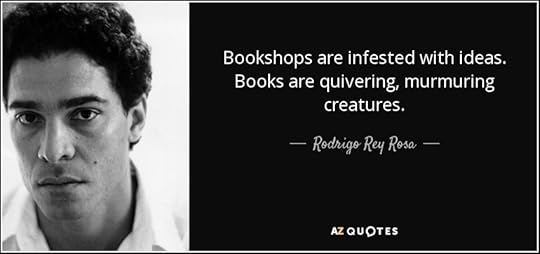
Rodrigo Rey Rosa (born 1958) -- A Guatemalan writer who bases the majority of his stories on indigenous Latin American legends and myths. Twelve short sparse tales in this collection set in Guatemala among everyday men and women. There is no explicit symbolism spelled out yet the relationships between objects, happenings and people are charged with compressed energy, infusing each scene with uncompromising and frequently harsh drama. To provide a taste of the author’s voice and the rhythm of his telling, I will focus on one tale I found particularly powerful:
CORALIA
An older gentleman at a table in a small restaurant tells his lady friend, a foreigner with auburn hair and very pale skin, about a woman he judges to be great and how she will really love this great woman.
Such an irksome, annoying statement – when we are told how we will love or have strong emotions toward another person without having once met that person.
Meanwhile, the plot thickens: overhearing this remark, a young man at the next table informs his girlfriend how the older gentleman is talking about Coralia and how Coralia has an ego as big as a cathedral.
At that moment Coralia herself enters the restaurant, head held high, looking neither to the left nor to the right. The older gentleman, Señor Méndez, rises to greet her. Coralia explains how she was, in fact, looking for him so as to ask the Señor if she could rent his truck to pick up some wood she already paid for.
Taking on the role of gallant friend, Señor Méndez tells Coralia that he himself will gladly pick up and deliver her wood. Delighted, Coralia offers to host coffee at five o'clock at her home for Señor and his lady friend as a way of extending her gratitude.
Coralia briskly walks to the door but catches sight of Enrique out of the corner of her eye and cries: “Enrique!” Enrique stands and hugs her.
Señor Méndez and his lady friend walk past and tell Coralia they will be at her home at five o’clock for that coffee.
Now that she knows her wood will be delivered, so much for Señor Méndez; Coralia has much better things to focus her attention on at this moment: a young man for whom, as we find out later in the story, she has a deep, powerful emotional attachment.
No sooner is Coralia in the front seat of Enrique's car, squeezed between driver and his girlfriend, Rita by name, then we read: “She informed them that she was a very candid person, and that she liked to tell the whole story from the beginning. She kept nothing back (she did not know what shame was) and that whoever objected to this should say so at the start.”
In so many words she is telling them: my life story is the most important thing in the world and I plan to command center stage and take as much time as I want to tell my whole story.
I’ve always found such obnoxious pronouncements, as this one by Coralia, disturbing and ugly in the extreme. And for a number of reasons, not the least of which is all the other people around them are reduced to passive listeners and tacitly judged inferior. A colossal egotism is at work here.
True to form, once Coralia begins telling her life story, it goes on for hours: how she emerged victorious from a hard childhood, suffering at the hands of drunken father and indifferent mother, how she heroically overcame the nuns at her convent school, but once she discovered the beauty of her voice . . . . bhah, bhah, bhah.
Enrique reminds Coralia of the time, that it is now well after five o’clock. Rita says “Poor Señor Méndez.” Coralia is surprised at the interruption of her story.
Coralia discovers the hard way there is a price to pay for ignoring her friends. Here is how Rodrigo Rey Rosa ends his tale: “A few yards after he had crossed the river Enrique had to make way suddenly for a small truck with blinding headlights which bore down upon them from the other direction. Rita turned to look. “Señor Méndez!” she exclaimed. Señor Méndez had stopped his truck at the edge of the river. They saw him climb into the back of the truck and leaning against the cabin’s partition, kick the logs furiously out of the truck, so that they rolled down the bank into the water and floated off downstream. The sky was full of stars.”

March 3, 2009
About 1/2 the stories here are fantastic.The best ones are haunting and thought provoking. The rest feel like exercises, which is a problem I often have with short stories (which may, in fact, be my problem as a reader, not Rosa's problem as writer).

October 22, 2008
spare, restrained, yet dangerous, stories masterfully translated by paul bowles.

April 15, 2014
Darkly, Disturbing at sometimes. Great read. but his other collection is way better.

March 3, 2026
‘’If you exist, God, bring this bird back to life.’’
The familiar comforts of home and habit are distorted into something unrecognisable and threatening. Rodrigo Rey Rosa’s stories - brilliantly translated by Paul Bowles - exist in a state of high tension, where the ordinary world of village squares, family ties, and religious rituals is thin ice stretched over a dark, violent abyss. It is a world where silence is never peaceful; a world full of warnings and omens...
The Proof: A young boy wants to become a god or prove that God exists and the results are bloody…
''Why did she see nobody? What day of the week was it? She counted on her fingers. Monday? Sunday? Monday, probably. For a town to be this silent on a Sunday would have upset her too much. The place was dead. She remembered that the rooster had crowed, and that was some consolation, at least. Now she could hear the sound of her own footsteps on the stones. She came to the main square. At the end of the street, she saw the side of a church. Something warned her not to go any nearer. She stood still and looked up and down the street. Then she turned around and ran back, leaving the plaza behind. A cry had come feebly from somewhere. The cry of a child? It had issued from inside the church, or had she imagined it?’’
Dust on Her Tongue: In a hazy, eerie setting, a woman attempts to escape her husband’s violence. This is one of the most atmospheric moments in the collection.
Privacy: A man finds himself imprisoned in a psychiatric hospital according to the wishes of his sister.
The Burial: The narrator witnesses the funeral of a victim of the political upheaval in Guatemala and contemplates the suffocating silence of a moment when you can’t even mourn your dead.
Still Water: A woman decides to live in isolation in a cabin. A strange man and a frog trapped in a jar become symbols of a society condemned to captivity.
Coralia: Coralia is a woman whose personality is magnetic, but her egoism gets the better of her, giving her the means to exercise complete control over men who fall under her spell.
The Truth: In this terrifying story, a young boy causes a deadly accident. But he points the finger at a poor worker and manages to walk away clean as a whistle. The story is terrifying not because of ghosts and ghouls, but because there is nothing more frightening than escaping the consequences of your actions due to your father’s hefty bank account. This is the society Rey Rosa describes in his works. The ‘truth’ is determined through money, not actions.
Angelica: A woman takes a dark and delicious revenge on her abusive husband.
‘’It said that in the middle of the island, at the cloud -covered summit of the mountain, there is a lake of great depth, like a blue eye looking up at the sky. And in the center of the lake is another island, a tiny pile of rocks, the abode of a lone man who, perhaps because he has always been by himself, is not really a man.’’
The Host: An old man receives an unwanted visitor. The last paragraph is the bloodiest, most graphic in the entire collection.
People of the Head: In a story with a distinctive Eastern feeling, Magical Realism meets Folklore, and the East meets the rituals of Central America. A rather cryptic, thought-provoking story.
Las Lagrimas: An ethnographer wants to record the funeral chants of an isolated tribe. The problem is that he has to wait for someone to die. A story that exposes the selfish motives of the ‘civilised’ world during a research of dubious origins.
Xquic: A beautiful, dark story based on the myth of the Mayan princess Xquic, who was mysteriously impregnated. In the world built through Rey Rosa’s pen, the myth meets the cruel, mortal reality.
This collection is a perfect example of the way the domestic is merged with the uncanny, creating an atmosphere of constant threat. Rey Rosa creates characters in perfectly ordinary situations, but his ‘ordinary’ soon turns into terror, often unseen but intensely felt. He writes about a society violated by civil war, corruption, and state terrorism, where shadows are lurking in every corner, leading to hair-raising conclusions. Nothing is more hair-raising than the power exerted on the ‘disposable’ in a society condemned to limbo…
‘’The other evening I was thinking. God knows who might not be going underneath me at this minute - a murderer, or a saint. Someone with the key to the puzzle of my life, or of my ruin.’’
My reviews can also be found on: https://theopinionatedreaderblog.word...
The familiar comforts of home and habit are distorted into something unrecognisable and threatening. Rodrigo Rey Rosa’s stories - brilliantly translated by Paul Bowles - exist in a state of high tension, where the ordinary world of village squares, family ties, and religious rituals is thin ice stretched over a dark, violent abyss. It is a world where silence is never peaceful; a world full of warnings and omens...
The Proof: A young boy wants to become a god or prove that God exists and the results are bloody…
''Why did she see nobody? What day of the week was it? She counted on her fingers. Monday? Sunday? Monday, probably. For a town to be this silent on a Sunday would have upset her too much. The place was dead. She remembered that the rooster had crowed, and that was some consolation, at least. Now she could hear the sound of her own footsteps on the stones. She came to the main square. At the end of the street, she saw the side of a church. Something warned her not to go any nearer. She stood still and looked up and down the street. Then she turned around and ran back, leaving the plaza behind. A cry had come feebly from somewhere. The cry of a child? It had issued from inside the church, or had she imagined it?’’
Dust on Her Tongue: In a hazy, eerie setting, a woman attempts to escape her husband’s violence. This is one of the most atmospheric moments in the collection.
Privacy: A man finds himself imprisoned in a psychiatric hospital according to the wishes of his sister.
The Burial: The narrator witnesses the funeral of a victim of the political upheaval in Guatemala and contemplates the suffocating silence of a moment when you can’t even mourn your dead.
Still Water: A woman decides to live in isolation in a cabin. A strange man and a frog trapped in a jar become symbols of a society condemned to captivity.
Coralia: Coralia is a woman whose personality is magnetic, but her egoism gets the better of her, giving her the means to exercise complete control over men who fall under her spell.
The Truth: In this terrifying story, a young boy causes a deadly accident. But he points the finger at a poor worker and manages to walk away clean as a whistle. The story is terrifying not because of ghosts and ghouls, but because there is nothing more frightening than escaping the consequences of your actions due to your father’s hefty bank account. This is the society Rey Rosa describes in his works. The ‘truth’ is determined through money, not actions.
Angelica: A woman takes a dark and delicious revenge on her abusive husband.
‘’It said that in the middle of the island, at the cloud -covered summit of the mountain, there is a lake of great depth, like a blue eye looking up at the sky. And in the center of the lake is another island, a tiny pile of rocks, the abode of a lone man who, perhaps because he has always been by himself, is not really a man.’’
The Host: An old man receives an unwanted visitor. The last paragraph is the bloodiest, most graphic in the entire collection.
People of the Head: In a story with a distinctive Eastern feeling, Magical Realism meets Folklore, and the East meets the rituals of Central America. A rather cryptic, thought-provoking story.
Las Lagrimas: An ethnographer wants to record the funeral chants of an isolated tribe. The problem is that he has to wait for someone to die. A story that exposes the selfish motives of the ‘civilised’ world during a research of dubious origins.
Xquic: A beautiful, dark story based on the myth of the Mayan princess Xquic, who was mysteriously impregnated. In the world built through Rey Rosa’s pen, the myth meets the cruel, mortal reality.
This collection is a perfect example of the way the domestic is merged with the uncanny, creating an atmosphere of constant threat. Rey Rosa creates characters in perfectly ordinary situations, but his ‘ordinary’ soon turns into terror, often unseen but intensely felt. He writes about a society violated by civil war, corruption, and state terrorism, where shadows are lurking in every corner, leading to hair-raising conclusions. Nothing is more hair-raising than the power exerted on the ‘disposable’ in a society condemned to limbo…
‘’The other evening I was thinking. God knows who might not be going underneath me at this minute - a murderer, or a saint. Someone with the key to the puzzle of my life, or of my ruin.’’
My reviews can also be found on: https://theopinionatedreaderblog.word...

August 4, 2020
#readtheworld Guatemala
A great collection of stories that I powered through in an evening. I loved Rey Rosa's straightforward style and twisted stories. I have a novel of his "Chaos: A Fable" which I very much look forward to reading after having finished these stories.
Below is a very, very truncated summary of each story (more for my memory than for any kind of academic summation).
"The Proof" Little boy kills a bird, his father discovers dead bird, the maid replaces what she thinks is a missing bird. No one speaks about it and no one knows the full truth.
"Dust on Her Tongue" Woman locked in a hotel room with no memory of what brought her there.
"Privacy" Man goes to a hospital in inquire after his sister, ends up locked in solitary confinement.
"The Burial" Old man fakes his own death (with the help of his grandson) to live out the remainder of his life as he pleases, against the wishes of his daughter.
"Still Water" American man is found dead. His widow arrives in Guatemala to live alone. The widow and her servant not-so-secretly torment each other via a pet toad.
"Coralia" Coralia, her "ego as big as a cathedral" and her manipulation of men
"The Truth" Boy drops stone from a bridge onto traffic, causing destruction, and still not earning the belief of his father when he tells the truth about it.
"Angelica" -- "the dead do not go away, but remain inside those whom they leave behind." Story of lovers, deception and death.
"The Host" An old man alone on an island, is sacrificed for unknown reasons. Soon after, his replacement is selected.
"People of the Head" A man becomes convinced that his new acquaintance, Wing Hung Wong owns an urn that requires a host to become a powerful oracle. The man becomes obsessed, paranoid, and determined.
"Las Lagrimas"Man goes to record funeral chants of a remote tribe. The funerals that follow are not the ones he planned to witness.
"Xquic" Academics (anthropologists?) study the well of Xquic and its mysterious powers.
A great collection of stories that I powered through in an evening. I loved Rey Rosa's straightforward style and twisted stories. I have a novel of his "Chaos: A Fable" which I very much look forward to reading after having finished these stories.
Below is a very, very truncated summary of each story (more for my memory than for any kind of academic summation).
"The Proof" Little boy kills a bird, his father discovers dead bird, the maid replaces what she thinks is a missing bird. No one speaks about it and no one knows the full truth.
"Dust on Her Tongue" Woman locked in a hotel room with no memory of what brought her there.
"Privacy" Man goes to a hospital in inquire after his sister, ends up locked in solitary confinement.
"The Burial" Old man fakes his own death (with the help of his grandson) to live out the remainder of his life as he pleases, against the wishes of his daughter.
"Still Water" American man is found dead. His widow arrives in Guatemala to live alone. The widow and her servant not-so-secretly torment each other via a pet toad.
"Coralia" Coralia, her "ego as big as a cathedral" and her manipulation of men
"The Truth" Boy drops stone from a bridge onto traffic, causing destruction, and still not earning the belief of his father when he tells the truth about it.
"Angelica" -- "the dead do not go away, but remain inside those whom they leave behind." Story of lovers, deception and death.
"The Host" An old man alone on an island, is sacrificed for unknown reasons. Soon after, his replacement is selected.
"People of the Head" A man becomes convinced that his new acquaintance, Wing Hung Wong owns an urn that requires a host to become a powerful oracle. The man becomes obsessed, paranoid, and determined.
"Las Lagrimas"Man goes to record funeral chants of a remote tribe. The funerals that follow are not the ones he planned to witness.
"Xquic" Academics (anthropologists?) study the well of Xquic and its mysterious powers.
This entire review has been hidden because of spoilers.

July 26, 2019
This collection of twelve surreal stories was translated into English by Paul Bowles. The entire collection could have easily been written by Bowles himself. The stories are spare and eerie. While actual violence is rare, it’s never far away. Sleep with the lights on after reading.

October 22, 2018
Pick hits: "Coralia," "The Truth," Xquic," "Still Water," "The Proof," Dust on Her Tongue."
3.5 stars.
3.5 stars.

December 27, 2013
If you enjoy Roberto Bolano, I imagine you would also enjoy Rodrigo Rey Rosa, the apparent similarity being most of the stories feature thoughtful loners trying to interpret odd, slightly threatening occurrences or people. Rosa lacks Bolano's wonderful sense of humor, and his prose is even more spare, but his deep fascination with myth and obscure religious practices makes up for it.

February 10, 2008
guatemalan writer. stark, excellent

April 2, 2010
This is a collection of a dozen very short and very forgettable stories set in Guatemala. Don't bother.
Displaying 1 - 11 of 11 reviews