Sure, there’s no place like home—but what if you can’t really pinpoint where home is? By the time she was nine, Tracy Seeley had lived in seven towns and thirteen different houses. Her father’s dreams of movie stardom, stoked by a series of affairs, kept the family on edge, and on the move, until he up and left. Thirty years later, settled in what seems like a charmed life in San Francisco, a diagnosis of cancer and the betrayal of a lover shake Seeley to her roots—roots she is suddenly determined to search out. My Ruby Slippers tells the story of that search, the tale of a woman with an impassioned if vague sense of mission: to find the meaning of home.
Seeley finds herself in a Kansas that defies memory, a place far more complex and elusive than the sum of its cultural myths. On back roads and in her many back years, Seeley also finds unexpected forgiveness for her errant father, and, in the face of mortality, a sense of what it means to be rooted in place, to dwell deeply in the only life we have.
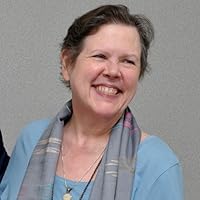
Tracy Seeley is a nonfiction writer, professor at the University of San Francisco, and organic gardener. She grew up in Kansas and escaped at seventeen, only to be drawn back decades later to write about it. Her book MY RUBY SLIPPERS: THE ROAD BACK TO KANSAS tells the tale of her falling in love with the state she thought she'd left behind. A lyric exploration of place and displacement, geographical and otherwise.
Tracy lives in Oakland, California with her husband Frederick Marx, a filmmaker, and with three formerly feral--and not very cuddly--cats."
A Perfect Combination of Nostalgia and the Search for the Meaning of Home
Tracy Seeley is a professor of English at the University of San Francisco. That bit of information may seem like a sideline comment on a book so completely fascinating and thought provoking as MY RUBY SLIPPERS: THE ROAD BACK TO KANSAS, but it does help explain how this writer comes to her debut novel with such eloquent technique and style. While everyone who reads this book will enjoy the long road trip to a beginning, the fact that Tracy Seeley can be abstracted almost page by page with poetic phrasing that stand alone is a marvel.
As for the content of this beauty of a book, Seeley states 'I went back to discover the place I came from and thought I'd left behind, to re-imagine my family story, to learn stories I never knew, to learn what it means to live deeply in the place I find myself, and in my one and only life.' This brief statement quickly distills the following facts: after high school in Wichita, college in Dallas and graduate school in Austin, where she finished a Ph.D. in British Lit, she taught at Yale for five years before hoofin' it west to San Francisco in 1993. And there, for the most part, she's stayed. Except for a semester in Caracas, a semester in Barcelona, a semester in Budapest, and three years living half-time in L.A. Oh, and after 17 years of living in The City, recently moving to Oakland. But it is the 'before' that brings Seeley to explore her roots: she has been diagnosed and treated for carcinoma, divorced, and has spent her life on the West Coast falling into the 'embarrassed file' of having a history of being from Kansas (kind of like being called an Okie), and not only that but having lived in seven towns and thirteen houses due to the vagaries of her Hollywood star-struck father's philandering desire for fame and to be loved by everyone. And it is this last phrase that seems to lie in the core of Seeley's re-exploration of her roots - the need to understand her father's motivations and behavior as well as explain the thought processes formed as a vagrant child searching for identity and meaning. Her trip to find all of her remaining homes of the past and some of the people with whom she connected during her migratory life is the road trip on which we accompany her, stopping in diners, out of place Chinese restaurants, awakening to the beauties of the prairie of Kansas and the rather amazing realities of the social history of that state, and discovering the essence of her roots - an essence that fills her with abundant pride, becoming a part of her journey to finding peace at last.
Seeley pauses in places to wax profound: in visiting an old childhood friend she reflects on that friend's parents -'I wanted Ruth and Charlie for my own. Competent, at ease with the world. They worked hard - Charlie at school, Ruth at home, both of them in the studio. But unlike my parents, they seemed comfortable together, sure of each other. They knew how to send down roots and flourish where they were. And like real Kansans, they could make anything, from tree houses to gardens'. Moments like this fill the pages of this reassuring book.
Some authors elect to write a Foreword or Introduction to their work - usually a portion that the time-challenged reader may skip. But for this reader, one of the most poetic portions of this fine book is the Preface. It really is all there - the longing, the need, the compassion, and the fulfillment phrased in such wondrous language that it could be excerpted into a book of fine poetry. Tracy Seeley has a gift. Let's hope she shares more.
A story of discovery--that our roots go deep no matter where we land in the world. As someone living just 30 miles from where I grew up in Minnesota, I appreciated this elegy to a quiet, rural place. What happens when we go back to the place of our youth many years later? What will that world look like through fresh, mature eyes? Seeley's journey provides answers in insightful, literary ways.
I appreciated the portions of the book that detail Seeley's perspective and personal journey. I enjoyed information about other people who have called Kansas home and the meditation upon the meaning of home and what it means to have it ripped from you. But when I read memoir, I get so sucked into the author's personal journey and find myself eager to get back to it when presented with other information.
Seeley brought me to Kansas with her.
"My Ruby Slippers" deserves a place alongside other stunning memoirs that deal with a rural place, such as "Witness of Combines," "Population 485," and "Summer of Ordinary Ways."
There is no place like home, but not being sure where home is makes it difficult. Growing up, Tracy lived in over a dozen houses in more than a hand full of towns. As an adult living in San Francisco she decided it was time to find her roots, which she felt were in Kansas. What she finds is how faulty memory can be, how beautiful Kansas truly is, and an understanding of her family and her self. It's a fascinating journey and I highly recommend it.
I wrote the above sentence when I first heard of this book, and added it to my "to be read" shelf. Maybe because I was so excited about this book, I was equally so let down. It is not at all what I expected.
Of course if you are interested in the history of Kansas, you might love it. I was expecting more of a Glass Castle type of story, but this was not that at all. I thought I would find a kindred spirit with all the moving the author did, but I just couldn't connect with her beyond that.
Maybe it is because I would never go looking for home where I came from. Also I was a bit confused as the author was technically born in Colorado, why she honed in on Kansas. There were quite frankly a lot of twists and turns that didn't work for me in this book.
I was very excited to start My Ruby Slippers: The Road Back to Kansas by Tracy Seeley. At the beginning I have a lot hope for this book but slowly, I felt myself pushing myself through it. It is sad because I think she has a very compelling story. But there was too much time spent on some things and not enough on others. I would be inclined to read a short story by her but I could not make it to the end of the book without wanting to reading something different.
Tracy Seeley knows the importance of home and of knowing where it is. As a child, her family moved often. “Home” was thirteen houses in a mere nine years. Her father was more concerned about seeking stardom and validating himself. He moved himself and his family wherever he felt would further his whims. Ultimately, he left his family to fend for themselves. Tracy had no sense of stability; nor did she know what or where home truly was.
After struggling through a fractured, broken childhood, Tracy has nothing to draw on. She must embark upon a journey alone, and find her own way. Taking us into her past, she searches for meaning. She also shares steps in the present day as she moves toward a future with purpose.
Complicating things for Tracy are serious health issues and illness, adding to the importance of roots and what home means. This leads to her trying to reconcile her relationship with her father, and his role in her life.
From Kansas to Colorado to California, Tracy learns about life, herself, and ultimately what and where home is. In going back to where it all began, Tracy Seeley was able to find herself and move forward. In that, she found that home really is where the heart is. My Ruby Slippers is a beautifully written, lyrical memoir.
A very thoughtful and introspective meditation on place and life. It reminded me of Kathleen Norris' "Dakota: A Spiritual Geography." Unlike Norris Seeley is confronting her own mortality and is more peripatetic. She fled Kansas as a teenager but now finds solace there while calling San Francisco home and also living in Los Angeles. I travel to Kansas at least twice a year and have visited many of the places she cites in her book. I too am drawn to Kansas much as she is but for different reasons. Kansas is her past but it's my future-my grandchildren live there. So really this book is not so much about Kansas but about a person making peace with her past, moving on, and embracing the future. There's a shocking admission at the end.
Seeley writes this love story to Kansas. A cross between a heartfelt memoir and the language of an artistic novel, this book confused me and didn't leave me intrigued for the next page. A fan of the memoir genre, I wasn't captured by this book.
Bouncing between the present and her past memories, I couldn't follow her through her journey to find her center. I wanted to be swept away by the stories of the prairie and fall in love with the Kansas she was rediscovering, but I couldn't find myself beside her, instead I was lost along the way.
If you enjoy a novel full of intense language and have a heart for Kansas, this book would be perfect for a day sitting by the fireplace.
The author is lyrical and passionate - and the writing is just outstanding. I found myself stopping to savor some sentences or paragraphs and reading them aloud, marveling at her ability to use words. In fact the opening paragraph gives you an excellent example of the quality of the writing. The story left a little bit to be desired. It is good on multiple levels - the story of recovery, and the story of re-discovery were both well done. But I found the ramblings into early history confusing. At those junctures the story became not a personal story but a history lesson. And that felt sort of odd and disjointed to me.
I love creative nonfiction, and when it's about my home state (and, briefly, my old hometown), that's even better. Seeley captures with magical prose so much about Kansas. My timing is perfect here because I read it days after visiting Lindsborg and spending time at the Land Institute. Thanks to Jan at Small World Gallery for recommending it! It's the closest to capturing much of my growing up in Kansas since Kathleen Norris's Dakota.
Amazing to see how a person's whole life was brought into focus during a pivotal moment of transition. I really enjoyed seeing how she adapted and came to understand the importance of place and of personal history. I really enjoyed reading this.