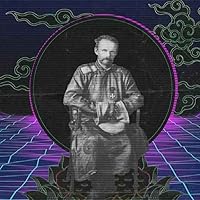
Quigley exposes the secret society's established in London in 1891, by Cecil Rhodes. Quigley explains how these men worked in union to begin their society to control the world. He explains how all the wars from that time were deliberately created to control the economies of all the nations.
American historian and theorist of the evolution of civilizations.
Noted for his teaching work as a professor at Georgetown University, for his academic publications, and for his research on secret societies.
He was an instructor at Princeton and Harvard; a consultant to the U.S. Department of Defense, the House Committee on Astronautics and Space Exploration; and the U.S. Navy.
William Carroll Quigley (1910-1977) was professor of history at Georgetown University's School of Foreign Service, where he taught an influential course, "The Development of Civilization" (summarized in his book The Evolution of Civilizations).
Quigley proposed an original and well-defined model of civilizations and the distinct stages through which they evolve.
In this model, a civilization is "a producing society that has writing, city life, and an economic instrument of expansion".
It evolves through seven stages, called 1) mixture 2) gestation 3) expansion 4) age of conflict 5) universal empire 6) decay 7) destruction (usually by outside invaders)
Quigley enumerates and names sixteen civilizations in history that fit this model, more or less.
Samuel P. Huntington drew upon Quigley's concepts in his book The Clash of Civilizations and Remaking of World Order.
---
In 1966, Quigley published a one-volume history of the twentieth century, titled Tragedy and Hope. At several points in this book, the history of the Milner group is discussed. Moreover, Quigley states that he has recently been in direct contact with this organization, whose nature he contrasts to right-wing claims of a communist conspiracy:
This radical Right fairy tale, which is now an accepted folk myth in many groups in America, pictured the recent history of the United States, in regard to domestic reform and in foreign affairs, as a well-organized plot by extreme Left-wing elements... This myth, like all fables, does in fact have a modicum of truth. There does exist, and has existed for a generation, an international Anglophile network which operates, to some extent, in the way the Radical right believes the Communists act. In fact, this network, which we may identify as the Round Table Groups, has no aversion to cooperating with the Communists, or any other group, and frequently does so. I know of the operation of this network because I have studied it for twenty years and was permitted for two years, in the early 1960s, to examine its papers and secret records. I have no aversion to it or to most of its aims and have, for much of my life, been close to it and to many of its instruments. I have objected, both in the past and recently, to a few of its policies... but in general my chief difference of opinion is that it wishes to remain unknown, and I believe its role in history is significant enough to be known
---
Quigley was dismissive of the authors who used his writings to support theories of a world domination conspiracy.
On Gary Allen's None Dare Call It Conspiracy he said:
They thought Dr. Carroll Quigley proved everything. For example, they constantly misquote me to this effect: that Lord Milner (the dominant trustee of the Cecil Rhodes Trust and a heavy in the Round Table Group) helped finance the Bolsheviks. I have been through the greater part of Milner's private papers and have found no evidence to support that. Further, None Dare Call It Conspiracy insists that international bankers were a single bloc, were all powerful and remain so today. I, on the contrary, stated in my book that they were much divided, often fought among themselves, had great influence but not control of political life and were sharply reduced in power about 1931-1940, when they became less influential than monopolized industry
---
Quigley argued that the Round Table groups were not World Government advocates but super-imperialists. He stated that they emphatically did not want the League of Nations to become a World Government. Yet Lionel Curtis, who, according to Quigley, was one of the leaders of the Round Table movement, wished for it to be a World government with teeth, writing articles with H. G. Wells urging this.
---
one fascinating oddity is a quote by Huntington
“These transnationalists have little need for national loyalty, view national boundaries as obstacles that thankfully are vanishing, and see national governments as residues from the past whose only useful function is to facilitate the elite's global operations”
The upside down American flag on the front cover pretty much sums up Quigley's thesis. Unfortunately this warning never reached mainstream America as the book remained unpublished for 30 plus years. Coincidence?
An important work directing readers' attention to an otherwise not necessarily too conspicuous reality in the geopolitical history of the English-speaking world between roughly 1870 to 1950: the neo-British Imperialist Rhodes-Milner secret society begun by Cecil Rhodes but morphed over time as it past through the hands of William Stead, then Alfred Milner, and others after Milner's death in 1925.
It is a "conspiratorial" account in the same sense that the December 7, 1941 attack on Pearl Harbor is a (correct) conspiracy theory. At the same time, it avoids the follies of some of the more legitimately ridiculous conspiracy theories circulating in various corners in that it makes very evident that the conspirators fall far from "masterminds" one would expect to find in a fictional spy thriller: the author shows the Milner Group to exhibit an obvious inconsistency, disagreement, and lack of clarity concerning its specifics of goals and objectives among its members. It hardly strikes one as the activity of geniuses, in terms of its original goals must be considered mostly a failure, and it is doubtful that a resurrected Cecil Rhodes would today look back on its legacy with favor. Even so, the author succeeds in his defense of the thesis that the Group's activities played pivotal roles in British, Dominion, and American foreign policy particularly during the World Wars and the interwar years.
Unfortunately, I must mercilessly deduct one star from my rating for the simple reason that Quigley subscribes to the myth that Allied "appeasement" of Hitler in the years preceding the Second World War was the Allies' great error of that war, when in fact, the Polish War Guarantee was their real "blunder" (I put that in quotes because of my cynicism toward any pretense of Allied "good intentions.") The sacred cow of the Munich Myth is the gold standard of contemporary warmonger propaganda, and millions of innocents have perished and/or agonized at the hands of America's foreign policy establishment due to its universal blind acceptance. For a book that purports to challenge establishment corruption (and which, to be fair, largely succeeds in that endeavor), it is curious that Quigley should accept this establishment canard. Even so, his discussion of the history of "appeasement" nevertheless is useful.
Starts as a C19 and C20 roll-call and personal history of the titans of modern political history, which is strangely fascinating in a soap-opera, Donton Abbey sort of way.
Ends as a back grounder to World War II, which turned my head around more that any other 50 pages I have ever read.
A brilliant piece of research. This book details the mechanisms by which a small number of men managed to gain control of immense power.
The book shows that there had been existing power groups in Great Britain wielded by small groups who used close associations, friendships and intermarriage to consolidate their power, but that this type of power structure was intensified in the early 19th century, initially around Cecil Rhodes and Lord Milner.
These men were motivated by what they saw as moral interests, but as Quigley himself points out on page 197, there are inherent dangers in such a small group of people wielding such enormous power. Later on in the book, Quigley, writing in 1949, blames the Milner group for the dissolution of the British Empire, the race wars of South Africa, and the horrors of the Second World War.
There is so much fascinating information in this book, such as the way that The Times was used to direct propaganda towards the influential middle classes and the way that even historical education was controlled - Hitler could have learned a lot about subtleties of technique from this group.
I would have given the book five stars if it wasn't for the lengthy genealogies which were really dull to read and could maybe have been presented in a more interesting way.
I am left confused by this book. This is in a large part also due to the author Quigley who clearly states his position and bias but dose a very good job on presenting the members, ideology and actions/influence of the Groups in a non hypocritical way. My confusion is also on the nature of the Groups (there were more than one) witch were not quite secret societies despite their clear discreetness and they were on an individual level good people with good intentions who can not be quite accused of conspiracy against the state (they populated it) or the British citizen of subject. They were policy makers of aristocratic and technocratic nature that devised policy in the context of a free country in a subversive way but without jeopardizing liberty and representative guv... This line of action is an impossibility, and they were idealists. The things that I could relate in their ideology are their desire to spread British/European culture and political culture, but they were infested with a paternalistic attitude, and a clear socialist preference (not marxist !! ) that prompted them to dictate imperial policy and foreign policy that brought much suffering in the world. In the end their legacy is a strange mixture of failure, compromise and success.
The practicability of this book is not imminent. I read it as if it was a bed-time story.
But knowledge revealed in this book shall be of significance, since they underscore certain crucial aspects of the history of a hidden association that had casted great influence on British national politics prior to WWII and carried out the will of Cecil Rhodes, wealthy empire-builder and the most important person in South Africa.
This association or society was founded by Cecil Rhodes in 1890. From 1891 to 1902, it was led by Rhodes; from 1902 to 1925, the leader was Alfred Milner; from 1925 to 1940, Kerr was leader, and since his death in 1940 this role has probably been played by Robert Henry Brand.
This society has been known at various times as Milner’s Kindergarten or as the Round Table Group. Professor Quigley divided the society or the Milner group into two concentric circles: “an inner core of intimate associates, who unquestionably knew that they were members of a group devoted to a common purpose; and an outer circle of a larger number, on whom the inner circle acted by personal persuasion, patronage distribution, and social pressure. Professor Quigley said that it was probable that much of the outside circle didn’t acknowledge their service to the inner circle.
Professor Quigley agreed on the goal of the group, which is to extend the British Commonwealth to areas such Indian, Palestine and Burma, but censured group’s method, which “lacked of perspective in critical moments, their failure to use intelligence and common sense, their tendency to place power and influence into hands chosen by friendship rather than merit, their oblivion to the consequences of their actions, their ignorance of the point of view of persons in other countries or of persons in other classes in their own country – these things, it seems to me, have brought many of the things which they and I hold dear close to disaster.”
The Significance of this society has been concealed, so has its existence. Professor Quigley said that “the organization has been able to conceal its existence quite successfully, and many of its most influential members, satisfied to possess the reality rather than the appearance of power, are unknown even to close students of British history.”
One of the chief methods by which this Group functions has been through propaganda. Professor Quigley listed the following propaganda-related activities that this society is responsible for:
It plotted the Jameson Raid of 1895; it caused the Boer War of 1899-1902; it set up and controls the Rhodes Trust; it created the Union of South Africa in 1906-1910; it established the south African periodical The State in 1908; it founded the British Empire periodical The Round Table in 1910, and this remains the mouthpiece of the Group; it has been the most powerful single influence in All Souls, Balliol, and New Colleges at Oxford for more than a generation; it has controlled The Times for more than fifty years, with the exception of the three years 1919-1922; it publicized the idea of and the name "British Commonwealth of Nations" in the period 1908-1918; it was the chief influence in Lloyd George's war administration in 1917-1919 and dominated the British delegation to the Peace Conference of 1919; it had a great deal to do with the formation and management of the League of Nations and of the system of mandates; it founded the Royal Institute of International Affairs in 1919 and still controls it; it was one of the chief influences on British policy toward Ireland, Palestine, and India in the period 1917-1945; it was a very important influence on the policy of appeasement of Germany during the years 1920-1940; it controlled and still controls, to a very considerable extent, the sources and the writing of the history of British Imperial and foreign policy since the Boer War.
The Milner Group was originally a major fief within the great nexus of power, influence, and privilege controlled by the Cecil family. Although it is unattainable to describe the ramifications of the Cecil influence, it is quite clear that Milner Group has been all-pervasive in British life since 1886. Milner Group generally used three clusters of methods to achieve that:
I. a triple-front penetration in politics, education, and journalism;
II. the recruitment of men of ability (chiefly from All Souls) and the linking of these men to the Cecil Bloc by matrimonial alliances and by gratitude for titles and positions of power;
II. the influencing of public policy by placing members of the Cecil Bloc in positions of power shielded as much as possible from public attention.
Behind the activities and penetration methods, the masterminds held three general beliefs that underpinned and governed their actions:
I. A conviction that the history of the British Empire represents the unfolding of a great moral idea - the idea of freedom - and that the unity of the Empire could best be preserved by the cement of this idea;
II. A conviction that the first call on the attention of any man should be a sense of duty and obligation to serve the state;
III. A feeling of the necessity to do social service work (especially educational work) among the working classes of English society.
Nonetheless, Cecil Rhode’s will was above all the thrust for the Milner Group: "The extension of British rule throughout the world, the perfecting of a system of emigration from the United Kingdom and of colonization by British subjects of all lands wherein the means of livelihood are attainable by energy, labour, and enterprise, . . . the ultimate recovery of the United States of America as an integral part of a British Empire, the consolidation of the whole Empire, the inauguration of a system of Colonial Representation in the Imperial Parliament which may tend to weld together the disjointed members of the Empire, and finally the foundation of so great a power as to hereafter render wars impossible and promote the best interests of humanity."
Towards the end of the book, Professor Quigley briefly evaluated the effectiveness of the Milner Group prior to WWII, as he put it this way:
"The disasters into which the Group directed British policy in the years before 1940 are not such as to allow their prestige to continue undiminished. In imperial affairs, their policies have been largely a failure, with Ireland gone, India divided and going, Burma drifting away, and even South Africa more distant than at any time since 1910. In foreign policy their actions almost destroyed western civilization, or at least the European center of it.”
"The great idealistic adventure which began with [Arnold] Toynbee and [Alfred] Milner in 1875 had slowly ground its way to a finish of bitterness and ashes."
A BOOK WHICH GOES DEEPER INTO THE "CONSPIRATORIAL" SOCIETY THAN DOES "TRAGEDY AND HOPE"
Carroll Quigley (1910-1977) was an American historian, and also a professor at Georgetown University. (Bill Clinton spoke highly of him, by the way.) He is perhaps most famous for his book, 'Tragedy and Hope: A History of the World In Our Time.' This book was written in 1949, but not published until 1981, after his death.
He wrote in the Preface, "(Cecil Rhodes) left his fortune to form a secret society, which was to devote itself to the preservation and expansion of the British Empire... (it) continues to exist to this day... it does not have any secret robes, secret handclasps, or secret passwords. It does not need any of these, since its members know each other intimately... It does, however, exist and holds secret meetings... It is not easy for an outsider to write the history of a secret group of this kind, but, since no insider is going to do it, an outsider must attempt it... this Group is, as I shall show, one of the most important historical facts of the twentieth century. Indeed, the Group is of such significance that evidence of its existence is not hard to find, if one knows where to look..."
He classifies the Group "into two concentric circles: an inner core of intimate associates, who ... (were) devoted to a common purpose; and an outer circle of a larger number... It is probable that most members of the outer circle were not conscious that they were being used by a secret society... In general, I agree with the goals and aims of the Milner Group. I feel that the British way of life and the British Commonwealth of Nations are among the great achievements of all history... But, agreeing with the Group on goals, I cannot agree with them on methods.... (which) have brought many of the things which they and I hold dear close to disaster... I have been told that the story I relate here would be better left untold, since this would provide ammunition for the enemies of what I admire. I do not share this view... I feel that the truth has a right to be told..."
He observes, "This organization has been able to conceal its existence quite successfully, and many of its most influential members, satisfied to possess the reality rather than the appearance of power, are unknown even to close students of British history." (Pg. 4-5) He notes, "the Milner Group engaged in journalistic activities that sought to influence public opinion in directions which the Group desired." (Pg. 101)
He records that "the idea of federation was swallowed up in a larger scheme for organizing the whole world within a League of Nations... To the older men, the world was to be united about the British Empire as a nucleus. To (Lionel) Curtis, the Empire was to be absorbed into a world organization. This second idea was fundamentally mystical." (Pg. 126) He asserts, "The Group never intended that the League of Nations should be used to achieve collective security. They never intended that sanctions, either military or economic, should be used to force any aggressive power to keep the peace or to enforce any political decision which might be reached by international agreement..." (Pg. 248)
Although Quigley's "Tragedy and Hope" briefly mentioned the Milner Group (and has since then been often cited by conspiracy theorists), this book gives much more detail, and will be of great interest to such persons.
An amazing history of a small secretive group that placed themselves in various positions of authority to create a network of power and influence. The Group was able to manipulate world events in their favor for the most part, trying to create a world state where they would hold the keys to the future of mankind. The group still exists to this day though undoubtedly is much more ruthless than the Milner Group which Quigley writes about.
The Anglo-American Establishment, authored by Carroll Quigley and published posthumously in 1981, presents a meticulous examination of the historical development and influence of a transatlantic elite network. This academic book review aims to provide a comprehensive assessment of The Anglo-American Establishment, exploring its main themes, arguments, and contributions to our understanding of power structures, historical alliances, and the interplay between elite networks and global affairs. Quigley's insightful research unveils the hidden dimensions of transatlantic influence and the intricate connections shaping international relations.
The Anglo-American Establishment delves into the origins, development, and activities of an elite network spanning the Anglo-American world. Quigley focuses on the role of influential individuals and organizations, such as the Milner Group and the Round Table movement, in shaping political, economic, and cultural affairs. The book examines the interplay between this secretive network and key historical events, including the rise and fall of empires, the formation of international organizations, and the consolidation of global power structures.
The Anglo-American Establishment offers a compelling analysis of elite networks and their impact on historical and contemporary global affairs. Quigley's extensive research draws from a wide range of sources, including primary documents and insider accounts, providing a nuanced understanding of the relationships, ideologies, and objectives of this transatlantic elite.
One of the significant contributions of the book lies in Quigley's exploration of the historical alliances and shared interests that shaped the Anglo-American elite network. He unveils the influence of key individuals, such as Cecil Rhodes, Alfred Milner, and their associates, in the formulation of policies and the consolidation of power. Quigley argues that this network, rooted in a shared vision of Anglo-American dominance, exerted considerable influence on the trajectory of global affairs.
Moreover, The Anglo-American Establishment sheds light on the interplay between elite networks and the formation of international organizations. Quigley highlights the network's involvement in the creation of influential institutions, including the Royal Institute of International Affairs (Chatham House) and the Council on Foreign Relations. He exposes the hidden hand of this transatlantic elite in shaping the agenda and decision-making processes of these organizations, thus influencing global policies.
The Anglo-American Establishment has made significant contributions to the fields of political science, history, and international relations. Quigley's meticulous research and analysis expose the mechanisms through which elite networks influence global affairs and shape power structures. The book prompts critical reflection on the complexities of transatlantic relations, historical alliances, and the interplay between economic, political, and cultural forces.
Furthermore, The Anglo-American Establishment remains relevant in contemporary discussions on the influence of elite networks, the consolidation of power, and the nature of global governance. Quigley's work invites scholars to critically examine the dynamics of power and influence in international relations, questioning prevailing narratives and emphasizing the role of hidden networks in shaping global affairs.
The Anglo-American Establishment, authored by Carroll Quigley, offers a revealing study of elite networks and their influence on transatlantic relations and global affairs. Quigley's research sheds light on the historical development, activities, and shared interests of this influential network. The book's exploration of the interplay between elite networks, key historical events, and international organizations provides valuable insights into the dynamics of power and influence in the Anglo-American world. The Anglo-American Establishment remains a significant contribution to political science, history, and international relations, prompting critical examination of the hidden dimensions of transatlantic influence and its impact on the course of global affairs.
Carroll Quigley writes in “The Anglo-American Establishment” about a secret society that for a time controlled world events behind the scenes. Quigley believes that they mainly meant well but had questionable methods and that they sometimes failed, which can be devastating if you have a lot of power.
Above all, he accuses them of having inadvertently contributed to the Second World War becoming such a terrible story. The secret power players decided to go soft and cautious with Hitler during the 1930s and thus gave him every chance to become a much worse threat than he might otherwise have been.
Although the group was initially created to maintain the British Empire, it was they who decided to transform the empire into the Commonwealth, a term that they chose and popularized. They had a great influence on events in South Africa, India and Ireland.
After the Second World War, however, the group has become much less influential and important. There is probably still a shard today, but many generations have passed and individual personalities seem to be important, not least during the founding of similar groups. Before these groups, there were other groups in the 19th century and probably new groups have emerged after the groups that Quigley writes about.
The book gives a rather different picture of the first half of the 20th century than the official one, which is very interesting. Then you might think it is long-winded to read pages and pages of upper-class gossip about who is related to whom.
Although the group only operated through propaganda, teaching, journalism and friendship, it had considerable power. This is shown not least by the decision to give Czechoslovakia to Nazi Germany.
Quigley claims that Czechoslovakia would have actually had a good chance of defeating Nazi Germany if it had defended itself, but the Round Table Group instead gave orders to surrender, which also happened. This is a very different picture of what happened than the official one.
The book was originally written in 1949 but was not published until 1981.
A very dense and comprehensive review of a cabal of largely Oxford-educated British Commonwealth politicians who seemed to have had exercised great influence in British politics, namely in foreign policy over the Boer Wars, the World Wars, Indian and Palestinian affairs, and more. The goal of this cabal was a sort of imperial federation under the auspices of Anglo-Saxon moralism and anti-democratic managerialism. Seems credible enough to me, although Quigley spares no quarter in listing every single member's resume much to the behest of the reader. One can only wonder if this group still exists today, and if so, to what extent it has influenced British (and world) politics?
This is an important work for understanding the history of modern Anglo-American establishment and its goals, It will only cover up to the end of WW2. Although this is well researched, Quigley's writing is quite bland. It is important to understand that he is writing this from the point of view of the establishment, as he says in the preface, "In general, I agree with the goals of the Milner group." So it is safe to say that there are no exaggerations on what he covers, I would argue it is downplayed. Overall, a good understanding of the beginnings of this group.
C Quigley, Professor of history at Princeton and Georgetown, mentor to former President Clinton and one of the biggest names in American academics, the guys got credentials. He also was allowed to see behind the curtain at who really held the power to control the fate of nations, rewrite modern history and what their agenda is. A MUST READ!
Prof. Carroll quigley, conducted quite the historical investigation. For a secret society to remain secret it’s member, actions, and writings must be scattered and unsignifying. However by putting together the pieces in the form of papers, speeches, positions and letters, Quigley manages to expose the actors behind the scenes of the world stage.
Very informative history on the development of the Western oligarchy, though he goes to great lengths to avoid actually saying who 'they' are. This euphemistic 'Anglo-American Establishment' stuff is a little tiresome, the guy clearly knows what the score is. Guess he did have a professorship to protect. Good info none the less..
Some extremely lucid and revealing history writing embedded between a lot of very dry & skimmable rosters of names and posts held by a laundry list of tangled influences and connections. Keeping track of all the names and implications of these connections is difficult, but the core analysis is clean, crisp and highly readable and interesting.
I really cannot overstate the importance of this book. Information that most people will be unaware of their entire lives. What is best about this book is how it can teach you how power works and what to look for when identifying power. This will change your understanding of WW1 and 2.
The book is poorly written and downright irritating. More than a hundred pages go into scrupulous gossiping about who is whose in-law, etc. in order to prove the existence of two overlapping ‘groups’ in British and South African politics and academia. The focus is on Milner’s Group, which enjoys being acknowledged as sharing a common ideology ambitioned to build a new world order upon the guiding principles of the then (1920s) emerging British Commonwealth. The proof for the group’s impact is the Second Anglo-Boer War and the creation of the South African Union. Then the author tries to convince the reader that Milner’s Group, sitting on its laurels, takes charge of 1) the Irish question; 2) the Indian question; 3) Appeasement, and fails abysmally in all. Quigley does succeed in pointing out the inconsistencies in British policy-making and in questioning the probity of The Times and of Oxford-bred politicians. But his analysis is in itself inconsistent, contradictory and partial when he tries to draw the reader to the view of a global-sized conspiracy. OK, we will be more vigilant in reading Toynbee or Curtis but that’s that. Miller’s Group were no Jesuits, Masons or Rosicrucians. They were a network of well-educated and well-positioned men who aimed at building support via legal and acceptable practices within a functional democracy. We may only respect them.
A chronology of the organizations founded by Cecil Rhodes and the secret Milner group that carried on the program. Very dry but it names names. For example, the founders of the Salvation Army, etc. Worth having as a reference.
Filled with takes such as "Charles Hardinge, although almost unknown to many people, is one of the most significant figures in the formation of British foreign policy in the twentieth century", ad nauseam. Some extracts.