Con un gusto e un'arte consumata nel raccontare, Régine Pernoud restituisce una dimensione di umanità nuova e sorprendente alla Duchessa d'Aquitania, Eleonora, prima regina di Francia e poi d'Inghilterra. Una fantasiosa tradizione ne aveva fatto un mito negativo, la ricostruzione della Pernoud ce ne presenta un altro volto. Vi risaltano la passione appena mitigata dalla prudenza politica, la vigilanza e la previdenza tutte materne, e un'incredibile energia operativa, oltre la lucidità delle intuizioni e la capacità di organizzazione, l'abilità nell'amministrare. Ne risulta uno spaccato sull'intero secolo XII, il secolo più ricco di fermenti culturali di tutto il Medioevo, ove fiorisce la letteratura romantica e dove si innalzano le cattedrali di pietra e le cattedrali di idee; il secolo di Bernardo, di Abelardo ed Eloisa…
Régine Pernoud (17 June 1909 in Château-Chinon, Nièvre - 22 April 1998 in Paris) was a historian and medievalist. She received an award from the Académie française. She is known for writing extensively about Joan of Arc.
This biography is associated now in my mind with a setback. Nothing to do with the book, which I thoroughly enjoyed but with the reason that made me decide to read it now. I was going to go with a group of Romanesque enthusiasts to South Western France, that is to Aquitaine, this week. I was particularly looking forward to visiting the Dax cathedral, the St Pierre-de-Molnay abbey, the Roman ruins in Saintes as well as many other places, but Covid-uncertainty when Bordeaux is at level 4 out of 5, made the trip tricky and it was cancelled.
No matter, it was worth revisiting the life of this extraordinary woman; I read in the past Eleanor of Aquitaine: A Life. But I just wish I had taken notes or written a review of Weir’s account, because I read it a while ago and don’t remember it well enough to make a respectable comparison.
Aliénor/Eleanor of Aquitaine (1122-1204) had a busy life and she mattered in history. As many strong women she has been sharply censored and libeled by posterity. Her reputation is in the process of being restored. Not many women could claim to have been queens of two different realms and to have left several of her offspring in the various political units in Europe: in England, in France, in Italy and in Spain.
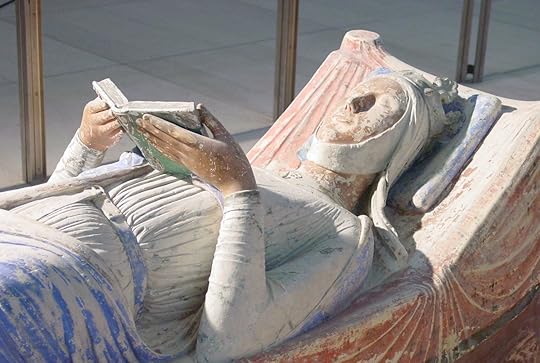
What I enjoyed in the narrative by Pernoud, a medievalist, was that apart from the events and facts, followed chronologically, she provides a very good feeling for the times, with particular emphasis on the literary milieu in which Eleanor grew up. She was after all the granddaughter of William IX of Aquitaine, named Le Trouvadour in the nineteenth century. Hers were the times of Chrétien de Troyes. And it is totally befitting that her funeral effigy in the Fontevrault abbey, she is represented holding a book
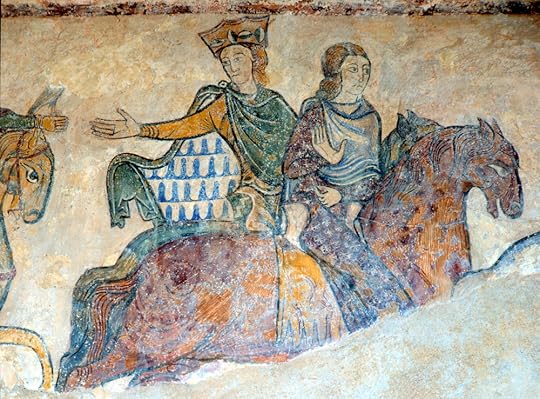
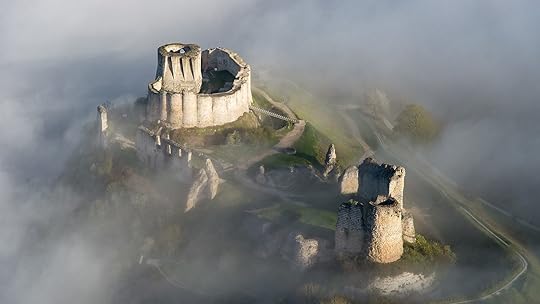
Pernoud also comments on the various costumes, and different types of ‘guimpes’ or headdresses, and on how Eleanor was taken aback in England by the smell from the candles made out tallow instead of olive oil. We are reminded about how much these people traveled, which even if it is known (many royal courts were itinerant), it still comes as a surprise to a reader from the twenty first century considering the hardships entailed by traveling in those times. I was particularly interested in the buildings mentioned, with the top star going to Chateau Gaillard in Normandy, founded by Henry II, Eleanor’s second husband, and the architecture was an obvious tie in with my very much anticipated visit to Aquitaine.
Apart from this contextual material that greatly helps in trying to imagine life in the twelfth century, I was surprised by her interpretation of the reign of king Philippe-Auguste. As he was the monarch who succeeded in enlarging France to borders not too different from those of the modern country, he is usually treated admiringly in French history. Pernoud’s account, as this king managed to expand his borders at the expense of Eleanor’s major project of fortifying the expanded kingdom of her beloved son, Richard Lionheart--which began disintegrating after Richard’s early and unexpected death—does not receive such a laudatory approach.
But even if the Romanesque excursion flopped, I look forward to another association with this biography. In October the Prado is offering a lecture on the beautiful Monastery of the Barefoot (Monasterio de las Descalzas).
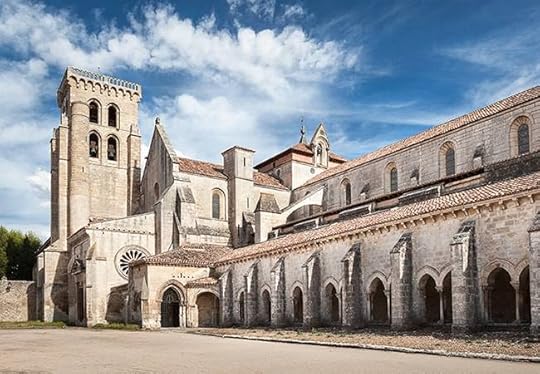
This monastery just outside the city of Burgos (and I recommend anybody who is the doing the Santiago pilgrimage not to miss it) was founded by Eleanor’s daughter, her namesake Leonor of Castille. And indeed, towards the end of her life Eleanor undertook yet another arduous trip to Castille to pick up one of her granddaughters, Blanca / Blanche, and take her to marry the heir to the French kingdom. This Blanche would become the mother of St Louis.
And it is with certain amusement that I realize that our current heiress to the throne in Spain, the young Leonor princess, owes her name to this Aquitaine grande dame. It was from her that the name entered the Spanish royal traditions.
Biografía dotada de gran rigor histórico, fiel al contexto de la época, cargada excesivamente de datos, fechas, sin una narración amena, y el personaje de Leonor desaparecida hasta casi el final del libro, esa ha sido la pena. Está bien pero podría haber estado narrada de forma más entretenida sin perder esa precisión histórica, la he disfrutado poco, es un gran libro pero no no empaticé. La recomiendo si eres fan, fan de la historia, del ensayo y las biografías.
Leonor de Aquitania es mi personaje histórico favorito, una de mis idolas feministas por antonomasia, y desde hacia tiempo tenia muchas ganas de leer una biografía suya. Sé que eso les pasa a muchas personas, y un breve vistazo a su recorrido vital explica el porque. Fue una mujer que tuvo una vida y una personalidad únicas y apasionantes, que no pueden dejar indiferentes a nadie y que se saltan todos los cánones. Y más cuando la persona que nos ocupa vivió en la Edad Media, un periodo intenso, y muchas veces muy estereotipado, como señala la autora al final del libro.
Régine Pernoud crea un libro dinámico, bien documentado y rápido de leer que resulta una delicia para el lector , que se sumerge en él . Uno puede percibir, mientras lee, la admiración y pasión que la escritora siente hacia este personaje (lo cual no es extraño, como he dicho más arriba), lo cual no impide que logre hacer un ejercicio de parcialidad cuando toca, y sepa humanizar a su autobiografíada, demostrándonos, mediante el uso de diversas fuentes documentales de la época, los recovecos y complejidades de su personalidad y del mundo donde le toco vivir. La autora sabe reflejar con total acierto y detalla la época de esplendor cultural, cambios de mentalidad y luchas políticas y militares que asolaron la Europa de los siglos XII y XIII , demostrando la importancia e influencia que tuvo Leonor en todas estas cuestiones. Personalmente me han parecido muy interesantes las páginas finales del libro, en las que nos da una visión sobre esta reina que puede resultar un tanto parcial y personal, y que no deja de ser las conclusiones que saca de su propio trabajo. Pero al mismo tiempo me han parecido muy esclarecedoras y acertadas, de alguna manera creo que ha dado en el clavo en cuanto a lo que fue y ha supuesto la que fuera reina de Francia e Inglaterra.
Recomiendo este libro a cualquier interesado en la Edad Media, o en los personajes que aparecen en él. Yo, personalmente, lo he disfrutado mucho. Sin duda alguna repetiré con esta autora, esta vez con el libro que tiene sobre la nieta de Leonor, Blanca de Castilla.
Aunque ya conocía la historia de Leonor de Aquitania, este libro me ha ayudado a recordar algunos detalles históricos propios de la época, pero lo mejor de todo ha sido recordar la fabulosa figura de este GRANDÍSIMO personaje histórico. Era alta, esbelta, altiva, e inteligente. Fue precursora de las artes y mecenas de los artista, así como la responsable de que a día de hoy sepamos mucho más sobre las leyendas del ciclo artúrico y los Caballeros de la Mesa Redonda. ¡Ni siquiera en el ámbito político queda olvidada en el ostracismo!, pues la gestión tan absolutamente brillante que realizó para que sus hijos conspiraran contra su padre y se fortalezca su poder es más que asombrosa. Verá gobernar a sus hijos en Inglaterra y Francia y hará gala de una inteligencia nada desdeñable. ¿Lo mejor? Los tribunales del amor y el inicio del amor cortés. Y es que con ella se forja la idea de que la mujer no es una máquina de hacer crías, y si un hombre quiere algo con ella, habrá de cortejarla debidamente, respetando su integridad y teniendo en cuenta que puede ser rechazado. Los tribunales del amor juzgarían quién es el responsable de romper el corazón del otro, pues con Leonor, el amor se ennoblece y se enaltece, al tiempo que la mujer queda en la posición digna que merece y ha merecido siempre. Para mí, se mantiene en el podio de las mejores más fascinantes de la historia de Inglaterra y del mundo entero. ¡Grande, Leonor!
Existen ciertos libros que, cuando los abres por primera vez, pintan muy bien, pero que, cuando los cierras tras concluir con su lectura, te dejan con los ojos vidriosos y una curiosa sensación en la que se equilibran la admiración por la calidad de lo leído y la envidia por la incapacidad de uno para construir una obra medio parecida. Este es uno de ellos.
Esta biografía de Leonor de Aquitania merecería ya las cinco estrellas solo por su calidad como mero trabajo historiográfico: estructura, claridad, preparación previa... Sin embargo, lo que más valoro, con diferencia, es el amor, con mayúsculas, que Régine Pernoud sentía por esta etapa de la Historia en la que se especializó y que tanto defendió en obras como "Para acabar con la Edad Media" (¿cuándo c... la volverán a editar en España?). ¡Cómo vuelve a hacerlo cuando se queja de la conmiseración y la ingenuidad con las que todavía se sigue tratando a la Edad Media a día de hoy! ¡Cuánta admiración siente hacia una mujer de carácter tan firme, forjado con mil y un avatares, oportunidades, decepciones, victorias, fracasos...! ¡Cuánto aprecia tanto la obra y patronazgos varios de Leonor como la maduración personal que fue demostrando, a lo largo de su larguísima vida, como soberana y como mujer! ¡Cómo se deleita también a la hora de describirnos el escenario en el que se mueve Leonor, tan importante para la conformación de Europa tal y como la conocemos, y repleto de personajes de la talla de Ricardo Corazón de León, Bernart de Ventadorn, el Abad Suger o Saladino, entre otros miles!
Lo dicho, si en otra vida me dedicara a escribir Historia, me gustaría escribirla como esta mujer, y en torno a figuras tan fascinantes como esa otra mujer, esa "Reina de los Trovadores" capaz de reinar sobre Francia y sobre Inglaterra demostrando, ante todo, una voluntad férrea hasta el final de sus días.
It's seldom that one will read of a more tumultuous life that that of Alienor d'Aquitaine, (Eleanor of Aquitaine in English) It spanned nearly all of the the 12th century (1122 until her death in her 83rd year in 1204)). She was a remarkable woman, not only in outliving eight of her ten children, including the famous Richard the Lion-Hearted, but because she was involved in nearly all the vicious power-struggles that went on to try to consolidate the areas of England, Normandy, parts of France near what is now Paris, and the vast and rich area of "Aquitaine" which stretched between the Loire River on the north and the foothills of the Pyrenees on the south. How these struggles turned out would begin to determine the boundaries of present France and England which at that time were not separate at all. It's easy to forget that this battling for power occurred less than a century after William the Conqueror's defeat of the English forces at the Battle of Hastings in 1066. One thing that struck me on reading this biography written in French is how much traveling these leaders did. They were constantly on the move to make contact with the local barons and see that their tribute and taxes kept flowing into the royal coffers, no easy job as the locals hated paying taxes as much as we do today. Eleanor was the daughter of Guillaume, ruler of most of Aquitaine, and when she was 15, her father and Louis the Fat, who controlled the north of France, decided that a good way to cement power between Aquitaine and France was to marry her to Louis the Fat's son , also named Louis. They were married in Paris in 1137, their combined ages adding up to 30. Eleanor was well-educated for the time, smart, and beautiful. Louis was retiring, not his father's first choice, as his older brother had been killed in a fall from a horse. She bore Louis two daughters, a deep disappointment as sons were wanted. They got on well for a number of years, even traveling together to the Holy Land is one of the Crusades. But no sons? It was one of the main reasons that Louis obtained an annulment of their marriage on the grounds of "consanguinity", that they were distant relatives and should never have been married in the first place. She quickly remarried, as did Louis, this time to Henry II, a vigorous younger man who was on the move constantly as a way of intimidating the local chiefs who never knew where he was. Eleanor was busy having children, including four sons. Court life under her was refined, encouraging the efforts of the troubadours and the rise of the legends of King Arthur. As they grew older, she and Henry disagreed about who should inherit the kingdom (the subject of the 1968 movie, THE LION IN WINTER, with Katharine Hepburn and Richard O'Toole playing their parts). Eleanor's favorite was Richard, Henry wanted the erratic John (who would later acquire dubious fame as a forced signer of the Magna Carta, granting his subjects rights and liberties. The two became so estranged that war broke out betweem the two, Henry controlling the Normandy and England, Eleanor the south. Henry had other problems as well, resulting in the killing of Thomas a Becket in a dispute between secular and clerical power. Eleanor was captured by Henry's men and spent nine years in prison. When she was released, there was a“family reunion” of sorts which not successfully tried to mend their differences. The family feuding continued into the next generation, with John grabbing power in the absence of his brother, Richard, who was in the Holy Lands on a crusade, one that Eleanor even took part in, even though she was a women in her 70’s. On the way home, Richard was captured and held hostage by a German prince, and it was mostly through Eleanor’s efforts that he was released. She worked hard in Richard’s campaign to overthrow John, and just after he succeeded, he was killed by a random arrow from a castle he was besieging. Eleanor was devastated, but she finally accepted the inevitability of John’s reign, and did all she could to pacify the various princes, granting liberties and rights. She brought a period of stability but when she died at the Abbey of Fontevrault in the Loire Valley (a spot we visited in the summer of 2010, and saw her death mask), John began to undo all that she had accomplished. It’s ironic, I suppose, that in the long haul of history, she didn’t accomplish very much politically. Both of her crusade ventures were futile, she came to hostility with both of her husbands as well as one of her sons, and the empire she tried to establish soon crumbled after her death. A chronicler of the time said of her, “This life is but a journey and a warfare.” But what a journey!
Alienor of Aquitaine was a woman of extraordinary intelligence, determination and courage. In her life Alienor was married twice, Queen of both France and England, accompanied her husband on the crusade and essentially ruled England in the place of her son Richard the Lion-Hearted while he travelled to the Holy Land on yet another crusade.
Alienor had great plans for England and her family. Unfortunately none of her sons were of the same quality and so Alienor's dreams were never realized. One however can still regard this remarkable with wonder and admiration. Alienor of Aquitaine is one of the finest books written by the great French historian Regine Pernoud.
This was an OK biography of Eleanor of Aquitaine. It does shed more light on her life in France, because there is more information avaible in French archives. Maybe there is a bio that draws extensively from both archives in France and England, but I have still yet to find it and read it.
Scioglievolezza, ma un po' troppe focalizzazioni sulla vita culturale della fin amor, che non mi interessano particolarmente. Sono ingiusto? Forse sì, ma ho trovato più appassionanti altri testi della Pernoud. Per quanto riguarda l'apparato storico, è compatibile con quello che si conosceva ad inizio anni '80. Un testo facile, scorrevole, piacevole, che però non presenta lo stesso pathos di Abelardo ed Eloisa (ma so di chiedere molto).
Gdy skończyłem czytać, moją pierwszą myślą po zamknięciu książki było pełne podziwu "co za kobieta". Przez swoje ponad 80 lat życia była m.in.: księżną Akwitanii, królową Francji (jako żona Ludwika VII), uczestniczką drugiej krucjaty, królową Anglii (jako żona Henryka II), patronką poetów i zakonów, oraz jedną z najbogatszych i najbardziej wpływowych kobiet średniowiecznej Europy. Wśród jej dziesiątki dzieci znalazły księżne i książęta, królowe i królowie (wśród nich Ryszard Lwie Serce). Przez całe życie działała aktywnie i bez wahania w sferach zarządzania państwem, rodem czy sprawami międzynarodowymi. W sferze kulturowej, jako patronka poetów i trubadurów, uosabiała ideał Damy, do której mieli wzdychać Rycerz i Poeta (często w jednej osobie). Pernoud napisała tą książkę w 1965 roku, jednak mimo upływu lat wciąż czyta się ją świetnie. Celem autorki było przybliżenie nie tylko postaci Alienor, ale również świata średniowiecznego, które nadal było (i wciąż często jest) zmitologizowane i oczernione przez dziedzictwo renesansu i oświecenia. Jednocześnie jednak nie popada w przesadę idealizowania tego okresu. Jak sama zauważa w nocie bibliograficznej:
"Przyznajemy, że w niniejszej pracy istnieje pewna luka: nie zawiera ona żadnego z tych autorytatywnych sądów, jakie zazwyczaj wypowiada się na temat średniowiecza. [...] Jakkolwiek rzecz się przedstawia, nie chcielibyśmy przemawiać tonem, jaki przybiera censor morum, i przepraszamy, że uchybiliśmy w ten sposób przyjętym zwyczajom. Czytelnik sam zechce może nas w tym wyręczyć.
Chyba, że po zapoznaniu się z treścią dokumentów będzie, tak jak my, raczej starał się zrozumieć tę epokę, niż ją osądzać."
Pernoud rzeczywiście stara się przedstawić i zrozumieć średniowiecze Alienor, z jego blaskami i cieniami. Dlatego też nie ogranicza się wyłącznie do dziejów swojej bohaterki. Opisuje zwyczaje, kulturę, stosunki społeczne, miejscami kwestie gospodarcze i zmiany jakie zachodziły w ponad półwieczu życia Alienor. To aż zaskakujące jak wiele informacji podała na ok. 250 stronach, w dodatku w sposób tak przystępny i barwny, dosłownie ożywiając na kartach książki świat średniowieczny. Jeżeli kogoś w jakimkolwiek stopniu interesuje średniowiecze i/lub historia kobiet, to ta książka będzie zdecydowanie strzałem w dziesiątkę.
La regina dei due regni Régine Pernoud ci offre questo approfondito racconto della vita di un personaggio storico dai tratti sicuramente eccezionali, Eleonora d’Aquitania. L’autrice vuole restituire questa donna straordinaria alla conoscenza veicolata dalle fonti storiche e non a leggendari pettegolezzi che spesso hanno alterato la realtà dei fatti. Certamente una donna straordinaria, regina di Francia prima e successivamente regina d’Inghilterra, madre e nonna di sovrani in svariate parti d’Europa, Eleonora ha senza dubbio attirato, durante la sua lunghissima vita, anche maldicenze e cattiverie. Régine Pernoud invece ce la consegna illuminata dalla luce dell’obiettività storica e emerge così il ritratto di una donna di potere: bellissima e un po’ frivola durante la giovinezza, era una ragazza appassionata, che si lasciava coinvolgere dall’amore per un uomo, per la Letteratura e per la sua terra; indomita e volitiva, aveva l’obiettivo di governare e mal sopportava di essere messa in un angolo. Non era per niente il tipo che si accontenta: dopo aver sposato il re di Francia Luigi VII, che pure era innamorato di lei, non sentendosi pienamente appagata e soddisfatta del suo ruolo di moglie e di regina, chiede l’annullamento del matrimonio e si sposa con Enrico Plantageneto, che in breve tempo diventa re d’Inghilterra e con cui avrà otto figli, fra i quali i leggendari Riccardo Cuor di Leone e Giovanni Senza Terra. Era una donna piena di energia e risolutezza, che nel XII secolo arriva alla non trascurabile età di circa ottant’anni e che soprattutto, fino agli ultimi mesi di vita, non si ferma ma continua a compiere missioni da svolgere per il suo ruolo di regina, anche pericolose, viaggiando da una parte all’altra dell’Europa. Si tratta quindi di una lettura molto interessante che va al di là della biografia di Eleonora d’Aquitania, siamo di fronte all’appassionante racconto delle vicende politiche e sociali della Francia e dell’Inghilterra del XII secolo, che possiamo goderci accompagnati da una grande medievista. Un unico appunto, l’autrice ha volutamente non inserito le note in questo testo per rendere la lettura più scorrevole; sinceramente non so quanto questa scelta possa essere condivisibile, infatti, pur essendo chiara l’approfondita conoscenza delle fonti da parte dell’autrice, perché privare il saggio della sua connotazione rigorosamente storica?
Buscaba una biografía de Leonor de Aquitania y, sin embargo, me he encontrado con una crónica de su tiempo, del imperio que no pudo ser, en la que, aunque Leonor era el eje central de todos los acontecimientos narrados apenas llegabas a conocer a la mujer. Cierro en libro con una visión bastante más clara de cómo eran sus hijos (no hijas) y maridos, y de las ambiciones políticas que la rodeaban, e incluso gestó, que de ella misma.
La chronique scandaleuse s'est emparée très tôt du personnage d'Aliénor d'Aquitaine; très tôt, puisque au XIIIe siècle déjà le facétieux Ménestrel de Reims lui attribuait des aventures avec Saladin!
Les Français ne lui auraient-ils pas gardé rancune d'avoir abandonné la couronne dé France pour celle d'Angleterre ?
Quoi qu'il en soit, la réputation fâcheuse qu'on lui a faite aura marqué, pour la postérité, une personnalité féminine hoirs, pair, dont l'existence aura eu pour cadre non seulement l'Occident européen de l'Aquitaine à la Saxe et à la Sicile, mais le Proche-Orient avec Antioche et Constantinople.
Avec le recul de l'histoire, et à la lumière des textes de son, -temps, la personne et l'action d'Aliénor d'Aquitaine prennent un relief étonnant.
A travers elles s'opère la fusion entre le Nordet le Midi, entre la poésie des troubadours et la magie des vieux -. contes celtiques ; on peut dire que, sans Aliénor, la civilisation occidentale - celle dé l'amour courtois, des romans de chevalerie, de Tristan et Iseult - n'eût pas été ce qu'elle fut.
Or, cette femme lettrée s'est aussi révélée, à l'occasion; une tête politique : deux fois reine, mère de deux rois, on pourrait lui appliquer l'épithète de « grand-mère de l'Europe » - comme à telle autre reine d'Angleterre - car ses enfants et petits-enfants peuplèrent non seulement, les cours de France et d'Angleterre, mais la Sicile, la Castille et jusqu'à l'Empire germanique.
Admirablement attentive à son temps, toujours prête à faire face aux situations si tragiques fussent-elles, elle se montra, au cours d'une vie particulièrement mouvementée, capable d'organiser la défense d'une forteresse, d'administrer non seulement son duché, mais tout un royaume, de prévoir l'importance qu'allait prendre, au XIIIe siècle, la bourgeoisie des villes.
Les textes contemporains, si sobres soient-ils, nous laissent entrevoir la femme passionnée, la mère vigilante, la reine énergique qu'elle sut être. Au total, selon l'expression de l'un d'entre eux, « une femme incomparable ».
Le livre si riche et si remarquable que lui a consacré Régine Pernoud, a été couronné par le Grand Prix littéraire de la Ville de Bordeaux et par le prix Historia.
A quelques jours/ semaines de la naissance de notre fille, Aliénor, je viens de finir la biographie de la reine Aliénor, Aliénor d'Aquitaine de Régine Pernoud, une remarquable biographie qui souligne le rôle qu'a joué en Europe cette femme qui fut Reine de France avant de devenir Reine d'Angleterre, mère de Richard Coeur de Lion et de Jean sans Terre, grand-mère de rois et de reines à travers toute l'Europe. On sent poindre l'affection, l'admiration même, de l'auteur pour son sujet. Une belle biographie, une parfaire réussite.
Aliénor est le modèle même de la femme médiévale, avec plus de pouvoir qu'on ne pourrait le penser avec nos préjugés contemporains, duchesse d'Aquitaine, jalouse de son pouvoir sur cette région, véritable femme de tête, protectrice des arts (et des troubadours en particulier), conseillère politique remarquable auprès de ses époux (avec sûrement plus de jugement dans ses conseils auprès d'Henri II Plantagenêt) et de ses fils.
Bon, je suis une incurable romantique donc j'aurais peut-être dû me renseigner, et savoir que Régine était historienne et pas romancière. A partir de là, je n'aurais sûrement pas lu le livre.
J'adore le personnage, mais Pernoud rend la vie d'Aliénor chiante. Oui. Chiante et méga reloue. Je n'avais aucun plaisir à anticiper les événements de sa vie marquants parce que je n'aime pas ce côté scientifique dans l'écriture. Que des faits,-ok c'est de l'histoire mais bon, ça peut être plus digeste-, mais jetés comme un pavé dans la mare, je me perdais dans la ribambelle de personnages, et j'avais plus peur qu'autre chose en ouvrant le livre le soir parce que j'étais vraiment déçue du livre. Je me suis forcée car je déteste ne pas finir un livre, et je n'ai pas pu arriver à la fin. Mais bon j'aurais du le savoir ! C'est de ma faute.
J'irai chercher un roman plutôt pour lire la vie d'Aliénor.
Aliénor d'Aquitaine est l'une de mes Reines favorites, je dirais même une quasi obsession. Je ne suis pas allée dans cette biographie à l'aveugle, je connaissais déjà une grande partie de l'existence d'Aliénor d'Aquitaine, ce qui m'a réellement permis de voir à quel point cette biographie est bien renseignée et complète.
Letto grazie a Fabio Genovesi e al gruppo Libri dal mondo. Eleonora d'Aquitania ha avuto una vita straordinaria ma Régine Pernoud è bravissima a raccontare in modo semplice e chiaro la sua storia basandosi sulle fonte storiche e sfatando maldicenze e luoghi comuni sul Medioevo. Peccato per gli alberi genealogici posti in fondo al romanzo privi di date di nascita e morte. Conclusa la lettura si ha voglia di (ri)leggere Ivanhoe.
Read thanks to Fabio Genovesi and the group Libri dal mondo. Eleonora d'Aquitania had a wonderful life but Régine Pernoud tells her story in a clear and direct way using historical documents and debunking slanders and cliches. The only problem is that in the genealogical trees at the end of the book don't have birth and death dates. When the book is over you want to read Ivanhoe.
Pomalutku uzupełniam swoją wiedzę z zakresu historii Anglii. Tym razem trafiłam na biografię kobiety, która miała dwóch mężów-królów i dwóch synów-królów. Wydana za mąż za Ludwika VII, twierdziła, że wyszła za mnicha. Małżeństwo zostało unieważnione, a Alienor wyszła za rywala politycznego poprzedniego męża, Henryka II, króla Anglii. Urodziła mu wiele dzieci, z których najbardziej znanymi stali się Ryszard Lwie Serce i Jan bez Ziemi. Eleonora żyła długo i przyznać trzeba, że miała głowę na karku. Najpierw rządziła jednym mężem, potem drugim, a wreszcie wywalczyła tron angielski dla ukochanego syna Ryszarda oraz francuski dla wnuczki, Blanki Kastylijskiej. Dość typowa biografia, z mnóstwem nazw, imion, miejscowości, więc chwilami bywało dość nudno. Jednak wolę biografie autorstwa Bidwella. Ale sama postać królowej zasługuje na bliższe się jej przyjrzenie. Dożyła sędziwego wieku, była królową trubadurów, podróżowała po prawie całej Europie i do Ziemi Świętej, pochowała prawie wszystkie swoje dzieci, była zaniedbywana przez Ludwika i więziona przez Henryka. A jednak nie straciła hartu ducha, przebiegłości, zdolności przewidywania przyszłości i zjednywania sobie sojuszników. Całe życie budowała swoje Imperium, które w końcu trafiło w ręce Jana, zupełnie nie nadającego się na króla...
Cela faisait longtemps que j’avais ce livre dans ma Pile A Lire (PAL). Mais j’ai toujours une certaine appréhension, car j’ai toujours douté sur mes capacités à lire des livres d’Histoire. Après quelques recherches, j’ai sauté le pas ! Et j’ai bien fait … Ce livre a été un très très bon moment de lecture. En un mot j’ai A-DO-RE cette lecture. Je n’ai absolument pas lu ce livre comme un livre d’histoire barbant, j’ai lu l'histoire d’Aliénor comme un roman d’aventures ! Régine Pernoud donne beaucoup d’informations, on a envie de tout noter. Moi-même, j’ai pris plus de 15 pages de notes de peur d’oublier. Gros point positif, les arbres généalogiques disponibles à la fin du livre même si les dates des protagonistes ne sont pas indiquées. Malgré le fait que Régine Pernoud retrace de manière très académique, classique et chronologique la vie d’Aliénor, ce livre reste très accessible, et peut vous faire aimer l’Histoire avec un grand H. Cela me conforte dans mon choix de m’ouvrir de plus en plus à ce genre de lectures. Régine Pernoud est sans conteste une formidable conteuse et mon seul regret est de ne pas avoir lu avant cette historienne. J’étais déjà très attirée par ce personnage hors norme qu’est Aliénor d’Aquitaine. Mais cette lecture me conforte dans mon admiration pour ce personnage. Donc oui A lire !!
Desde que descubrí la apasionante historia de Leonor de Aquitania hará unos años, sentí la necesidad de leer más sobre ella. Empecé a leer este libro precisamente por recomendación bibliográfica de otro artículo sobre el personaje y no me ha decepcionado. Régine Pernoud cuenta, con lenguaje muy accesible y con una narración muy atractiva, los momentos más memorables de la vida de esta reina de Francia e Inglaterra. El libro es una delicia y se lee muy rápido. También es cierto que las intrigas, guerras y juegos políticos entre los reinos de Inglaterra y Francia en el siglo XI ayudan a mantener el interés. Recomiendo encarecidamente a cualquiera que esté interesado en este personaje histórico, que tenga curiosidad sobre el contexto político europeo en torno a la Plena Edad Media, el imperio angevino o simplemente a conocer cuál el origen del amor cortés y el ideal trovadoresco, a leer este libro. Estoy convencido de que no le decepcionará.
Merece tanto la pena explorar la historia de esta reina.
Lo que más me gustó: las situaciones curiosas que se den feudalismo entre reino y vasallos en el continente. Mucho mejor que juego de tronos por que puedes ir mirando por el móvil las localizaciones y las referencias.
Lo que menos me gustó: en 328 páginas hay sólo un diálogo corto. No diría que es una lectura amena, pero su contenido es tan interesante que lo lees.
Este libro es un descubrimiento que derriba concepciones estereotipadas de la Edad Media. Y lo hace de la forma más encantadora posible, a través de la figura de una mujer valiente, implacable, fuerte e inteligente, que unificó en todos los actos de su vida —afortunados y trágicos— su condición de reina y madre.
3.5 lecture très facile et plaisante sur la vie d'Aliénor d'Aquitaine. Beaucoup plus vivant qu'une page Wikipedia. Le côté romancé /introspectif ajouté par l'auteur me semble parfois biaisé, mais dans l'ensemble le livre m'a donné envie d'en apprendre encore plus sur Alienor d'Aquitaine (quelle vie impressionnante !)