

What do you think?

Legends of Dune #2
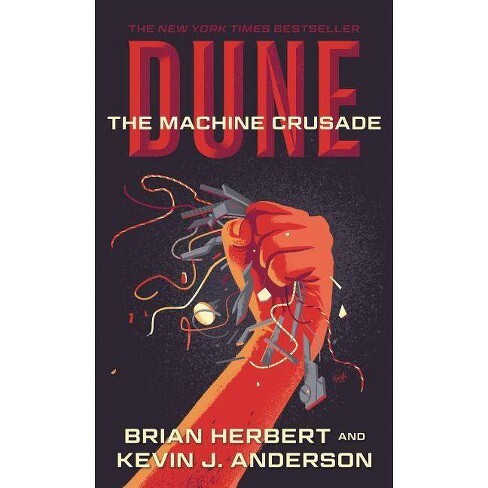
The Machine Crusade
The breathtaking vision and incomparable storytelling of Brian Herbert and Kevin Anderson's Dune: The Butlerian Jihad, a prequel to Frank Herbert's classic Dune, propelled it to the ranks of speculative fiction's classics in its own right. Now, with all the color, scope, and fascination of the prior novel, comes Dune: The Machine Crusade.
.
More than two decades have passed since the events chronicled in The Butlerian Jihad. The crusade against thinking robots has ground on for years, but the forces led by Serena Butler and Irbis Ginjo have made only slight gains; the human worlds grow weary of war, of the bloody, inconclusive swing from victory to defeat.
The fearsome cymeks, led by Agamemnon, hatch new plots to regain their lost power from Omnius--as their numbers dwindle and time begins to run out. The fighters of Ginaz, led by Jool Noret, forge themselves into an elite warrior class, a weapon against the machine-dominated worlds. Aurelius Venport and Norma Cenva are on the verge of the most important discovery in human history-a way to "fold" space and travel instantaneously to any place in the galaxy.
And on the faraway, nearly worthless planet of Arrakis, Selim Wormrider and his band of outlaws take the first steps to making themselves the feared fighters who will change the course of history: the Fremen.
Here is the unrivaled imaginative power that has put Brian Herbert and Kevin Anderson on bestseller lists everywhere and earned them the high regard of readers around the globe. The fantastic saga of Dune continues in Dune: The Machine Crusade.
Alternate cover edition located here.
.
More than two decades have passed since the events chronicled in The Butlerian Jihad. The crusade against thinking robots has ground on for years, but the forces led by Serena Butler and Irbis Ginjo have made only slight gains; the human worlds grow weary of war, of the bloody, inconclusive swing from victory to defeat.
The fearsome cymeks, led by Agamemnon, hatch new plots to regain their lost power from Omnius--as their numbers dwindle and time begins to run out. The fighters of Ginaz, led by Jool Noret, forge themselves into an elite warrior class, a weapon against the machine-dominated worlds. Aurelius Venport and Norma Cenva are on the verge of the most important discovery in human history-a way to "fold" space and travel instantaneously to any place in the galaxy.
And on the faraway, nearly worthless planet of Arrakis, Selim Wormrider and his band of outlaws take the first steps to making themselves the feared fighters who will change the course of history: the Fremen.
Here is the unrivaled imaginative power that has put Brian Herbert and Kevin Anderson on bestseller lists everywhere and earned them the high regard of readers around the globe. The fantastic saga of Dune continues in Dune: The Machine Crusade.
Alternate cover edition located here.
800 pages, Mass Market Paperback
First published September 19, 2003
About the author
Brian Herbert
261 books2,223 followersBrian Patrick Herbert is an American author who lives in Washington state. He is the elder son of science fiction author Frank Patrick Herbert.
Ratings & Reviews
Friends & Following
Create a free account to discover what your friends think of this book!
Community Reviews
Displaying 1 - 30 of 594 reviews

August 11, 2014
Buddy read with Athena!
"There are countless ways to die. The worst is to fade away without purpose."
After decades of standstill, the Butlerian Jihad is rising. The almost fanatical priestess Serena Butler and the power-hungry patriarch Iblis Ginjo have led it from an idea to a universe-spanning holy war. And in the spearhead of the movement stand the now legendary generals Vorian and Xavier, two brothers in arms whose surnames happen to be Atreides and Harkonnen.
A curious statement that pulled this book from mediocrity to greatness: This is Dune.
The Butlerian Jihad was something else. A depressing dystopia with little to no action and little to no connection with the most popular sci-fi universe in literature. In the second half of this book, Brian Herbert and Kevin J. Anderson take the series back to where it belongs, and starts building the setting for what is to come ten thousand years after these stories.
"Long ago, we conquered the Old Empire, and then lost it to Omnius. Now, the Synchronized Worlds are weakened from decades of war against the free humans. The Army of the Jihad has worn down the thinking machines for us - an opportunity we must seize!"
The wild cards of this story are fully unleashed. The treacherous Titans are conspiring against the machines and the free humans both. The legend of Selim Wormrider travels across the sands of Arrakis and leads a band of Zensunni slaves to the heart of Dune. From the schools of Ginaz, the greatest swordmaster in history arises. An Atreides sets foot on Caladan for the first time. Tensions are rising between the leaders of the Jihad. And Serena Butler uses all means to ignite the flames of war one last time.
"I am no more than a woman with a mission. That is all I have ever been." Then she murmured, "That is all I ever need to be.”
This book did not only continue the story of the machine crusade with great success; it also started building the foundation of the rest of the series, and did so amazingly well. In contrast to the first book, this one definitely fit into the name of the trilogy: Legends of Dune. This is what I hoped for when I started reading these books.
Unfortunately, a huge chunk of this book was incredibly boring. Not more so than almost the entirety of the first book, but still pretty disappointing. There was little plot development, little character development, little action. It still wasn’t bad, but it wasn’t exactly good either. Fortunately, about halfway through the book, it suddenly rose to become almost mind-blowingly amazing.
From that point on, there are great twists and developments in every chapter. I felt that the authors never fully utilised the material they were working with in the first book, but here they’ve done a truly impressive job. The Prelude trilogy was like a breath of fresh air into the series when Frank Herbert’s writing grew tiresome, but this was like the best of both worlds. And the result is astounding for a Dune fan.
So it turns out I can forgive hundreds of pages or practically nothing, when the remainder of the book is most likely the best part of the series since the Great Dune Trilogy, and certainly the best contribution by Brian Herbert and Kevin J. Anderson so far.
I’ll finish off this review with the quote that truly made me love this book:
"She saw mankind's future, with space-folding ships connecting a vast empire... a civilization that remained linked to the past through a long line of Sorceresses dressed in black, hooded robes.
And she heard a harmonious, hypnotic chant from the desert: "Muad'Dib... Muad'Dib... Muad'Dib..."
"There are countless ways to die. The worst is to fade away without purpose."
After decades of standstill, the Butlerian Jihad is rising. The almost fanatical priestess Serena Butler and the power-hungry patriarch Iblis Ginjo have led it from an idea to a universe-spanning holy war. And in the spearhead of the movement stand the now legendary generals Vorian and Xavier, two brothers in arms whose surnames happen to be Atreides and Harkonnen.
A curious statement that pulled this book from mediocrity to greatness: This is Dune.
The Butlerian Jihad was something else. A depressing dystopia with little to no action and little to no connection with the most popular sci-fi universe in literature. In the second half of this book, Brian Herbert and Kevin J. Anderson take the series back to where it belongs, and starts building the setting for what is to come ten thousand years after these stories.
"Long ago, we conquered the Old Empire, and then lost it to Omnius. Now, the Synchronized Worlds are weakened from decades of war against the free humans. The Army of the Jihad has worn down the thinking machines for us - an opportunity we must seize!"
The wild cards of this story are fully unleashed. The treacherous Titans are conspiring against the machines and the free humans both. The legend of Selim Wormrider travels across the sands of Arrakis and leads a band of Zensunni slaves to the heart of Dune. From the schools of Ginaz, the greatest swordmaster in history arises. An Atreides sets foot on Caladan for the first time. Tensions are rising between the leaders of the Jihad. And Serena Butler uses all means to ignite the flames of war one last time.
"I am no more than a woman with a mission. That is all I have ever been." Then she murmured, "That is all I ever need to be.”
This book did not only continue the story of the machine crusade with great success; it also started building the foundation of the rest of the series, and did so amazingly well. In contrast to the first book, this one definitely fit into the name of the trilogy: Legends of Dune. This is what I hoped for when I started reading these books.
Unfortunately, a huge chunk of this book was incredibly boring. Not more so than almost the entirety of the first book, but still pretty disappointing. There was little plot development, little character development, little action. It still wasn’t bad, but it wasn’t exactly good either. Fortunately, about halfway through the book, it suddenly rose to become almost mind-blowingly amazing.
From that point on, there are great twists and developments in every chapter. I felt that the authors never fully utilised the material they were working with in the first book, but here they’ve done a truly impressive job. The Prelude trilogy was like a breath of fresh air into the series when Frank Herbert’s writing grew tiresome, but this was like the best of both worlds. And the result is astounding for a Dune fan.
So it turns out I can forgive hundreds of pages or practically nothing, when the remainder of the book is most likely the best part of the series since the Great Dune Trilogy, and certainly the best contribution by Brian Herbert and Kevin J. Anderson so far.
I’ll finish off this review with the quote that truly made me love this book:
"She saw mankind's future, with space-folding ships connecting a vast empire... a civilization that remained linked to the past through a long line of Sorceresses dressed in black, hooded robes.
And she heard a harmonious, hypnotic chant from the desert: "Muad'Dib... Muad'Dib... Muad'Dib..."

February 28, 2025
And ofc, it’s a 5✨ read !🦦💜

May 10, 2026
4,5\5 stars

March 30, 2022
Brian Herbert and Kevin J. Anderson continue their deep prequel of Frank Herbert’s masterpiece science fiction series Dune in this 2003 publication.
Describing events of about twenty years after the conclusion of The Butlerian Jihad, we find our heroes grinding out the long war of attrition against the evil Omnius, his hordes of thinking machine battle droids, his malevolent henchman independent robot Erasmus and the nefarious Cymeks, once human, now preserved as warrior droids and fighting against humanity.
Most noteworthy, for me at least, is the exploration of the jihad itself and the recognition that religious fervor, while well intentioned, can create problems all its own. Zealot Serena Butler is a figurehead after her infant was brutally murdered by Erasmus, but wily politician Irbis Ginjo is a behind the scenes master of puppets whose machinations lead to successes on the battlefields, but horrific violations of human rights and personal freedoms otherwise. The writers’ descriptions of Ginjo are some of the best in the book and his character study, as a crafty leader and devotee of the ideal that the end justifies the means is well played.
We also spend time with Vorian Atreides, Xavier Harkonnen and Selim Wormrider out on distant Arrakis as the origins of the Fremen are explained.
Most frustrating and annoying, though, like the previous book, this is almost comically inconstant. Some sections are brilliant while others are just plain stupid. It makes me wonder about the collaboration between the two authors. Do I like one of the writers’ work, but not the other? Are some sections written out of sequence and slapped on later and this lack of continuity is the inconsistency I don’t like? I’ll add my ubiquitous complaint about the length of this book too, shedding the weight of 50 to 100 pages would have made it better.
Anyway, it was good enough for this enthusiast and I recommend it to the Dune expansion fans out there as worth the time. Now on to The Battle of Corrin!
Describing events of about twenty years after the conclusion of The Butlerian Jihad, we find our heroes grinding out the long war of attrition against the evil Omnius, his hordes of thinking machine battle droids, his malevolent henchman independent robot Erasmus and the nefarious Cymeks, once human, now preserved as warrior droids and fighting against humanity.
Most noteworthy, for me at least, is the exploration of the jihad itself and the recognition that religious fervor, while well intentioned, can create problems all its own. Zealot Serena Butler is a figurehead after her infant was brutally murdered by Erasmus, but wily politician Irbis Ginjo is a behind the scenes master of puppets whose machinations lead to successes on the battlefields, but horrific violations of human rights and personal freedoms otherwise. The writers’ descriptions of Ginjo are some of the best in the book and his character study, as a crafty leader and devotee of the ideal that the end justifies the means is well played.
We also spend time with Vorian Atreides, Xavier Harkonnen and Selim Wormrider out on distant Arrakis as the origins of the Fremen are explained.
Most frustrating and annoying, though, like the previous book, this is almost comically inconstant. Some sections are brilliant while others are just plain stupid. It makes me wonder about the collaboration between the two authors. Do I like one of the writers’ work, but not the other? Are some sections written out of sequence and slapped on later and this lack of continuity is the inconsistency I don’t like? I’ll add my ubiquitous complaint about the length of this book too, shedding the weight of 50 to 100 pages would have made it better.
Anyway, it was good enough for this enthusiast and I recommend it to the Dune expansion fans out there as worth the time. Now on to The Battle of Corrin!

February 7, 2008
This book makes me want to scrub my brain with a brillo pad to get it out.
Having established that Herbert & Anderson are just PLOT VOMITTING things out by now instead of telling a good story, this volume of the Butlerian Jihad trilogy features all your favorite hints of amateur writing. We have random skips through time, checking in on characters whenever the authors get too lazy to finish their stories. We have random character deaths after pointless circumstances in which you've invested significant page counts (did these guys get paid by the page??? they musta...). We have the melodramatic dumbassness that originates the Atreides/Harkonnen feud. Am I missing anything? Oh yeah, we also have blatant attempts at seeding "backstory" for the next trilogy these two assholes are gonna write! Fuck me sitting!
Do thyself a favor and just stop with this shit. DO NOT WANT.
Having established that Herbert & Anderson are just PLOT VOMITTING things out by now instead of telling a good story, this volume of the Butlerian Jihad trilogy features all your favorite hints of amateur writing. We have random skips through time, checking in on characters whenever the authors get too lazy to finish their stories. We have random character deaths after pointless circumstances in which you've invested significant page counts (did these guys get paid by the page??? they musta...). We have the melodramatic dumbassness that originates the Atreides/Harkonnen feud. Am I missing anything? Oh yeah, we also have blatant attempts at seeding "backstory" for the next trilogy these two assholes are gonna write! Fuck me sitting!
Do thyself a favor and just stop with this shit. DO NOT WANT.

August 18, 2024
Fills lots of details

April 18, 2025
*** 4.59 ***
Probably the best work by Brian and Kevin I have read so far. There is an underlying darkness that permeates the whole series, and the books are cobbled together with violence, but they are compelling and engaging, and I am completely hooked!
Probably the best work by Brian and Kevin I have read so far. There is an underlying darkness that permeates the whole series, and the books are cobbled together with violence, but they are compelling and engaging, and I am completely hooked!

May 11, 2015
Buddy Read with Markus!

ALL THE FEELS!!!!
Oh book...you ruin me!
-----------------------------------------------------------------------
ALL THE FEELS!!!!
Oh book...you ruin me!
-----------------------------------------------------------------------

January 5, 2015
800 pages of “OMG will this book ever end!!!” Seriously a book should build to a climax which these authors didn’t seem to understand. I so had to force myself to finish it hoping that at some point something exciting would happen. Instead they decided to kill off the characters that I cared about. So now I have to ask, “Why should I read the next book in the series?”
I guess the authors used notes left by Frank Herbert to write this and the other books after Frank died. I get that they wanted to continue the legacy but seriously couldn’t they find someone that could actually write? The book is like ninety percent narrative with very little dialog. I’d have to go back and check but I’d bet you’d have to finish at least four chapters before you find any serious dialog at all. Makes for a seriously difficult read.
I would only recommend this book to serious Dune lovers.

April 20, 2019
The Machine Crusade suffers from the same writing faults as all the books in Legends of Dune trilogy: juvenile writing, superficial character development, plot inconsistencies and so on. The only way to enjoy these books is to forget they have anything to do with the Dune universe and take them for what they are: trashy soap operas.
The Machine Crusade didn't impress me. It was one of those novels that I didn't have issues finishing, but that I forgot soon afterwards. However, unlike other books in this series, here we have at least one quite likable character. Sure, her portrayal could be better, but at least I could sympathize with Norma. An ugly daughter of a beautiful sorceress, a mathematical genius, and a sort of an ugly duckling. Ignored by everyone, she develops beautifully under extreme circumstances. I quite liked that part. The rest of the book was--- meh. The Harkonnen's Jesus like sacrifice moment was a bit too much for me, and the other characters were quite boring.
Once again, Erasmus is terribly written. His portrayal is painfully inconsistent. This robot is supposed to be devoid of emotion but he shows them- every step of the way. His tortures are ghastly and contribute nothing to the story. That's exactly what I imagine lazy writing to be. Shock elements, abruptly ended episodes that make us for plot inconsistencies....For most part, The Machine Crusade is a disappointing read. It is a shame, for I really think this story had potential.
The Machine Crusade didn't impress me. It was one of those novels that I didn't have issues finishing, but that I forgot soon afterwards. However, unlike other books in this series, here we have at least one quite likable character. Sure, her portrayal could be better, but at least I could sympathize with Norma. An ugly daughter of a beautiful sorceress, a mathematical genius, and a sort of an ugly duckling. Ignored by everyone, she develops beautifully under extreme circumstances. I quite liked that part. The rest of the book was--- meh. The Harkonnen's Jesus like sacrifice moment was a bit too much for me, and the other characters were quite boring.
Once again, Erasmus is terribly written. His portrayal is painfully inconsistent. This robot is supposed to be devoid of emotion but he shows them- every step of the way. His tortures are ghastly and contribute nothing to the story. That's exactly what I imagine lazy writing to be. Shock elements, abruptly ended episodes that make us for plot inconsistencies....For most part, The Machine Crusade is a disappointing read. It is a shame, for I really think this story had potential.

August 24, 2025
Faptul ca mi-a luat 5 luni sa o termin spune tot.

August 17, 2010
As much as I dislike “epic” fiction where the cast of characters is longer than the credited cameo appearances in “It’s a Mad, Mad, Mad, Mad World,” I seem to keep coming back to the enthralled, mummified forms of Frank Herbert’s Dune as they are commanded by the necromantic chroniclers of the latest Dune novels (more accurately, prequels), Kevin J. Anderson and Brian Herbert. The experience isn’t the same, the ecological gospel not as clear and the novelty long since displaced, but there is something of the familiar, something of the inevitable, and something of the fascinating in these lengthy commercial paeans to the original blockbuster. As sure as a sandworm coming to devour an unwary drummer on Arrakis, I seem to eventually migrate to these books.
It’s truly a mystery to me. I much prefer books that focus on events from the perspective of three or four characters at most. The more character points of view (POV) I’m forced to assimilate, the less I generally care about the characters themselves. Dune: The Machine Crusade puts a lot of aspects of the original Dune trilogy into perspective. We see the rise of the “free men” before they are specifically called “fremen” and we see the horrors of the Grand Patriarch orchestrating the foundations of the Jihad. We see the origin of “folding space” and the details of legendary sacrifices/martyrs quoted/mentioned in other books. We see Atreides and Harkonnen cooperating seamlessly, side-by-side without understanding how the mistrust would stir the relationship between families in the future.
Dune: The Machine Crusade is best when it is dealing with Vorian Atreides. Vorian has emotions to go along with his sense of duty and one grows to care about him—especially with his long-distance love affair and its implications. One can also identify very much with Norma Cenva, both her advantages, disability (if you will), and emotions. It is wonderful to see someone actually coming out of their cocoon—even in a novel.
The novel is also functioning at its best when sharing the dangers of a fanatical crusade juxtaposed, at one point, against the dangers of peace at any price. It accomplishes an important task when showing how events can be manipulated for propaganda purposes. Yet, for me personally, I don’t quite buy the icy demeanor of Serena Butler. I’m somewhat confused by the motivation of the Grand Patriarch as he seems to enjoy aggregating power more than actually using it.
What I read in the book was good, as far as it went, but I felt like the book would have been more effective as two or three books within this universe where we were able to live with the refugees, get more inside the heads of Serena and Iblis Ginjo. At times, conversations seem so superficial that I feel like I’m racing through a novel that is like an early videogame with multiple parallax scrolling behind it to give the illusion of movement.
What I don’t understand is that in spite of the incomplete feeling I get in reading these novels, I keep coming back to them. Why do I have such an investment in this universe when so much of the interaction feels like cardboard? I don’t know. All I know is that I do so and that I will continue to do so. I don’t pick them up as soon as they appear, but I still find them worthwhile overall whenever I make the effort. It’s just that I wish it didn’t always have to be an effort.
It’s truly a mystery to me. I much prefer books that focus on events from the perspective of three or four characters at most. The more character points of view (POV) I’m forced to assimilate, the less I generally care about the characters themselves. Dune: The Machine Crusade puts a lot of aspects of the original Dune trilogy into perspective. We see the rise of the “free men” before they are specifically called “fremen” and we see the horrors of the Grand Patriarch orchestrating the foundations of the Jihad. We see the origin of “folding space” and the details of legendary sacrifices/martyrs quoted/mentioned in other books. We see Atreides and Harkonnen cooperating seamlessly, side-by-side without understanding how the mistrust would stir the relationship between families in the future.
Dune: The Machine Crusade is best when it is dealing with Vorian Atreides. Vorian has emotions to go along with his sense of duty and one grows to care about him—especially with his long-distance love affair and its implications. One can also identify very much with Norma Cenva, both her advantages, disability (if you will), and emotions. It is wonderful to see someone actually coming out of their cocoon—even in a novel.
The novel is also functioning at its best when sharing the dangers of a fanatical crusade juxtaposed, at one point, against the dangers of peace at any price. It accomplishes an important task when showing how events can be manipulated for propaganda purposes. Yet, for me personally, I don’t quite buy the icy demeanor of Serena Butler. I’m somewhat confused by the motivation of the Grand Patriarch as he seems to enjoy aggregating power more than actually using it.
What I read in the book was good, as far as it went, but I felt like the book would have been more effective as two or three books within this universe where we were able to live with the refugees, get more inside the heads of Serena and Iblis Ginjo. At times, conversations seem so superficial that I feel like I’m racing through a novel that is like an early videogame with multiple parallax scrolling behind it to give the illusion of movement.
What I don’t understand is that in spite of the incomplete feeling I get in reading these novels, I keep coming back to them. Why do I have such an investment in this universe when so much of the interaction feels like cardboard? I don’t know. All I know is that I do so and that I will continue to do so. I don’t pick them up as soon as they appear, but I still find them worthwhile overall whenever I make the effort. It’s just that I wish it didn’t always have to be an effort.

February 27, 2022
This is the second book in a prequel trilogy and so it’s kind of difficult to talk about it without also talking about the original Dune series and the book that came before this one. There’s also no reason to pick this up unless you’ve been reading through the series in order. It’s not one of those series where you can just pick up the books as and when you see them.
I also found that it was a little more difficult to get into this book than it was with The Butlerian Jihad, the book that came before it. It’s not as though it’s been a huge amount of time since I read the last one, but I’d forgotten a few of the details and a period of twenty years or so has passed, which made things a little more complex.
There’s also a huge cast of characters here, to the point at which I found it difficult to follow at times. There were literally points at which I couldn’t remember which side people were on, although to be honest, it didn’t bother me too much. It all worked out okay in the end, so I was just along for the ride.
There was plenty of interesting stuff in terms of the differences between human beings and technology, and there were also a surprising number of similarities. If you’re at all interested in artificial intelligence and the way that it impacts our society, you should check this trilogy out. If you’re one of those people who think that artificial intelligence will spell the end of our civilisation, you’re going to like it even more.
But there are a ton of different threads going on at the same time, which means that you’re sure to find something that you’ll like. One of my personal favourites was the attention that’s given to the slaves, who go on to become “free men” on Arrakis. We’re talking about the birth of the Fremen.
It also ramped up significantly towards the end, with a couple of major character deaths and one particular confrontation that has the potential to cause disastrous consequences for the jihad against the machines. They had a powerful ally that had switched sides and abandoned the machines, and there’s a scene in which some of the main heroes of the jihad destroy themselves while taking out their ally.
And so we get a whole heap of great stuff in this one which more than makes up for the fact that it’s kind of slow to begin with. In part, I guess that’s because Herbert and Anderson had to recap some of what had happened before so that they could build upon it while simultaneously laying the foundations for everything that happened in this one. That’s a lot of work to do.
It says a lot that my main complaint about the book was to do with the physical format, which was pretty dense and which used tiny text so that I had to squint to be able to read it. It put me off picking it up a few times, and so it took me a little longer to get through than I might otherwise have hoped. It also didn’t help that I was planning on reading a big chunk of this while travelling and then I ended up with a hangover, so I couldn’t focus on it.
So what’s the overall verdict? Well, the fact that it’s the second book in a prequel series means that you’re obviously not going to want to start out with this one, but it’s still worth a read if you get this far. I was particularly impressed by the AI themes in it, and I think that they’re arguably even more relevant now than they were when the book first came out.
I also found that it was a little more difficult to get into this book than it was with The Butlerian Jihad, the book that came before it. It’s not as though it’s been a huge amount of time since I read the last one, but I’d forgotten a few of the details and a period of twenty years or so has passed, which made things a little more complex.
There’s also a huge cast of characters here, to the point at which I found it difficult to follow at times. There were literally points at which I couldn’t remember which side people were on, although to be honest, it didn’t bother me too much. It all worked out okay in the end, so I was just along for the ride.
There was plenty of interesting stuff in terms of the differences between human beings and technology, and there were also a surprising number of similarities. If you’re at all interested in artificial intelligence and the way that it impacts our society, you should check this trilogy out. If you’re one of those people who think that artificial intelligence will spell the end of our civilisation, you’re going to like it even more.
But there are a ton of different threads going on at the same time, which means that you’re sure to find something that you’ll like. One of my personal favourites was the attention that’s given to the slaves, who go on to become “free men” on Arrakis. We’re talking about the birth of the Fremen.
It also ramped up significantly towards the end, with a couple of major character deaths and one particular confrontation that has the potential to cause disastrous consequences for the jihad against the machines. They had a powerful ally that had switched sides and abandoned the machines, and there’s a scene in which some of the main heroes of the jihad destroy themselves while taking out their ally.
And so we get a whole heap of great stuff in this one which more than makes up for the fact that it’s kind of slow to begin with. In part, I guess that’s because Herbert and Anderson had to recap some of what had happened before so that they could build upon it while simultaneously laying the foundations for everything that happened in this one. That’s a lot of work to do.
It says a lot that my main complaint about the book was to do with the physical format, which was pretty dense and which used tiny text so that I had to squint to be able to read it. It put me off picking it up a few times, and so it took me a little longer to get through than I might otherwise have hoped. It also didn’t help that I was planning on reading a big chunk of this while travelling and then I ended up with a hangover, so I couldn’t focus on it.
So what’s the overall verdict? Well, the fact that it’s the second book in a prequel series means that you’re obviously not going to want to start out with this one, but it’s still worth a read if you get this far. I was particularly impressed by the AI themes in it, and I think that they’re arguably even more relevant now than they were when the book first came out.

August 16, 2014
Relentlessly insipid. The shambling horror of its plot is bound together only by the staggering stupidity of every single one of its characters. Immersion is impossible; suspension of disbelief wholly undeserved. I confess, this is the first book in a long while to defeat me. I did not finish it.
I try to keep my nostalgia glasses from becoming too rose-tinted: the Dune sequels penned by Herbert himself had many problems. But these novels are simply abysmal. The first editor to see them should have set them alight. I'm fond of Tor, but these books represent a cash-in of the ugliest sort. Move right along, lover of sci-fi: you'll find only frustration and disappointment here.
I try to keep my nostalgia glasses from becoming too rose-tinted: the Dune sequels penned by Herbert himself had many problems. But these novels are simply abysmal. The first editor to see them should have set them alight. I'm fond of Tor, but these books represent a cash-in of the ugliest sort. Move right along, lover of sci-fi: you'll find only frustration and disappointment here.

April 11, 2019
Not an easy task to try to fill in the history of one of scifi/space opera's most revered masterpieces.
This entry in the series continues to build off the Butlerian Jihad, there is enough development and for the most part plausible cunning and ruthlessness.
On to book three.
This entry in the series continues to build off the Butlerian Jihad, there is enough development and for the most part plausible cunning and ruthlessness.
On to book three.

April 3, 2011
I've held off on reviewing this installment in the Legends of Dune series, mainly because I felt I'd said all I could about it in my review of the first book. However, this installment deserves plenty of criticism for the way it managed to add to what was already a big literary disappointment and missed opportunity.
In every way, this book was a repeat of all the things that made The Butlerian Jihad (Legends of Dune, #1) so poor. These included a story jammed full of contrivances, SF cliches, bad writing, and what felt like a really bad interpretation of Frank Herbert's vision. I've placed (!) throughout to indicate the most appalling and cheesy of these.
Plot Recap:
The story takes place a few years after the Butlerian Jihad has been declared. Humanity continues to travel to Synchronized Worlds and nuke them, and the losses are mounting. Within the League of Nobles, former slave and taskmaster Iblis Ginjo is exploiting the whole religious war angle to amass power. And Serena Butler, who's now a rallying symbol, doesn't like it.
Omnius is confused by the nature of the war, which has come down to religion. Once again, he and Erasmus debate philosophy and make another bet: Erasmus will raise a child in an environment conducive to education, which will focus on mathematics and rigorous logic. This foretells the birth of the Mentat school, which replaces thinking machines down the road.
Xavier and Vorian continue to fight the good fight. Xavier is crestfallen that he's had to sacrifice his love for Serena so that she can remain pure in the eyes of the people. Like I said last time, she's some kind of Virgin Mary/Joan of Arc caricature now, a role she accepts for the sake of the war. But of course, Xavier is a one-dimensional hero, so he accepts the sacrifice.
Vorian has morphed completely into his Han Solo-type personality. In addition to being all debonair with the cigar smoking and the rugged good looks, he's nailing women around the galaxy. But of course, he begins to want to settle down after meeting a woman on Caladan, hinting at how House Atreides will call it home one day.
He's also winning battles against the machines by - get this - being unpredictable(!) And his latest brilliant addition to the war effort is to develop a computer virus which he manages to upload to Omnius via his old friend Seurat. Seurat, for the record, is a thinking machine who pilots Omnius' update ship.
In the first book, it is established that he goes around to the Synchronised Worlds and updates each copy of Omnius with the latest data. After being deactivated during the Battle of Earth (first book), Vorian reactivates him with the virus, and Seurat goes right back to doing the rounds and infects Omnius with it. The virus cripples one version of Omnius just in time to prevent him from learning of Erasmus' treachery.
Meanwhile, Norma Cenzva manages to develop the foldspace jump drive, which Tio Holtzmann steals from her. She leaves Poritrin just in time to escape a slave uprising led by the Zenshias (!), one of them shoots Holtzmann with a lasgun (who's wearing a personal shield), and the explosion destroys his entire compound.
A small band of Zensunnis manages to escape with the space-folding ship and flee to Arrakis. They join the followers of Selim Wormrider and decide to call themselves the "Free Men of Arrakis" (!), a blatantly-obvious origin story of the term "Fremen".
Meanwhile, Norma is taken prisoner by the Titan Xerxes who brutally tortures her. Rather than dying, her body is transformed into a being of pure energy (!) This allows her to destroy her captors, take on the form of a beautiful genetic ancestor, and return home to her mother and husband. She's guided by visions of a future where a fleet of her ships handles all transportation, which foretells the founding of the Spacing Guild.
Her transformation is also how the Bene Gesserit gets started because it establishes her as the greatest among the Sorceresses of Rossack (!). Finally, Xavier leads the League forces to victory and liberates Ix, and the remaining Titans rebel against Omnius and become an independent group on the planet Bela Tegeuse.
Cliches/Contrivances:
Where to begin? Well, once again, Brian and KJA present us with a version of artificial intelligence that is completely moronic. They are easily fooled, unsuspecting, and never seem to see an attack coming if it's not totally predictable. Why? Because machines are all mechanistic and only execute programs, right? Clearly, someone never explained to them that thinking machines are capable of thinking!
Case in point, Seurat is awakened after years of being deactivated and doesn't question anything about it. He just goes back to doing his rounds because... he's a robot. And he doesn't seem to notice he's carrying a doomsday virus. And Omnius accepts the virus-laden update without question. So in addition to the "thinking machines" having no capacity to think or learn, they also don't understand the concept of a virus scan or firewalls.
The part where Erasmus and Omnius talk about religion and beliefs are actually something I enjoyed about this book. Omnius is naturally confused by the whole issue while Erasmus is offering the benefit of his observations and what patterns/generalizations can be discerned from it. However, that ends quickly and we get right back to the humdrum storyline.
In this installment, Brian and Kevin chose to explore the Zensunni faith a little. They decided that their concept of God is an amalgam named Buddallah and they erect statues to Buddha and Mohammed in honor of them. They also decided that in addition to the Zensunni, you have the Zenshiite, which of course (in keeping with the common Islamophobic trope) is the more radical counterpart!
This has to be the shallowest and laziest idea ever, not to mention ignorant! Buddha is NOT a God in ANY version of Buddhism, but rather an enlightened teacher and a state of enlightenment. And as for Muhammed, there's kind of a rule against building statues or any representations of him - you know, the whole no "graven images" or idol worship thing?
The laziness also comes through with their whole concept of the Cogitors, those wisened disembodied brains (remember?) In addition to the ones from the first book, there's apparently a recluse group of them known as the "Ivory Tower" Cogitors. Seriously, that's what they call themselves. This is what happens when pulp writers try to sound intellectual!
But the transformation of Norma Cenva and the birth of the Bene Gesserit and Guild, that had to be the laziest aspect of this book! After being tortured horribly, she turns into a being of pure energy? Once again, the ancestors of the Bene Gesserit are supposedly freaking Jedi! And the way it was written too was also lazy and sterile.
And of course, there's always the way that Brian and KJA are forcing a plot here. Literally every development in the story is a clear and obvious attempt to get everyone and everything in the Dune universe to its starting point. Once again, it reminded me of the entirely forced and contrived nature of the Star Wars prequels, which was a big part of why they sucked (IMHO)!
Why did I read this book after being so unimpressed with the first? What can I say? I knew it would probably be a mistake, but I surrendered to curiosity. And it turned out that my instincts were entirely correct. These two may have had good intentions, but they had no business carrying Frank Herbert's torch.
Once again, consider this a cautionary review and if you're a fan of the elder Herbert and his Dune series, avoid it at all costs!
In every way, this book was a repeat of all the things that made The Butlerian Jihad (Legends of Dune, #1) so poor. These included a story jammed full of contrivances, SF cliches, bad writing, and what felt like a really bad interpretation of Frank Herbert's vision. I've placed (!) throughout to indicate the most appalling and cheesy of these.
Plot Recap:
The story takes place a few years after the Butlerian Jihad has been declared. Humanity continues to travel to Synchronized Worlds and nuke them, and the losses are mounting. Within the League of Nobles, former slave and taskmaster Iblis Ginjo is exploiting the whole religious war angle to amass power. And Serena Butler, who's now a rallying symbol, doesn't like it.
Omnius is confused by the nature of the war, which has come down to religion. Once again, he and Erasmus debate philosophy and make another bet: Erasmus will raise a child in an environment conducive to education, which will focus on mathematics and rigorous logic. This foretells the birth of the Mentat school, which replaces thinking machines down the road.
Xavier and Vorian continue to fight the good fight. Xavier is crestfallen that he's had to sacrifice his love for Serena so that she can remain pure in the eyes of the people. Like I said last time, she's some kind of Virgin Mary/Joan of Arc caricature now, a role she accepts for the sake of the war. But of course, Xavier is a one-dimensional hero, so he accepts the sacrifice.
Vorian has morphed completely into his Han Solo-type personality. In addition to being all debonair with the cigar smoking and the rugged good looks, he's nailing women around the galaxy. But of course, he begins to want to settle down after meeting a woman on Caladan, hinting at how House Atreides will call it home one day.
He's also winning battles against the machines by - get this - being unpredictable(!) And his latest brilliant addition to the war effort is to develop a computer virus which he manages to upload to Omnius via his old friend Seurat. Seurat, for the record, is a thinking machine who pilots Omnius' update ship.
In the first book, it is established that he goes around to the Synchronised Worlds and updates each copy of Omnius with the latest data. After being deactivated during the Battle of Earth (first book), Vorian reactivates him with the virus, and Seurat goes right back to doing the rounds and infects Omnius with it. The virus cripples one version of Omnius just in time to prevent him from learning of Erasmus' treachery.
Meanwhile, Norma Cenzva manages to develop the foldspace jump drive, which Tio Holtzmann steals from her. She leaves Poritrin just in time to escape a slave uprising led by the Zenshias (!), one of them shoots Holtzmann with a lasgun (who's wearing a personal shield), and the explosion destroys his entire compound.
A small band of Zensunnis manages to escape with the space-folding ship and flee to Arrakis. They join the followers of Selim Wormrider and decide to call themselves the "Free Men of Arrakis" (!), a blatantly-obvious origin story of the term "Fremen".
Meanwhile, Norma is taken prisoner by the Titan Xerxes who brutally tortures her. Rather than dying, her body is transformed into a being of pure energy (!) This allows her to destroy her captors, take on the form of a beautiful genetic ancestor, and return home to her mother and husband. She's guided by visions of a future where a fleet of her ships handles all transportation, which foretells the founding of the Spacing Guild.
Her transformation is also how the Bene Gesserit gets started because it establishes her as the greatest among the Sorceresses of Rossack (!). Finally, Xavier leads the League forces to victory and liberates Ix, and the remaining Titans rebel against Omnius and become an independent group on the planet Bela Tegeuse.
Cliches/Contrivances:
Where to begin? Well, once again, Brian and KJA present us with a version of artificial intelligence that is completely moronic. They are easily fooled, unsuspecting, and never seem to see an attack coming if it's not totally predictable. Why? Because machines are all mechanistic and only execute programs, right? Clearly, someone never explained to them that thinking machines are capable of thinking!
Case in point, Seurat is awakened after years of being deactivated and doesn't question anything about it. He just goes back to doing his rounds because... he's a robot. And he doesn't seem to notice he's carrying a doomsday virus. And Omnius accepts the virus-laden update without question. So in addition to the "thinking machines" having no capacity to think or learn, they also don't understand the concept of a virus scan or firewalls.
The part where Erasmus and Omnius talk about religion and beliefs are actually something I enjoyed about this book. Omnius is naturally confused by the whole issue while Erasmus is offering the benefit of his observations and what patterns/generalizations can be discerned from it. However, that ends quickly and we get right back to the humdrum storyline.
In this installment, Brian and Kevin chose to explore the Zensunni faith a little. They decided that their concept of God is an amalgam named Buddallah and they erect statues to Buddha and Mohammed in honor of them. They also decided that in addition to the Zensunni, you have the Zenshiite, which of course (in keeping with the common Islamophobic trope) is the more radical counterpart!
This has to be the shallowest and laziest idea ever, not to mention ignorant! Buddha is NOT a God in ANY version of Buddhism, but rather an enlightened teacher and a state of enlightenment. And as for Muhammed, there's kind of a rule against building statues or any representations of him - you know, the whole no "graven images" or idol worship thing?
The laziness also comes through with their whole concept of the Cogitors, those wisened disembodied brains (remember?) In addition to the ones from the first book, there's apparently a recluse group of them known as the "Ivory Tower" Cogitors. Seriously, that's what they call themselves. This is what happens when pulp writers try to sound intellectual!
But the transformation of Norma Cenva and the birth of the Bene Gesserit and Guild, that had to be the laziest aspect of this book! After being tortured horribly, she turns into a being of pure energy? Once again, the ancestors of the Bene Gesserit are supposedly freaking Jedi! And the way it was written too was also lazy and sterile.
And of course, there's always the way that Brian and KJA are forcing a plot here. Literally every development in the story is a clear and obvious attempt to get everyone and everything in the Dune universe to its starting point. Once again, it reminded me of the entirely forced and contrived nature of the Star Wars prequels, which was a big part of why they sucked (IMHO)!
Why did I read this book after being so unimpressed with the first? What can I say? I knew it would probably be a mistake, but I surrendered to curiosity. And it turned out that my instincts were entirely correct. These two may have had good intentions, but they had no business carrying Frank Herbert's torch.
Once again, consider this a cautionary review and if you're a fan of the elder Herbert and his Dune series, avoid it at all costs!
This entire review has been hidden because of spoilers.

August 22, 2025
Bueno, al fin terminé La Cruzada de las Máquinas y… tengo sentimientos encontrados. Para empezar, sí: el libro es muy largo. Es largo porque alguien decidió que era buena idea dedicar como 200 o 300 páginas para rellenar huecos y armar algo de contexto para ir entendiendo lo que pasó en los últimos 24 años, pero llega un punto en el que piensas: “Ok, ya entendí todo, ¿podemos ir a la parte donde pasa algo?”.
Lo gracioso es que al final del libro hay un apéndice de fechas que, en 10 páginas, resume y aclara mucho mejor lo que se intentó contar durante medio tomo. El problema es que entre contexto y contexto, meten alguna información relevante, una que otra escaramuza con algo de acción para que no te ahorres los bostezos y arranques el libro en la página 300.
Ahora, después de mi desahogo y dicho esto, cuando el libro finalmente agarra ritmo, mejora considerablemente. Las batallas están muy bien narradas, hay conspiraciones entretenidas y me gustó que se detuvieran en detalles más cotidianos (que siempre ayudan a que el mundo se sienta vivo y no solo una lista de ejércitos robóticos y humanos moviéndose por el tablero galáctico). Ahí sí sentí que valió la pena seguir leyendo. Esa es la razón por la que no abandono los libros. En este se cumple completamente.
Eso sí, comparado con el primero (La Yihad Butleriana), este se me hizo más flojo. El arranque es un plomo, cuesta y no tiene la misma chispa, por eso las 3 estrellas. Pero bueno, como me interesa seguir la guerra contra las máquinas pensantes y no perderme cómo se van acomodando las piezas, terminé este libro y puedo decir que lo cumple a cabalidad. No es brillante, pero tampoco es un desastre. Es más bien como esa serie que te gusta y que, en la segunda temporada, mete demasiado relleno, pero igual uno la sigue viendo porque sabes que se va a poner buena. La esperanza no se pierde.
¿Podría haber sido 300 páginas más corto? Sí.
¿Te vas a quejar igual que yo y aún así leer el tercero? Seguro que sí, yo lo leeré
Lo recomiendo si ya le entraste a la saga y quieres seguir el hilo.
Lo gracioso es que al final del libro hay un apéndice de fechas que, en 10 páginas, resume y aclara mucho mejor lo que se intentó contar durante medio tomo. El problema es que entre contexto y contexto, meten alguna información relevante, una que otra escaramuza con algo de acción para que no te ahorres los bostezos y arranques el libro en la página 300.
Ahora, después de mi desahogo y dicho esto, cuando el libro finalmente agarra ritmo, mejora considerablemente. Las batallas están muy bien narradas, hay conspiraciones entretenidas y me gustó que se detuvieran en detalles más cotidianos (que siempre ayudan a que el mundo se sienta vivo y no solo una lista de ejércitos robóticos y humanos moviéndose por el tablero galáctico). Ahí sí sentí que valió la pena seguir leyendo. Esa es la razón por la que no abandono los libros. En este se cumple completamente.
Eso sí, comparado con el primero (La Yihad Butleriana), este se me hizo más flojo. El arranque es un plomo, cuesta y no tiene la misma chispa, por eso las 3 estrellas. Pero bueno, como me interesa seguir la guerra contra las máquinas pensantes y no perderme cómo se van acomodando las piezas, terminé este libro y puedo decir que lo cumple a cabalidad. No es brillante, pero tampoco es un desastre. Es más bien como esa serie que te gusta y que, en la segunda temporada, mete demasiado relleno, pero igual uno la sigue viendo porque sabes que se va a poner buena. La esperanza no se pierde.
¿Podría haber sido 300 páginas más corto? Sí.
¿Te vas a quejar igual que yo y aún así leer el tercero? Seguro que sí, yo lo leeré
Lo recomiendo si ya le entraste a la saga y quieres seguir el hilo.

March 8, 2025
When this book focuses on the bigger picture and the main characters, it really shines. But when it tries to expand and tell smaller stories to fill out the universe...it becomes tedious.
I really liked the main plotlines with our main characters of Serena Butler, Vorian Atreides, Xavier Harkonnen, Norma Cenva, and a few others. Kevin and Brian really do a great job of not only portraying why AI is bad, but they also show how NOT to fight it, and what happens when leaders get too invested in victory. The book also works well as a discussion about strategy. There are some great themes here.
Unfortunately, there is a lot of bloat in this book, not only from the Selim plotline like in book 1, but in the many side characters that get POVs here. Brian and Kevin were trying to make the book epic, and it certainly has the multi-pov style that Kevin is known for. But here, those side ones just didn't work at all and the book should have been 150-200 pages shorter... at least!
Overall, I thought that the book had several great parts, but also some boring parts, evening out to about a 6.5 out of 10.
I really liked the main plotlines with our main characters of Serena Butler, Vorian Atreides, Xavier Harkonnen, Norma Cenva, and a few others. Kevin and Brian really do a great job of not only portraying why AI is bad, but they also show how NOT to fight it, and what happens when leaders get too invested in victory. The book also works well as a discussion about strategy. There are some great themes here.
Unfortunately, there is a lot of bloat in this book, not only from the Selim plotline like in book 1, but in the many side characters that get POVs here. Brian and Kevin were trying to make the book epic, and it certainly has the multi-pov style that Kevin is known for. But here, those side ones just didn't work at all and the book should have been 150-200 pages shorter... at least!
Overall, I thought that the book had several great parts, but also some boring parts, evening out to about a 6.5 out of 10.

February 9, 2024
In the rich universe of Dune, "The Machine Crusade" stands as a powerful continuation of the saga, delving deeper into the origins of the epic conflict between humanity and the thinking machines. For those who have embarked on the journey through the Dune prequels, this installment is essential reading, offering profound insights and expanding the intricate tapestry crafted by Brian Herbert and Kevin J. Anderson. Drawing once again from Frank Herbert's extensive notes, the authors create a story that is both compelling and true to the spirit of the original series. As always, I suggest all new Dune readers start with "The Butlerian Jihad," as it allows readers to fully invest in the prequels and gain the most understanding of the universe and characters.
From the very first chapter, "The Machine Crusade" thrusts readers into a universe gripped by a monumental struggle. As the human rebellion against the omnipotent thinking machines intensifies, characters from noble houses and diverse factions face profound challenges and make significant sacrifices. The authors weave a complex narrative filled with strategic battles, political intrigue, and deeply personal quests, immersing readers in a story of survival and resistance.
At the heart of "The Machine Crusade" is the relentless conflict against the thinking machines, a war that raises thought-provoking questions about humanity's reliance on technology, the cost of freedom, and the nature of consciousness. The book's exploration of these themes is both expansive and intimate, as characters confront their own fears, ambitions, and moral dilemmas. The struggle against the machines is not just a battle for survival but a profound examination of what it means to be human.
The characters' journeys are marked by growth, betrayal, and heroism. Figures like Xavier Harkonnen, Vorian Atreides, and Serena Butler are brought to life with rich detail, their personal stories interwoven with the larger narrative of war and rebellion. Their struggles and triumphs add layers of depth to the story, ensuring that their experiences resonate long after the final page is turned.
"The Machine Crusade" is also a testament to Herbert and Anderson's meticulous world-building. The vivid descriptions of alien landscapes, the intricacies of futuristic technology, and the complexities of interstellar politics create an immersive experience that transports readers to a universe of wonder and danger. The authors' attention to detail brings the Dune universe to life, making it a character in its own right.
In conclusion, "The Machine Crusade" is a thrilling and thought-provoking addition to the Dune saga, offering readers a deeper understanding of the epic struggle that shapes the series. With its compelling characters, intricate plotting, and richly imagined world, this book continues to set the stage for the legendary adventures to come. Whether you are a longtime fan of the Dune series or new to its universe, "The Machine Crusade" is a must-read.
From the very first chapter, "The Machine Crusade" thrusts readers into a universe gripped by a monumental struggle. As the human rebellion against the omnipotent thinking machines intensifies, characters from noble houses and diverse factions face profound challenges and make significant sacrifices. The authors weave a complex narrative filled with strategic battles, political intrigue, and deeply personal quests, immersing readers in a story of survival and resistance.
At the heart of "The Machine Crusade" is the relentless conflict against the thinking machines, a war that raises thought-provoking questions about humanity's reliance on technology, the cost of freedom, and the nature of consciousness. The book's exploration of these themes is both expansive and intimate, as characters confront their own fears, ambitions, and moral dilemmas. The struggle against the machines is not just a battle for survival but a profound examination of what it means to be human.
The characters' journeys are marked by growth, betrayal, and heroism. Figures like Xavier Harkonnen, Vorian Atreides, and Serena Butler are brought to life with rich detail, their personal stories interwoven with the larger narrative of war and rebellion. Their struggles and triumphs add layers of depth to the story, ensuring that their experiences resonate long after the final page is turned.
"The Machine Crusade" is also a testament to Herbert and Anderson's meticulous world-building. The vivid descriptions of alien landscapes, the intricacies of futuristic technology, and the complexities of interstellar politics create an immersive experience that transports readers to a universe of wonder and danger. The authors' attention to detail brings the Dune universe to life, making it a character in its own right.
In conclusion, "The Machine Crusade" is a thrilling and thought-provoking addition to the Dune saga, offering readers a deeper understanding of the epic struggle that shapes the series. With its compelling characters, intricate plotting, and richly imagined world, this book continues to set the stage for the legendary adventures to come. Whether you are a longtime fan of the Dune series or new to its universe, "The Machine Crusade" is a must-read.

January 29, 2011
The book is not that good. I read it for the sake of understanding the events that happened before Dune.
I really had a hard time convincing myself that the political events in the book happened as they have without scrutiny from the society. Had these events happened in reality, a large deal of scrutiny would ensue. Another problem is that, the setting of the story is the universe so it is hard for me to fathom how events in the story had become critical points (How large was the Thinking Machines Fleet was? How come it conquered an entire planet? The answer to these questions was not presented well. Same goes for the army of the League of Nobles). Likewise, there should be a great deal of diversity in culture and technology with respect to the advances presented in the book (e.g. space travel) however it seemed that the differences are superficial especially in technology. It also involved ploys by the protagonist-antagonist character, Iblis Ginjo, which is very untenable and easy to debunk (as I have mentioned earlier, there were political events that changed the course of the story which were unrealistic). The authors may have made the story dragging had they not included a touch of personal stories of the heroes: Serena, Xavier, and Vorian. Though I disliked the way the story went, I really liked how the authors presented the effects of war on the protagonists. I enjoyed how the characters continued on with their lives even in the midst of war. Humanity thrives in hardships and despair; this strength of humanity was well presented in the novel. It has more good points than bad so I'm giving it three stars. However, I will not recommend this book to non-Dune fans. (The book did not include a glossary so it is harder for a person who had just started reading Dune novels to understand; the book, "The Butlerian Jihad," included a glossary)
I really had a hard time convincing myself that the political events in the book happened as they have without scrutiny from the society. Had these events happened in reality, a large deal of scrutiny would ensue. Another problem is that, the setting of the story is the universe so it is hard for me to fathom how events in the story had become critical points (How large was the Thinking Machines Fleet was? How come it conquered an entire planet? The answer to these questions was not presented well. Same goes for the army of the League of Nobles). Likewise, there should be a great deal of diversity in culture and technology with respect to the advances presented in the book (e.g. space travel) however it seemed that the differences are superficial especially in technology. It also involved ploys by the protagonist-antagonist character, Iblis Ginjo, which is very untenable and easy to debunk (as I have mentioned earlier, there were political events that changed the course of the story which were unrealistic). The authors may have made the story dragging had they not included a touch of personal stories of the heroes: Serena, Xavier, and Vorian. Though I disliked the way the story went, I really liked how the authors presented the effects of war on the protagonists. I enjoyed how the characters continued on with their lives even in the midst of war. Humanity thrives in hardships and despair; this strength of humanity was well presented in the novel. It has more good points than bad so I'm giving it three stars. However, I will not recommend this book to non-Dune fans. (The book did not include a glossary so it is harder for a person who had just started reading Dune novels to understand; the book, "The Butlerian Jihad," included a glossary)

April 12, 2026
Much like the Butlerian Jihad itself, this book felt never-ending. I thought that after 800 pages, BH and KJA might have succeeded in adding some sort of color and personality to their iconic characters, but these two clowns (sorry, “authors”) managed to astound me in their obscene commitment to two-dimensionality. While the lore of the pre-Dune universe is pretty cool, I would’ve preferred to click around a detailed fan wiki than read 800 pages of repetitive, clunky prose.

January 16, 2018
I read this in 6 days and I am a slow reader so I guess it's a page turner. I finally got back to my stack.

February 18, 2025
4,5 ⭐
Iblis Ginjo to jest gad przebrzydły.
Porządnie nakreśleni bohaterowie, różnorodne planety, spiski, knowania, wielowarstwowa seria. Bardzo mi się podoba.
Iblis Ginjo to jest gad przebrzydły.
Porządnie nakreśleni bohaterowie, różnorodne planety, spiski, knowania, wielowarstwowa seria. Bardzo mi się podoba.

August 28, 2013
I read this without reading the first book (Dune: The Butlerian Jihad) and had no problems getting into this book and its vast universe. I had thought the book would focus on the fight against that machines (as reading had always intrigued me since "hearing" about it in the original Dune), however with a cast of characters this large, the war can consume all of the book. I was a little mifted at this initially, but I soon found myself getting caught up in the spectacle and drama.
Some characters are more interesting than others and I found myself enjoying Xavier Harkonnen and Vorrian Atreides the most, but these family lines are always more interesting, since, if you've read any Dune novel, you know what they are capable of. Also very interesting was Norma Cenva, the only female character to actually grow as the novel went on. It could be argued that she steals the book, even before her change, and is the most important character in the novel.
I was really bored by Iblis Ginjo and Serena Butler. They are both one note characters, which is typical of those desirous of power or those running a jihad. I recognize the necessity of each, but felt the story to become dull when either was involved.
There are several deaths at the end of the novel, some of which were unnecessary and seemed to be as though the authors had to "clean shop" to maintain continuity. I found the passing on 696 and 700 pointless. Those on 696 could have easily survived through other means, and 700 made this character's appearances in the book pointless--a literal waste of trees.
However, I did enjoy the book. The plotting of the mechanicals was interesting, and several plot points have been put into motion, but not resolved. I will read the next book to see what happens. I must also state what a pleasure it was to read of Harkonnen and Atreides, two fantastic characters that are laying the groundwork for their houses; both noble men who are unable to see all the plots about them due their devotion to Serena. Very nice, and enjoyable.
If you enjoyed Dune, you would probably enjoy this. There is much to nit about, if you feel the urge, but there is more to enjoy. I congratulate both authors and look forward to when I can continue to read this saga.
Some characters are more interesting than others and I found myself enjoying Xavier Harkonnen and Vorrian Atreides the most, but these family lines are always more interesting, since, if you've read any Dune novel, you know what they are capable of. Also very interesting was Norma Cenva, the only female character to actually grow as the novel went on. It could be argued that she steals the book, even before her change, and is the most important character in the novel.
I was really bored by Iblis Ginjo and Serena Butler. They are both one note characters, which is typical of those desirous of power or those running a jihad. I recognize the necessity of each, but felt the story to become dull when either was involved.
There are several deaths at the end of the novel, some of which were unnecessary and seemed to be as though the authors had to "clean shop" to maintain continuity. I found the passing on 696 and 700 pointless. Those on 696 could have easily survived through other means, and 700 made this character's appearances in the book pointless--a literal waste of trees.
However, I did enjoy the book. The plotting of the mechanicals was interesting, and several plot points have been put into motion, but not resolved. I will read the next book to see what happens. I must also state what a pleasure it was to read of Harkonnen and Atreides, two fantastic characters that are laying the groundwork for their houses; both noble men who are unable to see all the plots about them due their devotion to Serena. Very nice, and enjoyable.
If you enjoyed Dune, you would probably enjoy this. There is much to nit about, if you feel the urge, but there is more to enjoy. I congratulate both authors and look forward to when I can continue to read this saga.

June 3, 2013
As the war between humans and thinking machines grinds on, both sides threaten to splinter under the weight of conflicting agendas. Meanwhile, on Arrakis, the outlaws who will one day be known as the Fremen begin to gather strength as the spice mélange grows in popularity throughout the human worlds.
This is a sprawling, messy novel that could easily have been shortened by more than a hundred pages by editing out the repetition, excessive narrative about minor characters, and many meandering paragraphs of extraneous exposition. Nevertheless, I enjoyed this novel because, despite their flaws, Brian Herbert and Kevin J. Anderson hooked me with their characters and the enormous sweep of their story. A television series could get a whole season's worth of episodes out of the plot threads and twists of fate here.
Frank Herbert purists are not likely to find much to admire. Herbert, Jr. and Anderson are definitely more interested in outer space than inner space. The sections in which they try to emulate the elder Herbert's philosophizing, most notably those involving the developing Fremen, contrast most starkly and unfavorably with the original vision. I read and admired the original six books many years ago; when I decided to reread them, I thought I would do so within the context of this expanded series. I was jarred by "The Butlerian Jihad," but once I decided to just let Herbert and Anderson do what they want to do, I found much to enjoy in their work as well.
This is a sprawling, messy novel that could easily have been shortened by more than a hundred pages by editing out the repetition, excessive narrative about minor characters, and many meandering paragraphs of extraneous exposition. Nevertheless, I enjoyed this novel because, despite their flaws, Brian Herbert and Kevin J. Anderson hooked me with their characters and the enormous sweep of their story. A television series could get a whole season's worth of episodes out of the plot threads and twists of fate here.
Frank Herbert purists are not likely to find much to admire. Herbert, Jr. and Anderson are definitely more interested in outer space than inner space. The sections in which they try to emulate the elder Herbert's philosophizing, most notably those involving the developing Fremen, contrast most starkly and unfavorably with the original vision. I read and admired the original six books many years ago; when I decided to reread them, I thought I would do so within the context of this expanded series. I was jarred by "The Butlerian Jihad," but once I decided to just let Herbert and Anderson do what they want to do, I found much to enjoy in their work as well.

March 19, 2012
I honestly didn't expect the Dune prequels to be much good, but I figured I should still sample one to give them a chance. This one is part of a subseries fleshing out the details of the Butlerian Jihad, the episode of Dune series history when computers were destroyed, and hinting at the origins of a lot of other things too. It does have a complex plot (it isn't 700 pages long for nothing), and does try to keep the same themes as Frank Herbert's original books, but it's packed with cliches and illogicality on every level: science, characterization, and philosophy.

July 24, 2012
"The Machine Crusade", the second book in the Dune Butlerian Jihad series, plods along at a snail's pace in some parts. There are so many tangential stories, major and minor characters, that it seems like a sci-fi soap opera at times. Actually, with some of the most atrocious melodramatic dialogue I have read in years, this book really IS a sci-fi soap opera. I expected so much better from the writing team of Herbert and Anderson.
May 27, 2013
This may be the worst novel ever published. I had to apologize to my eyeballs for trying to read the thing.
Did I finish it? I can't remember. I may have blocked it from my memory. Frank Herbert would be rolling in his grave if he read this.
I'd recommend rereading the originals, and be glad we have them.
Did I finish it? I can't remember. I may have blocked it from my memory. Frank Herbert would be rolling in his grave if he read this.
I'd recommend rereading the originals, and be glad we have them.

November 8, 2007
If you liked Dune, then avoid this series. It's awful. It has none of the depth and intrigue that made Dune so great. Walk, no run away. Spend your money and your time on more fruitful endeavors like, say, a root canal.

April 16, 2015
Esta saga es estupenda, no entiendo como la gente le puede dar mala nota, seguro que son fanáticos hipsters del escritor padre, porque objetivamente no tiene ningún sentido.
http://blondestorm.blogspot.com.es/20...
http://blondestorm.blogspot.com.es/20...
Displaying 1 - 30 of 594 reviews