[9/10]
... it was a chase, and she was the beast in view.
A spinster living alone in a rundown hotel gets an unsolicited phone call. A stranger claims to have a mirror ball that spells trouble ahead for Helen Clarvoe. The hunt is on, exploring the dark tunnels of a deranged mind, but who is the true beast? The hunter or the prey?
“You know who this is?”
“No.”
“A friend.”
“I have a great many friends,” Miss Clarvoe lied.
In the mirror above the telephone stand she saw her mouth repeating the lie, enjoying it, and she saw her head nod in quick affirmation – this lie is true, yes, this is a very true lie. Only her eyes refused to be convinced. Embarrassed, they blinked and glanced away.
I am thoroughly captivated by classic crime stories, by those writers who could deliver a big punch in a tight package. Back in those days publishers (and probably readers) insisted on dime novels that could be easily printed and fast consumed, so authors were a lot more careful with their dialogues, their similes and their characters than in contemporary market where some think 1000 pages are better than 150. More buck for the dollar, so to speak (I’ve been guilty myself of this when choosing some fantasy epics for immersion instead of literary style) .
This is my first novel by Margaret Millar, and I find her ability to sketch a character, even a walk-in/walk out concierge role *, in a single paragraph that captures the true essence of their personality, by her talent to deliver psychological insight in a throwaway one line of dialogue**. I don’t plan to write a synopsis, the less you know about the actual chase, the better I think you will appreciate the construction of the case.
Note * : After thirty years in the business, people meant no more to him than individual bees do to a beekeeper. Their differences were lost in a welter of statistics, eradicated by sheer weight of numbers. They came and went; ate, drank, were happy, sad, thin, fat; stole towels and left behind toothbrushes, books, girdles, jewelry; burned holes in furniture, slipped in bathtubs, jumped out of windows. They were all alike, swarming around the hive, and Mr. Horner wore a protective net of indifference over his head and shoulders.
Note ** : “You’ll always be cheated, Mrs. Clarvoe, if you put your value on the wrong things.”
Note *** : Margaret Millar was the wife of Kenneth Millar, better known to genre fans as Ross Macdonald, and their styles are so similar that I wonder if they helped each other out with revisions and rewrites, polishing their dialogues and their metaphors until they sparkled.
Miss Clarvoe hung up. She knew how to deal with June and others like her. One hung up. One severed connections. What Miss Clarvoe did not realize was that she had severed too many connections in her life, she had hung up too often, too easily, on too many people. Now, at thirty, she was alone.
Coming back to the start of the novel, to that scary telephone call that forced Helen Clarvoe to acknowledge her own self delusion and to issue a call for help to the world outside her hotel room, I wondered what the crime was, and who will assume the role of private detective? Millar finds the unusual angle here, too, when she picks Paul Blackshear, a laid-back financial consultant with a keen eye for detail. Mr. Blackshear surprises even himself when he agrees to investigate the telephone call received by the daughter of his former wealthy client.
At fifty, he was retiring gracefully, by degrees, partly because he could afford to, but mostly because boredom had set in, like a too early winter. Things had begun to repeat themselves; new situations reminded him of past situations, and people he met for the first time were exactly like people he’d known for years. Nothing was new anymore.
Curiosity is a powerful motivator in a man who believes he has seen all aspects of human folly in his long career, but Paul Blackshear brings much more into this game of cat and mouse that will soon become deadly serious. His empathy is balanced by his integrity that refuses to sugarcoat the issues with banalities or polite consolations, in stark contrast with the secretive and paranoid Helen Clarvoe, or later in encounters with several witnesses and relatives. This is what he has to say about his unexpected first client as a detective:
She existed by, for, and unto herself, shut off from the world by a wall of money and the iron bars of her egotism.
Soon, Mr. Blackshear has a suspect, a former school friend of Helen named Evelyn Merrick, but not a motive, even as the threatening phone calls escalate to the people he investigates, maliciously dripping poison in the ears of the most vulnerable.
“It’s a little more than mischief, I’m afraid.”
“Well, she may be insane, but she seems to know a lot about human frailties.”
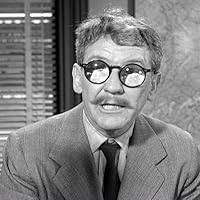
As I try to steer clear of spoiler pitfalls, I am relying on more samples from the text, hoping to wet the appetite of readers who enjoyed similar novel or movies. Patricia Highsmith and Alfred Hitchcock are two well known names that come to mind in the vein of the Goodreads staple of ‘if you liked this, you might like ...’. As a fun trivia, I checked if the novel has been filmed, and apparently there is a TV episode of it in “The Alfred Hitchcock Hour” from 1964.
He followed her down the dimly-lit hall to the den. A fire was spluttering in the raised fieldstone fire-pit and the room was like a kiln. In spite of the heat, Verna Clarvoe looked pale and cold, a starved sparrow preserved in ice. [...]In the past he had seen her in character, playing the role she thought was expected of her, the pretty and frivolous wife of a man who could afford her. She was still onstage, but she’d forgotten her lines, and the props and backdrop had been removed and the audience had long since departed.
===
“A plate breaks and you throw it away. A person breaks and all you can do is pick up the pieces and try to put them together the best way you can.”
Finally, I plan to read more from the author, but I’m not sure which book to pick.