The writer Natalie Barney and the artist Romaine Brooks were rich, American, eccentric, and grandly lesbian. They met in Paris in 1915, and their relationship lasted more than fifty years despite infidelity, separation, and temperamental differences.
Told by Diana Souhami, the critically acclaimed author of Mrs. Keppel and Her Daughter, Wild Girls is the story of two audacious women and the world they inhabited.
Natalie Barney believed that living was "the first of all arts." She published memoirs and collections of poems and aphorisms, but her passion was for seduction and love. She liked lavish displays, lots of sex, and love unbounded by rules. At her Friday afternoon salons, in the Grecian Temple of Friendship in the garden of her Paris home, "one met lesbians." Lovers and friends circled the Amazon, as she was called. She aspired to make her temple the Sapphic center of the western world.
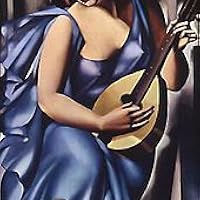
Romaine Brooks's prime interests, on the other hand, were herself and her painting. She produced many self-portraits and portraits of her own and Natalie's lovers and friends. She endured an unhappy childhood and a fraught relationship with her mother. She trusted no one but Natalie.
Natalie and Romaine are at the center of this "Sapphic Idyll." Included, too, are their lovers and friends before and after they met: Liane de Pougy, the exquisite courtesan and lover of princes; Renee Vivien, poet of melancholy and death, who died of anorexia at age thirty-two; Dolly Wilde, niece of Oscar, who ran up huge bills and died of a drug overdose; the prima ballerina Ida Rubinstein; the writer Gabriele D'Annunzio - and many others.
Natalie's salon, attended by Gertrude Stein, and Colette and Edith Sitwell, was a magnet for social introductions and cultural innovations. Drawing from letters, papers, and paintings, Diana Souhami re-creates the lives and loves of this pair of dazzling and wild women.
Diana Souhami was brought up in London and studied philosophy at Hull University. She worked in the publications department of the BBC before turning to biography. In 1986 she was approached by Pandora Press and received a commission to write a biography of Hannah Gluckstein. Souhami became a full-time writer publishing biographies which mostly explore the most influential and intriguing of 20th century lesbian and gay lives.
She is the author of 12 critically acclaimed nonfiction and biography books, including Selkirk’s Island (winner of the Whitbread Biography Award), The Trials of Radclyffe Hall (winner of the Lambda Literary Award and shortlisted for the James Tait Black Prize for Biography), the bestselling Mrs. Keppel and Her Daughter (winner of the Lambda Literary Award and a New York Times Notable Book of the Year), Gertrude and Alice, and Wild Girls: Paris, Sappho, and Art. She lives in London.
Ok, a book about wealthy lesbians that live the high parisian life in the early part of the 20th century, in my opinion an awesome time to be around. I'm thinking sex, drugs (mainly opium) women, lady boys, boyish girls, art, seduction, decadence, obscene opulence, dadaism & some cubism for good measure, obsession, passion, orgies, dressing up in togas and prancing around a maypole, excessive wine & cheese consumption, delinquent inverted behaviour that spat in the face of the status quo; and just general wanton bohemia. NOPE. Nothing even remotely that interesting.
Now I don't now whether Souhami totally missed those parts because she didn't think they were noteworthy or she is just a boring writer or that Natalie and her gal pals weren't that interesting, but I was totally disappointed with this book. When I read the back cover I thought wow this bitch lived the dream, but besides being wealthy, having lots of parties in paris, holidaying around the world and sleeping with a few women (and we're not talking Norman Lindsay Bohemia women attractive either, more like, butch artisan/bookish lesbian attractive; but if that was her type who am I to judge, I personally would have taken the former) her life comes off as pretty flat.
I have a feeling that I'm being too hard on Nat and that Souhami is to blame for this boring shuffle through lesbians gone totally not wild. She is a really boring writer, her language is simple and so plain it is painful; I've read accounting text books that use the english language with more colour and flair for artistic effect. She completely fails to capture the excitement and passion of Nat's hedonistic life.
There's a part where she tells you about the parties Natalie holds in her parisian salon and you just feel like 'yeah and??......What happened, who was there, were they naked, were there orgies, did they grab young french girls off the street and make them dance naked on tables whilst throwing money at them, did they throw stuff off the balcony at the traffic below, or snort powered opium off one another's butt cracks?? Huh! What went down??!!" According to Souhami just....parties....you know, parties with people and food and drink. WTF Souhami!
I'm a big fan of not letting the truth or the facts get in the way of a good yarn and in this case I feel that you should never let Diana Souhami get in the way of writing about someone's interesting life story. Someone with some artistic writing skill and merit needs to re-write this woman's life, because thanks to Souhami it sounds like death was the most dramatic and colourful part of Natalie's otherwise flat life of you know...parties and lesbian stuff.
Two thorough (as far as I can tell) biographies about two eccentric people, Natalie Barney and Romaine Brooks. Although they had almost opposite personalities, they were in love for more than 50 years.
The book also provides a detailed description of the fin de siècle (the 19th that is) and the subsequent wild 1920's in Paris. I liked the many footnotes that provide micro biographies of practically anyone of note that they came into contact with, the extensive index, and the original (as far as I can tell) structure of the text, occasionally interrupted by what could be autobiographical one page notes (one involving a death in a gas explosion, followed by 'a second cremation').
This book was surprisingly awesome, although I probably wouldn't have been so surprised if I had realized it was written by the same person who wrote Two Lives about Gertrude Stein and Alice B. Toklas. This book is actually better than Two Lives in the sense that it is juicier and has a lot more bizarre gossip about various members of the lesbian literature and art world, as well as just the general gay aristocracy of Western Europe and America during the late 19th/early 20th century. The particular focus is on Natalie Barney, a self-styled "writer" and hostess of a Paris salon which appears to have been a sort of lesbian Bloomsbury group of the day, as well as on Romaine Brooks, the moody, obscure artist who Natalie ultimately had the longest and deepest romantic liason with. I really, really loved the colorful characterization of each of them, especially Romaine, as these kind of cult lesbian heroines of their day and the whole thing reads like a novel more than a historical non-fiction book.
This book, about Natalie Barney and her circle – or rather, her affairs and long-term relationship with the reclusive and mentally unhinged Romaine Brooks – was disappointing for a number of reasons. I’d enjoyed Souhami's biography of Radclyffe Hall for its wit and fast pace and I’d hoped for more of the same. I’d also expected this account to be more decidedly located in time and place - the book is actually subtitled “Paris, Sappho & Art: the lives & loves of Natalie Barney & Romaine Brooks” - but I got very little sense of fin de siècle Paris, despite the colourful endpapers depicting those lovely old cars and people promenading in "L’Avenue du Bois de Boulogne à la Porte Dauphine". In addition, before most chapters, she includes incidents that seem to be from her own life: encounters in bars and the like, which I find irritating. I noticed a couple of other reviewers on Goodreads were irritated by this, too. If she means to use this tactic to point up the contrast between unromantic modern life and the romantic Parisian past, it actually backfires, drawing attention to herself rather than contrasting one time with another. Also, I suspect she’s decided to use these vignettes to Come Out; it really is irrelevant whether the author of a book about historical lesbians is gay or not.
Another of her bad habits is constant footnoting. I realise this is meant to clarify who she’s talking about, what they were famous for, etc, but to read continuously, you don’t need the constant interruption of little notes: “Bill Blowfly (1878-1931), cabaret artist famous for his affairs with male prostitutes”. I think she should have either provided a full glossary of names, dates and descriptions, or simply woven her account of these people into the narrative, providing textual references where necessary in endnotes.
I did manage to enjoy parts of the book – some of the anecdotes and the general information about people like Renée Vivien, the tragic English girl who translated Sappho from Greek into French and became a respected poet herself, but who could never find happiness and died young. There is even a mention of “Bosie”, the infamous Lord Alfred Douglas, who went to America to try to bag a rich wife! Countless others flit through the pages and are featured in the illustrations, but still remain maddeningly elusive. And I never got a sense of what Natalie Barney’s famous “salons” were like: surely some details of these could have been included.
The main thrust of the book is the long, loving but curiously unrewarding relationship between Barney and the painter Romaine Brooks, with Barney doing all the giving. Brooks’s background was a horror story – her father drank and both her mother and brother were certifiable; only their wealth prevented it. This marked her forever with a severely melancholic temperament and an inability to tolerate society or conduct relationships. Only her art (Souhami includes a selection of her paintings) could keep her going, but eventually even this failed her and she sank into a decline from which she never recovered, dying alone in Nice in 1970 at the age of 96. Natalie Barney had many, many affairs and longer, more committed relationships; Brooks had a few, in youth, but later became so reclusive she even finally refused to see Barney.
I am now going to find other books on this era and report on those! Happy 2015, everyone.
Not much to say about this book. It reads more like a reference book than a novel and feels like the author loved 'name-dropping' all the people that were around at the time, kind of like a gossip rag from the turn of the 20th century. I occasionally enjoyed the interesting foot notes, but I just felt that it was too sparse overall. I wanted to get to know some of the peripheral people that floated in and out of Natalie's life a bit more, but mostly I was not given that opportunity.
I must admit that I would not have been the slightest bit interested in this book if it centred on a heterosexual couple. It is only because they were a lesbian 'couple' and because this was a novel that was set during and after the belle époque (I love the sound of that) period of Europe.
All style and no substance, I say. However, I did keep me coming back and at no time did I feel like abandoning the book and throwing it across the room in a rage, so that's saying something.
Strangely enough, I started off hating Natalie and preferring Romaine, but towards the end - it was the other way around. It was probably something to do with the fact that despite Natalie's ever present devotion and support, Romaine descended into a hermit-like state and became really friggin' unlikeable.
A well-told tale of the lives and loves of Natalie Barney and Romaine Brooks who lived life to the full in Paris, although both were keen on keeping their own space.
The story is told before they met each other and then after this pair of 'wild women' realised that they had something very much in common.
One slight down factor is the great number of footnotes (see that Noel Coward quote in my quotes!) but in fairness, unlike many footnotes, they do add something to the story and are more interesting than most by giving details of the people who the notes are attached to. But perhaps they should have been incorporated in the text so as not to disrupt the reading too much.
Overall an enjoyable and enlightening read by a super author who thrives on this line of book, all of which are excellent.
I fell in love with the paintings of Romaine Brooks - although her demise into seclusion after WW2 and some madness made her less attractive than her lover Natalie Barney. Natalie Barney and Romaine Brooks were pivotal figures in the bohemian world of Paris at the turn of the century. Their group of friends and lesbian lovers included Liane de Pougy - courtesan, the poet Renee Vivien, Dolly Wilde - niece of Oscar Wilde - who died of drugs overdose, Gertrude Stein, Colette and Edith Sitwell & many others.
Souhami weaves her own life story between the chapters of the biographies and I don't think it works that well. Also she could have delved deeper into some of the other figures mentioned in the book. It could have been better. There is however a good bibliography and other books recommended at the end worth following up. I have the book at 4/5 rating mainly for the details of Romaine Brooks paintings and the illustrations, photographs etc.
A very unique biography, Souhami's style is definitely a love-hate type of situation, but I happened to love it. I don't know how it manages to be dry and emotional at the same time, but I'm here for it. Plus, you can tell this woman has done her research (even though here way of referencing is a little baffling).
Long story short: are you, like me, a little too obsessed with the Modernist queer scene? Read it. Do you know nothing about it? Read it all the same (if anything, it will make you want to pick up the Ladies Almanack).
Triumph! I finally found the History of Art section in my local library! (It’s located in an obscure corner frequented by tramps!) This happy surprise led me to grab not only the books on Abstract Expressionism I was looking for, but also this, whose hilariously bodice-ripping cover was too good for me to pass up.
Wild Girls is not actually a bodice-ripper. Nor is it much of a history of art.
It’s a biography of Natalie Barney and Romaine Brooks, a pair of rich American lesbians who met in 1920s Paris. The title is a bit of a misnomer – Natalie and Romaine were ‘wild’ only by contemporary standards: they were artistic; they loved women; they refused to kowtow to the men in their lives. Its shelving is also a slight misnomer: Romaine was a painter (and a good one), but this is a history of her life and loves more than her artistic nuance.
Natalie and Romaine are both interesting figures. Natalie was enthusiastic and rebellious; she held weekly salons in Paris where Gertrude Stein and other notable women mingled. Romaine, raised in the shadow of an insane mother and brother, was a darker and more troubled character.
However, Diana Souhami’s scope with the book is much wider: she also provides satisfying thumbnail sketches of other people who came in contact with Natalie and Romaine during their lives: the fun-loving high-class hooker; the pitiable man who chases lesbians endlessly; the reclusive writer who is moved by Natalie. Unfortunately, these panoramic glimpses, though enjoyable, give the book a fragmentary quality.
Souhami is clearly an accomplished author, drawing lucid and evocative descriptions from muddled and incomplete sources. However, her choice to intersperse a biography of two 1920s women with snippets of her own thoughts and experiences is self-indulgent to an extreme. I don’t know what she hoped to achieve by prefacing chapters with details about, for example, a blind date that she went on, but I was simply confused and irritated to be taken out of the narrative. It was a bit like a DVD commentary of a movie, where the director starts recounting some contextless anecdote, ostensibly to explain why and how s/he shot a scene.
In all, Wild Girls is not a fabulously entertaining read, but it has its moments. If you’re interested in the history of (a) women, (b) lesbians, or (c) expatriate Parisian society in the early part of the 20th century, you could do worse than to pick it up.
I love reading anything about the lesbians in Paris during this time period. This book is well researched and does a great job giving insight into the salon culture at that time, but in my opinion Souhami didn't focus enough on Barney and Brooks. So much of the book was about their relationships with others, and while that was interesting, I was hoping for more in depth biography on the two figures highlighted in the title.
I could not put this book down! I read it in less than a day and was sad to see it go. Totally absorbing and engrossing from start to finish. A fantastic read! My one complaint was that there was not more of it and I felt that the author skimmed over a lot of detail that deserved more focus in the book. All and all, this book was amazing and one I'll be sure to reread in the future.
I gave up about halfway through. I was so excited to stumble upon this at the bookstore. The entire thing was like, “She had a friend in said city. Another friend in another city. A sex friend in another city.” No details. I think at one point one of the character’s mom was mad at her? I don’t know, I was too bored to catch it.
The concept of the book is great. I wanted to love it. I wanted to learn about the characters. But i found the writing to be uncaptivating. It could be because i read this after i read Tete de Tete; which is in the same genre; but was brilliantly written.
Fab book if you're interested in Paris's salon culture in the early 20th century. Souhami is both entertaining and informative, which is rare for literary nonfiction. Also fab if you're a dyke. I have enjoyed all of Souhami's books.
Phenomenal book about Natalie Barney and Romaine Brooks. A wonderful biopgraphy not only of their long and enduring love for each other, but also of the Art world in Paris during the early 20th century.
This is one of those "post-modern" biographies where the author is constantly inserting herself into the text with short vignettes from her own life. I find that rather annoying and presumptuous.
Last year I read No Modernism Without Lesbians by Dian Souhami & enjoyed it. The year before that: Truly Wilde, a biography on Dolly Wilde, Oscar's neice. Ditto Hotbed: Bohemian Greenwich Village and the Secret Club that Sparked Modern Feminism by Joanna Scutts. In recent years, I've been kind of obsessed with early 20th century bohemian & queer culture. I grew up obsessed with Regency & Victorian culture--it's good to expand my passions.
SPOILERS Early in this book, I thought I'd like to get a book on Romaine Brooks' art.
But... I started disliking Romaine Brooks really far into Wild Girls. Her vicious, arrogant letter to Natalie--accusing her of surrounding herself with inferior women (I'm paraphrasing) started to do it. That and her snide remark that includes the word Jew--red flag. Oh, but then I got to page 170. And page 171. Ew. Ew. Ew. It's WWII by this point. Romaine Brooks was antisemitic & a Nazi sympathizer. Gross.
Page 175: Natalie had fascist sympathies, too?!?!?!? That's the extreme polar opposite of feminist. WTAF. Considering how apolitical Natalie was, I'm thinking that instead of having fascist sympathies, she was blinded by her love for Romaine.
Yeah.. so...
When I finish reading this, I'll begin reading a book about Jewish women's history. The Light of Days: The Untold Story of Women Resistance Fighters in Hitler's Ghettos by Judy Batalion is looking like the book--I've been wanting to read it soon.
This entire review has been hidden because of spoilers.
An ok offering from veteran chronicler of lesbian life Diana Souhami. Focussed on Natalie Barney and Romaine Brooks, who enjoyed a long friendship/affair while sleeping, and living with many other people besides, the book has a large and unwieldy cast of characters. Souhami has dealt with this problem by footnoting many individuals, some very famous, others quite obscure, which at times feels odd. In fact, some of the notes are downright bizarre, as when she gives the entire text of the original version of "Auld Lang Syne" on p. 105. Surely, this is overdrive? Even more annoying are the short and sometimes cryptic autobiographical interludes in which Souhami provides a window onto her own lesbian affairs. I found those self-indulgent and irrelevant. That said, the book told me just about all I really wanted to know about Natalie Barney, a bouncy woman with prodigious social and sexual appetites whose literary output is of no great consequence, and Romaine Brooks, a more significant artist but unfortunately a neurotic misanthrope with clear fascist leanings.
2 stars is "It was OK," and this was only OK. To begin with, the title: Wild Girls. These were not girls. Barney and Brooks were in their late 30s/early 40s when they met. They were women. They both have incredibly compelling stories, but the writing was so pedestrian as to inspire little but boredom. "Alice was seventeen. Her bereaved mother took her on a grand tour of Europe. Alice sketched impressions of Paris, Milan and Rome." The title and bodice-ripping cover suggest there ought to be some lushness in the retelling that simply isn't there. We get a catalog of numerous lesbian liaisons, but not enough texture, particularly not in the great threesome of Barney, Brooks and Lily de Gramont. Finally, Souhami begins chapters with random entries from her own journals or recollections from her personal history, which is confusing and self-indulgent. The material here is incredibly rich; I would love to see it handled by a different author.
The version I read was just called 'Natalie and Romaine' - a better title! At one point she wanted to call it 'A Sapphic Idyll' which more conveys the content than 'Wild Girls'. It is very much about a time between the wars and many of the characters were enormously wealthy. The 'idyll' comes to an end with age, WW2 and in terms of the book with a realisation that Romaine and others were quite fascistic. The idea of interspersing the chapters with brief descriptions of moments in Diana Souhami's life, showing parallels and differences and offering a perspective on those times works well. There is however a celebration of the determination of the women in the book to be unapologetically lesbian. I also enjoyed the humour and referencing. The possibilities and difficulties for different sorts of relationship are explored to some extent.
Fascinating lives, and so much happens that it simply can’t be done justice in one small book. While interesting, for me that was ultimately to the detriment of the book as the story became “and then this happened and then this happened and then this happened.” So many events could be whole books in themselves. The jump from Natalie and romaine meeting to being in a relationship was disorienting too, I wanted more about how that developed and came to be. I did actually enjoy the elliptical slices of 90s (?) lesbian life interspersed throughout
I'm working my way through Diana Souhami's biographies of fabulous lesbians. I started with Gluck and I've got Radclyffe Hall coming up next. I'm biased, but I love a biography of a fabulous lesbian. Especially when they lived in a time when they both were and weren't afforded the freedoms we are now. I just get very sad as they get old and decrepit. And even sadder when they have to die.
There were some really good parts and some really boring parts.
I was more interested in a story of their lives as opposed to a lot of name dropping and details of publishing and how they tried to get paintings exhibited etc.
It was good enough I suppose, but I skipped some parts which I rarely do and it was just all a bit.....underwhelming which is really disappointing.
Written in a breezy conversational tone that makes it light reading. Nevertheless, there’s a lot of information and name dropping for such as slim book. The lives of Brooks and Barney led prior to meeting was more interesting than the later end of the book detailing their lives in contrast, which also coincides with the slower pacing.
I've read quite a few of the author Diana Souhami's books, saw this in the 2nd hand bookshop. I had heard about the two wild girls, they certainly had different lives and luckily had the money to do so. They both had terrible childhoods and as a consequence their adult lives were very messy.