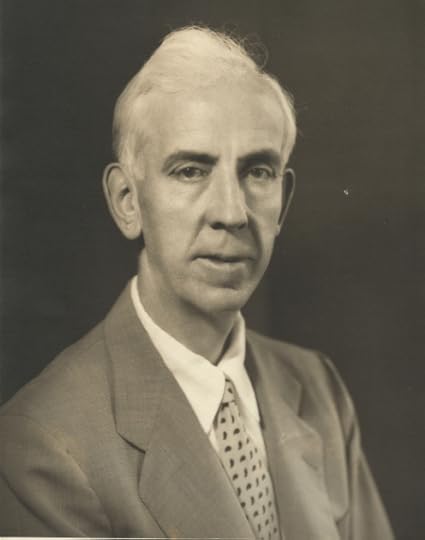
Curtis Kelsey was a simple man who never went to college and never gained worldly fame. But in 1921, at the age of 27, he was asked by 'Abdu'l-Baha to come and work in Haifa to install the first electric lighting in the Shrine of the Bab. For two months he lived and worked as a member of 'Abdu'l-Baha's household, an experience that transformed him.
This is a Baha'i book and I imagine it being of interest only to Baha'is and/or to those who are interested in the early days of the Faith in America.
Curtis was born in 1894 in Salt Lake City. He was a happy-go-lucky type with an eight-grade education. His mother was a Baha’i, but the rest of the family, Curtis included, were resistant to hearing anything about the Faith. It was when he was suffering from typhoid fever that he had a profound spiritual experience and turned to the Baha’i Writings. Several years later, he was invited to serve in Haifa in order to install lighting at the Holy Shrines, at a time when there was no electricity in the area. His time there was life changing.
This book served as a perfect reminder to turn to God for assistance and to trust in Him. My review cannot do it justice. Just know that it’s a lovely biography and I didn’t want it to end. They don’t make folks like him anymore.
1894-1970
Here are some of my favorite quotes and excerpts:
Buffalo Bill “Curtis was born in 1894 in Salt Lake City, Utah, where his father designed the city’s first water works. The Rocky Mountains fascinated him; he loved the open spaces, the touch of the soil; he loved to roam, unrestricted. As a child he enjoyed the times when his father’s close friend William Cody (Buffalo Bill) would visit the family, telling stories of the Old West, handing Curtis and his three brothers silver dollar coins, and tickets to his Wild West circus show.”
Studies and Academics “Curtis never forgot his formal school experiences, because they were painful. He felt like a prisoner in a classroom. Consequently, he harbored a distrust for the world of academe, something never expressed publicly, but shared with people close to him. Because of his unpleasant encounter with school, and because of his ability to become a hydraulic engineer through personal initiative, he felt that higher education was a waste of time, energy and money, with the exception of medicine, law and the technologies. He didn’t discourage people from pursuing university degrees; but on the other hand he didn’t encourage them to further their education. This was true with his children, who had a strong capacity for learning.
But though in his lifetime none of his children were university graduates, they were all active explorers of knowledge, continually reading Baha’i and non-Baha’i material and engaging in intellectual and lively discussions. Their healthy appetite for knowledge and active pursuit of it wasn’t something they inherited. It was learned from their father, who was a serious student of the Teachings.
As children, they remember Curtis reading and making notes, talking to them about different aspects of the Revelation and enthusiastically sharing certain insights he had gained from his reading. Those were exciting times, because the children’s minds and hearts were opened to weighty topics like ‘life after death.’ ‘soul, mind, and spirit,’ ‘free will and pre-destination.’ As an adult he rarely missed a day or night reading from the sacred texts. It got so that he would feel uncomfortable if he forgot to read. His wasn’t a fanatical attachment to the Writings; it was a love affair. How could a lover stay away from his beloved? The Writings were the source of his strength, his well-being; through them he gained understanding of the meaning of life; he discovered happiness. If it provided all of that, he reasoned, he would be a fool to neglect reading the utterances of Baha’u’llah and Abdu’l-Baha. But although he enjoyed his private moments with the Creative Word, he began reading because Baha’u’llah urged the believers to do it. To Curtis, it made sense to do what the Manifestation of God asks or commands, for you could only benefit by complying.
Often in a Baha’i study class or Feast, people, including those who were highly educated, would turn to Curtis for answers to complicated questions. In responding, he never adopted a superior air or slipped into self-righteousness. Answers were always given in the spirit of sharing and service. Perhaps that’s why so many people felt comfortable asking him questions. Though it was apparent he knew a lot about the Revelation, he wasn’t perceived as a ‘know-it-all.’ Curtis was approachable, because people sensed his genuine desire to serve them.”
Suicide “’No one should injure himself on purpose or take his own life,’ He (Abdu’l-Baha) said; ‘God never places a burden on us greater than we can carry. Each burden we endure is for our own good and development. Should anyone at any time encounter hard and perplexing times, he must say to himself, ‘This too will pass,’ then he will grow calm. ‘When experiencing difficulties,’ He added, ‘I would say to myself: this too shall pass away,’ and I would become calm again.’ ‘Now if someone cannot be patient and endure then it is better for him to arise in the service of the Cause of God.’”
Such a beautiful exploration of a rebellious spirit finding its path of purpose and joy in the most unexpected ways. A vibrant portrait of a man so in love with truth he became completely transformed by it.